
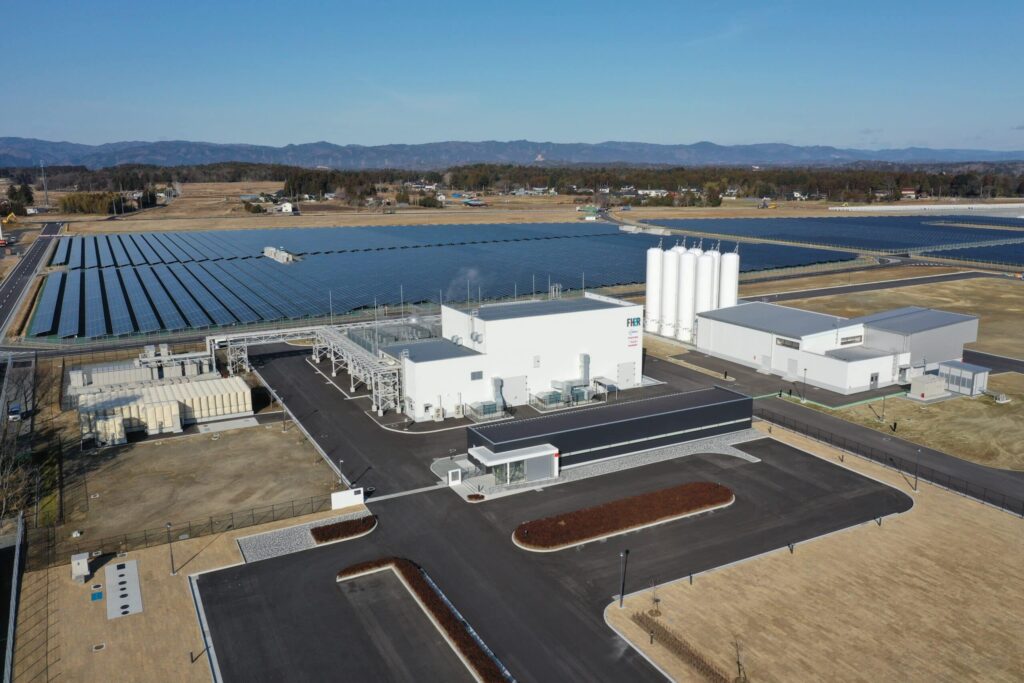
Japan’s Green Transformation (GX) Policy is one of the country’s most ambitious economic and industrial strategies, designed to achieve carbon neutrality while strengthening industrial competitiveness. Hydrogen has emerged as a cornerstone of this transformation, with investments spanning production, transportation, storage, and end-use applications.
According to Stratistics MRC, the Global Green Hydrogen Market is accounted for $8.5 billion in 2026 and is expected to reach $41.6 billion by 2034 growing at a CAGR of 30.3% during the forecast period.
Backed by government funding and private-sector collaboration, Japan is accelerating the development of a hydrogen economy that supports decarbonization across manufacturing, mobility, power generation, and heavy industry.
This article explores how the GX Policy is shaping the hydrogen market, highlights investment priorities, examines technology trends, and outlines future opportunities through 2035.
Hydrogen Market at a Glance
| Metric | Overview |
|---|---|
| Industry Focus | Hydrogen Production, Storage, Transportation & End Use |
| Growth Outlook | Strong long-term expansion through 2035 |
| Primary Drivers | Decarbonization, Energy Security, Industrial Innovation |
| Key Applications | Power Generation, Mobility, Manufacturing, Chemicals |
| Government Support | Japan Green Transformation (GX) Policy |
Note: Check Green hydrogen market research report for detailed market sizing, CAGR forecasts, and competitive analysis.
What Is Japan’s GX Policy?
Japan’s Green Transformation (GX) Policy is a long-term national strategy aimed at reducing greenhouse gas emissions while maintaining industrial growth and energy security.
The initiative encourages collaboration between government, industry, and research institutions to accelerate the transition toward cleaner energy systems and advanced manufacturing technologies.
Key objectives include:
- Achieving carbon neutrality by 2050
- Expanding renewable and low-carbon energy
- Accelerating hydrogen adoption
- Supporting industrial decarbonization
- Strengthening energy security
- Promoting clean technology innovation
Hydrogen is widely recognized as one of the strategic pillars supporting these objectives.
Why Hydrogen Is Central to Japan’s GX Strategy
Hydrogen offers the flexibility to decarbonize sectors where direct electrification is difficult.
Priority industries include:
- Steel manufacturing
- Chemical production
- Heavy transportation
- Shipping
- Aviation
- Thermal power generation
Its ability to store energy and reduce emissions makes hydrogen an important component of Japan’s long-term energy transition.
Investment Trends Driving the Hydrogen Market
Japan continues to encourage investment across the hydrogen value chain.
Key investment areas include:
- Hydrogen production facilities
- Electrolyzer manufacturing
- Hydrogen storage technologies
- Import terminals and distribution infrastructure
- Fuel cell development
- Industrial hydrogen applications
- Carbon capture-enabled hydrogen production
Public and private investments are expected to accelerate commercialization over the next decade.
Leading Countries Advancing the Hydrogen Economy
While Japan is a global leader in hydrogen policy, several countries are investing heavily in hydrogen technologies.
| Country | Strategic Focus |
|---|---|
| Japan | Hydrogen mobility, fuel cells, industrial decarbonization |
| Germany | Green hydrogen and industrial applications |
| South Korea | Fuel cell deployment and hydrogen mobility |
| Australia | Renewable hydrogen production and exports |
| United States | Clean hydrogen hubs and infrastructure |
| China | Large-scale hydrogen production and manufacturing |
International collaboration is expected to play a key role in developing global hydrogen supply chains.
Technology Roadmap Through 2035
Hydrogen technologies are expected to evolve across multiple stages.
Near-Term
- Expansion of hydrogen refueling infrastructure
- Increased fuel cell deployment
- Industrial hydrogen adoption
- Hydrogen import infrastructure
Mid-Term
- Large-scale green hydrogen production
- Hydrogen-powered shipping
- Advanced electrolyzer technologies
- Cross-border hydrogen supply chains
Long-Term
- Hydrogen-powered aviation
- Integrated hydrogen energy systems
- Smart hydrogen distribution networks
- Large-scale seasonal energy storage
These developments are expected to support broader adoption across industrial and energy sectors.
Future Opportunities
Japan’s GX Policy is creating opportunities throughout the hydrogen ecosystem.
Key growth areas include:
- Green hydrogen production
- Hydrogen logistics
- Fuel cell technologies
- Industrial decarbonization
- Heavy-duty transportation
- Maritime applications
- Renewable energy integration
- Carbon-neutral manufacturing
Companies investing in these areas are likely to benefit from long-term policy support and increasing market demand.
Challenges to Watch
Despite strong momentum, several factors could influence market adoption.
These include:
- High production costs
- Infrastructure development timelines
- Hydrogen storage complexity
- Global supply chain coordination
- Regulatory harmonization
Continued innovation and policy support will be essential to overcoming these challenges.
Frequently Asked Questions
What is Japan’s GX Policy?
Japan’s Green Transformation (GX) Policy is a national strategy focused on achieving carbon neutrality, strengthening energy security, and promoting clean industrial growth.
Why is hydrogen important under the GX Policy?
Hydrogen enables decarbonization in sectors such as heavy industry, transportation, and power generation, making it a strategic component of Japan’s energy transition.
Which industries are expected to benefit?
Manufacturing, steel, chemicals, shipping, aviation, power generation, logistics, and automotive industries are expected to benefit from increased hydrogen adoption.
Japan’s GX Policy represents more than an environmental initiative-it is a long-term industrial strategy designed to position the country as a leader in clean energy innovation. Hydrogen will remain a central pillar of this transformation, supported by sustained investment, technological progress, and international collaboration.
As governments and industries accelerate the transition toward low-carbon economies, organizations that understand policy developments, technology roadmaps, and market dynamics will be better positioned to capitalize on emerging opportunities.