
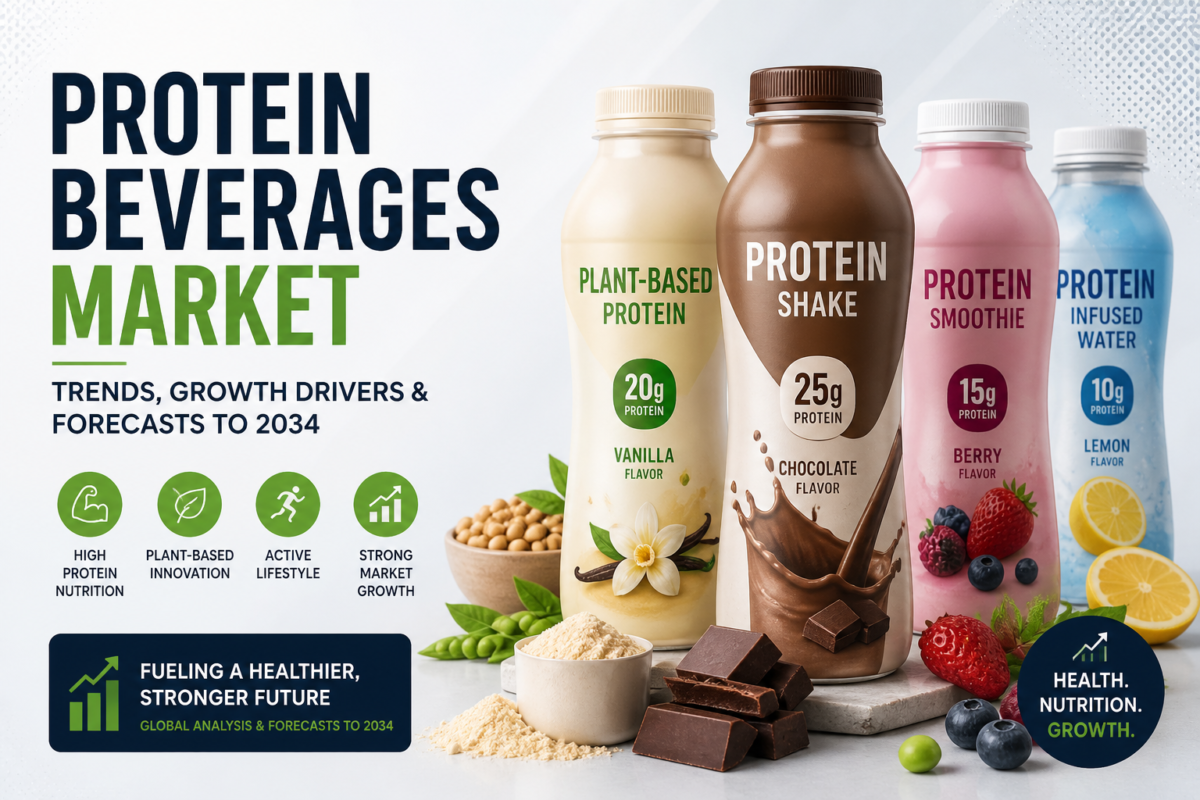
The protein beverages market is evolving rapidly as consumers shift toward functional nutrition, convenience, and high-protein diets. What was once limited to gym-goers is now a mainstream category, driven by demand for on-the-go nutrition, wellness, and lifestyle-based consumption.
According to Stratistics MRC, the Global Protein Beverages Market is accounted for $5.3 billion in 2026 and is expected to reach $10.7 billion by 2034 growing at a CAGR of 9.1% during the forecast period.
From ready-to-drink shakes to protein-infused water, innovation is reshaping the global protein beverage landscape.
Here are the key trends driving this market.
1. Surge in Ready-to-Drink (RTD) Protein Beverages
Convenience is a major growth driver.
What’s happening:
- Growth of grab-and-go protein shakes
- Expansion in retail and e-commerce channels
- Increased consumption among working professionals
RTD protein beverages are becoming a daily staple beyond fitness use.
2. Rapid Growth of Plant-Based Protein Drinks
Plant-based nutrition is one of the biggest shifts in the market.
Popular sources:
- Pea protein
- Soy protein
- Almond and oat-based blends
- Rice protein
This trend is driven by vegan diets, lactose intolerance, and sustainability concerns.
3. Rise of Functional & Fortified Protein Drinks
Protein beverages are evolving into functional health drinks.
Added benefits include:
- Vitamins and minerals
- Probiotics and gut health support
- Collagen for skin and joints
- Adaptogens for stress management
This is pushing the category into premium wellness territory.
4. Expansion Beyond Fitness Consumers
Protein drinks are no longer limited to athletes.
New target segments:
- Busy professionals
- Elderly population (clinical nutrition)
- Weight management consumers
- General health-conscious individuals
This broadens the market significantly.
5. Innovation in Protein-Infused Water & Light Beverages
Consumers are looking for lighter, refreshing alternatives.
Emerging formats:
- Protein water
- Juice-based protein drinks
- Low-calorie, low-carb beverages
These products appeal to consumers who want protein without heavy shakes.
6. Clean Label & Transparency Trends
Consumers want simple, understandable ingredients.
Key shifts:
- No artificial additives
- Low sugar or no added sugar
- Clear protein source labeling
- Non-GMO and organic certifications
Clean-label products are gaining higher trust and demand.
7. Premiumization & Flavor Innovation
Taste is becoming a key differentiator.
What’s changing:
- Gourmet flavors (coffee, chocolate blends, desserts)
- Better texture and mouthfeel
- High-end branding and packaging
Consumers are willing to pay more for taste + quality.
8. Growth in Emerging Markets
Demand is expanding beyond developed regions.
High-growth regions:
- Asia Pacific (India, China)
- Middle East
- Latin America
Urbanization, fitness awareness, and rising income are key drivers.
Market Outlook: Protein Beverages Industry
The protein beverages market is expected to grow strongly, driven by:
- Rising health and fitness awareness
- Demand for convenient nutrition
- Growth of plant-based diets
- Expansion of functional beverages
- Innovation in product formats
Protein beverages are transitioning from niche fitness products to mainstream daily nutrition solutions.
The protein beverages market is entering a new phase of growth, fueled by convenience, functionality, and personalization. Brands that innovate in taste, ingredients, and health benefits will lead the next wave.
As consumer lifestyles evolve, protein beverages will become a core category in the global functional food and beverage industry.