
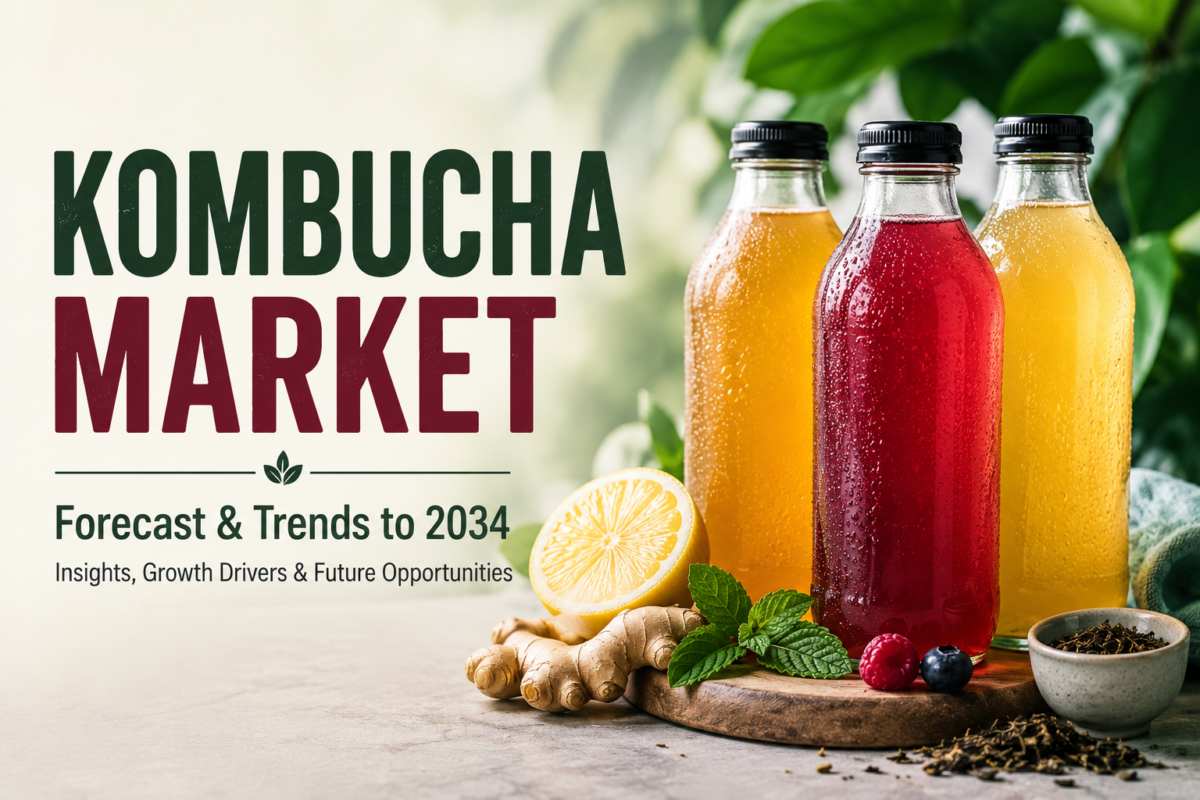
The kombucha market is witnessing rapid growth as consumers increasingly seek functional, probiotic-rich, and low-sugar beverages. Once considered a niche wellness drink, kombucha has now entered mainstream retail, driven by rising health awareness and demand for natural alternatives to sugary soft drinks.
From innovative flavors to functional ingredients, the kombucha industry is evolving quickly.
Here are the key trends shaping the global kombucha market.
1. Rising Demand for Functional Beverages
Consumers are moving beyond traditional soft drinks toward beverages that offer health benefits.
Key drivers:
- Gut health awareness
- Demand for probiotics and digestive wellness
- Preference for natural fermentation-based drinks
Kombucha is increasingly positioned as a daily wellness beverage rather than just a trend product.
2. Low-Sugar & Clean-Label Innovation
Health-conscious consumers are paying closer attention to sugar content and ingredients.
What’s changing:
- Reduced-sugar kombucha variants
- Organic and non-GMO formulations
- Natural flavoring and clean-label ingredients
Brands are focusing on balancing taste with healthier nutritional profiles.
3. Expansion of Functional Ingredients
Kombucha is evolving into a broader functional beverage category.
Popular additions include:
- Adaptogens
- Collagen
- CBD-infused variants (where permitted)
- Vitamins and botanicals
This trend is driving premiumization across the market.
4. Flavor Innovation Becoming a Key Differentiator
Flavor diversity is becoming essential for brand growth.
Trending flavors:
- Berry and citrus blends
- Ginger and turmeric
- Tropical fruit combinations
- Herbal and botanical infusions
Limited-edition and exotic flavors are helping brands attract younger consumers.
5. Growth of Ready-to-Drink (RTD) Wellness Products
Convenience continues to shape the beverage industry.
Fast-growing formats:
- Single-serve bottles and cans
- On-the-go wellness beverages
- Multipack functional drink offerings
Kombucha is increasingly competing with energy drinks and flavored sparkling water.
6. Expansion Into Mainstream Retail Channels
Kombucha is no longer limited to specialty health stores.
Growth channels include:
- Supermarkets and hypermarkets
- Convenience stores
- E-commerce and subscription platforms
- Cafes and fitness centers
Wider availability is accelerating consumer adoption globally.
7. Rise of Plant-Based & Vegan Lifestyles
The growth of plant-based living is supporting kombucha demand.
Why it matters:
- Naturally vegan product positioning
- Alignment with sustainable lifestyles
- Preference for plant-based wellness beverages
Kombucha brands are increasingly marketing sustainability and ethical sourcing.
8. Emerging Markets Showing Strong Potential
Demand is rising rapidly beyond North America and Europe.
High-growth regions:
- Asia Pacific
- Middle East
- Latin America
Urbanization, wellness trends, and premium beverage demand are driving adoption.
Market Outlook
The kombucha market is expected to grow strongly due to:
- Rising health and wellness awareness
- Expansion of functional beverage categories
- Demand for probiotic-rich drinks
- Innovation in flavors and ingredients
- Growth of clean-label products
Kombucha is transitioning from a niche health drink to a mainstream global beverage category.
The kombucha market is entering a new growth phase powered by functional nutrition, flavor innovation, and changing consumer lifestyles. Brands that focus on health benefits, clean ingredients, and premium experiences will lead the next wave of market expansion.
As consumers continue replacing sugary beverages with healthier alternatives, kombucha is positioned to become a major player in the future of wellness drinks.
Top 5 Kombucha Brands Leading the Functional Beverage Market
The kombucha market is becoming increasingly competitive as brands innovate around flavors, probiotics, clean-label ingredients, and wellness positioning. Here are five leading kombucha brands shaping the global market.
1. GT’s Living Foods
One of the most recognized kombucha brands globally, GT’s helped popularize kombucha in mainstream retail.
Key Highlights:
- Wide range of probiotic kombucha drinks
- Organic and raw formulations
- Strong distribution across supermarkets and health stores
Best known for: Authentic fermented kombucha products
2. Health-Ade
Health-Ade is known for premium kombucha with bold flavors and wellness-focused branding.
Key Highlights:
- Cold-pressed and small-batch positioning
- Trend-driven flavors
- Strong D2C and retail presence
Best known for: Premium lifestyle kombucha beverages
3. Kevita
Kevita offers kombucha and probiotic beverages focused on digestive wellness.
Key Highlights:
- Sparkling probiotic drinks
- Low-sugar beverage options
- Strong presence in wellness retail channels
Best known for: Functional probiotic beverages
4. Remedy Drinks
Remedy Drinks has gained popularity with its no-sugar kombucha positioning.
Key Highlights:
- No sugar after fermentation
- Clean-label formulations
- Rapid international expansion
Best known for: Health-focused kombucha alternatives
5. Brew Dr. Kombucha
Brew Dr. Kombucha focuses on organic ingredients and tea-based craft brewing methods.
Key Highlights:
- Organic tea blends
- Craft-brewed positioning
- Sustainability-focused branding
Best known for: Premium organic kombucha flavors