
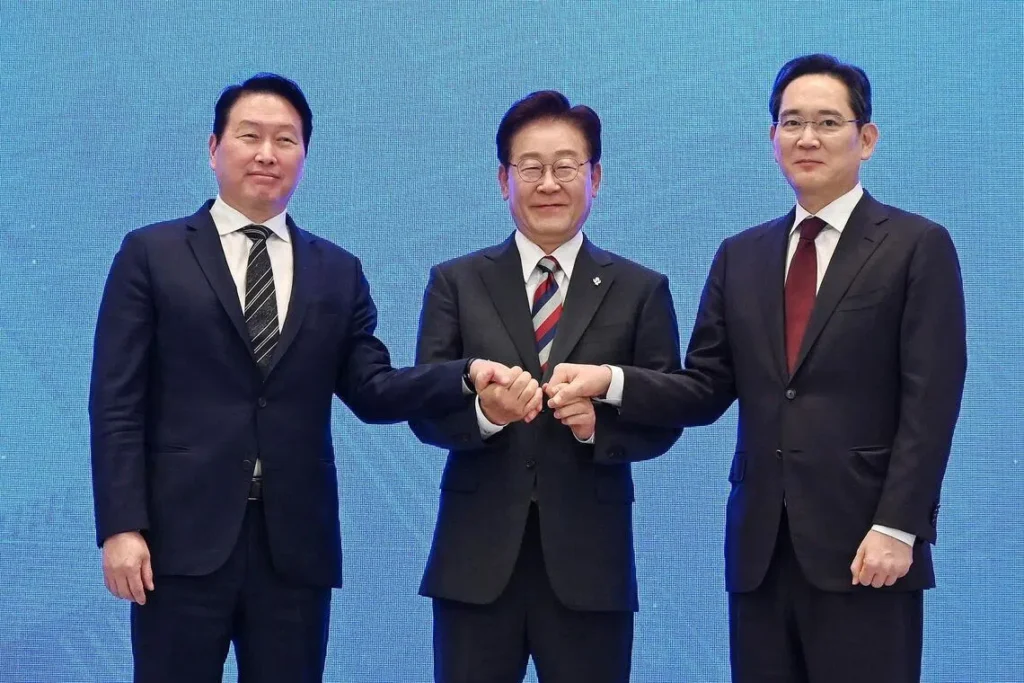
Artificial intelligence has become the driving force behind the next generation of global technological innovation, and semiconductors sit at the center of this transformation. Recognizing this shift, South Korea has unveiled one of the world’s most ambitious long-term industrial initiatives-a strategy expected to mobilize nearly $1 trillion in public and private investment across artificial intelligence, semiconductor manufacturing, advanced computing infrastructure, and digital innovation over the coming decade.
The initiative goes far beyond increasing chip production. It reflects a national effort to strengthen South Korea’s position in the global AI economy by expanding manufacturing capacity, supporting next-generation semiconductor technologies, accelerating AI adoption, and building a resilient technology ecosystem.
As countries race to secure leadership in AI and advanced manufacturing, South Korea’s strategy signals a broader shift where industrial policy, technology investment, and economic competitiveness are becoming increasingly interconnected.
Why This Strategy Matters
For decades, semiconductor leadership was measured by manufacturing capacity alone. Today, success depends on much more.
The explosive growth of generative AI, cloud computing, autonomous systems, robotics, and advanced data centers has dramatically increased demand for high-performance computing chips and memory technologies. Nations capable of developing and manufacturing these technologies are expected to gain long-term economic and strategic advantages.
South Korea already plays a critical role in global semiconductor production, particularly in memory chips. Through this new strategy, the country aims to strengthen its position across the entire AI value chain-from research and chip design to manufacturing, AI infrastructure, and commercialization.
Rather than reacting to technological change, South Korea is positioning itself to help shape the future of it.
The Four Pillars of South Korea’s AI & Chip Strategy
1. Expanding Advanced Semiconductor Manufacturing
Semiconductors remain the foundation of every AI application, from smartphones and autonomous vehicles to cloud platforms and industrial automation.
South Korea plans to accelerate investment in advanced semiconductor manufacturing by strengthening production capabilities, supporting next-generation fabrication technologies, and expanding capacity for high-value chips.
Priority areas include:
- AI processors
- High-bandwidth memory (HBM)
- Advanced packaging
- Logic chips
- Next-generation memory technologies
These investments are expected to strengthen supply chain resilience while supporting growing global demand for AI hardware.
2. Building National AI Infrastructure
AI development requires enormous computing power.
To support research, innovation, and commercial AI applications, South Korea is investing in modern digital infrastructure, including high-performance computing resources, AI data centers, cloud platforms, and next-generation networking capabilities.
The objective is to create an environment where startups, research institutions, and enterprises can access the computational resources needed to develop advanced AI technologies.
Infrastructure is no longer viewed simply as an IT investment—it has become a strategic national asset.
3. Strengthening the Semiconductor Ecosystem
A successful semiconductor industry depends on far more than chip fabrication.
South Korea’s strategy supports the broader ecosystem by encouraging investment across:
- Semiconductor equipment
- Electronic materials
- Advanced packaging
- Manufacturing software
- Industrial automation
- AI-enabled production systems
- Research collaboration
Strengthening every stage of the value chain helps reduce supply chain risks while improving long-term industrial competitiveness.
4. Accelerating AI Innovation
Beyond hardware, South Korea aims to become a global leader in AI software and commercial applications.
The strategy encourages collaboration between universities, research institutes, startups, and established technology companies to accelerate AI innovation across sectors including manufacturing, healthcare, finance, logistics, and mobility.
Developing skilled talent and expanding AI research capabilities are expected to remain long-term priorities.
Industries Expected to Benefit
The impact of this strategy extends well beyond the semiconductor industry.
Semiconductor Manufacturing
Growing demand for advanced chips will continue driving investment in fabrication facilities, process technologies, and production equipment.
Artificial Intelligence
Improved computing infrastructure supports faster AI model development and wider enterprise adoption.
Data Centers
Higher AI workloads are increasing demand for modern data centers capable of supporting advanced computing requirements.
Industrial Automation
Manufacturers will increasingly integrate AI into production planning, predictive maintenance, robotics, and quality inspection.
Robotics
More powerful processors enable smarter industrial robots, collaborative robots (cobots), and autonomous manufacturing systems.
Automotive
Electric vehicles and autonomous driving systems require increasingly sophisticated semiconductor technologies and AI capabilities.
South Korea’s Competitive Position
South Korea enters this new investment cycle with several structural advantages.
| Competitive Strength | Strategic Value |
|---|---|
| Advanced memory chip expertise | Supports AI computing and cloud infrastructure |
| Strong manufacturing ecosystem | Enables large-scale semiconductor production |
| Global technology companies | Drives innovation and commercialization |
| Skilled engineering workforce | Supports research and advanced manufacturing |
| Government-industry collaboration | Accelerates long-term technology investment |
These strengths provide a solid foundation for expanding the country’s role in the global AI economy.
Global Implications
South Korea’s strategy reflects a broader international trend where governments are making substantial investments in semiconductor manufacturing and AI infrastructure.
The initiative is likely to influence:
- Global semiconductor supply chains
- AI hardware development
- Cloud infrastructure expansion
- Advanced manufacturing technologies
- Cross-border technology partnerships
- Industrial digital transformation
Competition among major technology economies is expected to accelerate innovation while encouraging greater investment across the semiconductor ecosystem.
Challenges Ahead
While the long-term outlook remains positive, several challenges could influence implementation.
Talent Availability
Growing demand for AI specialists, semiconductor engineers, and advanced manufacturing professionals may intensify global competition for skilled talent.
Supply Chain Complexity
Semiconductor manufacturing relies on highly interconnected global supply chains that remain vulnerable to geopolitical and logistical disruptions.
Energy Requirements
Advanced semiconductor facilities and AI data centers consume significant amounts of electricity, making energy security and sustainability increasingly important.
Rapid Technology Evolution
The pace of innovation requires continuous investment in research, manufacturing capabilities, and workforce development.
What Businesses Should Watch
Organizations involved in the semiconductor and AI ecosystem should closely monitor several developments over the coming years:
- Expansion of AI-focused semiconductor manufacturing
- Growth in high-bandwidth memory (HBM) demand
- Advances in chip packaging technologies
- New AI infrastructure projects
- Increased collaboration between industry and research institutions
- Continued government support for advanced manufacturing
- Rising investment in industrial AI applications
These trends are expected to shape strategic investment decisions across multiple industries.
Looking Beyond 2030
South Korea’s strategy is not simply about increasing semiconductor production-it is about positioning the country for leadership in the AI-driven economy.
Future investment is expected to focus on:
- AI-native computing platforms
- Next-generation semiconductor technologies
- Sustainable chip manufacturing
- Quantum computing research
- Advanced robotics
- Intelligent manufacturing ecosystems
Success will ultimately depend on how effectively public policy, private investment, research, and industrial innovation continue to work together.
Frequently Asked Questions
Why is South Korea investing heavily in AI and semiconductors?
The country aims to strengthen its global competitiveness by expanding semiconductor manufacturing, supporting AI innovation, improving supply chain resilience, and building advanced digital infrastructure.
Which industries will benefit the most?
Semiconductors, artificial intelligence, cloud computing, robotics, industrial automation, automotive, healthcare, telecommunications, and advanced manufacturing are expected to benefit.
Why are semiconductors important for AI?
AI systems require powerful processors and advanced memory technologies to train and run complex machine learning models efficiently.