
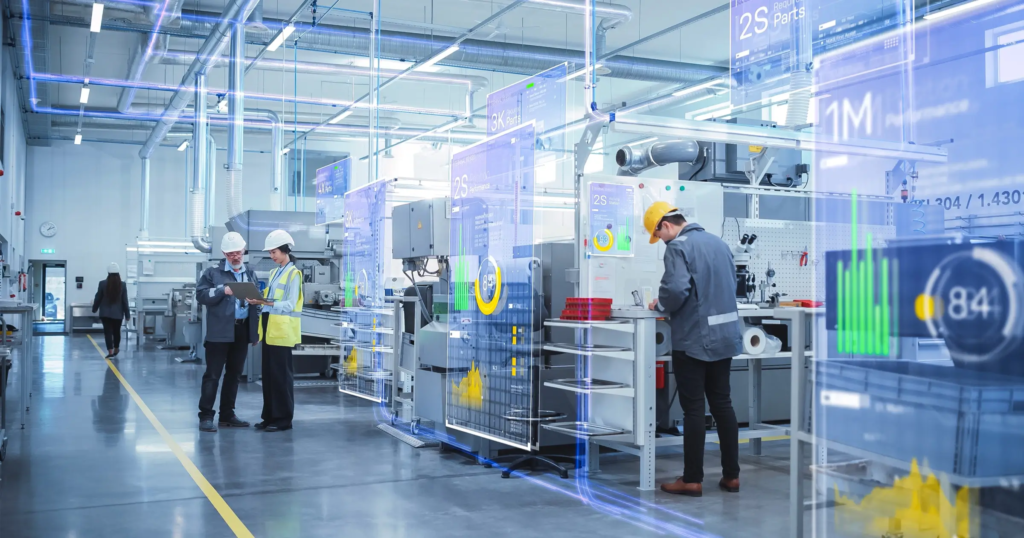
Asia is no longer just the world’s manufacturing hub—it’s becoming the global center for smart factory innovation. From AI-powered production lines in China to robotics-led automation in Japan and semiconductor manufacturing in Taiwan, countries across the region are investing heavily in next-generation industrial technologies.
According to Stratistics MRC, the Global Smart Factory Market is accounted for $112.1 billion in 2025 and is expected to reach $240.3 billion by 2032 growing at a CAGR of 11.5% during the forecast period.
Manufacturers are moving beyond traditional automation. Today’s factories are becoming connected, intelligent, and data-driven, using artificial intelligence, Industrial Internet of Things (IIoT), robotics, digital twins, and edge computing to improve productivity, quality, and operational resilience.
This shift is driven by more than technology. Rising labor costs, supply chain disruptions, sustainability goals, and increasing global competition are pushing businesses to modernize their production facilities faster than ever before.
Why Asia Is Leading the Smart Factory Revolution
Asia accounts for a significant share of global manufacturing output, making it a natural destination for investments in industrial automation and digital transformation. Governments and private enterprises alike are prioritizing advanced manufacturing to strengthen competitiveness and reduce reliance on manual processes.
Several factors are accelerating investment across the region:
- Industry 4.0 adoption
- Growing semiconductor production
- Labor shortages in developed economies
- AI-powered manufacturing
- Supply chain diversification
- Government incentives for advanced manufacturing
- Sustainability and energy efficiency initiatives
Rather than viewing smart factories as standalone projects, many organizations now see them as long-term strategic investments that enhance resilience, productivity, and innovation.
1. AI Is Becoming the Factory’s New Operating System
Artificial intelligence is moving beyond pilot projects and becoming an integral part of daily manufacturing operations.
Manufacturers are using AI to:
- Predict equipment failures before they occur
- Improve production scheduling
- Detect product defects using computer vision
- Optimize inventory levels
- Reduce energy consumption
As AI models become more accurate and accessible, manufacturers are embedding intelligence into every stage of production rather than limiting it to isolated processes.
2. Semiconductor Investments Are Driving Factory Modernization
The rapid growth of AI, electric vehicles, and high-performance computing has fueled unprecedented investment in semiconductor manufacturing.
To meet rising demand, manufacturers are building highly automated fabrication facilities equipped with robotics, precision inspection systems, and AI-driven process control.
This trend is creating opportunities not only for semiconductor companies but also for automation vendors, industrial software providers, and equipment manufacturers.
3. Digital Twins Are Moving from Simulation to Decision-Making
Digital twins have evolved from engineering tools into strategic business assets.
Manufacturers now use digital replicas of production lines and equipment to:
- Test factory layouts
- Monitor machine performance
- Optimize workflows
- Improve maintenance planning
- Reduce operational risk
As computing power increases, digital twins are becoming essential for improving factory efficiency without disrupting live production.
4. Governments Are Accelerating Industry 4.0 Investments
Public policy is playing a major role in smart factory adoption across Asia.
Governments are introducing initiatives that encourage manufacturers to invest in automation, AI, and advanced production technologies through financial incentives, innovation programs, and digital transformation strategies.
Countries such as Japan, South Korea, Singapore, China, and India continue expanding programs that support factory modernization and industrial competitiveness.
5. Robotics Investments Continue to Expand
Industrial robots remain one of the largest areas of investment across modern manufacturing.
However, the focus has shifted from replacing workers to enabling collaboration between humans and machines.
Collaborative robots (cobots), autonomous mobile robots (AMRs), and AI-powered robotic systems are improving production flexibility while helping manufacturers address labor shortages and increase output.
6. Sustainability Is Influencing Factory Investment Decisions
Environmental performance has become an important consideration when designing new manufacturing facilities.
Manufacturers are investing in:
- Energy-efficient production equipment
- Smart energy management systems
- Carbon monitoring platforms
- Waste reduction technologies
- Renewable energy integration
These investments not only support sustainability goals but also improve long-term operational efficiency.
7. Industrial Software Is Becoming as Valuable as Machinery
Modern factories generate enormous volumes of operational data.
As a result, investment is increasingly shifting toward software platforms that connect machines, production systems, and enterprise operations.
Manufacturers are adopting:
- Manufacturing Execution Systems (MES)
- Industrial AI platforms
- Predictive analytics software
- Industrial IoT platforms
- Cloud-based manufacturing solutions
The competitive advantage now comes from how effectively organizations use their operational data rather than simply owning advanced machinery.
8. Supply Chain Resilience Is Driving New Investments
Recent global disruptions have encouraged manufacturers to rethink how factories operate.
Organizations are investing in technologies that improve visibility, flexibility, and responsiveness across production and logistics networks.
Key priorities include:
- Real-time production monitoring
- AI-powered demand forecasting
- Automated warehouses
- Connected supply chains
- Edge computing for faster decision-making
The goal is to build manufacturing ecosystems that can adapt quickly to changing market conditions.
Which Asian Countries Are Leading?
While investment is growing across the region, several countries continue to lead smart factory development.
| Country | Strategic Focus |
|---|---|
| China | AI manufacturing, factory automation, electronics production |
| Japan | Robotics, precision manufacturing, industrial AI |
| South Korea | Semiconductor manufacturing and smart electronics |
| Taiwan | Advanced chip manufacturing and factory automation |
| Singapore | Digital manufacturing and Industry 4.0 innovation |
| India | Industrial digitalization and smart manufacturing expansion |
Each country brings unique strengths, creating one of the world’s most dynamic advanced manufacturing ecosystems.
What This Means for Businesses
The future of manufacturing will be defined by intelligent, connected, and increasingly autonomous factories.
Companies investing today in AI, robotics, industrial software, and digital infrastructure will be better positioned to improve productivity, reduce operational risks, and remain competitive in a rapidly evolving industrial landscape.
Technology providers, manufacturers, investors, and research organizations should closely monitor these investment trends as they continue shaping the future of global manufacturing.
Frequently Asked Questions
What is a smart factory?
A smart factory uses technologies such as artificial intelligence, Industrial IoT, robotics, automation, and real-time analytics to improve manufacturing efficiency and decision-making.
Which country leads smart factory investments in Asia?
China, Japan, South Korea, Taiwan, Singapore, and India are among the leading countries investing in smart manufacturing technologies, each with different industrial strengths.
Which technologies are driving smart factory growth?
Artificial intelligence, industrial robotics, digital twins, Industrial IoT, cloud manufacturing, edge computing, and predictive analytics are among the key technologies transforming modern factories.
As Industry 4.0 continues to evolve, investment in AI, robotics, digital twins, and industrial software will play a central role in shaping the next generation of manufacturing across the region.