
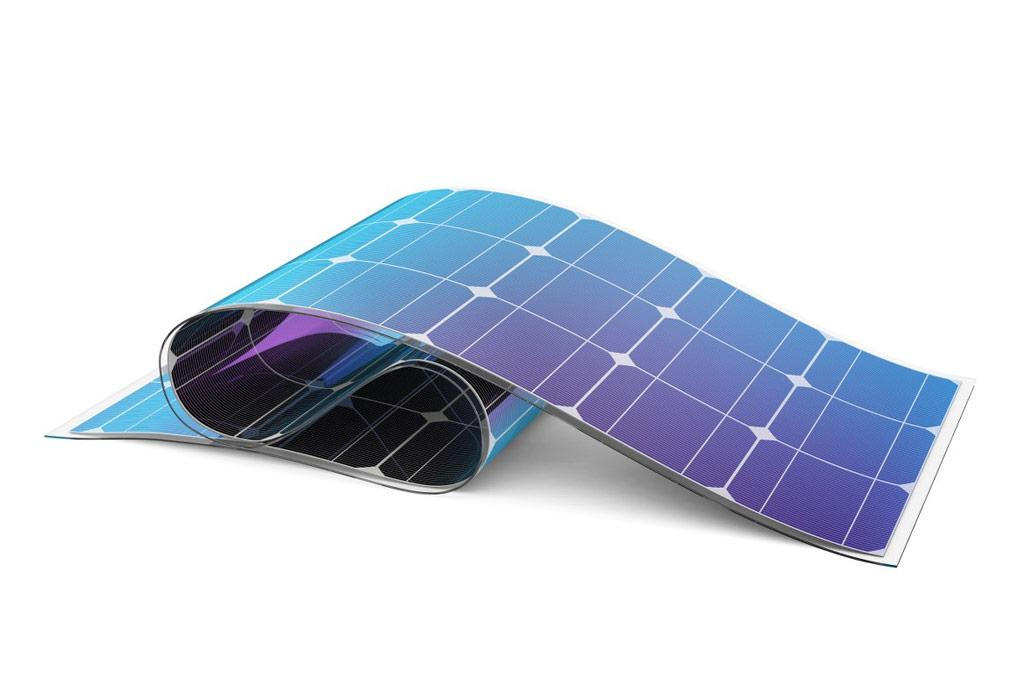
Perovskite solar cells are emerging as one of the most closely watched next-generation photovoltaic technologies. Their potential to deliver high efficiency, lightweight designs and compatibility with existing silicon solar cells has pushed companies, universities and governments to accelerate research and intellectual-property development.
The result is a growing global patent race focused not only on the perovskite material itself, but also on tandem cells, manufacturing processes, interfaces, stability and module design.
A Fast-Growing Technology Market
According to Stratistics MRC, the Global Perovskite Solar Cells Market is accounted for $1.0 billion in 2026 and is expected to reach $15.8 billion by 2034 growing at a CAGR of 40.9% during the forecast period.
This expected growth is encouraging companies to establish intellectual-property positions before large-scale commercial adoption.
China Leads Patent Activity
China has become the leading center for perovskite solar patent activity.
Recent patent-landscape analysis identified China as the largest patenting jurisdiction, followed by markets including the United States, South Korea and Japan. The same analysis identified thousands of patent families covering different areas of perovskite technology.
China’s position is supported by:
- Large solar manufacturing capacity
- Strong domestic PV demand
- Government support
- Extensive university research
- Major solar manufacturers
- Rapid pilot-scale development
This combination gives Chinese companies an advantage beyond simply filing large numbers of patents.
Companies Building the IP Landscape
Several major companies are actively developing perovskite-related intellectual property.
Notable players include:
- Trina Solar
- CATL
- Hanwha Solutions
- JinkoSolar
- LONGi
- Panasonic
- Semiconductor Energy Laboratory
- Mitsubishi Chemical
- Oxford PV
- First Solar
Trina Solar has established a particularly strong position. The company reported 481 perovskite solar-cell invention patent applications in an IPRdaily ranking published in 2025.
CATL is also notable because its involvement demonstrates that the technology race is expanding beyond traditional solar manufacturers into broader energy companies.
The Main Patent Battlegrounds
Patent activity is increasingly concentrated around several technology areas.
Perovskite Materials
Companies are developing material compositions designed to improve efficiency, stability and durability.
Tandem Solar Cells
Perovskite-silicon tandem cells are potentially the most important commercial pathway because they can add a perovskite layer to existing silicon technology.
Manufacturing Processes
Patents cover deposition, coating, crystallization and other methods required to produce larger-area devices.
Interface Engineering
Transport layers and interface technologies can improve efficiency and reduce energy losses.
Encapsulation
Long-term stability remains one of the biggest commercialization challenges, creating opportunities for protective materials and device structures.
Why Tandem Technology Matters
The biggest opportunity may not be replacing silicon solar cells.
It may be building perovskite technology on top of them.
Perovskite-silicon tandem cells can capture different parts of the solar spectrum, potentially producing more electricity from the same surface area.
This approach also allows manufacturers to leverage existing silicon manufacturing infrastructure.
Recent research from the U.S. National Renewable Energy Laboratory indicates that improving tandem efficiency and manufacturing could help reduce solar module costs per watt.
Consequently, tandem-cell patents could become particularly valuable as the technology moves toward commercial production.
Japan, South Korea and the United States
China currently dominates patent volume, but other countries have important technology positions.
Japan
Japan has strong capabilities in advanced materials, electronics and precision manufacturing. Companies including Panasonic and Semiconductor Energy Laboratory have developed perovskite-related technologies.
South Korea
South Korea is particularly active in advanced materials and tandem solar technology. Hanwha Solutions has emerged as a significant applicant in tandem-cell patent analysis.
United States
The U.S. ecosystem combines universities, startups, national laboratories and major technology companies. The Department of Energy has also supported perovskite research focused on efficiency, durability and scalable manufacturing.
Investment and Commercialization
Patent activity is being accompanied by increasing investment in pilot manufacturing and commercialization.
The U.S. Department of Energy announced $71 million in funding in 2025 for projects addressing perovskite efficiency, durability, manufacturing and domestic supply chains.
The key challenge now is moving from:
Laboratory → Pilot production → Reliable modules → Commercial scale
Efficiency alone will not determine commercial success.
Companies must also solve:
- Long-term durability
- Manufacturing yield
- Production cost
- Module reliability
- Supply-chain requirements
- Regulatory and certification requirements
What Comes Next?
The next stage of competition is likely to focus on technologies that can move perovskites from research laboratories into high-volume manufacturing.
The strongest opportunities include:
- Perovskite-silicon tandem modules
- Flexible solar cells
- Building-integrated photovoltaics
- Vehicle-integrated solar
- Lightweight portable solar
- Advanced encapsulation
- Large-area manufacturing
As commercialization progresses, patent ownership could become increasingly important for companies looking to license technology, form partnerships or enter the market.
The perovskite solar industry is entering a new phase in which intellectual property is becoming as important as laboratory efficiency records.
China currently leads global patent activity, while companies and research organizations in Japan, South Korea, the United States and Europe are developing strategically important technologies.
The most important patent battles are likely to center on tandem architectures, materials, manufacturing processes, interfaces and long-term stability.
The companies that ultimately win may not simply be those with the highest number of patents.
They will be the companies able to combine strong IP, scalable manufacturing and commercially viable solar technology.