
From raw materials to showrooms, automotive supply chains are the invisible engines powering the global vehicle industry. As car manufacturing becomes smarter and greener, the logistics backbone must evolve just as fast — blending automation, data analytics, and sustainability.
In 2026, a few global leaders are redefining how vehicles, batteries, and components move across continents. These five automotive logistics giants are not just optimizing transport — they’re shaping the future of vehicle logistics through innovation, efficiency, and technology.
1. DHL Supply Chain

Headquarters: Bonn, Germany
Core Strength: AI-driven logistics and sustainability
DHL Supply Chain dominates the automotive logistics landscape with a network spanning over 50 countries. Its “Smart Logistics” ecosystem integrates real-time tracking, robotics, and digital twins, ensuring precision delivery from suppliers to assembly lines.
- Key Highlights:
- Predictive inventory management and automated warehouses
- “GoGreen” program targeting net-zero emissions by 2050
- Dedicated EV battery and aftersales logistics hubs
2. Kuehne + Nagel

Headquarters: Schindellegi, Switzerland
Core Strength: Data transparency and multimodal efficiency
Kuehne + Nagel leads in AI-enabled demand forecasting and end-to-end supply chain visibility. Their Control Tower platform allows OEMs to track every shipment and proactively manage delays — a game-changer for global production networks.
- Key Highlights:
- Just-in-time (JIT) and just-in-sequence (JIS) delivery systems
- Battery logistics for EVs and hybrid components
- Cloud-based transport management and carbon reporting tools
3. DB Schenker

Headquarters: Essen, Germany
Core Strength: Sustainable, multimodal logistics integration
DB Schenker combines rail, sea, and air solutions for a seamless automotive supply chain. The company’s collaboration with top automakers and its investments in autonomous trucking underline its commitment to innovation and sustainability.
- Key Highlights:
- 1,200+ automotive clients globally
- Sustainable warehousing and energy-efficient transport
- Autonomous fleet testing for last-mile deliveries
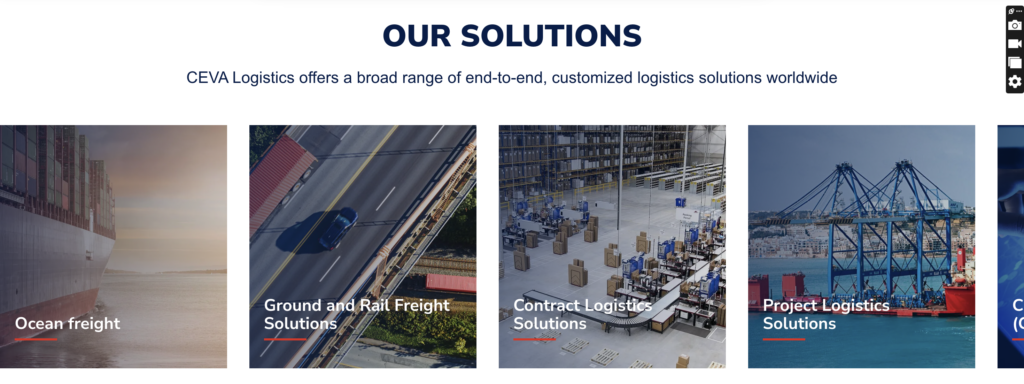
4. CEVA Logistics
Headquarters: Marseille, France
Core Strength: End-to-end automotive supply chain management
CEVA supports the full product lifecycle — from raw material sourcing to final vehicle delivery. Through its Digital Control Tower, CEVA provides real-time insights into every supply node, enabling agile and efficient decision-making.
- Key Highlights:
- Global parts distribution centers for Tier-1 suppliers
- Digital warehouse automation with AGV systems
- Reverse logistics and sustainability-driven packaging
5. Ryder System Inc.

Headquarters: Miami, USA
Core Strength: North American logistics innovation
Ryder stands out for its AI-powered predictive logistics and EV-ready transport solutions. The company’s 2025 initiative focuses on fleet electrification and smart warehousing, helping automakers transition to a greener, tech-enabled ecosystem.
- Key Highlights:
- Autonomous trucking pilot programs
- Predictive maintenance using IoT and AI sensors
- Dedicated support for EV parts logistics
Future Trends Driving Automotive Supply Chains
- AI-Powered Forecasting: Reducing inventory waste through data-driven planning.
- EV & Battery Logistics: Specialized storage and safety standards for high-voltage materials.
- Green Warehousing: Solar-powered facilities and carbon-neutral operations.
- Blockchain Tracking: Ensuring transparency from supplier to showroom.
The automotive industry’s supply chain is no longer just about transport, it’s about intelligence, sustainability, and resilience. These five global giants — DHL, Kuehne + Nagel, DB Schenker, CEVA, and Ryder — are setting new benchmarks for a connected, carbon-neutral, and tech-driven mobility future.