
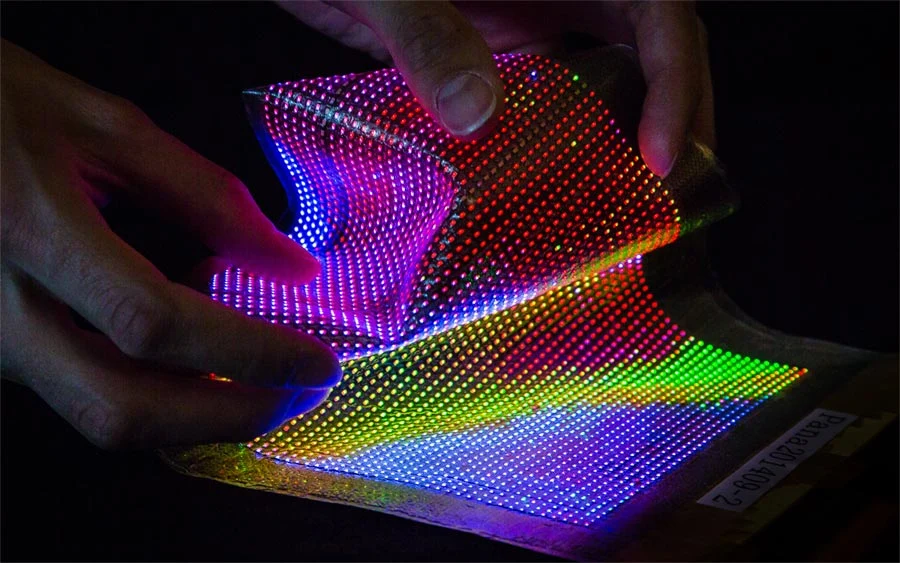
MicroLED is moving from a long-running display technology experiment toward a broader commercialization race.
Unlike OLED, where manufacturing processes and supply chains are already mature, MicroLED is still being developed across almost every layer of the value chain – from LED chips and epitaxy to backplanes, mass transfer, bonding, inspection and final display integration.
That makes the competitive landscape particularly interesting.
The companies competing in MicroLED are not all doing the same thing. Some are developing finished displays, while others are supplying the microscopic LED chips, manufacturing technologies, backplanes or specialized components needed to make those displays commercially viable.
The global MicroLED market is forecast to expand rapidly, although estimates differ considerably depending on market definition. For example, According to Stratistics MRC, the Global MicroLED Display Market is accounted for $2.3 billion in 2026 and is expected to reach $181.2 billion by 2034 growing at a CAGR of 72% during the forecast period. The wide variation highlights how early and rapidly evolving the market remains.
Against this backdrop, these are 15 companies to watch across the MicroLED ecosystem in 2026.
1. Samsung Electronics
Samsung is one of the most visible companies commercializing MicroLED, particularly in large-format premium displays.
The company’s strategy has focused heavily on large-screen applications, using MicroLED’s strengths in brightness, contrast, modularity and long operating life.
Samsung’s position is important because it is helping establish MicroLED as a commercially viable display technology rather than keeping it limited to laboratory demonstrations.
The company is also involved in transparent and automotive-oriented MicroLED concepts as the ecosystem expands beyond televisions. TrendForce notes Samsung’s continued development of glass-based MicroLED, including large displays and transparent applications.
Key focus: Large displays, premium consumer electronics, transparent displays and emerging applications.
2. Sony
Sony has been developing MicroLED through its Crystal LED technology platform.
Its strongest position is in premium large-format and professional display applications, where MicroLED’s brightness, contrast and seamless modular architecture can justify higher costs.
Sony’s strategy is different from a pure mass-market television approach. Professional environments, entertainment venues, corporate installations and high-end visual applications can provide markets where performance matters more than achieving the lowest possible panel price.
Sony is also part of the wider MicroLED ecosystem through its relationships with component suppliers.
Key focus: Professional displays, large-format systems, entertainment and premium visualization.
3. LG Display
LG Display is another major display manufacturer developing MicroLED technology as part of its longer-term next-generation display portfolio.
The company has significant expertise in OLED and advanced display manufacturing, giving it an established foundation for developing alternative technologies.
MicroLED is particularly relevant to LG Display because it can potentially address applications requiring extremely high brightness, long lifetime and advanced form factors.
The company is therefore positioned across the broader transition toward next-generation displays rather than relying on one technology indefinitely.
Key focus: Advanced panels, automotive displays, large displays and next-generation display technologies.
4. BOE Technology
China’s BOE has become one of the most important companies in the global display industry and is investing in MicroLED development as the technology moves toward commercialization.
BOE’s importance comes partly from its manufacturing scale and established relationships with consumer-electronics companies.
Its MicroLED work spans different display formats and applications, while China’s broader display ecosystem provides access to LED, semiconductor, materials and manufacturing capabilities.
BOE is therefore one of the companies to watch as MicroLED moves from prototypes toward higher-volume manufacturing.
Key focus: MicroLED panels, consumer electronics, automotive and advanced display manufacturing.
5. AUO
Taiwan-based AUO occupies an important position in MicroLED because of its display manufacturing capabilities and increasingly integrated ecosystem.
The company has been developing MicroLED for automotive, commercial, transparent and other applications.
TrendForce reports that AUO has been pursuing a phased integration strategy involving MicroLED chips, backplanes and mass-transfer capabilities. Its work with suppliers including PlayNitride and Ennostar illustrates how display manufacturers are attempting to gain greater control over the MicroLED value chain.
AUO has also demonstrated MicroLED automotive display technology, making the automotive segment an important area to watch.
Key focus: Automotive, transparent displays, commercial displays and MicroLED integration.
6. PlayNitride
PlayNitride is one of the most important pure-play MicroLED companies.
Rather than focusing primarily on finished consumer displays, the Taiwan-based company is positioned deeper in the technology supply chain.
Its capabilities include:
- MicroLED chips
- Chip-on-carrier technologies
- Mass transfer
- Turnkey solutions
- Equipment
- MicroLED modules
PlayNitride’s technology has been connected with several major downstream applications and companies.
In December 2025, TrendForce reported that PlayNitride approved the acquisition of US-based Lumiode, strengthening its intellectual property and near-eye display capabilities.
Key focus: MicroLED chips, mass transfer, near-eye displays and technology commercialization.
7. Innolux
Another major Taiwanese display manufacturer, Innolux, is developing MicroLED technology for multiple applications.
Its position is particularly relevant because Taiwan has developed a strong MicroLED supply chain spanning LED chips, display manufacturing, semiconductor processes and component technologies.
Innolux can potentially leverage these relationships to move toward greater vertical integration.
The company has been involved in MicroLED development for applications including automotive and commercial displays.
Key focus: Automotive, industrial, commercial and advanced display applications.
8. Tianma
Tianma is a major Chinese display manufacturer with extensive experience in small and medium-sized displays.
That makes MicroLED particularly relevant for applications where high pixel density, brightness and compact form factors are important.
Potential markets include:
- Automotive displays
- Wearables
- Industrial displays
- AR/VR
- Mobile applications
Tianma is part of a wider Chinese ecosystem that is investing heavily in next-generation display manufacturing.
Key focus: Automotive, mobile, wearable and high-resolution displays.
9. Jade Bird Display (JBD)
JBD has developed a particularly important position in MicroLED microdisplays for near-eye applications.
The company focuses heavily on extremely small, high-pixel-density displays that can be used in AR and related optical systems.
This is strategically important because MicroLED’s advantages become particularly valuable in near-eye applications where manufacturers need:
- High brightness
- High pixel density
- Low power consumption
- Small physical size
JBD is therefore positioned in one of the applications frequently identified as a potentially important early commercial market for MicroLED.
Key focus: AR microdisplays, near-eye applications and high-PPI displays.
10. Aledia
French company Aledia is developing MicroLED technology using gallium nitride and silicon-based approaches.
Its focus is strongly connected to microdisplays and next-generation applications where high brightness and compact form factors are important.
Aledia’s position is notable because the MicroLED ecosystem is not limited to large Asian display manufacturers.
European technology companies are also developing specialized approaches that could become important if AR and other high-performance applications accelerate.
In 2026, TrendForce reported a strategic partnership between AUO and Aledia aimed at developing next-generation MicroLED display technologies.
Key focus: Microdisplays, AR and advanced MicroLED technology.
11. VueReal
Canada-based VueReal is focused on MicroLED manufacturing technology and scalable production.
One of the industry’s biggest challenges is not proving that MicroLED can work, but manufacturing millions of microscopic LEDs with acceptable yield and cost.
VueReal’s technology approach is therefore aimed at addressing one of the industry’s central bottlenecks: mass manufacturing.
The company’s work makes it relevant to display manufacturers looking for ways to scale MicroLED beyond prototypes.
Key focus: Manufacturing platforms, MicroLED integration and mass production.
12. Plessey Semiconductors
Plessey has developed MicroLED technology with particular relevance to microdisplays and high-performance applications.
The company has focused on gallium-nitride MicroLED technology and has been associated with applications requiring high brightness and compact display architectures.
Its technology is relevant to AR/VR and other near-eye applications where conventional displays can face limitations around brightness and optical efficiency.
Key focus: GaN MicroLEDs, microdisplays and near-eye applications.
13. eLux
eLux is another company focused on the manufacturing side of MicroLED.
Its work is particularly relevant to the industry’s effort to develop scalable methods for assembling microscopic LEDs into usable display structures.
Mass transfer remains one of the largest barriers to MicroLED commercialization, and companies developing alternative assembly and transfer approaches could become strategically important even if they never become household consumer brands.
Key focus: MicroLED assembly, mass transfer and manufacturing technology.
14. Nanosys
Nanosys has historically been strongly associated with advanced display materials and quantum-dot technology and has also been involved in next-generation display technologies.
Its position illustrates how the MicroLED ecosystem extends beyond panel manufacturers.
Materials, color conversion and optical technologies can all play an important role in reducing manufacturing complexity and improving display performance.
Companies operating in these adjacent technology layers could therefore become important partners in future MicroLED architectures.
Key focus: Display materials, color technologies and next-generation display components.
15. Apple
Apple deserves attention even though it is not simply a conventional MicroLED panel manufacturer.
The company has invested heavily in next-generation display technology and has been widely associated with MicroLED development for future products.
Apple’s significance comes from its ability to influence the entire supply chain.
If MicroLED reaches commercial products at scale through a major consumer-electronics brand, the resulting demand could accelerate investment in:
- LED chips
- Backplanes
- Mass transfer
- Manufacturing equipment
- Materials
- Testing
- Supply-chain capacity
Apple is therefore potentially important not only as an end-product company but as a demand-side catalyst for MicroLED commercialization.
Key focus: Wearables, consumer electronics and next-generation displays.
The MicroLED Competitive Landscape
The 15 companies above can broadly be divided into four groups.
Display Manufacturers
Samsung
Sony
LG Display
BOE
AUO
Innolux
Tianma
These companies control or participate in the downstream display manufacturing ecosystem.
MicroLED Technology Specialists
PlayNitride
JBD
Aledia
VueReal
Plessey
eLux
These companies are focused on specific technical problems such as chips, microdisplays, mass transfer and manufacturing.
Materials & Component Companies
Nanosys
This part of the ecosystem can become increasingly important as manufacturers search for ways to improve efficiency, color performance and production economics.
Consumer Technology Companies
Apple
These companies can potentially create the demand required to push MicroLED manufacturing toward higher volumes.
The Geography of the MicroLED Industry
The MicroLED ecosystem is highly concentrated in Asia, but the technology landscape is global.
Taiwan
Taiwan has developed a particularly strong ecosystem involving:
- AUO
- Innolux
- PlayNitride
- Ennostar
- LED and semiconductor suppliers
The country’s advantage is the combination of display manufacturing, semiconductor expertise and specialized MicroLED companies.
South Korea
South Korea’s strength comes from major display and electronics companies such as Samsung and LG.
The focus is particularly strong around premium displays and advanced consumer technologies.
China
China has significant display manufacturing capacity and a growing MicroLED ecosystem involving BOE, Tianma and numerous other technology companies.
Scale and government-supported manufacturing investment could become important advantages.
United States and Europe
The US and Europe have developed specialist companies and technologies particularly relevant to:
- AR
- Microdisplays
- Materials
- Semiconductor processes
This creates a more distributed global ecosystem than the conventional television industry.
MicroLED Market Opportunity
Market forecasts vary substantially because MicroLED remains an emerging technology and researchers use different definitions and application boundaries.
One 2026 estimate puts the global MicroLED market at $2.03 billion in 2026, with a projected CAGR of 73.2% through 2035. Another estimate places the 2026 MicroLED display market at $2.25 billion, growing at a 30% CAGR through 2034.
Rather than focusing on a single forecast, the broader message is clear:
MicroLED is expected to be one of the faster-growing next-generation display technologies, but its ultimate scale depends heavily on manufacturing economics.
That makes the supply chain as important as the end-market forecast.