
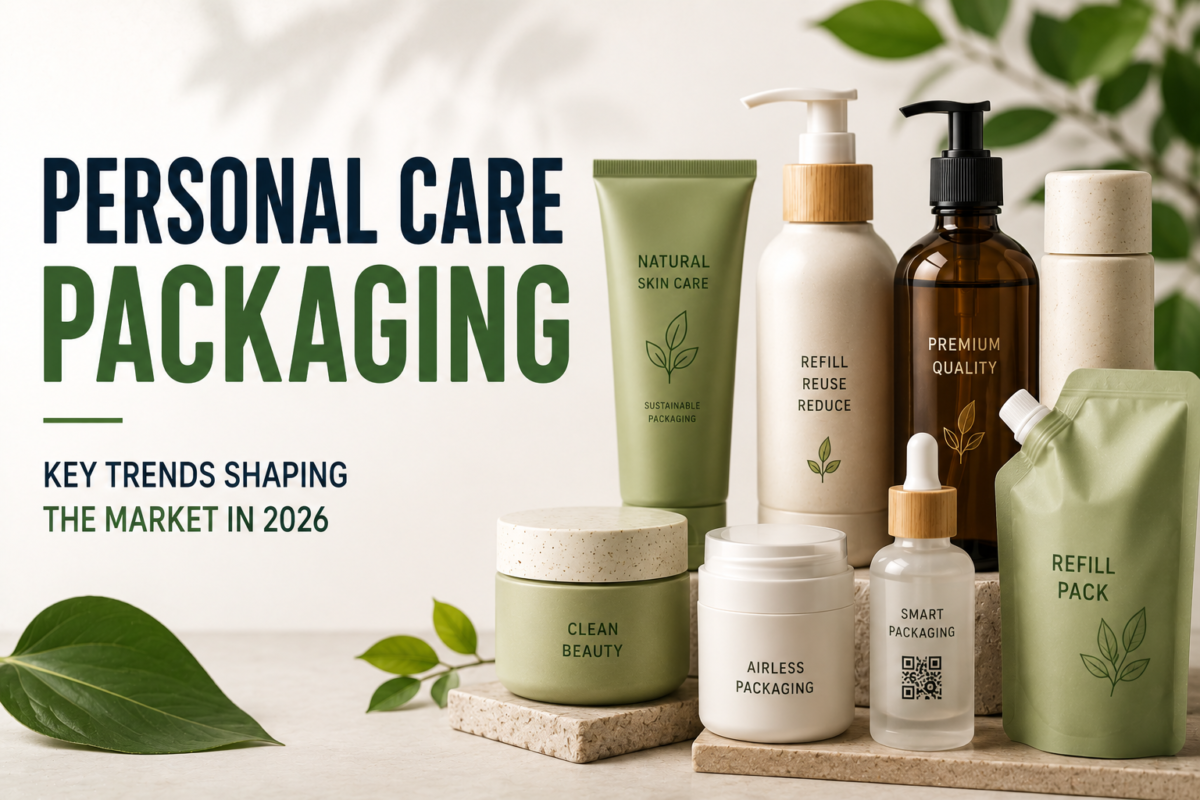
The personal care packaging market is evolving rapidly as beauty and skincare brands focus on sustainability, premium design, and consumer convenience. Packaging is no longer just about protection – it has become a key factor in branding, customer experience, and environmental responsibility.
From refillable containers to smart packaging technologies, innovation is transforming the global personal care packaging industry.
Here are the major trends driving the market in 2026.
1. Sustainability Becoming the Biggest Growth Driver
Eco-friendly packaging is now a major purchasing factor for consumers.
Key Developments:
- Recyclable and biodegradable materials
- Refillable packaging systems
- Reduced plastic usage
- Paper-based and compostable alternatives
Brands are increasingly investing in sustainable packaging to meet consumer expectations and regulatory requirements.
2. Rise of Premium & Luxury Packaging Designs
Personal care brands are focusing heavily on aesthetics and unboxing experiences.
Trending Features:
- Minimalist premium packaging
- Matte finishes and soft-touch materials
- Glass and aluminum containers
- Luxury dispensing systems
Premium packaging is helping brands differentiate in crowded skincare and cosmetics markets.
3. Growth of Smart Packaging Technologies
Technology integration is becoming more common in personal care packaging.
Innovations Include:
- QR-code enabled packaging
- NFC-enabled product authentication
- Smart refill tracking systems
- Interactive digital packaging experiences
Smart packaging improves engagement, traceability, and customer loyalty.
4. Expansion of Airless & Hygienic Packaging
Consumers increasingly prefer packaging that enhances hygiene and product preservation.
Popular Formats:
- Airless pumps
- Single-dose packaging
- Touch-free dispensers
- Leak-proof travel-friendly designs
This trend is especially strong in skincare and premium cosmetic products.
5. Refillable Packaging Systems Gaining Momentum
Refillable beauty products are moving into mainstream retail.
Why It’s Growing:
- Sustainability goals
- Reduction in packaging waste
- Premium reusable container designs
- Long-term cost savings for consumers
Many beauty brands are now launching refill-focused product ecosystems.
6. Increasing Demand for Travel-Friendly Packaging
Convenience and portability remain major consumer priorities.
Fast-Growing Packaging Formats:
- Mini-sized containers
- Flexible pouches
- Compact roll-ons and sticks
- Multi-use packaging solutions
Travel-friendly formats are growing across skincare, haircare, and personal hygiene products.
7. Shift Toward Sustainable Materials Innovation
Material innovation is transforming packaging production.
Emerging Materials:
- Ocean-bound plastics
- Bio-based plastics
- Recycled PET (rPET)
- Bamboo and fiber-based packaging
Brands are exploring low-carbon alternatives to traditional packaging materials.
8. E-Commerce Influencing Packaging Design
Online shopping growth is reshaping packaging requirements.
Key Changes:
- Durable shipping-friendly packaging
- Lightweight materials
- Enhanced leak protection
- Strong visual branding for digital-first consumers
Packaging now needs to balance protection, sustainability, and shelf appeal.
Market Outlook: Personal Care Packaging Industry
The personal care packaging market is expected to grow steadily due to:
- Expansion of skincare and cosmetics industries
- Demand for sustainable packaging
- Rise of premium beauty brands
- Growth of e-commerce and D2C channels
- Innovation in packaging materials and smart technologies
Packaging is becoming a strategic differentiator in the global personal care industry.
The personal care packaging market is entering a new era driven by sustainability, premium experiences, and smart innovation. Brands that combine eco-friendly materials with luxury design and functionality will lead the next phase of growth.
As consumer expectations continue to evolve, packaging will remain central to both brand identity and environmental responsibility.