

As the global demand for renewable energy and sustainable farming practices increases, agrivoltaics—a combination of agriculture and solar energy—has emerged as a groundbreaking solution.
According to Stratistics MRC, the Global Sustainable Agriculture Market is accounted for $14.37 billion in 2024 and is expected to reach $30.28 billion by 2030 growing at a CAGR of 12.5% during the forecast period.
Also by integrating solar panels with farmland, agrivoltaics optimizes land use while supporting clean energy production and enhancing crop yields.
Let’s explore how agrivoltaics works, its benefits, challenges, and its potential to shape a sustainable future.
What Is Agrivoltaics?
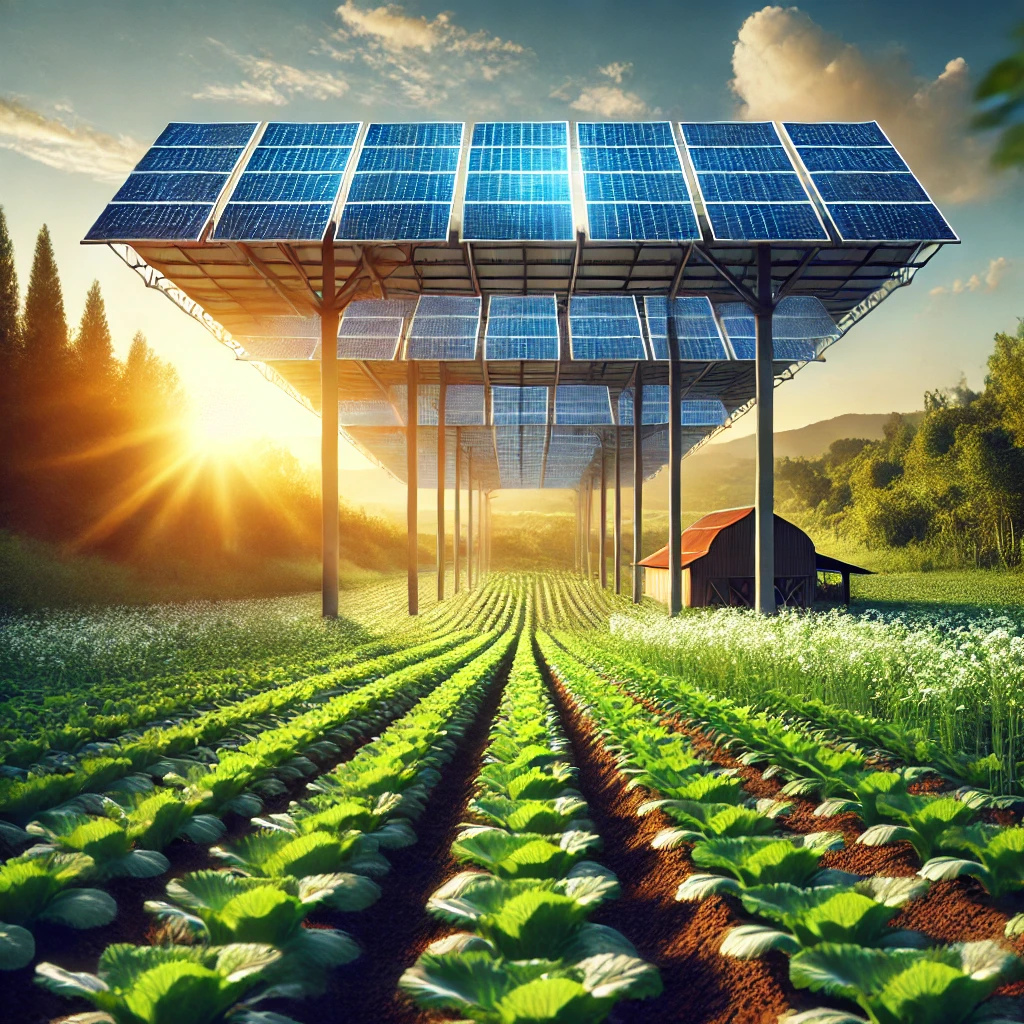
Agrivoltaics refers to the practice of installing solar panels on agricultural land in a way that allows farming activities to continue beneath the panels. These systems are designed to balance energy production and agricultural productivity by carefully placing solar arrays to ensure enough sunlight reaches crops while generating electricity.
Benefits of Agrivoltaics
- Efficient Land Use
By combining solar energy generation with farming, agrivoltaics maximizes the utility of available land, addressing the growing competition between agriculture and renewable energy projects. - Improved Crop Growth
Research suggests that certain crops thrive under partial shade provided by solar panels, benefiting from reduced heat stress and optimized water retention in the soil. - Renewable Energy Production
Agrivoltaics contributes to clean energy goals by generating solar power, reducing greenhouse gas emissions, and supporting the transition to a more sustainable energy system. - Economic Benefits for Farmers
Farmers can earn additional income by hosting solar installations on their land while continuing agricultural activities. This dual-purpose approach reduces financial risks and increases resilience. - Water Conservation
Solar panels can reduce evaporation rates by shielding crops from direct sunlight, conserving water resources and improving irrigation efficiency.
Real-World Applications of Agrivoltaics
- Europe: Countries like France and Germany are leading in agrivoltaics projects, experimenting with various crops such as vineyards and grains under solar panels.
- Asia: Japan and South Korea are adopting agrivoltaics to address land constraints and boost renewable energy production.
- United States: Large-scale projects in states like Colorado and Arizona are integrating solar panels with crops like lettuce, potatoes, and berries.
Challenges in Implementing Agrivoltaics
- Initial Costs
Setting up agrivoltaic systems requires significant investment in infrastructure and technology. However, the long-term benefits often outweigh these costs. - Technical Complexity
Designing solar panel layouts that balance energy production and agricultural needs can be complex, requiring expertise and careful planning. - Crop Compatibility
Not all crops are suitable for agrivoltaics. Finding the right crops and adapting farming techniques is essential for success. - Policy and Regulation
Supportive policies, subsidies, and incentives are critical to scaling agrivoltaic projects, but they vary by region.
The Future of Agrivoltaics
Agrivoltaics holds immense potential to revolutionize both the energy and agricultural sectors. With advancements in solar technology and farming techniques, this innovative approach can address key challenges such as food security, land scarcity, and climate change.
Looking ahead, agrivoltaics could become a cornerstone of sustainable development, offering a practical way to balance energy needs with agricultural productivity.
Conclusion
Agrivoltaics is a promising solution for creating a more sustainable and resilient future. By harnessing the power of the sun while supporting agriculture, this innovative approach ensures efficient land use, boosts renewable energy production, and provides economic benefits to farmers. As adoption grows, agrivoltaics could play a vital role in tackling global challenges like climate change and food security.