
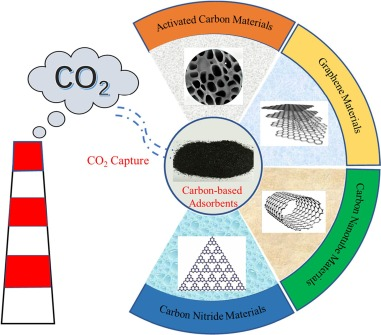
Carbon capture is increasingly moving toward a materials-driven competition. While large-scale carbon removal depends on energy, infrastructure and storage, the sorbent itself can determine how efficiently and economically carbon dioxide is captured.
According to Stratistics MRC, the Global Carbon Capture Sorbents Market is accounted for $2.9 billion in 2026 and is expected to reach $14.6 billion by 2034 growing at a CAGR of 22.4% during the forecast period.
This is particularly important in direct air capture (DAC), where CO₂ exists at a much lower concentration than in industrial exhaust. The U.S. Department of Energy estimates that roughly two-thirds of DAC companies use solid sorbents as their capture medium.
The technology landscape includes amine-functionalized materials, solid carbonates, porous materials, mineral-based approaches and other advanced sorbents. A review of more than 50 DAC startups identified solid alkali carbonates, amine-functionalized sorbents, physisorbents and ion-exchange resins among the major approaches being developed.
Below are 15 companies worth watching across the emerging carbon-capture sorbent ecosystem.
1. Spiritus
Spiritus is developing a solid-sorbent DAC system called Carbon Orchard. Its proprietary sorbent, called “Fruit,” is designed to capture CO₂ through passive air contact before being regenerated through a low-temperature process.
The company is pursuing a modular architecture intended to reduce energy consumption and support large-scale deployment.
Focus: Solid sorbents, passive DAC and low-energy regeneration.
2. Airhive
UK-based Airhive is developing DAC technology based on reactive mineral sorbents and engineered capture systems.
In July 2026, Airhive acquired Dutch DAC company Carbyon, bringing Carbyon’s thin-film sorbent technology and R&D capabilities into the combined business. The companies said the combined organization will develop Airhive’s next-generation “Cascade” technology.
Focus: Solid sorbents, mineral-based capture and scalable DAC.
3. Heirloom Carbon Technologies
Heirloom uses a limestone-based mineral looping approach rather than relying on conventional synthetic sorbents.
Its process uses calcium oxide to capture CO₂ and regenerate the material through controlled heating.
The company is among the better-funded and more advanced companies in carbon removal and is developing commercial-scale projects in the United States.
Focus: Mineral sorbents, DAC and permanent carbon removal.
4. CarbonCapture
California-based CarbonCapture is developing modular DAC systems using solid sorbent technology.
Its approach is designed around modularity, allowing the company to improve sorbent materials and system components without redesigning the entire plant.
The company is therefore competing not only on sorbent chemistry but also on manufacturing and deployment economics.
Focus: Modular DAC and solid sorbents.
5. Climeworks
Swiss company Climeworks is one of the best-known DAC companies and uses solid sorbent adsorption to capture CO₂ directly from air.
Its technology has progressed from demonstration systems to large commercial DAC facilities, giving the company substantial experience in operating sorbent-based systems at scale.
Focus: Solid sorbents, DAC and permanent geological storage.
6. Noya
U.S.-based Noya is developing modular direct-air-capture systems using solid sorbent technology.
Its approach focuses on improving energy efficiency and reducing the cost of capturing CO₂ from ambient air.
Noya is part of a growing group of startups attempting to make DAC systems smaller, modular and easier to deploy.
Focus: Solid sorbents and modular DAC.
7. NeoCarbon
Germany-based NeoCarbon is developing DAC systems using solid sorbent-based technology and waste heat.
The company’s approach is particularly interesting because low-temperature waste heat can potentially reduce the energy requirements associated with sorbent regeneration.
This creates opportunities for integration with industrial facilities and other sources of low-grade heat.
Focus: Solid sorbents, waste heat and modular DAC.
8. AirMyne
AirMyne is developing DAC technology aimed at capturing CO₂ from ambient air using a sorbent-based approach.
The company is working toward modular systems that can be deployed where clean energy and storage infrastructure are available.
Its inclusion in the Direct Air Capture Coalition’s current company directory reflects its position within the emerging DAC ecosystem.
Focus: DAC systems and advanced capture materials.
9. Mission Zero Technologies
UK-based Mission Zero Technologies is developing modular DAC systems designed to capture CO₂ directly from air.
Its approach uses an electrochemical process, distinguishing it from companies relying exclusively on traditional thermal regeneration.
Although electrochemical systems are different from conventional solid-sorbent DAC, they represent an important competing pathway for reducing energy requirements.
Focus: Electrochemical DAC and low-energy CO₂ capture.
10. 280 Earth
280 Earth is developing DAC systems using solid sorbent technology and has focused on modular deployment.
The company is particularly interested in combining DAC with low-carbon energy sources to reduce the overall carbon footprint of the capture process.
Its technology is part of the broader U.S. ecosystem developing scalable solid-sorbent DAC.
Focus: Solid sorbents and scalable DAC.
11. Arbon
Arbon is developing a DAC approach using solid sorbent materials and moisture-based regeneration.
Moisture-swing approaches are interesting because they can potentially reduce reliance on high-temperature regeneration.
The company is part of the emerging group of startups exploring alternative sorbent regeneration pathways.
Focus: Solid sorbents and moisture-based regeneration.
12. Octavia Carbon
Kenyan startup Octavia Carbon is developing DAC technology using solid sorbents with temperature and vacuum regeneration.
Its location is strategically interesting because DAC deployment can benefit from regions offering abundant renewable energy and suitable geological storage resources.
The company is therefore developing technology within an emerging African carbon-removal ecosystem.
Focus: Solid sorbents, DAC and renewable-energy integration.
13. Jeevan Climate Solutions
Jeevan Climate Solutions is developing solid-sorbent DAC technology.
The company is exploring materials and system configurations intended to reduce the cost and energy requirements of removing CO₂ from ambient air.
It represents the growing number of early-stage companies focused specifically on improving capture materials and system efficiency.
Focus: Solid sorbents and DAC.
14. Air View Engineering
UK-based Air View Engineering is developing direct-air-capture technology using solid sorbents and temperature/vacuum regeneration.
Its approach illustrates an important direction in the industry: integrating sorbent chemistry with engineered contactors and regeneration systems rather than treating the material independently.
Focus: Solid sorbents, temperature/vacuum regeneration and DAC.
15. Sustaera
U.S.-based Sustaera is developing modular DAC technology with a focus on low-cost carbon removal.
The company has pursued a combination of DAC and downstream CO₂ utilization, including applications involving synthetic fuels.
Its technology is relevant to the broader question of how captured CO₂ can become an industrial feedstock rather than simply being stored underground.
Focus: DAC, solid capture technologies and CO₂ utilization.
The Technology Race Behind the Startups
The companies are pursuing several different approaches to the same fundamental challenge: capturing CO₂ efficiently while minimizing the energy and cost required to release it again.
| Technology approach | Examples |
|---|---|
| Solid sorbents | Climeworks, CarbonCapture, Noya |
| Mineral-based capture | Heirloom, Airhive |
| Moisture-based regeneration | Arbon |
| Temperature/vacuum regeneration | Climeworks, Octavia Carbon |
| Electrochemical capture | Mission Zero |
| Advanced thin-film systems | Airhive/Carbyon |
| Modular DAC | Spiritus, CarbonCapture, NeoCarbon |
The diversity of approaches is important because there is currently no universally accepted winning sorbent technology.
What Makes a Good Carbon Capture Sorbent?
The commercial value of a sorbent ultimately depends on more than its CO₂ capacity.
Important characteristics include:
- High CO₂ selectivity
- Fast adsorption
- Low regeneration energy
- Long operating lifetime
- Resistance to humidity and contaminants
- Low material cost
- Scalable manufacturing
- Stable performance over repeated cycles
A material that captures large amounts of CO₂ but requires excessive energy to regenerate may not produce an economically attractive DAC system.
This is why companies are increasingly developing sorbent + contactor + regeneration systems together.