
Quantum computing is moving from a largely research-driven field toward a strategically important technology industry. Governments, technology companies, universities and specialized startups are investing in quantum processors, error correction, control systems and software architectures.
As competition intensifies, patents are becoming an important way to understand where companies are investing, which technologies they consider commercially valuable and how the global innovation race is developing.
However, quantum computing patent activity should not be measured by raw filing volume alone. Patent families, international coverage, granted rights, technological relevance and citation impact can provide a more meaningful picture of competitive positioning.
Quantum Computing Is Becoming a Major Patent Field
The broader quantum technology ecosystem includes quantum computing, quantum communication and quantum sensing. An OECD and European Patent Office study published in 2025 found that international patent families across quantum technologies increased sevenfold between 2005 and 2024, with an estimated compound annual growth rate of around 20% since 2014. Quantum computing became the most dynamic area and overtook quantum communication in patenting activity in 2022.
The growth reflects expanding investment in:
- Quantum processors and qubit architectures
- Error correction and fault-tolerant computing
- Quantum control and readout
- Cryogenic and photonic systems
- Quantum algorithms and software
- Quantum networking and communication
This expansion is creating a complex intellectual-property landscape in which hardware, software and supporting infrastructure increasingly overlap.
What Does the Quantum Computing Patent Landscape Cover?
Quantum computing patents span several layers of the technology stack.
| Technology area | What patents may cover |
|---|---|
| Qubit architectures | Superconducting, trapped-ion, photonic, neutral-atom and spin qubits |
| Quantum processors | Chip design, fabrication, interconnects and processor structures |
| Error correction | Logical qubits, error mitigation and fault-tolerant architectures |
| Control systems | Microwave control, lasers, pulse sequences and measurement |
| Cryogenic systems | Cooling, packaging and low-temperature electronics |
| Quantum software | Compilers, circuit optimization, algorithms and execution systems |
| Quantum networking | Photonic interfaces, quantum links and communication protocols |
A single company may hold patents across several categories. This is why a company with fewer filings may still possess strategically important IP in a technically difficult area.
Leading Companies in Quantum Computing Patents
Patent rankings vary depending on the database, search criteria, filing years and whether they count individual applications or consolidated patent families. A 2026 PatSnap landscape, for example, reported 18,593 patent families in scope and identified IBM, Google, Microsoft, Origin Quantum and Northrop Grumman among the largest applicants in its dataset. These figures should be treated as database-specific estimates, not a universal ranking of all quantum patents.
IBM
IBM has built one of the broadest quantum computing portfolios, covering both hardware and software.
Its patent interests include quantum processor architectures, superconducting qubits, control systems, error correction, quantum circuits and cloud-based quantum computing.
IBM’s advantage is its ability to connect research, hardware development, software tools and enterprise applications within one ecosystem.
Key IP areas: Superconducting quantum computing, processors, control systems, quantum software and error correction.
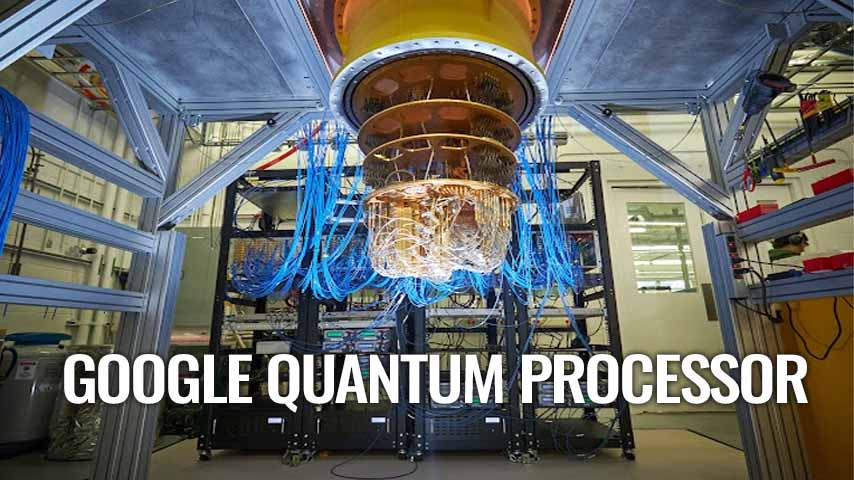
Google Quantum AI is strongly associated with superconducting quantum processors and research into fault-tolerant quantum computing.
Its intellectual-property interests extend across quantum processor design, calibration, control, error correction and quantum algorithms.
The company’s research on logical qubits and error-correction architectures makes this a particularly important area to monitor.
Key IP areas: Superconducting qubits, quantum processors, error correction and quantum algorithms.
Microsoft
Microsoft’s quantum strategy includes hardware research, quantum software and cloud integration through Azure Quantum.
Its patent landscape spans quantum architectures, software tools, control systems and approaches related to topological quantum computing.
Microsoft’s position is notable because it approaches quantum computing as part of a broader computing platform rather than only as a hardware product.
Key IP areas: Quantum architectures, software, control systems and topological quantum research.
D-Wave
D-Wave is one of the earliest major commercial quantum-computing companies and is particularly associated with quantum annealing.
Its patents cover annealing systems, superconducting qubits, processor architectures and related control technologies.
D-Wave’s portfolio is historically significant because annealing-based approaches entered commercial development earlier than many gate-based quantum systems. A QED-C analysis found that D-Wave and IBM each accounted for about one-fifth of patents awarded to its top 10 quantum-computing patent recipients over the period studied.
Key IP areas: Quantum annealing, superconducting systems and processor architectures.
Quantinuum
Quantinuum focuses on trapped-ion quantum computing and related technologies.
Its patent portfolio includes ion traps, qubit operations, quantum chemistry, photonics, beam delivery, detection, control electronics and software.
In a 2026 SEC filing, the company reported 86 issued U.S. patents and 210 U.S. pending or allowed patent applications, alongside 162 foreign issued patents and 368 pending or allowed foreign applications, as of March 19, 2026. These are company-disclosed figures covering its broader patent portfolio, not necessarily quantum-computing-only families.
Key IP areas: Trapped-ion systems, quantum operations, photonics, control and quantum software.
IonQ
IonQ is developing trapped-ion quantum computing systems and has expanded its activities across quantum networking and related technologies.
Its patent interests include ion-trap architectures, laser control, quantum processor design and supporting systems.
Key IP areas: Trapped-ion quantum computing, control systems and quantum networking.
Rigetti Computing
Rigetti is associated with superconducting quantum processors and integrated quantum-computing systems.
Its IP interests include superconducting qubits, processor fabrication, packaging, control electronics and quantum computing architectures.
Rigetti is also an example of how specialized startups use patents to protect technically differentiated technologies while competing with much larger companies.
Key IP areas: Superconducting processors, fabrication, control and quantum architectures.
PsiQuantum
PsiQuantum is pursuing photonic quantum computing, using photons as the foundation for its computing architecture.
Its technology areas include photonic components, optical interconnects, photon generation and detection, and scalable quantum-computing systems.
Key IP areas: Photonic quantum computing, optical systems, photon sources and detectors.
Fujitsu
Fujitsu is an important Japanese participant in quantum computing research and commercialization.
Its activities include superconducting quantum computing, quantum software, hybrid computing and quantum applications.
Japan’s broader quantum ecosystem also includes Toshiba, NEC, Hitachi, NTT and research institutions working across computing, communication and sensing.
Key IP areas: Quantum processors, superconducting systems, software and hybrid computing.
Origin Quantum
Origin Quantum is a major Chinese quantum-computing company developing superconducting quantum systems and related technologies.
Its presence in patent rankings illustrates China’s growing role in quantum hardware and domestic technology development.
Key IP areas: Superconducting quantum computing, processors and quantum software.
The Main Patent Battlegrounds
1. Superconducting Qubits
Superconducting systems remain one of the most heavily developed quantum-computing approaches.
Patents may cover Josephson junctions, circuit layouts, processor fabrication, wiring, packaging and microwave control.
IBM, Google, Rigetti and several Asian technology companies are active in this area.
2. Trapped-Ion Computing
Trapped-ion systems use electromagnetic fields to confine and control ions.
The patent landscape includes ion traps, laser systems, optical components, cooling, measurement and qubit operations.
Quantinuum and IonQ are among the best-known companies pursuing this architecture.
3. Photonic Quantum Computing
Photonic systems use light particles to carry and process quantum information.
Patents may cover photon sources, optical circuits, photonic chips, detectors, interconnects and error-correction architectures.
PsiQuantum and several research organizations are developing this technology pathway.
4. Error Correction and Logical Qubits
Error correction is one of the most commercially important areas of quantum computing.
Quantum systems are highly sensitive to noise, making reliable logical qubits essential for useful fault-tolerant computing.
Patent activity in this area can include:
- Error-detection methods
- Logical-qubit architectures
- Fault-tolerant gates
- Error-mitigation techniques
- Decoding systems
- Hardware-software integration
The companies that develop scalable error-correction solutions may gain significant strategic advantages.
5. Quantum Software and Compilers
Quantum computing also requires software capable of translating algorithms into hardware-compatible instructions.
Patents may cover circuit optimization, compilation, scheduling, hybrid algorithms and quantum-classical workflows.
This area is particularly important because quantum software may need to work across different hardware architectures.
Which Countries Are Leading?
The global quantum patent landscape is concentrated across several major innovation centers.
United States
The United States has a strong presence through IBM, Google, Microsoft, Intel, Rigetti, IonQ, PsiQuantum and major universities.
Its advantages include deep private-sector R&D, government funding, venture capital and a mature technology ecosystem.
China
China has developed substantial domestic patent activity through companies, universities and state-supported research programs.
Its strategy emphasizes quantum computing, quantum communication and technological self-sufficiency.
Japan
Japan has longstanding strengths in electronics, materials, precision engineering and quantum research.
Companies such as Fujitsu, Toshiba, NEC, Hitachi and NTT contribute to the country’s quantum technology ecosystem.
Europe
Europe’s quantum landscape includes companies such as Quantinuum, IQM, Pasqal and several university-led research networks.
The region’s patent strategy is supported by research institutions, national programs and cross-border technology initiatives.
A 2026 Quantum Industry Coalition analysis specifically compared patent activity across Europe, the United States, China, Japan, South Korea and Canada, highlighting differences in international filing strategies and regional innovation structures.
Why Patent Families Matter More Than Raw Counts
A patent application filed in one country is not equivalent to an invention protected across multiple commercial markets.
For example, one invention may generate applications in the United States, Europe, Japan and China. Counting each filing separately can exaggerate the number of distinct inventions.
A more useful approach is to examine:
- Patent families: Groups of applications covering the same invention
- International patent families: Inventions protected across multiple jurisdictions
- Granted patents: Rights that have passed examination
- Forward citations: How frequently later patents reference earlier work
- Technology relevance: Whether the patent directly relates to quantum computing
- Geographic coverage: Where companies seek commercial protection
The OECD and EPO’s quantum analysis uses international patent families to reduce national filing bias and identify inventions that applicants consider valuable enough to protect internationally.
Investment and Commercial Opportunities
Quantum computing remains an emerging market, but investment is increasingly moving toward technologies that could support commercialization.
Important opportunity areas include:
- Quantum processor manufacturing
- Cryogenic electronics
- Advanced materials
- Photonic components
- Error-correction technologies
- Quantum networking
- Quantum software
- Cloud-based quantum access
- Quantum-safe cybersecurity
The patent landscape can help investors and technology companies identify where R&D resources are concentrated and which technical bottlenecks are attracting intellectual-property activity.
However, a large patent portfolio does not automatically indicate commercial readiness. A technology may have strong IP but still face challenges related to scalability, reliability, cost or customer adoption.