
Agricultural Insect Pheromones Market
Agricultural Insect Pheromones Market Forecasts to 2032 - Global Analysis By Type (Sex Pheromones, Aggregation Pheromones and Other Product Types), Function (Mating Disruption, Mass Trapping and Monitoring & Detection), Crop Type, Species, Mode of Application, End User and By Geography

|
Years Covered |
2024-2032 |
|
Estimated Year Value (2025) |
US $4.7 BN |
|
Projected Year Value (2032) |
US $7.4 BN |
|
CAGR (2025-2032) |
6.5% |
|
Regions Covered |
North America, Europe, Asia Pacific, South America, and Middle East & Africa |
|
Countries Covered |
US, Canada, Mexico, Germany, UK, Italy, France, Spain, Japan, China, India, Australia, New Zealand, South Korea, Rest of Asia Pacific, South America, Argentina, Brazil, Chile, Middle East & Africa, Saudi Arabia, UAE, Qatar, and South Africa |
|
Largest Market |
North America |
|
Highest Growing Market |
Asia Pacific |
According to Stratistics MRC, the Global Agricultural Insect Pheromones Market is accounted for $4.7 billion in 2025 and is expected to reach $7.4 billion by 2032 growing at a CAGR of 6.5% during the forecast period. Agricultural insect pheromones are natural or synthetic chemical substances used to manipulate insect behavior for pest management in farming. Mimicking insects' natural communication signals, they are primarily used for mating disruption, monitoring pest populations, and mass trapping. These eco-friendly solutions help reduce reliance on chemical pesticides, promoting sustainable agriculture by targeting specific pests without harming beneficial organisms or the environment, thereby supporting integrated pest management (IPM) strategies for crop protection.
According to the California Department of Food and Agriculture, in April 2023, $1.1 million was granted to support two integrated pest management (IPM) technical assistance initiatives.

Market Dynamics:
Driver:
Rising adoption of integrated pest management (IPM) practices
The increasing adoption of IPM practices is a primary driver for the agricultural insect pheromones market. IPM emphasizes eco-friendly pest control, reducing reliance on chemical pesticides. Pheromones, as non-toxic alternatives, disrupt pest mating cycles, aligning with sustainable farming trends. Regulatory pressures to minimize pesticide residues and consumer demand for organic produce further propel adoption. Additionally, advancements in pheromone synthesis technologies enhance cost-effectiveness, encouraging farmers to integrate these solutions. This shift toward sustainable agriculture solidifies pheromones’ role in modern pest management strategies, driving market growth.
Restraint:
Narrow target spectrum
Unlike broad-spectrum chemical pesticides, pheromones are species-specific, limiting their effectiveness to particular pests. Farmers managing diverse infestations often require supplementary methods, increasing operational complexity and costs. This specificity also hinders adoption in regions with varied pest populations. Furthermore, limited awareness among small-scale farmers about integrating pheromones with other IPM tools exacerbates challenges.
Opportunity:
Government subsidies and support programs
Policies promoting sustainable agriculture, such as the EU’s Farm to Fork Strategy, incentivize pheromone adoption through financial aid and training initiatives. Emerging economies are launching schemes to reduce chemical pesticide reliance, offering grants for eco-friendly alternatives. Additionally, collaborations between governments and agro-research institutions accelerate product development and farmer education. These programs lower entry barriers for smallholders, expanding market reach. Such systemic support fosters long-term adoption, positioning pheromones as a cornerstone of global pest management transitions.
Threat:
Low-quality pheromone products
The proliferation of low-quality pheromone products threatens market credibility. Substandard formulations, often from unregulated manufacturers, compromise efficacy, leading to crop losses and farmer distrust. Counterfeit products, particularly in price-sensitive regions, undermine brand loyalty and slow market penetration. Moreover, inconsistent quality hampers regulatory compliance, risking legal repercussions for legitimate players.
Covid-19 Impact:
The Covid-19 pandemic disrupted supply chains, delaying raw material procurement and pheromone production. Labor shortages and logistical bottlenecks hampered distribution, particularly in Asia-Pacific. However, heightened focus on sustainable agriculture during recovery phases bolstered demand. Governments prioritized eco-friendly farming in stimulus packages, aiding market rebound. While initial lockdowns slowed sector growth, post-2020 investments in IPM and organic practices accelerated adoption. The crisis underscored the need for resilient pest control systems, positioning pheromones as a strategic solution in post-pandemic agricultural frameworks.
The sex pheromones segment is expected to be the largest during the forecast period
The sex pheromones segment is expected to account for the largest market share during the forecast period due to their widespread use in mating disruption. These pheromones effectively reduce pest populations by preventing reproduction, minimizing crop damage. High adoption in high-value crops like fruits, nuts, and vineyards drives demand. Additionally, advancements in slow-release dispensers and aerosol technologies enhance their field efficacy. Regulatory approvals for sex pheromones in North America and Europe further solidify their dominance. Their compatibility with organic farming certifications ensures sustained preference, securing the segment’s leading market position.
The fruit flies segment is expected to have the highest CAGR during the forecast period
Over the forecast period, the fruit flies segment is predicted to witness the highest growth rate due to escalating infestations in tropical and subtropical regions. Climate change and global trade have expanded fruit fly habitats, threatening crops like mangoes, citrus, and berries. Pheromone traps and lures offer targeted control, reducing pesticide use in export-oriented horticulture. Furthermore, government initiatives in Asia Pacific and Latin America to combat fruit fly outbreaks boost adoption. The segment’s alignment with IPM principles and high economic impact of fruit fly damage drive its exceptional CAGR.
Region with largest share:
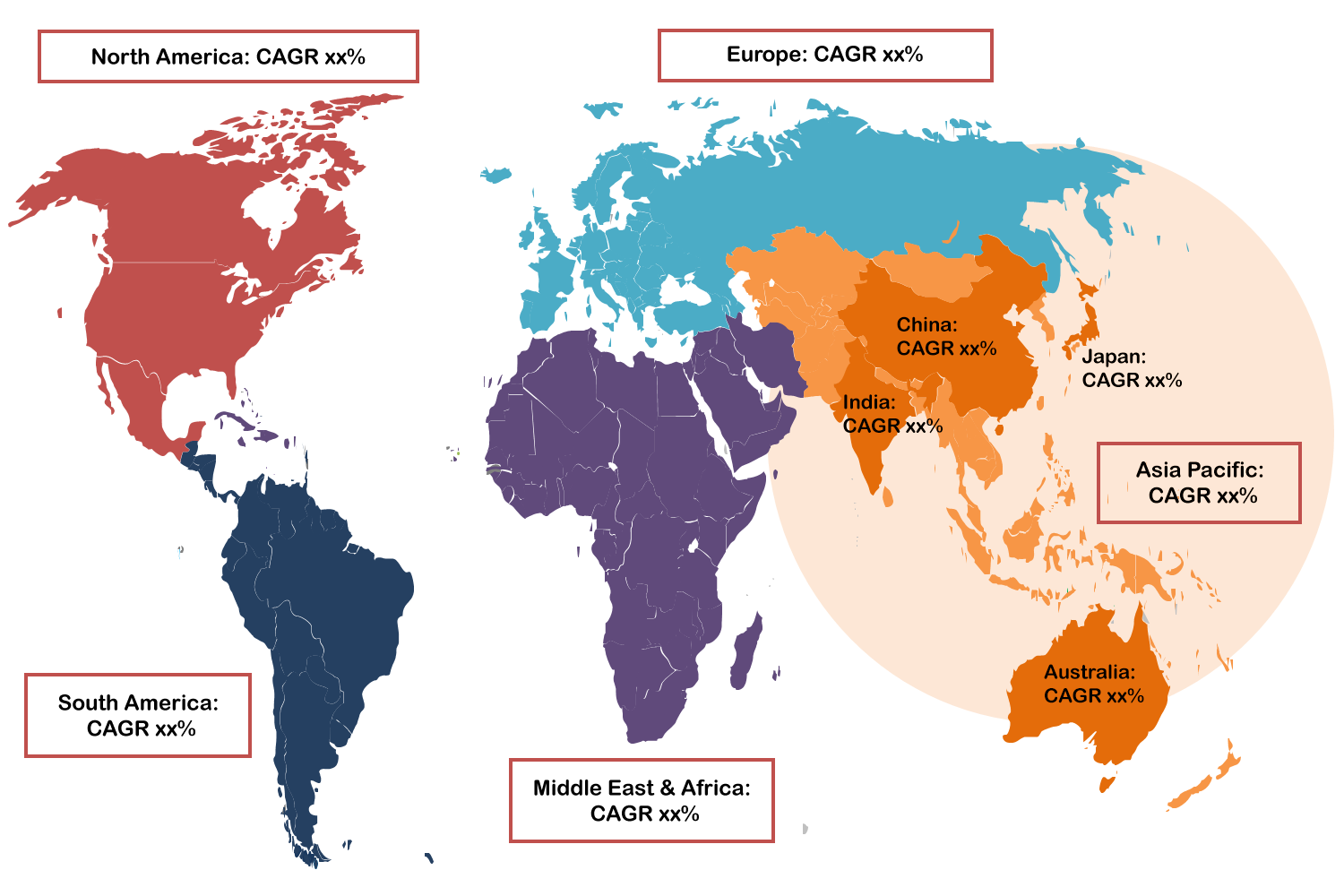
During the forecast period, the North America region is expected to hold the largest market share, driven by advanced agricultural practices and robust IPM adoption. The U.S. and Canada prioritize reducing chemical pesticide use, supported by stringent regulations and R&D investments. High-value specialty crops, such as almonds and apples, rely heavily on pheromones for pest control. Moreover, partnerships between agrochemical firms and research institutions accelerate product innovation. Government extensions and farmer education programs further enhance uptake. These factors, combined with a mature organic farming sector, ensure North America’s continued dominance in the agricultural pheromones market.
Region with highest CAGR:
Over the forecast period, the Asia Pacific region is anticipated to exhibit the highest CAGR, fueled by expanding agricultural sectors and rising pest resistance to conventional pesticides. Countries like India and China are investing in sustainable practices to meet export quality standards and domestic food security goals. Government subsidies for bio-based pest control and growing awareness of IPM benefits drive adoption. Additionally, increasing horticulture production and climate-induced pest outbreaks create urgent demand. Collaborations with global agrochemical companies and localized pheromone solutions further propel growth, positioning Asia Pacific as the fastest-evolving regional market.
Key players in the market
Some of the key players in Agricultural Insect Pheromones Market include Russell IPM, Shin-Etsu Chemical Company, Isagro, Biobest Group, SEDQ Healthy Crops SL, BASF SE, Gowan Company, Suterra LLC, Provivi Inc., Mitsui & Co., Ltd., The Wonderful Company LLC, ISCA Technologies, Koppert Biological Systems, Pherobank, Pacific Biocontrol Corporation, ATGC Biotech Pvt Ltd, Bio Controle, Novagrica and Trécé Inc.
Key Developments:
In March 2025, Shin-Etsu Chemical Co., Ltd will make investments at two of its bases, the subsidiary SE Tylose GmbH & Co. KG (Wiesbaden, Germany) and the Naoetsu Plant to strengthen its pharmaceutical cellulose business. In Germany, a new production facility for the pharmaceutical excipient L-HPC® *1 will be built adjacent to the existing facility, creating a dual base with the Naoetsu Plant. Completion of the new production facility is targeted within the second half of 2026.
In September 2024, Syngenta Biologicals and Provivi have announced a collaboration to develop and commercialize new pheromone-based biological solutions to effectively and more safely control detrimental pests in corn and rice – crops that serve as a primary food source for 3.5 billion people globally.
In April 2024, Biobest Group has changed its name to BioFirst Group, revealing the news, along with the global sustainable crop production company's new structure and logo, at the opening of its new cutting-edge, predatory mite production facility in Westerlo, Belgium. ?Our 12m EUR investment in this new state-of-the-art, 4000sqm mite-rearing facility will greatly boost our production capabilities and house up to 50 employees,? said CEO Jean-Marc Vandoorne.
Types Covered:
• Sex Pheromones
• Aggregation Pheromones
• Other Product Types
Functions Covered:
• Mating Disruption
• Mass Trapping
• Monitoring & Detection
Crop Types Covered:
• Fruits & Vegetables
• Cereals & Grains
• Oilseeds & Pulses
• Other Crop Types
Species Covered:
• Moths
• Beetles
• Fruit Flies
• Other Species
Mode of Applications Covered:
• Dispensers
• Sprays
• Traps
• Aerosols
• Other Mode of Applications
End Users Covered:
• Open Field Agriculture
• Protected Cultivation (Greenhouses)
• Forestry
Regions Covered:
• North America
o US
o Canada
o Mexico
• Europe
o Germany
o UK
o Italy
o France
o Spain
o Rest of Europe
• Asia Pacific
o Japan
o China
o India
o Australia
o New Zealand
o South Korea
o Rest of Asia Pacific
• South America
o Argentina
o Brazil
o Chile
o Rest of South America
• Middle East & Africa
o Saudi Arabia
o UAE
o Qatar
o South Africa
o Rest of Middle East & Africa
What our report offers:
- Market share assessments for the regional and country-level segments
- Strategic recommendations for the new entrants
- Covers Market data for the years 2024, 2025, 2026, 2028, and 2032
- Market Trends (Drivers, Constraints, Opportunities, Threats, Challenges, Investment Opportunities, and recommendations)
- Strategic recommendations in key business segments based on the market estimations
- Competitive landscaping mapping the key common trends
- Company profiling with detailed strategies, financials, and recent developments
- Supply chain trends mapping the latest technological advancements
Free Customization Offerings:
All the customers of this report will be entitled to receive one of the following free customization options:
• Company Profiling
o Comprehensive profiling of additional market players (up to 3)
o SWOT Analysis of key players (up to 3)
• Regional Segmentation
o Market estimations, Forecasts and CAGR of any prominent country as per the client's interest (Note: Depends on feasibility check)
• Competitive Benchmarking
o Benchmarking of key players based on product portfolio, geographical presence, and strategic alliances
Table of Contents
1 Executive Summary
2 Preface
2.1 Abstract
2.2 Stake Holders
2.3 Research Scope
2.4 Research Methodology
2.4.1 Data Mining
2.4.2 Data Analysis
2.4.3 Data Validation
2.4.4 Research Approach
2.5 Research Sources
2.5.1 Primary Research Sources
2.5.2 Secondary Research Sources
2.5.3 Assumptions
3 Market Trend Analysis
3.1 Introduction
3.2 Drivers
3.3 Restraints
3.4 Opportunities
3.5 Threats
3.6 End User Analysis
3.7 Emerging Markets
3.8 Impact of Covid-19
4 Porters Five Force Analysis
4.1 Bargaining power of suppliers
4.2 Bargaining power of buyers
4.3 Threat of substitutes
4.4 Threat of new entrants
4.5 Competitive rivalry
5 Global Agricultural Insect Pheromones Market, By Type
5.1 Introduction
5.2 Sex Pheromones
5.3 Aggregation Pheromones
5.4 Other Product Types
6 Global Agricultural Insect Pheromones Market, By Function
6.1 Introduction
6.2 Mating Disruption
6.3 Mass Trapping
6.4 Monitoring & Detection
7 Global Agricultural Insect Pheromones Market, By Crop Type
7.1 Introduction
7.2 Fruits & Vegetables
7.3 Cereals & Grains
7.4 Oilseeds & Pulses
7.5 Other Crop Types
8 Global Agricultural Insect Pheromones Market, By Species
8.1 Introduction
8.2 Moths
8.3 Beetles
8.4 Fruit Flies
8.5 Other Species
9 Global Agricultural Insect Pheromones Market, By Mode of Application
9.1 Introduction
9.2 Dispensers
9.3 Sprays
9.4 Traps
9.5 Aerosols
9.6 Other Mode of Applications
10 Global Agricultural Insect Pheromones Market, By End User
10.1 Introduction
10.2 Open Field Agriculture
10.3 Protected Cultivation (Greenhouses)
10.4 Forestry
11 Global Agricultural Insect Pheromones Market, By Geography
11.1 Introduction
11.2 North America
11.2.1 US
11.2.2 Canada
11.2.3 Mexico
11.3 Europe
11.3.1 Germany
11.3.2 UK
11.3.3 Italy
11.3.4 France
11.3.5 Spain
11.3.6 Rest of Europe
11.4 Asia Pacific
11.4.1 Japan
11.4.2 China
11.4.3 India
11.4.4 Australia
11.4.5 New Zealand
11.4.6 South Korea
11.4.7 Rest of Asia Pacific
11.5 South America
11.5.1 Argentina
11.5.2 Brazil
11.5.3 Chile
11.5.4 Rest of South America
11.6 Middle East & Africa
11.6.1 Saudi Arabia
11.6.2 UAE
11.6.3 Qatar
11.6.4 South Africa
11.6.5 Rest of Middle East & Africa
12 Key Developments
12.1 Agreements, Partnerships, Collaborations and Joint Ventures
12.2 Acquisitions & Mergers
12.3 New Product Launch
12.4 Expansions
12.5 Other Key Strategies
13 Company Profiling
13.1 Russell IPM
13.2 Shin-Etsu Chemical Company
13.3 Isagro
13.4 Biobest Group
13.5 SEDQ Healthy Crops SL
13.6 BASF SE
13.7 Gowan Company
13.8 Suterra LLC
13.9 Provivi Inc.
13.10 Mitsui & Co., Ltd.
13.11 The Wonderful Company LLC
13.12 ISCA Technologies
13.13 Koppert Biological Systems
13.14 Pherobank
13.15 Pacific Biocontrol Corporation
13.16 ATGC Biotech Pvt Ltd
13.17 Bio Controle
13.18 Novagrica
13.19 Trécé Inc.
List of Tables
1 Global Agricultural Insect Pheromones Market Outlook, By Region (2024-2032) ($MN)
2 Global Agricultural Insect Pheromones Market Outlook, By Type (2024-2032) ($MN)
3 Global Agricultural Insect Pheromones Market Outlook, By Sex Pheromones (2024-2032) ($MN)
4 Global Agricultural Insect Pheromones Market Outlook, By Aggregation Pheromones (2024-2032) ($MN)
5 Global Agricultural Insect Pheromones Market Outlook, By Other Product Types (2024-2032) ($MN)
6 Global Agricultural Insect Pheromones Market Outlook, By Function (2024-2032) ($MN)
7 Global Agricultural Insect Pheromones Market Outlook, By Mating Disruption (2024-2032) ($MN)
8 Global Agricultural Insect Pheromones Market Outlook, By Mass Trapping (2024-2032) ($MN)
9 Global Agricultural Insect Pheromones Market Outlook, By Monitoring & Detection (2024-2032) ($MN)
10 Global Agricultural Insect Pheromones Market Outlook, By Crop Type (2024-2032) ($MN)
11 Global Agricultural Insect Pheromones Market Outlook, By Fruits & Vegetables (2024-2032) ($MN)
12 Global Agricultural Insect Pheromones Market Outlook, By Cereals & Grains (2024-2032) ($MN)
13 Global Agricultural Insect Pheromones Market Outlook, By Oilseeds & Pulses (2024-2032) ($MN)
14 Global Agricultural Insect Pheromones Market Outlook, By Other Crop Types (2024-2032) ($MN)
15 Global Agricultural Insect Pheromones Market Outlook, By Species (2024-2032) ($MN)
16 Global Agricultural Insect Pheromones Market Outlook, By Moths (2024-2032) ($MN)
17 Global Agricultural Insect Pheromones Market Outlook, By Beetles (2024-2032) ($MN)
18 Global Agricultural Insect Pheromones Market Outlook, By Fruit Flies (2024-2032) ($MN)
19 Global Agricultural Insect Pheromones Market Outlook, By Other Species (2024-2032) ($MN)
20 Global Agricultural Insect Pheromones Market Outlook, By Mode of Application (2024-2032) ($MN)
21 Global Agricultural Insect Pheromones Market Outlook, By Dispensers (2024-2032) ($MN)
22 Global Agricultural Insect Pheromones Market Outlook, By Sprays (2024-2032) ($MN)
23 Global Agricultural Insect Pheromones Market Outlook, By Traps (2024-2032) ($MN)
24 Global Agricultural Insect Pheromones Market Outlook, By Aerosols (2024-2032) ($MN)
25 Global Agricultural Insect Pheromones Market Outlook, By Other Mode of Applications (2024-2032) ($MN)
26 Global Agricultural Insect Pheromones Market Outlook, By End User (2024-2032) ($MN)
27 Global Agricultural Insect Pheromones Market Outlook, By Open Field Agriculture (2024-2032) ($MN)
28 Global Agricultural Insect Pheromones Market Outlook, By Protected Cultivation (Greenhouses) (2024-2032) ($MN)
29 Global Agricultural Insect Pheromones Market Outlook, By Forestry (2024-2032) ($MN)
Note: Tables for North America, Europe, APAC, South America, and Middle East & Africa Regions are also represented in the same manner as above.
List of Figures
RESEARCH METHODOLOGY

We at ‘Stratistics’ opt for an extensive research approach which involves data mining, data validation, and data analysis. The various research sources include in-house repository, secondary research, competitor’s sources, social media research, client internal data, and primary research.
Our team of analysts prefers the most reliable and authenticated data sources in order to perform the comprehensive literature search. With access to most of the authenticated data bases our team highly considers the best mix of information through various sources to obtain extensive and accurate analysis.
Each report takes an average time of a month and a team of 4 industry analysts. The time may vary depending on the scope and data availability of the desired market report. The various parameters used in the market assessment are standardized in order to enhance the data accuracy.
Data Mining
The data is collected from several authenticated, reliable, paid and unpaid sources and is filtered depending on the scope & objective of the research. Our reports repository acts as an added advantage in this procedure. Data gathering from the raw material suppliers, distributors and the manufacturers is performed on a regular basis, this helps in the comprehensive understanding of the products value chain. Apart from the above mentioned sources the data is also collected from the industry consultants to ensure the objective of the study is in the right direction.
Market trends such as technological advancements, regulatory affairs, market dynamics (Drivers, Restraints, Opportunities and Challenges) are obtained from scientific journals, market related national & international associations and organizations.
Data Analysis
From the data that is collected depending on the scope & objective of the research the data is subjected for the analysis. The critical steps that we follow for the data analysis include:
- Product Lifecycle Analysis
- Competitor analysis
- Risk analysis
- Porters Analysis
- PESTEL Analysis
- SWOT Analysis
The data engineering is performed by the core industry experts considering both the Marketing Mix Modeling and the Demand Forecasting. The marketing mix modeling makes use of multiple-regression techniques to predict the optimal mix of marketing variables. Regression factor is based on a number of variables and how they relate to an outcome such as sales or profits.
Data Validation
The data validation is performed by the exhaustive primary research from the expert interviews. This includes telephonic interviews, focus groups, face to face interviews, and questionnaires to validate our research from all aspects. The industry experts we approach come from the leading firms, involved in the supply chain ranging from the suppliers, distributors to the manufacturers and consumers so as to ensure an unbiased analysis.
We are in touch with more than 15,000 industry experts with the right mix of consultants, CEO's, presidents, vice presidents, managers, experts from both supply side and demand side, executives and so on.
The data validation involves the primary research from the industry experts belonging to:
- Leading Companies
- Suppliers & Distributors
- Manufacturers
- Consumers
- Industry/Strategic Consultants
Apart from the data validation the primary research also helps in performing the fill gap research, i.e. providing solutions for the unmet needs of the research which helps in enhancing the reports quality.
For more details about research methodology, kindly write to us at info@strategymrc.com
Frequently Asked Questions
In case of any queries regarding this report, you can contact the customer service by filing the “Inquiry Before Buy” form available on the right hand side. You may also contact us through email: info@strategymrc.com or phone: +1-301-202-5929
Yes, the samples are available for all the published reports. You can request them by filling the “Request Sample” option available in this page.
Yes, you can request a sample with your specific requirements. All the customized samples will be provided as per the requirement with the real data masked.
All our reports are available in Digital PDF format. In case if you require them in any other formats, such as PPT, Excel etc you can submit a request through “Inquiry Before Buy” form available on the right hand side. You may also contact us through email: info@strategymrc.com or phone: +1-301-202-5929
We offer a free 15% customization with every purchase. This requirement can be fulfilled for both pre and post sale. You may send your customization requirements through email at info@strategymrc.com or call us on +1-301-202-5929.
We have 3 different licensing options available in electronic format.
- Single User Licence: Allows one person, typically the buyer, to have access to the ordered product. The ordered product cannot be distributed to anyone else.
- 2-5 User Licence: Allows the ordered product to be shared among a maximum of 5 people within your organisation.
- Corporate License: Allows the product to be shared among all employees of your organisation regardless of their geographical location.
All our reports are typically be emailed to you as an attachment.
To order any available report you need to register on our website. The payment can be made either through CCAvenue or PayPal payments gateways which accept all international cards.
We extend our support to 6 months post sale. A post sale customization is also provided to cover your unmet needs in the report.
Request Customization
We offer complimentary customization of up to 15% with every purchase. To share your customization requirements, feel free to email us at info@strategymrc.com or call us on +1-301-202-5929. .
Please Note: Customization within the 15% threshold is entirely free of charge. If your request exceeds this limit, we will conduct a feasibility assessment. Following that, a detailed quote and timeline will be provided.
WHY CHOOSE US ?

Assured Quality
Best in class reports with high standard of research integrity

24X7 Research Support
Continuous support to ensure the best customer experience.

Free Customization
Adding more values to your product of interest.

Safe & Secure Access
Providing a secured environment for all online transactions.

Trusted by 600+ Brands
Serving the most reputed brands across the world.
