
Airport Ground Support Vehicle Market
Airport Ground Support Vehicle Market Forecasts to 2032 - Global Analysis By Vehicle Type (Pushback Tractors, Towbarless Tractors, Aircraft Tugs, Baggage Tractors and Other Vehicle Types), Power Source (Electric, Diesel and Hybrid), Mode of Operation (Conventional/Manual, Semi-Autonomous and Fully Autonomous), Application, End User and By Geography

|
Years Covered |
2024-2032 |
|
Estimated Year Value (2025) |
US $9.16 BN |
|
Projected Year Value (2032) |
US $14.04 BN |
|
CAGR (2025-2032) |
6.3% |
|
Regions Covered |
North America, Europe, Asia Pacific, South America, and Middle East & Africa |
|
Countries Covered |
US, Canada, Mexico, Germany, UK, Italy, France, Spain, Japan, China, India, Australia, New Zealand, South Korea, Rest of Asia Pacific, South America, Argentina, Brazil, Chile, Middle East & Africa, Saudi Arabia, UAE, Qatar, and South Africa |
|
Largest Market |
North America |
|
Highest Growing Market |
Asia Pacific |
According to Stratistics MRC, the Global Airport Ground Support Vehicle Market is accounted for $9.16 billion in 2025 and is expected to reach $14.04 billion by 2032 growing at a CAGR of 6.3% during the forecast period. Specialized equipment used to maintain aircraft in between flights is known as a vehicle for airport ground support. Essential functions, including hauling aircraft, refueling, loading cargo, controlling the power supply, and providing boarding bridges or passenger steps, are all carried out by these vehicles. They are made to be both safe and effective, and they support ground operations by operating on airport ramps and aprons, which guarantees efficient aircraft turnaround and maximum airport performance.

Market Dynamics:
Driver:
Growing air traffic
The aviation industry is witnessing strong growth in air traffic, with international air traffic increasing by 41.6% in 2023 compared to 2022, reaching 94.1% of pre-pandemic figures. This increase in passenger and cargo numbers needs effective ground handling operations, which drives increased demand for vehicles that support airport ground operations. As airports handle more airplane movements, the demand for tugs, luggage tractors, and passenger transport vehicles grows. Furthermore, rising disposable income among the global middle class has driven low-cost flights, resulting in a strong commercial outlook for the aviation sector. This steady increase in air travel is a major force moving the market for vehicles that support airport ground operations forward.
Restraint:
Maintenance costs
Because of their specialized nature, these vehicles require regular service by qualified experts, which raises operational expenses for airlines and ground handling businesses. As ground support equipment gets more technologically advanced and includes sophisticated systems, maintenance complexity and associated costs increase. The necessity for genuine parts and specialist tools increases the budgetary strain. Furthermore, unanticipated breakdowns can result in costly downtime, affecting airport operations and perhaps causing aircraft delays. These maintenance difficulties disproportionately affect smaller airports and operators with limited funds, limiting their ability to maintain or expand their fleets of ground support vehicles.
Opportunity:
Demand for electric vehicles
The growing demand for electric ground support vehicles represents a huge market potential, driven by tough environmental rules and the aviation industry's goal to lower carbon emissions. Electric GSE provide lower noise levels, zero emissions, and increased operational efficiency, making them more appealing to airport managers. The shift toward sustainable operations is driving airlines to choose eco-friendly GSE choices, especially in industrialized countries with extensive charging infrastructure. Furthermore, government programs that promote green airport construction are hastening this change. As airports throughout the world work to reduce their environmental effect, firms investing in electric and hybrid GSE technology expect to gain a significant market share in this quickly changing area.
Threat:
Labor issues?
The industry confronts difficulty in hiring and maintaining competent operators capable of operating sophisticated equipment, potentially resulting in operational bottlenecks. Labor conflicts and strikes can cause significant disruptions in ground handling operations, hurting airline schedules and passenger experiences. Rising labor expenses have also put pressure on ground handling service providers' profit margins. Furthermore, the transition to increasingly automated and electric vehicles necessitates labor retraining, which may be both time-consuming and expensive. These labor-related difficulties jeopardize market growth and operational efficiency throughout the ecosystem of vehicles for airport ground support.
Covid-19 Impact:
The COVID-19 outbreak significantly impacted the industry for vehicles that support airport ground operations across various channels. Supply chain disruptions slowed component deliveries, impeding manufacturing and maintenance activities. Widespread lockdowns reduced staff availability, causing severe production delays. Budget restrictions led several airports and airlines to postpone investments in new ground support equipment, as funds were diverted to pandemic response efforts. The enormous fall in air travel during this period significantly lowered the usage of current equipment and the immediate demand for new vehicles. However, the market has begun to recover, with foreign aviation traffic gradually returning to pre-pandemic levels.
The non-electric segment is expected to be the largest during the forecast period
The non-electric segment is expected to account for the largest market share during the forecast period. These vehicles continue to serve an important role, particularly in areas where electric GSE infrastructure is weak. People choose non-electric GSE due to its reliability and ability to function effectively in challenging conditions, where electric alternatives may be scarce. Non-electric GSE's low initial investment and operational expenses make it an appealing alternative for many airports and airlines, particularly in developing economies. Furthermore, the established maintenance networks and familiarity with these older systems help them maintain their market leadership.
The ground handling service providers segment is expected to have the highest CAGR during the forecast period
Over the forecast period, the ground handling service providers segment is predicted to witness the highest growth rate, as these specialized organizations invest more in modern ground support vehicles to improve operational efficiency. These providers are implementing cutting-edge technology such as automation, telematics, and electric propulsion to increase service quality while lowering operating expenses. Furthermore, the trend of airlines outsourcing ground handling operations to third-party specialists is gaining traction, increasing the customer base for this industry. Ground handling service providers are well-positioned to benefit from economies of scale, allowing them to invest in diversified and technologically advanced vehicle fleets capable of serving several airlines at different airports, resulting in significant market growth in this area.
Region with largest share:
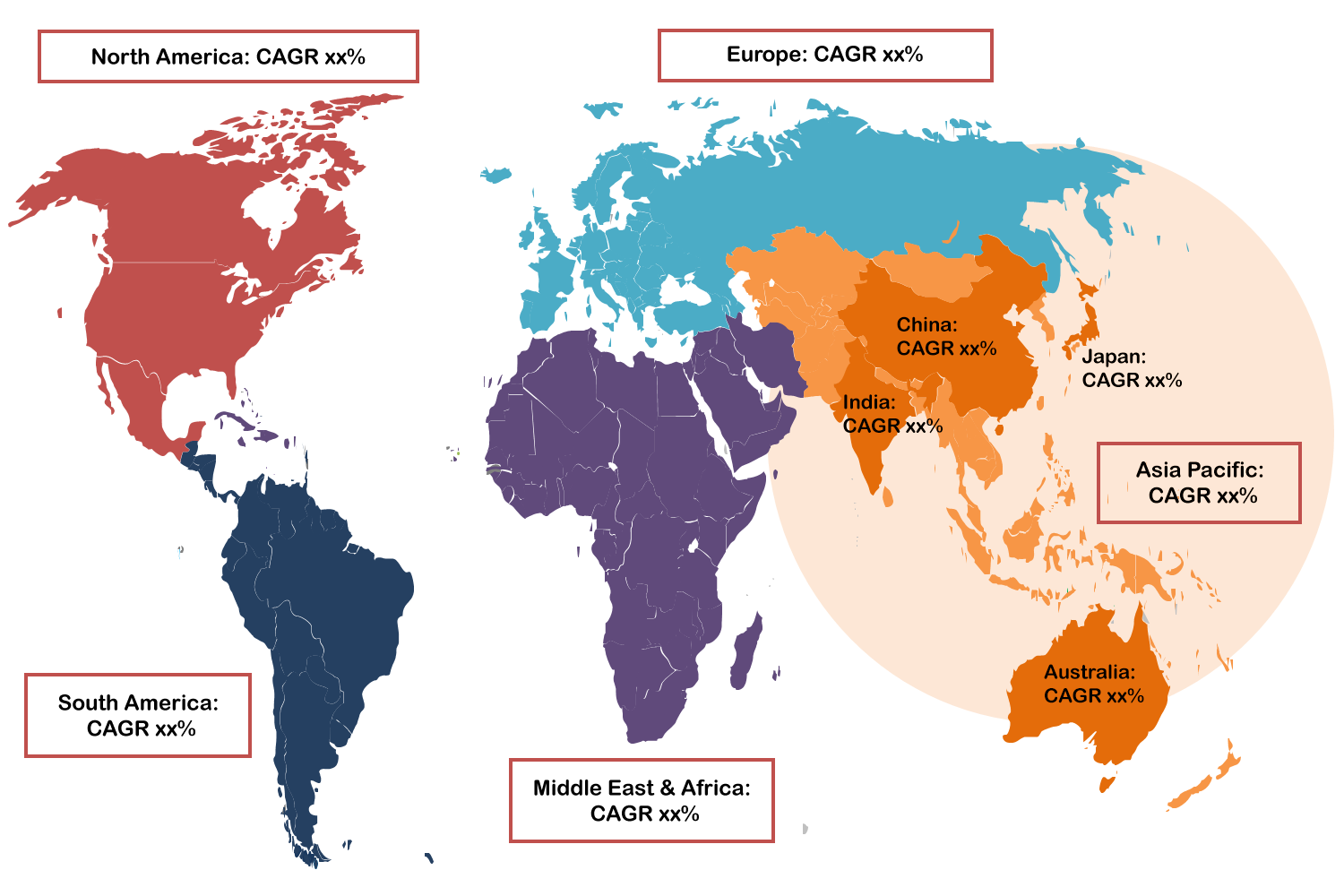
During the forecast period, the North America region is expected to hold the largest market share. The region's dominance is due to its powerful aviation industry, which comprises major airlines and airports, as well as ongoing investments in fleet upgrades and infrastructure solutions. The United States, with its vast network of airports and airlines, is a major source of demand for current GSE technologies. Strict environmental restrictions in the region are encouraging the use of cleaner and more sustainable GSE technologies. Furthermore, North America's robust manufacturing sector makes major contributions to the research and production of cutting-edge GSE solutions, bolstering the region's market-leading position.
Region with highest CAGR:
Over the forecast period, the Asia Pacific region is anticipated to exhibit the highest CAGR. Significant expenditures in new airports and the upgrading of existing ones to meet rising passenger and freight traffic are driving this rapid growth. Countries such as China and India are leading the way. Government backing and investment in air transportation infrastructure contribute considerably to industry growth. Furthermore, the region's emphasis on enhancing operational efficiency and using automation in airport administration is driving considerable demand for innovative ground support vehicles, particularly electric and hybrid versions that meet sustainability standards.
Key players in the market
Some of the key players in Airport Ground Support Vehicle Market include JBT Corporation, Textron Ground Support Equipment Inc., Vestergaard Company, Tronair Inc., Mallaghan Group, MULAG Fahrzeugwerk, Cavotec SA, Weihai Guangtai Airport Equipment Co. Ltd., Rheinmetall AG, AERO Specialties Inc., TCR Group, ITW GSE, Oshkosh Corporation, China International Marine Containers (Group) Ltd., Kalmar Motor AB, GATE GSE, Flightline Support Ltd. and Imai Aero-Equipment Mfg. Co. Ltd.
Key Developments:
In September 2024, Vestergaard Company launched the fully electric MY Lite open-basket deicer with battery packs of 70 or 140 kWh and a 22 kWh onboard charger. The e-MY Lite is designed for regional airports with less traffic or airports with fewer winter conditions.
In September 2024, Mallaghan Group introduced its first fully electric tanker, the Mallaghan Electric Self-Propelled Toilet Service Truck, and North America's first fully-electric, refrigerated, wide-body capable Catering Truck at the GSE Expo 2024. The company also announced the European release of its SkyBelt conveyor belt loader with updated specifications.
In September 2023, Rheinmetall AG began construction of a state-of-the-art factory for F-35 Lightning II fighter aircraft center fuselage production at Weeze Airport in Germany. The facility will have 30,000 square meters of production space and employ over 400 highly skilled staff, with production expected to begin in 2025.
Vehicle Types Covered:
• Pushback Tractors
• Towbarless Tractors
• Aircraft Tugs
• Baggage Tractors
• Belt Loaders
• Cargo Loaders
• Fuel Trucks
• Passenger Buses
• Ground Power Units
• Air Start Units
• Catering Trucks
• Lavatory Service Vehicles
• Water Service Vehicles
• Aircraft Deicing Vehicles
• Other Vehicle Types
Power Sources Covered:
• Electric
• Diesel
• Hybrid
Mode of Operations Covered:
• Conventional/Manual
• Semi-Autonomous
• Fully Autonomous
Applications Covered:
• Commercial Airports
• Military Airports
• General Aviation Airports
End Users Covered:
• Airport Authorities
• Airlines
• Ground Handling Service Providers
• Cargo Handling Companies
• Aircraft Maintenance Providers
Regions Covered:
• North America
o US
o Canada
o Mexico
• Europe
o Germany
o UK
o Italy
o France
o Spain
o Rest of Europe
• Asia Pacific
o Japan
o China
o India
o Australia
o New Zealand
o South Korea
o Rest of Asia Pacific
• South America
o Argentina
o Brazil
o Chile
o Rest of South America
• Middle East & Africa
o Saudi Arabia
o UAE
o Qatar
o South Africa
o Rest of Middle East & Africa
What our report offers:
- Market share assessments for the regional and country-level segments
- Strategic recommendations for the new entrants
- Covers Market data for the years 2024, 2025, 2026, 2028, and 2032
- Market Trends (Drivers, Constraints, Opportunities, Threats, Challenges, Investment Opportunities, and recommendations)
- Strategic recommendations in key business segments based on the market estimations
- Competitive landscaping mapping the key common trends
- Company profiling with detailed strategies, financials, and recent developments
- Supply chain trends mapping the latest technological advancements
Free Customization Offerings:
All the customers of this report will be entitled to receive one of the following free customization options:
• Company Profiling
o Comprehensive profiling of additional market players (up to 3)
o SWOT Analysis of key players (up to 3)
• Regional Segmentation
o Market estimations, Forecasts and CAGR of any prominent country as per the client's interest (Note: Depends on feasibility check)
• Competitive Benchmarking
o Benchmarking of key players based on product portfolio, geographical presence, and strategic alliances
Table of Contents
1 Executive Summary
2 Preface
2.1 Abstract
2.2 Stake Holders
2.3 Research Scope
2.4 Research Methodology
2.4.1 Data Mining
2.4.2 Data Analysis
2.4.3 Data Validation
2.4.4 Research Approach
2.5 Research Sources
2.5.1 Primary Research Sources
2.5.2 Secondary Research Sources
2.5.3 Assumptions
3 Market Trend Analysis
3.1 Introduction
3.2 Drivers
3.3 Restraints
3.4 Opportunities
3.5 Threats
3.6 Application Analysis
3.7 End User Analysis
3.8 Emerging Markets
3.9 Impact of Covid-19
4 Porters Five Force Analysis
4.1 Bargaining power of suppliers
4.2 Bargaining power of buyers
4.3 Threat of substitutes
4.4 Threat of new entrants
4.5 Competitive rivalry
5 Global Airport Ground Support Vehicle Market, By Vehicle Type
5.1 Introduction
5.2 Pushback Tractors
5.3 Towbarless Tractors
5.4 Aircraft Tugs
5.5 Baggage Tractors
5.6 Belt Loaders
5.7 Cargo Loaders
5.8 Fuel Trucks
5.9 Passenger Buses
5.10 Ground Power Units
5.11 Air Start Units
5.12 Catering Trucks
5.13 Lavatory Service Vehicles
5.14 Water Service Vehicles
5.15 Aircraft Deicing Vehicles
5.16 Other Vehicle Types
6 Global Airport Ground Support Vehicle Market, By Power Source
6.1 Introduction
6.2 Electric
6.3 Diesel
6.4 Hybrid
7 Global Airport Ground Support Vehicle Market, By Mode of Operation
7.1 Introduction
7.2 Conventional/Manual
7.3 Semi-Autonomous
7.4 Fully Autonomous
8 Global Airport Ground Support Vehicle Market, By Application
8.1 Introduction
8.2 Commercial Airports
8.3 Military Airports
8.4 General Aviation Airports
9 Global Airport Ground Support Vehicle Market, By End User
9.1 Introduction
9.2 Airport Authorities
9.3 Airlines
9.4 Ground Handling Service Providers
9.5 Cargo Handling Companies
9.6 Aircraft Maintenance Providers
10 Global Airport Ground Support Vehicle Market, By Geography
10.1 Introduction
10.2 North America
10.2.1 US
10.2.2 Canada
10.2.3 Mexico
10.3 Europe
10.3.1 Germany
10.3.2 UK
10.3.3 Italy
10.3.4 France
10.3.5 Spain
10.3.6 Rest of Europe
10.4 Asia Pacific
10.4.1 Japan
10.4.2 China
10.4.3 India
10.4.4 Australia
10.4.5 New Zealand
10.4.6 South Korea
10.4.7 Rest of Asia Pacific
10.5 South America
10.5.1 Argentina
10.5.2 Brazil
10.5.3 Chile
10.5.4 Rest of South America
10.6 Middle East & Africa
10.6.1 Saudi Arabia
10.6.2 UAE
10.6.3 Qatar
10.6.4 South Africa
10.6.5 Rest of Middle East & Africa
11 Key Developments
11.1 Agreements, Partnerships, Collaborations and Joint Ventures
11.2 Acquisitions & Mergers
11.3 New Product Launch
11.4 Expansions
11.5 Other Key Strategies
12 Company Profiling
12.1 JBT Corporation
12.2 Textron Ground Support Equipment Inc.
12.3 Vestergaard Company
12.4 Tronair Inc.
12.5 Mallaghan Group
12.6 MULAG Fahrzeugwerk
12.7 Cavotec SA
12.8 Weihai Guangtai Airport Equipment Co. Ltd.
12.9 Rheinmetall AG
12.10 AERO Specialties Inc.
12.11 TCR Group
12.12 ITW GSE
12.13 Oshkosh Corporation
12.14 China International Marine Containers (Group) Ltd.
12.15 Kalmar Motor AB
12.16 GATE GSE
12.17 Flightline Support Ltd.
12.18 Imai Aero-Equipment Mfg. Co. Ltd.
List of Tables
1 Global Airport Ground Support Vehicle Market Outlook, By Region (2024-2032) ($MN)
2 Global Airport Ground Support Vehicle Market Outlook, By Vehicle Type (2024-2032) ($MN)
3 Global Airport Ground Support Vehicle Market Outlook, By Pushback Tractors (2024-2032) ($MN)
4 Global Airport Ground Support Vehicle Market Outlook, By Towbarless Tractors (2024-2032) ($MN)
5 Global Airport Ground Support Vehicle Market Outlook, By Aircraft Tugs (2024-2032) ($MN)
6 Global Airport Ground Support Vehicle Market Outlook, By Baggage Tractors (2024-2032) ($MN)
7 Global Airport Ground Support Vehicle Market Outlook, By Belt Loaders (2024-2032) ($MN)
8 Global Airport Ground Support Vehicle Market Outlook, By Cargo Loaders (2024-2032) ($MN)
9 Global Airport Ground Support Vehicle Market Outlook, By Fuel Trucks (2024-2032) ($MN)
10 Global Airport Ground Support Vehicle Market Outlook, By Passenger Buses (2024-2032) ($MN)
11 Global Airport Ground Support Vehicle Market Outlook, By Ground Power Units (2024-2032) ($MN)
12 Global Airport Ground Support Vehicle Market Outlook, By Air Start Units (2024-2032) ($MN)
13 Global Airport Ground Support Vehicle Market Outlook, By Catering Trucks (2024-2032) ($MN)
14 Global Airport Ground Support Vehicle Market Outlook, By Lavatory Service Vehicles (2024-2032) ($MN)
15 Global Airport Ground Support Vehicle Market Outlook, By Water Service Vehicles (2024-2032) ($MN)
16 Global Airport Ground Support Vehicle Market Outlook, By Aircraft Deicing Vehicles (2024-2032) ($MN)
17 Global Airport Ground Support Vehicle Market Outlook, By Other Vehicle Types (2024-2032) ($MN)
18 Global Airport Ground Support Vehicle Market Outlook, By Power Source (2024-2032) ($MN)
19 Global Airport Ground Support Vehicle Market Outlook, By Electric (2024-2032) ($MN)
20 Global Airport Ground Support Vehicle Market Outlook, By Diesel (2024-2032) ($MN)
21 Global Airport Ground Support Vehicle Market Outlook, By Hybrid (2024-2032) ($MN)
22 Global Airport Ground Support Vehicle Market Outlook, By Mode of Operation (2024-2032) ($MN)
23 Global Airport Ground Support Vehicle Market Outlook, By Conventional/Manual (2024-2032) ($MN)
24 Global Airport Ground Support Vehicle Market Outlook, By Semi-Autonomous (2024-2032) ($MN)
25 Global Airport Ground Support Vehicle Market Outlook, By Fully Autonomous (2024-2032) ($MN)
26 Global Airport Ground Support Vehicle Market Outlook, By Application (2024-2032) ($MN)
27 Global Airport Ground Support Vehicle Market Outlook, By Commercial Airports (2024-2032) ($MN)
28 Global Airport Ground Support Vehicle Market Outlook, By Military Airports (2024-2032) ($MN)
29 Global Airport Ground Support Vehicle Market Outlook, By General Aviation Airports (2024-2032) ($MN)
30 Global Airport Ground Support Vehicle Market Outlook, By End User (2024-2032) ($MN)
31 Global Airport Ground Support Vehicle Market Outlook, By Airport Authorities (2024-2032) ($MN)
32 Global Airport Ground Support Vehicle Market Outlook, By Airlines (2024-2032) ($MN)
33 Global Airport Ground Support Vehicle Market Outlook, By Ground Handling Service Providers (2024-2032) ($MN)
34 Global Airport Ground Support Vehicle Market Outlook, By Cargo Handling Companies (2024-2032) ($MN)
35 Global Airport Ground Support Vehicle Market Outlook, By Aircraft Maintenance Providers (2024-2032) ($MN)
Note: Tables for North America, Europe, APAC, South America, and Middle East & Africa Regions are also represented in the same manner as above.
List of Figures
RESEARCH METHODOLOGY

We at ‘Stratistics’ opt for an extensive research approach which involves data mining, data validation, and data analysis. The various research sources include in-house repository, secondary research, competitor’s sources, social media research, client internal data, and primary research.
Our team of analysts prefers the most reliable and authenticated data sources in order to perform the comprehensive literature search. With access to most of the authenticated data bases our team highly considers the best mix of information through various sources to obtain extensive and accurate analysis.
Each report takes an average time of a month and a team of 4 industry analysts. The time may vary depending on the scope and data availability of the desired market report. The various parameters used in the market assessment are standardized in order to enhance the data accuracy.
Data Mining
The data is collected from several authenticated, reliable, paid and unpaid sources and is filtered depending on the scope & objective of the research. Our reports repository acts as an added advantage in this procedure. Data gathering from the raw material suppliers, distributors and the manufacturers is performed on a regular basis, this helps in the comprehensive understanding of the products value chain. Apart from the above mentioned sources the data is also collected from the industry consultants to ensure the objective of the study is in the right direction.
Market trends such as technological advancements, regulatory affairs, market dynamics (Drivers, Restraints, Opportunities and Challenges) are obtained from scientific journals, market related national & international associations and organizations.
Data Analysis
From the data that is collected depending on the scope & objective of the research the data is subjected for the analysis. The critical steps that we follow for the data analysis include:
- Product Lifecycle Analysis
- Competitor analysis
- Risk analysis
- Porters Analysis
- PESTEL Analysis
- SWOT Analysis
The data engineering is performed by the core industry experts considering both the Marketing Mix Modeling and the Demand Forecasting. The marketing mix modeling makes use of multiple-regression techniques to predict the optimal mix of marketing variables. Regression factor is based on a number of variables and how they relate to an outcome such as sales or profits.
Data Validation
The data validation is performed by the exhaustive primary research from the expert interviews. This includes telephonic interviews, focus groups, face to face interviews, and questionnaires to validate our research from all aspects. The industry experts we approach come from the leading firms, involved in the supply chain ranging from the suppliers, distributors to the manufacturers and consumers so as to ensure an unbiased analysis.
We are in touch with more than 15,000 industry experts with the right mix of consultants, CEO's, presidents, vice presidents, managers, experts from both supply side and demand side, executives and so on.
The data validation involves the primary research from the industry experts belonging to:
- Leading Companies
- Suppliers & Distributors
- Manufacturers
- Consumers
- Industry/Strategic Consultants
Apart from the data validation the primary research also helps in performing the fill gap research, i.e. providing solutions for the unmet needs of the research which helps in enhancing the reports quality.
For more details about research methodology, kindly write to us at info@strategymrc.com
Frequently Asked Questions
In case of any queries regarding this report, you can contact the customer service by filing the “Inquiry Before Buy” form available on the right hand side. You may also contact us through email: info@strategymrc.com or phone: +1-301-202-5929
Yes, the samples are available for all the published reports. You can request them by filling the “Request Sample” option available in this page.
Yes, you can request a sample with your specific requirements. All the customized samples will be provided as per the requirement with the real data masked.
All our reports are available in Digital PDF format. In case if you require them in any other formats, such as PPT, Excel etc you can submit a request through “Inquiry Before Buy” form available on the right hand side. You may also contact us through email: info@strategymrc.com or phone: +1-301-202-5929
We offer a free 15% customization with every purchase. This requirement can be fulfilled for both pre and post sale. You may send your customization requirements through email at info@strategymrc.com or call us on +1-301-202-5929.
We have 3 different licensing options available in electronic format.
- Single User Licence: Allows one person, typically the buyer, to have access to the ordered product. The ordered product cannot be distributed to anyone else.
- 2-5 User Licence: Allows the ordered product to be shared among a maximum of 5 people within your organisation.
- Corporate License: Allows the product to be shared among all employees of your organisation regardless of their geographical location.
All our reports are typically be emailed to you as an attachment.
To order any available report you need to register on our website. The payment can be made either through CCAvenue or PayPal payments gateways which accept all international cards.
We extend our support to 6 months post sale. A post sale customization is also provided to cover your unmet needs in the report.
Request Customization
We offer complimentary customization of up to 15% with every purchase. To share your customization requirements, feel free to email us at info@strategymrc.com or call us on +1-301-202-5929. .
Please Note: Customization within the 15% threshold is entirely free of charge. If your request exceeds this limit, we will conduct a feasibility assessment. Following that, a detailed quote and timeline will be provided.
WHY CHOOSE US ?

Assured Quality
Best in class reports with high standard of research integrity

24X7 Research Support
Continuous support to ensure the best customer experience.

Free Customization
Adding more values to your product of interest.

Safe & Secure Access
Providing a secured environment for all online transactions.

Trusted by 600+ Brands
Serving the most reputed brands across the world.
