
Augmented Reality In Retail Market
Augmented Reality in Retail Market Forecasts to 2032 - Global Analysis By Retail Type (Jewelry, Beauty and Cosmetics, Apparel Fitting, Furniture and Lighting, Grocery Shopping, Footwear and Other Retail Types), Component (Hardware, Software and Services), Device Type, Technology, Application and By Geography

|
Years Covered |
2024-2032 |
|
Estimated Year Value (2025) |
US $7.55 BN |
|
Projected Year Value (2032) |
US $77.25 BN |
|
CAGR (2025 - 2032) |
39.4% |
|
Regions Covered |
North America, Europe, Asia Pacific, South America, and Middle East & Africa |
|
Countries Covered |
US, Canada, Mexico, Germany, UK, Italy, France, Spain, Japan, China, India, Australia, New Zealand, South Korea, Rest of Asia Pacific, South America, Argentina, Brazil, Chile, Middle East & Africa, Saudi Arabia, UAE, Qatar, and South Africa |
|
Largest Market |
North America |
|
Highest Growing Market |
Asia Pacific |
According to Stratistics MRC, the Global Augmented Reality in Retail Market is accounted for $7.55 billion in 2025 and is expected to reach $77.25 billion by 2032 growing at a CAGR of 39.4% during the forecast period. Augmented reality (AR) is transforming the retail industry by connecting online and in-store shopping experiences. Retailers can provide customers with immersive, interactive experiences through augmented reality (AR) that let them see products in real-world environments before making a purchase. Customers can virtually try on clothing using AR-enabled mirrors or smart phones, or they can use AR to see how furniture would look in their living room. This technology lowers return rates, boosts buyer confidence, and improves customer engagement. Moreover, AR is turning into a crucial tool for retailers looking to maintain their competitiveness in the digital era as customer expectations for convenience and personalization rise.
According to a study by Snap Inc. and Deloitte Digital, AR reduces return rates by up to 25% in categories like furniture and cosmetics.

Market Dynamics:
Driver:
Growing use of AR and smart phone devices
A large percentage of the world's population can now access AR tools owing to the growing number of smart phones with AR features like depth sensors, high-resolution cameras, and AR processors. Additionally, hands-free AR experiences are becoming possible owing to AR headsets and smart glasses like Apple Vision Pro and Microsoft HoloLens. This broad accessibility democratizes AR-driven commerce by enabling retailers to scale AR solutions across international markets without the need for specialized devices.
Restraint:
High costs of implementation
Retail AR deployment requires a large initial investment in hardware, software, 3D content production, and continuing upkeep. Budgeting for these technologies can be difficult for smaller retailers, particularly in the beginning when ROI is unclear. High-end development resources and qualified staff are needed for advanced augmented reality features, such as virtual changing rooms or real-time product configuration, which can be prohibitively expensive for mid-sized enterprises. Furthermore, there may be extra costs and complexity involved in integrating AR with legacy retail systems.
Opportunity:
Combining machine learning and artificial intelligence (AI)
Shopping experiences can be made more intelligent and personalized by combining AR with AI/ML. AI can evaluate user demographics, preferences, and behavior to recommend products that meet consumer needs, which AR can then display in real time. AI-powered virtual stylists, for instance, can suggest outfits according to body types, and augmented reality displays how those outfits fit. Additionally, retailers can optimize engagement and conversion rates by using predictive analytics to dynamically update AR displays or promotions.
Threat:
Increasing competition in the market
As augmented reality (AR) gains traction in the retail industry, more and more businesses—both retailers and technology providers—are joining the market. Large-budget, well-known international brands can outperform smaller competitors by providing more complex, integrated augmented reality experiences. As a result, there is more competition for the attention and loyalty of customers. Moreover, companies without the resources to continuously innovate or market may find it difficult to stay relevant in this environment, which could lead to a loss of market share and a decline in profitability.
Covid-19 Impact:
The COVID-19 pandemic prompted retailers to reconsider their approaches to customer engagement through lockdowns and social distancing measures, which greatly accelerated the retail industry's adoption of augmented reality (AR). When physical stores were shut down or had their operations restricted, augmented reality (AR) became a crucial tool for facilitating contactless shopping experiences like interactive online catalogs, in-home product visualization, and virtual try-ons. Furthermore, AR was incorporated by retailers into websites and mobile apps to mimic in-store interactions and assist customers in making secure decisions about what to buy from the comfort of their own homes.
The jewelry segment is expected to be the largest during the forecast period
The jewelry segment is expected to account for the largest market share during the forecast period. The jewelry industry makes extensive use of augmented reality (AR) technology to improve the customer experience by enabling virtual try-ons, which let customers see rings, necklaces, bracelets, and earrings on themselves without having to make physical contact. By offering realistic, interactive previews, this technology helps consumers overcome their reluctance to buy, which boosts engagement and sales conversion rates. Additionally, AR in jewelry retail eliminates the need for substantial physical inventories and provides individualized customization options.
The information systems segment is expected to have the highest CAGR during the forecast period
Over the forecast period, the information systems segment is predicted to witness the highest growth rate. The growing use of AR technologies for in-store navigation, warehouse management, and enterprise training is responsible for this expansion. AR-driven information systems provide creative solutions that combine real-time data with physical environments as retailers look to improve operational efficiency and streamline procedures. Moreover, the industry's explosive growth highlights how crucial it is to revolutionize retail operations with immersive, data-rich experiences.
Region with largest share:
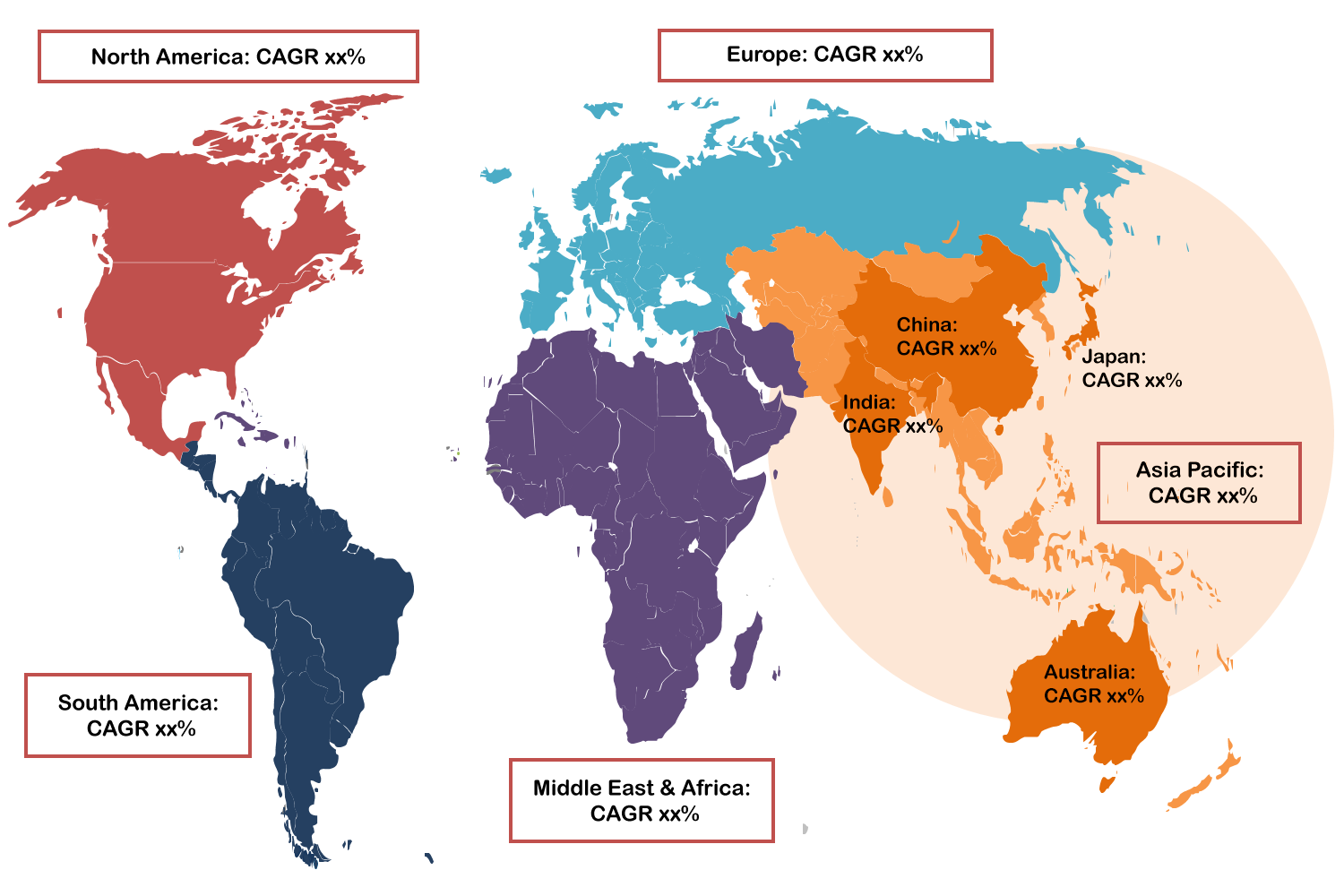
During the forecast period, the North America region is expected to hold the largest market share. At around 42.5% of the global AR in retail market revenue, North America is expected to continue to dominate for the duration of the forecast period. The presence of big tech companies like Apple, Google, and Microsoft, as well as the large investments made in AR technologies and the high adoption rate among retailers looking to improve customer experiences through immersive technologies, are the main drivers of this leadership. Additionally, cities like San Francisco, New York, and Los Angeles are centers for AR innovation and retail implementation, making the U.S. a major contributor to this growth.
Region with highest CAGR:
Over the forecast period, the Asia Pacific region is anticipated to exhibit the highest CAGR. Increased smart phone adoption, a growing e-commerce industry, and large investments in digital infrastructure are some of the factors driving this quick growth. With big retailers incorporating augmented reality (AR) technologies to improve customer experiences, nations like China, Japan, and South Korea are leading the way. Furthermore, the dynamic retail landscape in the region is influenced by the adoption of augmented reality (AR) features by platforms such as Taobao and JD.com, which enable virtual try-ons and product visualizations.
Key players in the market
Some of the key players in Augmented Reality in Retail Market include Google, Blippar Group Limited, Lenovo Group Ltd., Marxent Labs Inc, Amazon.com, Inc, Kudan Inc, Microsoft Corporation, Inter IKEA Systems B.V, Holition Ltd., Sony Group Corporation, Apple Inc., Magic Leap Inc., ViewAR GmbH, Qualcomm Inc., Samsung Electronics Co. Ltd., Zugara, Inc and PTC Inc.
Key Developments:
In June 2025, Google’s parent company Alphabet has agreed to invest $500 million over the next decade to overhaul its global compliance structure, under a proposed settlement in a shareholder lawsuit over antitrust violations. The agreement, filed in a federal court in California, marks a significant concession as Google faces intensifying regulatory scrutiny in the United States.
In May 2025, Amazon.com Inc. has a multiyear agreement with FedEx Corp. to deliver large packages for the online retailer, renewing a relationship between the two companies that ended in 2019. The deal follows plans announced in January by United Parcel Service Inc. to reduce by half the number of packages it delivers for Amazon by the end of 2026.
In January 2025, Lenovo Group?Limited and Alat, a PIF company, have announced the completion of the US$2 billion investment alongside reaching the strategic collaboration agreements. The deal has received shareholders’ approval and all regulatory approvals required for completion. The strategic collaboration and investment will enable Lenovo to further accelerate its ongoing transformation, enhance its global presence, and increase geographic diversification of its manufacturing footprint.
Retail Types Covered:
• Jewelry
• Beauty and Cosmetics
• Apparel Fitting
• Furniture and Lighting
• Grocery Shopping
• Footwear
• Other Retail Types
Components Covered:
• Hardware
• Software
• Services
Device Types Covered:
• Head-Mounted Display (HMD)
• Smart AR Mirror
• Handheld Device
Technologies Covered:
• Marker-based Augmented Reality
• Marker-less Augmented Reality
Applications Covered:
• Advertising and Marketing
• Try-on Solutions
• Planning and Designing
• Information Systems
Regions Covered:
• North America
o US
o Canada
o Mexico
• Europe
o Germany
o UK
o Italy
o France
o Spain
o Rest of Europe
• Asia Pacific
o Japan
o China
o India
o Australia
o New Zealand
o South Korea
o Rest of Asia Pacific
• South America
o Argentina
o Brazil
o Chile
o Rest of South America
• Middle East & Africa
o Saudi Arabia
o UAE
o Qatar
o South Africa
o Rest of Middle East & Africa
What our report offers:
- Market share assessments for the regional and country-level segments
- Strategic recommendations for the new entrants
- Covers Market data for the years 2024, 2025, 2026, 2028, and 2032
- Market Trends (Drivers, Constraints, Opportunities, Threats, Challenges, Investment Opportunities, and recommendations)
- Strategic recommendations in key business segments based on the market estimations
- Competitive landscaping mapping the key common trends
- Company profiling with detailed strategies, financials, and recent developments
- Supply chain trends mapping the latest technological advancements
Free Customization Offerings:
All the customers of this report will be entitled to receive one of the following free customization options:
• Company Profiling
o Comprehensive profiling of additional market players (up to 3)
o SWOT Analysis of key players (up to 3)
• Regional Segmentation
o Market estimations, Forecasts and CAGR of any prominent country as per the client's interest (Note: Depends on feasibility check)
• Competitive Benchmarking
o Benchmarking of key players based on product portfolio, geographical presence, and strategic alliances
Table of Contents
1 Executive Summary
2 Preface
2.1 Abstract
2.2 Stake Holders
2.3 Research Scope
2.4 Research Methodology
2.4.1 Data Mining
2.4.2 Data Analysis
2.4.3 Data Validation
2.4.4 Research Approach
2.5 Research Sources
2.5.1 Primary Research Sources
2.5.2 Secondary Research Sources
2.5.3 Assumptions
3 Market Trend Analysis
3.1 Introduction
3.2 Drivers
3.3 Restraints
3.4 Opportunities
3.5 Threats
3.6 Technology Analysis
3.7 Application Analysis
3.8 Emerging Markets
3.9 Impact of Covid-19
4 Porters Five Force Analysis
4.1 Bargaining power of suppliers
4.2 Bargaining power of buyers
4.3 Threat of substitutes
4.4 Threat of new entrants
4.5 Competitive rivalry
5 Global Augmented Reality in Retail Market, By Retail Type
5.1 Introduction
5.2 Jewelry
5.3 Beauty and Cosmetics
5.4 Apparel Fitting
5.5 Furniture and Lighting
5.6 Grocery Shopping
5.7 Footwear
5.8 Other Retail Types
6 Global Augmented Reality in Retail Market, By Component
6.1 Introduction
6.2 Hardware
6.2.1 Sensors
6.2.2 Semiconductor Components
6.2.3 Displays & Projectors
6.2.4 Cameras
6.3 Software
6.4 Services
7 Global Augmented Reality in Retail Market, By Device Type
7.1 Introduction
7.2 Head-Mounted Display (HMD)
7.3 Smart AR Mirror
7.4 Handheld Device
8 Global Augmented Reality in Retail Market, By Technology
8.1 Introduction
8.2 Marker-based Augmented Reality
8.2.1 Passive Marker
8.2.2 Active Marker
8.3 Marker-less Augmented Reality
8.3.1 Model Based
8.3.2 Image Processing Based
9 Global Augmented Reality in Retail Market, By Application
9.1 Introduction
9.2 Advertising and Marketing
9.3 Try-on Solutions
9.4 Planning and Designing
9.5 Information Systems
10 Global Augmented Reality in Retail Market, By Geography
10.1 Introduction
10.2 North America
10.2.1 US
10.2.2 Canada
10.2.3 Mexico
10.3 Europe
10.3.1 Germany
10.3.2 UK
10.3.3 Italy
10.3.4 France
10.3.5 Spain
10.3.6 Rest of Europe
10.4 Asia Pacific
10.4.1 Japan
10.4.2 China
10.4.3 India
10.4.4 Australia
10.4.5 New Zealand
10.4.6 South Korea
10.4.7 Rest of Asia Pacific
10.5 South America
10.5.1 Argentina
10.5.2 Brazil
10.5.3 Chile
10.5.4 Rest of South America
10.6 Middle East & Africa
10.6.1 Saudi Arabia
10.6.2 UAE
10.6.3 Qatar
10.6.4 South Africa
10.6.5 Rest of Middle East & Africa
11 Key Developments
11.1 Agreements, Partnerships, Collaborations and Joint Ventures
11.2 Acquisitions & Mergers
11.3 New Product Launch
11.4 Expansions
11.5 Other Key Strategies
12 Company Profiling
12.1 Google
12.2 Blippar Group Limited
12.3 Lenovo Group Ltd.
12.4 Marxent Labs Inc
12.5 Amazon.com, Inc
12.6 Kudan Inc
12.7 Microsoft Corporation
12.8 Inter IKEA Systems B.V
12.9 Holition Ltd.
12.10 Sony Group Corporation
12.11 Apple Inc.
12.12 Magic Leap Inc.
12.13 ViewAR GmbH
12.14 Qualcomm Inc.
12.15 Samsung Electronics Co. Ltd.
12.16 Zugara, Inc
12.17 PTC Inc.
List of Tables
1 Global Augmented Reality in Retail Market Outlook, By Region (2024-2032) ($MN)
2 Global Augmented Reality in Retail Market Outlook, By Retail Type (2024-2032) ($MN)
3 Global Augmented Reality in Retail Market Outlook, By Jewelry (2024-2032) ($MN)
4 Global Augmented Reality in Retail Market Outlook, By Beauty and Cosmetics (2024-2032) ($MN)
5 Global Augmented Reality in Retail Market Outlook, By Apparel Fitting (2024-2032) ($MN)
6 Global Augmented Reality in Retail Market Outlook, By Furniture and Lighting (2024-2032) ($MN)
7 Global Augmented Reality in Retail Market Outlook, By Grocery Shopping (2024-2032) ($MN)
8 Global Augmented Reality in Retail Market Outlook, By Footwear (2024-2032) ($MN)
9 Global Augmented Reality in Retail Market Outlook, By Other Retail Types (2024-2032) ($MN)
10 Global Augmented Reality in Retail Market Outlook, By Component (2024-2032) ($MN)
11 Global Augmented Reality in Retail Market Outlook, By Hardware (2024-2032) ($MN)
12 Global Augmented Reality in Retail Market Outlook, By Sensors (2024-2032) ($MN)
13 Global Augmented Reality in Retail Market Outlook, By Semiconductor Components (2024-2032) ($MN)
14 Global Augmented Reality in Retail Market Outlook, By Displays & Projectors (2024-2032) ($MN)
15 Global Augmented Reality in Retail Market Outlook, By Cameras (2024-2032) ($MN)
16 Global Augmented Reality in Retail Market Outlook, By Software (2024-2032) ($MN)
17 Global Augmented Reality in Retail Market Outlook, By Services (2024-2032) ($MN)
18 Global Augmented Reality in Retail Market Outlook, By Device Type (2024-2032) ($MN)
19 Global Augmented Reality in Retail Market Outlook, By Head-Mounted Display (HMD) (2024-2032) ($MN)
20 Global Augmented Reality in Retail Market Outlook, By Smart AR Mirror (2024-2032) ($MN)
21 Global Augmented Reality in Retail Market Outlook, By Handheld Device (2024-2032) ($MN)
22 Global Augmented Reality in Retail Market Outlook, By Technology (2024-2032) ($MN)
23 Global Augmented Reality in Retail Market Outlook, By Marker-based Augmented Reality (2024-2032) ($MN)
24 Global Augmented Reality in Retail Market Outlook, By Passive Marker (2024-2032) ($MN)
25 Global Augmented Reality in Retail Market Outlook, By Active Marker (2024-2032) ($MN)
26 Global Augmented Reality in Retail Market Outlook, By Marker-less Augmented Reality (2024-2032) ($MN)
27 Global Augmented Reality in Retail Market Outlook, By Model Based (2024-2032) ($MN)
28 Global Augmented Reality in Retail Market Outlook, By Image Processing Based (2024-2032) ($MN)
29 Global Augmented Reality in Retail Market Outlook, By Application (2024-2032) ($MN)
30 Global Augmented Reality in Retail Market Outlook, By Advertising and Marketing (2024-2032) ($MN)
31 Global Augmented Reality in Retail Market Outlook, By Try-on Solutions (2024-2032) ($MN)
32 Global Augmented Reality in Retail Market Outlook, By Planning and Designing (2024-2032) ($MN)
33 Global Augmented Reality in Retail Market Outlook, By Information Systems (2024-2032) ($MN)
Note: Tables for North America, Europe, APAC, South America, and Middle East & Africa Regions are also represented in the same manner as above.
List of Figures
RESEARCH METHODOLOGY

We at ‘Stratistics’ opt for an extensive research approach which involves data mining, data validation, and data analysis. The various research sources include in-house repository, secondary research, competitor’s sources, social media research, client internal data, and primary research.
Our team of analysts prefers the most reliable and authenticated data sources in order to perform the comprehensive literature search. With access to most of the authenticated data bases our team highly considers the best mix of information through various sources to obtain extensive and accurate analysis.
Each report takes an average time of a month and a team of 4 industry analysts. The time may vary depending on the scope and data availability of the desired market report. The various parameters used in the market assessment are standardized in order to enhance the data accuracy.
Data Mining
The data is collected from several authenticated, reliable, paid and unpaid sources and is filtered depending on the scope & objective of the research. Our reports repository acts as an added advantage in this procedure. Data gathering from the raw material suppliers, distributors and the manufacturers is performed on a regular basis, this helps in the comprehensive understanding of the products value chain. Apart from the above mentioned sources the data is also collected from the industry consultants to ensure the objective of the study is in the right direction.
Market trends such as technological advancements, regulatory affairs, market dynamics (Drivers, Restraints, Opportunities and Challenges) are obtained from scientific journals, market related national & international associations and organizations.
Data Analysis
From the data that is collected depending on the scope & objective of the research the data is subjected for the analysis. The critical steps that we follow for the data analysis include:
- Product Lifecycle Analysis
- Competitor analysis
- Risk analysis
- Porters Analysis
- PESTEL Analysis
- SWOT Analysis
The data engineering is performed by the core industry experts considering both the Marketing Mix Modeling and the Demand Forecasting. The marketing mix modeling makes use of multiple-regression techniques to predict the optimal mix of marketing variables. Regression factor is based on a number of variables and how they relate to an outcome such as sales or profits.
Data Validation
The data validation is performed by the exhaustive primary research from the expert interviews. This includes telephonic interviews, focus groups, face to face interviews, and questionnaires to validate our research from all aspects. The industry experts we approach come from the leading firms, involved in the supply chain ranging from the suppliers, distributors to the manufacturers and consumers so as to ensure an unbiased analysis.
We are in touch with more than 15,000 industry experts with the right mix of consultants, CEO's, presidents, vice presidents, managers, experts from both supply side and demand side, executives and so on.
The data validation involves the primary research from the industry experts belonging to:
- Leading Companies
- Suppliers & Distributors
- Manufacturers
- Consumers
- Industry/Strategic Consultants
Apart from the data validation the primary research also helps in performing the fill gap research, i.e. providing solutions for the unmet needs of the research which helps in enhancing the reports quality.
For more details about research methodology, kindly write to us at info@strategymrc.com
Frequently Asked Questions
In case of any queries regarding this report, you can contact the customer service by filing the “Inquiry Before Buy” form available on the right hand side. You may also contact us through email: info@strategymrc.com or phone: +1-301-202-5929
Yes, the samples are available for all the published reports. You can request them by filling the “Request Sample” option available in this page.
Yes, you can request a sample with your specific requirements. All the customized samples will be provided as per the requirement with the real data masked.
All our reports are available in Digital PDF format. In case if you require them in any other formats, such as PPT, Excel etc you can submit a request through “Inquiry Before Buy” form available on the right hand side. You may also contact us through email: info@strategymrc.com or phone: +1-301-202-5929
We offer a free 15% customization with every purchase. This requirement can be fulfilled for both pre and post sale. You may send your customization requirements through email at info@strategymrc.com or call us on +1-301-202-5929.
We have 3 different licensing options available in electronic format.
- Single User Licence: Allows one person, typically the buyer, to have access to the ordered product. The ordered product cannot be distributed to anyone else.
- 2-5 User Licence: Allows the ordered product to be shared among a maximum of 5 people within your organisation.
- Corporate License: Allows the product to be shared among all employees of your organisation regardless of their geographical location.
All our reports are typically be emailed to you as an attachment.
To order any available report you need to register on our website. The payment can be made either through CCAvenue or PayPal payments gateways which accept all international cards.
We extend our support to 6 months post sale. A post sale customization is also provided to cover your unmet needs in the report.
Request Customization
We offer complimentary customization of up to 15% with every purchase. To share your customization requirements, feel free to email us at info@strategymrc.com or call us on +1-301-202-5929. .
Please Note: Customization within the 15% threshold is entirely free of charge. If your request exceeds this limit, we will conduct a feasibility assessment. Following that, a detailed quote and timeline will be provided.
WHY CHOOSE US ?

Assured Quality
Best in class reports with high standard of research integrity

24X7 Research Support
Continuous support to ensure the best customer experience.

Free Customization
Adding more values to your product of interest.

Safe & Secure Access
Providing a secured environment for all online transactions.

Trusted by 600+ Brands
Serving the most reputed brands across the world.
