
Automotive Brake Rotor Market
Automotive Brake Rotor Market Forecasts to 2034 – Global Analysis By Rotor Construction (Solid Rotors, Vented Rotors, Drilled Rotors, Slotted Rotors, and Two-Piece and Floating Rotors), Rotor Material, Vehicle Type, Sales Channel, and By Geography

Market Dynamics:
Driver:
Vehicle mass and replacement cycles support sustained rotor demand
Rotors must safely absorb braking energy when regeneration is unavailable, insufficient, or deliberately limited. Heavier vehicles, towing applications, and demanding road conditions therefore maintain the need for adequate thermal capacity even as electric propulsion expands. Replacement purchases add an independent source of demand when discs become worn, damaged, or unsuitable for continued service. Workshops increasingly evaluate the complete pad-and-disc combination to restore predictable behavior. Suppliers that provide reliable dimensional control, broad fitment coverage, and consistent metallurgy can compete on reduced service uncertainty as well as the initial price of the disc itself.
Restraint:
Thermal performance competes with weight and manufacturing cost
A rotor cannot be made indefinitely lighter without affecting its ability to manage heat and mechanical stress. Ventilation geometry, alloy selection, and multipart construction help engineers balance these objectives, but they can complicate casting, machining, and inspection. Small dimensional variations may produce vibration or uneven contact once the disc heats during operation. Higher-performance materials also require manufacturing knowledge and quality controls that are expensive to scale. These constraints make incremental improvements commercially important: many customers need affordable, repeatable performance across millions of everyday vehicles rather than the maximum capability of a premium racing-derived design.
Opportunity:
Surface engineering addresses corrosion and wear on electrified vehicles
Reduced friction-brake use can leave rotor surfaces exposed to moisture for longer periods, making corrosion behavior an important selection factor on electrified vehicles. Protective treatments and carefully engineered friction surfaces can help preserve braking consistency while reducing wear debris. Opportunities also exist in complete replacement kits that pair a disc with a compatible pad and clear service instructions. Manufacturers able to validate both the coating and the underlying rotor construction can serve OEM programs and higher-value aftermarket applications. The commercial case is strongest where customers recognize lower maintenance disruption and predictable service life, not merely a premium finish.
Threat:
Commoditization and inconsistent replacement quality erode margins
Standard cast-iron discs are widely available, and purchasing decisions often begin with price and immediate availability. This encourages competition from products that look similar despite differences in metallurgy, machining accuracy, and protective treatment. Manufacturers must also manage casting-energy costs and material-price movements without losing distributor shelf space. Longer service intervals on selected regenerative-braking vehicles could reduce replacement frequency, although corrosion may create a different maintenance need. A supplier with limited differentiation or poor application data can lose business quickly when repair networks consolidate procurement or customers challenge the value of a premium rotor.
Covid-19 Impact:
During the pandemic, assembly interruptions reduced demand for new-vehicle discs, while lower travel postponed wear-driven replacement on many cars. Foundries and machining operations faced their own staffing and logistics constraints, making supply recovery uneven when workshop activity returned. Inventory mix mattered because replacement demand is tied to specific vehicle fitments rather than an interchangeable commodity. Performance and discretionary upgrade purchases were also exposed to household spending changes. As mobility recovered, suppliers needed to replenish appropriate disc references and restore production consistency without assuming that every vehicle category would return to its previous service pattern at the same pace.
The Gray Cast Iron segment is expected to be the largest during the forecast period
Gray Cast Iron is expected to remain the largest material segment because it offers a well-established combination of thermal behavior, castability, machining compatibility, and affordability. Manufacturing and service networks already understand its operating limits, supporting use across a broad range of passenger and commercial vehicles. Protective coatings and revised ventilation patterns can improve a cast-iron rotor without requiring an entirely new material system. This flexibility helps preserve its position as specifications evolve. More expensive alternatives offer benefits in particular applications, but the widespread need for economical replacement discs continues to favor a material with mature production infrastructure.
The Two-Piece and Floating Rotors segment is expected to have the highest CAGR during the forecast period
Two-Piece and Floating Rotors are anticipated to grow rapidly as manufacturers seek lower rotating mass and improved management of thermal expansion in demanding applications. Separating the friction ring from the mounting section creates opportunities to select materials for their respective functions. The design also requires dependable joints, corrosion control, and accurate assembly, which can limit adoption in the lowest-cost vehicle classes. Performance cars, heavier premium vehicles, and selected electrified platforms provide useful entry points. Growth will depend on demonstrating system-level value through handling, heat management, and durability rather than treating multipart construction as an automatic improvement.
Region with largest share:
Asia Pacific is expected to hold the largest regional share, supported by extensive vehicle assembly, casting capacity, and replacement-part demand. Its market contains both economical conventional discs and increasingly sophisticated products for electrified and premium vehicles. Proximity between foundries, machining operations, and OEM plants can help suppliers manage cost and logistics, while export programs reward consistent process control. The diversity of the regional fleet also sustains a wide aftermarket catalogue. Demand remains sensitive to local vehicle mix and service practices, but the breadth of production and replacement channels provides a substantial base for rotor consumption.
Region with highest CAGR:
The strongest regional growth is anticipated in Asia Pacific as the vehicle population expands and manufacturers introduce more demanding braking specifications. Larger passenger vehicles and electrified platforms can require improved corrosion protection, cooling, or lightweight construction. At the same time, organized repair channels create opportunities for branded replacement kits with clear fitment information. Domestic competition will continue to constrain pricing, making efficient production and dependable quality essential. Suppliers that adapt their product range to regional operating conditions while meeting international customer requirements are better placed to benefit from both factory demand and the maturing service market.
Key players in the market
Some of the key players in the Automotive Brake Rotor Market include Brembo N.V., ZF Friedrichshafen AG, Robert Bosch GmbH, Aisin Corporation, Akebono Brake Industry Co., Ltd., Astemo, Ltd., HL Mando Corporation, Tenneco Inc., ADVICS Co., Ltd., Winhere Auto-Part Manufacturing Co., Ltd., EBC Brakes, DBA (Disc Brakes Australia), Centric Parts, Otto Zimmermann GmbH, and AUMOVIO SE.
Key Developments:
In May 2025, TMD Friction launched Virtual Brake Sets in TecDoc and its Textar and Pagid catalogues. The digital references connect the pads, discs, and relevant wear indicators needed for a complete replacement, improving the purchasing process for rotor-containing service packages.
In April 2025, Brembo introduced Greentell at Auto Shanghai, combining dedicated pads with brake discs carrying a nickel-free dual-layer coating. The company described compatibility with several rotor constructions, placing surface durability and lower friction-pair wear at the center of the new original-equipment offering.
In September 2024, Brembo extended its Beyond Greenance Kit to sedans. The aftermarket package combines specially developed alloy discs and matching pads, expanding the application range of a replacement system designed to address wear emissions, durability, and the operating costs of frequently used vehicles.
Rotor Constructions Covered:
• Solid Rotors
• Vented Rotors
• Drilled Rotors
• Slotted Rotors
• Two-Piece and Floating Rotors
Rotor Materials Covered:
• Gray Cast Iron
• High-Carbon Cast Iron
• Carbon-Ceramic Composite
• Other Lightweight Materials
Vehicle Types Covered:
• Passenger Cars
• Light Commercial Vehicles
• Medium and Heavy Commercial Vehicles
• Performance and Luxury Vehicles
Sales Channels Covered:
• Original Equipment
• Replacement Aftermarket
• Performance and Motorsport
Regions Covered:
• North America
o United States
o Canada
o Mexico
• Europe
o United Kingdom
o Germany
o France
o Italy
o Spain
o Netherlands
o Belgium
o Sweden
o Switzerland
o Poland
o Rest of Europe
• Asia Pacific
o China
o Japan
o India
o South Korea
o Australia
o Indonesia
o Thailand
o Malaysia
o Singapore
o Vietnam
o Rest of Asia Pacific
• South America
o Brazil
o Argentina
o Colombia
o Chile
o Peru
o Rest of South America
• Rest of the World (RoW)
o Middle East
▪ Saudi Arabia
▪ United Arab Emirates
▪ Qatar
▪ Israel
▪ Rest of Middle East
o Africa
▪ South Africa
▪ Egypt
▪ Morocco
▪ Rest of Africa
What our report offers:
- Market share assessments for the regional and country-level segments
- Strategic recommendations for the new entrants
- Covers Market data for the years 2023, 2024, 2025, 2026, 2027, 2028, 2030, 2032 and 2034
- Market Trends (Drivers, Constraints, Opportunities, Threats, Challenges, Investment Opportunities, and recommendations)
- Strategic recommendations in key business segments based on the market estimations
- Competitive landscaping mapping the key common trends
- Company profiling with detailed strategies, financials, and recent developments
- Supply chain trends mapping the latest technological advancements
Free Customization Offerings:
All the customers of this report will be entitled to receive one of the following free customization options:
• Company Profiling
o Comprehensive profiling of additional market players (up to 3)
o SWOT Analysis of key players (up to 3)
• Regional Segmentation
o Market estimations, Forecasts and CAGR of any prominent country as per the client's interest (Note: Depends on feasibility check)
• Competitive Benchmarking
o Benchmarking of key players based on product portfolio, geographical presence, and strategic alliances
Table of Contents
1 Executive Summary1.1 Market Snapshot and Key Highlights
1.2 Growth Drivers, Challenges, and Opportunities
1.3 Competitive Landscape Overview
1.4 Strategic Insights and Recommendations
2 Research Framework
2.1 Study Objectives and Scope
2.2 Stakeholder Analysis
2.3 Research Assumptions and Limitations
2.4 Research Methodology
2.4.1 Data Collection (Primary and Secondary)
2.4.2 Data Modeling and Estimation Techniques
2.4.3 Data Validation and Triangulation
2.4.4 Analytical and Forecasting Approach
3 Market Dynamics and Trend Analysis
3.1 Market Definition and Structure
3.2 Key Market Drivers
3.3 Market Restraints and Challenges
3.4 Growth Opportunities and Investment Hotspots
3.5 Industry Threats and Risk Assessment
3.6 Technology and Innovation Landscape
3.7 Emerging and High-Growth Markets
3.8 Regulatory and Policy Environment
3.9 Impact of COVID-19 and Recovery Outlook
4 Competitive and Strategic Assessment
4.1 Porter's Five Forces Analysis
4.1.1 Supplier Bargaining Power
4.1.2 Buyer Bargaining Power
4.1.3 Threat of Substitutes
4.1.4 Threat of New Entrants
4.1.5 Competitive Rivalry
4.2 Market Share Analysis of Key Players
4.3 Product Benchmarking and Performance Comparison
5 Global Automotive Brake Rotor Market, By Rotor Construction
5.1 Solid Rotors
5.2 Vented Rotors
5.3 Drilled Rotors
5.4 Slotted Rotors
5.5 Two-Piece and Floating Rotors
6 Global Automotive Brake Rotor Market, By Rotor Material
6.1 Gray Cast Iron
6.2 High-Carbon Cast Iron
6.3 Carbon-Ceramic Composite
6.4 Other Lightweight Materials
7 Global Automotive Brake Rotor Market, By Vehicle Type
7.1 Passenger Cars
7.2 Light Commercial Vehicles
7.3 Medium and Heavy Commercial Vehicles
7.4 Performance and Luxury Vehicles
8 Global Automotive Brake Rotor Market, By Sales Channel
8.1 Original Equipment
8.2 Replacement Aftermarket
8.3 Performance and Motorsport
9 Global Automotive Brake Rotor Market, By Geography
9.1 North America
9.1.1 United States
9.1.2 Canada
9.1.3 Mexico
9.2 Europe
9.2.1 United Kingdom
9.2.2 Germany
9.2.3 France
9.2.4 Italy
9.2.5 Spain
9.2.6 Netherlands
9.2.7 Belgium
9.2.8 Sweden
9.2.9 Switzerland
9.2.10 Poland
9.2.11 Rest of Europe
9.3 Asia Pacific
9.3.1 China
9.3.2 Japan
9.3.3 India
9.3.4 South Korea
9.3.5 Australia
9.3.6 Indonesia
9.3.7 Thailand
9.3.8 Malaysia
9.3.9 Singapore
9.3.10 Vietnam
9.3.11 Rest of Asia Pacific
9.4 South America
9.4.1 Brazil
9.4.2 Argentina
9.4.3 Colombia
9.4.4 Chile
9.4.5 Peru
9.4.6 Rest of South America
9.5 Rest of the World (RoW)
9.5.1 Middle East
9.5.1.1 Saudi Arabia
9.5.1.2 United Arab Emirates
9.5.1.3 Qatar
9.5.1.4 Israel
9.5.1.5 Rest of Middle East
9.5.2 Africa
9.5.2.1 South Africa
9.5.2.2 Egypt
9.5.2.3 Morocco
9.5.2.4 Rest of Africa
10 Strategic Market Intelligence
10.1 Industry Value Network and Supply Chain Assessment
10.2 White-Space and Opportunity Mapping
10.3 Product Evolution and Market Life Cycle Analysis
10.4 Channel, Distributor, and Go-to-Market Assessment
11 Industry Developments and Strategic Initiatives
11.1 Mergers and Acquisitions
11.2 Partnerships, Alliances, and Joint Ventures
11.3 New Product Launches and Certifications
11.4 Capacity Expansion and Investments
11.5 Other Strategic Initiatives
12 Company Profiles
12.1 Brembo N.V.
12.2 ZF Friedrichshafen AG
12.3 Robert Bosch GmbH
12.4 Aisin Corporation
12.5 Akebono Brake Industry Co., Ltd.
12.6 Astemo, Ltd.
12.7 HL Mando Corporation
12.8 Tenneco Inc.
12.9 ADVICS Co., Ltd.
12.10 Winhere Auto-Part Manufacturing Co., Ltd.
12.11 EBC Brakes
12.12 DBA (Disc Brakes Australia)
12.13 Centric Parts
12.14 Otto Zimmermann GmbH
12.15 AUMOVIO SE
List of Tables
1 Global Automotive Brake Rotor Market Outlook, By Region (2023–2034) ($MN)
2 Global Automotive Brake Rotor Market Outlook, By Rotor Construction (2023–2034) ($MN)
3 Global Automotive Brake Rotor Market Outlook, By Solid Rotors (2023–2034) ($MN)
4 Global Automotive Brake Rotor Market Outlook, By Vented Rotors (2023–2034) ($MN)
5 Global Automotive Brake Rotor Market Outlook, By Drilled Rotors (2023–2034) ($MN)
6 Global Automotive Brake Rotor Market Outlook, By Slotted Rotors (2023–2034) ($MN)
7 Global Automotive Brake Rotor Market Outlook, By Two-Piece and Floating Rotors (2023–2034) ($MN)
8 Global Automotive Brake Rotor Market Outlook, By Rotor Material (2023–2034) ($MN)
9 Global Automotive Brake Rotor Market Outlook, By Gray Cast Iron (2023–2034) ($MN)
10 Global Automotive Brake Rotor Market Outlook, By High-Carbon Cast Iron (2023–2034) ($MN)
11 Global Automotive Brake Rotor Market Outlook, By Carbon-Ceramic Composite (2023–2034) ($MN)
12 Global Automotive Brake Rotor Market Outlook, By Other Lightweight Materials (2023–2034) ($MN)
13 Global Automotive Brake Rotor Market Outlook, By Vehicle Type (2023–2034) ($MN)
14 Global Automotive Brake Rotor Market Outlook, By Passenger Cars (2023–2034) ($MN)
15 Global Automotive Brake Rotor Market Outlook, By Light Commercial Vehicles (2023–2034) ($MN)
16 Global Automotive Brake Rotor Market Outlook, By Medium and Heavy Commercial Vehicles (2023–2034) ($MN)
17 Global Automotive Brake Rotor Market Outlook, By Performance and Luxury Vehicles (2023–2034) ($MN)
18 Global Automotive Brake Rotor Market Outlook, By Sales Channel (2023–2034) ($MN)
19 Global Automotive Brake Rotor Market Outlook, By Original Equipment (2023–2034) ($MN)
20 Global Automotive Brake Rotor Market Outlook, By Replacement Aftermarket (2023–2034) ($MN)
21 Global Automotive Brake Rotor Market Outlook, By Performance and Motorsport (2023–2034) ($MN)
Note: Tables for North America, Europe, APAC, South America, and Rest of the World (RoW) Regions are also represented in the same manner as above.
List of Figures
RESEARCH METHODOLOGY
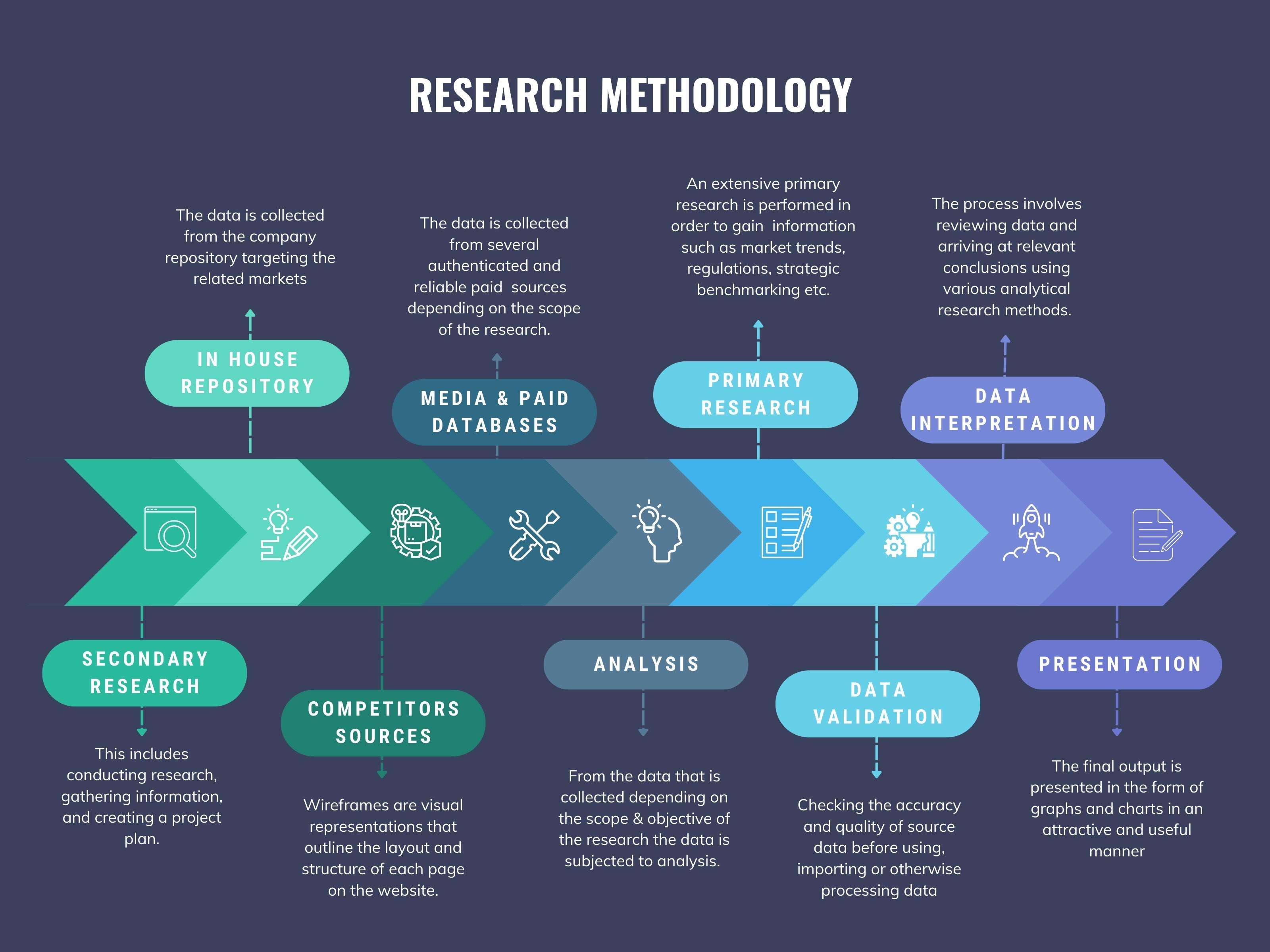
We at ‘Stratistics’ opt for an extensive research approach which involves data mining, data validation, and data analysis. The various research sources include in-house repository, secondary research, competitor’s sources, social media research, client internal data, and primary research.
Our team of analysts prefers the most reliable and authenticated data sources in order to perform the comprehensive literature search. With access to most of the authenticated data bases our team highly considers the best mix of information through various sources to obtain extensive and accurate analysis.
Each report takes an average time of a month and a team of 4 industry analysts. The time may vary depending on the scope and data availability of the desired market report. The various parameters used in the market assessment are standardized in order to enhance the data accuracy.
Data Mining
The data is collected from several authenticated, reliable, paid and unpaid sources and is filtered depending on the scope & objective of the research. Our reports repository acts as an added advantage in this procedure. Data gathering from the raw material suppliers, distributors and the manufacturers is performed on a regular basis, this helps in the comprehensive understanding of the products value chain. Apart from the above mentioned sources the data is also collected from the industry consultants to ensure the objective of the study is in the right direction.
Market trends such as technological advancements, regulatory affairs, market dynamics (Drivers, Restraints, Opportunities and Challenges) are obtained from scientific journals, market related national & international associations and organizations.
Data Analysis
From the data that is collected depending on the scope & objective of the research the data is subjected for the analysis. The critical steps that we follow for the data analysis include:
- Product Lifecycle Analysis
- Competitor analysis
- Risk analysis
- Porters Analysis
- PESTEL Analysis
- SWOT Analysis
The data engineering is performed by the core industry experts considering both the Marketing Mix Modeling and the Demand Forecasting. The marketing mix modeling makes use of multiple-regression techniques to predict the optimal mix of marketing variables. Regression factor is based on a number of variables and how they relate to an outcome such as sales or profits.
Data Validation
The data validation is performed by the exhaustive primary research from the expert interviews. This includes telephonic interviews, focus groups, face to face interviews, and questionnaires to validate our research from all aspects. The industry experts we approach come from the leading firms, involved in the supply chain ranging from the suppliers, distributors to the manufacturers and consumers so as to ensure an unbiased analysis.
We are in touch with more than 15,000 industry experts with the right mix of consultants, CEO's, presidents, vice presidents, managers, experts from both supply side and demand side, executives and so on.
The data validation involves the primary research from the industry experts belonging to:
- Leading Companies
- Suppliers & Distributors
- Manufacturers
- Consumers
- Industry/Strategic Consultants
Apart from the data validation the primary research also helps in performing the fill gap research, i.e. providing solutions for the unmet needs of the research which helps in enhancing the reports quality.
For more details about research methodology, kindly write to us at info@strategymrc.com
Frequently Asked Questions
In case of any queries regarding this report, you can contact the customer service by filing the “Inquiry Before Buy” form available on the right hand side. You may also contact us through email: info@strategymrc.com or phone: +1-301-202-5929
Yes, the samples are available for all the published reports. You can request them by filling the “Request Sample” option available in this page.
Yes, you can request a sample with your specific requirements. All the customized samples will be provided as per the requirement with the real data masked.
All our reports are available in Digital PDF format. In case if you require them in any other formats, such as PPT, Excel etc you can submit a request through “Inquiry Before Buy” form available on the right hand side. You may also contact us through email: info@strategymrc.com or phone: +1-301-202-5929
We offer a free 15% customization with every purchase. This requirement can be fulfilled for both pre and post sale. You may send your customization requirements through email at info@strategymrc.com or call us on +1-301-202-5929.
We have 3 different licensing options available in electronic format.
- Single User Licence: Allows one person, typically the buyer, to have access to the ordered product. The ordered product cannot be distributed to anyone else.
- 2-5 User Licence: Allows the ordered product to be shared among a maximum of 5 people within your organisation.
- Corporate License: Allows the product to be shared among all employees of your organisation regardless of their geographical location.
All our reports are typically be emailed to you as an attachment.
To order any available report you need to register on our website. The payment can be made either through CCAvenue or PayPal payments gateways which accept all international cards.
We extend our support to 6 months post sale. A post sale customization is also provided to cover your unmet needs in the report.
Request Customization
We offer complimentary customization of up to 15% with every purchase. To share your customization requirements, feel free to email us at info@strategymrc.com or call us on +1-301-202-5929. .
Please Note: Customization within the 15% threshold is entirely free of charge. If your request exceeds this limit, we will conduct a feasibility assessment. Following that, a detailed quote and timeline will be provided.
WHY CHOOSE US ?

Assured Quality
Best in class reports with high standard of research integrity

24X7 Research Support
Continuous support to ensure the best customer experience.

Free Customization
Adding more values to your product of interest.

Safe & Secure Access
Providing a secured environment for all online transactions.

Trusted by 600+ Brands
Serving the most reputed brands across the world.