
Automotive Common Rail Market
Automotive Common Rail Market Forecasts to 2034 – Global Analysis By System Component (High-Pressure Pumps, Common Rails and Accumulators, Fuel Injectors, and Electronic Control Units and Sensors), Injection Pressure Class, Fuel Type, Vehicle and Engine Application, and By Geography

Market Dynamics:
Driver:
Precise injection remains central to efficient diesel operation
Diesel engine developers need control over combustion throughout changing loads, temperatures and duty cycles. Common rail architecture provides flexibility to divide fuel delivery into carefully timed injections, helping balance torque, noise, fuel consumption and engine-out emissions. That flexibility is particularly valuable when an engine must work with exhaust treatment rather than rely on a single mechanical operating strategy. Commercial fleets also place a high value on predictable performance over long service lives. Together, these requirements sustain demand for robust injection platforms, even where passenger-car diesel demand is weaker than the commercial and industrial engine base.
Restraint:
Tight tolerances raise system and service costs
Common rail components operate with small clearances and demanding sealing requirements, making manufacturing quality and fuel cleanliness commercially significant. A pump or injector fault can affect other parts of the circuit and turn a localized problem into an expensive repair. Accurate diagnosis requires suitable equipment, trained technicians and reliable replacement specifications. These costs weigh most heavily on smaller engines and vehicles sold into price-sensitive markets. Increasing injection pressure is therefore not an automatic purchasing decision: manufacturers must justify the additional material, machining and validation expense against benefits achieved at the complete engine level.
Opportunity:
Renewable diesel and specialized engine platforms widen development work
Alternative diesel fuels create opportunities for suppliers able to validate injection performance across different lubricity and material-compatibility conditions. Agricultural and industrial engine makers also need compact electronic injection systems that fit established equipment layouts without adopting the cost structure of a large road engine. Modular pumps, scalable rails and application-specific controls can address these distinct requirements. Suppliers that combine hardware with calibration and durability testing are better positioned to secure whole-system contracts. The opportunity depends on verified fuel specifications and customer programs, rather than treating every renewable fuel blend as interchangeable in existing equipment.
Threat:
Electrification reduces the addressable passenger-car engine base
A battery-electric vehicle does not require diesel common rail injection, so a shift in vehicle production can remove an entire system from supplier demand. The exposure is uneven: urban passenger cars and delivery vehicles face different electrification economics from remote agricultural machinery and long-haul trucks. Suppliers concentrated on a narrow engine family may nevertheless experience lower utilization before replacement markets can compensate. Customer consolidation compounds this risk by reducing the number of independent engine platforms. Diversifying applications helps, but does not eliminate the possibility that new injection programs become fewer and larger over time.
Covid-19 Impact:
COVID-19 interrupted engine assembly, precision-component supply and vehicle distribution, reducing original-equipment demand for common rail systems during shutdown periods. Commercial and agricultural applications faced a different pattern from private cars because essential freight and food production continued, although maintenance access and parts availability were uneven. Deferred purchases could extend the operating life of existing diesel equipment, supporting repair needs while limiting new-system installations. As production resumed, suppliers had to coordinate pumps, injectors and electronics as a matched set, since shortages of one element could hold back delivery of the entire injection package.
The Fuel Injectors segment is expected to be the largest during the forecast period
Fuel Injectors are expected to represent the largest component segment because each engine requires several precision metering units and their performance directly determines combustion quality. Injector design must combine rapid actuation, repeatable delivery and durability in a severe thermal environment. The same installed engine base also creates replacement and remanufacturing demand as vehicles accumulate operating hours. Although high-pressure pumps are valuable assemblies, injector quantities and application-specific calibration provide a broad revenue base. This expected position reflects both original-equipment fitment and service needs, rather than assuming that all injector technologies command identical prices or replacement frequencies.
The Biodiesel and Renewable Diesel Blends segment is expected to have the highest CAGR during the forecast period
Biodiesel and Renewable Diesel Blends are anticipated to record the highest growth among the specified fuel categories as fleet operators examine lower-carbon options for equipment that will retain combustion engines. Fuel-system suppliers can support that transition through material selection, lubricity testing and validation of injection behavior. Adoption will vary with fuel availability, engine approvals and local operating economics; compatibility cannot be inferred solely from a renewable label. Nevertheless, the need to adapt existing diesel architectures gives this segment a clear development pathway and a smaller starting base than conventional diesel applications.
Region with largest share:
Asia Pacific is expected to hold the largest regional position because its vehicle manufacturing base spans light commercial vehicles, heavy trucks, agricultural equipment and numerous diesel-dependent transport applications. Local production networks can support both high-volume components and lower-cost system variants, while large operating fleets generate continuing repair demand. The regional opportunity extends beyond passenger-car preferences and depends strongly on freight, construction and mechanized agriculture. Differences in fuel quality and maintenance infrastructure also increase the value of robust filtration and service support. These factors provide a broad foundation for common rail demand across multiple engine classes.
Region with highest CAGR:
Asia Pacific is also projected to achieve the fastest regional growth as engine manufacturers balance tighter efficiency expectations with the practical need for durable, affordable commercial powertrains. Expansion of logistics and mechanized equipment can favor electronically controlled injection where older fuel-delivery systems remain in use. Local suppliers may gain business by adapting global technology to regional fuel and duty-cycle requirements. Growth will not be uniform, since electrification can displace some road applications while industrial engines follow a slower transition. The strongest prospects therefore lie in application-specific upgrades and diversified commercial-engine programs rather than indiscriminate diesel expansion.
Key players in the market
Some of the key players in the Automotive Common Rail Market include Robert Bosch GmbH, DENSO Corporation, BorgWarner Inc., AUMOVIO SE, Cummins Inc., Stanadyne LLC, Liebherr-International Deutschland GmbH, Woodward, Inc., Weifu High-Technology Group Co., Ltd., PHINIA Inc. (Delphi), Yanmar Holdings Co., Ltd., Isuzu Motors Limited, Caterpillar Inc., MAN Energy Solutions SE, and Tata AutoComp Systems Limited.
Key Developments:
In July 2026, PHINIA reported an award for a complete common rail system for agricultural applications, covering the rail, pump, injectors and electronic control unit. The contract illustrates demand for coordinated injection packages within the off-highway engine applications included in this market, rather than isolated component supply.
In September 2024, PHINIA launched its CR350 electronic common rail technology for Kohler small off-highway diesel engines. The compact system extended electronic injection into a lower-power equipment category, illustrating how common rail development also addresses packaging and cost constraints outside passenger vehicles and heavy road trucks.
In April 2024, Stanadyne announced that its two-piston diesel common rail pump had received an Automotive News PACE Award. The recognized design addressed compact packaging and operation with low-lubricity fuels, highlighting continued engineering attention to the pump within the wider electronically controlled diesel injection system.
System Components Covered:
• High-Pressure Pumps
• Common Rails and Accumulators
• Fuel Injectors
• Electronic Control Units and Sensors
Injection Pressure Classes Covered:
• Below 1,800 Bar
• 1,800 to 2,500 Bar
• Above 2,500 Bar
Fuel Types Covered:
• Diesel
• Biodiesel and Renewable Diesel Blends
• Dual-Fuel and Alternative Diesel Blends
Vehicle and Engine Applications Covered:
• Passenger Cars
• Light and Heavy Commercial Vehicles
• Off-Highway and Agricultural Equipment
• Marine and Stationary Engines
Regions Covered:
• North America
o United States
o Canada
o Mexico
• Europe
o United Kingdom
o Germany
o France
o Italy
o Spain
o Netherlands
o Belgium
o Sweden
o Switzerland
o Poland
o Rest of Europe
• Asia Pacific
o China
o Japan
o India
o South Korea
o Australia
o Indonesia
o Thailand
o Malaysia
o Singapore
o Vietnam
o Rest of Asia Pacific
• South America
o Brazil
o Argentina
o Colombia
o Chile
o Peru
o Rest of South America
• Rest of the World (RoW)
o Middle East
▪ Saudi Arabia
▪ United Arab Emirates
▪ Qatar
▪ Israel
▪ Rest of Middle East
o Africa
▪ South Africa
▪ Egypt
▪ Morocco
▪ Rest of Africa
What our report offers:
- Market share assessments for the regional and country-level segments
- Strategic recommendations for the new entrants
- Covers Market data for the years 2023, 2024, 2025, 2026, 2027, 2028, 2030, 2032 and 2034
- Market Trends (Drivers, Constraints, Opportunities, Threats, Challenges, Investment Opportunities, and recommendations)
- Strategic recommendations in key business segments based on the market estimations
- Competitive landscaping mapping the key common trends
- Company profiling with detailed strategies, financials, and recent developments
- Supply chain trends mapping the latest technological advancements
Free Customization Offerings:
All the customers of this report will be entitled to receive one of the following free customization options:
• Company Profiling
o Comprehensive profiling of additional market players (up to 3)
o SWOT Analysis of key players (up to 3)
• Regional Segmentation
o Market estimations, Forecasts and CAGR of any prominent country as per the client's interest (Note: Depends on feasibility check)
• Competitive Benchmarking
o Benchmarking of key players based on product portfolio, geographical presence, and strategic alliances
Table of Contents
1 Executive Summary1.1 Market Snapshot and Key Highlights
1.2 Growth Drivers, Challenges, and Opportunities
1.3 Competitive Landscape Overview
1.4 Strategic Insights and Recommendations
2 Research Framework
2.1 Study Objectives and Scope
2.2 Stakeholder Analysis
2.3 Research Assumptions and Limitations
2.4 Research Methodology
2.4.1 Data Collection (Primary and Secondary)
2.4.2 Data Modeling and Estimation Techniques
2.4.3 Data Validation and Triangulation
2.4.4 Analytical and Forecasting Approach
3 Market Dynamics and Trend Analysis
3.1 Market Definition and Structure
3.2 Key Market Drivers
3.3 Market Restraints and Challenges
3.4 Growth Opportunities and Investment Hotspots
3.5 Industry Threats and Risk Assessment
3.6 Technology and Innovation Landscape
3.7 Emerging and High-Growth Markets
3.8 Regulatory and Policy Environment
3.9 Impact of COVID-19 and Recovery Outlook
4 Competitive and Strategic Assessment
4.1 Porter's Five Forces Analysis
4.1.1 Supplier Bargaining Power
4.1.2 Buyer Bargaining Power
4.1.3 Threat of Substitutes
4.1.4 Threat of New Entrants
4.1.5 Competitive Rivalry
4.2 Market Share Analysis of Key Players
4.3 Product Benchmarking and Performance Comparison
5 Global Automotive Common Rail Market, By System Component
5.1 High-Pressure Pumps
5.2 Common Rails and Accumulators
5.3 Fuel Injectors
5.4 Electronic Control Units and Sensors
6 Global Automotive Common Rail Market, By Injection Pressure Class
6.1 Below 1,800 Bar
6.2 1,800 to 2,500 Bar
6.3 Above 2,500 Bar
7 Global Automotive Common Rail Market, By Fuel Type
7.1 Diesel
7.2 Biodiesel and Renewable Diesel Blends
7.3 Dual-Fuel and Alternative Diesel Blends
8 Global Automotive Common Rail Market, By Vehicle and Engine Application
8.1 Passenger Cars
8.2 Light and Heavy Commercial Vehicles
8.3 Off-Highway and Agricultural Equipment
8.4 Marine and Stationary Engines
9 Global Automotive Common Rail Market, By Geography
9.1 North America
9.1.1 United States
9.1.2 Canada
9.1.3 Mexico
9.2 Europe
9.2.1 United Kingdom
9.2.2 Germany
9.2.3 France
9.2.4 Italy
9.2.5 Spain
9.2.6 Netherlands
9.2.7 Belgium
9.2.8 Sweden
9.2.9 Switzerland
9.2.10 Poland
9.2.11 Rest of Europe
9.3 Asia Pacific
9.3.1 China
9.3.2 Japan
9.3.3 India
9.3.4 South Korea
9.3.5 Australia
9.3.6 Indonesia
9.3.7 Thailand
9.3.8 Malaysia
9.3.9 Singapore
9.3.10 Vietnam
9.3.11 Rest of Asia Pacific
9.4 South America
9.4.1 Brazil
9.4.2 Argentina
9.4.3 Colombia
9.4.4 Chile
9.4.5 Peru
9.4.6 Rest of South America
9.5 Rest of the World (RoW)
9.5.1 Middle East
9.5.1.1 Saudi Arabia
9.5.1.2 United Arab Emirates
9.5.1.3 Qatar
9.5.1.4 Israel
9.5.1.5 Rest of Middle East
9.5.2 Africa
9.5.2.1 South Africa
9.5.2.2 Egypt
9.5.2.3 Morocco
9.5.2.4 Rest of Africa
10 Strategic Market Intelligence
10.1 Industry Value Network and Supply Chain Assessment
10.2 White-Space and Opportunity Mapping
10.3 Product Evolution and Market Life Cycle Analysis
10.4 Channel, Distributor, and Go-to-Market Assessment
11 Industry Developments and Strategic Initiatives
11.1 Mergers and Acquisitions
11.2 Partnerships, Alliances, and Joint Ventures
11.3 New Product Launches and Certifications
11.4 Capacity Expansion and Investments
11.5 Other Strategic Initiatives
12 Company Profiles
12.1 Robert Bosch GmbH
12.2 DENSO Corporation
12.3 BorgWarner Inc.
12.4 AUMOVIO SE
12.5 Cummins Inc.
12.6 Stanadyne LLC
12.7 Liebherr-International Deutschland GmbH
12.8 Woodward, Inc.
12.9 Weifu High-Technology Group Co., Ltd.
12.10 PHINIA Inc. (Delphi)
12.11 Yanmar Holdings Co., Ltd.
12.12 Isuzu Motors Limited
12.13 Caterpillar Inc.
12.14 MAN Energy Solutions SE
12.15 Tata AutoComp Systems Limited
List of Tables
1 Global Automotive Common Rail Market Outlook, By Region (2023–2034) ($MN)
2 Global Automotive Common Rail Market Outlook, By System Component (2023–2034) ($MN)
3 Global Automotive Common Rail Market Outlook, By High-Pressure Pumps (2023–2034) ($MN)
4 Global Automotive Common Rail Market Outlook, By Common Rails and Accumulators (2023–2034) ($MN)
5 Global Automotive Common Rail Market Outlook, By Fuel Injectors (2023–2034) ($MN)
6 Global Automotive Common Rail Market Outlook, By Electronic Control Units and Sensors (2023–2034) ($MN)
7 Global Automotive Common Rail Market Outlook, By Injection Pressure Class (2023–2034) ($MN)
8 Global Automotive Common Rail Market Outlook, By Below 1,800 Bar (2023–2034) ($MN)
9 Global Automotive Common Rail Market Outlook, By 1,800 to 2,500 Bar (2023–2034) ($MN)
10 Global Automotive Common Rail Market Outlook, By Above 2,500 Bar (2023–2034) ($MN)
11 Global Automotive Common Rail Market Outlook, By Fuel Type (2023–2034) ($MN)
12 Global Automotive Common Rail Market Outlook, By Diesel (2023–2034) ($MN)
13 Global Automotive Common Rail Market Outlook, By Biodiesel and Renewable Diesel Blends (2023–2034) ($MN)
14 Global Automotive Common Rail Market Outlook, By Dual-Fuel and Alternative Diesel Blends (2023–2034) ($MN)
15 Global Automotive Common Rail Market Outlook, By Vehicle and Engine Application (2023–2034) ($MN)
16 Global Automotive Common Rail Market Outlook, By Passenger Cars (2023–2034) ($MN)
17 Global Automotive Common Rail Market Outlook, By Light and Heavy Commercial Vehicles (2023–2034) ($MN)
18 Global Automotive Common Rail Market Outlook, By Off-Highway and Agricultural Equipment (2023–2034) ($MN)
19 Global Automotive Common Rail Market Outlook, By Marine and Stationary Engines (2023–2034) ($MN)
Note: Tables for North America, Europe, APAC, South America, and Rest of the World (RoW) Regions are also represented in the same manner as above.
List of Figures
RESEARCH METHODOLOGY
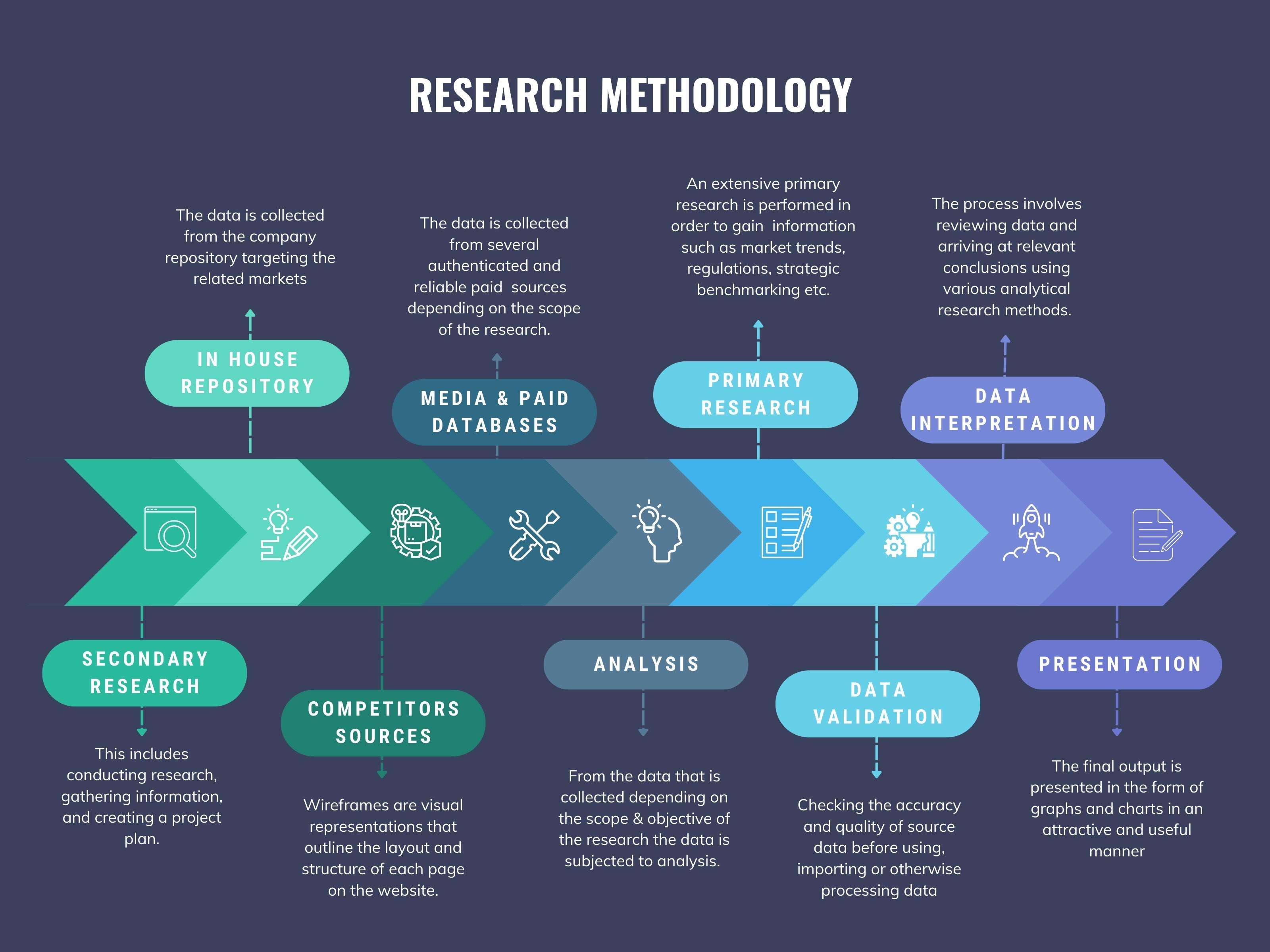
We at ‘Stratistics’ opt for an extensive research approach which involves data mining, data validation, and data analysis. The various research sources include in-house repository, secondary research, competitor’s sources, social media research, client internal data, and primary research.
Our team of analysts prefers the most reliable and authenticated data sources in order to perform the comprehensive literature search. With access to most of the authenticated data bases our team highly considers the best mix of information through various sources to obtain extensive and accurate analysis.
Each report takes an average time of a month and a team of 4 industry analysts. The time may vary depending on the scope and data availability of the desired market report. The various parameters used in the market assessment are standardized in order to enhance the data accuracy.
Data Mining
The data is collected from several authenticated, reliable, paid and unpaid sources and is filtered depending on the scope & objective of the research. Our reports repository acts as an added advantage in this procedure. Data gathering from the raw material suppliers, distributors and the manufacturers is performed on a regular basis, this helps in the comprehensive understanding of the products value chain. Apart from the above mentioned sources the data is also collected from the industry consultants to ensure the objective of the study is in the right direction.
Market trends such as technological advancements, regulatory affairs, market dynamics (Drivers, Restraints, Opportunities and Challenges) are obtained from scientific journals, market related national & international associations and organizations.
Data Analysis
From the data that is collected depending on the scope & objective of the research the data is subjected for the analysis. The critical steps that we follow for the data analysis include:
- Product Lifecycle Analysis
- Competitor analysis
- Risk analysis
- Porters Analysis
- PESTEL Analysis
- SWOT Analysis
The data engineering is performed by the core industry experts considering both the Marketing Mix Modeling and the Demand Forecasting. The marketing mix modeling makes use of multiple-regression techniques to predict the optimal mix of marketing variables. Regression factor is based on a number of variables and how they relate to an outcome such as sales or profits.
Data Validation
The data validation is performed by the exhaustive primary research from the expert interviews. This includes telephonic interviews, focus groups, face to face interviews, and questionnaires to validate our research from all aspects. The industry experts we approach come from the leading firms, involved in the supply chain ranging from the suppliers, distributors to the manufacturers and consumers so as to ensure an unbiased analysis.
We are in touch with more than 15,000 industry experts with the right mix of consultants, CEO's, presidents, vice presidents, managers, experts from both supply side and demand side, executives and so on.
The data validation involves the primary research from the industry experts belonging to:
- Leading Companies
- Suppliers & Distributors
- Manufacturers
- Consumers
- Industry/Strategic Consultants
Apart from the data validation the primary research also helps in performing the fill gap research, i.e. providing solutions for the unmet needs of the research which helps in enhancing the reports quality.
For more details about research methodology, kindly write to us at info@strategymrc.com
Frequently Asked Questions
In case of any queries regarding this report, you can contact the customer service by filing the “Inquiry Before Buy” form available on the right hand side. You may also contact us through email: info@strategymrc.com or phone: +1-301-202-5929
Yes, the samples are available for all the published reports. You can request them by filling the “Request Sample” option available in this page.
Yes, you can request a sample with your specific requirements. All the customized samples will be provided as per the requirement with the real data masked.
All our reports are available in Digital PDF format. In case if you require them in any other formats, such as PPT, Excel etc you can submit a request through “Inquiry Before Buy” form available on the right hand side. You may also contact us through email: info@strategymrc.com or phone: +1-301-202-5929
We offer a free 15% customization with every purchase. This requirement can be fulfilled for both pre and post sale. You may send your customization requirements through email at info@strategymrc.com or call us on +1-301-202-5929.
We have 3 different licensing options available in electronic format.
- Single User Licence: Allows one person, typically the buyer, to have access to the ordered product. The ordered product cannot be distributed to anyone else.
- 2-5 User Licence: Allows the ordered product to be shared among a maximum of 5 people within your organisation.
- Corporate License: Allows the product to be shared among all employees of your organisation regardless of their geographical location.
All our reports are typically be emailed to you as an attachment.
To order any available report you need to register on our website. The payment can be made either through CCAvenue or PayPal payments gateways which accept all international cards.
We extend our support to 6 months post sale. A post sale customization is also provided to cover your unmet needs in the report.
Request Customization
We offer complimentary customization of up to 15% with every purchase. To share your customization requirements, feel free to email us at info@strategymrc.com or call us on +1-301-202-5929. .
Please Note: Customization within the 15% threshold is entirely free of charge. If your request exceeds this limit, we will conduct a feasibility assessment. Following that, a detailed quote and timeline will be provided.
WHY CHOOSE US ?

Assured Quality
Best in class reports with high standard of research integrity

24X7 Research Support
Continuous support to ensure the best customer experience.

Free Customization
Adding more values to your product of interest.

Safe & Secure Access
Providing a secured environment for all online transactions.

Trusted by 600+ Brands
Serving the most reputed brands across the world.