Automotive Conductive Additive Market
Automotive Conductive Additive Market Forecasts to 2034 – Global Analysis By Additive Material (Carbon Black, Carbon Nanotubes, Graphene and Graphite, Carbon Nanofibers, and Metallic and Hybrid Conductive Additives), Battery Electrode Application, Product Form, Vehicle Type, and By Geography

Market Dynamics:
Driver:
Thicker and faster-charging electrodes need effective electrical contact
Cell producers seek more energy and faster charging without sacrificing durability or production yield. As electrode loading rises, conductive pathways must connect particles throughout a thicker coating. Silicon-containing anodes add another challenge because their volume changes can disrupt the network. Appropriate additives help manage resistance and maintain contact, allowing developers to make fuller use of active material. The commercial driver is therefore improved electrode performance within a workable manufacturing process. Suppliers that understand how an additive behaves during mixing, drying, and calendaring can contribute more value than those offering conductivity measurements without application-specific support.
Restraint:
Additive performance is highly dependent on the surrounding formulation
An additive that works well in one electrode may create excessive viscosity, poor coating quality, or undesirable surface reactions in another. High surface area can increase binder demand and affect electrolyte consumption, while inadequate dispersion produces uneven conductivity. Battery manufacturers must optimize several variables together rather than simply selecting the most conductive powder. This requires testing time, process expertise, and careful control of impurities. Cost is another constraint because additives occupy space that could store energy. Adoption depends on achieving a clear net improvement at practical loading levels and under the customer's actual production conditions.
Opportunity:
Blended and pre-dispersed products can reduce development complexity
Combining different conductive materials can create networks that balance long-range connections, local particle contact, and processability. Suppliers can offer blends or stable dispersions tailored to a cathode or anode system, reducing the number of variables a cell manufacturer must manage internally. Opportunities are emerging in high-silicon electrodes, dry processing, and other designs with demanding contact requirements. Regional formulation support can also accelerate troubleshooting during production ramps. The most attractive commercial proposition is a repeatable electrode result, including coating quality and cycling performance, rather than a claim that one additive is universally suitable for every battery chemistry.
Threat:
Optimization can reduce additive loading and intensify price competition
Better electrode engineering can lower the amount of conductive material required per cell, even as battery production expands. Customers may also replace a premium product with a lower-cost blend once they understand the process window more thoroughly. Changes in cathode chemistry, anode composition, or manufacturing route can redistribute demand among carbon black, nanotubes, and other additives. Suppliers concentrated in one formulation therefore face both volume and pricing risk. Maintaining technical support and a flexible product portfolio is important, because customer qualification provides continuity but does not prevent future redesigns that alter the preferred conductive network.
Covid-19 Impact:
The pandemic disturbed conductive-additive demand through interruptions in cell manufacturing and vehicle assembly. Specialized formulations also depended on technical exchanges that were harder to conduct when laboratories and customer sites operated under restrictions. Shipping uncertainty affected both powders and liquid dispersions, which have different storage and handling needs. Development programs did not stop uniformly, but qualification schedules became less predictable. As production recovered, customers sought dependable supply and clearer inventory planning. The period reinforced the importance of consistent material batches and responsive application support, particularly when factories were restarting or adjusting their electrode recipes.
The Carbon Black segment is expected to be the largest during the forecast period
Carbon Black is expected to be the largest material segment because it offers an established combination of conductivity, availability, and familiarity in battery-electrode processing. Many formulations use it alone or alongside more specialized conductive materials. Its role can extend across cathodes and anodes, supporting broad recurring demand once a cell design is qualified. Nanotubes and other advanced additives may deliver valuable improvements at lower concentrations, but they do not automatically replace every function of carbon black. The expected lead reflects its wide application base and practical economics, with continued development focused on purity, structure, and consistent dispersion.
The High-Silicon and Fast-Charge Formulations segment is expected to have the highest CAGR during the forecast period
High-Silicon and Fast-Charge Formulations are anticipated to grow fastest because they impose demanding requirements on electrical continuity and resistance. Silicon expansion can separate particles, while high charging currents expose weaknesses in the conductive network. These conditions encourage the use of tailored blends and additives that maintain connections through cycling. Growth will follow the qualification of associated cell designs rather than the availability of a new additive alone. Suppliers able to demonstrate durable performance at realistic electrode loading can benefit as manufacturers move beyond conventional recipes, particularly where the resulting improvement supports a vehicle's charging or range proposition.
Region with largest share:
Asia Pacific is expected to hold the largest share because regional cell manufacturers consume conductive additives across a wide variety of chemistries and production formats. Established supply relationships connect carbon-material producers with electrode coating operations and vehicle programs. The depth of manufacturing activity supports repeated optimization of mixing and dispersion methods. It also creates a competitive environment in which cost and batch consistency are closely scrutinized. Regional leadership is therefore supported by recurring electrode production and technical collaboration, while suppliers must continue adapting products as customers change active materials, loading levels, and manufacturing processes.
Region with highest CAGR:
North America is anticipated to achieve the highest growth as battery manufacturing expands and customers seek more localized supplies of specialized additives. The opportunity includes dispersion facilities and application laboratories as well as raw conductive-material production. Nearby technical support can help resolve coating and consistency problems during factory ramps. Growth remains sensitive to the timing of automotive cell programs and the outcome of planned investments. A smaller regional starting base creates room for expansion, but suppliers will need qualified products and dependable customer commitments to convert proposed capacity into sustained commercial demand.
Key players in the market
Some of the key players in the Automotive Conductive Additive Market include Cabot Corporation, Orion S.A., Imerys S.A., Denka Company Limited, LG Chem Ltd., OCSiAl S.A., Jiangsu Cnano Technology Co., Ltd., Arkema S.A., Birla Carbon, Tokai Carbon Co., Ltd., Resonac Corporation, SGL Carbon SE, Thomas Swan & Co. Ltd., and Mitsubishi Chemical Group Corporation.
Key Developments:
In July 2025, Cabot launched LITX 95F conductive carbon for stationary energy-storage batteries. This parent battery-additives development showed continued tailoring of carbon products to cell operating requirements. Its immediate target was energy storage, so it should not be treated as an announced automotive production qualification.
In September 2024, Cabot entered award negotiations for proposed U.S. production of battery-grade nanotubes and conductive dispersions. The planned facility addressed local supply of application-specific additives for electric vehicles and grid batteries. The announcement concerned potential funding support and did not confirm that manufacturing operations had begun.
In June 2024, OCSiAl announced completion of a Serbian facility for water-based single-walled nanotube dispersions. The project focused on supplying conductive networks for advanced batteries, including silicon-rich anodes, and illustrated the importance of scaling formulation capacity alongside production of the underlying nanotube material.
Additive Materials Covered:
• Carbon Black
• Carbon Nanotubes
• Graphene and Graphite
• Carbon Nanofibers
• Metallic and Hybrid Conductive Additives
Battery Electrode Applications Covered:
• Cathode Conductive Additives
• Anode Conductive Additives
• High-Silicon and Fast-Charge Formulations
• Solid-State and Emerging Battery Chemistries
Product Forms Covered:
• Powders
• Aqueous Dispersions
• Solvent-Based Dispersions
• Conductive Masterbatches
Vehicle Types Covered:
• Battery Electric Vehicles
• Plug-in Hybrid Vehicles
• Hybrid Vehicles
• Fuel Cell Electric Vehicles
Regions Covered:
• North America
o United States
o Canada
o Mexico
• Europe
o United Kingdom
o Germany
o France
o Italy
o Spain
o Netherlands
o Belgium
o Sweden
o Switzerland
o Poland
o Rest of Europe
• Asia Pacific
o China
o Japan
o India
o South Korea
o Australia
o Indonesia
o Thailand
o Malaysia
o Singapore
o Vietnam
o Rest of Asia Pacific
• South America
o Brazil
o Argentina
o Colombia
o Chile
o Peru
o Rest of South America
• Rest of the World (RoW)
o Middle East
▪ Saudi Arabia
▪ United Arab Emirates
▪ Qatar
▪ Israel
▪ Rest of Middle East
o Africa
▪ South Africa
▪ Egypt
▪ Morocco
▪ Rest of Africa
What our report offers:
- Market share assessments for the regional and country-level segments
- Strategic recommendations for the new entrants
- Covers Market data for the years 2023, 2024, 2025, 2026, 2027, 2028, 2030, 2032 and 2034
- Market Trends (Drivers, Constraints, Opportunities, Threats, Challenges, Investment Opportunities, and recommendations)
- Strategic recommendations in key business segments based on the market estimations
- Competitive landscaping mapping the key common trends
- Company profiling with detailed strategies, financials, and recent developments
- Supply chain trends mapping the latest technological advancements
Free Customization Offerings:
All the customers of this report will be entitled to receive one of the following free customization options:
• Company Profiling
o Comprehensive profiling of additional market players (up to 3)
o SWOT Analysis of key players (up to 3)
• Regional Segmentation
o Market estimations, Forecasts and CAGR of any prominent country as per the client's interest (Note: Depends on feasibility check)
• Competitive Benchmarking
o Benchmarking of key players based on product portfolio, geographical presence, and strategic alliances
Table of Contents
1 Executive Summary1.1 Market Snapshot and Key Highlights
1.2 Growth Drivers, Challenges, and Opportunities
1.3 Competitive Landscape Overview
1.4 Strategic Insights and Recommendations
2 Research Framework
2.1 Study Objectives and Scope
2.2 Stakeholder Analysis
2.3 Research Assumptions and Limitations
2.4 Research Methodology
2.4.1 Data Collection (Primary and Secondary)
2.4.2 Data Modeling and Estimation Techniques
2.4.3 Data Validation and Triangulation
2.4.4 Analytical and Forecasting Approach
3 Market Dynamics and Trend Analysis
3.1 Market Definition and Structure
3.2 Key Market Drivers
3.3 Market Restraints and Challenges
3.4 Growth Opportunities and Investment Hotspots
3.5 Industry Threats and Risk Assessment
3.6 Technology and Innovation Landscape
3.7 Emerging and High-Growth Markets
3.8 Regulatory and Policy Environment
3.9 Impact of COVID-19 and Recovery Outlook
4 Competitive and Strategic Assessment
4.1 Porter's Five Forces Analysis
4.1.1 Supplier Bargaining Power
4.1.2 Buyer Bargaining Power
4.1.3 Threat of Substitutes
4.1.4 Threat of New Entrants
4.1.5 Competitive Rivalry
4.2 Market Share Analysis of Key Players
4.3 Product Benchmarking and Performance Comparison
5 Global Automotive Conductive Additive Market, By Additive Material
5.1 Carbon Black
5.2 Carbon Nanotubes
5.3 Graphene and Graphite
5.4 Carbon Nanofibers
5.5 Metallic and Hybrid Conductive Additives
6 Global Automotive Conductive Additive Market, By Battery Electrode Application
6.1 Cathode Conductive Additives
6.2 Anode Conductive Additives
6.3 High-Silicon and Fast-Charge Formulations
6.4 Solid-State and Emerging Battery Chemistries
7 Global Automotive Conductive Additive Market, By Product Form
7.1 Powders
7.2 Aqueous Dispersions
7.3 Solvent-Based Dispersions
7.4 Conductive Masterbatches
8 Global Automotive Conductive Additive Market, By Vehicle Type
8.1 Battery Electric Vehicles
8.2 Plug-in Hybrid Vehicles
8.3 Hybrid Vehicles
8.4 Fuel Cell Electric Vehicles
9 Global Automotive Conductive Additive Market, By Geography
9.1 North America
9.1.1 United States
9.1.2 Canada
9.1.3 Mexico
9.2 Europe
9.2.1 United Kingdom
9.2.2 Germany
9.2.3 France
9.2.4 Italy
9.2.5 Spain
9.2.6 Netherlands
9.2.7 Belgium
9.2.8 Sweden
9.2.9 Switzerland
9.2.10 Poland
9.2.11 Rest of Europe
9.3 Asia Pacific
9.3.1 China
9.3.2 Japan
9.3.3 India
9.3.4 South Korea
9.3.5 Australia
9.3.6 Indonesia
9.3.7 Thailand
9.3.8 Malaysia
9.3.9 Singapore
9.3.10 Vietnam
9.3.11 Rest of Asia Pacific
9.4 South America
9.4.1 Brazil
9.4.2 Argentina
9.4.3 Colombia
9.4.4 Chile
9.4.5 Peru
9.4.6 Rest of South America
9.5 Rest of the World (RoW)
9.5.1 Middle East
9.5.1.1 Saudi Arabia
9.5.1.2 United Arab Emirates
9.5.1.3 Qatar
9.5.1.4 Israel
9.5.1.5 Rest of Middle East
9.5.2 Africa
9.5.2.1 South Africa
9.5.2.2 Egypt
9.5.2.3 Morocco
9.5.2.4 Rest of Africa
10 Strategic Market Intelligence
10.1 Industry Value Network and Supply Chain Assessment
10.2 White-Space and Opportunity Mapping
10.3 Product Evolution and Market Life Cycle Analysis
10.4 Channel, Distributor, and Go-to-Market Assessment
11 Industry Developments and Strategic Initiatives
11.1 Mergers and Acquisitions
11.2 Partnerships, Alliances, and Joint Ventures
11.3 New Product Launches and Certifications
11.4 Capacity Expansion and Investments
11.5 Other Strategic Initiatives
12 Company Profiles
12.1 Cabot Corporation
12.2 Orion S.A.
12.3 Imerys S.A.
12.4 Denka Company Limited
12.5 LG Chem Ltd.
12.6 OCSiAl S.A.
12.7 Jiangsu Cnano Technology Co., Ltd.
12.8 Arkema S.A.
12.9 Birla Carbon
12.10 Tokai Carbon Co., Ltd.
12.11 Resonac Corporation
12.12 SGL Carbon SE
12.13 Thomas Swan & Co. Ltd.
12.14 Mitsubishi Chemical Group Corporation
List of Tables
1 Global Automotive Conductive Additive Market Outlook, By Region (2023–2034) ($MN)
2 Global Automotive Conductive Additive Market Outlook, By Additive Material (2023–2034) ($MN)
3 Global Automotive Conductive Additive Market Outlook, By Carbon Black (2023–2034) ($MN)
4 Global Automotive Conductive Additive Market Outlook, By Carbon Nanotubes (2023–2034) ($MN)
5 Global Automotive Conductive Additive Market Outlook, By Graphene and Graphite (2023–2034) ($MN)
6 Global Automotive Conductive Additive Market Outlook, By Carbon Nanofibers (2023–2034) ($MN)
7 Global Automotive Conductive Additive Market Outlook, By Metallic and Hybrid Conductive Additives (2023–2034) ($MN)
8 Global Automotive Conductive Additive Market Outlook, By Battery Electrode Application (2023–2034) ($MN)
9 Global Automotive Conductive Additive Market Outlook, By Cathode Conductive Additives (2023–2034) ($MN)
10 Global Automotive Conductive Additive Market Outlook, By Anode Conductive Additives (2023–2034) ($MN)
11 Global Automotive Conductive Additive Market Outlook, By High-Silicon and Fast-Charge Formulations (2023–2034) ($MN)
12 Global Automotive Conductive Additive Market Outlook, By Solid-State and Emerging Battery Chemistries (2023–2034) ($MN)
13 Global Automotive Conductive Additive Market Outlook, By Product Form (2023–2034) ($MN)
14 Global Automotive Conductive Additive Market Outlook, By Powders (2023–2034) ($MN)
15 Global Automotive Conductive Additive Market Outlook, By Aqueous Dispersions (2023–2034) ($MN)
16 Global Automotive Conductive Additive Market Outlook, By Solvent-Based Dispersions (2023–2034) ($MN)
17 Global Automotive Conductive Additive Market Outlook, By Conductive Masterbatches (2023–2034) ($MN)
18 Global Automotive Conductive Additive Market Outlook, By Vehicle Type (2023–2034) ($MN)
19 Global Automotive Conductive Additive Market Outlook, By Battery Electric Vehicles (2023–2034) ($MN)
20 Global Automotive Conductive Additive Market Outlook, By Plug-in Hybrid Vehicles (2023–2034) ($MN)
21 Global Automotive Conductive Additive Market Outlook, By Hybrid Vehicles (2023–2034) ($MN)
22 Global Automotive Conductive Additive Market Outlook, By Fuel Cell Electric Vehicles (2023–2034) ($MN)
Note: Tables for North America, Europe, APAC, South America, and Rest of the World (RoW) Regions are also represented in the same manner as above.
List of Figures
RESEARCH METHODOLOGY
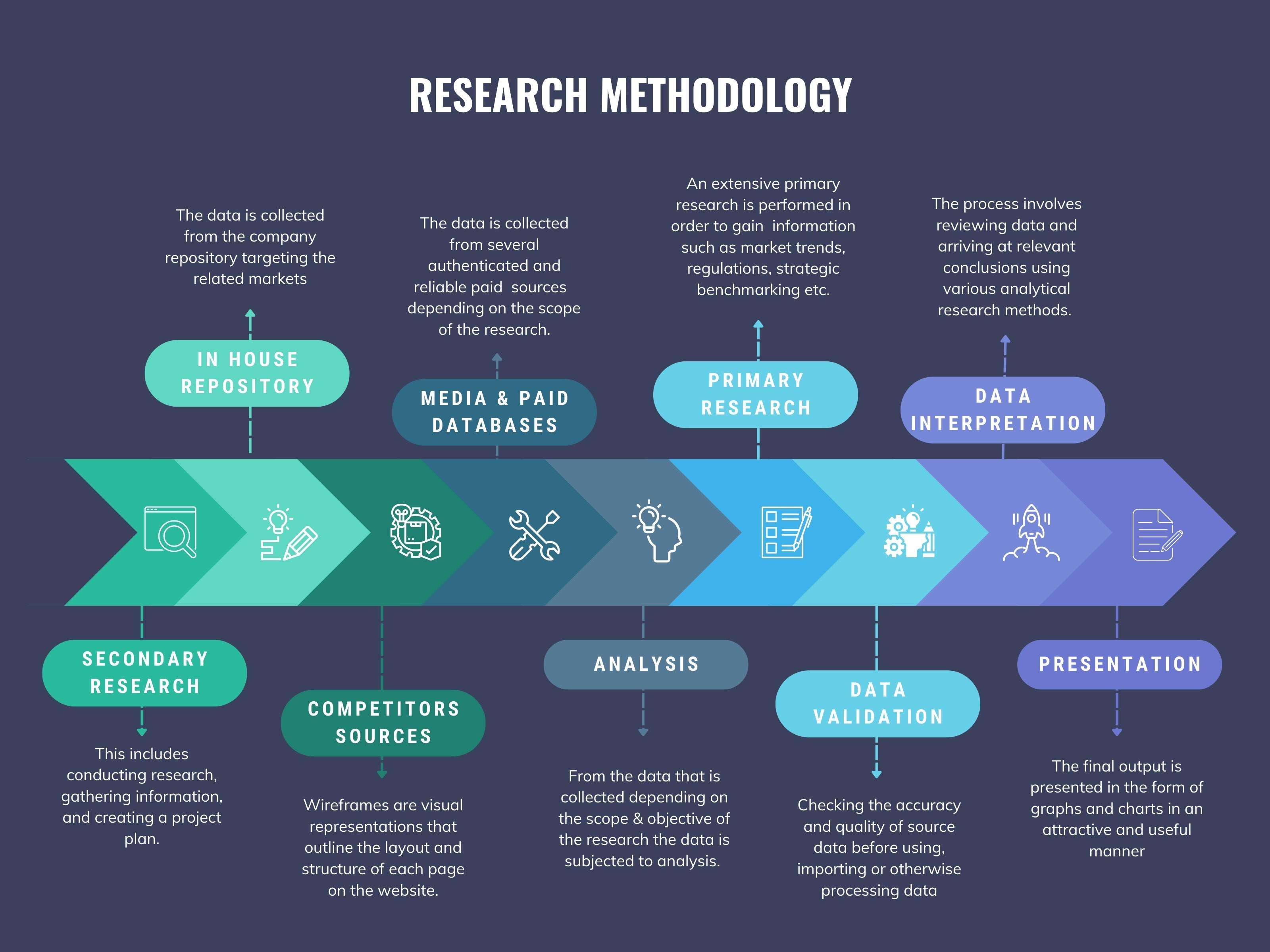
We at ‘Stratistics’ opt for an extensive research approach which involves data mining, data validation, and data analysis. The various research sources include in-house repository, secondary research, competitor’s sources, social media research, client internal data, and primary research.
Our team of analysts prefers the most reliable and authenticated data sources in order to perform the comprehensive literature search. With access to most of the authenticated data bases our team highly considers the best mix of information through various sources to obtain extensive and accurate analysis.
Each report takes an average time of a month and a team of 4 industry analysts. The time may vary depending on the scope and data availability of the desired market report. The various parameters used in the market assessment are standardized in order to enhance the data accuracy.
Data Mining
The data is collected from several authenticated, reliable, paid and unpaid sources and is filtered depending on the scope & objective of the research. Our reports repository acts as an added advantage in this procedure. Data gathering from the raw material suppliers, distributors and the manufacturers is performed on a regular basis, this helps in the comprehensive understanding of the products value chain. Apart from the above mentioned sources the data is also collected from the industry consultants to ensure the objective of the study is in the right direction.
Market trends such as technological advancements, regulatory affairs, market dynamics (Drivers, Restraints, Opportunities and Challenges) are obtained from scientific journals, market related national & international associations and organizations.
Data Analysis
From the data that is collected depending on the scope & objective of the research the data is subjected for the analysis. The critical steps that we follow for the data analysis include:
- Product Lifecycle Analysis
- Competitor analysis
- Risk analysis
- Porters Analysis
- PESTEL Analysis
- SWOT Analysis
The data engineering is performed by the core industry experts considering both the Marketing Mix Modeling and the Demand Forecasting. The marketing mix modeling makes use of multiple-regression techniques to predict the optimal mix of marketing variables. Regression factor is based on a number of variables and how they relate to an outcome such as sales or profits.
Data Validation
The data validation is performed by the exhaustive primary research from the expert interviews. This includes telephonic interviews, focus groups, face to face interviews, and questionnaires to validate our research from all aspects. The industry experts we approach come from the leading firms, involved in the supply chain ranging from the suppliers, distributors to the manufacturers and consumers so as to ensure an unbiased analysis.
We are in touch with more than 15,000 industry experts with the right mix of consultants, CEO's, presidents, vice presidents, managers, experts from both supply side and demand side, executives and so on.
The data validation involves the primary research from the industry experts belonging to:
- Leading Companies
- Suppliers & Distributors
- Manufacturers
- Consumers
- Industry/Strategic Consultants
Apart from the data validation the primary research also helps in performing the fill gap research, i.e. providing solutions for the unmet needs of the research which helps in enhancing the reports quality.
For more details about research methodology, kindly write to us at info@strategymrc.com
Frequently Asked Questions
In case of any queries regarding this report, you can contact the customer service by filing the “Inquiry Before Buy” form available on the right hand side. You may also contact us through email: info@strategymrc.com or phone: +1-301-202-5929
Yes, the samples are available for all the published reports. You can request them by filling the “Request Sample” option available in this page.
Yes, you can request a sample with your specific requirements. All the customized samples will be provided as per the requirement with the real data masked.
All our reports are available in Digital PDF format. In case if you require them in any other formats, such as PPT, Excel etc you can submit a request through “Inquiry Before Buy” form available on the right hand side. You may also contact us through email: info@strategymrc.com or phone: +1-301-202-5929
We offer a free 15% customization with every purchase. This requirement can be fulfilled for both pre and post sale. You may send your customization requirements through email at info@strategymrc.com or call us on +1-301-202-5929.
We have 3 different licensing options available in electronic format.
- Single User Licence: Allows one person, typically the buyer, to have access to the ordered product. The ordered product cannot be distributed to anyone else.
- 2-5 User Licence: Allows the ordered product to be shared among a maximum of 5 people within your organisation.
- Corporate License: Allows the product to be shared among all employees of your organisation regardless of their geographical location.
All our reports are typically be emailed to you as an attachment.
To order any available report you need to register on our website. The payment can be made either through CCAvenue or PayPal payments gateways which accept all international cards.
We extend our support to 6 months post sale. A post sale customization is also provided to cover your unmet needs in the report.
Request Customization
We offer complimentary customization of up to 15% with every purchase. To share your customization requirements, feel free to email us at info@strategymrc.com or call us on +1-301-202-5929. .
Please Note: Customization within the 15% threshold is entirely free of charge. If your request exceeds this limit, we will conduct a feasibility assessment. Following that, a detailed quote and timeline will be provided.
WHY CHOOSE US ?

Assured Quality
Best in class reports with high standard of research integrity

24X7 Research Support
Continuous support to ensure the best customer experience.

Free Customization
Adding more values to your product of interest.

Safe & Secure Access
Providing a secured environment for all online transactions.

Trusted by 600+ Brands
Serving the most reputed brands across the world.