
Automotive Front Radar Market
Automotive Front Radar Market Forecasts to 2034 – Global Analysis By Frequency Band (24 GHz, 77 GHz, and 79 GHz Ultra-Wideband), Radar Range, ADAS Function, Vehicle Type, and By Geography

Market Dynamics:
Driver:
Forward assistance needs dependable range and relative-speed information
Maintaining distance from a vehicle ahead requires more than recognizing its appearance. Front radar provides measurements of range and relative motion that are directly useful to longitudinal driving functions. Its operation is also less dependent on visible illumination than a conventional camera, making it a valuable part of a combined perception system. Automakers can use the same forward sensor across several assistance features when its coverage and processing are appropriate. Demand therefore grows with the need for consistent vehicle behavior across ordinary highway, urban, and changing-light conditions.
Restraint:
Higher resolution increases system demands beyond the radar chip
Separating small or closely spaced targets can require more antenna channels, richer signal processing, and greater data throughput. These improvements must fit vehicle power, cooling, packaging, and cost limits. The front fascia also affects the radio path, and installation tolerances can influence where the sensor appears to see objects. Engineers must validate performance across road profiles, barriers, overhead structures, and unusual traffic arrangements. A design that improves one specification may introduce new integration work elsewhere. This makes practical vehicle-level performance more important than maximizing any isolated radar metric.
Opportunity:
Imaging radar can improve interpretation of difficult road scenes
Imaging radar creates opportunities to obtain a richer description of the environment while retaining radar's useful motion information. Better angular separation can help distinguish traffic from nearby structures or identify hazards that would otherwise merge into a coarse detection. Semiconductor suppliers can support this development with integrated transceivers and processors, while system suppliers contribute calibration and perception software. Opportunities are strongest where the additional information improves a defined driving function. Efficient interfaces and scalable processing will help automakers apply the technology across more than a small group of premium vehicles.
Threat:
Errors in scene interpretation can limit driver confidence and deployment
Unexpected braking, missed targets, or inconsistent tracking can weaken acceptance of assistance systems even when the underlying radar hardware meets its specifications. Road geometry, multipath reflections, and interactions with other sensors all affect the final decision. Automakers may respond by changing the sensor mix, limiting the operating conditions of a feature, or moving more processing into their own software stack. Those changes can alter supplier opportunities. Front-radar companies must therefore maintain strong integration support and credible validation evidence while competing against alternative perception architectures and increasingly demanding customer cost targets.
Covid-19 Impact:
The pandemic delayed vehicle programs and made radar semiconductor supply less predictable. Forward-radar validation also depended on access to test vehicles, proving grounds, and repeatable road scenarios, activities that were disrupted by travel and workplace restrictions. Production recovery did not remove every constraint at once because sensors, control units, and associated electronics had to become available together. Suppliers consequently faced shifting launch schedules and changing demand forecasts. The experience strengthened the case for scalable hardware platforms and clearer supply planning, while preserving the need for full vehicle testing before an assistance function could be released.
The Long-Range Front Radar segment is expected to be the largest during the forecast period
Long-Range Front Radar is expected to be the largest segment because established forward-driving functions benefit from detecting relevant traffic early enough for smooth control decisions. Highway following and forward-collision assessment require useful information beyond the immediate vicinity of the bumper. A long-range sensor can provide that foundation while additional sensors address side coverage and close maneuvering. The segment's commercial strength comes from its role in widely applicable driving functions, not simply maximum detection distance. Manufacturers still need adequate angular coverage and robust target tracking to make the range useful in everyday traffic.
The Imaging and High-Resolution Radar segment is expected to have the highest CAGR during the forecast period
Imaging and High-Resolution Radar is anticipated to have the highest CAGR as assistance systems require more detailed interpretation of the road ahead. Additional spatial information can help separate objects, characterize complex scenes, and support more demanding perception software. Integrated semiconductor designs may make these capabilities easier to package and scale over time. Growth will depend on processing efficiency and the ability to demonstrate fewer ambiguities at the vehicle level. Suppliers that connect improved resolution to practical driving outcomes should find stronger demand than those promoting a larger channel count without a clear application benefit.
Region with largest share:
Asia Pacific is expected to maintain the largest share because major automotive production centers are expanding assistance features across a wide range of vehicle prices. Regional electronics capabilities and active competition among automakers support the integration of front radar into shared platforms. Dense traffic and varied road conditions also create a substantial validation challenge, encouraging demand for adaptable sensing and software. The market includes both mature radar functions and more advanced perception programs. Suppliers that offer a credible path from cost-sensitive modules to higher-resolution designs can serve a broader set of regional customers.
Region with highest CAGR:
North America is projected to record the highest CAGR as manufacturers develop more capable highway assistance and automated-driving functions for passenger and commercial vehicles. Long-distance driving and a strong ecosystem of perception software, semiconductor, and vehicle-development companies support investment in richer forward sensing. The opportunity is likely to center on radar performance within a complete system rather than standalone hardware volume alone. Customers will expect reliable operation across varied weather and road layouts. Suppliers with strong validation, software interfaces, and scalable processing options should be positioned to address these evolving program requirements.
Key players in the market
Some of the key players in the Automotive Front Radar Market include Robert Bosch GmbH, AUMOVIO SE, Aptiv PLC, Valeo SE, DENSO Corporation, ZF Friedrichshafen AG, HELLA GmbH & Co. KGaA, NXP Semiconductors N.V., Infineon Technologies AG, Texas Instruments Incorporated, Analog Devices, Inc., Arbe Robotics Ltd., Smartmicro GmbH, Magna International Inc., and Veoneer, Inc.
Key Developments:
In June 2026, NXP introduced the SAF8444 radar system-on-chip for mainstream front and corner ADAS designs. The pre-production device combined radio-frequency sensing with embedded processing intended to reduce system complexity. Its supported functions included adaptive cruise control and emergency braking, illustrating the move toward more intelligence at the radar sensor.
In January 2026, Texas Instruments announced the AWR2188 eight-by-eight imaging-radar transceiver. The device was designed to support higher-resolution sensing with fewer cascaded components and to work in both centralized and edge-processing architectures. For front-radar programs, the release expands options for interpreting complex road scenes at longer distances.
In May 2025, NXP unveiled its S32R47 imaging-radar processor family. The company targeted more demanding automated-driving perception, including improved detection of vulnerable road users and road hazards. The processor announcement addressed the computing requirements associated with higher-resolution radar rather than announcing a complete production vehicle system.
Frequency Bands Covered:
• 24 GHz
• 77 GHz
• 79 GHz Ultra-Wideband
Radar Ranges Covered:
• Long-Range Front Radar
• Medium-Range Front Radar
• Imaging and High-Resolution Radar
ADAS Functions Covered:
• Adaptive Cruise Control
• Automatic Emergency Braking and Forward Collision Warning
• Highway and Traffic-Jam Assist
• Object Classification
Vehicle Types Covered:
• Passenger Cars
• Light Commercial Vehicles
• Heavy Commercial Vehicles
Regions Covered:
• North America
o United States
o Canada
o Mexico
• Europe
o United Kingdom
o Germany
o France
o Italy
o Spain
o Netherlands
o Belgium
o Sweden
o Switzerland
o Poland
o Rest of Europe
• Asia Pacific
o China
o Japan
o India
o South Korea
o Australia
o Indonesia
o Thailand
o Malaysia
o Singapore
o Vietnam
o Rest of Asia Pacific
• South America
o Brazil
o Argentina
o Colombia
o Chile
o Peru
o Rest of South America
• Rest of the World (RoW)
o Middle East
▪ Saudi Arabia
▪ United Arab Emirates
▪ Qatar
▪ Israel
▪ Rest of Middle East
o Africa
▪ South Africa
▪ Egypt
▪ Morocco
▪ Rest of Africa
What our report offers:
- Market share assessments for the regional and country-level segments
- Strategic recommendations for the new entrants
- Covers Market data for the years 2023, 2024, 2025, 2026, 2027, 2028, 2030, 2032 and 2034
- Market Trends (Drivers, Constraints, Opportunities, Threats, Challenges, Investment Opportunities, and recommendations)
- Strategic recommendations in key business segments based on the market estimations
- Competitive landscaping mapping the key common trends
- Company profiling with detailed strategies, financials, and recent developments
- Supply chain trends mapping the latest technological advancements
Free Customization Offerings:
All the customers of this report will be entitled to receive one of the following free customization options:
• Company Profiling
o Comprehensive profiling of additional market players (up to 3)
o SWOT Analysis of key players (up to 3)
• Regional Segmentation
o Market estimations, Forecasts and CAGR of any prominent country as per the client's interest (Note: Depends on feasibility check)
• Competitive Benchmarking
o Benchmarking of key players based on product portfolio, geographical presence, and strategic alliances
Table of Contents
1 Executive Summary1.1 Market Snapshot and Key Highlights
1.2 Growth Drivers, Challenges, and Opportunities
1.3 Competitive Landscape Overview
1.4 Strategic Insights and Recommendations
2 Research Framework
2.1 Study Objectives and Scope
2.2 Stakeholder Analysis
2.3 Research Assumptions and Limitations
2.4 Research Methodology
2.4.1 Data Collection (Primary and Secondary)
2.4.2 Data Modeling and Estimation Techniques
2.4.3 Data Validation and Triangulation
2.4.4 Analytical and Forecasting Approach
3 Market Dynamics and Trend Analysis
3.1 Market Definition and Structure
3.2 Key Market Drivers
3.3 Market Restraints and Challenges
3.4 Growth Opportunities and Investment Hotspots
3.5 Industry Threats and Risk Assessment
3.6 Technology and Innovation Landscape
3.7 Emerging and High-Growth Markets
3.8 Regulatory and Policy Environment
3.9 Impact of COVID-19 and Recovery Outlook
4 Competitive and Strategic Assessment
4.1 Porter's Five Forces Analysis
4.1.1 Supplier Bargaining Power
4.1.2 Buyer Bargaining Power
4.1.3 Threat of Substitutes
4.1.4 Threat of New Entrants
4.1.5 Competitive Rivalry
4.2 Market Share Analysis of Key Players
4.3 Product Benchmarking and Performance Comparison
5 Global Automotive Front Radar Market, By Frequency Band
5.1 24 GHz
5.2 77 GHz
5.3 79 GHz Ultra-Wideband
6 Global Automotive Front Radar Market, By Radar Range
6.1 Long-Range Front Radar
6.2 Medium-Range Front Radar
6.3 Imaging and High-Resolution Radar
7 Global Automotive Front Radar Market, By ADAS Function
7.1 Adaptive Cruise Control
7.2 Automatic Emergency Braking and Forward Collision Warning
7.3 Highway and Traffic-Jam Assist
7.4 Object Classification
8 Global Automotive Front Radar Market, By Vehicle Type
8.1 Passenger Cars
8.2 Light Commercial Vehicles
8.3 Heavy Commercial Vehicles
9 Global Automotive Front Radar Market, By Geography
9.1 North America
9.1.1 United States
9.1.2 Canada
9.1.3 Mexico
9.2 Europe
9.2.1 United Kingdom
9.2.2 Germany
9.2.3 France
9.2.4 Italy
9.2.5 Spain
9.2.6 Netherlands
9.2.7 Belgium
9.2.8 Sweden
9.2.9 Switzerland
9.2.10 Poland
9.2.11 Rest of Europe
9.3 Asia Pacific
9.3.1 China
9.3.2 Japan
9.3.3 India
9.3.4 South Korea
9.3.5 Australia
9.3.6 Indonesia
9.3.7 Thailand
9.3.8 Malaysia
9.3.9 Singapore
9.3.10 Vietnam
9.3.11 Rest of Asia Pacific
9.4 South America
9.4.1 Brazil
9.4.2 Argentina
9.4.3 Colombia
9.4.4 Chile
9.4.5 Peru
9.4.6 Rest of South America
9.5 Rest of the World (RoW)
9.5.1 Middle East
9.5.1.1 Saudi Arabia
9.5.1.2 United Arab Emirates
9.5.1.3 Qatar
9.5.1.4 Israel
9.5.1.5 Rest of Middle East
9.5.2 Africa
9.5.2.1 South Africa
9.5.2.2 Egypt
9.5.2.3 Morocco
9.5.2.4 Rest of Africa
10 Strategic Market Intelligence
10.1 Industry Value Network and Supply Chain Assessment
10.2 White-Space and Opportunity Mapping
10.3 Product Evolution and Market Life Cycle Analysis
10.4 Channel, Distributor, and Go-to-Market Assessment
11 Industry Developments and Strategic Initiatives
11.1 Mergers and Acquisitions
11.2 Partnerships, Alliances, and Joint Ventures
11.3 New Product Launches and Certifications
11.4 Capacity Expansion and Investments
11.5 Other Strategic Initiatives
12 Company Profiles
12.1 Robert Bosch GmbH
12.2 AUMOVIO SE
12.3 Aptiv PLC
12.4 Valeo SE
12.5 DENSO Corporation
12.6 ZF Friedrichshafen AG
12.7 HELLA GmbH & Co. KGaA
12.8 NXP Semiconductors N.V.
12.9 Infineon Technologies AG
12.10 Texas Instruments Incorporated
12.11 Analog Devices, Inc.
12.12 Arbe Robotics Ltd.
12.13 Smartmicro GmbH
12.14 Magna International Inc.
12.15 Veoneer, Inc.
List of Tables
1 Global Automotive Front Radar Market Outlook, By Region (2023–2034) ($MN)
2 Global Automotive Front Radar Market Outlook, By Frequency Band (2023–2034) ($MN)
3 Global Automotive Front Radar Market Outlook, By 24 GHz (2023–2034) ($MN)
4 Global Automotive Front Radar Market Outlook, By 77 GHz (2023–2034) ($MN)
5 Global Automotive Front Radar Market Outlook, By 79 GHz Ultra-Wideband (2023–2034) ($MN)
6 Global Automotive Front Radar Market Outlook, By Radar Range (2023–2034) ($MN)
7 Global Automotive Front Radar Market Outlook, By Long-Range Front Radar (2023–2034) ($MN)
8 Global Automotive Front Radar Market Outlook, By Medium-Range Front Radar (2023–2034) ($MN)
9 Global Automotive Front Radar Market Outlook, By Imaging and High-Resolution Radar (2023–2034) ($MN)
10 Global Automotive Front Radar Market Outlook, By ADAS Function (2023–2034) ($MN)
11 Global Automotive Front Radar Market Outlook, By Adaptive Cruise Control (2023–2034) ($MN)
12 Global Automotive Front Radar Market Outlook, By Automatic Emergency Braking and Forward Collision Warning (2023–2034) ($MN)
13 Global Automotive Front Radar Market Outlook, By Highway and Traffic-Jam Assist (2023–2034) ($MN)
14 Global Automotive Front Radar Market Outlook, By Object Classification (2023–2034) ($MN)
15 Global Automotive Front Radar Market Outlook, By Vehicle Type (2023–2034) ($MN)
16 Global Automotive Front Radar Market Outlook, By Passenger Cars (2023–2034) ($MN)
17 Global Automotive Front Radar Market Outlook, By Light Commercial Vehicles (2023–2034) ($MN)
18 Global Automotive Front Radar Market Outlook, By Heavy Commercial Vehicles (2023–2034) ($MN)
Note: Tables for North America, Europe, APAC, South America, and Rest of the World (RoW) Regions are also represented in the same manner as above.
List of Figures
RESEARCH METHODOLOGY
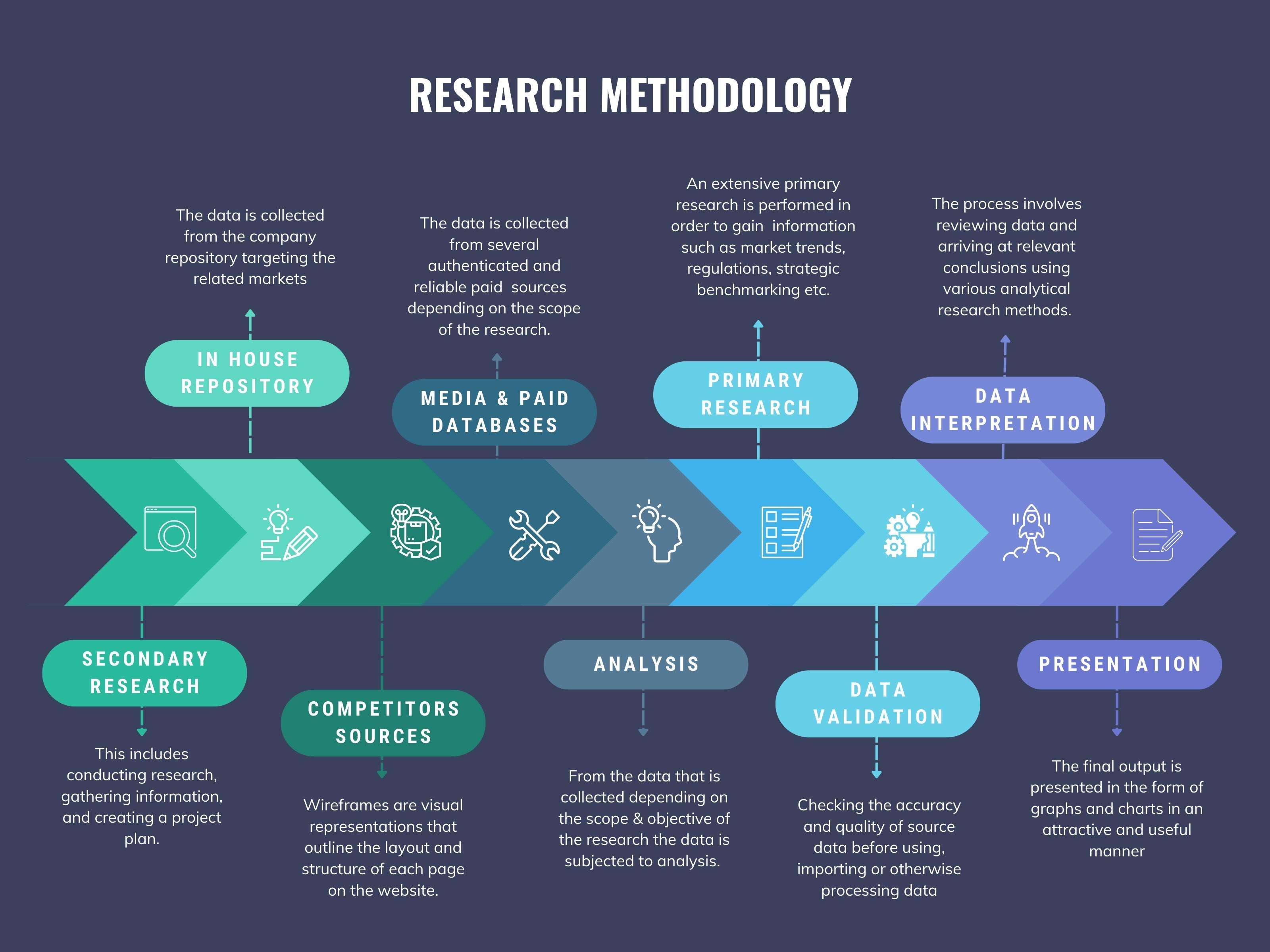
We at ‘Stratistics’ opt for an extensive research approach which involves data mining, data validation, and data analysis. The various research sources include in-house repository, secondary research, competitor’s sources, social media research, client internal data, and primary research.
Our team of analysts prefers the most reliable and authenticated data sources in order to perform the comprehensive literature search. With access to most of the authenticated data bases our team highly considers the best mix of information through various sources to obtain extensive and accurate analysis.
Each report takes an average time of a month and a team of 4 industry analysts. The time may vary depending on the scope and data availability of the desired market report. The various parameters used in the market assessment are standardized in order to enhance the data accuracy.
Data Mining
The data is collected from several authenticated, reliable, paid and unpaid sources and is filtered depending on the scope & objective of the research. Our reports repository acts as an added advantage in this procedure. Data gathering from the raw material suppliers, distributors and the manufacturers is performed on a regular basis, this helps in the comprehensive understanding of the products value chain. Apart from the above mentioned sources the data is also collected from the industry consultants to ensure the objective of the study is in the right direction.
Market trends such as technological advancements, regulatory affairs, market dynamics (Drivers, Restraints, Opportunities and Challenges) are obtained from scientific journals, market related national & international associations and organizations.
Data Analysis
From the data that is collected depending on the scope & objective of the research the data is subjected for the analysis. The critical steps that we follow for the data analysis include:
- Product Lifecycle Analysis
- Competitor analysis
- Risk analysis
- Porters Analysis
- PESTEL Analysis
- SWOT Analysis
The data engineering is performed by the core industry experts considering both the Marketing Mix Modeling and the Demand Forecasting. The marketing mix modeling makes use of multiple-regression techniques to predict the optimal mix of marketing variables. Regression factor is based on a number of variables and how they relate to an outcome such as sales or profits.
Data Validation
The data validation is performed by the exhaustive primary research from the expert interviews. This includes telephonic interviews, focus groups, face to face interviews, and questionnaires to validate our research from all aspects. The industry experts we approach come from the leading firms, involved in the supply chain ranging from the suppliers, distributors to the manufacturers and consumers so as to ensure an unbiased analysis.
We are in touch with more than 15,000 industry experts with the right mix of consultants, CEO's, presidents, vice presidents, managers, experts from both supply side and demand side, executives and so on.
The data validation involves the primary research from the industry experts belonging to:
- Leading Companies
- Suppliers & Distributors
- Manufacturers
- Consumers
- Industry/Strategic Consultants
Apart from the data validation the primary research also helps in performing the fill gap research, i.e. providing solutions for the unmet needs of the research which helps in enhancing the reports quality.
For more details about research methodology, kindly write to us at info@strategymrc.com
Frequently Asked Questions
In case of any queries regarding this report, you can contact the customer service by filing the “Inquiry Before Buy” form available on the right hand side. You may also contact us through email: info@strategymrc.com or phone: +1-301-202-5929
Yes, the samples are available for all the published reports. You can request them by filling the “Request Sample” option available in this page.
Yes, you can request a sample with your specific requirements. All the customized samples will be provided as per the requirement with the real data masked.
All our reports are available in Digital PDF format. In case if you require them in any other formats, such as PPT, Excel etc you can submit a request through “Inquiry Before Buy” form available on the right hand side. You may also contact us through email: info@strategymrc.com or phone: +1-301-202-5929
We offer a free 15% customization with every purchase. This requirement can be fulfilled for both pre and post sale. You may send your customization requirements through email at info@strategymrc.com or call us on +1-301-202-5929.
We have 3 different licensing options available in electronic format.
- Single User Licence: Allows one person, typically the buyer, to have access to the ordered product. The ordered product cannot be distributed to anyone else.
- 2-5 User Licence: Allows the ordered product to be shared among a maximum of 5 people within your organisation.
- Corporate License: Allows the product to be shared among all employees of your organisation regardless of their geographical location.
All our reports are typically be emailed to you as an attachment.
To order any available report you need to register on our website. The payment can be made either through CCAvenue or PayPal payments gateways which accept all international cards.
We extend our support to 6 months post sale. A post sale customization is also provided to cover your unmet needs in the report.
Request Customization
We offer complimentary customization of up to 15% with every purchase. To share your customization requirements, feel free to email us at info@strategymrc.com or call us on +1-301-202-5929. .
Please Note: Customization within the 15% threshold is entirely free of charge. If your request exceeds this limit, we will conduct a feasibility assessment. Following that, a detailed quote and timeline will be provided.
WHY CHOOSE US ?

Assured Quality
Best in class reports with high standard of research integrity

24X7 Research Support
Continuous support to ensure the best customer experience.

Free Customization
Adding more values to your product of interest.

Safe & Secure Access
Providing a secured environment for all online transactions.

Trusted by 600+ Brands
Serving the most reputed brands across the world.