
Automotive Smart Surface Market
Automotive Smart Surface Market Forecasts to 2034 – Global Analysis By Surface Technology (Capacitive Touch Surfaces, Haptic and Force-Sensing Surfaces, Illuminated and Dynamic Trim, and Sensing and Heating Integrated Surfaces), Interior Location, Function, Vehicle Segment, and By Geography

Market Dynamics:
Driver:
Interior differentiation increasingly depends on integrated functions
Vehicle manufacturers use cabin design to distinguish models whose underlying electronic capabilities may otherwise appear similar. Integrating illumination and controls into a continuous trim surface offers new possibilities for that differentiation. It can also reduce visible component boundaries and create functions that appear only when needed. Demand develops where this design freedom is paired with practical usability and efficient assembly. The strongest business case is not simply removing switches; it is combining selected functions in a part that meets styling, manufacturing and interaction requirements without making routine actions harder for occupants to find or understand.
Restraint:
Combining decoration and electronics complicates qualification
A surface that looks acceptable when new must continue to function after heat, sunlight, cleaning, abrasion and repeated contact. Embedded electronics and printed conductive structures introduce additional considerations involving molding stresses, connections and repair. Manufacturing defects can also affect both appearance and function, increasing the value of a rejected component. These challenges require coordination among material specialists, electronic designers and trim manufacturers. Qualification can therefore take longer than for a passive decorative part. Suppliers must demonstrate stable production processes and service strategies before an automaker commits to an integrated assembly across a high-volume vehicle program.
Opportunity:
Manufacturing partnerships can move concepts into repeatable parts
Technology developers can expand the market by working with established interior suppliers that understand tooling, appearance standards and vehicle-program execution. Such partnerships provide a route from an attractive concept panel to a component that can be produced consistently at different plants. Modular electronic interfaces and reusable design rules may further reduce the engineering effort for each application. Opportunities are particularly strong where illumination, sensing and selected feedback functions can share the same assembly. The resulting value lies in a dependable manufacturing and integration process, allowing designers to explore new surfaces without restarting industrial development for every vehicle.
Threat:
Hidden controls can conflict with everyday usability
A visually seamless cabin can become frustrating if occupants cannot locate a control without searching or if accidental contact activates a function. Capacitive operation may also behave differently with gloves, moisture or changes in touch behavior. These practical issues can prompt manufacturers to restore distinct physical controls, reducing demand for some integrated surfaces. Repair cost is another commercial risk when a minor electronic fault requires replacement of a large trim assembly. Suppliers need to address discoverability, feedback and serviceability early, because a striking appearance alone may not sustain adoption once the vehicle enters routine use.
Covid-19 Impact:
The pandemic disrupted the collaborative prototyping process used to develop smart interior surfaces. Material samples, tooling trials and tactile evaluations were harder to coordinate when engineering teams and production sites had restricted access. Vehicle-program uncertainty could also defer investment in unfamiliar manufacturing methods. Digital visualization helped maintain styling work but could not establish surface feel, illumination uniformity or reliable touch response. As projects resumed, suppliers faced pressure to demonstrate that integrated designs could be manufactured consistently and maintained economically. The period favored clear development milestones and close coordination between electronic and interior-component teams.
The Capacitive Touch Surfaces segment is expected to be the largest during the forecast period
Capacitive Touch Surfaces are expected to represent the largest share because they provide an established way to place input functions behind or within interior trim. The technology can support a range of shapes and appearances without requiring a moving switch at every location. Its anticipated lead reflects integration flexibility and supplier familiarity, while actual performance remains dependent on material thickness, electrode design and environmental conditions. Manufacturers must pair the sensing area with clear visual or tactile cues. Growth in installed surfaces will be strongest where the resulting interface remains easy to locate and operate during ordinary vehicle use.
The Haptic and Force-Sensing Surfaces segment is expected to have the highest CAGR during the forecast period
Haptic and Force-Sensing Surfaces are anticipated to record the highest growth because they address two weaknesses of a purely flat touch interface: uncertain actuation intent and the absence of physical confirmation. Force information can help distinguish deliberate pressure from incidental contact, while haptic feedback can signal that an action has been accepted. Combining these functions requires careful mechanical design and tuning. The segment’s growth is expected to follow successful implementation in premium controls and subsequent reuse across broader vehicle platforms. Suppliers that simplify integration while preserving consistent surface feel can make these capabilities more commercially practical.
Region with largest share:
Europe is expected to hold the largest share through its established premium-interior supply base and experience combining materials, lighting and vehicle electronics. Automakers and Tier 1 suppliers can develop integrated surfaces as part of the complete cabin architecture, coordinating appearance with manufacturing and user interaction. This provides a favorable setting for production-oriented projects. The anticipated regional position does not imply uniform adoption across all controls, since usability requirements differ by function. Selective integration in consoles, door trim and ambient lighting offers a practical route to scale while more demanding interface concepts undergo further evaluation.
Region with highest CAGR:
Asia Pacific is projected to experience the highest growth as electric-vehicle manufacturers and interior suppliers pursue distinctive cabin experiences at a widening range of price points. The region’s electronics and manufacturing capabilities can support experimentation with illuminated controls, responsive trim and integrated comfort functions. Large vehicle programs also create opportunities to reduce cost after initial qualification. Growth should depend on turning these concepts into repeatable assemblies that users find convenient. Close cooperation between technology licensors and established component producers will be valuable where manufacturers seek both rapid design differentiation and dependable production across multiple models.
Key players in the market
Some of the key players in the Automotive Smart Surface Market include AUMOVIO SE, Robert Bosch GmbH, Valeo SE, Aptiv PLC, Magna International Inc., DENSO Corporation, Panasonic Automotive Systems Co., Ltd., HARMAN International Industries, Inc., Forvia SE, Marelli Holdings Co., Ltd., Visteon Corporation, Cerence Inc., Immersion Corporation, Synaptics Incorporated, and TactoTek Oy.
Key Developments:
In September 2026, TactoTek signed an IMSE technology licensing agreement with EDAG. The arrangement brought integrated smart-surface design into EDAG’s engineering services, covering activities from concept and prototype work through validation and industrialization. It expanded development capability rather than announcing a specific automaker’s series-produced surface.
In May 2026, Motherson licensed TactoTek’s in-mold structural electronics technology to support integrated automotive surfaces. The agreement connected the technology with a major Tier 1 supplier’s engineering and manufacturing capabilities, providing a route for interior and exterior applications while leaving individual vehicle-program adoption to subsequent customer decisions.
In April 2025, Boréas Technologies announced that NIO had integrated its haptic module into the ET9’s TUI Bar. The center-console touch surface combined configurable interaction with piezoelectric feedback, providing a concrete vehicle example of a functional interior surface designed to communicate accepted inputs through physical sensation.
Surface Technologies Covered:
• Capacitive Touch Surfaces
• Haptic and Force-Sensing Surfaces
• Illuminated and Dynamic Trim
• Sensing and Heating Integrated Surfaces
Interior Locations Covered:
• Dashboard and Center Console
• Door Panels and Armrests
• Steering Wheel and Controls
• Seats and Decorative Trim
Functions Covered:
• Touch and Gesture Control
• Occupant and Driver Sensing
• Ambient Lighting and Information Display
• Climate and Comfort Control
Vehicle Segments Covered:
• Passenger Cars
• Premium and Luxury Vehicles
• Electric and Software-Defined Vehicles
Regions Covered:
• North America
o United States
o Canada
o Mexico
• Europe
o United Kingdom
o Germany
o France
o Italy
o Spain
o Netherlands
o Belgium
o Sweden
o Switzerland
o Poland
o Rest of Europe
• Asia Pacific
o China
o Japan
o India
o South Korea
o Australia
o Indonesia
o Thailand
o Malaysia
o Singapore
o Vietnam
o Rest of Asia Pacific
• South America
o Brazil
o Argentina
o Colombia
o Chile
o Peru
o Rest of South America
• Rest of the World (RoW)
o Middle East
▪ Saudi Arabia
▪ United Arab Emirates
▪ Qatar
▪ Israel
▪ Rest of Middle East
o Africa
▪ South Africa
▪ Egypt
▪ Morocco
▪ Rest of Africa
What our report offers:
- Market share assessments for the regional and country-level segments
- Strategic recommendations for the new entrants
- Covers Market data for the years 2023, 2024, 2025, 2026, 2027, 2028, 2030, 2032 and 2034
- Market Trends (Drivers, Constraints, Opportunities, Threats, Challenges, Investment Opportunities, and recommendations)
- Strategic recommendations in key business segments based on the market estimations
- Competitive landscaping mapping the key common trends
- Company profiling with detailed strategies, financials, and recent developments
- Supply chain trends mapping the latest technological advancements
Free Customization Offerings:
All the customers of this report will be entitled to receive one of the following free customization options:
• Company Profiling
o Comprehensive profiling of additional market players (up to 3)
o SWOT Analysis of key players (up to 3)
• Regional Segmentation
o Market estimations, Forecasts and CAGR of any prominent country as per the client's interest (Note: Depends on feasibility check)
• Competitive Benchmarking
o Benchmarking of key players based on product portfolio, geographical presence, and strategic alliances
Table of Contents
1 Executive Summary1.1 Market Snapshot and Key Highlights
1.2 Growth Drivers, Challenges, and Opportunities
1.3 Competitive Landscape Overview
1.4 Strategic Insights and Recommendations
2 Research Framework
2.1 Study Objectives and Scope
2.2 Stakeholder Analysis
2.3 Research Assumptions and Limitations
2.4 Research Methodology
2.4.1 Data Collection (Primary and Secondary)
2.4.2 Data Modeling and Estimation Techniques
2.4.3 Data Validation and Triangulation
2.4.4 Analytical and Forecasting Approach
3 Market Dynamics and Trend Analysis
3.1 Market Definition and Structure
3.2 Key Market Drivers
3.3 Market Restraints and Challenges
3.4 Growth Opportunities and Investment Hotspots
3.5 Industry Threats and Risk Assessment
3.6 Technology and Innovation Landscape
3.7 Emerging and High-Growth Markets
3.8 Regulatory and Policy Environment
3.9 Impact of COVID-19 and Recovery Outlook
4 Competitive and Strategic Assessment
4.1 Porter's Five Forces Analysis
4.1.1 Supplier Bargaining Power
4.1.2 Buyer Bargaining Power
4.1.3 Threat of Substitutes
4.1.4 Threat of New Entrants
4.1.5 Competitive Rivalry
4.2 Market Share Analysis of Key Players
4.3 Product Benchmarking and Performance Comparison
5 Global Automotive Smart Surface Market, By Surface Technology
5.1 Capacitive Touch Surfaces
5.2 Haptic and Force-Sensing Surfaces
5.3 Illuminated and Dynamic Trim
5.4 Sensing and Heating Integrated Surfaces
6 Global Automotive Smart Surface Market, By Interior Location
6.1 Dashboard and Center Console
6.2 Door Panels and Armrests
6.3 Steering Wheel and Controls
6.4 Seats and Decorative Trim
7 Global Automotive Smart Surface Market, By Function
7.1 Touch and Gesture Control
7.2 Occupant and Driver Sensing
7.3 Ambient Lighting and Information Display
7.4 Climate and Comfort Control
8 Global Automotive Smart Surface Market, By Vehicle Segment
8.1 Passenger Cars
8.2 Premium and Luxury Vehicles
8.3 Electric and Software-Defined Vehicles
9 Global Automotive Smart Surface Market, By Geography
9.1 North America
9.1.1 United States
9.1.2 Canada
9.1.3 Mexico
9.2 Europe
9.2.1 United Kingdom
9.2.2 Germany
9.2.3 France
9.2.4 Italy
9.2.5 Spain
9.2.6 Netherlands
9.2.7 Belgium
9.2.8 Sweden
9.2.9 Switzerland
9.2.10 Poland
9.2.11 Rest of Europe
9.3 Asia Pacific
9.3.1 China
9.3.2 Japan
9.3.3 India
9.3.4 South Korea
9.3.5 Australia
9.3.6 Indonesia
9.3.7 Thailand
9.3.8 Malaysia
9.3.9 Singapore
9.3.10 Vietnam
9.3.11 Rest of Asia Pacific
9.4 South America
9.4.1 Brazil
9.4.2 Argentina
9.4.3 Colombia
9.4.4 Chile
9.4.5 Peru
9.4.6 Rest of South America
9.5 Rest of the World (RoW)
9.5.1 Middle East
9.5.1.1 Saudi Arabia
9.5.1.2 United Arab Emirates
9.5.1.3 Qatar
9.5.1.4 Israel
9.5.1.5 Rest of Middle East
9.5.2 Africa
9.5.2.1 South Africa
9.5.2.2 Egypt
9.5.2.3 Morocco
9.5.2.4 Rest of Africa
10 Strategic Market Intelligence
10.1 Industry Value Network and Supply Chain Assessment
10.2 White-Space and Opportunity Mapping
10.3 Product Evolution and Market Life Cycle Analysis
10.4 Channel, Distributor, and Go-to-Market Assessment
11 Industry Developments and Strategic Initiatives
11.1 Mergers and Acquisitions
11.2 Partnerships, Alliances, and Joint Ventures
11.3 New Product Launches and Certifications
11.4 Capacity Expansion and Investments
11.5 Other Strategic Initiatives
12 Company Profiles
12.1 AUMOVIO SE
12.2 Robert Bosch GmbH
12.3 Valeo SE
12.4 Aptiv PLC
12.5 Magna International Inc.
12.6 DENSO Corporation
12.7 Panasonic Automotive Systems Co., Ltd.
12.8 HARMAN International Industries, Inc.
12.9 Forvia SE
12.10 Marelli Holdings Co., Ltd.
12.11 Visteon Corporation
12.12 Cerence Inc.
12.13 Immersion Corporation
12.14 Synaptics Incorporated
12.15 TactoTek Oy
List of Tables
1 Global Automotive Smart Surface Market Outlook, By Region (2023–2034) ($MN)
2 Global Automotive Smart Surface Market Outlook, By Surface Technology (2023–2034) ($MN)
3 Global Automotive Smart Surface Market Outlook, By Capacitive Touch Surfaces (2023–2034) ($MN)
4 Global Automotive Smart Surface Market Outlook, By Haptic and Force-Sensing Surfaces (2023–2034) ($MN)
5 Global Automotive Smart Surface Market Outlook, By Illuminated and Dynamic Trim (2023–2034) ($MN)
6 Global Automotive Smart Surface Market Outlook, By Sensing and Heating Integrated Surfaces (2023–2034) ($MN)
7 Global Automotive Smart Surface Market Outlook, By Interior Location (2023–2034) ($MN)
8 Global Automotive Smart Surface Market Outlook, By Dashboard and Center Console (2023–2034) ($MN)
9 Global Automotive Smart Surface Market Outlook, By Door Panels and Armrests (2023–2034) ($MN)
10 Global Automotive Smart Surface Market Outlook, By Steering Wheel and Controls (2023–2034) ($MN)
11 Global Automotive Smart Surface Market Outlook, By Seats and Decorative Trim (2023–2034) ($MN)
12 Global Automotive Smart Surface Market Outlook, By Function (2023–2034) ($MN)
13 Global Automotive Smart Surface Market Outlook, By Touch and Gesture Control (2023–2034) ($MN)
14 Global Automotive Smart Surface Market Outlook, By Occupant and Driver Sensing (2023–2034) ($MN)
15 Global Automotive Smart Surface Market Outlook, By Ambient Lighting and Information Display (2023–2034) ($MN)
16 Global Automotive Smart Surface Market Outlook, By Climate and Comfort Control (2023–2034) ($MN)
17 Global Automotive Smart Surface Market Outlook, By Vehicle Segment (2023–2034) ($MN)
18 Global Automotive Smart Surface Market Outlook, By Passenger Cars (2023–2034) ($MN)
19 Global Automotive Smart Surface Market Outlook, By Premium and Luxury Vehicles (2023–2034) ($MN)
20 Global Automotive Smart Surface Market Outlook, By Electric and Software-Defined Vehicles (2023–2034) ($MN)
Note: Tables for North America, Europe, APAC, South America, and Rest of the World (RoW) Regions are also represented in the same manner as above.
List of Figures
RESEARCH METHODOLOGY
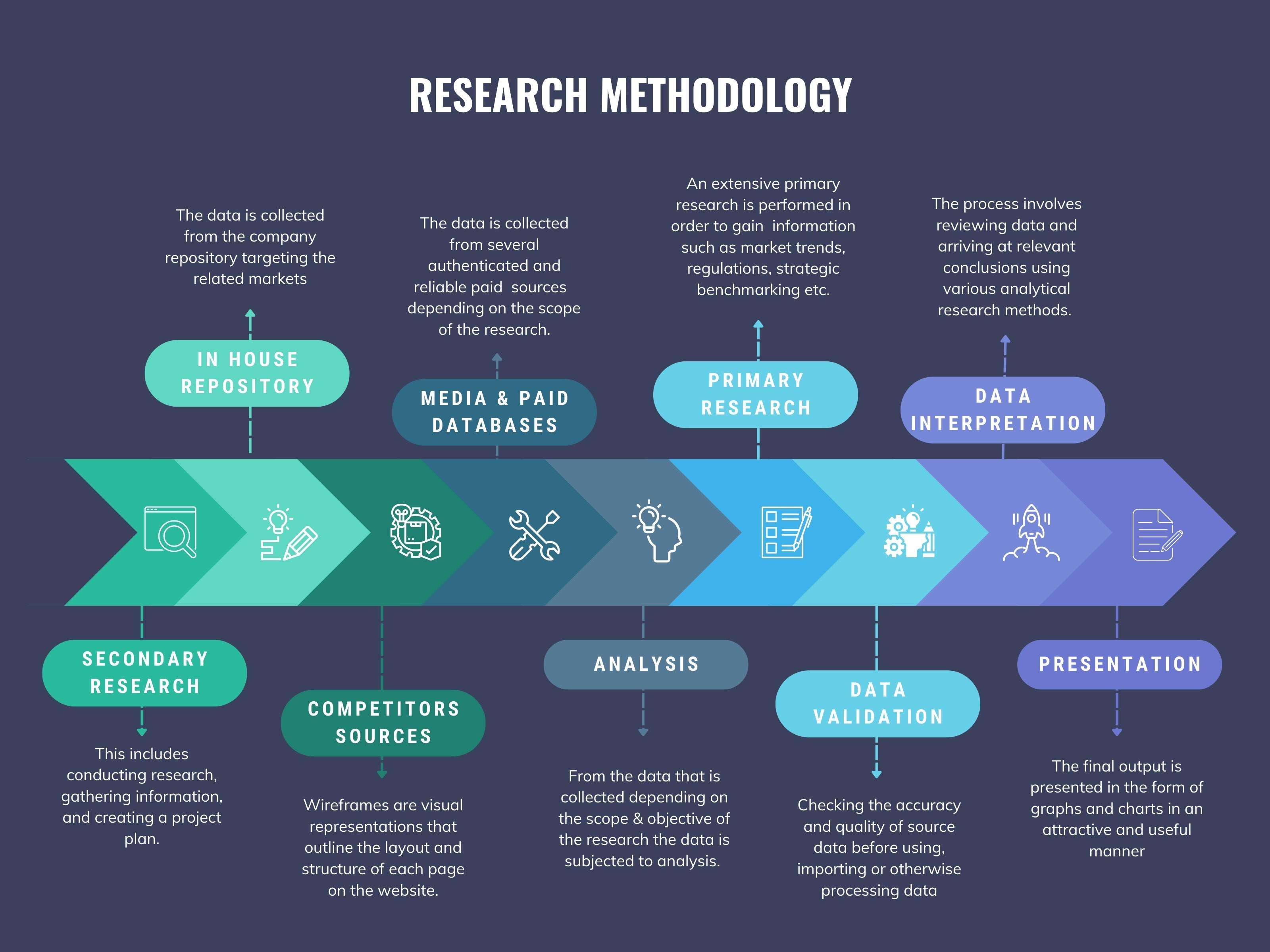
We at ‘Stratistics’ opt for an extensive research approach which involves data mining, data validation, and data analysis. The various research sources include in-house repository, secondary research, competitor’s sources, social media research, client internal data, and primary research.
Our team of analysts prefers the most reliable and authenticated data sources in order to perform the comprehensive literature search. With access to most of the authenticated data bases our team highly considers the best mix of information through various sources to obtain extensive and accurate analysis.
Each report takes an average time of a month and a team of 4 industry analysts. The time may vary depending on the scope and data availability of the desired market report. The various parameters used in the market assessment are standardized in order to enhance the data accuracy.
Data Mining
The data is collected from several authenticated, reliable, paid and unpaid sources and is filtered depending on the scope & objective of the research. Our reports repository acts as an added advantage in this procedure. Data gathering from the raw material suppliers, distributors and the manufacturers is performed on a regular basis, this helps in the comprehensive understanding of the products value chain. Apart from the above mentioned sources the data is also collected from the industry consultants to ensure the objective of the study is in the right direction.
Market trends such as technological advancements, regulatory affairs, market dynamics (Drivers, Restraints, Opportunities and Challenges) are obtained from scientific journals, market related national & international associations and organizations.
Data Analysis
From the data that is collected depending on the scope & objective of the research the data is subjected for the analysis. The critical steps that we follow for the data analysis include:
- Product Lifecycle Analysis
- Competitor analysis
- Risk analysis
- Porters Analysis
- PESTEL Analysis
- SWOT Analysis
The data engineering is performed by the core industry experts considering both the Marketing Mix Modeling and the Demand Forecasting. The marketing mix modeling makes use of multiple-regression techniques to predict the optimal mix of marketing variables. Regression factor is based on a number of variables and how they relate to an outcome such as sales or profits.
Data Validation
The data validation is performed by the exhaustive primary research from the expert interviews. This includes telephonic interviews, focus groups, face to face interviews, and questionnaires to validate our research from all aspects. The industry experts we approach come from the leading firms, involved in the supply chain ranging from the suppliers, distributors to the manufacturers and consumers so as to ensure an unbiased analysis.
We are in touch with more than 15,000 industry experts with the right mix of consultants, CEO's, presidents, vice presidents, managers, experts from both supply side and demand side, executives and so on.
The data validation involves the primary research from the industry experts belonging to:
- Leading Companies
- Suppliers & Distributors
- Manufacturers
- Consumers
- Industry/Strategic Consultants
Apart from the data validation the primary research also helps in performing the fill gap research, i.e. providing solutions for the unmet needs of the research which helps in enhancing the reports quality.
For more details about research methodology, kindly write to us at info@strategymrc.com
Frequently Asked Questions
In case of any queries regarding this report, you can contact the customer service by filing the “Inquiry Before Buy” form available on the right hand side. You may also contact us through email: info@strategymrc.com or phone: +1-301-202-5929
Yes, the samples are available for all the published reports. You can request them by filling the “Request Sample” option available in this page.
Yes, you can request a sample with your specific requirements. All the customized samples will be provided as per the requirement with the real data masked.
All our reports are available in Digital PDF format. In case if you require them in any other formats, such as PPT, Excel etc you can submit a request through “Inquiry Before Buy” form available on the right hand side. You may also contact us through email: info@strategymrc.com or phone: +1-301-202-5929
We offer a free 15% customization with every purchase. This requirement can be fulfilled for both pre and post sale. You may send your customization requirements through email at info@strategymrc.com or call us on +1-301-202-5929.
We have 3 different licensing options available in electronic format.
- Single User Licence: Allows one person, typically the buyer, to have access to the ordered product. The ordered product cannot be distributed to anyone else.
- 2-5 User Licence: Allows the ordered product to be shared among a maximum of 5 people within your organisation.
- Corporate License: Allows the product to be shared among all employees of your organisation regardless of their geographical location.
All our reports are typically be emailed to you as an attachment.
To order any available report you need to register on our website. The payment can be made either through CCAvenue or PayPal payments gateways which accept all international cards.
We extend our support to 6 months post sale. A post sale customization is also provided to cover your unmet needs in the report.
Request Customization
We offer complimentary customization of up to 15% with every purchase. To share your customization requirements, feel free to email us at info@strategymrc.com or call us on +1-301-202-5929. .
Please Note: Customization within the 15% threshold is entirely free of charge. If your request exceeds this limit, we will conduct a feasibility assessment. Following that, a detailed quote and timeline will be provided.
WHY CHOOSE US ?

Assured Quality
Best in class reports with high standard of research integrity

24X7 Research Support
Continuous support to ensure the best customer experience.

Free Customization
Adding more values to your product of interest.

Safe & Secure Access
Providing a secured environment for all online transactions.

Trusted by 600+ Brands
Serving the most reputed brands across the world.