
Color Changing Materials Market
Color-Changing Materials Market Forecasts to 2032 – Global Analysis By Material Type (Photochromic, Thermochromic, Electrochromic, Mechanochromic, Solvatochromic and Other Material Types), Form (Coatings, Films, Inks and Pigments), Application and By Geography

According to Stratistics MRC, the Global Color-Changing Materials Market is accounted for $2.2 billion in 2025 and is expected to reach $3.5 billion by 2032 growing at a CAGR of 6.9% during the forecast period. Color-changing materials exhibit visual changes in color triggered by external stimuli such as temperature, light, pressure, pH, or electrical current. These smart materials find applications in sensors, security printing, wearable devices, packaging, and medical diagnostics. Their function depends on molecular rearrangements, chemical reactions, or structural transformations that alter optical properties. Research focuses on enhancing response speed, reversibility, stability, and color contrast. These materials enable intuitive interaction with environments, real-time condition monitoring, and adaptive aesthetics in various industries, including consumer electronics and safety applications.
According to Google Patents, photochromic color-changing materials can change color states within less than 10, 9, 8, 7, 6, 5, 4, 3, 2, or 1 minute, 30 seconds, 15 seconds, or faster, with some achieving color changes within less than 120, 90, 60, or 30 seconds upon exposure to or removal of said stimulus. According to the same patent documentation, these materials maintain optical clarity with transmission >70%, Clarity >70%, and Haze <4 when measured using ASTM D1003 international standards.
Market Dynamics:
Driver:
Demand for smart textiles and adaptive surfaces
The primary market driver is the escalating demand for smart textiles and adaptive surfaces across various industries. This is fueled by the convergence of material science and IoT, creating products with dynamic functionality. In the automotive and construction sectors, these materials enable energy-efficient smart windows and responsive exterior coatings. Moreover, the fashion industry is leveraging them for innovative, interactive apparel. This trend towards personalized and responsive consumer goods significantly propels the adoption of color-changing technologies, establishing them as critical components in next-generation smart applications and enhancing user experience and sustainability.
Restraint:
Limited durability and repeatability under stress
A significant restraint hindering broader market adoption is the inherent limitation in the durability and repeatability of certain color-changing materials under prolonged stress. Exposure to harsh environmental factors like extreme temperatures, UV radiation, and mechanical abrasion can lead to polymer degradation, pigment fatigue, and a consequent loss of chromic performance. This reduced lifecycle increases the total cost of ownership and raises concerns about product reliability for potential end-users, particularly in demanding applications such as automotive exteriors or protective clothing, thereby limiting their use to less strenuous use cases.
Opportunity:
Brand protection and anti-counterfeit packaging
Color-changing inks, particularly photochromic and thermochromic variants, provide a sophisticated, cost-effective, and easily verifiable security feature that is extremely difficult to replicate illicitly. This technology is increasingly integrated into labels, packaging, and official documentation for pharmaceuticals, luxury goods, and electronics. The growing global focus on combating counterfeit products, which cost industries billions annually, presents a robust growth vector for manufacturers specializing in high-security, functional chromic materials for authentication purposes.
Threat:
Competition from OLED and e-ink technologies
The market faces a potent threat from competing advanced display technologies, notably OLED and e-ink. These technologies offer superior contrast, faster switching times, and the ability to display complex, dynamic information beyond simple color shifts. As the cost of flexible and transparent OLEDs decreases, they become a more viable alternative for applications in signage, consumer electronics, and wearables, where information display is key. This competition forces chromic material innovators to focus on niche applications where their specific advantages, such as passive operation and zero energy consumption, are paramount.
Covid-19 Impact:
The COVID-19 pandemic initially disrupted the global supply chain, causing raw material shortages and manufacturing delays that hindered market growth. However, it simultaneously acted as a catalyst for certain applications. The heightened focus on health and hygiene accelerated the adoption of thermochromic materials in medical indicators and smart packaging. Additionally, the increased demand for authenticity in the pharmaceutical supply chain to combat counterfeit vaccines and medicines underscored the value of anti-counterfeit chromic technologies, creating new growth opportunities within the crisis and aiding market recovery.
The thermochromic materials segment is expected to be the largest during the forecast period
The COVID-19 pandemic initially disrupted the global supply chain, causing raw material shortages and manufacturing delays that hindered market growth. However, it simultaneously acted as a catalyst for certain applications. The heightened focus on health and hygiene accelerated the adoption of thermochromic materials in medical indicators and smart packaging. Additionally, the increased demand for authenticity in the pharmaceutical supply chain to combat counterfeit vaccines and medicines underscored the value of anti-counterfeit chromic technologies, creating new growth opportunities within the crisis and aiding market recovery.
The healthcare segment is expected to have the highest CAGR during the forecast period
Over the forecast period, the healthcare segment is predicted to witness the highest growth rate, driven by the critical need for advanced medical indicators, smart packaging, and diagnostic tools. Thermochromic inks are essential for sterility indicators on autoclave bags and temperature-sensitive labels for pharmaceuticals and blood bags, ensuring safe storage and transport. Moreover, research into color-changing biosensors for noninvasive health monitoring presents a significant future growth avenue. The aging global population and rising healthcare expenditures further propel the adoption of these smart, responsive materials to improve patient outcomes and operational efficiency.
Region with largest share:
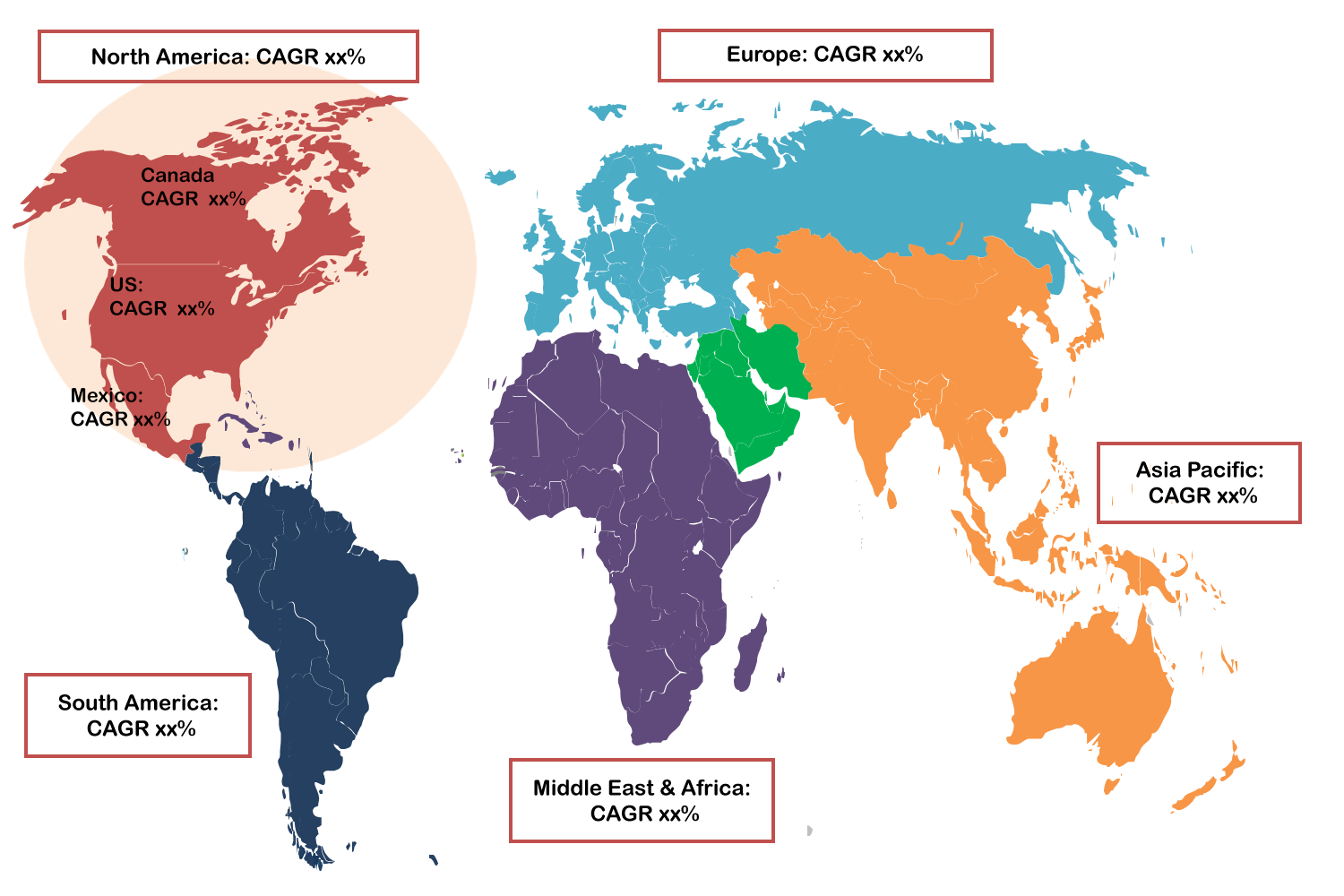
During the forecast period, the Asia Pacific region is expected to hold the largest market share. This hegemony is fueled by a robust manufacturing ecosystem, particularly in China, South Korea, and Japan, which are global hubs for the textile, automotive, and consumer electronics industries. These sectors are primary end-users of chromic materials. Furthermore, rising disposable incomes, rapid industrialization, and strong government support for technological advancements in smart materials contribute significantly. The region's massive production capacity for packaged goods also drives demand for anti-counterfeit and smart packaging solutions, consolidating its leading market position.
Region with highest CAGR:
Over the forecast period, the North America region is anticipated to exhibit the highest CAGR. This accelerated growth is propelled by strong investments in research and development from both established corporations and startups, particularly in the United States and Canada. The presence of an advanced healthcare and pharmaceutical industry, which is an early adopter of smart packaging and diagnostic technologies, provides a substantial boost. Additionally, high consumer acceptance of innovative products in automotive aesthetics, smart home systems, and defense applications creates a fertile ground for the adoption of advanced color-changing materials.
Key players in the market
Some of the key players in Color-Changing Materials Market include LCR Hallcrest, OliKrom, Chromatic Technologies Inc., Matsui International Company, Inc., Saint-Gobain, Gentex Corporation, PPG Industries, Inc., Merck KGaA, View, Inc., AGC Inc., ChromoGenics AB, Corning Incorporated, Asahi Kasei Corporation, AkzoNobel N.V., BASF SE, Tokuyama Corporation, Mitsui Chemicals, Inc., EssilorLuxottica, HOYA Corporation, and 3M Company.
Key Developments:
In July 2025, PPG collaborated with Lucid Motors to develop coatings for luxury electric vehicles using PPG Andaro® pigment nanodispersion technology. The technology provides dramatically higher color intensity, transparency and clarity, including Supernova Bronze which uses vacuum metallized pigment to create a true bronze hue with chrome metallic effect.
In June 2025, OliKrom unveiled VisioKrom®, a new-generation thermochromic pigment developed entirely in France at its Pessac industrial site. This patented technology enables temporary visualization of anti-corrosion coatings applied to metal parts while maintaining mechanical and conductive properties. The innovation was presented at the Paris Air Show 2025 as a response to expectations from strategic industries including aeronautics, rail, energy and defense.
In February 2025, EssilorLuxottica unveiled Transitions Color Touch at their 28th Transitions Academy. This is their first color-infused ultra-dynamic lens that adapts to all light conditions, available in five colors inspired by the original GEN S palette in gradient or washed effect.
Material Types Covered:
• Photochromic Materials
• Thermochromic Materials
• Electrochromic Materials
• Mechanochromic Materials
• Solvatochromic Materials
• Other Material Types
Forms:
• Coatings
• Films
• Inks
• Pigments
Applications Covered:
• Smart Windows
• Smart Fabrics
• Packaging
• Consumer Electronics
• Automotive
• Healthcare
• Other Applications
Regions Covered:
• North America
o US
o Canada
o Mexico
• Europe
o Germany
o UK
o Italy
o France
o Spain
o Rest of Europe
• Asia Pacific
o Japan
o China
o India
o Australia
o New Zealand
o South Korea
o Rest of Asia Pacific
• South America
o Argentina
o Brazil
o Chile
o Rest of South America
• Middle East & Africa
o Saudi Arabia
o UAE
o Qatar
o South Africa
o Rest of Middle East & Africa
What our report offers:
- Market share assessments for the regional and country-level segments
- Strategic recommendations for the new entrants
- Covers Market data for the years 2024, 2025, 2026, 2028, and 2032
- Market Trends (Drivers, Constraints, Opportunities, Threats, Challenges, Investment Opportunities, and recommendations)
- Strategic recommendations in key business segments based on the market estimations
- Competitive landscaping mapping the key common trends
- Company profiling with detailed strategies, financials, and recent developments
- Supply chain trends mapping the latest technological advancements
Free Customization Offerings:
All the customers of this report will be entitled to receive one of the following free customization options:
• Company Profiling
o Comprehensive profiling of additional market players (up to 3)
o SWOT Analysis of key players (up to 3)
• Regional Segmentation
o Market estimations, Forecasts and CAGR of any prominent country as per the client's interest (Note: Depends on feasibility check)
• Competitive Benchmarking
o Benchmarking of key players based on product portfolio, geographical presence, and strategic alliances
Table of Contents
1 Executive Summary
2 Preface
2.1 Abstract
2.2 Stake Holders
2.3 Research Scope
2.4 Research Methodology
2.4.1 Data Mining
2.4.2 Data Analysis
2.4.3 Data Validation
2.4.4 Research Approach
2.5 Research Sources
2.5.1 Primary Research Sources
2.5.2 Secondary Research Sources
2.5.3 Assumptions
3 Market Trend Analysis
3.1 Introduction
3.2 Drivers
3.3 Restraints
3.4 Opportunities
3.5 Threats
3.6 Application Analysis
3.7 Emerging Markets
3.8 Impact of Covid-19
4 Porters Five Force Analysis
4.1 Bargaining power of suppliers
4.2 Bargaining power of buyers
4.3 Threat of substitutes
4.4 Threat of new entrants
4.5 Competitive rivalry
5 Global Color-Changing Materials Market, By Material Type
5.1 Introduction
5.2 Photochromic Materials
5.3 Thermochromic Materials
5.4 Electrochromic Materials
5.5 Mechanochromic Materials
5.6 Solvatochromic Materials
5.7 Other Material Types
6 Global Color-Changing Materials Market, By Form
6.1 Introduction
6.2 Coatings
6.3 Films
6.4 Inks
6.5 Pigments
7 Global Color-Changing Materials Market, By Application
7.1 Introduction
7.2 Smart Windows
7.3 Smart Fabrics
7.4 Packaging
7.5 Consumer Electronics
7.6 Automotive
7.7 Healthcare
7.8 Other Applications
8 Global Color-Changing Materials Market, By Geography
8.1 Introduction
8.2 North America
8.2.1 US
8.2.2 Canada
8.2.3 Mexico
8.3 Europe
8.3.1 Germany
8.3.2 UK
8.3.3 Italy
8.3.4 France
8.3.5 Spain
8.3.6 Rest of Europe
8.4 Asia Pacific
8.4.1 Japan
8.4.2 China
8.4.3 India
8.4.4 Australia
8.4.5 New Zealand
8.4.6 South Korea
8.4.7 Rest of Asia Pacific
8.5 South America
8.5.1 Argentina
8.5.2 Brazil
8.5.3 Chile
8.5.4 Rest of South America
8.6 Middle East & Africa
8.6.1 Saudi Arabia
8.6.2 UAE
8.6.3 Qatar
8.6.4 South Africa
8.6.5 Rest of Middle East & Africa
9 Key Developments
9.1 Agreements, Partnerships, Collaborations and Joint Ventures
9.2 Acquisitions & Mergers
9.3 New Product Launch
9.4 Expansions
9.5 Other Key Strategies
10 Company Profiling
10.1 LCR Hallcrest
10.2 OliKrom
10.3 Chromatic Technologies Inc.
10.4 Matsui International Company, Inc.
10.5 Saint-Gobain
10.6 Gentex Corporation
10.7 PPG Industries, Inc.
10.8 Merck KGaA
10.9 View, Inc.
10.10 AGC Inc.
10.11 ChromoGenics AB
10.12 Corning Incorporated
10.13 Asahi Kasei Corporation
10.14 AkzoNobel N.V.
10.15 BASF SE
10.16 Tokuyama Corporation
10.17 Mitsui Chemicals, Inc.
10.18 EssilorLuxottica
10.19 HOYA Corporation
10.20 3M Company
List of Tables
1 Global Color-Changing Materials Market Outlook, By Region (2024-2032) ($MN)
2 Global Color-Changing Materials Market Outlook, By Material Type (2024-2032) ($MN)
3 Global Color-Changing Materials Market Outlook, By Photochromic Materials (2024-2032) ($MN)
4 Global Color-Changing Materials Market Outlook, By Thermochromic Materials (2024-2032) ($MN)
5 Global Color-Changing Materials Market Outlook, By Electrochromic Materials (2024-2032) ($MN)
6 Global Color-Changing Materials Market Outlook, By Mechanochromic Materials (2024-2032) ($MN)
7 Global Color-Changing Materials Market Outlook, By Solvatochromic Materials (2024-2032) ($MN)
8 Global Color-Changing Materials Market Outlook, By Other Material Types (2024-2032) ($MN)
9 Global Color-Changing Materials Market Outlook, By Form (2024-2032) ($MN)
10 Global Color-Changing Materials Market Outlook, By Coatings (2024-2032) ($MN)
11 Global Color-Changing Materials Market Outlook, By Films (2024-2032) ($MN)
12 Global Color-Changing Materials Market Outlook, By Inks (2024-2032) ($MN)
13 Global Color-Changing Materials Market Outlook, By Pigments (2024-2032) ($MN)
14 Global Color-Changing Materials Market Outlook, By Application (2024-2032) ($MN)
15 Global Color-Changing Materials Market Outlook, By Smart Windows (2024-2032) ($MN)
16 Global Color-Changing Materials Market Outlook, By Smart Fabrics (2024-2032) ($MN)
17 Global Color-Changing Materials Market Outlook, By Packaging (2024-2032) ($MN)
18 Global Color-Changing Materials Market Outlook, By Consumer Electronics (2024-2032) ($MN)
19 Global Color-Changing Materials Market Outlook, By Automotive (2024-2032) ($MN)
20 Global Color-Changing Materials Market Outlook, By Healthcare (2024-2032) ($MN)
21 Global Color-Changing Materials Market Outlook, By Other Applications (2024-2032) ($MN)
Note: Tables for North America, Europe, APAC, South America, and Middle East & Africa Regions are also represented in the same manner as above.
List of Figures
RESEARCH METHODOLOGY

We at ‘Stratistics’ opt for an extensive research approach which involves data mining, data validation, and data analysis. The various research sources include in-house repository, secondary research, competitor’s sources, social media research, client internal data, and primary research.
Our team of analysts prefers the most reliable and authenticated data sources in order to perform the comprehensive literature search. With access to most of the authenticated data bases our team highly considers the best mix of information through various sources to obtain extensive and accurate analysis.
Each report takes an average time of a month and a team of 4 industry analysts. The time may vary depending on the scope and data availability of the desired market report. The various parameters used in the market assessment are standardized in order to enhance the data accuracy.
Data Mining
The data is collected from several authenticated, reliable, paid and unpaid sources and is filtered depending on the scope & objective of the research. Our reports repository acts as an added advantage in this procedure. Data gathering from the raw material suppliers, distributors and the manufacturers is performed on a regular basis, this helps in the comprehensive understanding of the products value chain. Apart from the above mentioned sources the data is also collected from the industry consultants to ensure the objective of the study is in the right direction.
Market trends such as technological advancements, regulatory affairs, market dynamics (Drivers, Restraints, Opportunities and Challenges) are obtained from scientific journals, market related national & international associations and organizations.
Data Analysis
From the data that is collected depending on the scope & objective of the research the data is subjected for the analysis. The critical steps that we follow for the data analysis include:
- Product Lifecycle Analysis
- Competitor analysis
- Risk analysis
- Porters Analysis
- PESTEL Analysis
- SWOT Analysis
The data engineering is performed by the core industry experts considering both the Marketing Mix Modeling and the Demand Forecasting. The marketing mix modeling makes use of multiple-regression techniques to predict the optimal mix of marketing variables. Regression factor is based on a number of variables and how they relate to an outcome such as sales or profits.
Data Validation
The data validation is performed by the exhaustive primary research from the expert interviews. This includes telephonic interviews, focus groups, face to face interviews, and questionnaires to validate our research from all aspects. The industry experts we approach come from the leading firms, involved in the supply chain ranging from the suppliers, distributors to the manufacturers and consumers so as to ensure an unbiased analysis.
We are in touch with more than 15,000 industry experts with the right mix of consultants, CEO's, presidents, vice presidents, managers, experts from both supply side and demand side, executives and so on.
The data validation involves the primary research from the industry experts belonging to:
- Leading Companies
- Suppliers & Distributors
- Manufacturers
- Consumers
- Industry/Strategic Consultants
Apart from the data validation the primary research also helps in performing the fill gap research, i.e. providing solutions for the unmet needs of the research which helps in enhancing the reports quality.
For more details about research methodology, kindly write to us at info@strategymrc.com
Frequently Asked Questions
In case of any queries regarding this report, you can contact the customer service by filing the “Inquiry Before Buy” form available on the right hand side. You may also contact us through email: info@strategymrc.com or phone: +1-301-202-5929
Yes, the samples are available for all the published reports. You can request them by filling the “Request Sample” option available in this page.
Yes, you can request a sample with your specific requirements. All the customized samples will be provided as per the requirement with the real data masked.
All our reports are available in Digital PDF format. In case if you require them in any other formats, such as PPT, Excel etc you can submit a request through “Inquiry Before Buy” form available on the right hand side. You may also contact us through email: info@strategymrc.com or phone: +1-301-202-5929
We offer a free 15% customization with every purchase. This requirement can be fulfilled for both pre and post sale. You may send your customization requirements through email at info@strategymrc.com or call us on +1-301-202-5929.
We have 3 different licensing options available in electronic format.
- Single User Licence: Allows one person, typically the buyer, to have access to the ordered product. The ordered product cannot be distributed to anyone else.
- 2-5 User Licence: Allows the ordered product to be shared among a maximum of 5 people within your organisation.
- Corporate License: Allows the product to be shared among all employees of your organisation regardless of their geographical location.
All our reports are typically be emailed to you as an attachment.
To order any available report you need to register on our website. The payment can be made either through CCAvenue or PayPal payments gateways which accept all international cards.
We extend our support to 6 months post sale. A post sale customization is also provided to cover your unmet needs in the report.
Request Customization
We offer complimentary customization of up to 15% with every purchase. To share your customization requirements, feel free to email us at info@strategymrc.com or call us on +1-301-202-5929. .
Please Note: Customization within the 15% threshold is entirely free of charge. If your request exceeds this limit, we will conduct a feasibility assessment. Following that, a detailed quote and timeline will be provided.
WHY CHOOSE US ?

Assured Quality
Best in class reports with high standard of research integrity

24X7 Research Support
Continuous support to ensure the best customer experience.

Free Customization
Adding more values to your product of interest.

Safe & Secure Access
Providing a secured environment for all online transactions.

Trusted by 600+ Brands
Serving the most reputed brands across the world.
