
Confidential Ai Computing Market
Confidential AI Computing Market Forecasts to 2034 – Global Analysis By Component (Hardware, Software and Services), Confidential Computing Technology, AI Workload, Infrastructure, Deployment Mode, Application, End-User Industry and By Geography

Market Dynamics:
Driver:
Regulated AI Deployment Requirements
Financial services, healthcare, and government organizations face mounting pressure to deploy AI on sensitive data while satisfying strict data-in-use protection mandates. Traditional encryption protects data at rest and in transit but leaves it exposed during computation, creating an impasse for AI workloads that must process regulated information. Confidential computing resolves this by encrypting data in memory and isolating it from the host operating system, enabling AI training and inference on protected datasets within public cloud environments. The adoption rate of confidential computing in cloud and AI inference scenarios jumped from 12% in 2025 to 21% in 2026, reflecting this regulatory-driven urgency.
Restraint:
Performance Overhead and GPU Maturity
Hardware-enforced memory encryption and attestation introduce computational overhead that can degrade AI training and inference throughput, particularly for latency-sensitive workloads. While CPU-based confidential computing has matured, GPU-based confidential computing remains at an earlier stage of ecosystem development, with limited hardware support and evolving software toolchains. Enterprises must weigh the security benefits against throughput penalties and the operational complexity of managing attestation workflows across heterogeneous accelerator environments, slowing adoption for performance-critical AI applications despite growing regulatory pressure.
Opportunity:
Confidential AI for Multi-Party Collaboration
Confidential computing unlocks AI collaboration scenarios that were previously impractical due to data-sharing restrictions. Organizations can jointly train models on combined datasets without any party exposing its raw data to others, or to a shared cloud platform. This capability is particularly valuable in healthcare consortia, financial fraud detection networks, and cross-industry benchmarking initiatives where competitive and regulatory constraints have historically prevented data pooling. As confidential GPU acceleration matures and attestation standards converge, the addressable market expands beyond single-organization deployments to multi-party AI ecosystems, creating new revenue streams for platform providers.
Threat:
Hyperscaler Native Integration
Major cloud providers are embedding confidential computing capabilities directly into their AI platform offerings, potentially commoditizing standalone confidential AI solutions. Microsoft, Google Cloud, and AWS have built confidential computing into their compute services, reducing the need for customers to operate compatible TEE hardware independently. For enterprises already committed to a single cloud ecosystem, native confidential AI capabilities may prove sufficient, limiting demand for third-party confidential computing platforms. Specialized vendors must differentiate through cross-cloud portability, superior attestation granularity, or support for hybrid and on-premises deployments that hyperscalers do not prioritize.
Covid-19 Impact:
The pandemic accelerated enterprise cloud migration and normalized remote access to sensitive systems, expanding the attack surface for data-in-use exposure and heightening awareness of computation-layer vulnerabilities. While confidential AI computing as a distinct category did not exist during the pandemic’s acute phase, the crisis permanently shifted organizational expectations toward zero-trust architectures and data-centric security models. Post-pandemic, the rapid commercialization of generative AI and large language models transformed confidential computing from a niche hardware feature into a strategic requirement for regulated AI deployment, with the 2026 market reflecting this convergence of AI adoption and data protection imperatives.
The trusted execution environments segment is expected to be the largest during the forecast period
The trusted execution environments segment is expected to account for the largest market share during the forecast period, due to TEEs being the foundational hardware primitive upon which all other confidential computing technologies depend. Confidential virtual machines, confidential containers, and secure enclaves are all implemented by leveraging TEE capabilities provided by Intel TDX, AMD SEV-SNP, and Arm CCA. Intel TDX alone held 41.2% of the hardware TEE market in 2025, reflecting the dominance of TEE-based architectures . As AI workloads increasingly require attested, hardware-isolated execution, TEEs remain the essential building block that sustains revenue leadership across the confidential AI computing stack.
The GPU-based confidential computing segment is expected to have the highest CAGR during the forecast period
Over the forecast period, the GPU-based confidential computing segment is predicted to witness the highest growth rate, driven by the centrality of GPU acceleration to AI training and inference and the rapid maturation of confidential GPU capabilities from NVIDIA and other vendors. As AI models grow larger and inference demands intensify, protecting model weights and input data during GPU computation becomes critical for regulated industries. Market Intelo data shows confidential AI with hardware TEEs, including GPU-accelerated workloads, growing at a 62.7% CAGR through 2034. The transition from CPU-only confidential computing to GPU-enabled confidential AI represents the primary growth frontier, accelerating faster than any other infrastructure segment.
Region with largest share:
During the forecast period, the North America region is expected to hold the largest market share, due to the concentration of leading confidential computing vendors including Intel, NVIDIA, Microsoft, and Google, early enterprise adoption in regulated industries, and mature regulatory frameworks emphasizing data-in-use protection. Fortune Business Insights data shows North America generated USD 12.35 billion in 2025, holding 51.00% share of the broader confidential computing market. The United States dominates regional demand as financial services, healthcare, and government agencies deploy confidential AI for fraud detection, clinical analytics, and classified workloads, reinforcing North America’s market leadership.
Region with highest CAGR:
Over the forecast period, the Asia Pacific region is anticipated to exhibit the highest CAGR, due to rapid cloud infrastructure expansion, accelerating AI adoption across China, Japan, India, and Singapore, and government initiatives promoting secure data sharing and sovereign AI capabilities. Confidential Computing Software data shows Asia-Pacific expanding at a 25.73% CAGR between 2026 and 2031. China’s GB/T 45230-2025 national standard for confidential computing, implemented in 2025, provides a regulatory foundation for adoption, while Japan’s AI Promotion Act and India’s sovereign AI initiatives create demand for confidential AI platforms that support local data residency and compliance requirements.
Key players in the market
Some of the key players in Confidential AI Computing Market include NVIDIA Corporation, Intel Corporation, Advanced Micro Devices, Inc., Microsoft Corporation, Google LLC, Amazon Web Services, Inc., IBM Corporation, Fortanix, Inc., Anjuna Security, Inc., Edgeless Systems GmbH, Opaque Systems, Inc., Enclaive GmbH, R3, Arm Limited, Oracle Corporation, Hewlett Packard Enterprise, Thales Group, and Decentriq AG.
Key Developments:
In November 2026, NVIDIA Corporation expanded confidential computing support across its GPU portfolio, enabling hardware-based TEE protection for AI training and inference workloads on Hopper and Blackwell architectures for regulated industry deployments.
In October 2026, Fortanix, Inc. advanced its confidential AI platform with expanded attestation and key management capabilities for multi-cloud environments, supporting enterprises deploying AI on sensitive data across hybrid infrastructure.
In September 2026, Microsoft Corporation expanded Azure confidential virtual machine offerings for AI workloads, including GPU-enabled confidential computing instances targeting financial services and healthcare customers requiring data-in-use protection.
Components Covered:
• Hardware
• Software
• Services
Confidential Computing Technologies Covered:
• Trusted Execution Environments
• Confidential Virtual Machines
• Confidential Containers
• Secure Enclaves
AI Workloads Covered:
• Model Training
• Model Inference
• Fine-Tuning
• Privacy-Preserving Data Collaboration
Infrastructures Covered:
• CPU-Based Confidential Computing
• GPU-Based Confidential Computing
• Accelerator-Based Confidential Computing
Deployment Modes Covered:
• Private Cloud
• Public Cloud
• Hybrid Cloud
• On-Premises
Applications Covered:
• Sensitive Model Processing
• Protected Data Analytics
• Secure Multi-Party AI Workflows
• Regulated AI Deployment
• Other Applications
End-User Industries Covered:
• Banking and Financial Services
• Healthcare and Life Sciences
• Government and Defense
• Telecommunications
• Manufacturing
• Other End-User Industries
Regions Covered:
• North America
o United States
o Canada
o Mexico
• Europe
o United Kingdom
o Germany
o France
o Italy
o Spain
o Netherlands
o Belgium
o Sweden
o Switzerland
o Poland
o Rest of Europe
• Asia Pacific
o China
o Japan
o India
o South Korea
o Australia
o Indonesia
o Thailand
o Malaysia
o Singapore
o Vietnam
o Rest of Asia Pacific
• South America
o Brazil
o Argentina
o Colombia
o Chile
o Peru
o Rest of South America
• Rest of the World (RoW)
o Middle East
Saudi Arabia
United Arab Emirates
Qatar
Israel
Rest of Middle East
o Africa
South Africa
Egypt
Morocco
Rest of Africa
What our report offers:
- Market share assessments for the regional and country-level segments
- Strategic recommendations for the new entrants
- Covers Market data for the years 2023, 2024, 2025, 2026, 2027, 2028, 2030, 2032 and 2034
- Market Trends (Drivers, Constraints, Opportunities, Threats, Challenges, Investment Opportunities, and recommendations)
- Strategic recommendations in key business segments based on the market estimations
- Competitive landscaping mapping the key common trends
- Company profiling with detailed strategies, financials, and recent developments
- Supply chain trends mapping the latest technological advancements
Free Customization Offerings:
All the customers of this report will be entitled to receive one of the following free customization options:
• Company Profiling
o Comprehensive profiling of additional market players (up to 3)
o SWOT Analysis of key players (up to 3)
• Regional Segmentation
o Market estimations, Forecasts and CAGR of any prominent country as per the client's interest (Note: Depends on feasibility check)
• Competitive Benchmarking
o Benchmarking of key players based on product portfolio, geographical presence, and strategic alliances
Table of Contents
1 Executive Summary1.1 Market Snapshot and Key Highlights
1.2 Growth Drivers, Challenges, and Opportunities
1.3 Competitive Landscape Overview
1.4 Strategic Insights and Recommendations
2 Research Framework
2.1 Study Objectives and Scope
2.2 Stakeholder Analysis
2.3 Research Assumptions and Limitations
2.4 Research Methodology
2.4.1 Data Collection (Primary and Secondary)
2.4.2 Data Modeling and Estimation Techniques
2.4.3 Data Validation and Triangulation
2.4.4 Analytical and Forecasting Approach
3 Market Dynamics and Trend Analysis
3.1 Market Definition and Structure
3.2 Key Market Drivers
3.3 Market Restraints and Challenges
3.4 Growth Opportunities and Investment Hotspots
3.5 Industry Threats and Risk Assessment
3.6 Technology and Innovation Landscape
3.7 Emerging and High-Growth Markets
3.8 Regulatory and Policy Environment
3.9 Impact of COVID-19 and Recovery Outlook
4 Competitive and Strategic Assessment
4.1 Porter's Five Forces Analysis
4.1.1 Supplier Bargaining Power
4.1.2 Buyer Bargaining Power
4.1.3 Threat of Substitutes
4.1.4 Threat of New Entrants
4.1.5 Competitive Rivalry
4.2 Market Share Analysis of Key Players
4.3 Product Benchmarking and Performance Comparison
5 Global Confidential AI Computing Market, By Component
5.1 Hardware
5.2 Software
5.3 Services
6 Global Confidential AI Computing Market, By Confidential Computing Technology
6.1 Trusted Execution Environments
6.2 Confidential Virtual Machines
6.3 Confidential Containers
6.4 Secure Enclaves
7 Global Confidential AI Computing Market, By AI Workload
7.1 Model Training
7.2 Model Inference
7.3 Fine-Tuning
7.4 Privacy-Preserving Data Collaboration
8 Global Confidential AI Computing Market, By Infrastructure
8.1 CPU-Based Confidential Computing
8.2 GPU-Based Confidential Computing
8.3 Accelerator-Based Confidential Computing
9 Global Confidential AI Computing Market, By Deployment Mode
9.1 Private Cloud
9.2 Public Cloud
9.3 Hybrid Cloud
9.4 On-Premises
10 Global Confidential AI Computing Market, By Application
10.1 Sensitive Model Processing
10.2 Protected Data Analytics
10.3 Secure Multi-Party AI Workflows
10.4 Regulated AI Deployment
10.5 Other Applications
11 Global Confidential AI Computing Market, By End-User Industry
11.1 Banking and Financial Services
11.2 Healthcare and Life Sciences
11.3 Government and Defense
11.4 Telecommunications
11.5 Manufacturing
11.6 Other End-User Industries
12 Global Confidential AI Computing Market, By Geography
12.1 North America
12.1.1 United States
12.1.2 Canada
12.1.3 Mexico
12.2 Europe
12.2.1 United Kingdom
12.2.2 Germany
12.2.3 France
12.2.4 Italy
12.2.5 Spain
12.2.6 Netherlands
12.2.7 Belgium
12.2.8 Sweden
12.2.9 Switzerland
12.2.10 Poland
12.2.11 Rest of Europe
12.3 Asia Pacific
12.3.1 China
12.3.2 Japan
12.3.3 India
12.3.4 South Korea
12.3.5 Australia
12.3.6 Indonesia
12.3.7 Thailand
12.3.8 Malaysia
12.3.9 Singapore
12.3.10 Vietnam
12.3.11 Rest of Asia Pacific
12.4 South America
12.4.1 Brazil
12.4.2 Argentina
12.4.3 Colombia
12.4.4 Chile
12.4.5 Peru
12.4.6 Rest of South America
12.5 Rest of the World (RoW)
12.5.1 Middle East
12.5.1.1 Saudi Arabia
12.5.1.2 United Arab Emirates
12.5.1.3 Qatar
12.5.1.4 Israel
12.5.1.5 Rest of Middle East
12.5.2 Africa
12.5.2.1 South Africa
12.5.2.2 Egypt
12.5.2.3 Morocco
12.5.2.4 Rest of Africa
13 Strategic Market Intelligence
13.1 Industry Value Network and Supply Chain Assessment
13.2 White-Space and Opportunity Mapping
13.3 Product Evolution and Market Life Cycle Analysis
13.4 Channel, Distributor, and Go-to-Market Assessment
14 Industry Developments and Strategic Initiatives
14.1 Mergers and Acquisitions
14.2 Partnerships, Alliances, and Joint Ventures
14.3 New Product Launches and Certifications
14.4 Capacity Expansion and Investments
14.5 Other Strategic Initiatives
15 Company Profiles
15.1 NVIDIA Corporation
15.2 Intel Corporation
15.3 Advanced Micro Devices, Inc.
15.4 Microsoft Corporation
15.5 Google LLC
15.6 Amazon Web Services, Inc.
15.7 IBM Corporation
15.8 Fortanix, Inc.
15.9 Anjuna Security, Inc.
15.10 Edgeless Systems GmbH
15.11 Opaque Systems, Inc.
15.12 Enclaive GmbH
15.13 R3
15.14 Arm Limited
15.15 Oracle Corporation
15.16 Hewlett Packard Enterprise
15.17 Thales Group
15.18 Decentriq AG
List of Tables
1 Global Confidential AI Computing Market Outlook, By Region (2023-2034) ($MN)
2 Global Confidential AI Computing Market Outlook, By Component (2023-2034) ($MN)
3 Global Confidential AI Computing Market Outlook, By Hardware (2023-2034) ($MN)
4 Global Confidential AI Computing Market Outlook, By Software (2023-2034) ($MN)
5 Global Confidential AI Computing Market Outlook, By Services (2023-2034) ($MN)
6 Global Confidential AI Computing Market Outlook, By Confidential Computing Technology (2023-2034) ($MN)
7 Global Confidential AI Computing Market Outlook, By Trusted Execution Environments (2023-2034) ($MN)
8 Global Confidential AI Computing Market Outlook, By Confidential Virtual Machines (2023-2034) ($MN)
9 Global Confidential AI Computing Market Outlook, By Confidential Containers (2023-2034) ($MN)
10 Global Confidential AI Computing Market Outlook, By Secure Enclaves (2023-2034) ($MN)
11 Global Confidential AI Computing Market Outlook, By AI Workload (2023-2034) ($MN)
12 Global Confidential AI Computing Market Outlook, By Model Training (2023-2034) ($MN)
13 Global Confidential AI Computing Market Outlook, By Model Inference (2023-2034) ($MN)
14 Global Confidential AI Computing Market Outlook, By Fine-Tuning (2023-2034) ($MN)
15 Global Confidential AI Computing Market Outlook, By Privacy-Preserving Data Collaboration (2023-2034) ($MN)
16 Global Confidential AI Computing Market Outlook, By Infrastructure (2023-2034) ($MN)
17 Global Confidential AI Computing Market Outlook, By CPU-Based Confidential Computing (2023-2034) ($MN)
18 Global Confidential AI Computing Market Outlook, By GPU-Based Confidential Computing (2023-2034) ($MN)
19 Global Confidential AI Computing Market Outlook, By Accelerator-Based Confidential Computing (2023-2034) ($MN)
20 Global Confidential AI Computing Market Outlook, By Deployment Mode (2023-2034) ($MN)
21 Global Confidential AI Computing Market Outlook, By Private Cloud (2023-2034) ($MN)
22 Global Confidential AI Computing Market Outlook, By Public Cloud (2023-2034) ($MN)
23 Global Confidential AI Computing Market Outlook, By Hybrid Cloud (2023-2034) ($MN)
24 Global Confidential AI Computing Market Outlook, By On-Premises (2023-2034) ($MN)
25 Global Confidential AI Computing Market Outlook, By Application (2023-2034) ($MN)
26 Global Confidential AI Computing Market Outlook, By Sensitive Model Processing (2023-2034) ($MN)
27 Global Confidential AI Computing Market Outlook, By Protected Data Analytics (2023-2034) ($MN)
28 Global Confidential AI Computing Market Outlook, By Secure Multi-Party AI Workflows (2023-2034) ($MN)
29 Global Confidential AI Computing Market Outlook, By Regulated AI Deployment (2023-2034) ($MN)
30 Global Confidential AI Computing Market Outlook, By Other Applications (2023-2034) ($MN)
31 Global Confidential AI Computing Market Outlook, By End-User Industry (2023-2034) ($MN)
32 Global Confidential AI Computing Market Outlook, By Banking and Financial Services (2023-2034) ($MN)
33 Global Confidential AI Computing Market Outlook, By Healthcare and Life Sciences (2023-2034) ($MN)
34 Global Confidential AI Computing Market Outlook, By Government and Defense (2023-2034) ($MN)
35 Global Confidential AI Computing Market Outlook, By Telecommunications (2023-2034) ($MN)
36 Global Confidential AI Computing Market Outlook, By Manufacturing (2023-2034) ($MN)
37 Global Confidential AI Computing Market Outlook, By Other End-User Industries (2023-2034) ($MN)
Note: Regional tables for North America, Europe, Asia Pacific, South America, and Rest of the World are represented in the same manner.
List of Figures
RESEARCH METHODOLOGY
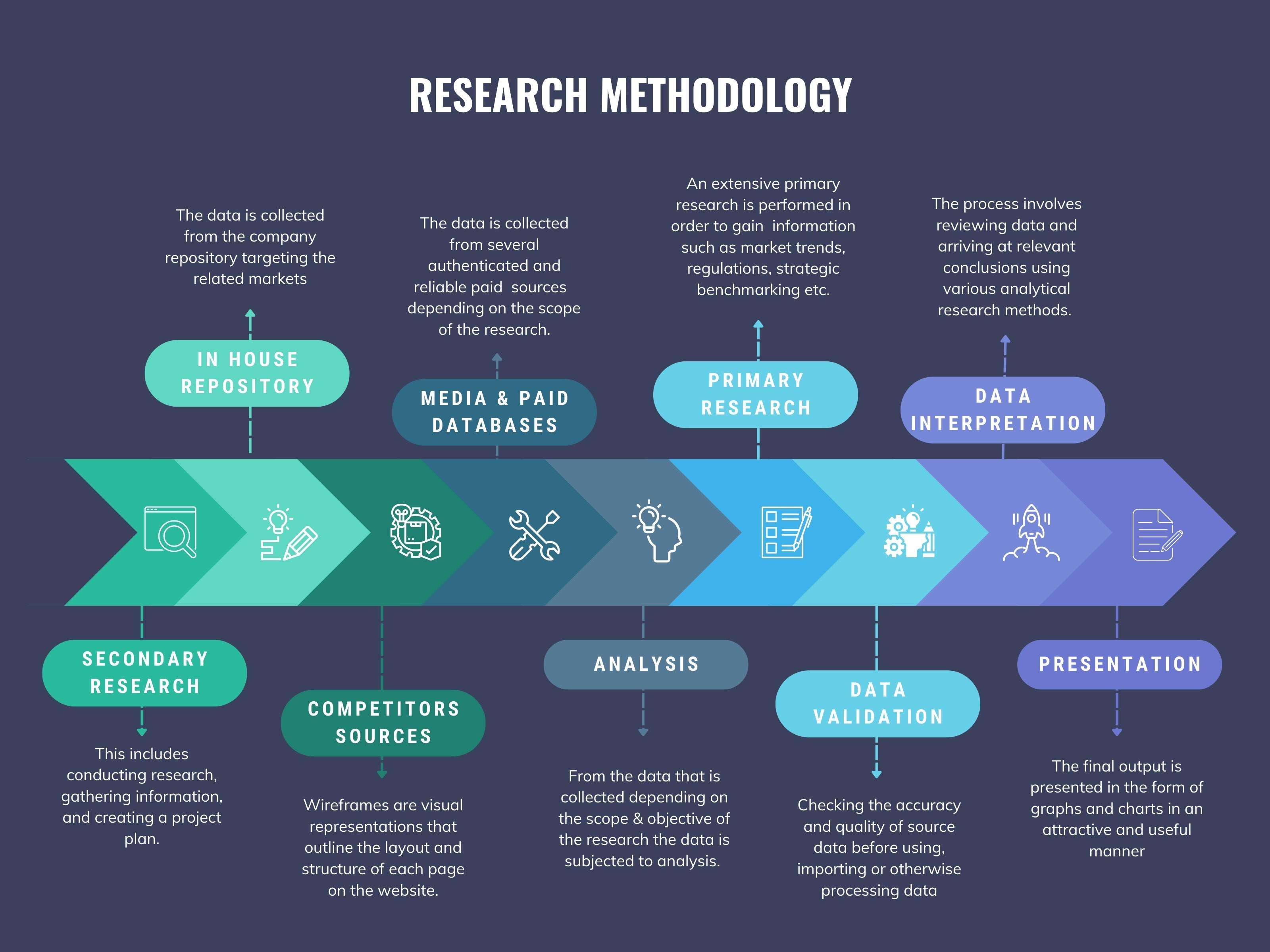
We at ‘Stratistics’ opt for an extensive research approach which involves data mining, data validation, and data analysis. The various research sources include in-house repository, secondary research, competitor’s sources, social media research, client internal data, and primary research.
Our team of analysts prefers the most reliable and authenticated data sources in order to perform the comprehensive literature search. With access to most of the authenticated data bases our team highly considers the best mix of information through various sources to obtain extensive and accurate analysis.
Each report takes an average time of a month and a team of 4 industry analysts. The time may vary depending on the scope and data availability of the desired market report. The various parameters used in the market assessment are standardized in order to enhance the data accuracy.
Data Mining
The data is collected from several authenticated, reliable, paid and unpaid sources and is filtered depending on the scope & objective of the research. Our reports repository acts as an added advantage in this procedure. Data gathering from the raw material suppliers, distributors and the manufacturers is performed on a regular basis, this helps in the comprehensive understanding of the products value chain. Apart from the above mentioned sources the data is also collected from the industry consultants to ensure the objective of the study is in the right direction.
Market trends such as technological advancements, regulatory affairs, market dynamics (Drivers, Restraints, Opportunities and Challenges) are obtained from scientific journals, market related national & international associations and organizations.
Data Analysis
From the data that is collected depending on the scope & objective of the research the data is subjected for the analysis. The critical steps that we follow for the data analysis include:
- Product Lifecycle Analysis
- Competitor analysis
- Risk analysis
- Porters Analysis
- PESTEL Analysis
- SWOT Analysis
The data engineering is performed by the core industry experts considering both the Marketing Mix Modeling and the Demand Forecasting. The marketing mix modeling makes use of multiple-regression techniques to predict the optimal mix of marketing variables. Regression factor is based on a number of variables and how they relate to an outcome such as sales or profits.
Data Validation
The data validation is performed by the exhaustive primary research from the expert interviews. This includes telephonic interviews, focus groups, face to face interviews, and questionnaires to validate our research from all aspects. The industry experts we approach come from the leading firms, involved in the supply chain ranging from the suppliers, distributors to the manufacturers and consumers so as to ensure an unbiased analysis.
We are in touch with more than 15,000 industry experts with the right mix of consultants, CEO's, presidents, vice presidents, managers, experts from both supply side and demand side, executives and so on.
The data validation involves the primary research from the industry experts belonging to:
- Leading Companies
- Suppliers & Distributors
- Manufacturers
- Consumers
- Industry/Strategic Consultants
Apart from the data validation the primary research also helps in performing the fill gap research, i.e. providing solutions for the unmet needs of the research which helps in enhancing the reports quality.
For more details about research methodology, kindly write to us at info@strategymrc.com
Frequently Asked Questions
In case of any queries regarding this report, you can contact the customer service by filing the “Inquiry Before Buy” form available on the right hand side. You may also contact us through email: info@strategymrc.com or phone: +1-301-202-5929
Yes, the samples are available for all the published reports. You can request them by filling the “Request Sample” option available in this page.
Yes, you can request a sample with your specific requirements. All the customized samples will be provided as per the requirement with the real data masked.
All our reports are available in Digital PDF format. In case if you require them in any other formats, such as PPT, Excel etc you can submit a request through “Inquiry Before Buy” form available on the right hand side. You may also contact us through email: info@strategymrc.com or phone: +1-301-202-5929
We offer a free 15% customization with every purchase. This requirement can be fulfilled for both pre and post sale. You may send your customization requirements through email at info@strategymrc.com or call us on +1-301-202-5929.
We have 3 different licensing options available in electronic format.
- Single User Licence: Allows one person, typically the buyer, to have access to the ordered product. The ordered product cannot be distributed to anyone else.
- 2-5 User Licence: Allows the ordered product to be shared among a maximum of 5 people within your organisation.
- Corporate License: Allows the product to be shared among all employees of your organisation regardless of their geographical location.
All our reports are typically be emailed to you as an attachment.
To order any available report you need to register on our website. The payment can be made either through CCAvenue or PayPal payments gateways which accept all international cards.
We extend our support to 6 months post sale. A post sale customization is also provided to cover your unmet needs in the report.
Request Customization
We offer complimentary customization of up to 15% with every purchase. To share your customization requirements, feel free to email us at info@strategymrc.com or call us on +1-301-202-5929. .
Please Note: Customization within the 15% threshold is entirely free of charge. If your request exceeds this limit, we will conduct a feasibility assessment. Following that, a detailed quote and timeline will be provided.
WHY CHOOSE US ?

Assured Quality
Best in class reports with high standard of research integrity

24X7 Research Support
Continuous support to ensure the best customer experience.

Free Customization
Adding more values to your product of interest.

Safe & Secure Access
Providing a secured environment for all online transactions.

Trusted by 600+ Brands
Serving the most reputed brands across the world.