
Controlled And Slow Release Fertilizers Market
Controlled and Slow Release Fertilizers Market Forecasts to 2032 - Global Analysis By Type (Controlled Release Fertilizers (CRF), Slow Release Fertilizers (SRF), Nitrification and Urease Inhibitors and Other Types), Crop Type, Mode of Application and By Geography

|
Years Covered |
2024-2032 |
|
Estimated Year Value (2025) |
US $2.66 BN |
|
Projected Year Value (2032) |
US $4.65 BN |
|
CAGR (2025-2032) |
8.3% |
|
Regions Covered |
North America, Europe, Asia Pacific, South America, and Middle East & Africa |
|
Countries Covered |
US, Canada, Mexico, Germany, UK, Italy, France, Spain, Japan, China, India, Australia, New Zealand, South Korea, Rest of Asia Pacific, South America, Argentina, Brazil, Chile, Middle East & Africa, Saudi Arabia, UAE, Qatar, and South Africa |
|
Largest Market |
Asia Pacific |
|
Highest Growing Market |
North America |
According to Stratistics MRC, the Global Controlled and Slow Release Fertilizers Market is accounted for $2.66 billion in 2025 and is expected to reach $4.65 billion by 2032 growing at a CAGR of 8.3% during the forecast period. Specialised nutrient sources called controlled and slow-release fertilisers are made to release nutrients gradually over time, increasing plant absorption efficiency and reducing nutrient loss. Coatings or chemical alterations are used in controlled-release fertilisers (CRFs) to control the release of nutrients in response to moisture or temperature. Slow-release fertilisers (SRFs) provide a sustained supply of nutrients by breaking down naturally through hydrolysis or microbial action. By guaranteeing a consistent and effective delivery of nutrients to plants over an extended period of time, both varieties enhance soil health, lessen leaching, and promote sustainable agriculture.
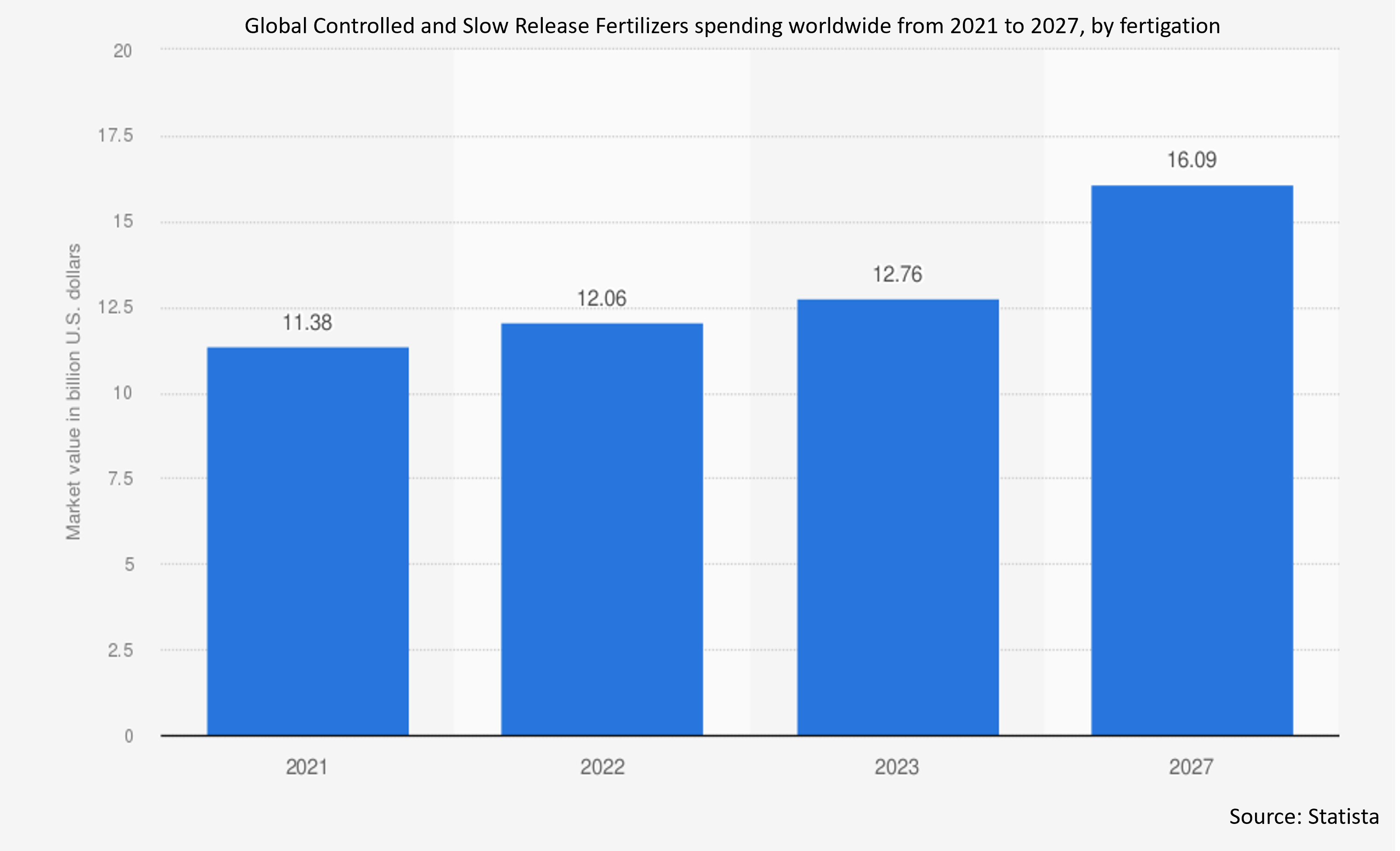
Market Dynamics:
Driver:
Rising global population & food security concerns
Slow-release and controlled fertilisers increase the efficiency of nitrogen utilisation, increasing agricultural yields while reducing their negative effects on the environment. Concerns about food security drive farmers to use cutting-edge fertilisers that offer a steady supply of nutrients, minimising losses and increasing output. Long-term agricultural sustainability is ensured by these fertilisers, which also aid in reducing soil degradation. In order to support the world's food production, governments and organisations are encouraging their use through laws and subsidies. In response to the growing global demand for food, the market for controlled and slow-release fertilisers is expanding steadily.
Restraint:
High cost compared to conventional fertilizers
Farmers choose less expensive options to cut production expenses, particularly in underdeveloped nations. Small and medium-sized farmers are deterred by the upfront costs associated with these cutting-edge fertilisers. Adoption rates are further decreased by a lack of knowledge regarding long-term advantages. These fertilisers are less available in price-sensitive areas due to high production and research expenditures. Consequently, regulated and slow-release fertilisers continue to have limited commercial expansion.
Opportunity:
Growth in precision farming
In order to precisely supply nutrients to crops and increase yields, farmers are using these fertilisers more and more. By enabling accurate application, cutting-edge technologies like GPS and IoT reduce their negative effects on the environment. In order to promote sustainable agriculture, controlled-release fertilisers lower greenhouse gas emissions and leaching. The growing demand for food around the world forces farmers to use cutting-edge fertilisation techniques to maximise yield. In general, the use of regulated and slow-release fertilisers for efficient and sustainable agriculture is accelerated by precision farming.
Threat:
Competition from traditional & organic fertilizers
Conventional fertilisers are frequently preferred by farmers because of their reduced initial costs and instant nutrient availability. Organic fertilisers support sustainable farming methods and appeal to consumers who care about the environment. Slow-release fertilisers are further complicated by government incentives and regulatory support for organic farming. The market's expansion is further constrained by developing nations' low knowledge and uptake of sophisticated fertilisers. Because of this, the market for controlled and slow-release fertilisers finds it difficult to grow in comparison to these established substitutes.
Covid-19 Impact
The COVID-19 pandemic disrupted the controlled and slow-release fertilizers market due to supply chain constraints, labour shortages, and reduced agricultural activities. Lockdowns affected production and distribution, leading to delays in fertilizer availability. Farmers faced economic uncertainties, impacting purchasing decisions. However, the market rebounded as governments prioritized food security and sustainable farming. Increased demand for high-efficiency fertilizers to maximize yields amid labour shortages further drove market growth post-pandemic, with a rising focus on precision agriculture and environmentally friendly solutions.
The cereals & grains segment is expected to be the largest during the forecast period
The cereals & grains segment is expected to account for the largest market share during the forecast period by enhanced nutrient efficiency and crop yield. By lowering leaching and guaranteeing continuous plant growth, these fertilisers offer a consistent supply of nutrients. The need for sophisticated fertilisation methods is fuelled by the growing demand for staple crops like corn, rice, and wheat worldwide. In line with sustainable farming methods, controlled-release fertilisers enhance soil health and reduce environmental effect. In cereal and grain cultivation, the demand for slow-release fertilisers is further boosted by the growing use of precision farming.
The soil application segment is expected to have the highest CAGR during the forecast period
Over the forecast period, the soil application segment is predicted to witness the highest growth rate, due to efficient nutrient delivery to plants. It enhances soil fertility, reducing nutrient leaching and minimizing environmental impact. Farmers prefer this method due to its ease of application and long-lasting effects on crop yield. The demand for sustainable and cost-effective fertilization further boosts its adoption. As precision farming gains traction, soil-applied controlled-release fertilizers continue to witness strong market growth.
Region with largest share:
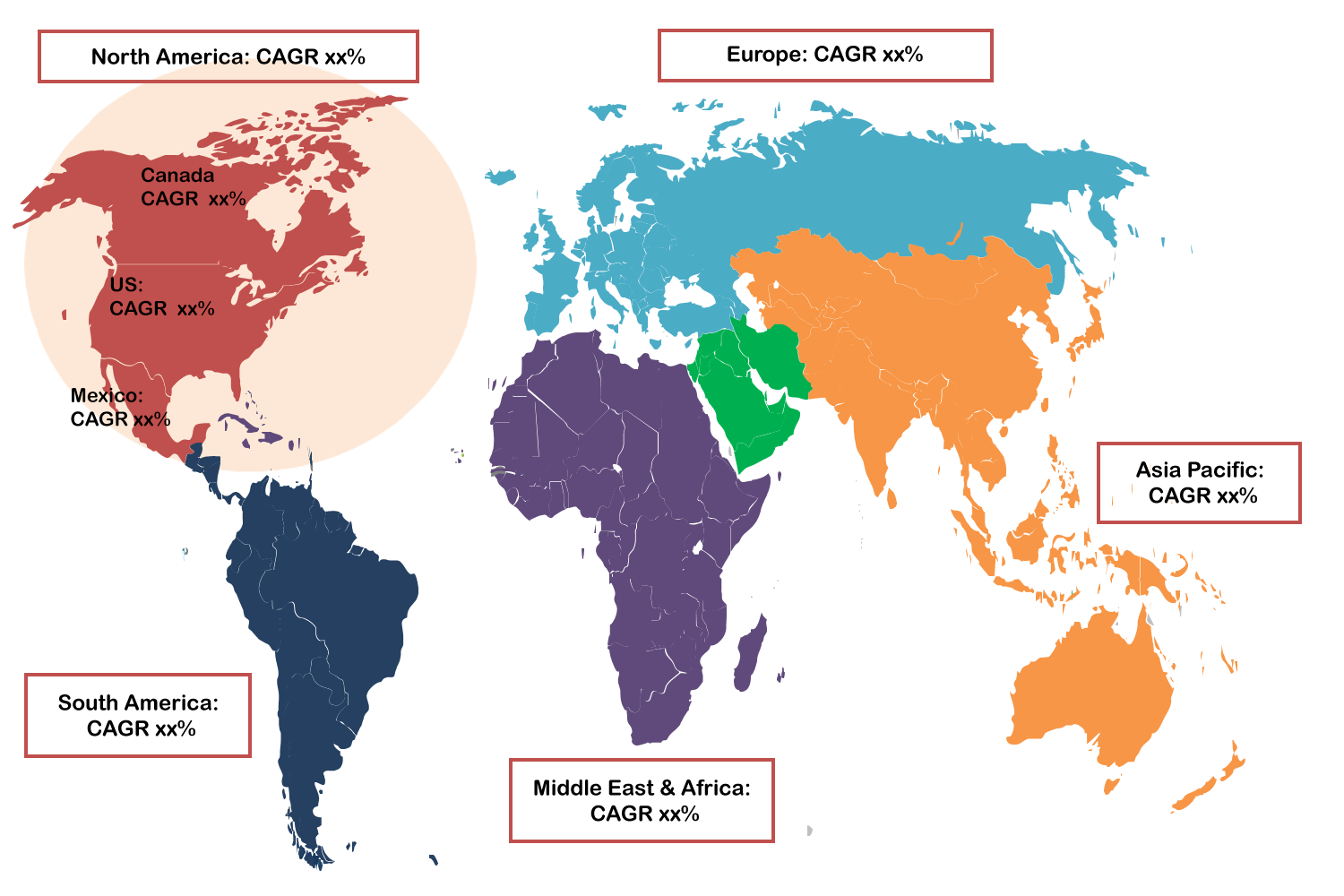
During the forecast period, the Asia Pacific region is expected to hold the largest market share due to rising demand for sustainable agricultural practices. Countries like China, India, and Japan are adopting advanced fertilizers to improve soil health and minimize nutrient loss. Government initiatives promoting efficient fertilizer use and increasing investments in precision farming are fueling market expansion. The growing preference for eco-friendly fertilizers and the need for high-efficiency nutrient management in horticulture and field crops further contribute to the rising adoption of controlled and slow-release fertilizers.
Region with highest CAGR:
Over the forecast period, the North America region is anticipated to exhibit the highest CAGR, owing to enhanced crop yield efficiency. Farmers are adopting these fertilizers to minimize nutrient loss and improve soil health. Technological advancements and precision farming are further boosting their adoption. The rising popularity of organic farming and environmentally friendly solutions also contributes to market expansion. Additionally, government initiatives promoting efficient fertilizer use and research investments in advanced formulations are supporting market growth across the region.
Key players in the market
Some of the key players profiled in the Controlled and Slow Release Fertilizers Market include Haifa Group, Yara International, Nutrien, Coromandel International, ICL Group Ltd., CF Industries Holdings Inc., The Mosaic Company, K+S AG, ScottsMiracle-Gro Company, Compo Expert GmbH, Agrium Inc., Kingenta Ecological Engineering Group Co., Ltd., Shikefeng Chemical Industry, Kugler Company, JNC Corporation, SK Specialties, Ekompany International B.V. and Andersons, Inc.
Key Developments:
In March 2024, Haifa Group signed a collaborative agreement with Deepak Fertilisers and Petrochemicals Corporation Limited (DFPCL) of India. This partnership aims to enhance innovation and sustainability in plant nutrition and agriculture in India, providing farmers with advanced solutions to improve crop yields and quality while focusing on resource preservation and environmental protection.
In December 2023, Yara International acquired Agribios Italiana, an organic fertilizer company, to strengthen its portfolio in organic-based fertilizers. This acquisition aligns with Yara’s strategy to expand its sustainable agriculture solutions, enhancing its market presence in eco-friendly fertilizers while supporting global demand for sustainable and controlled-release nutrient solutions.
Types Covered:
• Controlled Release Fertilizers (CRF)
• Slow Release Fertilizers (SRF)
• Nitrification and Urease Inhibitors
• Other Types
Crop Types Covered:
• Cereals & Grains
• Oilseeds & Pulses
• Fruits & Vegetables
• Turf & Ornamentals
• Other Crop Types
Mode of Applications Covered:
• Foliar Application
• Soil Application
• Fertigation
• Seed Coating & Dressing
• Root Dipping
• Other Mode of Applications
Regions Covered:
• North America
o US
o Canada
o Mexico
• Europe
o Germany
o UK
o Italy
o France
o Spain
o Rest of Europe
• Asia Pacific
o Japan
o China
o India
o Australia
o New Zealand
o South Korea
o Rest of Asia Pacific
• South America
o Argentina
o Brazil
o Chile
o Rest of South America
• Middle East & Africa
o Saudi Arabia
o UAE
o Qatar
o South Africa
o Rest of Middle East & Africa
What our report offers:
- Market share assessments for the regional and country-level segments
- Strategic recommendations for the new entrants
- Covers Market data for the years 2024, 2025, 2026, 2028, and 2032
- Market Trends (Drivers, Constraints, Opportunities, Threats, Challenges, Investment Opportunities, and recommendations)
- Strategic recommendations in key business segments based on the market estimations
- Competitive landscaping mapping the key common trends
- Company profiling with detailed strategies, financials, and recent developments
- Supply chain trends mapping the latest technological advancements
Free Customization Offerings:
All the customers of this report will be entitled to receive one of the following free customization options:
• Company Profiling
o Comprehensive profiling of additional market players (up to 3)
o SWOT Analysis of key players (up to 3)
• Regional Segmentation
o Market estimations, Forecasts and CAGR of any prominent country as per the client's interest (Note: Depends on feasibility check)
• Competitive Benchmarking
o Benchmarking of key players based on product portfolio, geographical presence, and strategic alliances
Table of Contents
1 Executive Summary
2 Preface
2.1 Abstract
2.2 Stake Holders
2.3 Research Scope
2.4 Research Methodology
2.4.1 Data Mining
2.4.2 Data Analysis
2.4.3 Data Validation
2.4.4 Research Approach
2.5 Research Sources
2.5.1 Primary Research Sources
2.5.2 Secondary Research Sources
2.5.3 Assumptions
3 Market Trend Analysis
3.1 Introduction
3.2 Drivers
3.3 Restraints
3.4 Opportunities
3.5 Threats
3.6 Emerging Markets
3.7 Impact of Covid-19
4 Porters Five Force Analysis
4.1 Bargaining power of suppliers
4.2 Bargaining power of buyers
4.3 Threat of substitutes
4.4 Threat of new entrants
4.5 Competitive rivalry
5 Global Controlled and Slow Release Fertilizers Market, By Type
5.1 Introduction
5.2 Controlled Release Fertilizers (CRF)
5.2.1 Polymer-Coated Fertilizers
5.2.2 Sulfur-Coated Fertilizers
5.2.3 Polymer-Sulfur-Coated Fertilizers
5.3 Slow Release Fertilizers (SRF)
5.3.1 Urea-Formaldehyde
5.3.2 Urea-Isobutyraldehyde
5.3.3 Urea-Acetaldehyde
5.4 Nitrification And Urease Inhibitors
5.4.1 Nitrification Inhibitors
5.4.2 Urease Inhibitors
5.5 Other Types
6 Global Controlled and Slow Release Fertilizers Market, By Crop Type
6.1 Introduction
6.2 Cereals & Grains
6.3 Oilseeds & Pulses
6.4 Fruits & Vegetables
6.5 Turf & Ornamentals
6.6 Other Crop Types
7 Global Controlled and Slow Release Fertilizers Market, By Mode of Application
7.1 Introduction
7.2 Foliar Application
7.3 Soil Application
7.4 Fertigation
7.5 Seed Coating & Dressing
7.6 Root Dipping
7.7 Other Mode of Applications
8 Global Controlled and Slow Release Fertilizers Market, By Geography
8.1 Introduction
8.2 North America
8.2.1 US
8.2.2 Canada
8.2.3 Mexico
8.3 Europe
8.3.1 Germany
8.3.2 UK
8.3.3 Italy
8.3.4 France
8.3.5 Spain
8.3.6 Rest of Europe
8.4 Asia Pacific
8.4.1 Japan
8.4.2 China
8.4.3 India
8.4.4 Australia
8.4.5 New Zealand
8.4.6 South Korea
8.4.7 Rest of Asia Pacific
8.5 South America
8.5.1 Argentina
8.5.2 Brazil
8.5.3 Chile
8.5.4 Rest of South America
8.6 Middle East & Africa
8.6.1 Saudi Arabia
8.6.2 UAE
8.6.3 Qatar
8.6.4 South Africa
8.6.5 Rest of Middle East & Africa
9 Key Developments
9.1 Agreements, Partnerships, Collaborations and Joint Ventures
9.2 Acquisitions & Mergers
9.3 New Product Launch
9.4 Expansions
9.5 Other Key Strategies
10 Company Profiling
10.1 Haifa Group
10.2 Yara International
10.3 Nutrien
10.4 Coromandel International
10.5 ICL Group Ltd.
10.6 CF Industries Holdings Inc.
10.7 The Mosaic Company
10.8 K+S AG
10.9 ScottsMiracle-Gro Company
10.10 Compo Expert GmbH
10.11 Agrium Inc.
10.12 Kingenta Ecological Engineering Group Co., Ltd.
10.13 Shikefeng Chemical Industry
10.14 Kugler Company
10.15 JNC Corporation
10.16 SK Specialties
10.17 Ekompany International B.V.
10.18 Andersons, Inc.
List of Tables
1 Global Controlled and Slow Release Fertilizers Market Outlook, By Region (2024-2032) ($MN)
2 Global Controlled and Slow Release Fertilizers Market Outlook, By Type (2024-2032) ($MN)
3 Global Controlled and Slow Release Fertilizers Market Outlook, By Controlled Release Fertilizers (CRF) (2024-2032) ($MN)
4 Global Controlled and Slow Release Fertilizers Market Outlook, By Polymer-coated fertilizers (2024-2032) ($MN)
5 Global Controlled and Slow Release Fertilizers Market Outlook, By Sulfur-coated fertilizers (2024-2032) ($MN)
6 Global Controlled and Slow Release Fertilizers Market Outlook, By Polymer-sulfur-coated fertilizers (2024-2032) ($MN)
7 Global Controlled and Slow Release Fertilizers Market Outlook, By Slow Release Fertilizers (SRF) (2024-2032) ($MN)
8 Global Controlled and Slow Release Fertilizers Market Outlook, By Urea-formaldehyde (2024-2032) ($MN)
9 Global Controlled and Slow Release Fertilizers Market Outlook, By Urea-isobutyraldehyde (2024-2032) ($MN)
10 Global Controlled and Slow Release Fertilizers Market Outlook, By Urea-acetaldehyde (2024-2032) ($MN)
11 Global Controlled and Slow Release Fertilizers Market Outlook, By Nitrification and Urease Inhibitors (2024-2032) ($MN)
12 Global Controlled and Slow Release Fertilizers Market Outlook, By Nitrification inhibitors (2024-2032) ($MN)
13 Global Controlled and Slow Release Fertilizers Market Outlook, By Urease inhibitors (2024-2032) ($MN)
14 Global Controlled and Slow Release Fertilizers Market Outlook, By Other Types (2024-2032) ($MN)
15 Global Controlled and Slow Release Fertilizers Market Outlook, By Crop Type (2024-2032) ($MN)
16 Global Controlled and Slow Release Fertilizers Market Outlook, By Cereals & grains (2024-2032) ($MN)
17 Global Controlled and Slow Release Fertilizers Market Outlook, By Oilseeds & pulses (2024-2032) ($MN)
18 Global Controlled and Slow Release Fertilizers Market Outlook, By Fruits & vegetables (2024-2032) ($MN)
19 Global Controlled and Slow Release Fertilizers Market Outlook, By Turf & ornamentals (2024-2032) ($MN)
20 Global Controlled and Slow Release Fertilizers Market Outlook, By Other Crop Types (2024-2032) ($MN)
21 Global Controlled and Slow Release Fertilizers Market Outlook, By Mode of Application (2024-2032) ($MN)
22 Global Controlled and Slow Release Fertilizers Market Outlook, By Foliar application (2024-2032) ($MN)
23 Global Controlled and Slow Release Fertilizers Market Outlook, By Soil application (2024-2032) ($MN)
24 Global Controlled and Slow Release Fertilizers Market Outlook, By Fertigation (2024-2032) ($MN)
25 Global Controlled and Slow Release Fertilizers Market Outlook, By Seed Coating & Dressing (2024-2032) ($MN)
26 Global Controlled and Slow Release Fertilizers Market Outlook, By Root Dipping (2024-2032) ($MN)
27 Global Controlled and Slow Release Fertilizers Market Outlook, By Other Mode of Applications (2024-2032) ($MN)
Note: Tables for North America, Europe, APAC, South America, and Middle East & Africa Regions are also represented in the same manner as above.
List of Figures
RESEARCH METHODOLOGY

We at ‘Stratistics’ opt for an extensive research approach which involves data mining, data validation, and data analysis. The various research sources include in-house repository, secondary research, competitor’s sources, social media research, client internal data, and primary research.
Our team of analysts prefers the most reliable and authenticated data sources in order to perform the comprehensive literature search. With access to most of the authenticated data bases our team highly considers the best mix of information through various sources to obtain extensive and accurate analysis.
Each report takes an average time of a month and a team of 4 industry analysts. The time may vary depending on the scope and data availability of the desired market report. The various parameters used in the market assessment are standardized in order to enhance the data accuracy.
Data Mining
The data is collected from several authenticated, reliable, paid and unpaid sources and is filtered depending on the scope & objective of the research. Our reports repository acts as an added advantage in this procedure. Data gathering from the raw material suppliers, distributors and the manufacturers is performed on a regular basis, this helps in the comprehensive understanding of the products value chain. Apart from the above mentioned sources the data is also collected from the industry consultants to ensure the objective of the study is in the right direction.
Market trends such as technological advancements, regulatory affairs, market dynamics (Drivers, Restraints, Opportunities and Challenges) are obtained from scientific journals, market related national & international associations and organizations.
Data Analysis
From the data that is collected depending on the scope & objective of the research the data is subjected for the analysis. The critical steps that we follow for the data analysis include:
- Product Lifecycle Analysis
- Competitor analysis
- Risk analysis
- Porters Analysis
- PESTEL Analysis
- SWOT Analysis
The data engineering is performed by the core industry experts considering both the Marketing Mix Modeling and the Demand Forecasting. The marketing mix modeling makes use of multiple-regression techniques to predict the optimal mix of marketing variables. Regression factor is based on a number of variables and how they relate to an outcome such as sales or profits.
Data Validation
The data validation is performed by the exhaustive primary research from the expert interviews. This includes telephonic interviews, focus groups, face to face interviews, and questionnaires to validate our research from all aspects. The industry experts we approach come from the leading firms, involved in the supply chain ranging from the suppliers, distributors to the manufacturers and consumers so as to ensure an unbiased analysis.
We are in touch with more than 15,000 industry experts with the right mix of consultants, CEO's, presidents, vice presidents, managers, experts from both supply side and demand side, executives and so on.
The data validation involves the primary research from the industry experts belonging to:
- Leading Companies
- Suppliers & Distributors
- Manufacturers
- Consumers
- Industry/Strategic Consultants
Apart from the data validation the primary research also helps in performing the fill gap research, i.e. providing solutions for the unmet needs of the research which helps in enhancing the reports quality.
For more details about research methodology, kindly write to us at info@strategymrc.com
Frequently Asked Questions
In case of any queries regarding this report, you can contact the customer service by filing the “Inquiry Before Buy” form available on the right hand side. You may also contact us through email: info@strategymrc.com or phone: +1-301-202-5929
Yes, the samples are available for all the published reports. You can request them by filling the “Request Sample” option available in this page.
Yes, you can request a sample with your specific requirements. All the customized samples will be provided as per the requirement with the real data masked.
All our reports are available in Digital PDF format. In case if you require them in any other formats, such as PPT, Excel etc you can submit a request through “Inquiry Before Buy” form available on the right hand side. You may also contact us through email: info@strategymrc.com or phone: +1-301-202-5929
We offer a free 15% customization with every purchase. This requirement can be fulfilled for both pre and post sale. You may send your customization requirements through email at info@strategymrc.com or call us on +1-301-202-5929.
We have 3 different licensing options available in electronic format.
- Single User Licence: Allows one person, typically the buyer, to have access to the ordered product. The ordered product cannot be distributed to anyone else.
- 2-5 User Licence: Allows the ordered product to be shared among a maximum of 5 people within your organisation.
- Corporate License: Allows the product to be shared among all employees of your organisation regardless of their geographical location.
All our reports are typically be emailed to you as an attachment.
To order any available report you need to register on our website. The payment can be made either through CCAvenue or PayPal payments gateways which accept all international cards.
We extend our support to 6 months post sale. A post sale customization is also provided to cover your unmet needs in the report.
Request Customization
We offer complimentary customization of up to 15% with every purchase. To share your customization requirements, feel free to email us at info@strategymrc.com or call us on +1-301-202-5929. .
Please Note: Customization within the 15% threshold is entirely free of charge. If your request exceeds this limit, we will conduct a feasibility assessment. Following that, a detailed quote and timeline will be provided.
WHY CHOOSE US ?

Assured Quality
Best in class reports with high standard of research integrity

24X7 Research Support
Continuous support to ensure the best customer experience.

Free Customization
Adding more values to your product of interest.

Safe & Secure Access
Providing a secured environment for all online transactions.

Trusted by 600+ Brands
Serving the most reputed brands across the world.
