Inflammatory Bowel Disease Treatment Market
Inflammatory Bowel Disease Treatment Market Forecasts to 2034 - Global Analysis By Disease Type (Crohn's Disease and Ulcerative Colitis), Treatment Type, Drug Class, Route of Administration, Patient Age Group, Distribution Channel, End User and By Geography

Market Dynamics:
Driver:
Increasing prevalence of inflammatory bowel disease and demand for advanced therapies
The increasing prevalence of Crohn's disease and ulcerative colitis is driving demand for effective inflammatory bowel disease treatments worldwide. Growing diagnosis rates, improved disease awareness, and expanding access to gastroenterology services are contributing to treatment adoption. The chronic and relapsing nature of inflammatory bowel disease creates sustained demand for maintenance therapies and disease monitoring. Additionally, increasing availability of biologics and targeted small-molecule medications is improving therapeutic options for patients with moderate-to-severe disease. Continued investment in clinical research and personalized treatment approaches is further supporting market development.
Restraint:
High treatment costs and limited accessibility to advanced therapies
High treatment costs and uneven access to advanced medications are significant restraints on market growth. Biologic therapies and newer targeted treatments can impose substantial financial burdens on healthcare systems and patients, particularly in countries with limited reimbursement coverage. Long-term treatment requirements, monitoring expenses, and potential adverse effects further increase healthcare costs. Additionally, delayed diagnosis, inadequate specialist availability, and variations in treatment infrastructure can restrict access to appropriate care. Regulatory approval requirements and complex reimbursement processes may also delay the introduction of innovative therapies in certain markets.
Opportunity:
Development of targeted therapies and expansion of biosimilar availability
The development of targeted immunotherapies and expanding biosimilar availability are creating significant market opportunities. Pharmaceutical companies are investing in selective cytokine inhibitors, oral small-molecule therapies, and novel mechanisms designed to improve disease control and treatment convenience. Increasing adoption of biosimilars may reduce treatment costs and expand access to biologic medications. Advances in biomarkers, therapeutic drug monitoring, and precision medicine are also supporting individualized treatment strategies. Growing clinical research activity and increasing demand for therapies with improved safety and long-term effectiveness are further encouraging innovation.
Threat:
Stringent regulatory requirements and competitive pressure from biosimilars
Stringent regulatory requirements, treatment-related safety concerns, and increasing competition present significant threats to market participants. Developers of inflammatory bowel disease therapies must demonstrate sustained efficacy and acceptable safety profiles through extensive clinical evaluation. Potential risks associated with immunosuppressive treatments, including serious infections and other adverse events, may influence prescribing decisions. Patent expirations and biosimilar competition can create pricing pressure for established biologic manufacturers. Additionally, variable patient responses, treatment resistance, and changing reimbursement policies may affect commercial performance and long-term market development.
Covid-19 Impact:
The COVID-19 pandemic affected the inflammatory bowel disease treatment market through disruptions in routine consultations, diagnostic procedures, and elective healthcare services. Patients receiving immunosuppressive therapies faced additional concerns regarding infection risk, prompting greater emphasis on individualized treatment management. Telemedicine consultations, remote monitoring, and home-based medication administration gained importance during periods of restricted healthcare access. Although clinical trial operations and hospital services experienced temporary disruptions, the pandemic accelerated adoption of digital healthcare solutions. Subsequent recovery in specialist consultations and continued availability of maintenance therapies supported market stabilization.
The biologics segment is expected to be the largest during the forecast period
The biologics segment is expected to account for the largest market share during the forecast period due to widespread use of targeted therapies for moderate-to-severe Crohn's disease and ulcerative colitis. Biologic medications targeting tumor necrosis factor, integrins, and interleukin pathways have become important components of inflammatory bowel disease management. Their ability to achieve clinical remission and support mucosal healing in appropriate patients is encouraging treatment adoption. Continued development of innovative biologics, expansion of approved indications, and increasing biosimilar availability are supporting segment growth. Strong pharmaceutical investment further reinforces its market position.
The JAK inhibitors segment is expected to have the highest CAGR during the forecast period
Over the forecast period, the JAK inhibitors segment is predicted to witness the highest growth rate due to increasing interest in targeted oral therapies for inflammatory bowel disease. Janus kinase inhibitors interfere with intracellular signaling pathways involved in inflammatory responses, offering an alternative to injectable biologic treatments for eligible patients. Growing clinical evidence, regulatory approvals for selected indications, and expanding physician familiarity are supporting adoption. Oral administration offers convenience, although safety warnings and patient-selection requirements remain important considerations.
Region with largest share:
During the forecast period, North America is expected to hold the largest market share, supported by established gastroenterology infrastructure, substantial healthcare expenditure, and widespread availability of advanced inflammatory bowel disease therapies. The United States represents a major market due to significant pharmaceutical research activity, specialist treatment networks, and access to biologics and targeted medications. Increasing disease awareness, diagnostic capabilities, and clinical trial participation are supporting treatment demand. The presence of leading pharmaceutical manufacturers and continued development of innovative therapies further strengthen regional market performance.
Region with highest CAGR:
Over the forecast period, Asia Pacific is anticipated to exhibit the highest CAGR due to increasing recognition of inflammatory bowel disease, expanding healthcare infrastructure, and improving access to specialized treatments. China, India, Japan, South Korea, and Australia are important markets for advanced gastroenterology care. Rising healthcare expenditure, growing diagnostic capabilities, and expanding insurance coverage in selected countries are supporting treatment adoption. Increasing clinical research activity, greater availability of biosimilars, and pharmaceutical investment in regional markets are further encouraging growth.
Key players in the market
Some of the key players in the Inflammatory Bowel Disease Treatment Market include AbbVie, Johnson & Johnson, Takeda, Pfizer, UCB, Eli Lilly, Bristol-Myers Squibb, Amgen, Celltrion, Sanofi, Teva, Merck & Co., Roche, Abivax, InnoCare Pharma, cAMPfield Therapeutics, Palisade Bio, and Caldera Therapeutics.
Key Developments:
In October 2025, Eli Lilly announced that the U.S. Food and Drug Administration approved a single-injection, once-monthly maintenance regimen of Omvoh (mirikizumab-mrkz) for adults with moderately to severely active ulcerative colitis. The 200 mg subcutaneous formulation simplifies maintenance treatment by replacing the previous two-injection regimen.
In September 2025, Johnson & Johnson received U.S. FDA approval for a subcutaneous induction regimen of Tremfya (guselkumab) for adults with moderately to severely active ulcerative colitis. The approval enables eligible patients to begin treatment through subcutaneous administration rather than requiring intravenous induction.
In March 2025, Johnson & Johnson announced U.S. FDA approval of Tremfya (guselkumab) for adults with moderately to severely active Crohn's disease. The treatment offers both intravenous and subcutaneous induction options, providing additional flexibility in therapy initiation.
Disease Types Covered:
• Crohn's Disease
• Ulcerative Colitis
Treatment Types Covered:
• Pharmacological Therapy
• Surgical Intervention
• Nutritional Therapy
Drug Classes Covered:
• Aminosalicylates (5-ASA)
• Corticosteroids
• Immunomodulators
• Biologics
• JAK Inhibitors
• S1P Receptor Modulators
Routes of Administration Covered:
• Oral
• Parenteral
• Rectal
Patient Age Groups Covered:
• Pediatric
• Adult
• Geriatric
Distribution Channels Covered:
• Hospital Pharmacies
• Retail Pharmacies
• Online Pharmacies
End Users Covered:
• Hospitals
• Gastroenterology Clinics
• Homecare Settings
Regions Covered:
• North America
o United States
o Canada
o Mexico
• Europe
o United Kingdom
o Germany
o France
o Italy
o Spain
o Netherlands
o Belgium
o Sweden
o Switzerland
o Poland
o Rest of Europe
• Asia Pacific
o China
o Japan
o India
o South Korea
o Australia
o Indonesia
o Thailand
o Malaysia
o Singapore
o Vietnam
o Rest of Asia Pacific
• South America
o Brazil
o Argentina
o Colombia
o Chile
o Peru
o Rest of South America
• Rest of the World (RoW)
o Middle East
§ Saudi Arabia
§ United Arab Emirates
§ Qatar
§ Israel
§ Rest of Middle East
o Africa
§ South Africa
§ Egypt
§ Morocco
§ Rest of Africa
What our report offers:
- Market share assessments for the regional and country-level segments
- Strategic recommendations for the new entrants
- Covers Market data for the years 2023, 2024, 2025, 2026, 2027, 2028, 2030, 2032 and 2034
- Market Trends (Drivers, Constraints, Opportunities, Threats, Challenges, Investment Opportunities, and recommendations)
- Strategic recommendations in key business segments based on the market estimations
- Competitive landscaping mapping the key common trends
- Company profiling with detailed strategies, financials, and recent developments
- Supply chain trends mapping the latest technological advancements
Free Customization Offerings:
All the customers of this report will be entitled to receive one of the following free customization options:
• Company Profiling
o Comprehensive profiling of additional market players (up to 3)
o SWOT Analysis of key players (up to 3)
• Regional Segmentation
o Market estimations, Forecasts and CAGR of any prominent country as per the client's interest (Note: Depends on feasibility check)
• Competitive Benchmarking
o Benchmarking of key players based on product portfolio, geographical presence, and strategic alliances
Table of Contents
1 Executive Summary1.1 Market Snapshot and Key Highlights
1.2 Growth Drivers, Challenges, and Opportunities
1.3 Competitive Landscape Overview
1.4 Strategic Insights and Recommendations
2 Research Framework
2.1 Study Objectives and Scope
2.2 Stakeholder Analysis
2.3 Research Assumptions and Limitations
2.4 Research Methodology
2.4.1 Data Collection (Primary and Secondary)
2.4.2 Data Modeling and Estimation Techniques
2.4.3 Data Validation and Triangulation
2.4.4 Analytical and Forecasting Approach
3 Market Dynamics and Trend Analysis
3.1 Market Definition and Structure
3.2 Key Market Drivers
3.3 Market Restraints and Challenges
3.4 Growth Opportunities and Investment Hotspots
3.5 Industry Threats and Risk Assessment
3.6 Technology and Innovation Landscape
3.7 Emerging and High-Growth Markets
3.8 Regulatory and Policy Environment
3.9 Impact of COVID-19 and Recovery Outlook
4 Competitive and Strategic Assessment
4.1 Porter's Five Forces Analysis
4.1.1 Supplier Bargaining Power
4.1.2 Buyer Bargaining Power
4.1.3 Threat of Substitutes
4.1.4 Threat of New Entrants
4.1.5 Competitive Rivalry
4.2 Market Share Analysis of Key Players
4.3 Product Benchmarking and Performance Comparison
5 Global Inflammatory Bowel Disease Treatment Market, By Disease Type
5.1 Crohn's Disease
5.2 Ulcerative Colitis
6 Global Inflammatory Bowel Disease Treatment Market, By Treatment Type
6.1 Pharmacological Therapy
6.2 Surgical Intervention
6.3 Nutritional Therapy
7 Global Inflammatory Bowel Disease Treatment Market, By Drug Class
7.1 Aminosalicylates (5-ASA)
7.2 Corticosteroids
7.3 Immunomodulators
7.4 Biologics
7.5 JAK Inhibitors
7.6 S1P Receptor Modulators
8 Global Inflammatory Bowel Disease Treatment Market, By Route of Administration
8.1 Oral
8.2 Parenteral
8.3 Rectal
9 Global Inflammatory Bowel Disease Treatment Market, By Patient Age Group
9.1 Pediatric
9.2 Adult
9.3 Geriatric
10 Global Inflammatory Bowel Disease Treatment Market, By Distribution Channel
10.1 Hospital Pharmacies
10.2 Retail Pharmacies
10.3 Online Pharmacies
11 Global Inflammatory Bowel Disease Treatment Market, By End User
11.1 Hospitals
11.2 Gastroenterology Clinics
11.3 Homecare Settings
12 Global Inflammatory Bowel Disease Treatment Market, By Geography
12.1 North America
12.1.1 United States
12.1.2 Canada
12.1.3 Mexico
12.2 Europe
12.2.1 United Kingdom
12.2.2 Germany
12.2.3 France
12.2.4 Italy
12.2.5 Spain
12.2.6 Netherlands
12.2.7 Belgium
12.2.8 Sweden
12.2.9 Switzerland
12.2.10 Poland
12.2.11 Rest of Europe
12.3 Asia Pacific
12.3.1 China
12.3.2 Japan
12.3.3 India
12.3.4 South Korea
12.3.5 Australia
12.3.6 Indonesia
12.3.7 Thailand
12.3.8 Malaysia
12.3.9 Singapore
12.3.10 Vietnam
12.3.11 Rest of Asia Pacific
12.4 South America
12.4.1 Brazil
12.4.2 Argentina
12.4.3 Colombia
12.4.4 Chile
12.4.5 Peru
12.4.6 Rest of South America
12.5 Rest of the World (RoW)
12.5.1 Middle East
12.5.1.1 Saudi Arabia
12.5.1.2 United Arab Emirates
12.5.1.3 Qatar
12.5.1.4 Israel
12.5.1.5 Rest of Middle East
12.5.2 Africa
12.5.2.1 South Africa
12.5.2.2 Egypt
12.5.2.3 Morocco
12.5.2.4 Rest of Africa
13 Strategic Market Intelligence
13.1 Industry Value Network and Supply Chain Assessment
13.2 White-Space and Opportunity Mapping
13.3 Product Evolution and Market Life Cycle Analysis
13.4 Channel, Distributor, and Go-to-Market Assessment
14 Industry Developments and Strategic Initiatives
14.1 Mergers and Acquisitions
14.2 Partnerships, Alliances, and Joint Ventures
14.3 New Product Launches and Certifications
14.4 Capacity Expansion and Investments
14.5 Other Strategic Initiatives
15 Company Profiles
15.1 AbbVie
15.2 Johnson & Johnson
15.3 Takeda
15.4 Pfizer
15.5 UCB
15.6 Eli Lilly
15.7 Bristol-Myers Squibb
15.8 Amgen
15.9 Celltrion
15.10 Sanofi
15.11 Teva
15.12 Merck & Co.
15.13 Roche
15.14 Abivax
15.15 InnoCare Pharma
15.16 cAMPfield Therapeutics
15.17 Palisade Bio
15.18 Caldera Therapeutics
List of Tables
1 Global Inflammatory Bowel Disease Treatment Market Outlook, By Region (2023-2034) ($MN)
2 Global Inflammatory Bowel Disease Treatment Market Outlook, By Disease Type (2023-2034) ($MN)
3 Global Inflammatory Bowel Disease Treatment Market Outlook, By Crohn's Disease (2023-2034) ($MN)
4 Global Inflammatory Bowel Disease Treatment Market Outlook, By Ulcerative Colitis (2023-2034) ($MN)
5 Global Inflammatory Bowel Disease Treatment Market Outlook, By Treatment Type (2023-2034) ($MN)
6 Global Inflammatory Bowel Disease Treatment Market Outlook, By Pharmacological Therapy (2023-2034) ($MN)
7 Global Inflammatory Bowel Disease Treatment Market Outlook, By Surgical Intervention (2023-2034) ($MN)
8 Global Inflammatory Bowel Disease Treatment Market Outlook, By Nutritional Therapy (2023-2034) ($MN)
9 Global Inflammatory Bowel Disease Treatment Market Outlook, By Drug Class (2023-2034) ($MN)
10 Global Inflammatory Bowel Disease Treatment Market Outlook, By Aminosalicylates (5-ASA) (2023-2034) ($MN)
11 Global Inflammatory Bowel Disease Treatment Market Outlook, By Corticosteroids (2023-2034) ($MN)
12 Global Inflammatory Bowel Disease Treatment Market Outlook, By Immunomodulators (2023-2034) ($MN)
13 Global Inflammatory Bowel Disease Treatment Market Outlook, By Biologics (2023-2034) ($MN)
14 Global Inflammatory Bowel Disease Treatment Market Outlook, By JAK Inhibitors (2023-2034) ($MN)
15 Global Inflammatory Bowel Disease Treatment Market Outlook, By S1P Receptor Modulators (2023-2034) ($MN)
16 Global Inflammatory Bowel Disease Treatment Market Outlook, By Route of Administration (2023-2034) ($MN)
17 Global Inflammatory Bowel Disease Treatment Market Outlook, By Oral (2023-2034) ($MN)
18 Global Inflammatory Bowel Disease Treatment Market Outlook, By Parenteral (2023-2034) ($MN)
19 Global Inflammatory Bowel Disease Treatment Market Outlook, By Rectal (2023-2034) ($MN)
20 Global Inflammatory Bowel Disease Treatment Market Outlook, By Patient Age Group (2023-2034) ($MN)
21 Global Inflammatory Bowel Disease Treatment Market Outlook, By Pediatric (2023-2034) ($MN)
22 Global Inflammatory Bowel Disease Treatment Market Outlook, By Adult (2023-2034) ($MN)
23 Global Inflammatory Bowel Disease Treatment Market Outlook, By Geriatric (2023-2034) ($MN)
24 Global Inflammatory Bowel Disease Treatment Market Outlook, By Distribution Channel (2023-2034) ($MN)
25 Global Inflammatory Bowel Disease Treatment Market Outlook, By Hospital Pharmacies (2023-2034) ($MN)
26 Global Inflammatory Bowel Disease Treatment Market Outlook, By Retail Pharmacies (2023-2034) ($MN)
27 Global Inflammatory Bowel Disease Treatment Market Outlook, By Online Pharmacies (2023-2034) ($MN)
28 Global Inflammatory Bowel Disease Treatment Market Outlook, By End User (2023-2034) ($MN)
29 Global Inflammatory Bowel Disease Treatment Market Outlook, By Hospitals (2023-2034) ($MN)
30 Global Inflammatory Bowel Disease Treatment Market Outlook, By Gastroenterology Clinics (2023-2034) ($MN)
31 Global Inflammatory Bowel Disease Treatment Market Outlook, By Homecare Settings (2023-2034) ($MN)
Note: Tables for North America, Europe, APAC, South America, and Rest of the World (RoW) Regions are also represented in the same manner as above.
List of Figures
RESEARCH METHODOLOGY
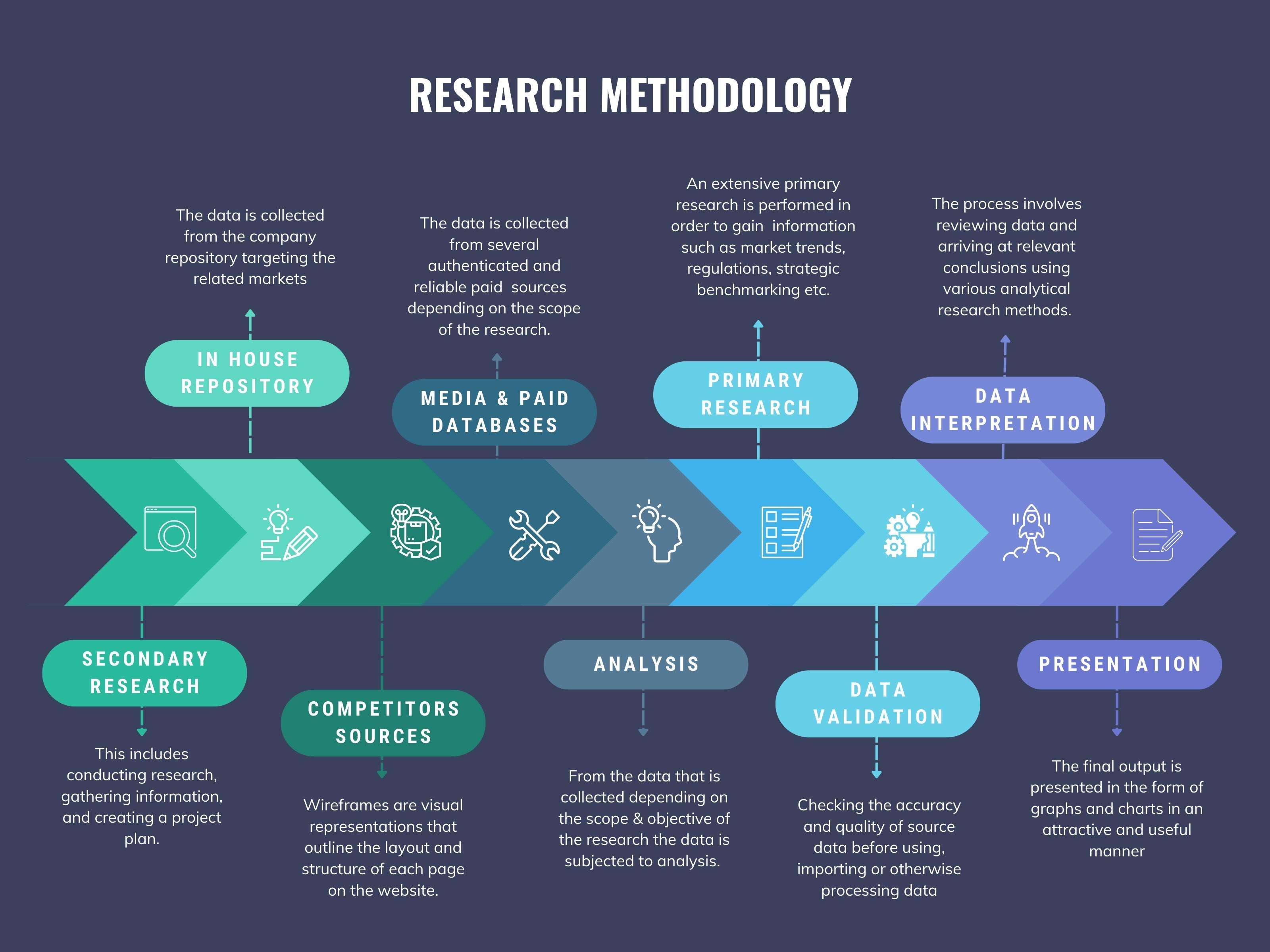
We at ‘Stratistics’ opt for an extensive research approach which involves data mining, data validation, and data analysis. The various research sources include in-house repository, secondary research, competitor’s sources, social media research, client internal data, and primary research.
Our team of analysts prefers the most reliable and authenticated data sources in order to perform the comprehensive literature search. With access to most of the authenticated data bases our team highly considers the best mix of information through various sources to obtain extensive and accurate analysis.
Each report takes an average time of a month and a team of 4 industry analysts. The time may vary depending on the scope and data availability of the desired market report. The various parameters used in the market assessment are standardized in order to enhance the data accuracy.
Data Mining
The data is collected from several authenticated, reliable, paid and unpaid sources and is filtered depending on the scope & objective of the research. Our reports repository acts as an added advantage in this procedure. Data gathering from the raw material suppliers, distributors and the manufacturers is performed on a regular basis, this helps in the comprehensive understanding of the products value chain. Apart from the above mentioned sources the data is also collected from the industry consultants to ensure the objective of the study is in the right direction.
Market trends such as technological advancements, regulatory affairs, market dynamics (Drivers, Restraints, Opportunities and Challenges) are obtained from scientific journals, market related national & international associations and organizations.
Data Analysis
From the data that is collected depending on the scope & objective of the research the data is subjected for the analysis. The critical steps that we follow for the data analysis include:
- Product Lifecycle Analysis
- Competitor analysis
- Risk analysis
- Porters Analysis
- PESTEL Analysis
- SWOT Analysis
The data engineering is performed by the core industry experts considering both the Marketing Mix Modeling and the Demand Forecasting. The marketing mix modeling makes use of multiple-regression techniques to predict the optimal mix of marketing variables. Regression factor is based on a number of variables and how they relate to an outcome such as sales or profits.
Data Validation
The data validation is performed by the exhaustive primary research from the expert interviews. This includes telephonic interviews, focus groups, face to face interviews, and questionnaires to validate our research from all aspects. The industry experts we approach come from the leading firms, involved in the supply chain ranging from the suppliers, distributors to the manufacturers and consumers so as to ensure an unbiased analysis.
We are in touch with more than 15,000 industry experts with the right mix of consultants, CEO's, presidents, vice presidents, managers, experts from both supply side and demand side, executives and so on.
The data validation involves the primary research from the industry experts belonging to:
- Leading Companies
- Suppliers & Distributors
- Manufacturers
- Consumers
- Industry/Strategic Consultants
Apart from the data validation the primary research also helps in performing the fill gap research, i.e. providing solutions for the unmet needs of the research which helps in enhancing the reports quality.
For more details about research methodology, kindly write to us at info@strategymrc.com
Frequently Asked Questions
In case of any queries regarding this report, you can contact the customer service by filing the “Inquiry Before Buy” form available on the right hand side. You may also contact us through email: info@strategymrc.com or phone: +1-301-202-5929
Yes, the samples are available for all the published reports. You can request them by filling the “Request Sample” option available in this page.
Yes, you can request a sample with your specific requirements. All the customized samples will be provided as per the requirement with the real data masked.
All our reports are available in Digital PDF format. In case if you require them in any other formats, such as PPT, Excel etc you can submit a request through “Inquiry Before Buy” form available on the right hand side. You may also contact us through email: info@strategymrc.com or phone: +1-301-202-5929
We offer a free 15% customization with every purchase. This requirement can be fulfilled for both pre and post sale. You may send your customization requirements through email at info@strategymrc.com or call us on +1-301-202-5929.
We have 3 different licensing options available in electronic format.
- Single User Licence: Allows one person, typically the buyer, to have access to the ordered product. The ordered product cannot be distributed to anyone else.
- 2-5 User Licence: Allows the ordered product to be shared among a maximum of 5 people within your organisation.
- Corporate License: Allows the product to be shared among all employees of your organisation regardless of their geographical location.
All our reports are typically be emailed to you as an attachment.
To order any available report you need to register on our website. The payment can be made either through CCAvenue or PayPal payments gateways which accept all international cards.
We extend our support to 6 months post sale. A post sale customization is also provided to cover your unmet needs in the report.
Request Customization
We offer complimentary customization of up to 15% with every purchase. To share your customization requirements, feel free to email us at info@strategymrc.com or call us on +1-301-202-5929. .
Please Note: Customization within the 15% threshold is entirely free of charge. If your request exceeds this limit, we will conduct a feasibility assessment. Following that, a detailed quote and timeline will be provided.
WHY CHOOSE US ?

Assured Quality
Best in class reports with high standard of research integrity

24X7 Research Support
Continuous support to ensure the best customer experience.

Free Customization
Adding more values to your product of interest.

Safe & Secure Access
Providing a secured environment for all online transactions.

Trusted by 600+ Brands
Serving the most reputed brands across the world.