
Long Range Camera Market
Long Range Camera Market Forecasts to 2032 - Global Analysis By Camera Type (Thermal/Infrared Cameras, Visible Light Cameras and Other Camera Types), Resolution (HD, UHD, 4K and Above), Wavelength, Focal Length, Camera Installation, Platform, Application, End User and By Geography

|
Years Covered |
2024-2032 |
|
Estimated Year Value (2025) |
US $1.3 BN |
|
Projected Year Value (2032) |
US $2.9 BN |
|
CAGR (2025-2032) |
12% |
|
Regions Covered |
North America, Europe, Asia Pacific, South America, and Middle East & Africa |
|
Countries Covered |
US, Canada, Mexico, Germany, UK, Italy, France, Spain, Japan, China, India, Australia, New Zealand, South Korea, Rest of Asia Pacific, South America, Argentina, Brazil, Chile, Middle East & Africa, Saudi Arabia, UAE, Qatar, and South Africa |
|
Largest Market |
North America |
|
Highest Growing Market |
Asia Pacific |
According to Stratistics MRC, the Global Long Range Camera Market is accounted for $1.3 billion in 2025 and is expected to reach $2.9 billion by 2032 growing at a CAGR of 12% during the forecast period. Advanced imaging equipment called a long-range camera is made to take crisp, detailed pictures or videos over vast distances—often more than a few kilometers. In order to preserve focus and clarity, it usually has strong sensors, a high optical zoom, and stabilizing technologies. These cameras are used extensively in industrial inspections, military, wildlife observation, and surveillance because they let users keep an eye on far-off things without sacrificing image quality or requiring close proximity.
According to Business Today, China has developed a groundbreaking space surveillance camera capable of capturing details as small as 1.7 millimeters from over 100 kilometers away, utilizing synthetic aperture lidar (SAL) technology.
Market Dynamics:
Driver:
Increased demand for surveillance and security
The increased demand for stronger security measures in both military and civilian settings is propelling the long-range camera industry. These cameras provide vital high-resolution imaging capabilities that are required for monitoring broad regions, recognizing potential threats from a distance, and maintaining complete surveillance coverage. Furthermore, the expansion of applications in defense, border security, and law enforcement has fueled demand, especially as global security concerns have grown. Furthermore, the incorporation of these cameras into smart city projects for urban monitoring and traffic control has opened up new business prospects, accelerating market growth.
Restraint:
High cost of advanced long range cameras
The high initial investment necessary for sophisticated long-range camera systems is a key market constraint, influencing adoption rates in developing countries and among smaller firms. Budget constraints often restrict purchasing power in towns and organizations with limited financial resources. Furthermore, the ongoing need for maintenance and updates raises the overall cost of ownership, making these systems less affordable to prospective customers with limited budgets. Furthermore, as technology progresses, the cost of implementing cutting-edge features like greater zoom capabilities and thermal imaging rises, posing challenges to market growth.
Opportunity:
Development of thermal and night vision technologies
The incorporation of enhanced thermal imaging and night vision capabilities into long-range cameras opens up significant market potential opportunities. These technologies dramatically improve camera operation by providing clear visibility in low light, severe weather, and utter darkness. Furthermore, its applicability extends to wildlife protection, enabling non-intrusive monitoring of endangered species. Combining these technologies with artificial intelligence and machine learning yields strong systems capable of automated threat identification and analysis. Furthermore, as these technologies grow more polished and cost-effective, they offer up new applications in various fields, including defense, security, and industrial monitoring.
Threat:
Cyber security risks?
The rising connection characteristics in modern long-range camera systems expose them to major cybersecurity vulnerabilities that jeopardize market growth. As these cameras are linked into networked surveillance systems, they represent possible entry points for hostile actors looking to undermine security infrastructure or obtain sensitive visual data. Unauthorized access may result in surveillance system manipulation or interruption, undercutting the fundamental security objective of these devices. Furthermore, increasing privacy concerns and severe data protection requirements present compliance issues for both manufacturers and users.
Covid-19 Impact:
The COVID-19 epidemic had a mixed impact on the long-range camera industry. While demand fell in industries such as shooting sports and entertainment, it rose in security and surveillance applications. The crisis pushed the use of these cameras to monitor wide regions while adhering to social distance standards. Additionally, supply chain interruptions impacted component availability and production capacity. Despite these hurdles, the industry showed resilience, particularly in defense and aerospace applications, and resumed its growth trajectory by 2022.
The intelligence, surveillance, target acquisition, and reconnaissance (ISTAR) segment is expected to be the largest during the forecast period
The intelligence, surveillance, target acquisition, and reconnaissance (ISTAR) segment is expected to account for the largest market share during the forecast period. These cameras offer crucial capabilities for combat awareness, threat detection, and strategic intelligence gathering across long distances. Furthermore, the increased emphasis on electronic warfare over traditional weapons, as shown in recent conflicts such as the Russia-Ukraine war, has fueled demand for advanced imaging equipment. Furthermore, their capacity to deliver high-resolution pictures for target identification and reconnaissance makes them critical to modern defense operations.
The airborne segment is expected to have the highest CAGR during the forecast period
Over the forecast period, the airborne segment is predicted to witness the highest growth rate as a result of the growing use of drone-mounted and aircraft-integrated long-range video systems. These systems offer distinct advantages like expanded coverage areas, mobility, and the capacity to reach previously unreachable locations. Technological advances in lightweight, stabilized camera systems intended expressly for aerial deployment have substantially improved performance. Additionally, the increasing use of unmanned aerial vehicles (UAVs) for both military and commercial purposes has resulted in a significant demand for specialist long-range imaging systems. Furthermore, integrating these cameras with additional airborne sensors results in strong surveillance systems capable of providing comprehensive situational awareness from elevated places.
Region with largest share:
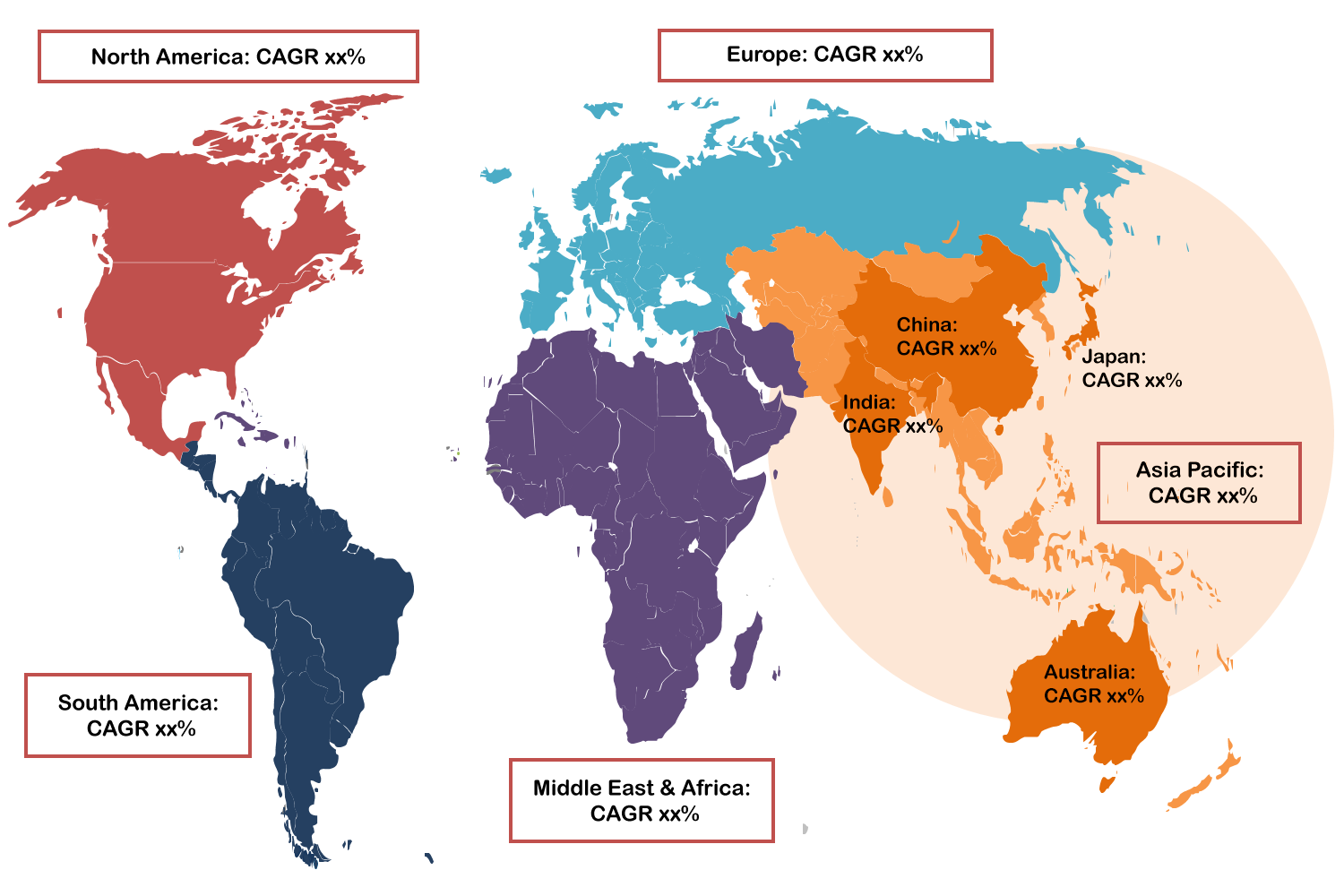
During the forecast period, the North America region is expected to hold the largest market share, owing to strong defense budgets, excellent technological infrastructure, and increased security concerns. The region's significant emphasis on border security, key infrastructure protection, and military surveillance capabilities drives a steady need for sophisticated long-range imaging systems. The presence of key market competitors and strong R&D investments fosters market growth. Tight security regulations and government initiatives supporting cutting-edge surveillance technologies also support market dominance. Furthermore, the region's early adoption of cutting-edge technology such as thermal imaging and AI-enhanced camera systems contributes to its market-leading position.
Region with highest CAGR:
Over the forecast period, the Asia Pacific region is anticipated to exhibit the highest CAGR as a result of rising security concerns, rapid urbanization, and significant investments in military modernization programs in countries such as China, India, and Japan. Rising border tensions and territorial conflicts have increased the demand for modern surveillance systems with extensive monitoring capabilities. The growing deployment of smart city programs across the region presents considerable prospects for integrated security solutions that include long-range cameras. Furthermore, the region's manufacturing capabilities and technical improvements are creating a favorable environment for market expansion, with Asia Pacific emerging as the fastest-growing regional market.
Key players in the market
Some of the key players in Long Range Camera Market include Leonardo S.p.A., Thales Group, L3Harris Technologies, Inc., FLIR Systems, Hikvision, Dahua Technology, Axis Communications AB, Honeywell International Inc., Hanwha Vision Co., Ltd., Robert Bosch GmbH, Lorex, Vivotek Inc., Opgal, Senspex, InfraTec, Vumii Imaging, Avigilon Corporation and Sony Group Corporation.
Key Developments:
In April 2025, Axis announced two new AI-powered PTZ cameras (AXIS Q6355-LE and AXIS Q6358-LE) that deliver unmatched image quality with great detail and high performance in all light conditions. Built on ARTPEC-9, they offer accelerated performance and support for next-generation AI-powered analytics.
In October 2024, Hikvision launched its latest network cameras with ColorVu 3.0 technology, elevating video security with improved picture quality.
Camera Types Covered:
• Thermal/Infrared Cameras
• Visible Light Cameras
• Other Camera Types
Resolutions Covered:
• High Definition (HD)
• Ultra High Definition (UHD)
• 4K and Above
Wavelengths Covered:
• Short-Wave Infrared (SWIR)
• Mid-Wave Infrared (MWIR)
• Long-Wave Infrared (LWIR)
Focal Lengths Covered:
• Below 200 mm
• 200 - 400 mm
• 400 - 800 mm
• Above 800 mm
Camera Installations Covered:
• Fixed Installation
• Portable
• Platform-mounted
Platforms Covered:
• Airborne
• Land
• Naval
Technologies Covered:
• Active Technology
• Passive Technology
• Hybrid Technology
Applications Covered:
• Intelligence, Surveillance, Target Acquisition, and Reconnaissance (ISTAR)
• Command and Control
• Border & Perimeter Security
• Critical Infrastructure Protection
• Counter-Unmanned Aerial Systems Operations
• Forest & Wildlife Protection
• Inspection, Surveying & Mapping
• Disaster Monitoring
• Aerial Photography & Cinematography
End Users Covered:
• Defense
• Homeland Security
• Shooting Sports
• Forestry & Wildlife Conservation
• Disaster Management Services
• Media & Entertainment
• Geospatial Research
Regions Covered:
• North America
o US
o Canada
o Mexico
• Europe
o Germany
o UK
o Italy
o France
o Spain
o Rest of Europe
• Asia Pacific
o Japan
o China
o India
o Australia
o New Zealand
o South Korea
o Rest of Asia Pacific
• South America
o Argentina
o Brazil
o Chile
o Rest of South America
• Middle East & Africa
o Saudi Arabia
o UAE
o Qatar
o South Africa
o Rest of Middle East & Africa
What our report offers:
- Market share assessments for the regional and country-level segments
- Strategic recommendations for the new entrants
- Covers Market data for the years 2024, 2025, 2026, 2028, and 2032
- Market Trends (Drivers, Constraints, Opportunities, Threats, Challenges, Investment Opportunities, and recommendations)
- Strategic recommendations in key business segments based on the market estimations
- Competitive landscaping mapping the key common trends
- Company profiling with detailed strategies, financials, and recent developments
- Supply chain trends mapping the latest technological advancements
Free Customization Offerings:
All the customers of this report will be entitled to receive one of the following free customization options:
• Company Profiling
o Comprehensive profiling of additional market players (up to 3)
o SWOT Analysis of key players (up to 3)
• Regional Segmentation
o Market estimations, Forecasts and CAGR of any prominent country as per the client's interest (Note: Depends on feasibility check)
• Competitive Benchmarking
o Benchmarking of key players based on product portfolio, geographical presence, and strategic alliances
Table of Contents
1 Executive Summary
2 Preface
2.1 Abstract
2.2 Stake Holders
2.3 Research Scope
2.4 Research Methodology
2.4.1 Data Mining
2.4.2 Data Analysis
2.4.3 Data Validation
2.4.4 Research Approach
2.5 Research Sources
2.5.1 Primary Research Sources
2.5.2 Secondary Research Sources
2.5.3 Assumptions
3 Market Trend Analysis
3.1 Introduction
3.2 Drivers
3.3 Restraints
3.4 Opportunities
3.5 Threats
3.6 Technology Analysis
3.7 Application Analysis
3.8 End User Analysis
3.9 Emerging Markets
3.10 Impact of Covid-19
4 Porters Five Force Analysis
4.1 Bargaining power of suppliers
4.2 Bargaining power of buyers
4.3 Threat of substitutes
4.4 Threat of new entrants
4.5 Competitive rivalry
5 Global Long Range Camera Market, By Camera Type
5.1 Introduction
5.2 Thermal/Infrared Cameras
5.3 Visible Light Cameras
5.4 Other Camera Types
6 Global Long Range Camera Market, By Resolution
6.1 Introduction
6.2 High Definition (HD)
6.3 Ultra High Definition (UHD)
6.4 4K and Above
7 Global Long Range Camera Market, By Wavelength
7.1 Introduction
7.2 Short-Wave Infrared (SWIR)
7.3 Mid-Wave Infrared (MWIR)
7.4 Long-Wave Infrared (LWIR)
8 Global Long Range Camera Market, By Focal Length
8.1 Introduction
8.2 Below 200 mm
8.3 200 - 400 mm
8.4 400 - 800 mm
8.5 Above 800 mm
9 Global Long Range Camera Market, By Camera Installation
9.1 Introduction
9.2 Fixed Installation
9.3 Portable
9.4 Platform-mounted
10 Global Long Range Camera Market, By Platform
10.1 Introduction
10.2 Airborne
10.3 Land
10.4 Naval
11 Global Long Range Camera Market, By Technology
11.1 Introduction
11.2 Active Technology
11.3 Passive Technology
11.4 Hybrid Technology
12 Global Long Range Camera Market, By Application
12.1 Introduction
12.2 Intelligence, Surveillance, Target Acquisition, and Reconnaissance (ISTAR)
12.3 Command and Control
12.4 Border & Perimeter Security
12.5 Critical Infrastructure Protection
12.6 Counter-Unmanned Aerial Systems Operations
12.7 Forest & Wildlife Protection
12.8 Inspection, Surveying & Mapping
12.9 Disaster Monitoring
12.10 Aerial Photography & Cinematography
13 Global Long Range Camera Market, By End User
13.1 Introduction
13.2 Defense
13.3 Homeland Security
13.4 Shooting Sports
13.5 Forestry & Wildlife Conservation
13.6 Disaster Management Services
13.7 Media & Entertainment
13.8 Geospatial Research
14 Global Long Range Camera Market, By Geography
14.1 Introduction
14.2 North America
14.2.1 US
14.2.2 Canada
14.2.3 Mexico
14.3 Europe
14.3.1 Germany
14.3.2 UK
14.3.3 Italy
14.3.4 France
14.3.5 Spain
14.3.6 Rest of Europe
14.4 Asia Pacific
14.4.1 Japan
14.4.2 China
14.4.3 India
14.4.4 Australia
14.4.5 New Zealand
14.4.6 South Korea
14.4.7 Rest of Asia Pacific
14.5 South America
14.5.1 Argentina
14.5.2 Brazil
14.5.3 Chile
14.5.4 Rest of South America
14.6 Middle East & Africa
14.6.1 Saudi Arabia
14.6.2 UAE
14.6.3 Qatar
14.6.4 South Africa
14.6.5 Rest of Middle East & Africa
15 Key Developments
15.1 Agreements, Partnerships, Collaborations and Joint Ventures
15.2 Acquisitions & Mergers
15.3 New Product Launch
15.4 Expansions
15.5 Other Key Strategies
16 Company Profiling
16.1 Leonardo S.p.A.
16.2 Thales Group
16.3 L3Harris Technologies, Inc.
16.4 FLIR Systems
16.5 Hikvision
16.6 Dahua Technology
16.7 Axis Communications AB
16.8 Honeywell International Inc.
16.9 Hanwha Vision Co., Ltd.
16.10 Robert Bosch GmbH
16.11 Lorex
16.12 Vivotek Inc.
16.13 Opgal
16.14 Senspex
16.15 InfraTec
16.16 Vumii Imaging
16.17 Avigilon Corporation
16.18 Sony Group Corporation
List of Tables
1 Global Long Range Camera Market Outlook, By Region (2024-2032) ($MN)
2 Global Long Range Camera Market Outlook, By Camera Type (2024-2032) ($MN)
3 Global Long Range Camera Market Outlook, By Thermal/Infrared Cameras (2024-2032) ($MN)
4 Global Long Range Camera Market Outlook, By Visible Light Cameras (2024-2032) ($MN)
5 Global Long Range Camera Market Outlook, By Other Camera Types (2024-2032) ($MN)
6 Global Long Range Camera Market Outlook, By Resolution (2024-2032) ($MN)
7 Global Long Range Camera Market Outlook, By High Definition (HD) (2024-2032) ($MN)
8 Global Long Range Camera Market Outlook, By Ultra High Definition (UHD) (2024-2032) ($MN)
9 Global Long Range Camera Market Outlook, By 4K and Above (2024-2032) ($MN)
10 Global Long Range Camera Market Outlook, By Wavelength (2024-2032) ($MN)
11 Global Long Range Camera Market Outlook, By Short-Wave Infrared (SWIR) (2024-2032) ($MN)
12 Global Long Range Camera Market Outlook, By Mid-Wave Infrared (MWIR) (2024-2032) ($MN)
13 Global Long Range Camera Market Outlook, By Long-Wave Infrared (LWIR) (2024-2032) ($MN)
14 Global Long Range Camera Market Outlook, By Focal Length (2024-2032) ($MN)
15 Global Long Range Camera Market Outlook, By Below 200 mm (2024-2032) ($MN)
16 Global Long Range Camera Market Outlook, By 200 - 400 mm (2024-2032) ($MN)
17 Global Long Range Camera Market Outlook, By 400 - 800 mm (2024-2032) ($MN)
18 Global Long Range Camera Market Outlook, By Above 800 mm (2024-2032) ($MN)
19 Global Long Range Camera Market Outlook, By Camera Installation (2024-2032) ($MN)
20 Global Long Range Camera Market Outlook, By Fixed Installation (2024-2032) ($MN)
21 Global Long Range Camera Market Outlook, By Portable (2024-2032) ($MN)
22 Global Long Range Camera Market Outlook, By Platform-mounted (2024-2032) ($MN)
23 Global Long Range Camera Market Outlook, By Platform (2024-2032) ($MN)
24 Global Long Range Camera Market Outlook, By Airborne (2024-2032) ($MN)
25 Global Long Range Camera Market Outlook, By Land (2024-2032) ($MN)
26 Global Long Range Camera Market Outlook, By Naval (2024-2032) ($MN)
27 Global Long Range Camera Market Outlook, By Technology (2024-2032) ($MN)
28 Global Long Range Camera Market Outlook, By Active Technology (2024-2032) ($MN)
29 Global Long Range Camera Market Outlook, By Passive Technology (2024-2032) ($MN)
30 Global Long Range Camera Market Outlook, By Hybrid Technology (2024-2032) ($MN)
31 Global Long Range Camera Market Outlook, By Application (2024-2032) ($MN)
32 Global Long Range Camera Market Outlook, By Intelligence, Surveillance, Target Acquisition, and Reconnaissance (ISTAR) (2024-2032) ($MN)
33 Global Long Range Camera Market Outlook, By Command and Control (2024-2032) ($MN)
34 Global Long Range Camera Market Outlook, By Border & Perimeter Security (2024-2032) ($MN)
35 Global Long Range Camera Market Outlook, By Critical Infrastructure Protection (2024-2032) ($MN)
36 Global Long Range Camera Market Outlook, By Counter-Unmanned Aerial Systems Operations (2024-2032) ($MN)
37 Global Long Range Camera Market Outlook, By Forest & Wildlife Protection (2024-2032) ($MN)
38 Global Long Range Camera Market Outlook, By Inspection, Surveying & Mapping (2024-2032) ($MN)
39 Global Long Range Camera Market Outlook, By Disaster Monitoring (2024-2032) ($MN)
40 Global Long Range Camera Market Outlook, By Aerial Photography & Cinematography (2024-2032) ($MN)
41 Global Long Range Camera Market Outlook, By End User (2024-2032) ($MN)
42 Global Long Range Camera Market Outlook, By Defense (2024-2032) ($MN)
43 Global Long Range Camera Market Outlook, By Homeland Security (2024-2032) ($MN)
44 Global Long Range Camera Market Outlook, By Shooting Sports (2024-2032) ($MN)
45 Global Long Range Camera Market Outlook, By Forestry & Wildlife Conservation (2024-2032) ($MN)
46 Global Long Range Camera Market Outlook, By Disaster Management Services (2024-2032) ($MN)
47 Global Long Range Camera Market Outlook, By Media & Entertainment (2024-2032) ($MN)
48 Global Long Range Camera Market Outlook, By Geospatial Research (2024-2032) ($MN)
Note: Tables for North America, Europe, APAC, South America, and Middle East & Africa Regions are also represented in the same manner as above.
List of Figures
RESEARCH METHODOLOGY

We at ‘Stratistics’ opt for an extensive research approach which involves data mining, data validation, and data analysis. The various research sources include in-house repository, secondary research, competitor’s sources, social media research, client internal data, and primary research.
Our team of analysts prefers the most reliable and authenticated data sources in order to perform the comprehensive literature search. With access to most of the authenticated data bases our team highly considers the best mix of information through various sources to obtain extensive and accurate analysis.
Each report takes an average time of a month and a team of 4 industry analysts. The time may vary depending on the scope and data availability of the desired market report. The various parameters used in the market assessment are standardized in order to enhance the data accuracy.
Data Mining
The data is collected from several authenticated, reliable, paid and unpaid sources and is filtered depending on the scope & objective of the research. Our reports repository acts as an added advantage in this procedure. Data gathering from the raw material suppliers, distributors and the manufacturers is performed on a regular basis, this helps in the comprehensive understanding of the products value chain. Apart from the above mentioned sources the data is also collected from the industry consultants to ensure the objective of the study is in the right direction.
Market trends such as technological advancements, regulatory affairs, market dynamics (Drivers, Restraints, Opportunities and Challenges) are obtained from scientific journals, market related national & international associations and organizations.
Data Analysis
From the data that is collected depending on the scope & objective of the research the data is subjected for the analysis. The critical steps that we follow for the data analysis include:
- Product Lifecycle Analysis
- Competitor analysis
- Risk analysis
- Porters Analysis
- PESTEL Analysis
- SWOT Analysis
The data engineering is performed by the core industry experts considering both the Marketing Mix Modeling and the Demand Forecasting. The marketing mix modeling makes use of multiple-regression techniques to predict the optimal mix of marketing variables. Regression factor is based on a number of variables and how they relate to an outcome such as sales or profits.
Data Validation
The data validation is performed by the exhaustive primary research from the expert interviews. This includes telephonic interviews, focus groups, face to face interviews, and questionnaires to validate our research from all aspects. The industry experts we approach come from the leading firms, involved in the supply chain ranging from the suppliers, distributors to the manufacturers and consumers so as to ensure an unbiased analysis.
We are in touch with more than 15,000 industry experts with the right mix of consultants, CEO's, presidents, vice presidents, managers, experts from both supply side and demand side, executives and so on.
The data validation involves the primary research from the industry experts belonging to:
- Leading Companies
- Suppliers & Distributors
- Manufacturers
- Consumers
- Industry/Strategic Consultants
Apart from the data validation the primary research also helps in performing the fill gap research, i.e. providing solutions for the unmet needs of the research which helps in enhancing the reports quality.
For more details about research methodology, kindly write to us at info@strategymrc.com
Frequently Asked Questions
In case of any queries regarding this report, you can contact the customer service by filing the “Inquiry Before Buy” form available on the right hand side. You may also contact us through email: info@strategymrc.com or phone: +1-301-202-5929
Yes, the samples are available for all the published reports. You can request them by filling the “Request Sample” option available in this page.
Yes, you can request a sample with your specific requirements. All the customized samples will be provided as per the requirement with the real data masked.
All our reports are available in Digital PDF format. In case if you require them in any other formats, such as PPT, Excel etc you can submit a request through “Inquiry Before Buy” form available on the right hand side. You may also contact us through email: info@strategymrc.com or phone: +1-301-202-5929
We offer a free 15% customization with every purchase. This requirement can be fulfilled for both pre and post sale. You may send your customization requirements through email at info@strategymrc.com or call us on +1-301-202-5929.
We have 3 different licensing options available in electronic format.
- Single User Licence: Allows one person, typically the buyer, to have access to the ordered product. The ordered product cannot be distributed to anyone else.
- 2-5 User Licence: Allows the ordered product to be shared among a maximum of 5 people within your organisation.
- Corporate License: Allows the product to be shared among all employees of your organisation regardless of their geographical location.
All our reports are typically be emailed to you as an attachment.
To order any available report you need to register on our website. The payment can be made either through CCAvenue or PayPal payments gateways which accept all international cards.
We extend our support to 6 months post sale. A post sale customization is also provided to cover your unmet needs in the report.
Request Customization
We offer complimentary customization of up to 15% with every purchase. To share your customization requirements, feel free to email us at info@strategymrc.com or call us on +1-301-202-5929. .
Please Note: Customization within the 15% threshold is entirely free of charge. If your request exceeds this limit, we will conduct a feasibility assessment. Following that, a detailed quote and timeline will be provided.
WHY CHOOSE US ?

Assured Quality
Best in class reports with high standard of research integrity

24X7 Research Support
Continuous support to ensure the best customer experience.

Free Customization
Adding more values to your product of interest.

Safe & Secure Access
Providing a secured environment for all online transactions.

Trusted by 600+ Brands
Serving the most reputed brands across the world.
