
Lunar Soil Prospecting Market
Lunar Soil Prospecting Market Forecasts to 2032 – Global Analysis By Resource Type (Water Ice, Helium-3, Rare Earth Elements, Metals and Other Resource Types), Technology, Application, End User and By Geography

According to Stratistics MRC, the Global Lunar Soil Prospecting Market is accounted for $0.61 billion in 2025 and is expected to reach $1.95 billion by 2032 growing at a CAGR of 18.0% during the forecast period. Lunar soil prospecting refers to the detailed exploration of the Moon’s surface regolith to determine its properties, resources, and usability. Using technology on satellites, landers, and robotic explorers, researchers investigate soil samples to identify minerals like ilmenite, which can release oxygen, and search for hidden reserves of water ice. This research is essential because lunar soil studies not only reveal clues about the Moon are geological past but also aid in planning sustainable missions. Discovering accessible resources helps reduce reliance on Earth’s transport by providing building materials, energy sources, and life-support elements locally. Ultimately, soil prospecting is vital for permanent lunar settlement.
According to the Lunar Soil Characterization Consortium (LSCC), detailed compositional analyses of Apollo-returned soils show modal abundances of minerals such as ilmenite (FeTiO₃) ranging from 1% to over 10% by weight in certain mare soils — a key feedstock for oxygen extraction via hydrogen reduction. These datasets include reflectance spectra (0.3–2.6 µm) and chemical composition for multiple Apollo sample sites.
Market Dynamics:
Driver:
Rising demand for space resources
The surge in demand for off-Earth resources significantly accelerates the lunar soil prospecting market. The Moon’s regolith offers minerals like ilmenite, which releases oxygen, and silicates useful for infrastructure development. Moreover, confirmed deposits of water ice in shaded regions hold exceptional promise for both human survival and propellant generation. By transforming these local assets into usable materials, space programs can lessen costly reliance on shipments from Earth. This makes lunar resources vital for long-duration exploration. Governments and private firms are therefore heavily investing in soil prospecting technologies, recognizing resource extraction on the Moon as a major enabler for sustainable space industries.
Restraint:
High costs of lunar missions
A primary challenge restricting the lunar soil prospecting market is the prohibitive expense of missions. Deploying spacecraft, designing durable rovers, and executing safe lunar operations demand enormous funding. While reusable launch systems have lowered some expenses, mission infrastructure and operational logistics still remain highly costly. Furthermore, the need for sophisticated instruments to examine lunar regolith pushes budgets even higher. These high expenditures discourage smaller nations and companies from active involvement, narrowing the pace of industry development. Without major breakthroughs in cost reduction and stronger global partnerships, financial hurdles will persist as one of the toughest restraints limiting lunar prospecting initiatives.
Opportunity:
Resource utilization for space economy
The development of lunar soil prospecting creates vast opportunities for advancing the space economy through in-situ resource utilization. Regolith on the Moon holds abundant elements—oxygen, metals, and silicates—that can be transformed into fuel, housing materials, and essential life-support systems. By extracting and processing these resources locally, missions minimize reliance on expensive Earth-based resupply chains. Water ice, for example, can yield hydrogen and oxygen to power spacecraft refueling depots, enabling extended exploration. This fosters a new economic framework where lunar resources form the backbone of interplanetary commerce. Hence, resource utilization stands as a pivotal opportunity for building a self-sustaining space economy.
Threat:
Geopolitical rivalries and conflicts
Rising geopolitical tensions represent a critical threat to lunar soil prospecting. Competing national interests in exploiting lunar resources could trigger disputes, especially given the absence of well-defined laws governing ownership and usage rights. Overlapping territorial claims may lead to strained relations, reduced cooperation, and restricted technology sharing. In extreme cases, lunar exploration could become militarized, diverting attention from scientific and commercial progress. Such rivalry undermines international partnerships that are essential for cost-effective and sustainable missions. Unless a global framework for fair and cooperative resource management is established, geopolitical conflicts may significantly endanger the long-term success of lunar prospecting initiatives.
Covid-19 Impact:
The outbreak of COVID-19 significantly disrupted the lunar soil prospecting market, creating delays in missions, research, and development activities. Global lockdowns restricted personnel movement, slowing construction of spacecraft, rovers, and analytical instruments. Funding priorities shifted toward public health, limiting available resources for exploratory projects. Supply chain interruptions further complicated the production of high-tech components critical to lunar missions. Collaborative projects between international partners also faced communication gaps and scheduling setbacks. Nevertheless, the crisis accelerated the adoption of virtual platforms, remote monitoring, and automation in mission planning. Although the pandemic caused short-term setbacks, it also reshaped operational strategies within the market.
The water ice segment is expected to be the largest during the forecast period
The water ice segment is expected to account for the largest market share during the forecast period, owing to its vital importance for exploration and habitation. Located in shadowed lunar regions, ice deposits can be harvested and processed to meet several essential needs. It can provide safe drinking water, generate oxygen for astronauts, and be separated into hydrogen and oxygen to create fuel for spacecraft. These multifunctional uses make water ice central to reducing Earth dependency while enabling sustainable lunar operations. Compared to helium-3, rare earth elements, or metals, water ice offers more immediate benefits, positioning it as the most valuable and widely prioritized resource.
The commercial mining segment is expected to have the highest CAGR during the forecast period
Over the forecast period, the commercial mining segment is predicted to witness the highest growth rate. This growth is fueled by expanding private sector participation in extracting lunar resources like water ice, rare earths, and metals. Collaborative ventures between national space agencies and corporations are fostering innovation, lowering risks, and enabling large-scale projects. The ability to monetize resources for rocket fuel, infrastructure, and advanced technologies makes commercial mining especially attractive to investors. As the global space economy evolves toward commercialization, this segment is expected to outpace others, becoming the fastest-growing driver of sustainable lunar development.
Region with largest share:
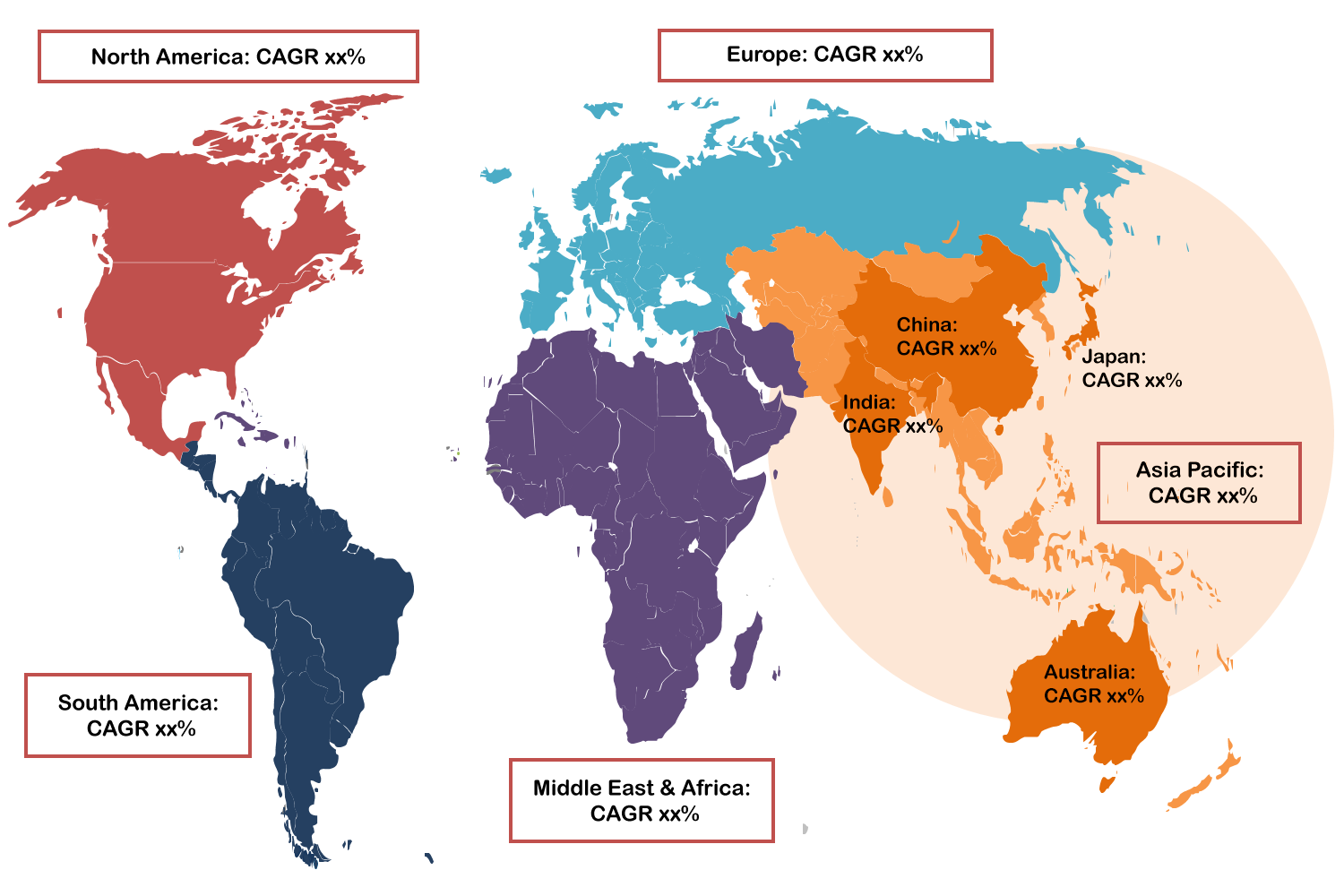
During the forecast period, the North America region is expected to hold the largest market share. This dominance is fueled by NASA’s leadership in lunar exploration and its Artemis program, which aims to establish long-term lunar presence. Strong partnerships with private players such as SpaceX and Blue Origin enhance technological progress in mining, mapping, and resource utilization. High levels of government funding, advanced research facilities, and strategic global collaborations contribute to North America’s advantage. By prioritizing sustainable lunar infrastructure and commercial opportunities, the region continues to secure its position as the frontrunner in lunar soil prospecting.
Region with highest CAGR:
Over the forecast period, the Asia Pacific region is anticipated to exhibit the highest CAGR due to its rapidly expanding space initiatives. China leads with its successful Chang’e missions, which include sample return and robotic exploration. India, through ISRO’s Chandrayaan projects, is accelerating its lunar research and strengthening its role in global exploration. Japan’s JAXA contributes by advancing lunar technology and collaborating on international projects for resource extraction and utilization. Rising government spending, increasing regional partnerships, and emerging private enterprises all support this expansion. With ambitious plans for sustainable lunar exploration, Asia-Pacific stands out as the fastest-growing region.
Key players in the market
Some of the key players in Lunar Soil Prospecting Market include NASA (National Aeronautics and Space Administration), European Space Agency (ESA), Sierra Space, Honeywell Aerospace, Terra Luna, ELO2, Outer Rim Exploration (ORE), Ethos Space, Interlune, Lunar Helium-3 Mining, LLC, ispace, Orbital Mining, Aganitha Space, Astrum Drive, Vermeer Corporation and Astrobotic Technology.
Key Developments:
In July 2025, Sierra Spaceannounced it has been awarded a contract by Mitsubishi Heavy Industries to deliver key components for spacecraft docking on the International Space Station (ISS). This includes a Passive Common Berthing Mechanism (PCBM), connection hatch, lighting system, and pressure sensor technology to enable spacecraft to dock at the ISS. The components will ultimately be used by the Japan Aerospace Exploration Agency (JAXA) for space station missions to the ISS.
In April 2025, The National Aeronautics and Space Administration (NASA) and the Space Information Sharing and Analysis Center (Space ISAC) signed an agreement this week to enhance collaboration on protecting critical space infrastructure from threats and vulnerabilities. The partnership is intended to promote the exchange of information on a range of space security challenges, including space weather, communication anomalies, spectrum interference, and cybersecurity threats affecting space systems.
In December 2024, The European Space Agency (ESA) and the Indian Space Research Organisation (ISRO) signed an agreement that will see ESA provide ground station support to the missions in ISRO’s Gaganyaan human spaceflight programme.
Resource Types Covered:
• Water Ice
• Helium-3
• Rare Earth Elements
• Metals
• Other Resource Types
Technologies Covered:
• Remote Sensing & Mapping
• Surface Mobility Systems
• Drilling & Excavation
• In-Situ Analysis
• Sample Return Systems
• ISRU Processing Systems
Applications Covered:
• Space Missions
• Commercial Mining
• Scientific Research
• Strategic Reserves
• Infrastructure Development
End Users Covered:
• Government Space Agencies
• Private Aerospace Firms
• Research Institutions
• Multilateral Consortia
Regions Covered:
• North America
o US
o Canada
o Mexico
• Europe
o Germany
o UK
o Italy
o France
o Spain
o Rest of Europe
• Asia Pacific
o Japan
o China
o India
o Australia
o New Zealand
o South Korea
o Rest of Asia Pacific
• South America
o Argentina
o Brazil
o Chile
o Rest of South America
• Middle East & Africa
o Saudi Arabia
o UAE
o Qatar
o South Africa
o Rest of Middle East & Africa
What our report offers:
- Market share assessments for the regional and country-level segments
- Strategic recommendations for the new entrants
- Covers Market data for the years 2024, 2025, 2026, 2028, and 2032
- Market Trends (Drivers, Constraints, Opportunities, Threats, Challenges, Investment Opportunities, and recommendations)
- Strategic recommendations in key business segments based on the market estimations
- Competitive landscaping mapping the key common trends
- Company profiling with detailed strategies, financials, and recent developments
- Supply chain trends mapping the latest technological advancements
Free Customization Offerings:
All the customers of this report will be entitled to receive one of the following free customization options:
• Company Profiling
o Comprehensive profiling of additional market players (up to 3)
o SWOT Analysis of key players (up to 3)
• Regional Segmentation
o Market estimations, Forecasts and CAGR of any prominent country as per the client's interest (Note: Depends on feasibility check)
• Competitive Benchmarking
o Benchmarking of key players based on product portfolio, geographical presence, and strategic alliances
Table of Contents
1 Executive Summary
2 Preface
2.1 Abstract
2.2 Stake Holders
2.3 Research Scope
2.4 Research Methodology
2.4.1 Data Mining
2.4.2 Data Analysis
2.4.3 Data Validation
2.4.4 Research Approach
2.5 Research Sources
2.5.1 Primary Research Sources
2.5.2 Secondary Research Sources
2.5.3 Assumptions
3 Market Trend Analysis
3.1 Introduction
3.2 Drivers
3.3 Restraints
3.4 Opportunities
3.5 Threats
3.6 Technology Analysis
3.7 Application Analysis
3.8 End User Analysis
3.9 Emerging Markets
3.10 Impact of Covid-19
4 Porters Five Force Analysis
4.1 Bargaining power of suppliers
4.2 Bargaining power of buyers
4.3 Threat of substitutes
4.4 Threat of new entrants
4.5 Competitive rivalry
5 Global Lunar Soil Prospecting Market, By Resource Type
5.1 Introduction
5.2 Water Ice
5.3 Helium-3
5.4 Rare Earth Elements
5.5 Metals
5.6 Other Resource Types
6 Global Lunar Soil Prospecting Market, By Technology
6.1 Introduction
6.2 Remote Sensing & Mapping
6.3 Surface Mobility Systems
6.4 Drilling & Excavation
6.5 In-Situ Analysis
6.6 Sample Return Systems
6.7 ISRU Processing Systems
7 Global Lunar Soil Prospecting Market, By Application
7.1 Introduction
7.2 Space Missions
7.3 Commercial Mining
7.4 Scientific Research
7.5 Strategic Reserves
7.6 Infrastructure Development
8 Global Lunar Soil Prospecting Market, By End User
8.1 Introduction
8.2 Government Space Agencies
8.3 Private Aerospace Firms
8.4 Research Institutions
8.5 Multilateral Consortia
9 Global Lunar Soil Prospecting Market, By Geography
9.1 Introduction
9.2 North America
9.2.1 US
9.2.2 Canada
9.2.3 Mexico
9.3 Europe
9.3.1 Germany
9.3.2 UK
9.3.3 Italy
9.3.4 France
9.3.5 Spain
9.3.6 Rest of Europe
9.4 Asia Pacific
9.4.1 Japan
9.4.2 China
9.4.3 India
9.4.4 Australia
9.4.5 New Zealand
9.4.6 South Korea
9.4.7 Rest of Asia Pacific
9.5 South America
9.5.1 Argentina
9.5.2 Brazil
9.5.3 Chile
9.5.4 Rest of South America
9.6 Middle East & Africa
9.6.1 Saudi Arabia
9.6.2 UAE
9.6.3 Qatar
9.6.4 South Africa
9.6.5 Rest of Middle East & Africa
10 Key Developments
10.1 Agreements, Partnerships, Collaborations and Joint Ventures
10.2 Acquisitions & Mergers
10.3 New Product Launch
10.4 Expansions
10.5 Other Key Strategies
11 Company Profiling
11.1 NASA (National Aeronautics and Space Administration)
11.2 European Space Agency (ESA)
11.3 Sierra Space
11.4 Honeywell Aerospace
11.5 Terra Luna
11.6 ELO2
11.7 Outer Rim Exploration (ORE)
11.8 Ethos Space
11.9 Interlune
11.10 Lunar Helium-3 Mining, LLC
11.11 ispace
11.12 Orbital Mining
11.13 Aganitha Space
11.14 Astrum Drive
11.15 Vermeer Corporation
11.16 Astrobotic Technology
List of Tables
1 Global Lunar Soil Prospecting Market Outlook, By Region (2024-2032) ($MN)
2 Global Lunar Soil Prospecting Market Outlook, By Resource Type (2024-2032) ($MN)
3 Global Lunar Soil Prospecting Market Outlook, By Water Ice (2024-2032) ($MN)
4 Global Lunar Soil Prospecting Market Outlook, By Helium-3 (2024-2032) ($MN)
5 Global Lunar Soil Prospecting Market Outlook, By Rare Earth Elements (2024-2032) ($MN)
6 Global Lunar Soil Prospecting Market Outlook, By Metals (2024-2032) ($MN)
7 Global Lunar Soil Prospecting Market Outlook, By Other Resource Types (2024-2032) ($MN)
8 Global Lunar Soil Prospecting Market Outlook, By Technology (2024-2032) ($MN)
9 Global Lunar Soil Prospecting Market Outlook, By Remote Sensing & Mapping (2024-2032) ($MN)
10 Global Lunar Soil Prospecting Market Outlook, By Surface Mobility Systems (2024-2032) ($MN)
11 Global Lunar Soil Prospecting Market Outlook, By Drilling & Excavation (2024-2032) ($MN)
12 Global Lunar Soil Prospecting Market Outlook, By In-Situ Analysis (2024-2032) ($MN)
13 Global Lunar Soil Prospecting Market Outlook, By Sample Return Systems (2024-2032) ($MN)
14 Global Lunar Soil Prospecting Market Outlook, By ISRU Processing Systems (2024-2032) ($MN)
15 Global Lunar Soil Prospecting Market Outlook, By Application (2024-2032) ($MN)
16 Global Lunar Soil Prospecting Market Outlook, By Space Missions (2024-2032) ($MN)
17 Global Lunar Soil Prospecting Market Outlook, By Commercial Mining (2024-2032) ($MN)
18 Global Lunar Soil Prospecting Market Outlook, By Scientific Research (2024-2032) ($MN)
19 Global Lunar Soil Prospecting Market Outlook, By Strategic Reserves (2024-2032) ($MN)
20 Global Lunar Soil Prospecting Market Outlook, By Infrastructure Development (2024-2032) ($MN)
21 Global Lunar Soil Prospecting Market Outlook, By End User (2024-2032) ($MN)
22 Global Lunar Soil Prospecting Market Outlook, By Government Space Agencies (2024-2032) ($MN)
23 Global Lunar Soil Prospecting Market Outlook, By Private Aerospace Firms (2024-2032) ($MN)
24 Global Lunar Soil Prospecting Market Outlook, By Research Institutions (2024-2032) ($MN)
25 Global Lunar Soil Prospecting Market Outlook, By Multilateral Consortia (2024-2032) ($MN)
Note: Tables for North America, Europe, APAC, South America, and Middle East & Africa Regions are also represented in the same manner as above.
List of Figures
RESEARCH METHODOLOGY

We at ‘Stratistics’ opt for an extensive research approach which involves data mining, data validation, and data analysis. The various research sources include in-house repository, secondary research, competitor’s sources, social media research, client internal data, and primary research.
Our team of analysts prefers the most reliable and authenticated data sources in order to perform the comprehensive literature search. With access to most of the authenticated data bases our team highly considers the best mix of information through various sources to obtain extensive and accurate analysis.
Each report takes an average time of a month and a team of 4 industry analysts. The time may vary depending on the scope and data availability of the desired market report. The various parameters used in the market assessment are standardized in order to enhance the data accuracy.
Data Mining
The data is collected from several authenticated, reliable, paid and unpaid sources and is filtered depending on the scope & objective of the research. Our reports repository acts as an added advantage in this procedure. Data gathering from the raw material suppliers, distributors and the manufacturers is performed on a regular basis, this helps in the comprehensive understanding of the products value chain. Apart from the above mentioned sources the data is also collected from the industry consultants to ensure the objective of the study is in the right direction.
Market trends such as technological advancements, regulatory affairs, market dynamics (Drivers, Restraints, Opportunities and Challenges) are obtained from scientific journals, market related national & international associations and organizations.
Data Analysis
From the data that is collected depending on the scope & objective of the research the data is subjected for the analysis. The critical steps that we follow for the data analysis include:
- Product Lifecycle Analysis
- Competitor analysis
- Risk analysis
- Porters Analysis
- PESTEL Analysis
- SWOT Analysis
The data engineering is performed by the core industry experts considering both the Marketing Mix Modeling and the Demand Forecasting. The marketing mix modeling makes use of multiple-regression techniques to predict the optimal mix of marketing variables. Regression factor is based on a number of variables and how they relate to an outcome such as sales or profits.
Data Validation
The data validation is performed by the exhaustive primary research from the expert interviews. This includes telephonic interviews, focus groups, face to face interviews, and questionnaires to validate our research from all aspects. The industry experts we approach come from the leading firms, involved in the supply chain ranging from the suppliers, distributors to the manufacturers and consumers so as to ensure an unbiased analysis.
We are in touch with more than 15,000 industry experts with the right mix of consultants, CEO's, presidents, vice presidents, managers, experts from both supply side and demand side, executives and so on.
The data validation involves the primary research from the industry experts belonging to:
- Leading Companies
- Suppliers & Distributors
- Manufacturers
- Consumers
- Industry/Strategic Consultants
Apart from the data validation the primary research also helps in performing the fill gap research, i.e. providing solutions for the unmet needs of the research which helps in enhancing the reports quality.
For more details about research methodology, kindly write to us at info@strategymrc.com
Frequently Asked Questions
In case of any queries regarding this report, you can contact the customer service by filing the “Inquiry Before Buy” form available on the right hand side. You may also contact us through email: info@strategymrc.com or phone: +1-301-202-5929
Yes, the samples are available for all the published reports. You can request them by filling the “Request Sample” option available in this page.
Yes, you can request a sample with your specific requirements. All the customized samples will be provided as per the requirement with the real data masked.
All our reports are available in Digital PDF format. In case if you require them in any other formats, such as PPT, Excel etc you can submit a request through “Inquiry Before Buy” form available on the right hand side. You may also contact us through email: info@strategymrc.com or phone: +1-301-202-5929
We offer a free 15% customization with every purchase. This requirement can be fulfilled for both pre and post sale. You may send your customization requirements through email at info@strategymrc.com or call us on +1-301-202-5929.
We have 3 different licensing options available in electronic format.
- Single User Licence: Allows one person, typically the buyer, to have access to the ordered product. The ordered product cannot be distributed to anyone else.
- 2-5 User Licence: Allows the ordered product to be shared among a maximum of 5 people within your organisation.
- Corporate License: Allows the product to be shared among all employees of your organisation regardless of their geographical location.
All our reports are typically be emailed to you as an attachment.
To order any available report you need to register on our website. The payment can be made either through CCAvenue or PayPal payments gateways which accept all international cards.
We extend our support to 6 months post sale. A post sale customization is also provided to cover your unmet needs in the report.
Request Customization
We offer complimentary customization of up to 15% with every purchase. To share your customization requirements, feel free to email us at info@strategymrc.com or call us on +1-301-202-5929. .
Please Note: Customization within the 15% threshold is entirely free of charge. If your request exceeds this limit, we will conduct a feasibility assessment. Following that, a detailed quote and timeline will be provided.
WHY CHOOSE US ?

Assured Quality
Best in class reports with high standard of research integrity

24X7 Research Support
Continuous support to ensure the best customer experience.

Free Customization
Adding more values to your product of interest.

Safe & Secure Access
Providing a secured environment for all online transactions.

Trusted by 600+ Brands
Serving the most reputed brands across the world.
