
Machine Learning Ml Market
Machine Learning (ML) Market Forecasts to 2032 - Global Analysis By Component (Hardware, Software and Services), Enterprise Size (SMEs and Large Enterprises), Deployment, Application, End User and By Geography

|
Years Covered |
2024-2032 |
|
Estimated Year Value (2025) |
US $86.02 BN |
|
Projected Year Value (2032) |
US $626.62 BN |
|
CAGR (2025 - 2032) |
32.8% |
|
Regions Covered |
North America, Europe, Asia Pacific, South America, and Middle East & Africa |
|
Countries Covered |
US, Canada, Mexico, Germany, UK, Italy, France, Spain, Japan, China, India, Australia, New Zealand, South Korea, Rest of Asia Pacific, South America, Argentina, Brazil, Chile, Middle East & Africa, Saudi Arabia, UAE, Qatar, and South Africa |
|
Largest Market |
North America |
|
Highest Growing Market |
Asia Pacific |
According to Stratistics MRC, the Global Machine Learning (ML) Market is accounted for $86.02 billion in 2025 and is expected to reach $626.62 billion by 2032 growing at a CAGR of 32.8% during the forecast period. Computers can learn from data and make decisions or predictions without explicit programming owing to a subfield of artificial intelligence called machine learning (ML). Through the use of statistical models and algorithms, it finds patterns in large datasets, gradually improving performance. Machine learning (ML) is widely used in many industries, such as marketing, finance, healthcare, and autonomous systems, where it improves productivity and decision-making. Moreover, complex issues like image recognition, natural language processing, and recommendation systems can be handled by ML models.
According to a worldwide survey of data professionals, 45% of companies have adopted machine learning methods, with an additional 21% exploring their use. Adoption rates vary by country, with Israel at 63%, the Netherlands at 57%, and the United States at 56%. Larger enterprises show higher adoption rates (61%) compared to medium (45%) and small companies (33%).
-Market-fig-2.png)
Market Dynamics:
Driver:
Growth in data manufacturing
An explosion of data generation from various sources, such as social media, enterprise apps, e-commerce platforms, and Internet of Things devices, has resulted from the rise of digital transformation across industries. This massive volume of structured and unstructured data is difficult for organizations to manually process and analyze. Businesses can find patterns, derive valuable insights, and make data-driven decisions instantly with the aid of machine learning algorithms. Additionally, the adoption of machine learning solutions has been further accelerated by the availability of big data analytics platforms.
Restraint:
High complexity and implementation costs
The initial investment needed for infrastructure, qualified staff, and model training can be too high for many businesses, even though machine learning has long-term advantages. For businesses to successfully develop and implement ML models, they must invest in strong computer resources, superior datasets, and cutting-edge software tools. Furthermore, integrating machine learning (ML) with current enterprise systems can be challenging and necessitate specialized solutions, which raise costs even more. Widespread adoption is slowed by small and medium-sized businesses' (SMEs') inability to devote funds to machine learning (ML) projects.
Opportunity:
Growing need for cyber security solutions powered by AI
There is a significant need for ML-driven cyber security solutions due to the growing sophistication and frequency of cyber attacks. Security systems with AI capabilities are able to identify irregularities, anticipate threats, and automate in-the-moment reactions to reduce risks. To bolster cyber defenses, machine learning algorithms are being applied to network security monitoring, fraud detection, and identity verification. Moreover, machine learning (ML)-powered threat intelligence platforms and behavioral analytics solutions offer a profitable opportunity for market expansion as governments and corporations prioritize cyber security investments.
Threat:
Reliance on access to high-quality data
ML performance is highly dependent on unbiased, diverse, and high-quality data. The efficacy of AI models is, however, constrained by the lack of adequate or high-quality datasets in many industries. Data fragmentation, inconsistencies between sources, and privacy restrictions are some of the factors that make data collection difficult. Furthermore, in order to maintain accuracy, machine learning models need to be updated frequently with new data; however, data access is frequently restricted by proprietary and regulatory constraints. Without sufficient and trustworthy datasets, machine learning models run the risk of generating outdated, false, or misleading insights, which lowers their overall usefulness to companies.
Covid-19 Impact:
The COVID-19 pandemic greatly sped up the adoption of machine learning (ML) in a number of industries as companies and organizations looked for creative ways to deal with disruptions. For data analysis, predictive modelling, and real-time decision-making, more sophisticated AI-driven systems are required, as evidenced by the growing dependence on remote work, digital services, and automation. In the medical field, machine learning played a key role in the creation of vaccines, diagnostic instruments, and patient care enhancement. Financial services, supply chain management, and e-commerce have also used machine learning (ML) to detect fraud, forecast demand, and provide individualized customer experiences. Moreover, problems like algorithmic bias, data privacy issues, and a lack of qualified machine learning specialists were also brought to light by the pandemic.
The predictive analytics segment is expected to be the largest during the forecast period
The predictive analytics segment is expected to account for the largest market share during the forecast period. This segment is crucial to a number of industries, including retail, healthcare, and finance, because it uses machine learning algorithms to forecast future results and analyze historical data. Predictive analytics aids in better decision-making, process optimization, and customer experience by empowering companies to forecast trends, customer behavior, and operational requirements. Demand forecasting, risk management, and inventory optimization are just a few of its many uses. Additionally, one of the main reasons predictive analytics is dominating the machine learning market is the growing reliance on data-driven insights and the volume of data generated across industries.
The healthcare segment is expected to have the highest CAGR during the forecast period
Over the forecast period, the healthcare segment is predicted to witness the highest growth rate because it allows for personalized medicine, increases diagnostic precision, and improves patient outcomes, machine learning is revolutionizing the healthcare sector. ML is helping with early disease detection, treatment optimization, and drug discovery because of its capacity to analyze enormous volumes of medical data. Furthermore, ML algorithms are being used to improve efficiency and drastically lower costs in healthcare automation, predictive analytics, and medical imaging. In the upcoming years, there will likely be a significant increase in demand for sophisticated machine learning solutions to handle challenging problems and enhance patient care as healthcare providers continue to embrace digital transformation.
Region with largest share:
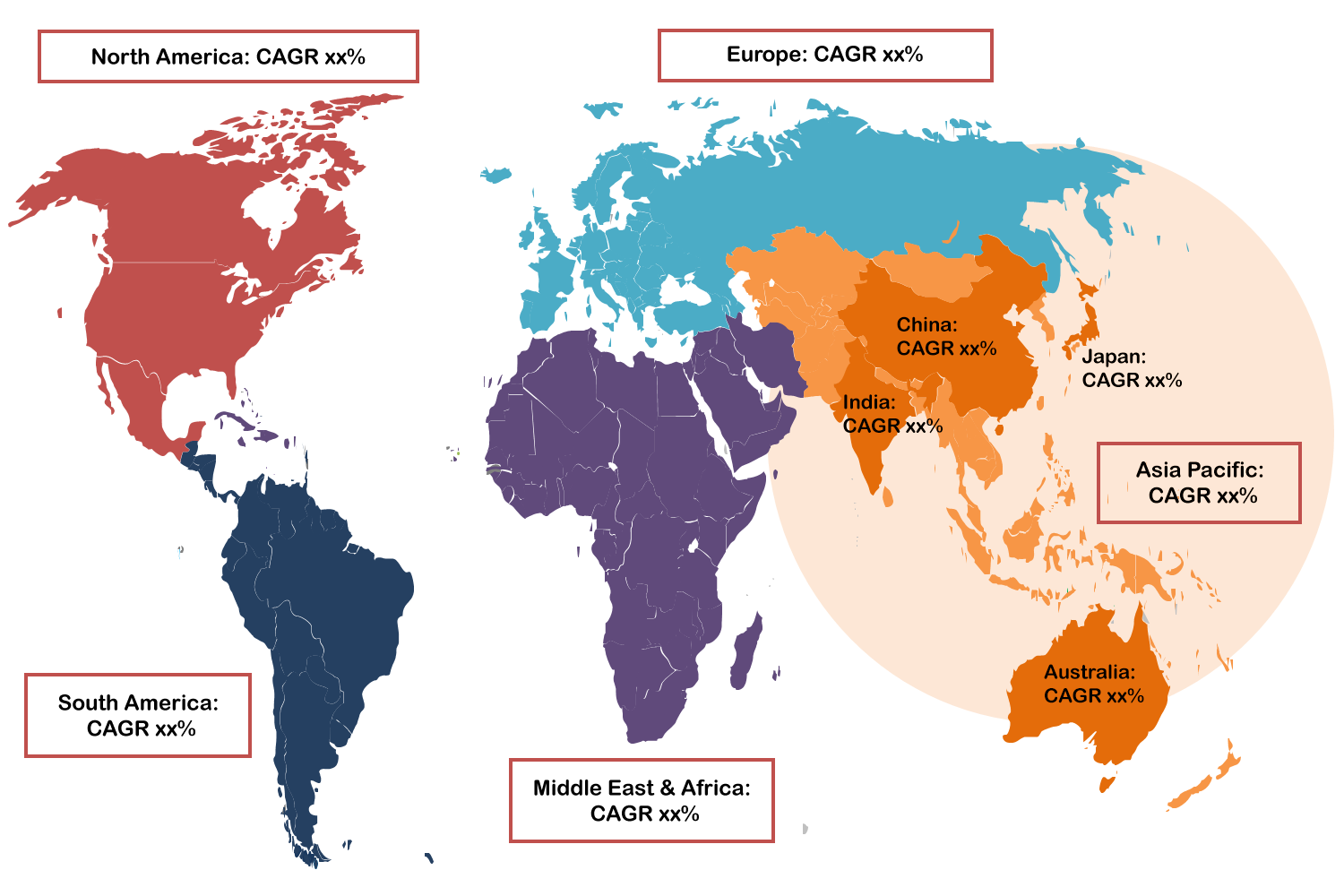
During the forecast period, the North America region is expected to hold the largest market share. The existence of important technology companies, sophisticated infrastructure, and large R&D expenditures are the main drivers of this dominance. Numerous startups and well-established businesses are implementing ML solutions in a variety of industries, including healthcare, finance, IT, and automotive, making the region a center for AI and ML innovation. The rise in ML adoption has also been aided by government programs and more financing for AI-powered technologies. Moreover, North America leads the global machine learning market due to its strong data collection and processing capabilities and high degree of technological awareness.
Region with highest CAGR:
Over the forecast period, the Asia Pacific region is anticipated to exhibit the highest CAGR. This growth is being driven by the quick digital transformation, growing use of AI technologies, and large investments in data analytics. Countries like China, India, and Japan are putting a lot of effort into integrating machine learning (ML) into a variety of industries, such as manufacturing, finance, and healthcare. Additionally, the demand for ML solutions is further fueled by the region's sizable population, increasing smartphone adoption, and expanding internet connectivity. Asia-Pacific is now the fastest-growing region for machine learning adoption due to government initiatives to promote smart technologies and the growing number of international tech companies in the region.
Key players in the market
Some of the key players in Machine Learning (ML) Market include Amazon Web Services, Inc., IBM Corporation, Microsoft Corporation, SAP SE, Google Cloud, Xicom Technologies, Nvidia Inc, Vention, Intel Corporation, SAS Institute Inc., Hewlett Packard Enterprise Company, Oracle Corporation, Altoros, MobiDev and BigML, Inc.
Key Developments:
In December 2024, Amazon Web Services (AWS) and Atlassian Corporation announced a multi-year strategic collaboration agreement (SCA) to expedite cloud transformation and deliver advanced AI and security capabilities to enterprise customers. The SCA will help drive the migration of millions of enterprise users from Atlassian’s Data Center business - which generates over $1 billion in annual revenue - to Atlassian Cloud over a multi-year timeline.
In July 2024, IBM announced that it has secured a five-year contract with $26 million in initial funding from the U.S. Agency for International Development (USAID) to support its Cybersecurity Protection and Response (CPR) program aimed to expand and enhance the agency's cybersecurity response support for host governments in the Europe and Eurasia (E&E) region.
In June 2024, Microsoft Corp. and Hitachi Ltd. announced a projected multibillion-dollar collaboration over the next three years that will accelerate social innovation with generative AI. Through this strategic alliance, Hitachi will propel growth of the Lumada business, with a planned revenue of 2.65 trillion yen (18.9 billion USD)*1 in FY2024, and will promote operational efficiency and productivity improvements for Hitachi Group’s 270,000 employees.
Components Covered:
• Hardware
• Software
• Services
Enterprise Sizes Covered:
• SMEs
• Large Enterprises
Deployments Covered:
• Cloud
• On-premise
Applications Covered:
• Predictive Analytics
• Natural Language Processing (NLP)
• Image Recognition
• Fraud Detection
• Other Applications
End Users Covered:
• Healthcare
• Banking, Financial Services and Insurance (BFSI)
• IT and Telecommunication
• Advertising & Media
• Automotive & Transportation
• Agriculture
• Energy & Utilities
• Manufacturing
• Other End Users
Regions Covered:
• North America
o US
o Canada
o Mexico
• Europe
o Germany
o UK
o Italy
o France
o Spain
o Rest of Europe
• Asia Pacific
o Japan
o China
o India
o Australia
o New Zealand
o South Korea
o Rest of Asia Pacific
• South America
o Argentina
o Brazil
o Chile
o Rest of South America
• Middle East & Africa
o Saudi Arabia
o UAE
o Qatar
o South Africa
o Rest of Middle East & Africa
What our report offers:
- Market share assessments for the regional and country-level segments
- Strategic recommendations for the new entrants
- Covers Market data for the years 2024, 2025, 2026, 2028, and 2032
- Market Trends (Drivers, Constraints, Opportunities, Threats, Challenges, Investment Opportunities, and recommendations)
- Strategic recommendations in key business segments based on the market estimations
- Competitive landscaping mapping the key common trends
- Company profiling with detailed strategies, financials, and recent developments
- Supply chain trends mapping the latest technological advancements
Free Customization Offerings:
All the customers of this report will be entitled to receive one of the following free customization options:
• Company Profiling
o Comprehensive profiling of additional market players (up to 3)
o SWOT Analysis of key players (up to 3)
• Regional Segmentation
o Market estimations, Forecasts and CAGR of any prominent country as per the client's interest (Note: Depends on feasibility check)
• Competitive Benchmarking
o Benchmarking of key players based on product portfolio, geographical presence, and strategic alliances
Table of Contents
1 Executive Summary
2 Preface
2.1 Abstract
2.2 Stake Holders
2.3 Research Scope
2.4 Research Methodology
2.4.1 Data Mining
2.4.2 Data Analysis
2.4.3 Data Validation
2.4.4 Research Approach
2.5 Research Sources
2.5.1 Primary Research Sources
2.5.2 Secondary Research Sources
2.5.3 Assumptions
3 Market Trend Analysis
3.1 Introduction
3.2 Drivers
3.3 Restraints
3.4 Opportunities
3.5 Threats
3.6 Application Analysis
3.7 End User Analysis
3.8 Emerging Markets
3.9 Impact of Covid-19
4 Porters Five Force Analysis
4.1 Bargaining power of suppliers
4.2 Bargaining power of buyers
4.3 Threat of substitutes
4.4 Threat of new entrants
4.5 Competitive rivalry
5 Global Machine Learning (ML) Market, By Component
5.1 Introduction
5.2 Hardware
5.3 Software
5.4 Services
6 Global Machine Learning (ML) Market, By Enterprise Size
6.1 Introduction
6.2 SMEs
6.3 Large Enterprises
7 Global Machine Learning (ML) Market, By Deployment
7.1 Introduction
7.2 Cloud
7.3 On-premise
8 Global Machine Learning (ML) Market, By Application
8.1 Introduction
8.2 Predictive Analytics
8.3 Natural Language Processing (NLP)
8.4 Image Recognition
8.5 Fraud Detection
8.6 Other Applications
9 Global Machine Learning (ML) Market, By End User
9.1 Introduction
9.2 Healthcare
9.3 Banking, Financial Services and Insurance (BFSI)
9.4 IT and Telecommunication
9.5 Advertising & Media
9.6 Automotive & Transportation
9.7 Agriculture
9.8 Energy & Utilities
9.9 Manufacturing
9.10 Other End Users
10 Global Machine Learning (ML) Market, By Geography
10.1 Introduction
10.2 North America
10.2.1 US
10.2.2 Canada
10.2.3 Mexico
10.3 Europe
10.3.1 Germany
10.3.2 UK
10.3.3 Italy
10.3.4 France
10.3.5 Spain
10.3.6 Rest of Europe
10.4 Asia Pacific
10.4.1 Japan
10.4.2 China
10.4.3 India
10.4.4 Australia
10.4.5 New Zealand
10.4.6 South Korea
10.4.7 Rest of Asia Pacific
10.5 South America
10.5.1 Argentina
10.5.2 Brazil
10.5.3 Chile
10.5.4 Rest of South America
10.6 Middle East & Africa
10.6.1 Saudi Arabia
10.6.2 UAE
10.6.3 Qatar
10.6.4 South Africa
10.6.5 Rest of Middle East & Africa
11 Key Developments
11.1 Agreements, Partnerships, Collaborations and Joint Ventures
11.2 Acquisitions & Mergers
11.3 New Product Launch
11.4 Expansions
11.5 Other Key Strategies
12 Company Profiling
12.1 Amazon Web Services, Inc.
12.2 IBM Corporation
12.3 Microsoft Corporation
12.4 SAP SE
12.5 Google Cloud
12.6 Xicom Technologies
12.7 Nvidia Inc
12.8 Vention
12.9 Intel Corporation
12.10 SAS Institute Inc.
12.11 Hewlett Packard Enterprise Company
12.12 Oracle Corporation
12.13 Altoros
12.14 MobiDev
12.15 BigML, Inc.
List of Tables
1 Global Machine Learning (ML) Market Outlook, By Region (2024-2032) ($MN)
2 Global Machine Learning (ML) Market Outlook, By Component (2024-2032) ($MN)
3 Global Machine Learning (ML) Market Outlook, By Hardware (2024-2032) ($MN)
4 Global Machine Learning (ML) Market Outlook, By Software (2024-2032) ($MN)
5 Global Machine Learning (ML) Market Outlook, By Services (2024-2032) ($MN)
6 Global Machine Learning (ML) Market Outlook, By Enterprise Size (2024-2032) ($MN)
7 Global Machine Learning (ML) Market Outlook, By SMEs (2024-2032) ($MN)
8 Global Machine Learning (ML) Market Outlook, By Large Enterprises (2024-2032) ($MN)
9 Global Machine Learning (ML) Market Outlook, By Deployment (2024-2032) ($MN)
10 Global Machine Learning (ML) Market Outlook, By Cloud (2024-2032) ($MN)
11 Global Machine Learning (ML) Market Outlook, By On-premise (2024-2032) ($MN)
12 Global Machine Learning (ML) Market Outlook, By Application (2024-2032) ($MN)
13 Global Machine Learning (ML) Market Outlook, By Predictive Analytics (2024-2032) ($MN)
14 Global Machine Learning (ML) Market Outlook, By Natural Language Processing (NLP) (2024-2032) ($MN)
15 Global Machine Learning (ML) Market Outlook, By Image Recognition (2024-2032) ($MN)
16 Global Machine Learning (ML) Market Outlook, By Fraud Detection (2024-2032) ($MN)
17 Global Machine Learning (ML) Market Outlook, By Other Applications (2024-2032) ($MN)
18 Global Machine Learning (ML) Market Outlook, By End User (2024-2032) ($MN)
19 Global Machine Learning (ML) Market Outlook, By Healthcare (2024-2032) ($MN)
20 Global Machine Learning (ML) Market Outlook, By Banking, Financial Services and Insurance (BFSI) (2024-2032) ($MN)
21 Global Machine Learning (ML) Market Outlook, By IT and Telecommunication (2024-2032) ($MN)
22 Global Machine Learning (ML) Market Outlook, By Advertising & Media (2024-2032) ($MN)
23 Global Machine Learning (ML) Market Outlook, By Automotive & Transportation (2024-2032) ($MN)
24 Global Machine Learning (ML) Market Outlook, By Agriculture (2024-2032) ($MN)
25 Global Machine Learning (ML) Market Outlook, By Energy & Utilities (2024-2032) ($MN)
26 Global Machine Learning (ML) Market Outlook, By Manufacturing (2024-2032) ($MN)
27 Global Machine Learning (ML) Market Outlook, By Other End Users (2024-2032) ($MN)
Note: Tables for North America, Europe, APAC, South America, and Middle East & Africa Regions are also represented in the same manner as above.
List of Figures
RESEARCH METHODOLOGY

We at ‘Stratistics’ opt for an extensive research approach which involves data mining, data validation, and data analysis. The various research sources include in-house repository, secondary research, competitor’s sources, social media research, client internal data, and primary research.
Our team of analysts prefers the most reliable and authenticated data sources in order to perform the comprehensive literature search. With access to most of the authenticated data bases our team highly considers the best mix of information through various sources to obtain extensive and accurate analysis.
Each report takes an average time of a month and a team of 4 industry analysts. The time may vary depending on the scope and data availability of the desired market report. The various parameters used in the market assessment are standardized in order to enhance the data accuracy.
Data Mining
The data is collected from several authenticated, reliable, paid and unpaid sources and is filtered depending on the scope & objective of the research. Our reports repository acts as an added advantage in this procedure. Data gathering from the raw material suppliers, distributors and the manufacturers is performed on a regular basis, this helps in the comprehensive understanding of the products value chain. Apart from the above mentioned sources the data is also collected from the industry consultants to ensure the objective of the study is in the right direction.
Market trends such as technological advancements, regulatory affairs, market dynamics (Drivers, Restraints, Opportunities and Challenges) are obtained from scientific journals, market related national & international associations and organizations.
Data Analysis
From the data that is collected depending on the scope & objective of the research the data is subjected for the analysis. The critical steps that we follow for the data analysis include:
- Product Lifecycle Analysis
- Competitor analysis
- Risk analysis
- Porters Analysis
- PESTEL Analysis
- SWOT Analysis
The data engineering is performed by the core industry experts considering both the Marketing Mix Modeling and the Demand Forecasting. The marketing mix modeling makes use of multiple-regression techniques to predict the optimal mix of marketing variables. Regression factor is based on a number of variables and how they relate to an outcome such as sales or profits.
Data Validation
The data validation is performed by the exhaustive primary research from the expert interviews. This includes telephonic interviews, focus groups, face to face interviews, and questionnaires to validate our research from all aspects. The industry experts we approach come from the leading firms, involved in the supply chain ranging from the suppliers, distributors to the manufacturers and consumers so as to ensure an unbiased analysis.
We are in touch with more than 15,000 industry experts with the right mix of consultants, CEO's, presidents, vice presidents, managers, experts from both supply side and demand side, executives and so on.
The data validation involves the primary research from the industry experts belonging to:
- Leading Companies
- Suppliers & Distributors
- Manufacturers
- Consumers
- Industry/Strategic Consultants
Apart from the data validation the primary research also helps in performing the fill gap research, i.e. providing solutions for the unmet needs of the research which helps in enhancing the reports quality.
For more details about research methodology, kindly write to us at info@strategymrc.com
Frequently Asked Questions
In case of any queries regarding this report, you can contact the customer service by filing the “Inquiry Before Buy” form available on the right hand side. You may also contact us through email: info@strategymrc.com or phone: +1-301-202-5929
Yes, the samples are available for all the published reports. You can request them by filling the “Request Sample” option available in this page.
Yes, you can request a sample with your specific requirements. All the customized samples will be provided as per the requirement with the real data masked.
All our reports are available in Digital PDF format. In case if you require them in any other formats, such as PPT, Excel etc you can submit a request through “Inquiry Before Buy” form available on the right hand side. You may also contact us through email: info@strategymrc.com or phone: +1-301-202-5929
We offer a free 15% customization with every purchase. This requirement can be fulfilled for both pre and post sale. You may send your customization requirements through email at info@strategymrc.com or call us on +1-301-202-5929.
We have 3 different licensing options available in electronic format.
- Single User Licence: Allows one person, typically the buyer, to have access to the ordered product. The ordered product cannot be distributed to anyone else.
- 2-5 User Licence: Allows the ordered product to be shared among a maximum of 5 people within your organisation.
- Corporate License: Allows the product to be shared among all employees of your organisation regardless of their geographical location.
All our reports are typically be emailed to you as an attachment.
To order any available report you need to register on our website. The payment can be made either through CCAvenue or PayPal payments gateways which accept all international cards.
We extend our support to 6 months post sale. A post sale customization is also provided to cover your unmet needs in the report.
Request Customization
We offer complimentary customization of up to 15% with every purchase. To share your customization requirements, feel free to email us at info@strategymrc.com or call us on +1-301-202-5929. .
Please Note: Customization within the 15% threshold is entirely free of charge. If your request exceeds this limit, we will conduct a feasibility assessment. Following that, a detailed quote and timeline will be provided.
WHY CHOOSE US ?

Assured Quality
Best in class reports with high standard of research integrity

24X7 Research Support
Continuous support to ensure the best customer experience.

Free Customization
Adding more values to your product of interest.

Safe & Secure Access
Providing a secured environment for all online transactions.

Trusted by 600+ Brands
Serving the most reputed brands across the world.
