
Printing Inks Market
Printing Inks Market Forecasts to 2032 – Global Analysis By Ink Type (Solvent-based Inks, Water-based Inks, UV-curable Inks, Oil-based Inks and Latex & Hybrid Inks), Printing Process, Resin Type, Application, End User and By Geography

According to Stratistics MRC, the Global Printing Inks Market is accounted for $23.13 billion in 2025 and is expected to reach $30.03 billion by 2032 growing at a CAGR of 3.8% during the forecast period. Printing inks are essential chemical mixtures designed for creating text, graphics, and patterns on a variety of substrates including paper, films, fabrics, and cartons. These inks typically combine pigments, resins, solvents, and modifiers, ensuring vibrancy, adhesion, and long-lasting performance. They are extensively applied in packaging, publishing, commercial printing, and textile decoration, enhancing both visual appeal and product information. In recent years, sustainable and digital-based inks have become increasingly prominent, reducing ecological impact while improving efficiency. The industry’s growth is further supported by the rapid rise in online retail, increased demand for flexible packaging, and innovative branding strategies requiring vivid print solutions.
According to data from the European Printing Ink Association (EuPIA), packaging inks represented the largest segment of the European printing ink market in 2021, accounting for approximately €2.1 billion in sales and 550,000 tonnes in volume, which was over 60% of total ink volume. EuPIA confirms that sustainability, migration compliance, and digitalization are the primary innovation drivers in ink formulation, especially for packaging applications.
Market Dynamics:
Driver:
Growing demand from packaging industry
The packaging sector plays a pivotal role in driving the global printing inks market, as these inks are essential for enhancing shelf appeal, labeling, and effective branding. The surge in consumer spending and booming e-commerce activity has heightened the importance of eye-catching and durable packaging solutions. Printing inks enable detailed graphics, vibrant colors, and protective finishes, which not only boost brand recognition but also ensure product safety. Moreover, the rising adoption of flexible packaging materials like wraps, pouches, and corrugated cartons further accelerates ink consumption. This growing reliance on innovative packaging formats establishes the packaging industry as a key growth driver.
Restraint:
Volatile raw material prices
One of the key challenges in the printing inks industry is the unpredictability of raw material costs, particularly pigments, solvents, and resins. These inputs largely depend on the petrochemical sector, making them sensitive to fluctuations in crude oil prices and global supply disruptions. Rising costs increase overall manufacturing expenses, forcing producers to raise prices and affecting profitability. This uncertainty complicates long-term business planning and can strain relationships with buyers. Smaller ink manufacturers, with limited financial resilience, often face greater risks in maintaining competitiveness. Consequently, raw material price volatility remains a persistent obstacle, constraining the stability and steady expansion of the printing inks market.
Opportunity:
Rising adoption of sustainable inks
The push for sustainability is creating major opportunities in the printing inks market, with rising demand for eco-friendly alternatives. Conventional inks often release VOCs, making greener solutions like water-based, bio-derived, and UV-curable inks more appealing. These inks offer advantages such as lower emissions, recyclability, and environmental safety. Governments are enforcing strict environmental laws, while businesses and consumers increasingly favor sustainable products, accelerating adoption. Producers are focusing on developing biodegradable inks and incorporating renewable feedstocks to stay competitive. As industries align with global green initiatives, sustainable printing inks provide one of the most dynamic opportunities, supporting both market growth and brand reputation.
Threat:
Substitution by alternative printing technologies
New printing technologies are creating substitution threats for the traditional printing inks market. Digital printing advancements and the rapid adoption of 3D printing reduce dependency on conventional ink systems. Unlike standard printing, 3D methods rely on powders, polymers, and resins, transforming applications across manufacturing, healthcare, and design prototyping. Additionally, electronic displays and smart labeling innovations are replacing printed media in some industries, cutting into ink demand. This growing preference for alternative solutions puts pressure on traditional ink suppliers to adapt. Without innovation and diversification, conventional ink producers may face declining market shares, as substitutes increasingly replace ink-based printing processes.
Covid-19 Impact:
The outbreak of COVID-19 created both challenges and opportunities for the printing inks industry. Segments like publishing, advertising, and commercial printing experienced steep declines due to lockdowns, digital adoption, and reduced marketing activities. With offices and schools closed, the demand for printed materials such as books and brochures dropped sharply. Conversely, packaging inks witnessed strong growth as online retail and food delivery services expanded during the crisis. Supply chain disruptions and rising costs of raw materials further pressured ink producers. Despite setbacks in traditional markets, resilience in packaging and labeling applications enabled the printing inks market to maintain partial stability.
The solvent-based inks segment is expected to be the largest during the forecast period
The solvent-based inks segment is expected to account for the largest market share during the forecast period, driven by their strong adaptability and high-performance features. They are extensively applied in flexible packaging, product labels, outdoor advertising, and industrial printing because they adhere effectively to non-absorbent materials such as plastics, foils, and synthetic films. Their durability against water, chemicals, and physical wear ensures superior print quality for long-term applications. Despite facing regulatory restrictions due to VOC emissions, solvent-based inks continue to dominate because of their affordability and proven reliability. Moreover, rapid packaging growth and printing needs in emerging economies reinforce their status as the largest segment in the market.
The digital (inkjet & laser) segment is expected to have the highest CAGR during the forecast period
Over the forecast period, the digital (inkjet & laser) segment is predicted to witness the highest growth rate. Its efficiency in producing short batches, offering customization, and enabling quick turnaround supports increasing use across packaging, publishing, and promotional sectors. Businesses prefer digital printing for personalized labels, variable data applications, and innovative branding solutions. In addition, it generates minimal waste, requires less setup, and ensures vibrant, high-quality prints, aligning with sustainability goals. Technological improvements in UV-curable and inkjet inks are broadening opportunities. Strong demand from e-commerce packaging and marketing activities positions digital printing as the highest CAGR segment.
Region with largest share:
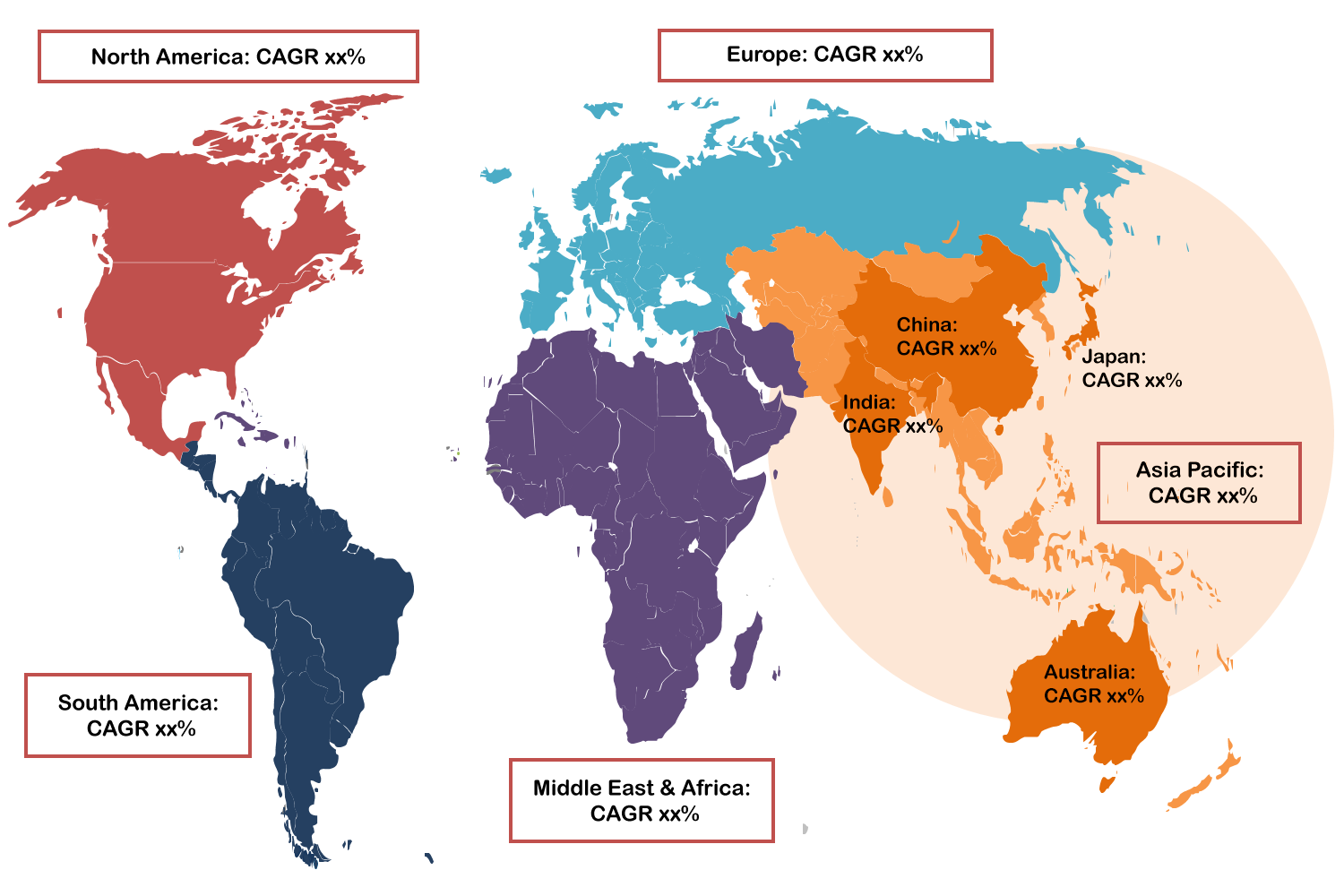
During the forecast period, the Asia Pacific region is expected to hold the largest market share, supported by rapid growth in packaging, publishing, and advertising sectors. Rising urbanization, industrial development, and higher consumer expenditure are fueling packaging demand, particularly in food, beverages, and online retail. Major economies such as China, India, and Japan contribute significantly to ink usage due to their strong manufacturing capacities and vast retail networks. The shift toward flexible packaging formats and advanced digital printing also boosts regional demand. Affordable production, expanding middle-income groups, and increased focus on eco-friendly inks further reinforce Asia-Pacific’s leadership, making it the dominant hub in the global printing inks industry.
Region with highest CAGR:
Over the forecast period, the Asia Pacific region is anticipated to exhibit the highest CAGR. This surge is attributed to factors like rapid industrialization, heightened demand for packaging and publishing, and a growing inclination towards superior printed materials in emerging economies. China is expected to maintain its leadership in the Asia-Pacific market, with substantial contributions from India and Japan. The region's expanding commercial printing and packaging industries are pivotal drivers of this growth. Moreover, advancements in printing technologies, including the adoption of water-based inks and digital printing methods, are amplifying the demand for printing inks in the region.
Key players in the market
Some of the key players in Printing Inks Market include Sun Chemical, Flint Group, Xingxin, INX International, SICPA Holding SA, Tokyo Ink (Tokyo Printing Ink Mfg Co. Ltd), Gardiner Colours, DIC Corporation, Toyo Ink SC Holdings Co. Ltd, Fujifilm Corporation, Siegwerk Druckfarben AG & Co. KGaA, Alite Inks, Zeller+Gmelin GmbH & Co. KG, Marabu GmbH and Hubergroup Deutschland GmbH.
Key Developments:
In July 2025, Flint Group has expanded its resin production site in Caronno, Italy, to strengthen supply security for nitrocellulose-free inks used in flexible packaging. The investment responds to rising demand for sustainable and recyclable solutions in line with the upcoming Packaging and Packaging Waste Regulation.
In May 2025, INX International Ink Co. has successfully acquired Servicom New Zealand Limited and entered into a definitive agreement to acquire Galaxy Inks & Coatings Australia. Subject to customary closing conditions, that transaction is expected to close by the end of this month.
In March 2025, FUJIFILM Healthcare Americas Corporation announces it has entered into a new strategic agreement with Amazon Web Services (AWS), an Amazon.com, Inc. company. Additionally, AWS has validated Fujifilm’s Synapse ® enterprise PACS, specifically, Radiology PACS, Cardiology PACS, Digital Pathology PACS and the Synapse VNA for cloud readiness, further expanding and strengthening cloud hosting capabilities for Fujifilm’s North American Synapse Enterprise Imaging customer base.
Ink Types Covered:
• Solvent-based Inks
• Water-based Inks
• UV-curable Inks
• Oil-based Inks
• Latex & Hybrid Inks
Printing Processes Covered:
• Lithographic (Offset)
• Flexographic
• Gravure
• Digital (Inkjet & Laser)
• Screen Printing
Resin Types Covered:
• Modified Rosin
• Acrylic
• Polyurethane
• Modified Cellulose
• Other Resin Types
Applications Covered:
• Packaging
• Commercial & Publication
• Textiles
• Industrial Marking
• Ceramics & Specialty Surfaces
End Users Covered:
• Food & Beverage
• Pharmaceuticals
• Consumer Goods
• Retail & Advertising
• Manufacturing & Industrial
Regions Covered:
• North America
o US
o Canada
o Mexico
• Europe
o Germany
o UK
o Italy
o France
o Spain
o Rest of Europe
• Asia Pacific
o Japan
o China
o India
o Australia
o New Zealand
o South Korea
o Rest of Asia Pacific
• South America
o Argentina
o Brazil
o Chile
o Rest of South America
• Middle East & Africa
o Saudi Arabia
o UAE
o Qatar
o South Africa
o Rest of Middle East & Africa
What our report offers:
- Market share assessments for the regional and country-level segments
- Strategic recommendations for the new entrants
- Covers Market data for the years 2024, 2025, 2026, 2028, and 2032
- Market Trends (Drivers, Constraints, Opportunities, Threats, Challenges, Investment Opportunities, and recommendations)
- Strategic recommendations in key business segments based on the market estimations
- Competitive landscaping mapping the key common trends
- Company profiling with detailed strategies, financials, and recent developments
- Supply chain trends mapping the latest technological advancements
Free Customization Offerings:
All the customers of this report will be entitled to receive one of the following free customization options:
• Company Profiling
o Comprehensive profiling of additional market players (up to 3)
o SWOT Analysis of key players (up to 3)
• Regional Segmentation
o Market estimations, Forecasts and CAGR of any prominent country as per the client's interest (Note: Depends on feasibility check)
• Competitive Benchmarking
o Benchmarking of key players based on product portfolio, geographical presence, and strategic alliances
Table of Contents
1 Executive Summary
2 Preface
2.1 Abstract
2.2 Stake Holders
2.3 Research Scope
2.4 Research Methodology
2.4.1 Data Mining
2.4.2 Data Analysis
2.4.3 Data Validation
2.4.4 Research Approach
2.5 Research Sources
2.5.1 Primary Research Sources
2.5.2 Secondary Research Sources
2.5.3 Assumptions
3 Market Trend Analysis
3.1 Introduction
3.2 Drivers
3.3 Restraints
3.4 Opportunities
3.5 Threats
3.6 Application Analysis
3.7 End User Analysis
3.8 Emerging Markets
3.9 Impact of Covid-19
4 Porters Five Force Analysis
4.1 Bargaining power of suppliers
4.2 Bargaining power of buyers
4.3 Threat of substitutes
4.4 Threat of new entrants
4.5 Competitive rivalry
5 Global Printing Inks Market, By Ink Type
5.1 Introduction
5.2 Solvent-based Inks
5.3 Water-based Inks
5.4 UV-curable Inks
5.5 Oil-based Inks
5.6 Latex & Hybrid Inks
6 Global Printing Inks Market, By Printing Process
6.1 Introduction
6.2 Lithographic (Offset)
6.3 Flexographic
6.4 Gravure
6.5 Digital (Inkjet & Laser)
6.6 Screen Printing
7 Global Printing Inks Market, By Resin Type
7.1 Introduction
7.2 Modified Rosin
7.3 Acrylic
7.4 Polyurethane
7.5 Modified Cellulose
7.6 Other Resin Types
8 Global Printing Inks Market, By Application
8.1 Introduction
8.2 Packaging
8.3 Commercial & Publication
8.4 Textiles
8.5 Industrial Marking
8.6 Ceramics & Specialty Surfaces
9 Global Printing Inks Market, By End User
9.1 Introduction
9.2 Food & Beverage
9.3 Pharmaceuticals
9.4 Consumer Goods
9.5 Retail & Advertising
9.6 Manufacturing & Industrial
10 Global Printing Inks Market, By Geography
10.1 Introduction
10.2 North America
10.2.1 US
10.2.2 Canada
10.2.3 Mexico
10.3 Europe
10.3.1 Germany
10.3.2 UK
10.3.3 Italy
10.3.4 France
10.3.5 Spain
10.3.6 Rest of Europe
10.4 Asia Pacific
10.4.1 Japan
10.4.2 China
10.4.3 India
10.4.4 Australia
10.4.5 New Zealand
10.4.6 South Korea
10.4.7 Rest of Asia Pacific
10.5 South America
10.5.1 Argentina
10.5.2 Brazil
10.5.3 Chile
10.5.4 Rest of South America
10.6 Middle East & Africa
10.6.1 Saudi Arabia
10.6.2 UAE
10.6.3 Qatar
10.6.4 South Africa
10.6.5 Rest of Middle East & Africa
11 Key Developments
11.1 Agreements, Partnerships, Collaborations and Joint Ventures
11.2 Acquisitions & Mergers
11.3 New Product Launch
11.4 Expansions
11.5 Other Key Strategies
12 Company Profiling
12.1 Sun Chemical
12.2 Flint Group
12.3 Xingxin
12.4 INX International
12.5 SICPA Holding SA
12.6 Tokyo Ink (Tokyo Printing Ink Mfg Co. Ltd)
12.7 Gardiner Colours
12.8 DIC Corporation
12.9 Toyo Ink SC Holdings Co. Ltd
12.10 Fujifilm Corporation
12.11 Siegwerk Druckfarben AG & Co. KGaA
12.12 Alite Inks
12.13 Zeller+Gmelin GmbH & Co. KG
12.14 Marabu GmbH
12.15 Hubergroup Deutschland GmbH
List of Tables
1 Global Printing Inks Market Outlook, By Region (2024-2032) ($MN)
2 Global Printing Inks Market Outlook, By Ink Type (2024-2032) ($MN)
3 Global Printing Inks Market Outlook, By Solvent-based Inks (2024-2032) ($MN)
4 Global Printing Inks Market Outlook, By Water-based Inks (2024-2032) ($MN)
5 Global Printing Inks Market Outlook, By UV-curable Inks (2024-2032) ($MN)
6 Global Printing Inks Market Outlook, By Oil-based Inks (2024-2032) ($MN)
7 Global Printing Inks Market Outlook, By Latex & Hybrid Inks (2024-2032) ($MN)
8 Global Printing Inks Market Outlook, By Printing Process (2024-2032) ($MN)
9 Global Printing Inks Market Outlook, By Lithographic (Offset) (2024-2032) ($MN)
10 Global Printing Inks Market Outlook, By Flexographic (2024-2032) ($MN)
11 Global Printing Inks Market Outlook, By Gravure (2024-2032) ($MN)
12 Global Printing Inks Market Outlook, By Digital (Inkjet & Laser) (2024-2032) ($MN)
13 Global Printing Inks Market Outlook, By Screen Printing (2024-2032) ($MN)
14 Global Printing Inks Market Outlook, By Resin Type (2024-2032) ($MN)
15 Global Printing Inks Market Outlook, By Modified Rosin (2024-2032) ($MN)
16 Global Printing Inks Market Outlook, By Acrylic (2024-2032) ($MN)
17 Global Printing Inks Market Outlook, By Polyurethane (2024-2032) ($MN)
18 Global Printing Inks Market Outlook, By Modified Cellulose (2024-2032) ($MN)
19 Global Printing Inks Market Outlook, By Other Resin Types (2024-2032) ($MN)
20 Global Printing Inks Market Outlook, By Application (2024-2032) ($MN)
21 Global Printing Inks Market Outlook, By Packaging (2024-2032) ($MN)
22 Global Printing Inks Market Outlook, By Commercial & Publication (2024-2032) ($MN)
23 Global Printing Inks Market Outlook, By Textiles (2024-2032) ($MN)
24 Global Printing Inks Market Outlook, By Industrial Marking (2024-2032) ($MN)
25 Global Printing Inks Market Outlook, By Ceramics & Specialty Surfaces (2024-2032) ($MN)
26 Global Printing Inks Market Outlook, By End User (2024-2032) ($MN)
27 Global Printing Inks Market Outlook, By Food & Beverage (2024-2032) ($MN)
28 Global Printing Inks Market Outlook, By Pharmaceuticals (2024-2032) ($MN)
29 Global Printing Inks Market Outlook, By Consumer Goods (2024-2032) ($MN)
30 Global Printing Inks Market Outlook, By Retail & Advertising (2024-2032) ($MN)
31 Global Printing Inks Market Outlook, By Manufacturing & Industrial (2024-2032) ($MN)
Note: Tables for North America, Europe, APAC, South America, and Middle East & Africa Regions are also represented in the same manner as above.
List of Figures
RESEARCH METHODOLOGY

We at ‘Stratistics’ opt for an extensive research approach which involves data mining, data validation, and data analysis. The various research sources include in-house repository, secondary research, competitor’s sources, social media research, client internal data, and primary research.
Our team of analysts prefers the most reliable and authenticated data sources in order to perform the comprehensive literature search. With access to most of the authenticated data bases our team highly considers the best mix of information through various sources to obtain extensive and accurate analysis.
Each report takes an average time of a month and a team of 4 industry analysts. The time may vary depending on the scope and data availability of the desired market report. The various parameters used in the market assessment are standardized in order to enhance the data accuracy.
Data Mining
The data is collected from several authenticated, reliable, paid and unpaid sources and is filtered depending on the scope & objective of the research. Our reports repository acts as an added advantage in this procedure. Data gathering from the raw material suppliers, distributors and the manufacturers is performed on a regular basis, this helps in the comprehensive understanding of the products value chain. Apart from the above mentioned sources the data is also collected from the industry consultants to ensure the objective of the study is in the right direction.
Market trends such as technological advancements, regulatory affairs, market dynamics (Drivers, Restraints, Opportunities and Challenges) are obtained from scientific journals, market related national & international associations and organizations.
Data Analysis
From the data that is collected depending on the scope & objective of the research the data is subjected for the analysis. The critical steps that we follow for the data analysis include:
- Product Lifecycle Analysis
- Competitor analysis
- Risk analysis
- Porters Analysis
- PESTEL Analysis
- SWOT Analysis
The data engineering is performed by the core industry experts considering both the Marketing Mix Modeling and the Demand Forecasting. The marketing mix modeling makes use of multiple-regression techniques to predict the optimal mix of marketing variables. Regression factor is based on a number of variables and how they relate to an outcome such as sales or profits.
Data Validation
The data validation is performed by the exhaustive primary research from the expert interviews. This includes telephonic interviews, focus groups, face to face interviews, and questionnaires to validate our research from all aspects. The industry experts we approach come from the leading firms, involved in the supply chain ranging from the suppliers, distributors to the manufacturers and consumers so as to ensure an unbiased analysis.
We are in touch with more than 15,000 industry experts with the right mix of consultants, CEO's, presidents, vice presidents, managers, experts from both supply side and demand side, executives and so on.
The data validation involves the primary research from the industry experts belonging to:
- Leading Companies
- Suppliers & Distributors
- Manufacturers
- Consumers
- Industry/Strategic Consultants
Apart from the data validation the primary research also helps in performing the fill gap research, i.e. providing solutions for the unmet needs of the research which helps in enhancing the reports quality.
For more details about research methodology, kindly write to us at info@strategymrc.com
Frequently Asked Questions
In case of any queries regarding this report, you can contact the customer service by filing the “Inquiry Before Buy” form available on the right hand side. You may also contact us through email: info@strategymrc.com or phone: +1-301-202-5929
Yes, the samples are available for all the published reports. You can request them by filling the “Request Sample” option available in this page.
Yes, you can request a sample with your specific requirements. All the customized samples will be provided as per the requirement with the real data masked.
All our reports are available in Digital PDF format. In case if you require them in any other formats, such as PPT, Excel etc you can submit a request through “Inquiry Before Buy” form available on the right hand side. You may also contact us through email: info@strategymrc.com or phone: +1-301-202-5929
We offer a free 15% customization with every purchase. This requirement can be fulfilled for both pre and post sale. You may send your customization requirements through email at info@strategymrc.com or call us on +1-301-202-5929.
We have 3 different licensing options available in electronic format.
- Single User Licence: Allows one person, typically the buyer, to have access to the ordered product. The ordered product cannot be distributed to anyone else.
- 2-5 User Licence: Allows the ordered product to be shared among a maximum of 5 people within your organisation.
- Corporate License: Allows the product to be shared among all employees of your organisation regardless of their geographical location.
All our reports are typically be emailed to you as an attachment.
To order any available report you need to register on our website. The payment can be made either through CCAvenue or PayPal payments gateways which accept all international cards.
We extend our support to 6 months post sale. A post sale customization is also provided to cover your unmet needs in the report.
Request Customization
We offer complimentary customization of up to 15% with every purchase. To share your customization requirements, feel free to email us at info@strategymrc.com or call us on +1-301-202-5929. .
Please Note: Customization within the 15% threshold is entirely free of charge. If your request exceeds this limit, we will conduct a feasibility assessment. Following that, a detailed quote and timeline will be provided.
WHY CHOOSE US ?

Assured Quality
Best in class reports with high standard of research integrity

24X7 Research Support
Continuous support to ensure the best customer experience.

Free Customization
Adding more values to your product of interest.

Safe & Secure Access
Providing a secured environment for all online transactions.

Trusted by 600+ Brands
Serving the most reputed brands across the world.
