
Quantum Computing Applications Market
Quantum Computing Applications Market Forecasts to 2034 - Global Analysis By Component (Hardware, Software & Algorithms and Services), Deployment Mode, Technology, Application, End User and By Geography

|
Years Covered |
2023-2034 |
|
Estimated Year Value (2026) |
US $4.99BN |
|
Projected Year Value (2034) |
US $81.58BN |
|
CAGR (2026-2034) |
41.8% |
|
Regions Covered |
North America, Europe, Asia Pacific, South America, and Middle East & Africa |
|
Countries Covered |
US, Canada, Mexico, Germany, UK, Italy, France, Spain, Japan, China, India, Australia, New Zealand, South Korea, Rest of Asia Pacific, South America, Argentina, Brazil, Chile, Middle East & Africa, Saudi Arabia, UAE, Qatar, and South Africa |
|
Largest Market |
North America |
|
Highest Growing Market |
Asia Pacific |
According to Stratistics MRC, the Global Quantum Computing Applications Market is accounted for $4.99 billion in 2026 and is expected to reach $81.58 billion by 2034 growing at a CAGR of 41.8% during the forecast period. Quantum computing applications harness the principles of quantum mechanics superposition, entanglement, and quantum interference to perform complex computations far beyond the capabilities of classical computers. They are revolutionizing fields such as cryptography, enabling ultra secure communications, and drug discovery, by simulating molecular interactions with unprecedented precision. In finance, they optimize portfolio management and risk assessment, while in logistics and manufacturing, they enhance supply chain optimization and predictive maintenance. Additionally, quantum computing is advancing artificial intelligence, material science, and climate modeling, offering transformative solutions to previously intractable problems across industries globally.
Market Dynamics:
Driver:
Exponential growth in computational needs
The rapid expansion of data-driven industries and the increasing complexity of computational problems are driving the demand for quantum computing applications. Traditional computing systems are struggling to manage large-scale simulations, cryptographic analyses, and optimization tasks efficiently. Quantum computing addresses these challenges by offering superior processing power through principles like superposition and entanglement. This exponential growth in computational needs across sectors such as pharmaceuticals, finance, and logistics is fueling market adoption.
Restraint:
High cost of quantum hardware and maintenance
Despite its transformative potential, the market faces significant challenges due to the high cost of hardware, cryogenic systems, and ongoing maintenance. Quantum processors require highly controlled environments and specialized infrastructure, limiting accessibility for smaller organizations and slowing widespread adoption. Additionally, the technical expertise needed to operate and maintain these systems increase operational expenditures. These financial and logistical barriers act as a key restraint, constraining market growth and delaying the integration of quantum solutions across industries.
Opportunity:
Advancements in quantum hardware and algorithms
Advancements in quantum hardware, including scalable qubits, error correction techniques, and improved coherence times, are creating immense growth opportunities for quantum computing applications. Simultaneously, the development of sophisticated quantum algorithms for optimization, simulation, and artificial intelligence enhances practical applications across industries. As technology matures, companies are increasingly able to deploy quantum solutions efficiently, unlocking new revenue streams and accelerating adoption in high demand computational sectors globally.
Threat:
Regulatory and security concerns
Regulatory uncertainty and security risks present a significant threat to the market. As quantum systems gain the potential to break classical cryptographic protocols, concerns around data privacy, cybersecurity, and intellectual property intensify. Additionally, differing national regulations and export controls can hinder cross-border collaboration and commercialization. Companies must navigate complex compliance frameworks while safeguarding sensitive information, which may slow adoption and limit investment.
Covid-19 Impact:
The COVID-19 pandemic both challenged and accelerated quantum computing adoption. Supply chain disruptions and reduced investment initially slowed hardware development and implementation. However, the pandemic underscored the need for advanced computational solutions, particularly in pharmaceuticals and healthcare, for rapid drug discovery, molecular simulations, and predictive analytics. Organizations increasingly recognized quantum computing’s potential to solve complex, urgent problems, driving renewed interest and strategic investment.
The pharmaceuticals segment is expected to be the largest during the forecast period
The pharmaceuticals segment is expected to account for the largest market share during the forecast period, because quantum simulations allow researchers to analyze complex biological interactions with high precision, significantly reducing time and cost compared to classical methods. This capability enables the development of novel therapeutics, vaccines, and personalized medicine strategies. Growing demand for advanced healthcare solutions, coupled with the increasing complexity of drug development pipelines, positions the pharmaceutical sector as the largest contributor to market revenue during the forecast period.
The machine learning & AI segment is expected to have the highest CAGR during the forecast period
Over the forecast period, the machine learning & AI segment is predicted to witness the highest growth rate, as quantum algorithms improve training efficiency for AI models, enabling faster pattern recognition, decision-making, and complex simulations. Industries such as finance, logistics, and cybersecurity benefit from these accelerated insights. As organizations increasingly adopt AI-driven strategies, quantum-enhanced machine learning offers a transformative advantage, supporting real time analytics and problem solving those were previously unattainable with classical computing methods.
Region with largest share:
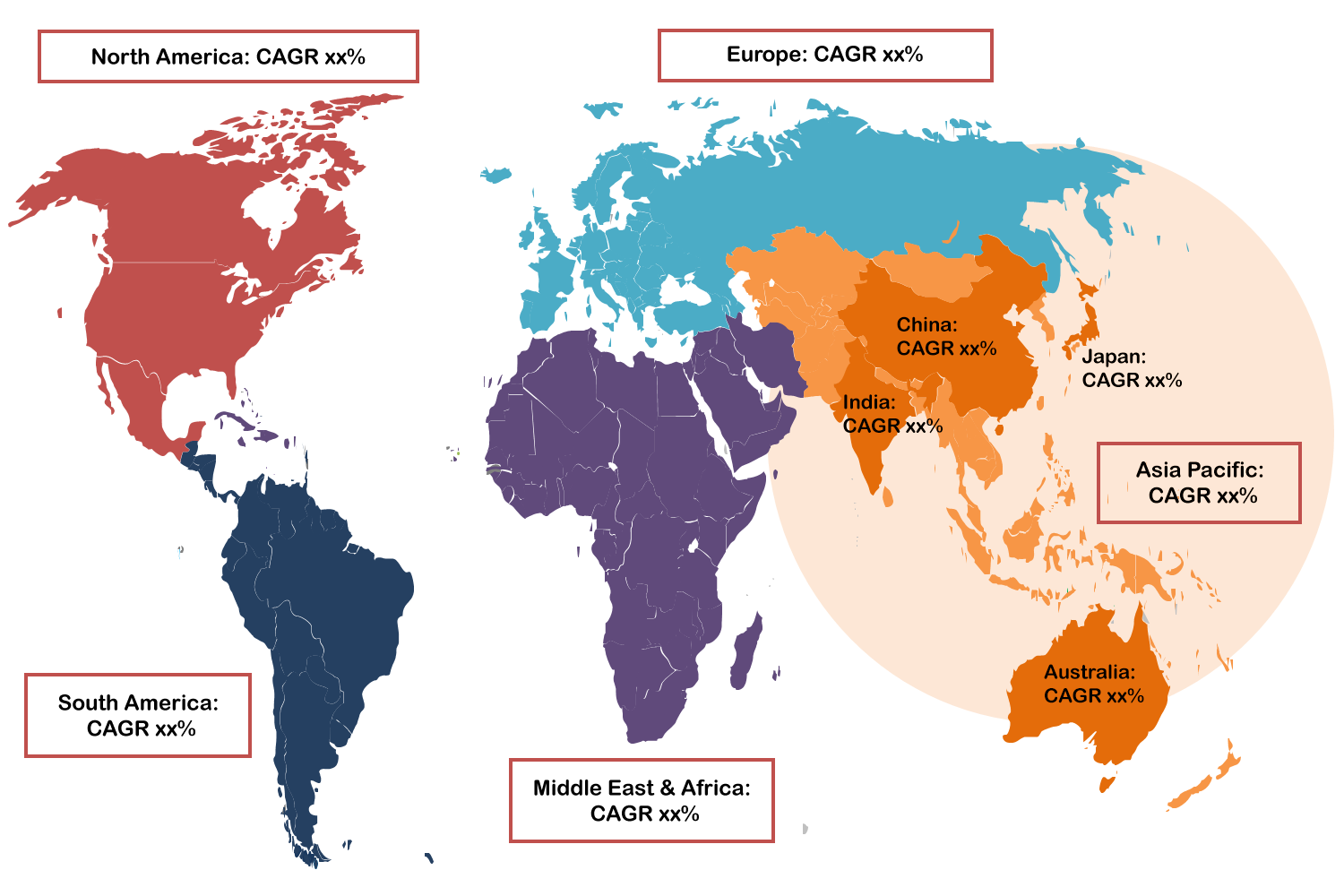
During the forecast period, the North America region is expected to hold the largest market share, due to substantial investment in quantum technology, and the presence of key market players. The region’s strong focus on innovation and collaboration between academia and industry, facilitates the development and deployment of quantum computing applications. High adoption in sectors such as pharmaceuticals, finance, and defense further reinforces market dominance. North America’s established ecosystem positions it as a global leader in quantum computing advancements and commercialization.
Region with highest CAGR:
Over the forecast period, the Asia Pacific region is anticipated to exhibit the highest CAGR, owing to rapid industrialization, rising adoption of AI and machine learning, and government support for next-generation computing solutions fuel market growth. Emerging economies are increasingly integrating quantum applications in sectors such as healthcare, logistics, and finance. The region’s dynamic innovation landscape and focus on scalable technology deployment position it for accelerated adoption and significant market expansion during the forecast period.
Key players in the market
Some of the key players in Quantum Computing Applications Market include IBM, Google, Microsoft, Amazon Web Services (AWS), Intel, Rigetti Computing, IonQ, Quantinuum, D-Wave Systems, Fujitsu, Alibaba Group, Baidu, Atos, Toshiba and Zapata Computing.
Key Developments:
In January 2026, IBM and Datavault AI are expanding their collaboration to deploy enterprise-grade AI at the edge using Available Infrastructure’s SanQtum AI platform, combining IBM’s watsonx AI with a zero-trust micro-edge network for real-time, secure data tokenization and ultra-low-latency processing in New York and Philadelphia.
In October 2025, IBM and AMD are partnering with Zyphra to develop next-generation AI infrastructure, combining IBM’s enterprise expertise and AMD’s high-performance compute to accelerate scalable AI solutions and drive advanced workloads across hybrid, cloud, and edge environments.
Components Covered:
• Hardware
• Software & Algorithms
• Services
Deployment Modes Covered:
• Cloud-Based
• On-Premises
• Hybrid
Technologies Covered:
• Superconducting Quantum Computers
• Trapped Ion Quantum Computers
• Photonic Quantum Computers
• Topological Quantum Computers
• Other Technologies
Applications Covered:
• Cryptography & Cybersecurity
• Optimization & Simulation
• Drug Discovery & Healthcare
• Financial Modeling & Risk Analysis
• Machine Learning & AI
• Material Science & Chemistry
• Logistics & Supply Chain
End Users Covered:
• IT & Telecommunications
• Banking, Financial Services & Insurance (BFSI)
• Pharmaceuticals
• Automotive & Manufacturing
• Government & Defense
• Energy & Utilities
• Academia & Research Institutes
Regions Covered:
• North America
o United States
o Canada
o Mexico
• Europe
o United Kingdom
o Germany
o France
o Italy
o Spain
o Netherlands
o Belgium
o Sweden
o Switzerland
o Poland
o Rest of Europe
• Asia Pacific
o China
o Japan
o India
o South Korea
o Australia
o Indonesia
o Thailand
o Malaysia
o Singapore
o Vietnam
o Rest of Asia Pacific
• South America
o Brazil
o Argentina
o Colombia
o Chile
o Peru
o Rest of South America
• Rest of the World (RoW)
o Middle East
§ Saudi Arabia
§ United Arab Emirates
§ Qatar
§ Israel
§ Rest of Middle East
o Africa
§ South Africa
§ Egypt
§ Morocco
§ Rest of Africa
What our report offers:
- Market share assessments for the regional and country-level segments
- Strategic recommendations for the new entrants
- Covers Market data for the years 2023, 2024, 2025, 2026, 2027, 2028, 2030, 2032 and 2034
- Market Trends (Drivers, Constraints, Opportunities, Threats, Challenges, Investment Opportunities, and recommendations)
- Strategic recommendations in key business segments based on the market estimations
- Competitive landscaping mapping the key common trends
- Company profiling with detailed strategies, financials, and recent developments
- Supply chain trends mapping the latest technological advancements
Free Customization Offerings:
All the customers of this report will be entitled to receive one of the following free customization options:
• Company Profiling
o Comprehensive profiling of additional market players (up to 3)
o SWOT Analysis of key players (up to 3)
• Regional Segmentation
o Market estimations, Forecasts and CAGR of any prominent country as per the client's interest (Note: Depends on feasibility check)
• Competitive Benchmarking
o Benchmarking of key players based on product portfolio, geographical presence, and strategic alliances
Table of Contents
1 Executive Summary
1.1 Market Snapshot and Key Highlights
1.2 Growth Drivers, Challenges, and Opportunities
1.3 Competitive Landscape Overview
1.4 Strategic Insights and Recommendations
2 Research Framework
2.1 Study Objectives and Scope
2.2 Stakeholder Analysis
2.3 Research Assumptions and Limitations
2.4 Research Methodology
2.4.1 Data Collection (Primary and Secondary)
2.4.2 Data Modeling and Estimation Techniques
2.4.3 Data Validation and Triangulation
2.4.4 Analytical and Forecasting Approach
3 Market Dynamics and Trend Analysis
3.1 Market Definition and Structure
3.2 Key Market Drivers
3.3 Market Restraints and Challenges
3.4 Growth Opportunities and Investment Hotspots
3.5 Industry Threats and Risk Assessment
3.6 Technology and Innovation Landscape
3.7 Emerging and High-Growth Markets
3.8 Regulatory and Policy Environment
3.9 Impact of COVID-19 and Recovery Outlook
4 Competitive and Strategic Assessment
4.1 Porter's Five Forces Analysis
4.1.1 Supplier Bargaining Power
4.1.2 Buyer Bargaining Power
4.1.3 Threat of Substitutes
4.1.4 Threat of New Entrants
4.1.5 Competitive Rivalry
4.2 Market Share Analysis of Key Players
4.3 Product Benchmarking and Performance Comparison
5 Global Quantum Computing Applications Market, By Component
5.1 Hardware
5.1.1 Qubits & Processors
5.1.2 Control Electronics
5.1.3 Cryogenics & Cooling Systems
5.2 Software & Algorithms
5.2.1 Quantum Programming Languages
5.2.2 Quantum Simulation Software
5.2.3 Middleware & APIs
5.3 Services
5.3.1 Consulting
5.3.2 Training & Support
6 Global Quantum Computing Applications Market, By Deployment Mode
6.1 Cloud-Based
6.2 On-Premises
6.3 Hybrid
7 Global Quantum Computing Applications Market, By Technology
7.1 Superconducting Quantum Computers
7.2 Trapped Ion Quantum Computers
7.3 Photonic Quantum Computers
7.4 Topological Quantum Computers
7.5 Other Technologies
8 Global Quantum Computing Applications Market, By Application
8.1 Cryptography & Cybersecurity
8.2 Optimization & Simulation
8.3 Drug Discovery & Healthcare
8.4 Financial Modeling & Risk Analysis
8.5 Machine Learning & AI
8.6 Material Science & Chemistry
8.7 Logistics & Supply Chain
9 Global Quantum Computing Applications Market, By End User
9.1 IT & Telecommunications
9.2 Banking, Financial Services & Insurance (BFSI)
9.3 Pharmaceuticals
9.4 Automotive & Manufacturing
9.5 Government & Defense
9.6 Energy & Utilities
9.7 Academia & Research Institutes
10 Global Quantum Computing Applications Market, By Geography
10.1 North America
10.1.1 United States
10.1.2 Canada
10.1.3 Mexico
10.2 Europe
10.2.1 United Kingdom
10.2.2 Germany
10.2.3 France
10.2.4 Italy
10.2.5 Spain
10.2.6 Netherlands
10.2.7 Belgium
10.2.8 Sweden
10.2.9 Switzerland
10.2.10 Poland
10.2.11 Rest of Europe
10.3 Asia Pacific
10.3.1 China
10.3.2 Japan
10.3.3 India
10.3.4 South Korea
10.3.5 Australia
10.3.6 Indonesia
10.3.7 Thailand
10.3.8 Malaysia
10.3.9 Singapore
10.3.10 Vietnam
10.3.11 Rest of Asia Pacific
10.4 South America
10.4.1 Brazil
10.4.2 Argentina
10.4.3 Colombia
10.4.4 Chile
10.4.5 Peru
10.4.6 Rest of South America
10.5 Rest of the World (RoW)
10.5.1 Middle East
10.5.1.1 Saudi Arabia
10.5.1.2 United Arab Emirates
10.5.1.3 Qatar
10.5.1.4 Israel
10.5.1.5 Rest of Middle East
10.5.2 Africa
10.5.2.1 South Africa
10.5.2.2 Egypt
10.5.2.3 Morocco
10.5.2.4 Rest of Africa
11 Strategic Market Intelligence
11.1 Industry Value Network and Supply Chain Assessment
11.2 White-Space and Opportunity Mapping
11.3 Product Evolution and Market Life Cycle Analysis
11.4 Channel, Distributor, and Go-to-Market Assessment
12 Industry Developments and Strategic Initiatives
12.1 Mergers and Acquisitions
12.2 Partnerships, Alliances, and Joint Ventures
12.3 New Product Launches and Certifications
12.4 Capacity Expansion and Investments
12.5 Other Strategic Initiatives
13 Company Profiles
13.1 IBM
13.2 Google
13.3 Microsoft
13.4 Amazon Web Services (AWS)
13.5 Intel
13.6 Rigetti Computing
13.7 IonQ
13.8 Quantinuum
13.9 D-Wave Systems
13.10 Fujitsu
13.11 Alibaba Group
13.12 Baidu
13.13 Atos
13.14 Toshiba
13.15 Zapata Computing
List of Tables
1 Global Quantum Computing Applications Market Outlook, By Region (2023-2034) ($MN)
2 Global Quantum Computing Applications Market Outlook, By Component (2023-2034) ($MN)
3 Global Quantum Computing Applications Market Outlook, By Hardware (2023-2034) ($MN)
4 Global Quantum Computing Applications Market Outlook, By Qubits & Processors (2023-2034) ($MN)
5 Global Quantum Computing Applications Market Outlook, By Control Electronics (2023-2034) ($MN)
6 Global Quantum Computing Applications Market Outlook, By Cryogenics & Cooling Systems (2023-2034) ($MN)
7 Global Quantum Computing Applications Market Outlook, By Software & Algorithms (2023-2034) ($MN)
8 Global Quantum Computing Applications Market Outlook, By Quantum Programming Languages (2023-2034) ($MN)
9 Global Quantum Computing Applications Market Outlook, By Quantum Simulation Software (2023-2034) ($MN)
10 Global Quantum Computing Applications Market Outlook, By Middleware & APIs (2023-2034) ($MN)
11 Global Quantum Computing Applications Market Outlook, By Services (2023-2034) ($MN)
12 Global Quantum Computing Applications Market Outlook, By Consulting (2023-2034) ($MN)
13 Global Quantum Computing Applications Market Outlook, By Training & Support (2023-2034) ($MN)
14 Global Quantum Computing Applications Market Outlook, By Deployment Mode (2023-2034) ($MN)
15 Global Quantum Computing Applications Market Outlook, By Cloud-Based (2023-2034) ($MN)
16 Global Quantum Computing Applications Market Outlook, By On-Premises (2023-2034) ($MN)
17 Global Quantum Computing Applications Market Outlook, By Hybrid (2023-2034) ($MN)
18 Global Quantum Computing Applications Market Outlook, By Technology (2023-2034) ($MN)
19 Global Quantum Computing Applications Market Outlook, By Superconducting Quantum Computers (2023-2034) ($MN)
20 Global Quantum Computing Applications Market Outlook, By Trapped Ion Quantum Computers (2023-2034) ($MN)
21 Global Quantum Computing Applications Market Outlook, By Photonic Quantum Computers (2023-2034) ($MN)
22 Global Quantum Computing Applications Market Outlook, By Topological Quantum Computers (2023-2034) ($MN)
23 Global Quantum Computing Applications Market Outlook, By Other Technologies (2023-2034) ($MN)
24 Global Quantum Computing Applications Market Outlook, By Application (2023-2034) ($MN)
25 Global Quantum Computing Applications Market Outlook, By Cryptography & Cybersecurity (2023-2034) ($MN)
26 Global Quantum Computing Applications Market Outlook, By Optimization & Simulation (2023-2034) ($MN)
27 Global Quantum Computing Applications Market Outlook, By Drug Discovery & Healthcare (2023-2034) ($MN)
28 Global Quantum Computing Applications Market Outlook, By Financial Modeling & Risk Analysis (2023-2034) ($MN)
29 Global Quantum Computing Applications Market Outlook, By Machine Learning & AI (2023-2034) ($MN)
30 Global Quantum Computing Applications Market Outlook, By Material Science & Chemistry (2023-2034) ($MN)
31 Global Quantum Computing Applications Market Outlook, By Logistics & Supply Chain (2023-2034) ($MN)
32 Global Quantum Computing Applications Market Outlook, By End User (2023-2034) ($MN)
33 Global Quantum Computing Applications Market Outlook, By IT & Telecommunications (2023-2034) ($MN)
34 Global Quantum Computing Applications Market Outlook, By Banking, Financial Services & Insurance (BFSI) (2023-2034) ($MN)
35 Global Quantum Computing Applications Market Outlook, By Pharmaceuticals (2023-2034) ($MN)
36 Global Quantum Computing Applications Market Outlook, By Automotive & Manufacturing (2023-2034) ($MN)
37 Global Quantum Computing Applications Market Outlook, By Government & Defense (2023-2034) ($MN)
38 Global Quantum Computing Applications Market Outlook, By Energy & Utilities (2023-2034) ($MN)
39 Global Quantum Computing Applications Market Outlook, By Academia & Research Institutes (2023-2034) ($MN)
Note: Tables for North America, Europe, APAC, South America, and Rest of the World (RoW) are also represented in the same manner as above.
List of Figures
RESEARCH METHODOLOGY

We at ‘Stratistics’ opt for an extensive research approach which involves data mining, data validation, and data analysis. The various research sources include in-house repository, secondary research, competitor’s sources, social media research, client internal data, and primary research.
Our team of analysts prefers the most reliable and authenticated data sources in order to perform the comprehensive literature search. With access to most of the authenticated data bases our team highly considers the best mix of information through various sources to obtain extensive and accurate analysis.
Each report takes an average time of a month and a team of 4 industry analysts. The time may vary depending on the scope and data availability of the desired market report. The various parameters used in the market assessment are standardized in order to enhance the data accuracy.
Data Mining
The data is collected from several authenticated, reliable, paid and unpaid sources and is filtered depending on the scope & objective of the research. Our reports repository acts as an added advantage in this procedure. Data gathering from the raw material suppliers, distributors and the manufacturers is performed on a regular basis, this helps in the comprehensive understanding of the products value chain. Apart from the above mentioned sources the data is also collected from the industry consultants to ensure the objective of the study is in the right direction.
Market trends such as technological advancements, regulatory affairs, market dynamics (Drivers, Restraints, Opportunities and Challenges) are obtained from scientific journals, market related national & international associations and organizations.
Data Analysis
From the data that is collected depending on the scope & objective of the research the data is subjected for the analysis. The critical steps that we follow for the data analysis include:
- Product Lifecycle Analysis
- Competitor analysis
- Risk analysis
- Porters Analysis
- PESTEL Analysis
- SWOT Analysis
The data engineering is performed by the core industry experts considering both the Marketing Mix Modeling and the Demand Forecasting. The marketing mix modeling makes use of multiple-regression techniques to predict the optimal mix of marketing variables. Regression factor is based on a number of variables and how they relate to an outcome such as sales or profits.
Data Validation
The data validation is performed by the exhaustive primary research from the expert interviews. This includes telephonic interviews, focus groups, face to face interviews, and questionnaires to validate our research from all aspects. The industry experts we approach come from the leading firms, involved in the supply chain ranging from the suppliers, distributors to the manufacturers and consumers so as to ensure an unbiased analysis.
We are in touch with more than 15,000 industry experts with the right mix of consultants, CEO's, presidents, vice presidents, managers, experts from both supply side and demand side, executives and so on.
The data validation involves the primary research from the industry experts belonging to:
- Leading Companies
- Suppliers & Distributors
- Manufacturers
- Consumers
- Industry/Strategic Consultants
Apart from the data validation the primary research also helps in performing the fill gap research, i.e. providing solutions for the unmet needs of the research which helps in enhancing the reports quality.
For more details about research methodology, kindly write to us at info@strategymrc.com
Frequently Asked Questions
In case of any queries regarding this report, you can contact the customer service by filing the “Inquiry Before Buy” form available on the right hand side. You may also contact us through email: info@strategymrc.com or phone: +1-301-202-5929
Yes, the samples are available for all the published reports. You can request them by filling the “Request Sample” option available in this page.
Yes, you can request a sample with your specific requirements. All the customized samples will be provided as per the requirement with the real data masked.
All our reports are available in Digital PDF format. In case if you require them in any other formats, such as PPT, Excel etc you can submit a request through “Inquiry Before Buy” form available on the right hand side. You may also contact us through email: info@strategymrc.com or phone: +1-301-202-5929
We offer a free 15% customization with every purchase. This requirement can be fulfilled for both pre and post sale. You may send your customization requirements through email at info@strategymrc.com or call us on +1-301-202-5929.
We have 3 different licensing options available in electronic format.
- Single User Licence: Allows one person, typically the buyer, to have access to the ordered product. The ordered product cannot be distributed to anyone else.
- 2-5 User Licence: Allows the ordered product to be shared among a maximum of 5 people within your organisation.
- Corporate License: Allows the product to be shared among all employees of your organisation regardless of their geographical location.
All our reports are typically be emailed to you as an attachment.
To order any available report you need to register on our website. The payment can be made either through CCAvenue or PayPal payments gateways which accept all international cards.
We extend our support to 6 months post sale. A post sale customization is also provided to cover your unmet needs in the report.
Request Customization
We offer complimentary customization of up to 15% with every purchase. To share your customization requirements, feel free to email us at info@strategymrc.com or call us on +1-301-202-5929. .
Please Note: Customization within the 15% threshold is entirely free of charge. If your request exceeds this limit, we will conduct a feasibility assessment. Following that, a detailed quote and timeline will be provided.
WHY CHOOSE US ?

Assured Quality
Best in class reports with high standard of research integrity

24X7 Research Support
Continuous support to ensure the best customer experience.

Free Customization
Adding more values to your product of interest.

Safe & Secure Access
Providing a secured environment for all online transactions.

Trusted by 600+ Brands
Serving the most reputed brands across the world.
