
Smart Card Ic Market
Smart Card IC Market Forecasts to 2034 - Global Analysis By Card Type (Payment Cards, ID Cards, SIM Cards, Transport Cards, Access Control Cards, Government and E-Governance Cards, and Loyalty Cards), IC Type, Security Level, Technology, Application, and By Geography

According to Stratistics MRC, the Global Smart Card IC Market is accounted for $4.1 billion in 2026 and is expected to reach $7.3 billion by 2034 growing at a CAGR of 7.4% during the forecast period. Smart card integrated circuits (ICs) are the embedded microchips that provide processing, memory, and security capabilities to smart cards used across various applications. These ICs enable secure transactions, data storage, and authentication functions for payment, identification, telecommunications, and access control systems. The market encompasses a diverse range of chip technologies supporting contact, contactless, dual-interface, and multi-interface communication protocols, serving industries from banking and government to transportation and retail, with increasing demand driven by digital transformation and security requirements.
Market Dynamics:
Driver:
Rising demand for secure contactless payments
This factor is significantly driving the smart card IC market as consumers and merchants increasingly prefer convenient, hygienic transaction methods. The global shift toward tap-and-go payment systems accelerated dramatically following the COVID-19 pandemic, with contactless transaction limits raised in many countries to encourage adoption. Smart card ICs embedded in payment cards enable rapid, secure transactions without physical contact with terminals, reducing both transaction time and hygiene concerns. Financial institutions are aggressively replacing magnetic stripe cards with EMV-compliant contactless smart cards, creating sustained demand for advanced ICs with enhanced processing speeds and robust encryption capabilities to protect sensitive financial data during wireless transmissions.
Restraint:
High initial investment in infrastructure upgrades
This factor significantly restrains market growth, particularly in developing economies where legacy systems remain prevalent. Transitioning from magnetic stripe or basic chip technology to advanced smart card ICs requires substantial investment in new point-of-sale terminals, card issuance systems, backend processing infrastructure, and security management platforms. For governments and financial institutions with large cardholder bases, the cost of replacing existing cards and upgrading reader infrastructure can reach hundreds of millions of dollars. This financial burden often leads to phased implementations or delayed adoption, creating an uneven global market where developed regions advance rapidly while emerging economies struggle to justify the capital expenditure required for comprehensive smart card IC deployment.
Opportunity:
Expansion of government digital identity programs
This factor presents substantial growth opportunities for smart card IC manufacturers as nations worldwide implement national e-ID and digital governance initiatives. Government-issued smart cards incorporating advanced ICs are becoming the foundation for secure access to healthcare services, voting systems, tax filing, social benefits distribution, and citizen authentication portals. Programs such as national ID cards, electronic passports, and driver's licenses increasingly require dual-interface ICs capable of both contact and contactless operation to accommodate diverse use cases. As governments prioritize digital transformation and citizens demand convenient access to public services, large-volume procurement contracts for secure, tamper-resistant smart card ICs create predictable, long-term revenue streams for established suppliers.
Threat:
Growing adoption of mobile-based digital wallets
This factor poses a significant threat to the traditional smart card IC market as consumers increasingly store payment credentials and identification documents directly on smartphones. Apple Pay, Google Wallet, Samsung Pay, and various banking apps enable contactless transactions using NFC-enabled phones, potentially replacing physical payment and transit cards entirely. Similarly, digital driver's licenses and mobile national IDs are emerging, reducing the need for physical smart cards. While this trend creates opportunities for secure element ICs within smartphones, it directly reduces demand for standalone smart card ICs. As smartphone penetration continues rising globally and consumer trust in mobile payments strengthens, the displacement of physical cards may accelerate beyond current projections.
Covid-19 Impact:
The COVID-19 pandemic had a complex impact on the smart card IC market, simultaneously disrupting supply chains while accelerating long-term demand drivers. Initial lockdowns caused manufacturing slowdowns and logistics disruptions, delaying card production and issuance programs worldwide. However, the pandemic dramatically accelerated contactless payment adoption as consumers and merchants prioritized hygiene, with contactless transaction volumes surging by over 40 percent in many markets. Government stimulus distribution programs required rapid issuance of payment cards to millions of citizens, creating urgent demand. The lasting behavioral shift away from cash and toward touch-free transactions has fundamentally strengthened the market position of smart card ICs in the post-pandemic economy.
The Payment Cards segment is expected to be the largest during the forecast period
The Payment Cards segment is expected to account for the largest market share during the forecast period, driven by the global transition from magnetic stripe and basic chip technologies to advanced contactless payment solutions. Financial institutions worldwide are actively replacing legacy payment cards with smart card IC-enabled versions that support EMV standards and contactless transactions. The sheer volume of payment cards in circulation, estimated in the billions globally, combined with regular card replacement cycles every three to five years, ensures consistent, substantial demand for smart card ICs. Additionally, the expansion of banking services to unbanked populations in developing economies through government-backed financial inclusion programs further contributes to this segment's dominant market position throughout the forecast timeline.
The Multi-Interface Smart Card IC segment is expected to have the highest CAGR during the forecast period
Over the forecast period, the Multi-Interface Smart Card IC segment is predicted to witness the highest growth rate, offering seamless operation across contact, contactless, and emerging communication protocols within a single chip architecture. These versatile ICs enable a single smart card to function with diverse reader infrastructures, providing backward compatibility while supporting future deployment flexibility. Government identity programs increasingly specify multi-interface ICs for national ID cards that must work with both legacy contact readers and newer contactless terminals. Similarly, corporate access cards and university campus cards benefit from supporting multiple interaction methods across different facilities. As organizations seek to consolidate multiple applications onto single cards while accommodating mixed reader environments, multi-interface IC adoption accelerates substantially.
Region with largest share:
During the forecast period, the Asia-Pacific region is expected to hold the largest market share, driven by massive smart card deployment across China, India, Japan, South Korea, and Southeast Asian nations. The region benefits from concentrated smart card and IC manufacturing capabilities, with leading producers headquartered in China, Taiwan, and South Korea. Large-scale government programs including national ID distribution, electronic passports, and transportation payment systems generate enormous volumes. The region's rapidly expanding banking sector and high mobile phone penetration driving SIM card demand further contribute to market leadership. Combined with favorable government policies promoting digital payments and smart city infrastructure development, Asia-Pacific maintains its dominant market position throughout the forecast period.
Region with highest CAGR:
Over the forecast period, the Asia-Pacific region is anticipated to exhibit the highest CAGR, fueled by continued economic growth, rapid urbanization, and government-led digital transformation initiatives across emerging economies. Countries including India, Indonesia, Vietnam, and the Philippines are in the early to middle stages of smart card adoption, offering significant runway for expansion as banking penetration increases and national ID programs roll out. China remains a major growth driver with ongoing payment card innovation and transit system modernization. The region's large population base means that even incremental increases in smart card penetration translate to substantial unit volumes. As manufacturing efficiencies reduce costs and local IC design capabilities improve, Asia-Pacific accelerates faster than any other region globally.
Key players in the market
Some of the key players in Smart Card IC Market include Infineon Technologies AG, NXP Semiconductors N.V., STMicroelectronics N.V., Samsung Electronics Co., Ltd., Texas Instruments Incorporated, Renesas Electronics Corporation, Microchip Technology Incorporated, Intel Corporation, Qualcomm Incorporated, Sony Semiconductor Solutions Corporation, Broadcom Inc., MediaTek Inc., SK hynix Inc., Unigroup Guoxin Microelectronics Co., Ltd., Onsemi, Rohm Co., Ltd., Semtech Corporation, and Analog Devices, Inc.
Key Developments:
In May 2026, Infineon Technologies AG announced the launch of its SECORA™ Connect X and SECORA™ Wallet secure solutions. This latest line of integrated circuits (ICs) introduces streamlined, low-power secure architectures specifically optimized for multi-application wearable payments and blockchain-backed security token systems.
In March 2026, Samsung Electronics Co., Ltd. featured its comprehensive security and smart storage portfolios alongside its advanced AI-driven foundry offerings during strategic alignments at industrial deep-dives. This roadmap reinforced the company's capabilities to deliver secure element architectures supporting highly integrated fraud detection and advanced cryptographic processing for high-density systems.
In February 2026, ENISA's European Cybersecurity Certification framework published the official common criteria evaluation for STMicroelectronics’ ST31P450 secure microcontroller platforms. The chip passed intensive evaluations utilizing the NESLIB cryptographic library, verifying its stability for dual-interface contact and contactless smart card systems such as international electronic travel documents.
Card Types Covered:
• Payment Cards
• ID Cards
• SIM Cards
• Transport Cards
• Access Control Cards
• Government and E-Governance Cards
• Loyalty Cards
IC Types Covered:
• Contact Smart Card IC
• Contactless Smart Card IC
• Dual-Interface Smart Card IC
• Multi-Interface Smart Card IC
Security Levels Covered:
• Low Security
• Mid Security
• High Security
Technologies Covered:
• Microcontroller-Based IC
• Memory-Based IC
• Secure Element
• Java Card and Multi-Application IC
Applications Covered:
• Banking and Financial Services
• Telecommunications
• Government and National ID
• Transportation
• Healthcare
• Retail and Loyalty
• Enterprise Access and Authentication
Regions Covered:
• North America
o United States
o Canada
o Mexico
• Europe
o United Kingdom
o Germany
o France
o Italy
o Spain
o Netherlands
o Belgium
o Sweden
o Switzerland
o Poland
o Rest of Europe
• Asia Pacific
o China
o Japan
o India
o South Korea
o Australia
o Indonesia
o Thailand
o Malaysia
o Singapore
o Vietnam
o Rest of Asia Pacific
• South America
o Brazil
o Argentina
o Colombia
o Chile
o Peru
o Rest of South America
• Rest of the World (RoW)
o Middle East
§ Saudi Arabia
§ United Arab Emirates
§ Qatar
§ Israel
§ Rest of Middle East
o Africa
§ South Africa
§ Egypt
§ Morocco
§ Rest of Africa
What our report offers:
- Market share assessments for the regional and country-level segments
- Strategic recommendations for the new entrants
- Covers Market data for the years 2023, 2024, 2025, 2026, 2027, 2028, 2030, 2032 and 2034
- Market Trends (Drivers, Constraints, Opportunities, Threats, Challenges, Investment Opportunities, and recommendations)
- Strategic recommendations in key business segments based on the market estimations
- Competitive landscaping mapping the key common trends
- Company profiling with detailed strategies, financials, and recent developments
- Supply chain trends mapping the latest technological advancements
Free Customization Offerings:
All the customers of this report will be entitled to receive one of the following free customization options:
• Company Profiling
o Comprehensive profiling of additional market players (up to 3)
o SWOT Analysis of key players (up to 3)
• Regional Segmentation
o Market estimations, Forecasts and CAGR of any prominent country as per the client's interest (Note: Depends on feasibility check)
• Competitive Benchmarking
o Benchmarking of key players based on product portfolio, geographical presence, and strategic alliances
Table of Contents
1 Executive Summary
1.1 Market Snapshot and Key Highlights
1.2 Growth Drivers, Challenges, and Opportunities
1.3 Competitive Landscape Overview
1.4 Strategic Insights and Recommendations
2 Research Framework
2.1 Study Objectives and Scope
2.2 Stakeholder Analysis
2.3 Research Assumptions and Limitations
2.4 Research Methodology
2.4.1 Data Collection (Primary and Secondary)
2.4.2 Data Modeling and Estimation Techniques
2.4.3 Data Validation and Triangulation
2.4.4 Analytical and Forecasting Approach
3 Market Dynamics and Trend Analysis
3.1 Market Definition and Structure
3.2 Key Market Drivers
3.3 Market Restraints and Challenges
3.4 Growth Opportunities and Investment Hotspots
3.5 Industry Threats and Risk Assessment
3.6 Technology and Innovation Landscape
3.7 Emerging and High-Growth Markets
3.8 Regulatory and Policy Environment
3.9 Impact of COVID-19 and Recovery Outlook
4 Competitive and Strategic Assessment
4.1 Porter's Five Forces Analysis
4.1.1 Supplier Bargaining Power
4.1.2 Buyer Bargaining Power
4.1.3 Threat of Substitutes
4.1.4 Threat of New Entrants
4.1.5 Competitive Rivalry
4.2 Market Share Analysis of Key Players
4.3 Product Benchmarking and Performance Comparison
5 Global Smart Card IC Market, By Card Type
5.1 Payment Cards
5.2 ID Cards
5.3 SIM Cards
5.4 Transport Cards
5.5 Access Control Cards
5.6 Government and E-Governance Cards
5.7 Loyalty Cards
6 Global Smart Card IC Market, By IC Type
6.1 Contact Smart Card IC
6.2 Contactless Smart Card IC
6.3 Dual-Interface Smart Card IC
6.4 Multi-Interface Smart Card IC
7 Global Smart Card IC Market, By Security Level
7.1 Low Security
7.2 Mid Security
7.3 High Security
8 Global Smart Card IC Market, By Technology
8.1 Microcontroller-Based IC
8.2 Memory-Based IC
8.3 Secure Element
8.4 Java Card and Multi-Application IC
9 Global Smart Card IC Market, By Application
9.1 Banking and Financial Services
9.2 Telecommunications
9.3 Government and National ID
9.4 Transportation
9.5 Healthcare
9.6 Retail and Loyalty
9.7 Enterprise Access and Authentication
10 Global Smart Card IC Market, By Geography
10.1 North America
10.1.1 United States
10.1.2 Canada
10.1.3 Mexico
10.2 Europe
10.2.1 United Kingdom
10.2.2 Germany
10.2.3 France
10.2.4 Italy
10.2.5 Spain
10.2.6 Netherlands
10.2.7 Belgium
10.2.8 Sweden
10.2.9 Switzerland
10.2.10 Poland
10.2.11 Rest of Europe
10.3 Asia Pacific
10.3.1 China
10.3.2 Japan
10.3.3 India
10.3.4 South Korea
10.3.5 Australia
10.3.6 Indonesia
10.3.7 Thailand
10.3.8 Malaysia
10.3.9 Singapore
10.3.10 Vietnam
10.3.11 Rest of Asia Pacific
10.4 South America
10.4.1 Brazil
10.4.2 Argentina
10.4.3 Colombia
10.4.4 Chile
10.4.5 Peru
10.4.6 Rest of South America
10.5 Rest of the World (RoW)
10.5.1 Middle East
10.5.1.1 Saudi Arabia
10.5.1.2 United Arab Emirates
10.5.1.3 Qatar
10.5.1.4 Israel
10.5.1.5 Rest of Middle East
10.5.2 Africa
10.5.2.1 South Africa
10.5.2.2 Egypt
10.5.2.3 Morocco
10.5.2.4 Rest of Africa
11 Strategic Market Intelligence
11.1 Industry Value Network and Supply Chain Assessment
11.2 White-Space and Opportunity Mapping
11.3 Product Evolution and Market Life Cycle Analysis
11.4 Channel, Distributor, and Go-to-Market Assessment
12 Industry Developments and Strategic Initiatives
12.1 Mergers and Acquisitions
12.2 Partnerships, Alliances, and Joint Ventures
12.3 New Product Launches and Certifications
12.4 Capacity Expansion and Investments
12.5 Other Strategic Initiatives
13 Company Profiles
13.1 Infineon Technologies AG
13.2 NXP Semiconductors N.V.
13.3 STMicroelectronics N.V.
13.4 Samsung Electronics Co., Ltd.
13.5 Texas Instruments Incorporated
13.6 Renesas Electronics Corporation
13.7 Microchip Technology Incorporated
13.8 Intel Corporation
13.9 Qualcomm Incorporated
13.10 Sony Semiconductor Solutions Corporation
13.11 Broadcom Inc.
13.12 MediaTek Inc.
13.13 SK hynix Inc.
13.14 Unigroup Guoxin Microelectronics Co., Ltd.
13.15 Onsemi
13.16 Rohm Co., Ltd.
13.17 Semtech Corporation
13.18 Analog Devices, Inc.
List of Tables
1 Global Smart Card IC Market Outlook, By Region (2023–2034) ($MN)
2 Global Smart Card IC Market Outlook, By Card Type (2023–2034) ($MN)
3 Global Smart Card IC Market Outlook, By Payment Cards (2023–2034) ($MN)
4 Global Smart Card IC Market Outlook, By ID Cards (2023–2034) ($MN)
5 Global Smart Card IC Market Outlook, By SIM Cards (2023–2034) ($MN)
6 Global Smart Card IC Market Outlook, By Transport Cards (2023–2034) ($MN)
7 Global Smart Card IC Market Outlook, By Access Control Cards (2023–2034) ($MN)
8 Global Smart Card IC Market Outlook, By Government and E-Governance Cards (2023–2034) ($MN)
9 Global Smart Card IC Market Outlook, By Loyalty Cards (2023–2034) ($MN)
10 Global Smart Card IC Market Outlook, By IC Type (2023–2034) ($MN)
11 Global Smart Card IC Market Outlook, By Contact Smart Card IC (2023–2034) ($MN)
12 Global Smart Card IC Market Outlook, By Contactless Smart Card IC (2023–2034) ($MN)
13 Global Smart Card IC Market Outlook, By Dual-Interface Smart Card IC (2023–2034) ($MN)
14 Global Smart Card IC Market Outlook, By Multi-Interface Smart Card IC (2023–2034) ($MN)
15 Global Smart Card IC Market Outlook, By Security Level (2023–2034) ($MN)
16 Global Smart Card IC Market Outlook, By Low Security (2023–2034) ($MN)
17 Global Smart Card IC Market Outlook, By Mid Security (2023–2034) ($MN)
18 Global Smart Card IC Market Outlook, By High Security (2023–2034) ($MN)
19 Global Smart Card IC Market Outlook, By Technology (2023–2034) ($MN)
20 Global Smart Card IC Market Outlook, By Microcontroller-Based IC (2023–2034) ($MN)
21 Global Smart Card IC Market Outlook, By Memory-Based IC (2023–2034) ($MN)
22 Global Smart Card IC Market Outlook, By Secure Element (2023–2034) ($MN)
23 Global Smart Card IC Market Outlook, By Java Card and Multi-Application IC (2023–2034) ($MN)
24 Global Smart Card IC Market Outlook, By Application (2023–2034) ($MN)
25 Global Smart Card IC Market Outlook, By Banking and Financial Services (2023–2034) ($MN)
26 Global Smart Card IC Market Outlook, By Telecommunications (2023–2034) ($MN)
27 Global Smart Card IC Market Outlook, By Government and National ID (2023–2034) ($MN)
28 Global Smart Card IC Market Outlook, By Transportation (2023–2034) ($MN)
29 Global Smart Card IC Market Outlook, By Healthcare (2023–2034) ($MN)
30 Global Smart Card IC Market Outlook, By Retail and Loyalty (2023–2034) ($MN)
31 Global Smart Card IC Market Outlook, By Enterprise Access and Authentication (2023–2034) ($MN)
Note: Tables for North America, Europe, APAC, South America, and Rest of the World (RoW) Regions are also represented in the same manner as above.
List of Figures
RESEARCH METHODOLOGY
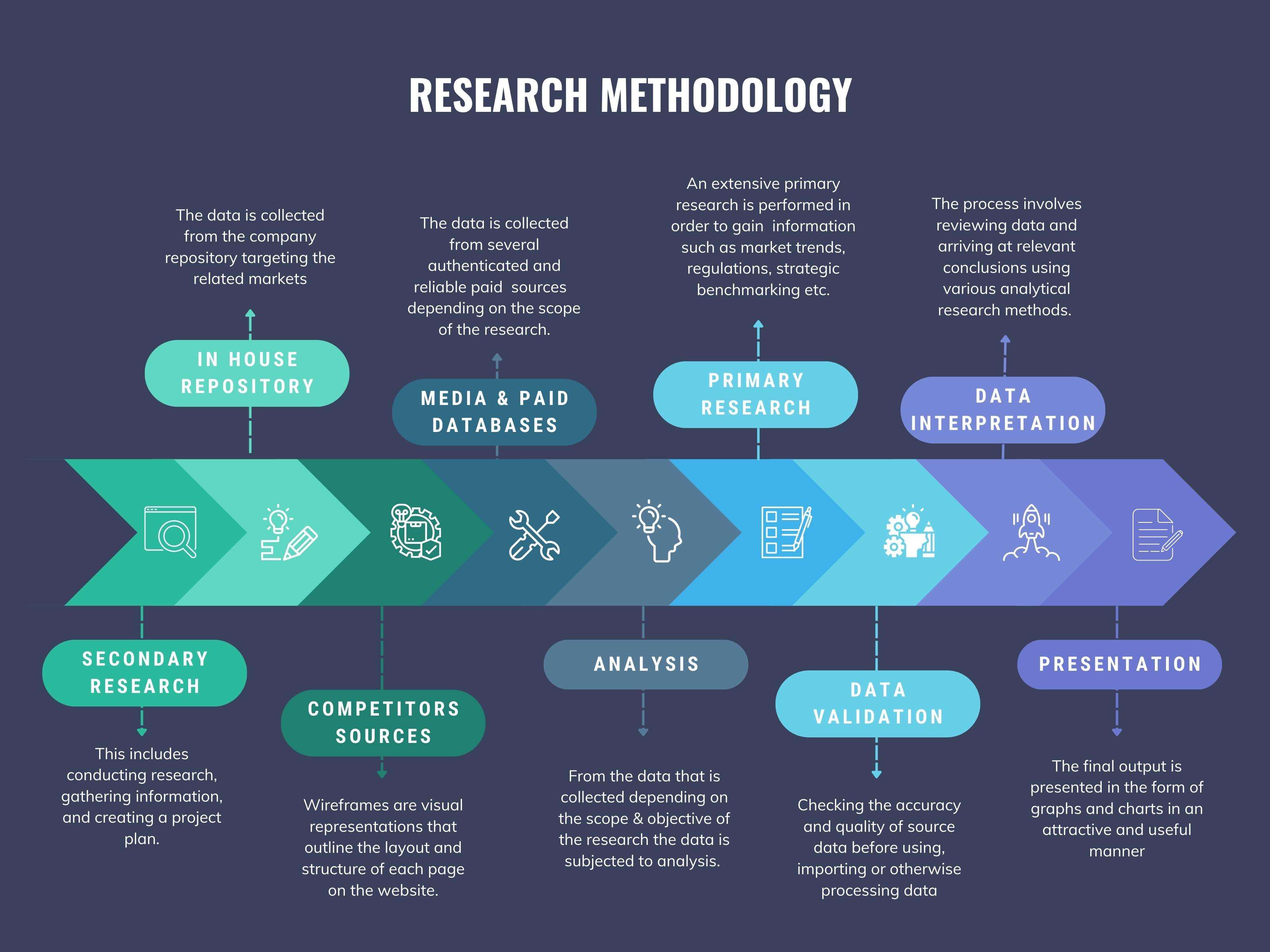
We at ‘Stratistics’ opt for an extensive research approach which involves data mining, data validation, and data analysis. The various research sources include in-house repository, secondary research, competitor’s sources, social media research, client internal data, and primary research.
Our team of analysts prefers the most reliable and authenticated data sources in order to perform the comprehensive literature search. With access to most of the authenticated data bases our team highly considers the best mix of information through various sources to obtain extensive and accurate analysis.
Each report takes an average time of a month and a team of 4 industry analysts. The time may vary depending on the scope and data availability of the desired market report. The various parameters used in the market assessment are standardized in order to enhance the data accuracy.
Data Mining
The data is collected from several authenticated, reliable, paid and unpaid sources and is filtered depending on the scope & objective of the research. Our reports repository acts as an added advantage in this procedure. Data gathering from the raw material suppliers, distributors and the manufacturers is performed on a regular basis, this helps in the comprehensive understanding of the products value chain. Apart from the above mentioned sources the data is also collected from the industry consultants to ensure the objective of the study is in the right direction.
Market trends such as technological advancements, regulatory affairs, market dynamics (Drivers, Restraints, Opportunities and Challenges) are obtained from scientific journals, market related national & international associations and organizations.
Data Analysis
From the data that is collected depending on the scope & objective of the research the data is subjected for the analysis. The critical steps that we follow for the data analysis include:
- Product Lifecycle Analysis
- Competitor analysis
- Risk analysis
- Porters Analysis
- PESTEL Analysis
- SWOT Analysis
The data engineering is performed by the core industry experts considering both the Marketing Mix Modeling and the Demand Forecasting. The marketing mix modeling makes use of multiple-regression techniques to predict the optimal mix of marketing variables. Regression factor is based on a number of variables and how they relate to an outcome such as sales or profits.
Data Validation
The data validation is performed by the exhaustive primary research from the expert interviews. This includes telephonic interviews, focus groups, face to face interviews, and questionnaires to validate our research from all aspects. The industry experts we approach come from the leading firms, involved in the supply chain ranging from the suppliers, distributors to the manufacturers and consumers so as to ensure an unbiased analysis.
We are in touch with more than 15,000 industry experts with the right mix of consultants, CEO's, presidents, vice presidents, managers, experts from both supply side and demand side, executives and so on.
The data validation involves the primary research from the industry experts belonging to:
- Leading Companies
- Suppliers & Distributors
- Manufacturers
- Consumers
- Industry/Strategic Consultants
Apart from the data validation the primary research also helps in performing the fill gap research, i.e. providing solutions for the unmet needs of the research which helps in enhancing the reports quality.
For more details about research methodology, kindly write to us at info@strategymrc.com
Frequently Asked Questions
In case of any queries regarding this report, you can contact the customer service by filing the “Inquiry Before Buy” form available on the right hand side. You may also contact us through email: info@strategymrc.com or phone: +1-301-202-5929
Yes, the samples are available for all the published reports. You can request them by filling the “Request Sample” option available in this page.
Yes, you can request a sample with your specific requirements. All the customized samples will be provided as per the requirement with the real data masked.
All our reports are available in Digital PDF format. In case if you require them in any other formats, such as PPT, Excel etc you can submit a request through “Inquiry Before Buy” form available on the right hand side. You may also contact us through email: info@strategymrc.com or phone: +1-301-202-5929
We offer a free 15% customization with every purchase. This requirement can be fulfilled for both pre and post sale. You may send your customization requirements through email at info@strategymrc.com or call us on +1-301-202-5929.
We have 3 different licensing options available in electronic format.
- Single User Licence: Allows one person, typically the buyer, to have access to the ordered product. The ordered product cannot be distributed to anyone else.
- 2-5 User Licence: Allows the ordered product to be shared among a maximum of 5 people within your organisation.
- Corporate License: Allows the product to be shared among all employees of your organisation regardless of their geographical location.
All our reports are typically be emailed to you as an attachment.
To order any available report you need to register on our website. The payment can be made either through CCAvenue or PayPal payments gateways which accept all international cards.
We extend our support to 6 months post sale. A post sale customization is also provided to cover your unmet needs in the report.
Request Customization
We offer complimentary customization of up to 15% with every purchase. To share your customization requirements, feel free to email us at info@strategymrc.com or call us on +1-301-202-5929. .
Please Note: Customization within the 15% threshold is entirely free of charge. If your request exceeds this limit, we will conduct a feasibility assessment. Following that, a detailed quote and timeline will be provided.
WHY CHOOSE US ?

Assured Quality
Best in class reports with high standard of research integrity

24X7 Research Support
Continuous support to ensure the best customer experience.

Free Customization
Adding more values to your product of interest.

Safe & Secure Access
Providing a secured environment for all online transactions.

Trusted by 600+ Brands
Serving the most reputed brands across the world.