
Soil Remediation Market
Soil Remediation Market Forecasts to 2032 – Global Analysis By Contaminant Type (Organic, Inorganic and Emerging Contaminants), Service Type (Site Investigation & Risk Assessment, Remediation Design & Engineering and Other Service Types), Remediation Approach (Ex-situ and In-situ), Technology, End User, and By Geography

According to Stratistics MRC, the Global Soil Remediation Market is accounted for $48.2 billion in 2025 and is expected to reach $79.4 billion by 2032 growing at a CAGR of 7.4% during the forecast period. Soil remediation is the process of removing, reducing, or neutralizing contaminants from polluted soil to restore its environmental and agricultural functionality. This engineering practice employs various techniques, including bioremediation, chemical treatment, thermal desorption, and soil washing to address heavy metals, petroleum products, pesticides, and industrial chemicals. The goal is achieving regulatory compliance while protecting groundwater, ecosystems, and human health from hazardous substances.
According to EPA records, the U.S. has invested US $1 billion via Superfund in cleaning up 22 major toxic waste sites, part of the infrastructure law funding, while another US $300 million specifically targets 200 contaminated industrial brownfield sites.
Market Dynamics:
Driver:
Increasing industrialization and urbanization
Rapid industrialization and urbanization drive soil contamination through industrial discharge, improper waste disposal, and construction activities, creating substantial demand for remediation services. Expanding urban development necessitates brownfield redevelopment projects where contaminated sites require remediation before repurposing for residential or commercial use. Industrial growth in developing economies, particularly in Asia Pacific regions like China and India, generates significant soil pollution from manufacturing processes, chemical plants, and petrochemical operations. This industrial growth pattern establishes a continuous cycle of contamination and mandatory remediation requirements.
Restraint:
Lack of awareness and resistance to change
Many industries and property developers view soil remediation as an unnecessary expense rather than essential environmental protection, particularly when contamination levels appear manageable through conventional methods. Traditional remediation approaches face resistance due to perceived high costs and extended project timelines, causing delays in implementation. Additionally, regulatory complexities and varying environmental standards across different geographical locations create confusion and hesitation in decision-making processes.
Opportunity:
Government funding and incentives
Government initiatives worldwide provide substantial financial support through grants, tax incentives, and public-private partnerships to accelerate soil remediation projects. The U.S. Environmental Protection Agency's CERCLA mandates cleanup of contaminated sites, while the USDA invested $32.5 million in soil health initiatives, demonstrating strong regulatory and financial backing. The European Union's Soil Thematic Strategy underscores regional commitment to soil preservation through comprehensive funding mechanisms and environmental protection policies. Additionally, green finance models and large-scale cleanup project investments are emerging to support sustainable remediation technologies. Moreover, government regulations in developing nations increasingly mandate environmental compliance, creating favorable conditions for market expansion.
Threat:
Complex contaminant mixtures
Modern industrial activities create complex contamination scenarios involving multiple pollutants, including chlorinated solvents, heavy metals, petroleum hydrocarbons, and emerging contaminants like PFAS substances, requiring sophisticated and expensive treatment approaches. Mixed contamination sites demand integrated remediation strategies combining various technologies, significantly increasing project costs and technical complexity. Furthermore, the presence of unknown or undiscovered contaminants can render initial remediation efforts ineffective, necessitating additional treatment phases and budget overruns. Additionally, contamination plumes can migrate across property boundaries, complicating remediation responsibility and increasing legal liabilities.
Covid-19 Impact:
The COVID-19 pandemic created mixed impacts on soil remediation markets, initially disrupting project timelines and supply chains while reducing immediate demand due to economic uncertainty. Construction and industrial activities slowed significantly during lockdowns, temporarily reducing new contamination sources but delaying ongoing remediation projects. However, the pandemic increased awareness about environmental health connections and disinfection practices, ultimately driving long-term demand for comprehensive soil remediation services. Supply chain disruptions affected equipment availability and specialized material procurement, extending project completion times. Travel restrictions limited on-site assessment capabilities and technical expertise deployment, yet the market demonstrated resilience with expected recovery and continued growth.
The remediation implementation & project management segment is expected to be the largest during the forecast period
The remediation implementation & project management segment is expected to account for the largest market share during the forecast period due to comprehensive service offerings encompassing site assessment, technology selection, execution oversight, and regulatory compliance management. This segment benefits from increasing demand for turnkey solutions where clients prefer single-point responsibility for complex remediation projects rather than managing multiple specialized contractors. The complexity of modern contamination scenarios requires specialized expertise in coordinating multiple remediation technologies, making integrated project management essential for successful outcomes. Moreover, liability concerns drive clients toward established firms with proven track records in managing large-scale remediation projects, particularly in brownfield initiatives.
The real estate & urban development segment is expected to have the highest CAGR during the forecast period
Over the forecast period, the real estate & urban development segment is predicted to witness the highest growth rate, driven by accelerating brownfield redevelopment projects and urban land scarcity pressures. Rapid urbanization creates intense demand for developable land, making contaminated sites valuable assets once remediated for residential and commercial purposes. Real estate developers increasingly recognize soil remediation as a value-addition strategy that transforms liability-prone properties into profitable development opportunities. Furthermore, municipal governments actively promote brownfield redevelopment through tax incentives and streamlined permitting processes to revitalize urban areas and prevent suburban sprawl. Green building certifications and sustainable development trends also drive demand for thoroughly remediated sites.
Region with largest share:
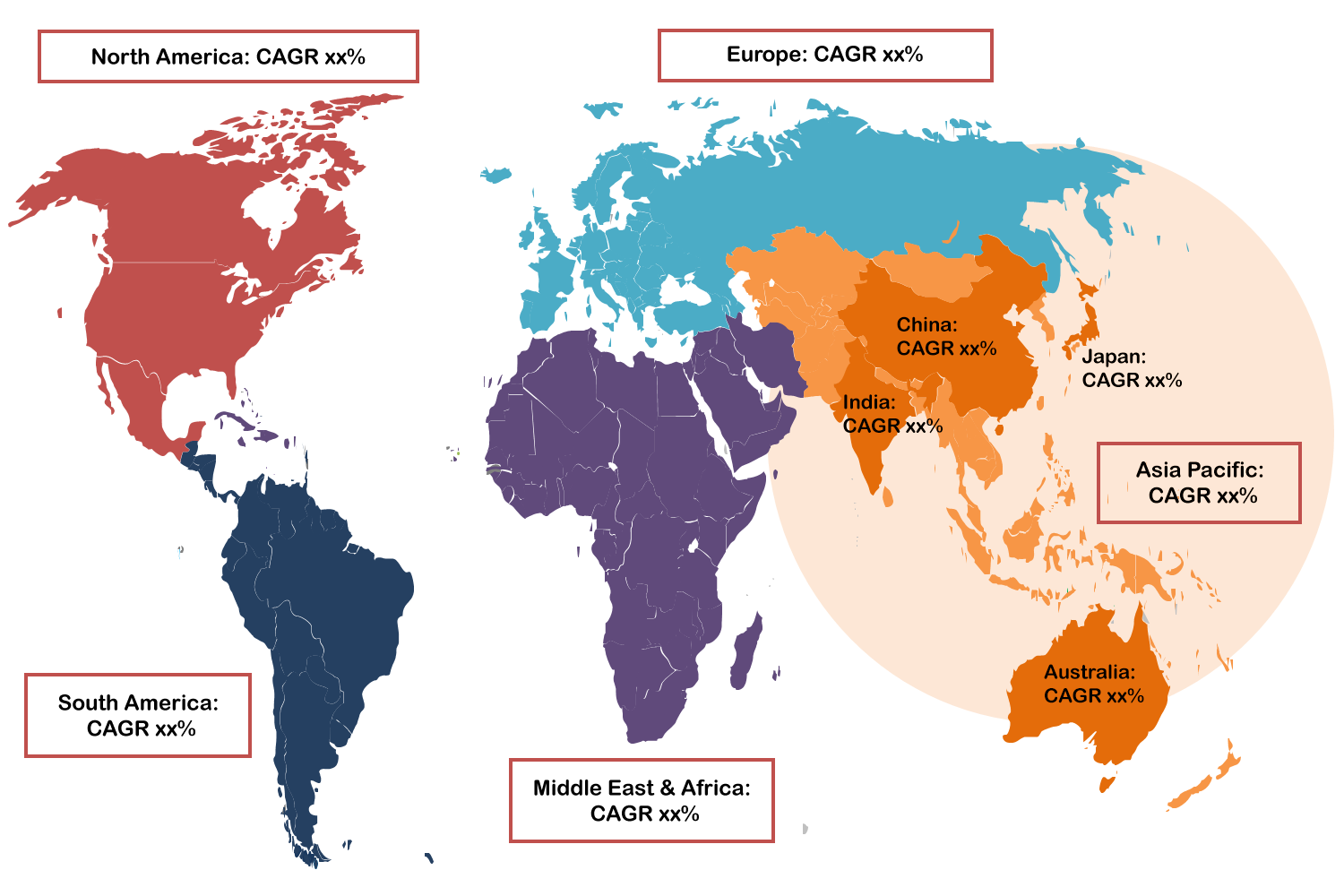
During the forecast period, the North America region is expected to hold the largest market share due to stringent environmental regulations, including the U.S. EPA's CERCLA mandating contaminated site cleanup and robust regulatory enforcement mechanisms. The region's growth is supported by extensive industrial infrastructure from past manufacturing activities requiring remediation. Additionally, well-established environmental consulting firms and advanced remediation technology providers create a mature service ecosystem capable of handling complex projects. The presence of major oil and chemical companies with legacy contamination liabilities ensures consistent demand for remediation services across multiple industrial sectors in the region.
Region with highest CAGR:
Over the forecast period, the Asia Pacific region is anticipated to exhibit the highest CAGR, driven by rapid industrialization in China, India, and Southeast Asian nations, creating substantial soil contamination challenges requiring immediate attention. Expanding manufacturing sectors, including chemicals, pharmaceuticals, and electronics, generate diverse contamination types, necessitating sophisticated remediation approaches. Furthermore, increasing environmental awareness and government regulatory pressure in developing economies mandate industrial compliance with soil protection standards. Additionally, growing middle-class populations in these countries also demand cleaner living environments, driving political support for environmental protection initiatives.
Key players in the market
Some of the key players in Soil Remediation Market include Clean Harbors, Inc., Golder Associates, AECOM, Jacobs Solutions Inc., Veolia Environnement S.A., Tetra Tech, DEME NV, TRS Group, US Ecology, Envirotreat, EVOQUA, TerraTherm (Cascade Environmental), Montrose Environmental Group, ENTACT, SUEZ Group, Stantec Inc., Arcadis N.V., DOWA Group, In-Situ Oxidative Technologies, Inc., and Antea Group.
Key Developments:
In May 2025, AECOM the trusted global infrastructure leader announced that it has been awarded an Optimized Remediation Contract (ORC) by the U.S. Army Corps of Engineers (USACE) Los Angeles District to provide environmental remediation services at Vandenberg Space Force Base on California’s Central Coast. The 10-year, $81.3-million single award is one of the largest optimized remediation contracts awarded by the USACE Los Angeles District, reinforcing AECOM’s position as a trusted partner in delivering mission-critical solutions.
In July 2024, Tetra Tech, Inc. a leading provider of high-end consulting and engineering services in water, environment and sustainable infrastructure, announced today that the U.S. Department of Defense (DoD) Environmental Security Technology Certification Program selected the Company and its partner Texas A&M University (TAMU) to design, fabricate, and demonstrate a prototype mobile electron beam (eBeam) system for on-site treatment of soils and sediments impacted by per- and polyfluoroalkyl substances (PFAS).
In April 2024, Clean Harbors, Inc. the leading provider of environmental and industrial services throughout North America introduced its “Total PFAS Solution” to address all the needs of customers related to PFAS (per- and poly-fluorinated alkyl substances), which are commonly referred to as forever chemicals. Clean Harbors’ Total PFAS Solution is the industry’s first and only one-stop-shop consisting of eight core elements and providing customers with a range of services from analysis to remediation to disposal.
Contaminant Types Covered:
• Organic Contaminants
• Inorganic Contaminants
• Emerging Contaminants (CECs)
Service Types:
• Site Investigation & Risk Assessment
• Remediation Design & Engineering
• Remediation Implementation & Project Management
• Post-Remediation Monitoring, Validation & Closure
• Regulatory Compliance & Permitting Support
Remediation Approaches Covered:
• Ex-situ
• In-situ
Technologies Covered:
• Biological Remediation
• Chemical Remediation
• Physical & Thermal Remediation
End Users Covered:
• Oil & Gas
• Manufacturing & Heavy Industry
• Mining & Metallurgy
• Real Estate & Urban Development
• Agriculture & Rural Development
• Waste Management & Landfills
• Utilities & Infrastructure
• Government & Defense
• Other End Users
Regions Covered:
• North America
o US
o Canada
o Mexico
• Europe
o Germany
o UK
o Italy
o France
o Spain
o Rest of Europe
• Asia Pacific
o Japan
o China
o India
o Australia
o New Zealand
o South Korea
o Rest of Asia Pacific
• South America
o Argentina
o Brazil
o Chile
o Rest of South America
• Middle East & Africa
o Saudi Arabia
o UAE
o Qatar
o South Africa
o Rest of Middle East & Africa
What our report offers:
- Market share assessments for the regional and country-level segments
- Strategic recommendations for the new entrants
- Covers Market data for the years 2024, 2025, 2026, 2028, and 2032
- Market Trends (Drivers, Constraints, Opportunities, Threats, Challenges, Investment Opportunities, and recommendations)
- Strategic recommendations in key business segments based on the market estimations
- Competitive landscaping mapping the key common trends
- Company profiling with detailed strategies, financials, and recent developments
- Supply chain trends mapping the latest technological advancements
Free Customization Offerings:
All the customers of this report will be entitled to receive one of the following free customization options:
• Company Profiling
o Comprehensive profiling of additional market players (up to 3)
o SWOT Analysis of key players (up to 3)
• Regional Segmentation
o Market estimations, Forecasts and CAGR of any prominent country as per the client's interest (Note: Depends on feasibility check)
• Competitive Benchmarking
o Benchmarking of key players based on product portfolio, geographical presence, and strategic alliances
Table of Contents
1 Executive Summary
2 Preface
2.1 Abstract
2.2 Stake Holders
2.3 Research Scope
2.4 Research Methodology
2.4.1 Data Mining
2.4.2 Data Analysis
2.4.3 Data Validation
2.4.4 Research Approach
2.5 Research Sources
2.5.1 Primary Research Sources
2.5.2 Secondary Research Sources
2.5.3 Assumptions
3 Market Trend Analysis
3.1 Introduction
3.2 Drivers
3.3 Restraints
3.4 Opportunities
3.5 Threats
3.6 Technology Analysis
3.7 End User Analysis
3.8 Emerging Markets
3.9 Impact of Covid-19
4 Porters Five Force Analysis
4.1 Bargaining power of suppliers
4.2 Bargaining power of buyers
4.3 Threat of substitutes
4.4 Threat of new entrants
4.5 Competitive rivalry
5 Global Soil Remediation Market, By Contaminant Type
5.1 Introduction
5.2 Organic Contaminants
5.2.1 Petroleum Hydrocarbons
5.2.2 Pesticides
5.2.3 Volatile & Semi-Volatile Organic Compounds (SVOCs)
5.2.4 Polycyclic Aromatic Hydrocarbons (PAHs)
5.2.5 Other Organic Contaminants
5.3 Inorganic Contaminants
5.3.1 Heavy Metals
5.3.2 Salts & Acidity/Alkalinity Contaminants
5.3.3 Radionuclides
5.3.4 Other Inorganic Contaminants
5.4 Emerging Contaminants (CECs)
5.4.1 Per- and Polyfluoroalkyl Substances (PFAS)
5.4.2 Pharmaceuticals & Personal Care Products (PPCPs)
5.4.3 Microplastics
6 Global Soil Remediation Market, By Service Type
6.1 Introduction
6.2 Site Investigation & Risk Assessment
6.3 Remediation Design & Engineering
6.4 Remediation Implementation & Project Management
6.5 Post-Remediation Monitoring, Validation & Closure
6.6 Regulatory Compliance & Permitting Support
7 Global Soil Remediation Market, By Remediation Approach
7.1 Introduction
7.2 Ex-situ
7.3 In-situ
8 Global Soil Remediation Market, By Technology
8.1 Introduction
8.2 Biological Remediation
8.2.1 Biostimulation & Bioaugmentation
8.2.2 Phytoremediation
8.2.3 Composting & Landfarming
8.2.4 Other Biological Technologies
8.3 Chemical Remediation
8.3.1 Chemical Oxidation
8.3.2 Chemical Reduction
8.3.3 Solidification/Stabilization (S/S)
8.3.4 Soil Flushing / Chemical Extraction
8.3.5 Other Chemical Technologies
8.4 Physical & Thermal Remediation
8.4.1 Soil Vapor Extraction (SVE) & Air Sparging
8.4.2 Thermal Desorption
8.4.3 Excavation & Off-site Treatment/Disposal
8.4.4 Soil Washing & Screening
8.4.5 Electrokinetic Remediation
8.4.6 Permeable Reactive Barriers (PRBs)
8.4.7 Other Physical & Thermal Technologies
9 Global Soil Remediation Market, By End User
9.1 Introduction
9.2 Oil & Gas
9.3 Manufacturing & Heavy Industry
9.4 Mining & Metallurgy
9.5 Real Estate & Urban Development
9.6 Agriculture & Rural Development
9.7 Waste Management & Landfills
9.8 Utilities & Infrastructure
9.9 Government & Defense
9.10 Other End Users
10 Global Soil Remediation Market, By Geography
10.1 Introduction
10.2 North America
10.2.1 US
10.2.2 Canada
10.2.3 Mexico
10.3 Europe
10.3.1 Germany
10.3.2 UK
10.3.3 Italy
10.3.4 France
10.3.5 Spain
10.3.6 Rest of Europe
10.4 Asia Pacific
10.4.1 Japan
10.4.2 China
10.4.3 India
10.4.4 Australia
10.4.5 New Zealand
10.4.6 South Korea
10.4.7 Rest of Asia Pacific
10.5 South America
10.5.1 Argentina
10.5.2 Brazil
10.5.3 Chile
10.5.4 Rest of South America
10.6 Middle East & Africa
10.6.1 Saudi Arabia
10.6.2 UAE
10.6.3 Qatar
10.6.4 South Africa
10.6.5 Rest of Middle East & Africa
11 Key Developments
11.1 Agreements, Partnerships, Collaborations and Joint Ventures
11.2 Acquisitions & Mergers
11.3 New Product Launch
11.4 Expansions
11.5 Other Key Strategies
12 Company Profiling
12.1 Clean Harbors, Inc.
12.2 Golder Associates
12.3 AECOM
12.4 Jacobs Solutions Inc.
12.5 Veolia Environnement S.A.
12.6 Tetra Tech
12.7 DEME NV
12.8 TRS Group
12.9 US Ecology
12.10 Envirotreat
12.11 EVOQUA
12.12 TerraTherm (Cascade Environmental)
12.13 Montrose Environmental Group
12.14 ENTACT
12.15 SUEZ Group
12.16 Stantec Inc.
12.17 Arcadis N.V.
12.18 DOWA Group
12.19 In-Situ Oxidative Technologies, Inc.
12.20 Antea Group
List of Tables
1 Global Soil Remediation Market Outlook, By Region (2024-2032) ($MN)
2 Global Soil Remediation Market Outlook, By Contaminant Type (2024-2032) ($MN)
3 Global Soil Remediation Market Outlook, By Organic Contaminants (2024-2032) ($MN)
4 Global Soil Remediation Market Outlook, By Petroleum Hydrocarbons (2024-2032) ($MN)
5 Global Soil Remediation Market Outlook, By Pesticides (2024-2032) ($MN)
6 Global Soil Remediation Market Outlook, By Volatile & Semi-Volatile Organic Compounds (SVOCs) (2024-2032) ($MN)
7 Global Soil Remediation Market Outlook, By Polycyclic Aromatic Hydrocarbons (PAHs) (2024-2032) ($MN)
8 Global Soil Remediation Market Outlook, By Other Organic Contaminants (2024-2032) ($MN)
9 Global Soil Remediation Market Outlook, By Inorganic Contaminants (2024-2032) ($MN)
10 Global Soil Remediation Market Outlook, By Heavy Metals (2024-2032) ($MN)
11 Global Soil Remediation Market Outlook, By Salts & Acidity/Alkalinity Contaminants (2024-2032) ($MN)
12 Global Soil Remediation Market Outlook, By Radionuclides (2024-2032) ($MN)
13 Global Soil Remediation Market Outlook, By Other Inorganic Contaminants (2024-2032) ($MN)
14 Global Soil Remediation Market Outlook, By Emerging Contaminants (CECs) (2024-2032) ($MN)
15 Global Soil Remediation Market Outlook, By Per- and Polyfluoroalkyl Substances (PFAS) (2024-2032) ($MN)
16 Global Soil Remediation Market Outlook, By Pharmaceuticals & Personal Care Products (PPCPs) (2024-2032) ($MN)
17 Global Soil Remediation Market Outlook, By Microplastics (2024-2032) ($MN)
18 Global Soil Remediation Market Outlook, By Service Type (2024-2032) ($MN)
19 Global Soil Remediation Market Outlook, By Site Investigation & Risk Assessment (2024-2032) ($MN)
20 Global Soil Remediation Market Outlook, By Remediation Design & Engineering (2024-2032) ($MN)
21 Global Soil Remediation Market Outlook, By Remediation Implementation & Project Management (2024-2032) ($MN)
22 Global Soil Remediation Market Outlook, By Post-Remediation Monitoring, Validation & Closure (2024-2032) ($MN)
23 Global Soil Remediation Market Outlook, By Regulatory Compliance & Permitting Support (2024-2032) ($MN)
24 Global Soil Remediation Market Outlook, By Remediation Approach (2024-2032) ($MN)
25 Global Soil Remediation Market Outlook, By Ex-situ (2024-2032) ($MN)
26 Global Soil Remediation Market Outlook, By In-situ (2024-2032) ($MN)
27 Global Soil Remediation Market Outlook, By Technology (2024-2032) ($MN)
28 Global Soil Remediation Market Outlook, By Biological Remediation (2024-2032) ($MN)
29 Global Soil Remediation Market Outlook, By Biostimulation & Bioaugmentation (2024-2032) ($MN)
30 Global Soil Remediation Market Outlook, By Phytoremediation (2024-2032) ($MN)
31 Global Soil Remediation Market Outlook, By Composting & Landfarming (2024-2032) ($MN)
32 Global Soil Remediation Market Outlook, By Other Biological Technologies (2024-2032) ($MN)
33 Global Soil Remediation Market Outlook, By Chemical Remediation (2024-2032) ($MN)
34 Global Soil Remediation Market Outlook, By Chemical Oxidation (2024-2032) ($MN)
35 Global Soil Remediation Market Outlook, By Chemical Reduction (2024-2032) ($MN)
36 Global Soil Remediation Market Outlook, By Solidification/Stabilization (S/S) (2024-2032) ($MN)
37 Global Soil Remediation Market Outlook, By Soil Flushing / Chemical Extraction (2024-2032) ($MN)
38 Global Soil Remediation Market Outlook, By Other Chemical Technologies (2024-2032) ($MN)
39 Global Soil Remediation Market Outlook, By Physical & Thermal Remediation (2024-2032) ($MN)
40 Global Soil Remediation Market Outlook, By Soil Vapor Extraction (SVE) & Air Sparging (2024-2032) ($MN)
41 Global Soil Remediation Market Outlook, By Thermal Desorption (2024-2032) ($MN)
42 Global Soil Remediation Market Outlook, By Excavation & Off-site Treatment/Disposal (2024-2032) ($MN)
43 Global Soil Remediation Market Outlook, By Soil Washing & Screening (2024-2032) ($MN)
44 Global Soil Remediation Market Outlook, By Electrokinetic Remediation (2024-2032) ($MN)
45 Global Soil Remediation Market Outlook, By Permeable Reactive Barriers (PRBs) (2024-2032) ($MN)
46 Global Soil Remediation Market Outlook, By Other Physical & Thermal Technologies (2024-2032) ($MN)
47 Global Soil Remediation Market Outlook, By End User (2024-2032) ($MN)
48 Global Soil Remediation Market Outlook, By Oil & Gas (2024-2032) ($MN)
49 Global Soil Remediation Market Outlook, By Manufacturing & Heavy Industry (2024-2032) ($MN)
50 Global Soil Remediation Market Outlook, By Mining & Metallurgy (2024-2032) ($MN)
51 Global Soil Remediation Market Outlook, By Real Estate & Urban Development (2024-2032) ($MN)
52 Global Soil Remediation Market Outlook, By Agriculture & Rural Development (2024-2032) ($MN)
53 Global Soil Remediation Market Outlook, By Waste Management & Landfills (2024-2032) ($MN)
54 Global Soil Remediation Market Outlook, By Utilities & Infrastructure (2024-2032) ($MN)
55 Global Soil Remediation Market Outlook, By Government & Defense (2024-2032) ($MN)
56 Global Soil Remediation Market Outlook, By Other End Users (2024-2032) ($MN)
Note: Tables for North America, Europe, APAC, South America, and Middle East & Africa Regions are also represented in the same manner as above.
List of Figures
RESEARCH METHODOLOGY

We at ‘Stratistics’ opt for an extensive research approach which involves data mining, data validation, and data analysis. The various research sources include in-house repository, secondary research, competitor’s sources, social media research, client internal data, and primary research.
Our team of analysts prefers the most reliable and authenticated data sources in order to perform the comprehensive literature search. With access to most of the authenticated data bases our team highly considers the best mix of information through various sources to obtain extensive and accurate analysis.
Each report takes an average time of a month and a team of 4 industry analysts. The time may vary depending on the scope and data availability of the desired market report. The various parameters used in the market assessment are standardized in order to enhance the data accuracy.
Data Mining
The data is collected from several authenticated, reliable, paid and unpaid sources and is filtered depending on the scope & objective of the research. Our reports repository acts as an added advantage in this procedure. Data gathering from the raw material suppliers, distributors and the manufacturers is performed on a regular basis, this helps in the comprehensive understanding of the products value chain. Apart from the above mentioned sources the data is also collected from the industry consultants to ensure the objective of the study is in the right direction.
Market trends such as technological advancements, regulatory affairs, market dynamics (Drivers, Restraints, Opportunities and Challenges) are obtained from scientific journals, market related national & international associations and organizations.
Data Analysis
From the data that is collected depending on the scope & objective of the research the data is subjected for the analysis. The critical steps that we follow for the data analysis include:
- Product Lifecycle Analysis
- Competitor analysis
- Risk analysis
- Porters Analysis
- PESTEL Analysis
- SWOT Analysis
The data engineering is performed by the core industry experts considering both the Marketing Mix Modeling and the Demand Forecasting. The marketing mix modeling makes use of multiple-regression techniques to predict the optimal mix of marketing variables. Regression factor is based on a number of variables and how they relate to an outcome such as sales or profits.
Data Validation
The data validation is performed by the exhaustive primary research from the expert interviews. This includes telephonic interviews, focus groups, face to face interviews, and questionnaires to validate our research from all aspects. The industry experts we approach come from the leading firms, involved in the supply chain ranging from the suppliers, distributors to the manufacturers and consumers so as to ensure an unbiased analysis.
We are in touch with more than 15,000 industry experts with the right mix of consultants, CEO's, presidents, vice presidents, managers, experts from both supply side and demand side, executives and so on.
The data validation involves the primary research from the industry experts belonging to:
- Leading Companies
- Suppliers & Distributors
- Manufacturers
- Consumers
- Industry/Strategic Consultants
Apart from the data validation the primary research also helps in performing the fill gap research, i.e. providing solutions for the unmet needs of the research which helps in enhancing the reports quality.
For more details about research methodology, kindly write to us at info@strategymrc.com
Frequently Asked Questions
In case of any queries regarding this report, you can contact the customer service by filing the “Inquiry Before Buy” form available on the right hand side. You may also contact us through email: info@strategymrc.com or phone: +1-301-202-5929
Yes, the samples are available for all the published reports. You can request them by filling the “Request Sample” option available in this page.
Yes, you can request a sample with your specific requirements. All the customized samples will be provided as per the requirement with the real data masked.
All our reports are available in Digital PDF format. In case if you require them in any other formats, such as PPT, Excel etc you can submit a request through “Inquiry Before Buy” form available on the right hand side. You may also contact us through email: info@strategymrc.com or phone: +1-301-202-5929
We offer a free 15% customization with every purchase. This requirement can be fulfilled for both pre and post sale. You may send your customization requirements through email at info@strategymrc.com or call us on +1-301-202-5929.
We have 3 different licensing options available in electronic format.
- Single User Licence: Allows one person, typically the buyer, to have access to the ordered product. The ordered product cannot be distributed to anyone else.
- 2-5 User Licence: Allows the ordered product to be shared among a maximum of 5 people within your organisation.
- Corporate License: Allows the product to be shared among all employees of your organisation regardless of their geographical location.
All our reports are typically be emailed to you as an attachment.
To order any available report you need to register on our website. The payment can be made either through CCAvenue or PayPal payments gateways which accept all international cards.
We extend our support to 6 months post sale. A post sale customization is also provided to cover your unmet needs in the report.
Request Customization
We offer complimentary customization of up to 15% with every purchase. To share your customization requirements, feel free to email us at info@strategymrc.com or call us on +1-301-202-5929. .
Please Note: Customization within the 15% threshold is entirely free of charge. If your request exceeds this limit, we will conduct a feasibility assessment. Following that, a detailed quote and timeline will be provided.
WHY CHOOSE US ?

Assured Quality
Best in class reports with high standard of research integrity

24X7 Research Support
Continuous support to ensure the best customer experience.

Free Customization
Adding more values to your product of interest.

Safe & Secure Access
Providing a secured environment for all online transactions.

Trusted by 600+ Brands
Serving the most reputed brands across the world.
