
Tilt Rotor Aircraft Market
Tilt Rotor Aircraft Market Forecasts to 2032 – Global Analysis By Type (Twin Tilt Rotor Aircraft, Quad Tilt Rotor Aircraft, Manned Tilt Rotor Aircraft, Unmanned Tilt Rotor Aircraft and Other Types), Propulsion (Conventional Fuel, Electric/Hybrid Propulsion and Hydrogen Fuel Cell), Material, Application, End User and By Geography

According to Stratistics MRC, the Global Tilt Rotor Aircraft Market is accounted for $2.11 billion in 2025 and is expected to reach $6.55 billion by 2032 growing at a CAGR of 17.53% during the forecast period. A tiltrotor aircraft is a hybrid aircraft that combines the high speed and range of a fixed-wing aircraft with the vertical takeoff and landing (VTOL) capability of a helicopter. It does this by attaching massive rotors to revolving nacelles at the tips of its wings, which have the ability to tilt from vertical to horizontal. The aircraft can hover, take off, and land without a runway owing to the lift provided by the rotors, which work similarly to a helicopter's in the vertical orientation. The aircraft can fly faster and more efficiently than a traditional helicopter because, once in the air, the nacelles tilt forward and the rotors function as propellers. When long-range speed and agility in tight spaces are essential, tiltrotor aircraft provide versatility.
According to the NASA Ames Research Center & U.S. Army AMRDEC, Performance calculations were conducted for 146,600-lb conventional and quad tiltrotors, which are to cruise at 300 knots at 4000 ft/95°F.
Market Dynamics:
Driver:
Increasing need for capabilities for vertical takeoff and landing (VTOL)
The growing demand for VTOL capabilities, which offer unparalleled operational flexibility, is a major factor propelling the tiltrotor aircraft market. Tiltrotors are very useful in urban, military, and remote operations because they can take off and land in tight spaces without the need for lengthy runways, unlike conventional fixed-wing aircraft. Search and rescue operations, troop transport, disaster response, and offshore operations all depend on this capability. Moreover, the VTOL capability of tiltrotor aircraft makes them an appealing substitute for both helicopters and traditional airplanes, increasing their adoption across industries as urban air mobility and defense forces concentrate on versatile aerial platforms.
Restraint:
High expenses of development and acquisition
The astronomically high cost of development and acquisition is one of the main factors limiting the tiltrotor aircraft market. It costs billions of dollars to design and produce these hybrid platforms because they require sophisticated engineering, cutting-edge materials, and extensive testing. Programs like the V-22 Osprey, for instance, had lengthy delays and cost overruns before they were able to go into service. Adoption is mostly restricted to affluent defense forces due to the high costs, which also limit commercial interest. Furthermore, tiltrotors are still far more expensive to maintain and operate than helicopters or fixed-wing aircraft, which makes them unfeasible for widespread civilian use, particularly in markets where costs are high, like regional transportation.
Opportunity:
Growth in emergency and humanitarian services
Tiltrotor aircraft present significant prospects in emergency response and humanitarian relief, where speed, range, and adaptability are essential. The demand for quick logistics and evacuation solutions is rising as a result of natural disasters, climate change, and conflicts. Tiltrotors are great for delivering supplies, rescuing civilians, and performing medical evacuations because they can fly long distances, carry heavy loads, and land directly in areas with damaged infrastructure. In crisis situations, they can provide continuous support because they can cover larger areas without refueling, unlike helicopters. Future demand in the humanitarian sector is anticipated as tiltrotors are likely to be viewed as strategic assets by governments, non-governmental organizations, and international organizations.
Threat:
Budgetary restraints and economic uncertainty
The tiltrotor market is extremely susceptible to changes in government defense budgets and worldwide economic uncertainty. Any cut to defense spending has a direct effect on procurement programs because tiltrotors are costly to acquire and maintain. Governments may be forced to postpone or cancel acquisitions due to economic downturns or conflicting national priorities, such as infrastructure and healthcare. In a similar vein, during uncertain financial times, commercial operators might be reluctant to purchase expensive tiltrotors. When funding is limited, tiltrotors are less appealing due to their high upfront costs and uncertain returns. Growth in the market may be slowed by these economic pressures, especially in areas where governments place a higher priority on less expensive aviation options.
Covid-19 Impact:
The COVID-19 pandemic had a mixed effect on the tiltrotor aircraft market, emphasizing the value of adaptable aerial platforms while also upsetting supply chains, manufacturing schedules, and procurement programs. Defense budgets in some areas had to be reallocated toward healthcare and recovery measures, which slowed acquisition plans, and lockdowns and travel restrictions delayed production schedules and the testing of new models. The short-term demand for new aviation technologies was weakened on the commercial side by decreased air travel and financial uncertainty. Nonetheless, the pandemic also highlighted the importance of tiltrotor aircraft for humanitarian missions, medical evacuation, and emergency supply delivery, establishing them as essential resources for upcoming crisis-response plans.
The twin tilt rotor aircraft segment is expected to be the largest during the forecast period
The twin tilt rotor aircraft segment is expected to account for the largest market share during the forecast period because of its harmonious combination of functionality, efficiency, and performance. These aircraft, which have two tilting rotors, one on each wingtip, provide vertical takeoff and landing capabilities in addition to airplane-like cruising speed. They are also significantly less noisy and mechanically complex than their quad-rotor counterparts. They are perfect for high-performance military transport, search and rescue, and new civil urban air mobility missions because of this combination of qualities. Lower operational and developmental risks are also a result of their technological maturity, which is demonstrated by platforms such as the V-22 Osprey. Twin tilt rotors are therefore still the most popular and economically feasible design available.
The hybrid/electric propulsion segment is expected to have the highest CAGR during the forecast period
Over the forecast period, the hybrid/electric propulsion segment is predicted to witness the highest growth rate. The growing need for environmentally friendly aviation solutions as well as developments in electric and hybrid-electric technologies is the main drivers of this expansion. Compared to conventional propulsion methods, hybrid-electric systems—which combine conventional engines with electric motors—offer lower emissions, lower fuel consumption, and quieter operations. These advantages complement international environmental objectives and regulatory demands for more environmentally friendly aviation. Hybrid-electric systems also improve safety and dependability by offering operational flexibility and redundancy. The hybrid/electric propulsion market is therefore expected to grow significantly over the next several years.
Region with largest share:
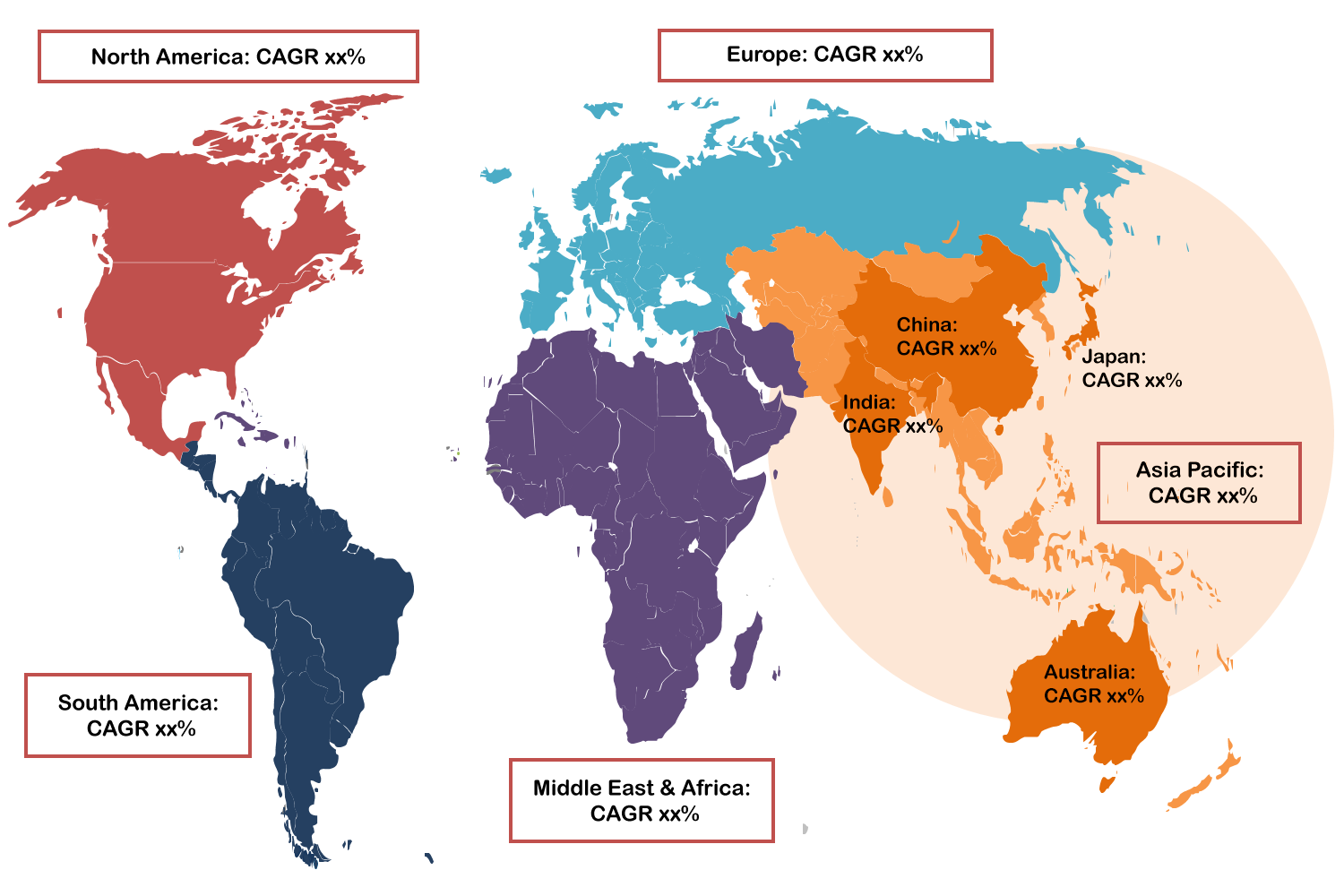
During the forecast period, the North America region is expected to hold the largest market share, principally propelled by robust R&D capabilities, a well-established aerospace industry, and high defense spending. With a sizable fleet of tiltrotor aircraft, including the V-22 Osprey, which is extensively utilized by the Air Force, Navy, and Marine Corps, the United States dominates the region. The region's dominance is further reinforced by ongoing modernization initiatives like the V-280 Valor project and investments in unmanned tiltrotor technology. North America also benefits from a highly skilled workforce, sophisticated manufacturing infrastructure, and strategic alliances between aerospace firms and defense agencies.
Region with highest CAGR:
Over the forecast period, the Asia Pacific region is anticipated to exhibit the highest CAGR, driven by rising investments in cutting-edge aerospace infrastructure, expanding defense budgets, and the quick development of urban air mobility projects. To improve military capabilities, disaster response, and urban transportation, nations like China, Japan, India, South Korea, Australia, and Indonesia are making significant investments in cutting-edge aerial platforms. Furthermore, the Asia-Pacific region is now the tiltrotor aircraft market with the fastest rate of growth in the world owing to a surge in investment and technological advancement.
Key players in the market
Some of the key players in Tilt Rotor Aircraft Market include Acubed, BAE Systems, Bell Textron Inc., Boeing, GE Aviation, General Dynamics, Honeywell Aerospace, Israel Aerospace Industries Ltd, Joby Aviation, Kitty Hawk, Leonardo SpA, Lilium GmbH, Lockheed Martin, Overair, Airbus Helicopters Inc and Northrop Grumman Corporation.
Key Developments:
In June 2025, BAE Systems has been awarded a $1.2 billion contract by U.S. Space Systems Command to provide the U.S. Space Force with missile tracking satellite capabilities. BAE Systems will serve as the prime contractor for the Resilient Missile Warning & Tracking (RMWT) – Medium Earth Orbit (MEO) Epoch 2 program and will design and build 10 spacecraft over the agreement, including a four-year delivery for the space vehicles plus another five years of operations and support.
In June 2025, Bell Textron Inc announces a signed purchase agreement for 12 SUBARU Bell 412EPXs to the Tunisian Air Force, marking the first order for this Bell 412 variant in region. The aircraft will be used for multi-role military and security missions. The Tunisian military expands its rotary wing fleet of 39 Bell aircraft, including Bell UH-1s, 205s and OH-58s.
In May 2025, GE Aerospace and Qatar Airways announced a significant expansion of their long-standing partnership with the signing of multiple deals for new GE9X and GEnx engines during U.S. President Donald J. Trump's visit to Doha. As part of the visit, Qatar Airways has signed an agreement for more than 400 engines, including 60 GE9X and 260 GEnx engines, with additional options and spares, to power its next-generation Boeing 777-9 and Boeing 787 aircraft – the largest widebody engine purchase in the history of GE Aerospace.
Types Covered:
• Twin Tilt Rotor Aircraft
• Quad Tilt Rotor Aircraft
• Manned Tilt Rotor Aircraft
• Unmanned Tilt Rotor Aircraft
• Other Types
Propulsions Covered:
• Conventional Fuel
• Electric/Hybrid Propulsion
• Hydrogen Fuel Cell
Materials Covered:
• Aluminum Alloys
• Composite Materials
• Titanium Alloys
• Advanced Polymers
• Other Materials
Applications Covered:
• Military
• Commercial
• Civil
• Emergency Medical Services (EMS)
• Search & Rescue
• Other Applications
End Users Covered:
• Defense Agencies
• Commercial Operators
• Government & Civil Services
• Disaster Relief Agencies
• Urban Air Mobility Providers
Regions Covered:
• North America
o US
o Canada
o Mexico
• Europe
o Germany
o UK
o Italy
o France
o Spain
o Rest of Europe
• Asia Pacific
o Japan
o China
o India
o Australia
o New Zealand
o South Korea
o Rest of Asia Pacific
• South America
o Argentina
o Brazil
o Chile
o Rest of South America
• Middle East & Africa
o Saudi Arabia
o UAE
o Qatar
o South Africa
o Rest of Middle East & Africa
What our report offers:
- Market share assessments for the regional and country-level segments
- Strategic recommendations for the new entrants
- Covers Market data for the years 2024, 2025, 2026, 2028, and 2032
- Market Trends (Drivers, Constraints, Opportunities, Threats, Challenges, Investment Opportunities, and recommendations)
- Strategic recommendations in key business segments based on the market estimations
- Competitive landscaping mapping the key common trends
- Company profiling with detailed strategies, financials, and recent developments
- Supply chain trends mapping the latest technological advancements
Free Customization Offerings:
All the customers of this report will be entitled to receive one of the following free customization options:
• Company Profiling
o Comprehensive profiling of additional market players (up to 3)
o SWOT Analysis of key players (up to 3)
• Regional Segmentation
o Market estimations, Forecasts and CAGR of any prominent country as per the client's interest (Note: Depends on feasibility check)
• Competitive Benchmarking
o Benchmarking of key players based on product portfolio, geographical presence, and strategic alliances
Table of Contents
1 Executive Summary
2 Preface
2.1 Abstract
2.2 Stake Holders
2.3 Research Scope
2.4 Research Methodology
2.4.1 Data Mining
2.4.2 Data Analysis
2.4.3 Data Validation
2.4.4 Research Approach
2.5 Research Sources
2.5.1 Primary Research Sources
2.5.2 Secondary Research Sources
2.5.3 Assumptions
3 Market Trend Analysis
3.1 Introduction
3.2 Drivers
3.3 Restraints
3.4 Opportunities
3.5 Threats
3.6 Application Analysis
3.7 End User Analysis
3.8 Emerging Markets
3.9 Impact of Covid-19
4 Porters Five Force Analysis
4.1 Bargaining power of suppliers
4.2 Bargaining power of buyers
4.3 Threat of substitutes
4.4 Threat of new entrants
4.5 Competitive rivalry
5 Global Tilt Rotor Aircraft Market, By Type
5.1 Introduction
5.2 Twin Tilt Rotor Aircraft
5.3 Quad Tilt Rotor Aircraft
5.4 Manned Tilt Rotor Aircraft
5.5 Unmanned Tilt Rotor Aircraft
5.6 Other Types
6 Global Tilt Rotor Aircraft Market, By Propulsion
6.1 Introduction
6.2 Conventional Fuel
6.3 Electric/Hybrid Propulsion
6.4 Hydrogen Fuel Cell
7 Global Tilt Rotor Aircraft Market, By Material
7.1 Introduction
7.2 Aluminum Alloys
7.3 Composite Materials
7.4 Titanium Alloys
7.5 Advanced Polymers
7.6 Other Materials
8 Global Tilt Rotor Aircraft Market, By Application
8.1 Introduction
8.2 Military
8.3 Commercial
8.4 Civil
8.5 Emergency Medical Services (EMS)
8.6 Search & Rescue
8.7 Other Applications
9 Global Tilt Rotor Aircraft Market, By End User
9.1 Introduction
9.2 Defense Agencies
9.3 Commercial Operators
9.4 Government & Civil Services
9.5 Disaster Relief Agencies
9.6 Urban Air Mobility Providers
10 Global Tilt Rotor Aircraft Market, By Geography
10.1 Introduction
10.2 North America
10.2.1 US
10.2.2 Canada
10.2.3 Mexico
10.3 Europe
10.3.1 Germany
10.3.2 UK
10.3.3 Italy
10.3.4 France
10.3.5 Spain
10.3.6 Rest of Europe
10.4 Asia Pacific
10.4.1 Japan
10.4.2 China
10.4.3 India
10.4.4 Australia
10.4.5 New Zealand
10.4.6 South Korea
10.4.7 Rest of Asia Pacific
10.5 South America
10.5.1 Argentina
10.5.2 Brazil
10.5.3 Chile
10.5.4 Rest of South America
10.6 Middle East & Africa
10.6.1 Saudi Arabia
10.6.2 UAE
10.6.3 Qatar
10.6.4 South Africa
10.6.5 Rest of Middle East & Africa
11 Key Developments
11.1 Agreements, Partnerships, Collaborations and Joint Ventures
11.2 Acquisitions & Mergers
11.3 New Product Launch
11.4 Expansions
11.5 Other Key Strategies
12 Company Profiling
12.1 Acubed
12.2 BAE Systems
12.3 Bell Textron Inc.
12.4 Boeing
12.5 GE Aviation
12.6 General Dynamics
12.7 Honeywell Aerospace
12.8 Israel Aerospace Industries Ltd
12.9 Joby Aviation
12.10 Kitty Hawk
12.11 Leonardo SpA
12.12 Lilium GmbH
12.13 Lockheed Martin
12.14 Overair
12.15 Airbus Helicopters Inc
12.16 Northrop Grumman Corporation
List of Tables
1 Global Tilt Rotor Aircraft Market Outlook, By Region (2024-2032) ($MN)
2 Global Tilt Rotor Aircraft Market Outlook, By Type (2024-2032) ($MN)
3 Global Tilt Rotor Aircraft Market Outlook, By Twin Tilt Rotor Aircraft (2024-2032) ($MN)
4 Global Tilt Rotor Aircraft Market Outlook, By Quad Tilt Rotor Aircraft (2024-2032) ($MN)
5 Global Tilt Rotor Aircraft Market Outlook, By Manned Tilt Rotor Aircraft (2024-2032) ($MN)
6 Global Tilt Rotor Aircraft Market Outlook, By Unmanned Tilt Rotor Aircraft (2024-2032) ($MN)
7 Global Tilt Rotor Aircraft Market Outlook, By Other Types (2024-2032) ($MN)
8 Global Tilt Rotor Aircraft Market Outlook, By Propulsion (2024-2032) ($MN)
9 Global Tilt Rotor Aircraft Market Outlook, By Conventional Fuel (2024-2032) ($MN)
10 Global Tilt Rotor Aircraft Market Outlook, By Electric/Hybrid Propulsion (2024-2032) ($MN)
11 Global Tilt Rotor Aircraft Market Outlook, By Hydrogen Fuel Cell (2024-2032) ($MN)
12 Global Tilt Rotor Aircraft Market Outlook, By Material (2024-2032) ($MN)
13 Global Tilt Rotor Aircraft Market Outlook, By Aluminum Alloys (2024-2032) ($MN)
14 Global Tilt Rotor Aircraft Market Outlook, By Composite Materials (2024-2032) ($MN)
15 Global Tilt Rotor Aircraft Market Outlook, By Titanium Alloys (2024-2032) ($MN)
16 Global Tilt Rotor Aircraft Market Outlook, By Advanced Polymers (2024-2032) ($MN)
17 Global Tilt Rotor Aircraft Market Outlook, By Other Materials (2024-2032) ($MN)
18 Global Tilt Rotor Aircraft Market Outlook, By Application (2024-2032) ($MN)
19 Global Tilt Rotor Aircraft Market Outlook, By Military (2024-2032) ($MN)
20 Global Tilt Rotor Aircraft Market Outlook, By Commercial (2024-2032) ($MN)
21 Global Tilt Rotor Aircraft Market Outlook, By Civil (2024-2032) ($MN)
22 Global Tilt Rotor Aircraft Market Outlook, By Emergency Medical Services (EMS) (2024-2032) ($MN)
23 Global Tilt Rotor Aircraft Market Outlook, By Search & Rescue (2024-2032) ($MN)
24 Global Tilt Rotor Aircraft Market Outlook, By Other Applications (2024-2032) ($MN)
25 Global Tilt Rotor Aircraft Market Outlook, By End User (2024-2032) ($MN)
26 Global Tilt Rotor Aircraft Market Outlook, By Defense Agencies (2024-2032) ($MN)
27 Global Tilt Rotor Aircraft Market Outlook, By Commercial Operators (2024-2032) ($MN)
28 Global Tilt Rotor Aircraft Market Outlook, By Government & Civil Services (2024-2032) ($MN)
29 Global Tilt Rotor Aircraft Market Outlook, By Disaster Relief Agencies (2024-2032) ($MN)
30 Global Tilt Rotor Aircraft Market Outlook, By Urban Air Mobility Providers (2024-2032) ($MN)
Note: Tables for North America, Europe, APAC, South America, and Middle East & Africa Regions are also represented in the same manner as above.
List of Figures
RESEARCH METHODOLOGY

We at ‘Stratistics’ opt for an extensive research approach which involves data mining, data validation, and data analysis. The various research sources include in-house repository, secondary research, competitor’s sources, social media research, client internal data, and primary research.
Our team of analysts prefers the most reliable and authenticated data sources in order to perform the comprehensive literature search. With access to most of the authenticated data bases our team highly considers the best mix of information through various sources to obtain extensive and accurate analysis.
Each report takes an average time of a month and a team of 4 industry analysts. The time may vary depending on the scope and data availability of the desired market report. The various parameters used in the market assessment are standardized in order to enhance the data accuracy.
Data Mining
The data is collected from several authenticated, reliable, paid and unpaid sources and is filtered depending on the scope & objective of the research. Our reports repository acts as an added advantage in this procedure. Data gathering from the raw material suppliers, distributors and the manufacturers is performed on a regular basis, this helps in the comprehensive understanding of the products value chain. Apart from the above mentioned sources the data is also collected from the industry consultants to ensure the objective of the study is in the right direction.
Market trends such as technological advancements, regulatory affairs, market dynamics (Drivers, Restraints, Opportunities and Challenges) are obtained from scientific journals, market related national & international associations and organizations.
Data Analysis
From the data that is collected depending on the scope & objective of the research the data is subjected for the analysis. The critical steps that we follow for the data analysis include:
- Product Lifecycle Analysis
- Competitor analysis
- Risk analysis
- Porters Analysis
- PESTEL Analysis
- SWOT Analysis
The data engineering is performed by the core industry experts considering both the Marketing Mix Modeling and the Demand Forecasting. The marketing mix modeling makes use of multiple-regression techniques to predict the optimal mix of marketing variables. Regression factor is based on a number of variables and how they relate to an outcome such as sales or profits.
Data Validation
The data validation is performed by the exhaustive primary research from the expert interviews. This includes telephonic interviews, focus groups, face to face interviews, and questionnaires to validate our research from all aspects. The industry experts we approach come from the leading firms, involved in the supply chain ranging from the suppliers, distributors to the manufacturers and consumers so as to ensure an unbiased analysis.
We are in touch with more than 15,000 industry experts with the right mix of consultants, CEO's, presidents, vice presidents, managers, experts from both supply side and demand side, executives and so on.
The data validation involves the primary research from the industry experts belonging to:
- Leading Companies
- Suppliers & Distributors
- Manufacturers
- Consumers
- Industry/Strategic Consultants
Apart from the data validation the primary research also helps in performing the fill gap research, i.e. providing solutions for the unmet needs of the research which helps in enhancing the reports quality.
For more details about research methodology, kindly write to us at info@strategymrc.com
Frequently Asked Questions
In case of any queries regarding this report, you can contact the customer service by filing the “Inquiry Before Buy” form available on the right hand side. You may also contact us through email: info@strategymrc.com or phone: +1-301-202-5929
Yes, the samples are available for all the published reports. You can request them by filling the “Request Sample” option available in this page.
Yes, you can request a sample with your specific requirements. All the customized samples will be provided as per the requirement with the real data masked.
All our reports are available in Digital PDF format. In case if you require them in any other formats, such as PPT, Excel etc you can submit a request through “Inquiry Before Buy” form available on the right hand side. You may also contact us through email: info@strategymrc.com or phone: +1-301-202-5929
We offer a free 15% customization with every purchase. This requirement can be fulfilled for both pre and post sale. You may send your customization requirements through email at info@strategymrc.com or call us on +1-301-202-5929.
We have 3 different licensing options available in electronic format.
- Single User Licence: Allows one person, typically the buyer, to have access to the ordered product. The ordered product cannot be distributed to anyone else.
- 2-5 User Licence: Allows the ordered product to be shared among a maximum of 5 people within your organisation.
- Corporate License: Allows the product to be shared among all employees of your organisation regardless of their geographical location.
All our reports are typically be emailed to you as an attachment.
To order any available report you need to register on our website. The payment can be made either through CCAvenue or PayPal payments gateways which accept all international cards.
We extend our support to 6 months post sale. A post sale customization is also provided to cover your unmet needs in the report.
Request Customization
We offer complimentary customization of up to 15% with every purchase. To share your customization requirements, feel free to email us at info@strategymrc.com or call us on +1-301-202-5929. .
Please Note: Customization within the 15% threshold is entirely free of charge. If your request exceeds this limit, we will conduct a feasibility assessment. Following that, a detailed quote and timeline will be provided.
WHY CHOOSE US ?

Assured Quality
Best in class reports with high standard of research integrity

24X7 Research Support
Continuous support to ensure the best customer experience.

Free Customization
Adding more values to your product of interest.

Safe & Secure Access
Providing a secured environment for all online transactions.

Trusted by 600+ Brands
Serving the most reputed brands across the world.
