
Ultra Thin Battery Electrodes Market
Ultra-Thin Battery Electrodes Market Forecasts to 2034 - Global Analysis By Electrode Type (Cathode Electrodes, Anode Electrodes, Solid-State Electrodes, Thin-Film Composite Electrodes, Nanostructured Electrodes, and Graphene-Based Electrodes), Material Type, Fabrication, Battery Type, Application, End User, and By Geography

According to Stratistics MRC, the Global Ultra-Thin Battery Electrodes Market is accounted for $2.1 billion in 2026 and is expected to reach $6.2 billion by 2034 growing at a CAGR of 14.4% during the forecast period. Ultra-thin battery electrodes are advanced current collector and active material layer assemblies fabricated at micron and sub-micron scales to enable high-performance energy storage in miniaturized, flexible, and solid-state battery architectures. Encompassing cathode, anode, solid-state, thin-film composite, nanostructured, and graphene-based electrode systems, these components are engineered for maximum volumetric energy density, rapid charge-discharge kinetics, and mechanical durability under repetitive cycling. They serve implantable medical devices, wearable electronics, smart cards, microelectromechanical systems, and next-generation solid-state electric vehicle battery cell fabrication.
Market Dynamics:
Driver:
Wearable device miniaturization demand
Accelerating miniaturization of wearable electronics and implantable medical devices is the foremost driver. Continuous heart monitors, neural stimulators, drug delivery implants, and advanced hearing devices require energy storage solutions occupying minimal volume while delivering sufficient capacity for extended autonomous operation. Ultra-thin electrode architectures enable battery cell thicknesses below 500 micrometers that conventional processes cannot achieve, enabling next-generation device form factors. Growing adoption of wearable health biosensors and expanding miniaturized active medical implant pipelines sustain strong commercial demand.
Restraint:
Complex precision manufacturing requirements
Exceptional precision manufacturing demands for ultra-thin battery electrode fabrication represent a significant restraint. Achieving consistent sub-10 micrometer electrode layers with uniform active material distribution and defect-free current collector interfaces demands atomic layer deposition, physical vapor deposition, and nanoscale coating processes requiring substantial capital equipment and controlled cleanroom environments. Manufacturing yield rates below conventional thick electrode processes elevate per-unit costs, constraining ability to compete on price in cost-sensitive applications where thicker conventional alternatives remain technically viable.
Opportunity:
Solid-state EV battery transition
Global transition to solid-state battery technology for electric vehicles is generating transformative demand for ultra-thin electrode systems compatible with solid electrolyte interfaces. Solid-state batteries require electrode architectures maintaining intimate solid-solid contact with ceramic or polymer electrolyte layers, necessitating nanostructured and thin-film designs. Leading automotive manufacturers including Toyota Motor Corporation, BMW Group, and Volkswagen AG have committed to solid-state battery programs by the late 2020s, creating substantial forward procurement signals driving active ultra-thin electrode manufacturing investment.
Threat:
Conventional electrode technology advancement
Continuing advances in conventional thick electrode battery technology represent a persistent competitive threat. Innovations in high-active-material-loading electrodes, fast-charging lithium-ion cells, and silicon-graphite composite anode architectures are progressively improving energy density and charging performance, narrowing the technical performance gap justifying premium ultra-thin electrode adoption. If conventional improvements enable adequate miniaturization for the majority of wearable and IoT sensor applications, the addressable market for specialized ultra-thin electrode systems may contract to narrower high-value niches.
Covid-19 Impact:
COVID-19 temporarily disrupted the ultra-thin battery electrode market by interrupting supply chains for specialty deposition equipment, precursor materials, and cleanroom manufacturing inputs. Consumer electronics demand fluctuations caused manufacturers to defer advanced electrode capacity expansion investments. Post-pandemic, accelerated adoption of wearable health monitoring devices established durable new product categories generating strong miniaturized battery demand, while government electric vehicle adoption stimulus programs strengthened the long-term solid-state battery development pipeline.
The nanostructured electrodes segment is expected to be the largest during the forecast period
The nanostructured electrodes segment is expected to account for the largest market share during the forecast period, due to superior surface area-to-volume ratios enabling exceptional volumetric energy density and fast ion transport kinetics in compact battery architectures. Nanostructured electrode materials including vertically aligned nanorod arrays, nanoporous frameworks, and nanoparticle-embedded thin films simultaneously address energy density and power density requirements for high-performance implantable and wearable applications. Extensive patent portfolios held by leading battery material developers and ongoing commercial scale-up investments are sustaining dominant segment positioning.
The lithium cobalt oxide (LCO) segment is expected to have the highest CAGR during the forecast period
Over the forecast period, the lithium cobalt oxide (LCO) segment is predicted to witness the highest growth rate, driven by its established position as the preferred cathode material for ultra-thin battery applications in consumer electronics, medical implants, and smart card platforms. LCO cathodes achieve the highest volumetric energy density among commercial lithium-ion cathode chemistries, making them the default material selection where minimizing electrode thickness is the paramount design requirement. Advances in LCO coating and single-crystal particle engineering are extending thin-film LCO cycling stability, expanding addressable application ranges.
Region with largest share:
During the forecast period, the Asia Pacific region is expected to hold the largest market share, due to South Korea hosting globally leading battery cell manufacturers including LG Energy Solution Ltd., Samsung SDI Co., Ltd., and SK On Co., Ltd. as major advanced electrode consumers. Japan contributes through Panasonic Holdings Corporation and Toshiba Corporation with deep thin-film and solid-state battery technology programs. China's CATL and BYD Company Limited represent the world's largest battery production operations, investing heavily in next-generation electrode material procurement to support respective solid-state battery development roadmaps.
Region with highest CAGR:
Over the forecast period, the North America region is anticipated to exhibit the highest CAGR, due to rapid growth in domestic battery cell manufacturing investment driven by Inflation Reduction Act domestic content incentives, creating substantial new demand for advanced electrode materials from companies including Enovix Corporation, Sila Nanotechnologies Inc., and Amprius Technologies, Inc. Tesla, Inc.'s battery cell development programs contribute meaningfully to North American ultra-thin electrode advancement. Federal medtech innovation funding further supports miniaturized implantable device power system development.
Key players in the market
Some of the key players in Ultra-Thin Battery Electrodes Market include Panasonic Holdings Corporation, LG Energy Solution Ltd., Samsung SDI Co., Ltd., CATL (Contemporary Amperex Technology Co., Limited), BYD Company Limited, Tesla, Inc., SK On Co., Ltd., Northvolt AB, Toshiba Corporation, Hitachi Energy Ltd., Umicore S.A., BASF SE, Targray Technology International Inc., Enovix Corporation, Sila Nanotechnologies Inc., Amprius Technologies, Inc. and Enevate Corporation.
Key Developments:
In February 2026, Samsung SDI Co., Ltd. unveiled an ultra-thin all-solid-state battery electrode system with sub-5 micrometer cathode layers targeting implantable medical device and premium wearable electronics power applications.
In January 2026, LG Energy Solution Ltd. launched a next-generation nanostructured LCO thin-film cathode product line optimized for high-volumetric-energy-density battery cells in compact wearable sensor and smart card applications.
In November 2025, Enovix Corporation announced capacity expansion at its US manufacturing facility to scale production of silicon-dominant ultra-thin anode cells for wearable electronics and next-generation smartphone battery markets.
Electrode Types Covered:
• Cathode Electrodes
• Anode Electrodes
• Solid-State Electrodes
• Thin-Film Composite Electrodes
• Nanostructured Electrodes
• Graphene-Based Electrodes
Material Types Covered:
• Lithium Cobalt Oxide (LCO)
• Lithium Iron Phosphate (LFP)
• Lithium Nickel Manganese Cobalt (NMC)
• Silicon-Based Anode Materials
• Graphite-Based Electrodes
• Advanced Nanomaterial Electrodes
Fabrications Covered:
• Physical Vapor Deposition (PVD)
• Chemical Vapor Deposition (CVD)
• Electrochemical Deposition
• Roll-to-Roll Processing
• Sputtering Technology
• Atomic Layer Deposition
Battery Types Covered:
• Lithium-Ion Batteries
• Solid-State Batteries
• Lithium Polymer Batteries
• Micro Batteries
• Flexible Batteries
• Wearable Device Batteries
Applications Covered:
• Consumer Electronics
• Electric Vehicles
• Medical Devices
• Wearable Electronics
• Energy Storage Systems
• IoT Devices
End Users Covered:
• Consumer Electronics Industry
• Automotive Industry
• Healthcare and Medical Devices
• Aerospace and Defense
• Industrial Electronics
• Telecommunications Devices
Regions Covered:
• North America
o United States
o Canada
o Mexico
• Europe
o United Kingdom
o Germany
o France
o Italy
o Spain
o Netherlands
o Belgium
o Sweden
o Switzerland
o Poland
o Rest of Europe
• Asia Pacific
o China
o Japan
o India
o South Korea
o Australia
o Indonesia
o Thailand
o Malaysia
o Singapore
o Vietnam
o Rest of Asia Pacific
• South America
o Brazil
o Argentina
o Colombia
o Chile
o Peru
o Rest of South America
• Rest of the World (RoW)
o Middle East
§ Saudi Arabia
§ United Arab Emirates
§ Qatar
§ Israel
§ Rest of Middle East
o Africa
§ South Africa
§ Egypt
§ Morocco
§ Rest of Africa
What our report offers:
- Market share assessments for the regional and country-level segments
- Strategic recommendations for the new entrants
- Covers Market data for the years 2023, 2024, 2025, 2026, 2027, 2028, 2030, 2032 and 2034
- Market Trends (Drivers, Constraints, Opportunities, Threats, Challenges, Investment Opportunities, and recommendations)
- Strategic recommendations in key business segments based on the market estimations
- Competitive landscaping mapping the key common trends
- Company profiling with detailed strategies, financials, and recent developments
- Supply chain trends mapping the latest technological advancements
Free Customization Offerings:
All the customers of this report will be entitled to receive one of the following free customization options:
• Company Profiling
o Comprehensive profiling of additional market players (up to 3)
o SWOT Analysis of key players (up to 3)
• Regional Segmentation
o Market estimations, Forecasts and CAGR of any prominent country as per the client's interest (Note: Depends on feasibility check)
• Competitive Benchmarking
o Benchmarking of key players based on product portfolio, geographical presence, and strategic alliances
Table of Contents
1 Executive Summary
1.1 Market Snapshot and Key Highlights
1.2 Growth Drivers, Challenges, and Opportunities
1.3 Competitive Landscape Overview
1.4 Strategic Insights and Recommendations
2 Research Framework
2.1 Study Objectives and Scope
2.2 Stakeholder Analysis
2.3 Research Assumptions and Limitations
2.4 Research Methodology
2.4.1 Data Collection (Primary and Secondary)
2.4.2 Data Modeling and Estimation Techniques
2.4.3 Data Validation and Triangulation
2.4.4 Analytical and Forecasting Approach
3 Market Dynamics and Trend Analysis
3.1 Market Definition and Structure
3.2 Key Market Drivers
3.3 Market Restraints and Challenges
3.4 Growth Opportunities and Investment Hotspots
3.5 Industry Threats and Risk Assessment
3.6 Technology and Innovation Landscape
3.7 Emerging and High-Growth Markets
3.8 Regulatory and Policy Environment
3.9 Impact of COVID-19 and Recovery Outlook
4 Competitive and Strategic Assessment
4.1 Porter's Five Forces Analysis
4.1.1 Supplier Bargaining Power
4.1.2 Buyer Bargaining Power
4.1.3 Threat of Substitutes
4.1.4 Threat of New Entrants
4.1.5 Competitive Rivalry
4.2 Market Share Analysis of Key Players
4.3 Product Benchmarking and Performance Comparison
5 Global Ultra-Thin Battery Electrodes Market, By Electrode Type
5.1 Cathode Electrodes
5.2 Anode Electrodes
5.3 Solid-State Electrodes
5.4 Thin-Film Composite Electrodes
5.5 Nanostructured Electrodes
5.6 Graphene-Based Electrodes
6 Global Ultra-Thin Battery Electrodes Market, By Material Type
6.1 Lithium Cobalt Oxide (LCO)
6.2 Lithium Iron Phosphate (LFP)
6.3 Lithium Nickel Manganese Cobalt (NMC)
6.4 Silicon-Based Anode Materials
6.5 Graphite-Based Electrodes
6.6 Advanced Nanomaterial Electrodes
7 Global Ultra-Thin Battery Electrodes Market, By Fabrication
7.1 Physical Vapor Deposition (PVD)
7.2 Chemical Vapor Deposition (CVD)
7.3 Electrochemical Deposition
7.4 Roll-to-Roll Processing
7.5 Sputtering Technology
7.6 Atomic Layer Deposition
8 Global Ultra-Thin Battery Electrodes Market, By Battery Type
8.1 Lithium-Ion Batteries
8.2 Solid-State Batteries
8.3 Lithium Polymer Batteries
8.4 Micro Batteries
8.5 Flexible Batteries
8.6 Wearable Device Batteries
9 Global Ultra-Thin Battery Electrodes Market, By Application
9.1 Consumer Electronics
9.2 Electric Vehicles
9.3 Medical Devices
9.4 Wearable Electronics
9.5 Energy Storage Systems
9.6 IoT Devices
10 Global Ultra-Thin Battery Electrodes Market, By End User
10.1 Consumer Electronics Industry
10.2 Automotive Industry
10.3 Healthcare and Medical Devices
10.4 Aerospace and Defense
10.5 Industrial Electronics
10.6 Telecommunications Devices
11 Global Ultra-Thin Battery Electrodes Market, By Geography
11.1 North America
11.1.1 United States
11.1.2 Canada
11.1.3 Mexico
11.2 Europe
11.2.1 United Kingdom
11.2.2 Germany
11.2.3 France
11.2.4 Italy
11.2.5 Spain
11.2.6 Netherlands
11.2.7 Belgium
11.2.8 Sweden
11.2.9 Switzerland
11.2.10 Poland
11.2.11 Rest of Europe
11.3 Asia Pacific
11.3.1 China
11.3.2 Japan
11.3.3 India
11.3.4 South Korea
11.3.5 Australia
11.3.6 Indonesia
11.3.7 Thailand
11.3.8 Malaysia
11.3.9 Singapore
11.3.10 Vietnam
11.3.11 Rest of Asia Pacific
11.4 South America
11.4.1 Brazil
11.4.2 Argentina
11.4.3 Colombia
11.4.4 Chile
11.4.5 Peru
11.4.6 Rest of South America
11.5 Rest of the World (RoW)
11.5.1 Middle East
11.5.1.1 Saudi Arabia
11.5.1.2 United Arab Emirates
11.5.1.3 Qatar
11.5.1.4 Israel
11.5.1.5 Rest of Middle East
11.5.2 Africa
11.5.2.1 South Africa
11.5.2.2 Egypt
11.5.2.3 Morocco
11.5.2.4 Rest of Africa
12 Strategic Market Intelligence
12.1 Industry Value Network and Supply Chain Assessment
12.2 White-Space and Opportunity Mapping
12.3 Product Evolution and Market Life Cycle Analysis
12.4 Channel, Distributor, and Go-to-Market Assessment
13 Industry Developments and Strategic Initiatives
13.1 Mergers and Acquisitions
13.2 Partnerships, Alliances, and Joint Ventures
13.3 New Product Launches and Certifications
13.4 Capacity Expansion and Investments
13.5 Other Strategic Initiatives
14 Company Profiles
14.1 Panasonic Holdings Corporation
14.2 LG Energy Solution Ltd.
14.3 Samsung SDI Co., Ltd.
14.4 CATL (Contemporary Amperex Technology Co., Limited)
14.5 BYD Company Limited
14.6 Tesla, Inc.
14.7 SK On Co., Ltd.
14.8 Northvolt AB
14.9 Toshiba Corporation
14.10 Hitachi Energy Ltd.
14.11 Umicore S.A.
14.12 BASF SE
14.13 Targray Technology International Inc.
14.14 Enovix Corporation
14.15 Sila Nanotechnologies Inc.
14.16 Amprius Technologies, Inc.
14.17 Enevate Corporation
List of Tables
1 Global Ultra-Thin Battery Electrodes Market Outlook, By Region (2023-2034) ($MN)
2 Global Ultra-Thin Battery Electrodes Market Outlook, By Electrode Type (2023-2034) ($MN)
3 Global Ultra-Thin Battery Electrodes Market Outlook, By Cathode Electrodes (2023-2034) ($MN)
4 Global Ultra-Thin Battery Electrodes Market Outlook, By Anode Electrodes (2023-2034) ($MN)
5 Global Ultra-Thin Battery Electrodes Market Outlook, By Solid-State Electrodes (2023-2034) ($MN)
6 Global Ultra-Thin Battery Electrodes Market Outlook, By Thin-Film Composite Electrodes (2023-2034) ($MN)
7 Global Ultra-Thin Battery Electrodes Market Outlook, By Nanostructured Electrodes (2023-2034) ($MN)
8 Global Ultra-Thin Battery Electrodes Market Outlook, By Graphene-Based Electrodes (2023-2034) ($MN)
9 Global Ultra-Thin Battery Electrodes Market Outlook, By Material Type (2023-2034) ($MN)
10 Global Ultra-Thin Battery Electrodes Market Outlook, By Lithium Cobalt Oxide (LCO) (2023-2034) ($MN)
11 Global Ultra-Thin Battery Electrodes Market Outlook, By Lithium Iron Phosphate (LFP) (2023-2034) ($MN)
12 Global Ultra-Thin Battery Electrodes Market Outlook, By Lithium Nickel Manganese Cobalt (NMC) (2023-2034) ($MN)
13 Global Ultra-Thin Battery Electrodes Market Outlook, By Silicon-Based Anode Materials (2023-2034) ($MN)
14 Global Ultra-Thin Battery Electrodes Market Outlook, By Graphite-Based Electrodes (2023-2034) ($MN)
15 Global Ultra-Thin Battery Electrodes Market Outlook, By Advanced Nanomaterial Electrodes (2023-2034) ($MN)
16 Global Ultra-Thin Battery Electrodes Market Outlook, By Fabrication (2023-2034) ($MN)
17 Global Ultra-Thin Battery Electrodes Market Outlook, By Physical Vapor Deposition (PVD) (2023-2034) ($MN)
18 Global Ultra-Thin Battery Electrodes Market Outlook, By Chemical Vapor Deposition (CVD) (2023-2034) ($MN)
19 Global Ultra-Thin Battery Electrodes Market Outlook, By Electrochemical Deposition (2023-2034) ($MN)
20 Global Ultra-Thin Battery Electrodes Market Outlook, By Roll-to-Roll Processing (2023-2034) ($MN)
21 Global Ultra-Thin Battery Electrodes Market Outlook, By Sputtering Technology (2023-2034) ($MN)
22 Global Ultra-Thin Battery Electrodes Market Outlook, By Atomic Layer Deposition (2023-2034) ($MN)
23 Global Ultra-Thin Battery Electrodes Market Outlook, By Battery Type (2023-2034) ($MN)
24 Global Ultra-Thin Battery Electrodes Market Outlook, By Lithium-Ion Batteries (2023-2034) ($MN)
25 Global Ultra-Thin Battery Electrodes Market Outlook, By Solid-State Batteries (2023-2034) ($MN)
26 Global Ultra-Thin Battery Electrodes Market Outlook, By Lithium Polymer Batteries (2023-2034) ($MN)
27 Global Ultra-Thin Battery Electrodes Market Outlook, By Micro Batteries (2023-2034) ($MN)
28 Global Ultra-Thin Battery Electrodes Market Outlook, By Flexible Batteries (2023-2034) ($MN)
29 Global Ultra-Thin Battery Electrodes Market Outlook, By Wearable Device Batteries (2023-2034) ($MN)
30 Global Ultra-Thin Battery Electrodes Market Outlook, By Application (2023-2034) ($MN)
31 Global Ultra-Thin Battery Electrodes Market Outlook, By Consumer Electronics (2023-2034) ($MN)
32 Global Ultra-Thin Battery Electrodes Market Outlook, By Electric Vehicles (2023-2034) ($MN)
33 Global Ultra-Thin Battery Electrodes Market Outlook, By Medical Devices (2023-2034) ($MN)
34 Global Ultra-Thin Battery Electrodes Market Outlook, By Wearable Electronics (2023-2034) ($MN)
35 Global Ultra-Thin Battery Electrodes Market Outlook, By Energy Storage Systems (2023-2034) ($MN)
36 Global Ultra-Thin Battery Electrodes Market Outlook, By IoT Devices (2023-2034) ($MN)
37 Global Ultra-Thin Battery Electrodes Market Outlook, By End User (2023-2034) ($MN)
38 Global Ultra-Thin Battery Electrodes Market Outlook, By Consumer Electronics Industry (2023-2034) ($MN)
39 Global Ultra-Thin Battery Electrodes Market Outlook, By Automotive Industry (2023-2034) ($MN)
40 Global Ultra-Thin Battery Electrodes Market Outlook, By Healthcare and Medical Devices (2023-2034) ($MN)
41 Global Ultra-Thin Battery Electrodes Market Outlook, By Aerospace and Defense (2023-2034) ($MN)
42 Global Ultra-Thin Battery Electrodes Market Outlook, By Industrial Electronics (2023-2034) ($MN)
43 Global Ultra-Thin Battery Electrodes Market Outlook, By Telecommunications Devices (2023-2034) ($MN)
Note: Tables for North America, Europe, APAC, South America, and Rest of the World (RoW) Regions are also represented in the same manner as above.
List of Figures
RESEARCH METHODOLOGY
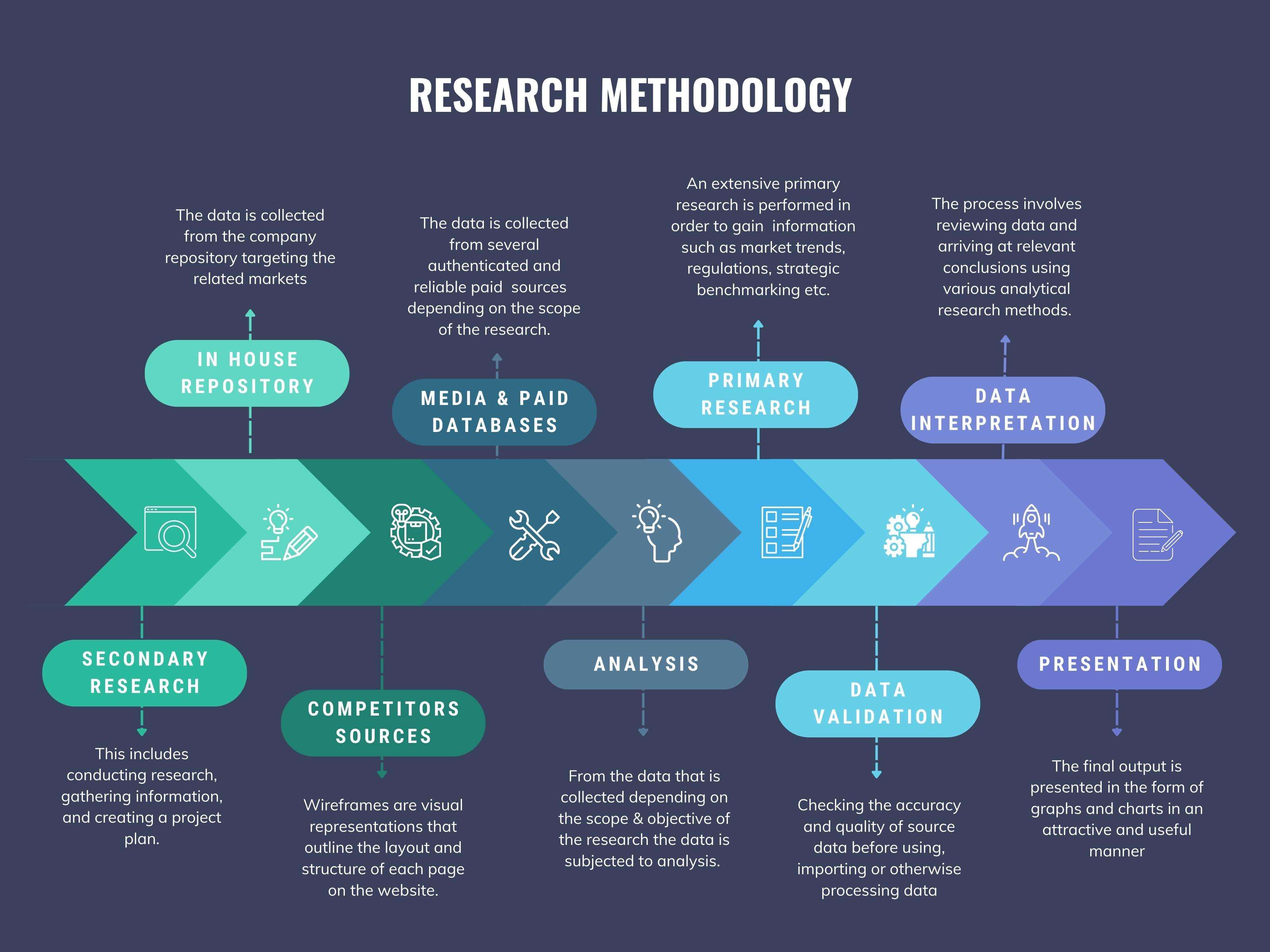
We at ‘Stratistics’ opt for an extensive research approach which involves data mining, data validation, and data analysis. The various research sources include in-house repository, secondary research, competitor’s sources, social media research, client internal data, and primary research.
Our team of analysts prefers the most reliable and authenticated data sources in order to perform the comprehensive literature search. With access to most of the authenticated data bases our team highly considers the best mix of information through various sources to obtain extensive and accurate analysis.
Each report takes an average time of a month and a team of 4 industry analysts. The time may vary depending on the scope and data availability of the desired market report. The various parameters used in the market assessment are standardized in order to enhance the data accuracy.
Data Mining
The data is collected from several authenticated, reliable, paid and unpaid sources and is filtered depending on the scope & objective of the research. Our reports repository acts as an added advantage in this procedure. Data gathering from the raw material suppliers, distributors and the manufacturers is performed on a regular basis, this helps in the comprehensive understanding of the products value chain. Apart from the above mentioned sources the data is also collected from the industry consultants to ensure the objective of the study is in the right direction.
Market trends such as technological advancements, regulatory affairs, market dynamics (Drivers, Restraints, Opportunities and Challenges) are obtained from scientific journals, market related national & international associations and organizations.
Data Analysis
From the data that is collected depending on the scope & objective of the research the data is subjected for the analysis. The critical steps that we follow for the data analysis include:
- Product Lifecycle Analysis
- Competitor analysis
- Risk analysis
- Porters Analysis
- PESTEL Analysis
- SWOT Analysis
The data engineering is performed by the core industry experts considering both the Marketing Mix Modeling and the Demand Forecasting. The marketing mix modeling makes use of multiple-regression techniques to predict the optimal mix of marketing variables. Regression factor is based on a number of variables and how they relate to an outcome such as sales or profits.
Data Validation
The data validation is performed by the exhaustive primary research from the expert interviews. This includes telephonic interviews, focus groups, face to face interviews, and questionnaires to validate our research from all aspects. The industry experts we approach come from the leading firms, involved in the supply chain ranging from the suppliers, distributors to the manufacturers and consumers so as to ensure an unbiased analysis.
We are in touch with more than 15,000 industry experts with the right mix of consultants, CEO's, presidents, vice presidents, managers, experts from both supply side and demand side, executives and so on.
The data validation involves the primary research from the industry experts belonging to:
- Leading Companies
- Suppliers & Distributors
- Manufacturers
- Consumers
- Industry/Strategic Consultants
Apart from the data validation the primary research also helps in performing the fill gap research, i.e. providing solutions for the unmet needs of the research which helps in enhancing the reports quality.
For more details about research methodology, kindly write to us at info@strategymrc.com
Frequently Asked Questions
In case of any queries regarding this report, you can contact the customer service by filing the “Inquiry Before Buy” form available on the right hand side. You may also contact us through email: info@strategymrc.com or phone: +1-301-202-5929
Yes, the samples are available for all the published reports. You can request them by filling the “Request Sample” option available in this page.
Yes, you can request a sample with your specific requirements. All the customized samples will be provided as per the requirement with the real data masked.
All our reports are available in Digital PDF format. In case if you require them in any other formats, such as PPT, Excel etc you can submit a request through “Inquiry Before Buy” form available on the right hand side. You may also contact us through email: info@strategymrc.com or phone: +1-301-202-5929
We offer a free 15% customization with every purchase. This requirement can be fulfilled for both pre and post sale. You may send your customization requirements through email at info@strategymrc.com or call us on +1-301-202-5929.
We have 3 different licensing options available in electronic format.
- Single User Licence: Allows one person, typically the buyer, to have access to the ordered product. The ordered product cannot be distributed to anyone else.
- 2-5 User Licence: Allows the ordered product to be shared among a maximum of 5 people within your organisation.
- Corporate License: Allows the product to be shared among all employees of your organisation regardless of their geographical location.
All our reports are typically be emailed to you as an attachment.
To order any available report you need to register on our website. The payment can be made either through CCAvenue or PayPal payments gateways which accept all international cards.
We extend our support to 6 months post sale. A post sale customization is also provided to cover your unmet needs in the report.
Request Customization
We offer complimentary customization of up to 15% with every purchase. To share your customization requirements, feel free to email us at info@strategymrc.com or call us on +1-301-202-5929. .
Please Note: Customization within the 15% threshold is entirely free of charge. If your request exceeds this limit, we will conduct a feasibility assessment. Following that, a detailed quote and timeline will be provided.
WHY CHOOSE US ?

Assured Quality
Best in class reports with high standard of research integrity

24X7 Research Support
Continuous support to ensure the best customer experience.

Free Customization
Adding more values to your product of interest.

Safe & Secure Access
Providing a secured environment for all online transactions.

Trusted by 600+ Brands
Serving the most reputed brands across the world.