
Virtual Reality Vr Based Skill Simulation Market
Virtual Reality (VR) Based Skill Simulation Market Forecasts to 2032 – Global Analysis By Component (Hardware, Software, and Services), Application (Medical Training, Industrial Training, Military & Defense, Education, Aviation & Aerospace, and Other Applications), End User and By Geography

According to Stratistics MRC, the Global Virtual Reality (VR) Based Skill Simulation Market is accounted for $12.5 billion in 2025 and is expected to reach $88.09 billion by 2032 growing at a CAGR of 32.1% during the forecast period. VR-based skill simulation solutions leverage immersive technology to train individuals in fields like healthcare, manufacturing, aviation, and military. The market offers realistic, interactive simulations for risk-free, hands-on learning, improving retention and performance. Growth is driven by increasing adoption of immersive learning, cost-efficient training needs, and digital transformation initiatives. Key players focus on realism, scalability, and content variety. The market targets organizations seeking innovative training methods, reducing errors and operational costs while enhancing practical skill acquisition in controlled, virtual environments.
According to real-world company use cases, leading enterprises like Walmart, Boeing, and Verizon have implemented VR-based training, resulting in outcomes such as a 70% improvement in employee test scores, 75% reduction in training time for equipment handling, and a 50% reduction in direct training time compared to traditional methods.
Market Dynamics:
Driver:
Advancements in VR technology
Advancements in VR hardware, software, and content delivery are improving realism and effectiveness of simulation-based training. Higher-resolution displays, refined motion tracking, haptic feedback, and reduced latency boost immersion and skill transfer, allowing practitioners to rehearse complex procedures safely. Moreover, growing developer ecosystems and interoperable platforms lower production barriers, enabling faster creation of tailored scenarios. Enterprise cloud streaming and subscription models permit wider distribution and remote access, while robust evidence of improved retention and reduced error rates encourages procurement by healthcare, aviation, and industrial training buyers.
Restraint:
High setup costs
Initial investment in headsets, haptic devices, powerful workstations, software licenses, and bespoke content production can be prohibitive for smaller organizations and educational institutions. Additionally, integration with existing training infrastructure and compliance with regulatory requirements adds complexity and expense. Ongoing maintenance, content updates, and specialist staffing further raise total cost of ownership, and the need for accredited validation or certification can delay return on investment, limiting rapid scaling beyond better-funded hospitals, defense programs, and large corporations.
Opportunity:
Integration with AI
AI-driven performance analytics can identify skill gaps, deliver targeted feedback, and dynamically adjust scenario difficulty to optimize learning curves. Natural language processing enables realistic virtual tutors and debriefs, while computer vision supports automated assessment of technique and ergonomics. Furthermore, AI can accelerate content generation through procedural scenario creation and automated asset tagging, lowering production time and cost. These capabilities make VR training more measurable, scalable, and attractive to enterprises seeking demonstrable competency improvements and data-driven learning pathways.
Threat:
Competition from Traditional Training Methods
Established hands-on workshops, instructor-led sessions, and apprenticeship models benefit from proven outcomes, institutional familiarity, and lower perceived technological risk. Stakeholders may resist change due to concerns about realism, user comfort, or the learning curve associated with VR systems, and skepticism. Additionally, budgets allocated to legacy programs and accreditation standards tied to traditional credentials can slow procurement of immersive alternatives, making widespread displacement of incumbent training approaches gradual rather than immediate.
Covid-19 Impact:
The COVID-19 pandemic accelerated adoption of VR skill simulation by restricting in-person training and highlighting remote alternatives. Social distancing forced many institutions to suspend hands-on workshops, creating demand for immersive virtual practice that preserves procedural fidelity. Moreover, VR enabled continuity of certification and assessment while reducing infection risk for trainees and patients. Demand surged for scalable remote training, prompting pilots and investments that will shape long-term blended learning strategies across industries, with accelerated investment cycles.
The healthcare providers segment is expected to be the largest during the forecast period
The healthcare providers segment is expected to account for the largest market share during the forecast period because clinical simulation delivers high-value outcomes across diagnostics, surgical rehearsal, and emergency response training. Hospitals and teaching centers adopt VR to standardize procedures, reduce patient risk, and shorten time to competency for clinicians. Furthermore, VR supports multidisciplinary team training and remote proctoring, expanding reach beyond tertiary centers. Reimbursement pressure, patient safety priorities, and measurable reductions in procedural errors make investment in immersive simulation a strategic priority for large healthcare systems and academic medical centers.
The education segment is expected to have the highest CAGR during the forecast period
Over the forecast period, the education segment is predicted to witness the highest growth rate as academic institutions embrace immersive tools to enrich experiential learning and vocational training. VR enables scalable laboratories, virtual field trips, and realistic technical practice without physical infrastructure costs, appealing to universities, trade schools, and K–12 programs. Furthermore, falling hardware prices, improved curricular alignment, teacher training initiatives, and partnerships with content providers reduce adoption friction and broaden content availability, and broaden access for underserved communities while supporting lifelong learning initiatives effectively.
Region with largest share:
During the forecast period, the North America region is expected to hold the largest market share due to mature healthcare systems, established defense and aviation training programs, and early commercial adoption in enterprise learning. A dense ecosystem of VR vendors, venture funding, and research institutions accelerates product development and validation. Moreover, regulatory frameworks, prominent teaching hospitals, and large corporate training budgets support procurement which drives procurement cycles and supports domestic vendor growth. These factors combine to sustain a leading position in market revenue and solution deployment.
Region with highest CAGR:
Over the forecast period, the Asia Pacific region is anticipated to exhibit the highest CAGR as governments, educational bodies, and private enterprises invest in digital skills and vocational training at scale. Rapid urbanization, rising healthcare spending, and growing vocational enrollments create significant demand for cost-efficient, scalable simulation. Local technology firms, international vendors, and educational consortia are partnering to localize content, reduce costs, and expand distribution channels and boosting workforce readiness. These dynamics position the region for accelerated adoption and above-average market expansion.
Key players in the market
Some of the key players in Virtual Reality (VR) Based Skill Simulation Market include Strivr, Oxford Medical Simulation, EON Reality, Talespin, Virti, VirtualSpeech, SimX, CAE Inc., PIXO VR, Pixaera, Mursion, Immersive Technologies, Cubic Corporation, BAE Systems plc, L3Harris Technologies, Inc., and Ansys, Inc.
Key Developments:
In January 2025, EON Reality, the world leader in AI-assisted Virtual Reality and Augmented Reality-based knowledge transfer for industry and education, is thrilled to announce its strategic expansion in 2025. Building on significant traction with value added resellers and a strong market response to new product launches, the company is poised to strengthen its leadership in the region through high-impact events in Singapore, Dubai, and India.
In April 2025, SimX, the leader in virtual reality (VR) healthcare training, and Elevate Healthcare, formerly CAE Healthcare, a global leader in simulation-based education, are proud to announce a strategic collaboration aimed at transforming the landscape of medical training and education. This collaboration will bring together SimX's cutting-edge VR simulation platform and Elevate's proven expertise in physical simulation and improving patient outcomes in healthcare. At a time when the healthcare industry faces a critical shortage of nurses and over 200,000 preventable patient deaths annually, this partnership aims to close gaps in training and improve clinical readiness through next-generation simulation. SimX's Virtual Reality Simulation System (VRMSS) addresses this need for institutions and facilities around the world.
Components Covered:
• Hardware
• Software
• Services
Applications Covered:
• Medical Training
• Industrial Training
• Military & Defense
• Education
• Aviation & Aerospace
• Other Applications
End Users Covered:
• Academic Institutions
• Healthcare Providers
• Enterprises
• Defense Organizations
• Other End Users
Regions Covered:
• North America
o US
o Canada
o Mexico
• Europe
o Germany
o UK
o Italy
o France
o Spain
o Rest of Europe
• Asia Pacific
o Japan
o China
o India
o Australia
o New Zealand
o South Korea
o Rest of Asia Pacific
• South America
o Argentina
o Brazil
o Chile
o Rest of South America
• Middle East & Africa
o Saudi Arabia
o UAE
o Qatar
o South Africa
o Rest of Middle East & Africa
What our report offers:
- Market share assessments for the regional and country-level segments
- Strategic recommendations for the new entrants
- Covers Market data for the years 2024, 2025, 2026, 2028, and 2032
- Market Trends (Drivers, Constraints, Opportunities, Threats, Challenges, Investment Opportunities, and recommendations)
- Strategic recommendations in key business segments based on the market estimations
- Competitive landscaping mapping the key common trends
- Company profiling with detailed strategies, financials, and recent developments
- Supply chain trends mapping the latest technological advancements
Free Customization Offerings:
All the customers of this report will be entitled to receive one of the following free customization options:
• Company Profiling
o Comprehensive profiling of additional market players (up to 3)
o SWOT Analysis of key players (up to 3)
• Regional Segmentation
o Market estimations, Forecasts and CAGR of any prominent country as per the client's interest (Note: Depends on feasibility check)
• Competitive Benchmarking
o Benchmarking of key players based on product portfolio, geographical presence, and strategic alliance
Table of Contents
1 Executive Summary
2 Preface
2.1 Abstract
2.2 Stake Holders
2.3 Research Scope
2.4 Research Methodology
2.4.1 Data Mining
2.4.2 Data Analysis
2.4.3 Data Validation
2.4.4 Research Approach
2.5 Research Sources
2.5.1 Primary Research Sources
2.5.2 Secondary Research Sources
2.5.3 Assumptions
3 Market Trend Analysis
3.1 Introduction
3.2 Drivers
3.3 Restraints
3.4 Opportunities
3.5 Threats
3.6 Application Analysis
3.7 End User Analysis
3.8 Emerging Markets
3.9 Impact of Covid-19
4 Porters Five Force Analysis
4.1 Bargaining power of suppliers
4.2 Bargaining power of buyers
4.3 Threat of substitutes
4.4 Threat of new entrants
4.5 Competitive rivalry
5 Global Virtual Reality (VR) Based Skill Simulation Market, By Component
5.1 Introduction
5.2 Hardware
5.3 Software
5.4 Services
6 Global Virtual Reality (VR) Based Skill Simulation Market, By Application
6.1 Introduction
6.2 Medical Training
6.3 Industrial Training
6.4 Military & Defense
6.5 Education
6.6 Aviation & Aerospace
6.7 Other Applications
7 Global Virtual Reality (VR) Based Skill Simulation Market, By End User
7.1 Introduction
7.2 Academic Institutions
7.3 Healthcare Providers
7.4 Enterprises
7.5 Defense Organizations
7.6 Other End Users
8 Global Virtual Reality (VR) Based Skill Simulation Market, By Geography
8.1 Introduction
8.2 North America
8.2.1 US
8.2.2 Canada
8.2.3 Mexico
8.3 Europe
8.3.1 Germany
8.3.2 UK
8.3.3 Italy
8.3.4 France
8.3.5 Spain
8.3.6 Rest of Europe
8.4 Asia Pacific
8.4.1 Japan
8.4.2 China
8.4.3 India
8.4.4 Australia
8.4.5 New Zealand
8.4.6 South Korea
8.4.7 Rest of Asia Pacific
8.5 South America
8.5.1 Argentina
8.5.2 Brazil
8.5.3 Chile
8.5.4 Rest of South America
8.6 Middle East & Africa
8.6.1 Saudi Arabia
8.6.2 UAE
8.6.3 Qatar
8.6.4 South Africa
8.6.5 Rest of Middle East & Africa
9 Key Developments
9.1 Agreements, Partnerships, Collaborations and Joint Ventures
9.2 Acquisitions & Mergers
9.3 New Product Launch
9.4 Expansions
9.5 Other Key Strategies
10 Company Profiling
10.1 Strivr
10.2 Oxford Medical Simulation
10.3 EON Reality
10.4 Talespin
10.5 Virti
10.6 VirtualSpeech
10.7 SimX
10.8 CAE Inc.
10.9 PIXO VR
10.10 Pixaera
10.11 Mursion
10.12 Immersive Technologies
10.13 Cubic Corporation
10.14 BAE Systems plc
10.15 L3Harris Technologies, Inc.
10.16 Ansys, Inc.
List of Tables
1 Global Virtual Reality (VR) Based Skill Simulation Market Outlook, By Region (2024-2032) ($MN)
2 Global Virtual Reality (VR) Based Skill Simulation Market Outlook, By Component (2024-2032) ($MN)
3 Global Virtual Reality (VR) Based Skill Simulation Market Outlook, By Hardware (2024-2032) ($MN)
4 Global Virtual Reality (VR) Based Skill Simulation Market Outlook, By Software (2024-2032) ($MN)
5 Global Virtual Reality (VR) Based Skill Simulation Market Outlook, By Services (2024-2032) ($MN)
6 Global Virtual Reality (VR) Based Skill Simulation Market Outlook, By Application (2024-2032) ($MN)
7 Global Virtual Reality (VR) Based Skill Simulation Market Outlook, By Medical Training (2024-2032) ($MN)
8 Global Virtual Reality (VR) Based Skill Simulation Market Outlook, By Industrial Training (2024-2032) ($MN)
9 Global Virtual Reality (VR) Based Skill Simulation Market Outlook, By Military & Defense (2024-2032) ($MN)
10 Global Virtual Reality (VR) Based Skill Simulation Market Outlook, By Education (2024-2032) ($MN)
11 Global Virtual Reality (VR) Based Skill Simulation Market Outlook, By Aviation & Aerospace (2024-2032) ($MN)
12 Global Virtual Reality (VR) Based Skill Simulation Market Outlook, By Other Applications (2024-2032) ($MN)
13 Global Virtual Reality (VR) Based Skill Simulation Market Outlook, By End User (2024-2032) ($MN)
14 Global Virtual Reality (VR) Based Skill Simulation Market Outlook, By Academic Institutions (2024-2032) ($MN)
15 Global Virtual Reality (VR) Based Skill Simulation Market Outlook, By Healthcare Providers (2024-2032) ($MN)
16 Global Virtual Reality (VR) Based Skill Simulation Market Outlook, By Enterprises (2024-2032) ($MN)
17 Global Virtual Reality (VR) Based Skill Simulation Market Outlook, By Defense Organizations (2024-2032) ($MN)
18 Global Virtual Reality (VR) Based Skill Simulation Market Outlook, By Other End Users (2024-2032) ($MN)
Note: Tables for North America, Europe, APAC, South America, and Middle East & Africa Regions are also represented in the same manner as above.
List of Figures
RESEARCH METHODOLOGY
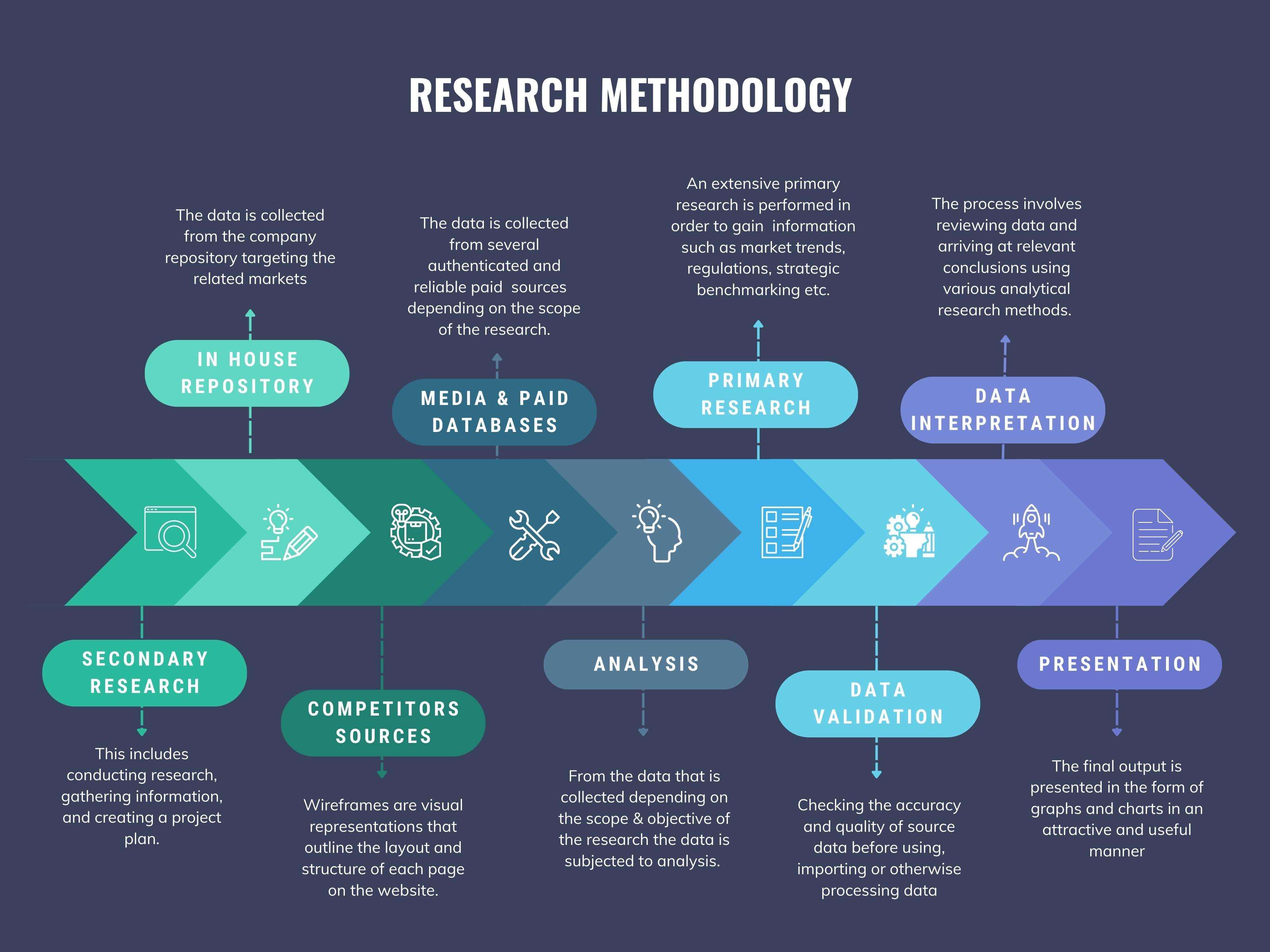
We at ‘Stratistics’ opt for an extensive research approach which involves data mining, data validation, and data analysis. The various research sources include in-house repository, secondary research, competitor’s sources, social media research, client internal data, and primary research.
Our team of analysts prefers the most reliable and authenticated data sources in order to perform the comprehensive literature search. With access to most of the authenticated data bases our team highly considers the best mix of information through various sources to obtain extensive and accurate analysis.
Each report takes an average time of a month and a team of 4 industry analysts. The time may vary depending on the scope and data availability of the desired market report. The various parameters used in the market assessment are standardized in order to enhance the data accuracy.
Data Mining
The data is collected from several authenticated, reliable, paid and unpaid sources and is filtered depending on the scope & objective of the research. Our reports repository acts as an added advantage in this procedure. Data gathering from the raw material suppliers, distributors and the manufacturers is performed on a regular basis, this helps in the comprehensive understanding of the products value chain. Apart from the above mentioned sources the data is also collected from the industry consultants to ensure the objective of the study is in the right direction.
Market trends such as technological advancements, regulatory affairs, market dynamics (Drivers, Restraints, Opportunities and Challenges) are obtained from scientific journals, market related national & international associations and organizations.
Data Analysis
From the data that is collected depending on the scope & objective of the research the data is subjected for the analysis. The critical steps that we follow for the data analysis include:
- Product Lifecycle Analysis
- Competitor analysis
- Risk analysis
- Porters Analysis
- PESTEL Analysis
- SWOT Analysis
The data engineering is performed by the core industry experts considering both the Marketing Mix Modeling and the Demand Forecasting. The marketing mix modeling makes use of multiple-regression techniques to predict the optimal mix of marketing variables. Regression factor is based on a number of variables and how they relate to an outcome such as sales or profits.
Data Validation
The data validation is performed by the exhaustive primary research from the expert interviews. This includes telephonic interviews, focus groups, face to face interviews, and questionnaires to validate our research from all aspects. The industry experts we approach come from the leading firms, involved in the supply chain ranging from the suppliers, distributors to the manufacturers and consumers so as to ensure an unbiased analysis.
We are in touch with more than 15,000 industry experts with the right mix of consultants, CEO's, presidents, vice presidents, managers, experts from both supply side and demand side, executives and so on.
The data validation involves the primary research from the industry experts belonging to:
- Leading Companies
- Suppliers & Distributors
- Manufacturers
- Consumers
- Industry/Strategic Consultants
Apart from the data validation the primary research also helps in performing the fill gap research, i.e. providing solutions for the unmet needs of the research which helps in enhancing the reports quality.
For more details about research methodology, kindly write to us at info@strategymrc.com
Frequently Asked Questions
In case of any queries regarding this report, you can contact the customer service by filing the “Inquiry Before Buy” form available on the right hand side. You may also contact us through email: info@strategymrc.com or phone: +1-301-202-5929
Yes, the samples are available for all the published reports. You can request them by filling the “Request Sample” option available in this page.
Yes, you can request a sample with your specific requirements. All the customized samples will be provided as per the requirement with the real data masked.
All our reports are available in Digital PDF format. In case if you require them in any other formats, such as PPT, Excel etc you can submit a request through “Inquiry Before Buy” form available on the right hand side. You may also contact us through email: info@strategymrc.com or phone: +1-301-202-5929
We offer a free 15% customization with every purchase. This requirement can be fulfilled for both pre and post sale. You may send your customization requirements through email at info@strategymrc.com or call us on +1-301-202-5929.
We have 3 different licensing options available in electronic format.
- Single User Licence: Allows one person, typically the buyer, to have access to the ordered product. The ordered product cannot be distributed to anyone else.
- 2-5 User Licence: Allows the ordered product to be shared among a maximum of 5 people within your organisation.
- Corporate License: Allows the product to be shared among all employees of your organisation regardless of their geographical location.
All our reports are typically be emailed to you as an attachment.
To order any available report you need to register on our website. The payment can be made either through CCAvenue or PayPal payments gateways which accept all international cards.
We extend our support to 6 months post sale. A post sale customization is also provided to cover your unmet needs in the report.
Request Customization
We offer complimentary customization of up to 15% with every purchase. To share your customization requirements, feel free to email us at info@strategymrc.com or call us on +1-301-202-5929. .
Please Note: Customization within the 15% threshold is entirely free of charge. If your request exceeds this limit, we will conduct a feasibility assessment. Following that, a detailed quote and timeline will be provided.
WHY CHOOSE US ?

Assured Quality
Best in class reports with high standard of research integrity

24X7 Research Support
Continuous support to ensure the best customer experience.

Free Customization
Adding more values to your product of interest.

Safe & Secure Access
Providing a secured environment for all online transactions.

Trusted by 600+ Brands
Serving the most reputed brands across the world.