
2d Materials Market
2D Materials Market Forecasts to 2032 – Global Analysis By Form (Sheets/Films, Dispersions, Powders and Suspensions), Material Type (Graphene, Hexagonal Boron Nitride, Transition Metal Dichalcogenides, Black Phosphorus, Germanene, Silicene, MXenes and Other Material Types), Production Method, Application, End User, and By Geography

According to Stratistics MRC, the Global 2D Materials Market is accounted for $2.60 billion in 2025 and is expected to reach $3.47 billion by 2032 growing at a CAGR of 4.2% during the forecast period. 2D materials are crystalline substances with a single layer of atoms, exhibiting unique electrical, mechanical, and optical properties. Their atomic-scale thickness enables high surface area and exceptional conductivity, making them valuable for electronics, sensors, energy storage, and photonics. These materials are revolutionizing advanced technologies due to their tunable properties and nanoscale integration potential.
Market Dynamics:
Driver:
Rising demand for miniaturized and flexible electronics
The evolution of consumer electronics, where smaller, lighter, and more adaptable devices are prioritized, necessitates advanced materials offering superior performance beyond traditional silicon. The exceptional electrical conductivity, flexibility, and atomic-scale thickness of 2D materials, such as graphene, enable the fabrication of highly efficient and compact components suitable for next-generation wearables, foldable displays, and IoT devices. Moreover, this trend is further bolstered by ongoing research in quantum computing and integrated circuits, which rely increasingly on 2D materials for innovative device architectures.
Restraint:
Lack of standardization and commercial-grade quality
The lack of standardization and consistent commercial-grade quality in 2D materials manufacturing hinders the market's broader adoption. Many industries require processes that guarantee uniformity, stability, and seamless integration into existing supply chains, which is challenged by variation in layer thickness, defect densities, and inconsistent quality between production batches. This uncertainty makes downstream manufacturers hesitant, as reliable product performance remains difficult to guarantee on a large scale. Furthermore, the absence of universally accepted regulatory standards for 2D materials exacerbates the reluctance, especially for mission-critical applications in electronics or healthcare, slowing widespread commercialization.
Opportunity:
Growth in wearable and biomedical devices
Expanding applications in wearable and biomedical devices present significant opportunities. These ultrathin, flexible materials are uniquely positioned to enable the creation of sensitive, lightweight sensors and new medical devices that demand high electrical conductivity and biocompatibility. The ongoing convergence of electronics and healthcare in wearable health monitoring and implantable sensors leverages the superior properties of 2D materials, particularly graphene, to enhance device performance, sensitivity, and patient comfort. Additionally, innovative biomedical applications such as biosensors and interfaces for neural communication are benefiting from the remarkable versatility and scalability of various 2D materials, opening pathways to smarter and more personalized healthcare solutions.
Threat:
High production costs and scalability challenges
The sophisticated techniques required, such as chemical vapor deposition and mechanical exfoliation, demand significant capital investment and technical know-how, resulting in elevated unit costs and difficulties in achieving industrial-scale output. Variations in material quality and limited throughput hinder the transition from laboratory research to high-volume manufacturing. Furthermore, competitive pressures from alternative advanced materials, alongside technology and intellectual property hurdles, impede the rapid scale-up needed for mass-market penetration, thus slowing the pace of commercialization and broader application of 2D materials.
Covid-19 Impact:
The Covid-19 pandemic exerted a multifaceted influence on the 2D materials market. Disruptions in global supply chains, delayed research projects, and restricted laboratory access led to interruptions in new development and the timely roll-out of innovative materials. Many companies realigned priorities towards essential applications, which impacted innovation speed. However, the pandemic also emphasized the importance of advanced materials for enabling technologies in remote healthcare, monitoring, and communication. As the sector adapted, renewed interest emerged in applications such as medical sensors and antiviral coatings, showcasing the resilience and potential of 2D materials in supporting post-pandemic recovery.
The graphene segment is expected to be the largest during the forecast period
The graphene segment is expected to account for the largest market share during the forecast period due to its outstanding conductivity, mechanical strength, and transparency. These properties make it exceptionally versatile for use in transistors, sensors, transparent electrodes, and composite materials, ensuring broad appeal across electronics, energy storage, and advanced composites. Moreover, substantial ongoing research and a growing number of commercial applications continue to solidify graphene’s preeminent position. Producers are investing in expanding supply capabilities, integrating graphene into manufacturing, and developing new industrial uses, all contributing to its dominance.
The sheets/films segment is expected to have the highest CAGR during the forecast period
Over the forecast period, the sheets/films segment is predicted to witness the highest growth rate, driven by surging demand from electronics, optoelectronics, and flexible device manufacturers. These ultrathin layers, including monolayer and multilayer films, provide exceptional electrical, optical, and mechanical properties required in flexible sensors, displays, and next-generation transistors. Furthermore, innovation in deposition techniques and enhanced scalability of sheet and film production methods are facilitating adoption in mass-market applications. The push for wearable technology, responsive displays, and flexible solar modules ensures sustained, rapid expansion of the segment.
Region with largest share:
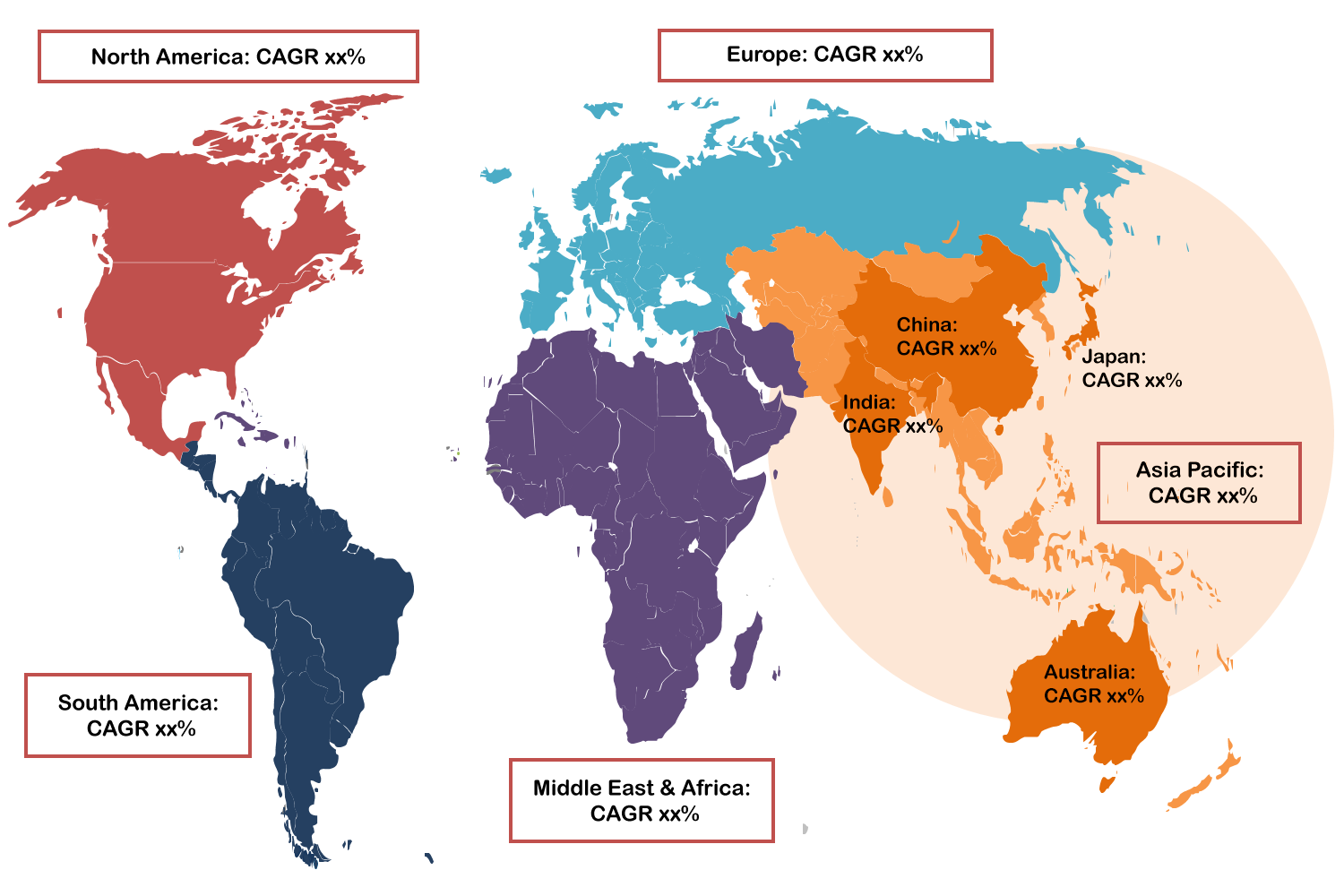
During the forecast period, the North America region is expected to hold the largest market share, benefiting from a robust R&D ecosystem, major investments in emerging technologies, and supportive regulatory policies encouraging innovation. The region’s established industrial base across sectors such as electronics, automotive, aerospace, and healthcare fosters rapid adoption and integration of 2D materials into commercial products. Governmental and private sector funding, combined with the presence of leading research institutions and innovative startups, reinforces North America’s leadership in the market, making it a cornerstone for technological advancements and commercialization of new 2D material applications.
Region with highest CAGR:
Over the forecast period, the Asia Pacific region is anticipated to exhibit the highest CAGR, underpinned by large-scale investment in high-tech manufacturing and a rapidly expanding semiconductor sector. Countries such as China, Japan, and South Korea are committing significant resources to R&D and industrialization, enhancing the region’s competitiveness in advanced materials. Growth in consumer electronics, energy storage, and the burgeoning wearable tech industry further propels adoption rates. Additionally, favorable government initiatives, increasing foreign direct investment, and a vibrant startup landscape are expected to drive sustained high growth in the Asia Pacific region.
Key players in the market
Some of the key players in 2D Materials Market include 2D-TECH, Graphenea, Haydale Graphene Industries, Versarien, ACS Material LLC, Nitronix Nanotechnology Corporation, Thomas Swan & Co. Ltd., Garmor, Shanghai Viff International Trade Co., Ltd, planarTECH LLC, 2D fab, NanoXplore Inc., Cabot Corporation, Smart-elements GmbH, Ossila Ltd, American Elements, and BASF SE.
Key Developments:
In July 2025, Levidian has agreed a new partnership with global graphene R&D firm planarTECH to accelerate graphene adoption in Asia. The planarTECH team already has a manufacturing base and established network of customers and research partners in region and will be launching Levidian’s LOOP technology to the Asian market at the ‘Nano Korea 2025’ 2D Materials Seminar, to be held on July 2nd at KINTEX in Ilsan, South Korea.
In January 2025, Haydale has been awarded £258,547 by Innovate UK for a 42-month project to develop innovative imaging techniques to characterise 2D materials. The goal is to create standardised, visual-reference-based characterisation methods to speed up industrial materials selection. Haydale will contribute its materials and expertise to this Horizon Europe research initiative.
In January 2025, Premier Graphene Inc. has announced significant progress in their presentation preparations for Mexico's armed forces and security forces. The company aims to secure major contracts through a comprehensive presentation featuring contributions from multiple partners.
Forms Covered:
• Sheets/Films
• Dispersions
• Powders
• Suspensions
Material Types:
• Graphene
• Hexagonal Boron Nitride (h-BN)
• Transition Metal Dichalcogenides (TMDs)
• Black Phosphorus
• Germanene
• Silicene
• MXenes
• Other Material Types
Production Methods Covered:
• Mechanical Exfoliation
• Chemical Vapor Deposition (CVD)
• Liquid Phase Exfoliation
• Epitaxial Growth
• Other Production Methods
Applications Covered:
• Coatings & Composites
• Electronics & Optoelectronics
• Energy Storage
• Sensors
• Biomedical
• Wastewater Treatment
• Catalysis
• Other Applications
End Users Covered:
• Electronics & Semiconductor
• Energy
• Automotive & Aerospace
• Healthcare & Pharmaceuticals
• Other End Users
Regions Covered:
• North America
o US
o Canada
o Mexico
• Europe
o Germany
o UK
o Italy
o France
o Spain
o Rest of Europe
• Asia Pacific
o Japan
o China
o India
o Australia
o New Zealand
o South Korea
o Rest of Asia Pacific
• South America
o Argentina
o Brazil
o Chile
o Rest of South America
• Middle East & Africa
o Saudi Arabia
o UAE
o Qatar
o South Africa
o Rest of Middle East & Africa
What our report offers:
- Market share assessments for the regional and country-level segments
- Strategic recommendations for the new entrants
- Covers Market data for the years 2024, 2025, 2026, 2028, and 2032
- Market Trends (Drivers, Constraints, Opportunities, Threats, Challenges, Investment Opportunities, and recommendations)
- Strategic recommendations in key business segments based on the market estimations
- Competitive landscaping mapping the key common trends
- Company profiling with detailed strategies, financials, and recent developments
- Supply chain trends mapping the latest technological advancements
Free Customization Offerings:
All the customers of this report will be entitled to receive one of the following free customization options:
• Company Profiling
o Comprehensive profiling of additional market players (up to 3)
o SWOT Analysis of key players (up to 3)
• Regional Segmentation
o Market estimations, Forecasts and CAGR of any prominent country as per the client's interest (Note: Depends on feasibility check)
• Competitive Benchmarking
o Benchmarking of key players based on product portfolio, geographical presence, and strategic alliances
Table of Contents
1 Executive Summary
2 Preface
2.1 Abstract
2.2 Stake Holders
2.3 Research Scope
2.4 Research Methodology
2.4.1 Data Mining
2.4.2 Data Analysis
2.4.3 Data Validation
2.4.4 Research Approach
2.5 Research Sources
2.5.1 Primary Research Sources
2.5.2 Secondary Research Sources
2.5.3 Assumptions
3 Market Trend Analysis
3.1 Introduction
3.2 Drivers
3.3 Restraints
3.4 Opportunities
3.5 Threats
3.6 Application Analysis
3.7 End User Analysis
3.8 Emerging Markets
3.9 Impact of Covid-19
4 Porters Five Force Analysis
4.1 Bargaining power of suppliers
4.2 Bargaining power of buyers
4.3 Threat of substitutes
4.4 Threat of new entrants
4.5 Competitive rivalry
5 Global 2D Materials Market, By Form
5.1 Introduction
5.2 Sheets/Films
5.3 Dispersions
5.4 Powders
5.5 Suspensions
6 Global 2D Materials Market, By Material Type
6.1 Introduction
6.2 Graphene
6.3 Hexagonal Boron Nitride (h-BN)
6.4 Transition Metal Dichalcogenides (TMDs)
6.5 Black Phosphorus
6.6 Germanene
6.7 Silicene
6.8 MXenes
6.9 Other Material Types
7 Global 2D Materials Market, By Production Method
7.1 Introduction
7.2 Mechanical Exfoliation
7.3 Chemical Vapor Deposition (CVD)
7.4 Liquid Phase Exfoliation
7.5 Epitaxial Growth
7.6 Other Production Methods
8 Global 2D Materials Market, By Application
8.1 Introduction
8.2 Coatings & Composites
8.3 Electronics & Optoelectronics
8.4 Energy Storage
8.5 Sensors
8.6 Biomedical
8.7 Wastewater Treatment
8.8 Catalysis
8.9 Other Applications
9 Global 2D Materials Market, By End User
9.1 Introduction
9.2 Electronics & Semiconductor
9.3 Energy
9.4 Automotive & Aerospace
9.5 Healthcare & Pharmaceuticals
9.6 Other End Users
10 Global 2D Materials Market, By Geography
10.1 Introduction
10.2 North America
10.2.1 US
10.2.2 Canada
10.2.3 Mexico
10.3 Europe
10.3.1 Germany
10.3.2 UK
10.3.3 Italy
10.3.4 France
10.3.5 Spain
10.3.6 Rest of Europe
10.4 Asia Pacific
10.4.1 Japan
10.4.2 China
10.4.3 India
10.4.4 Australia
10.4.5 New Zealand
10.4.6 South Korea
10.4.7 Rest of Asia Pacific
10.5 South America
10.5.1 Argentina
10.5.2 Brazil
10.5.3 Chile
10.5.4 Rest of South America
10.6 Middle East & Africa
10.6.1 Saudi Arabia
10.6.2 UAE
10.6.3 Qatar
10.6.4 South Africa
10.6.5 Rest of Middle East & Africa
11 Key Developments
11.1 Agreements, Partnerships, Collaborations and Joint Ventures
11.2 Acquisitions & Mergers
11.3 New Product Launch
11.4 Expansions
11.5 Other Key Strategies
12 Company Profiling
12.1 2D-TECH
12.2 Graphenea
12.3 Haydale Graphene Industries
12.4 Versarien
12.5 ACS Material LLC
12.6 Nitronix Nanotechnology Corporation
12.7 Thomas Swan & Co. Ltd.
12.8 Garmor
12.9 Shanghai Viff International Trade Co., Ltd
12.10 planarTECH LLC
12.11 2D fab
12.12 NanoXplore Inc.
12.13 Cabot Corporation
12.14 Smart-elements GmbH
12.15 Ossila Ltd
12.16 American Elements
12.17 BASF SE
List of Tables
1 Global 2D Materials Market Outlook, By Region (2024-2032) ($MN)
2 Global 2D Materials Market Outlook, By Form (2024-2032) ($MN)
3 Global 2D Materials Market Outlook, By Sheets/Films (2024-2032) ($MN)
4 Global 2D Materials Market Outlook, By Dispersions (2024-2032) ($MN)
5 Global 2D Materials Market Outlook, By Powders (2024-2032) ($MN)
6 Global 2D Materials Market Outlook, By Suspensions (2024-2032) ($MN)
7 Global 2D Materials Market Outlook, By Material Type (2024-2032) ($MN)
8 Global 2D Materials Market Outlook, By Graphene (2024-2032) ($MN)
9 Global 2D Materials Market Outlook, By Hexagonal Boron Nitride (h-BN) (2024-2032) ($MN)
10 Global 2D Materials Market Outlook, By Transition Metal Dichalcogenides (TMDs) (2024-2032) ($MN)
11 Global 2D Materials Market Outlook, By Black Phosphorus (2024-2032) ($MN)
12 Global 2D Materials Market Outlook, By Germanene (2024-2032) ($MN)
13 Global 2D Materials Market Outlook, By Silicene (2024-2032) ($MN)
14 Global 2D Materials Market Outlook, By MXenes (2024-2032) ($MN)
15 Global 2D Materials Market Outlook, By Other Material Types (2024-2032) ($MN)
16 Global 2D Materials Market Outlook, By Production Method (2024-2032) ($MN)
17 Global 2D Materials Market Outlook, By Mechanical Exfoliation (2024-2032) ($MN)
18 Global 2D Materials Market Outlook, By Chemical Vapor Deposition (CVD) (2024-2032) ($MN)
19 Global 2D Materials Market Outlook, By Liquid Phase Exfoliation (2024-2032) ($MN)
20 Global 2D Materials Market Outlook, By Epitaxial Growth (2024-2032) ($MN)
21 Global 2D Materials Market Outlook, By Other Production Methods (2024-2032) ($MN)
22 Global 2D Materials Market Outlook, By Application (2024-2032) ($MN)
23 Global 2D Materials Market Outlook, By Coatings & Composites (2024-2032) ($MN)
24 Global 2D Materials Market Outlook, By Electronics & Optoelectronics (2024-2032) ($MN)
25 Global 2D Materials Market Outlook, By Energy Storage (2024-2032) ($MN)
26 Global 2D Materials Market Outlook, By Sensors (2024-2032) ($MN)
27 Global 2D Materials Market Outlook, By Biomedical (2024-2032) ($MN)
28 Global 2D Materials Market Outlook, By Wastewater Treatment (2024-2032) ($MN)
29 Global 2D Materials Market Outlook, By Catalysis (2024-2032) ($MN)
30 Global 2D Materials Market Outlook, By Other Applications (2024-2032) ($MN)
31 Global 2D Materials Market Outlook, By End User (2024-2032) ($MN)
32 Global 2D Materials Market Outlook, By Electronics & Semiconductor (2024-2032) ($MN)
33 Global 2D Materials Market Outlook, By Energy (2024-2032) ($MN)
34 Global 2D Materials Market Outlook, By Automotive & Aerospace (2024-2032) ($MN)
35 Global 2D Materials Market Outlook, By Healthcare & Pharmaceuticals (2024-2032) ($MN)
36 Global 2D Materials Market Outlook, By Other End Users (2024-2032) ($MN)
Note: Tables for North America, Europe, APAC, South America, and Middle East & Africa Regions are also represented in the same manner as above.
List of Figures
RESEARCH METHODOLOGY

We at ‘Stratistics’ opt for an extensive research approach which involves data mining, data validation, and data analysis. The various research sources include in-house repository, secondary research, competitor’s sources, social media research, client internal data, and primary research.
Our team of analysts prefers the most reliable and authenticated data sources in order to perform the comprehensive literature search. With access to most of the authenticated data bases our team highly considers the best mix of information through various sources to obtain extensive and accurate analysis.
Each report takes an average time of a month and a team of 4 industry analysts. The time may vary depending on the scope and data availability of the desired market report. The various parameters used in the market assessment are standardized in order to enhance the data accuracy.
Data Mining
The data is collected from several authenticated, reliable, paid and unpaid sources and is filtered depending on the scope & objective of the research. Our reports repository acts as an added advantage in this procedure. Data gathering from the raw material suppliers, distributors and the manufacturers is performed on a regular basis, this helps in the comprehensive understanding of the products value chain. Apart from the above mentioned sources the data is also collected from the industry consultants to ensure the objective of the study is in the right direction.
Market trends such as technological advancements, regulatory affairs, market dynamics (Drivers, Restraints, Opportunities and Challenges) are obtained from scientific journals, market related national & international associations and organizations.
Data Analysis
From the data that is collected depending on the scope & objective of the research the data is subjected for the analysis. The critical steps that we follow for the data analysis include:
- Product Lifecycle Analysis
- Competitor analysis
- Risk analysis
- Porters Analysis
- PESTEL Analysis
- SWOT Analysis
The data engineering is performed by the core industry experts considering both the Marketing Mix Modeling and the Demand Forecasting. The marketing mix modeling makes use of multiple-regression techniques to predict the optimal mix of marketing variables. Regression factor is based on a number of variables and how they relate to an outcome such as sales or profits.
Data Validation
The data validation is performed by the exhaustive primary research from the expert interviews. This includes telephonic interviews, focus groups, face to face interviews, and questionnaires to validate our research from all aspects. The industry experts we approach come from the leading firms, involved in the supply chain ranging from the suppliers, distributors to the manufacturers and consumers so as to ensure an unbiased analysis.
We are in touch with more than 15,000 industry experts with the right mix of consultants, CEO's, presidents, vice presidents, managers, experts from both supply side and demand side, executives and so on.
The data validation involves the primary research from the industry experts belonging to:
- Leading Companies
- Suppliers & Distributors
- Manufacturers
- Consumers
- Industry/Strategic Consultants
Apart from the data validation the primary research also helps in performing the fill gap research, i.e. providing solutions for the unmet needs of the research which helps in enhancing the reports quality.
For more details about research methodology, kindly write to us at info@strategymrc.com
Frequently Asked Questions
In case of any queries regarding this report, you can contact the customer service by filing the “Inquiry Before Buy” form available on the right hand side. You may also contact us through email: info@strategymrc.com or phone: +1-301-202-5929
Yes, the samples are available for all the published reports. You can request them by filling the “Request Sample” option available in this page.
Yes, you can request a sample with your specific requirements. All the customized samples will be provided as per the requirement with the real data masked.
All our reports are available in Digital PDF format. In case if you require them in any other formats, such as PPT, Excel etc you can submit a request through “Inquiry Before Buy” form available on the right hand side. You may also contact us through email: info@strategymrc.com or phone: +1-301-202-5929
We offer a free 15% customization with every purchase. This requirement can be fulfilled for both pre and post sale. You may send your customization requirements through email at info@strategymrc.com or call us on +1-301-202-5929.
We have 3 different licensing options available in electronic format.
- Single User Licence: Allows one person, typically the buyer, to have access to the ordered product. The ordered product cannot be distributed to anyone else.
- 2-5 User Licence: Allows the ordered product to be shared among a maximum of 5 people within your organisation.
- Corporate License: Allows the product to be shared among all employees of your organisation regardless of their geographical location.
All our reports are typically be emailed to you as an attachment.
To order any available report you need to register on our website. The payment can be made either through CCAvenue or PayPal payments gateways which accept all international cards.
We extend our support to 6 months post sale. A post sale customization is also provided to cover your unmet needs in the report.
Request Customization
We offer complimentary customization of up to 15% with every purchase. To share your customization requirements, feel free to email us at info@strategymrc.com or call us on +1-301-202-5929. .
Please Note: Customization within the 15% threshold is entirely free of charge. If your request exceeds this limit, we will conduct a feasibility assessment. Following that, a detailed quote and timeline will be provided.
WHY CHOOSE US ?

Assured Quality
Best in class reports with high standard of research integrity

24X7 Research Support
Continuous support to ensure the best customer experience.

Free Customization
Adding more values to your product of interest.

Safe & Secure Access
Providing a secured environment for all online transactions.

Trusted by 600+ Brands
Serving the most reputed brands across the world.
