
Artificial Photosynthesis Catalysts Market
Artificial Photosynthesis Catalysts Market Forecasts to 2032 – Global Analysis By Catalyst Type (Molecular Catalysts, Heterogeneous Catalysts and Biological Catalysts), Technology (Photoelectrochemical Cells, Photocatalytic Systems, Hybrid & Integrated Systems and Other Technologies), Application, End User and By Geography

According to Stratistics MRC, the Global Artificial Photosynthesis Catalysts Market is accounted for $136.74 million in 2025 and is expected to reach $361.52 million by 2032 growing at a CAGR of 14.9% during the forecast period. Artificial photosynthesis catalysts mimic natural photosynthesis to convert sunlight, water, and carbon dioxide into fuels or valuable chemicals. These catalysts, often based on metal complexes or semiconductors, enable efficient light absorption, charge separation, and catalytic reactions under mild conditions. Applications target sustainable hydrogen production, carbon dioxide reduction, and renewable energy storage. By advancing catalyst efficiency, stability, and scalability, artificial photosynthesis technologies aim to reduce reliance on fossil fuels, lower greenhouse gas emissions, and support a circular carbon economy through efficient solar-to-chemical energy conversion systems.
According to Science Advances journal, published in 2024, a Ni-O-Ag photothermal catalyst enables 10³-m² artificial photosynthesis with greater than 17% solar-to-chemical energy conversion efficiency.
Market Dynamics:
Driver:
Government R&D funding for hydrogen and CO₂ conversion
Government R&D funding for hydrogen and CO₂ conversion is a primary market catalyst. Substantial public investments from initiatives like the U.S. Department of Energy's H2@Scale and the European Green Deal are de-risking early-stage technology development. This funding enables foundational research into novel electrocatalysts and molecular assemblies, accelerating the path from laboratory discovery to pilot-scale demonstrations. By subsidizing high-cost research, governments are effectively lowering the barrier to entry for private entities and stimulating innovation across the value chain. This financial support is crucial for overcoming initial techno-economic hurdles and fostering a competitive landscape dedicated to advancing artificial photosynthesis technologies for sustainable energy solutions.
Restraint:
Low conversion efficiency and scalability
Many catalyst systems, particularly those utilizing precious metals, suffer from inadequate solar-to-fuel (STF) efficiency rates that remain non-competitive with incumbent energy sources. Moreover, transitioning these systems from small-scale laboratory environments to industrial-scale operations introduces profound engineering challenges related to catalyst durability, reactor design, and mass transport. The inability to consistently achieve long-term stability and high performance at scale creates a major techno-economic barrier, deterring large-scale investment and postponing commercial viability, thus restraining overall market growth and adoption timelines.
Opportunity:
Green hydrogen and synthetic fuel production
As hard-to-abate industrial and transportation sectors seek decarbonization solutions, artificial photosynthesis offers a pathway to produce carbon-neutral fuels directly from sunlight, water, and CO₂. This technology can serve as a cornerstone for a sustainable circular carbon economy, enabling the production of e-fuels and green ammonia. Furthermore, it provides a mechanism for large-scale energy storage, addressing the intermittency of renewable sources like solar and wind. This position AP catalysts as a critical enabler for achieving deep decarbonization and energy security goals globally.
Threat:
Uncertain regulatory frameworks for synthetic fuels
The absence of universally accepted definitions, sustainability criteria, and certification mechanisms for electrofuels (e-fuels) creates investment ambiguity. Potential shifts in political priorities can abruptly alter subsidy structures or carbon pricing, undermining long-term project economics. This regulatory unpredictability discourages capital-intensive commitments from energy majors and investors who require stable, long-term policy signals to justify funding large-scale demonstration plants. Without clear and consistent regulations that recognize the value of synthetic fuels, market growth could be significantly hampered.
Covid-19 Impact:
The COVID-19 pandemic initially disrupted the artificial photosynthesis catalysts market, causing supply chain delays for critical raw materials and halting laboratory research due to lockdowns. Government funding was temporarily redirected towards immediate healthcare crises, slowing down new grant approvals for energy projects. However, the pandemic also acted as a catalyst, underscoring the need for resilient and sustainable energy systems. In its latter stages, it accelerated the global commitment to a green recovery, leading to renewed and even enhanced policy support for clean energy technologies, including artificial photosynthesis, as part of broader economic stimulus packages.
The hydrogen (H2) production segment is expected to be the largest during the forecast period
The hydrogen (H₂) production segment is expected to account for the largest market share during the forecast period due to the overwhelming global policy focus and increasing investment in green hydrogen as a cornerstone of decarbonization. Unlike biological or chemical reduction pathways, artificial photosynthesis for H₂ production via water splitting offers a direct, single-step process using sunlight, enhancing its appeal. The segment's dominance is driven by its application potential in refining, ammonia production, and as a zero-carbon fuel for industries and fuel cell electric vehicles, making it the most immediate and commercially relevant output for AP systems.
The photoelectrochemical (PEC) cells segment is expected to have the highest CAGR during the forecast period
Over the forecast period, the photoelectrochemical (PEC) cells segment is predicted to witness the highest growth rate. This accelerated growth is attributed to intensive R&D focused on improving the efficiency and durability of semiconductor-electrocatalyst interfaces. PEC systems offer a potentially simpler and more integrated architecture compared to coupled photovoltaic-electrolyzer (PV-E) systems, which could lead to lower levelized costs for hydrogen production in the long term. Advances in novel light-absorbing materials and protective coatings that mitigate photocorrosion are key factors driving innovation and investment in this particularly promising technological approach.
Region with largest share:
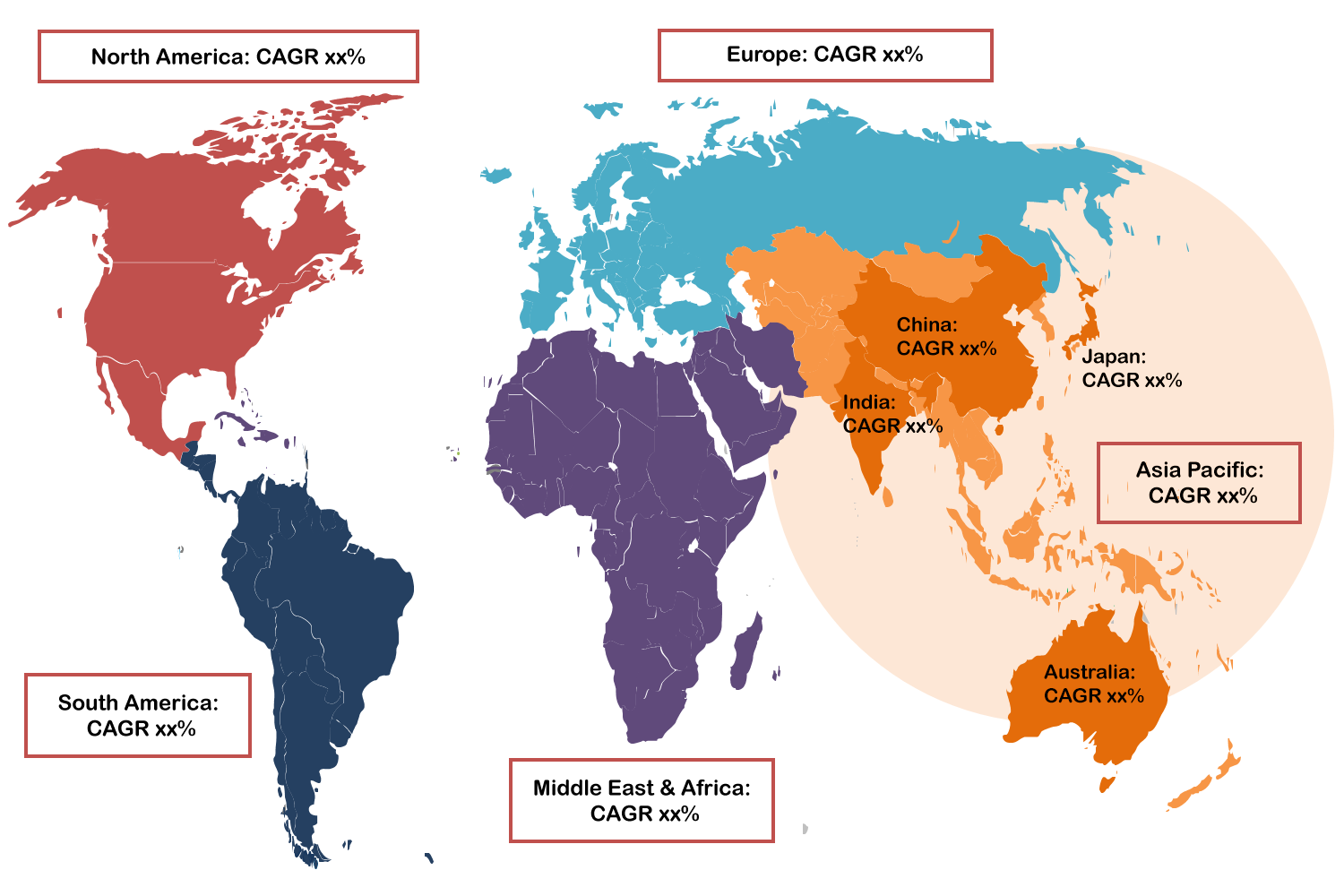
During the forecast period, the North America region is expected to hold the largest market share. This leadership is predicated on robust federal and private R&D funding from institutions like the U.S. Department of Energy and its National Laboratories, which are at the forefront of catalyst discovery and device engineering. Furthermore, a strong presence of leading academic research institutions and technology startups fosters a vibrant innovation ecosystem. Supportive policies and early adoption of hydrogen strategies, particularly in the U.S. and Canada, create a conducive environment for the initial commercial deployment of artificial photosynthesis technologies.
Region with highest CAGR:
Over the forecast period, the Asia Pacific region is anticipated to exhibit the highest CAGR. This rapid growth is fueled by massive governmental investments in hydrogen economies, notably from Japan, South Korea, and China, all of which have national hydrogen strategies aiming for leadership in the future energy landscape. The region's strong manufacturing base for electronics and semiconductors provides a strategic advantage in producing critical components for photoelectrochemical systems. Additionally, the pressing need to address air pollution and ensure energy security for its large population drives aggressive adoption of innovative clean energy technologies like artificial photosynthesis.
Key players in the market
Some of the key players in Artificial Photosynthesis Catalysts Market include A-LEAF, BASF SE, Evonik Industries, ENGIE, Fujifilm, JX Advanced Metals Corporation, Mitsubishi Chemical Group, NTT Corporation, Panasonic Corporation, Siemens Energy, SunHydrogen, Sunfire GmbH, Toshiba Corporation, Toyota Central R&D Labs., Inc., and Twelve.
Key Developments:
In November 2024, BASF announced plans to build a first-of-its-kind plant in Ludwigshafen to produce catalysts using its X3D® shaping technology. This initiative aims to enhance catalyst performance and efficiency, supporting green transformation projects, including artificial photosynthesis applications.
In October 2024, Mitsubishi Chemical Group Corporation's KAITEKI Report emphasized the company's efforts in utilizing catalytic technology for artificial photosynthesis. The report outlines the development of various inorganic materials contributing to a sustainable society through CO₂ and methane separation and recovery processes.
In February 2022, JX Advanced Metals joined the Japan Technological Research Association of Artificial Photosynthetic Chemical Process (ARPChem) Phase 2 activities. The company is developing photocatalysts for artificial photosynthesis, focusing on hydrogen generation and CO₂ reduction. They are conducting joint research with Shinshu University and contributing high purity metals like tantalum and titanium for catalyst development.
Product Types Covered:
• Molecular Catalysts (Homogeneous)
• Heterogeneous Catalysts
• Biological Catalysts (Bio-Hybrid Systems)
Technologies Covered:
• Photoelectrochemical (PEC) Cells
• Photocatalytic (PC) Systems (Suspension-based)
• Hybrid & Integrated Systems
• Other Technologies
Applications Covered:
• Hydrogen (H2) Production
• Carbon-Based Fuels
• Chemicals and Feedstocks
End Users Covered:
• Energy (Fuel Production Companies)
• Chemicals and Petrochemicals
• Research and Development Institutions
• Other End Users
Regions Covered:
• North America
o US
o Canada
o Mexico
• Europe
o Germany
o UK
o Italy
o France
o Spain
o Rest of Europe
• Asia Pacific
o Japan
o China
o India
o Australia
o New Zealand
o South Korea
o Rest of Asia Pacific
• South America
o Argentina
o Brazil
o Chile
o Rest of South America
• Middle East & Africa
o Saudi Arabia
o UAE
o Qatar
o South Africa
o Rest of Middle East & Africa
What our report offers:
- Market share assessments for the regional and country-level segments
- Strategic recommendations for the new entrants
- Covers Market data for the years 2024, 2025, 2026, 2028, and 2032
- Market Trends (Drivers, Constraints, Opportunities, Threats, Challenges, Investment Opportunities, and recommendations)
- Strategic recommendations in key business segments based on the market estimations
- Competitive landscaping mapping the key common trends
- Company profiling with detailed strategies, financials, and recent developments
- Supply chain trends mapping the latest technological advancements
Free Customization Offerings:
All the customers of this report will be entitled to receive one of the following free customization options:
• Company Profiling
o Comprehensive profiling of additional market players (up to 3)
o SWOT Analysis of key players (up to 3)
• Regional Segmentation
o Market estimations, Forecasts and CAGR of any prominent country as per the client's interest (Note: Depends on feasibility check)
• Competitive Benchmarking
o Benchmarking of key players based on product portfolio, geographical presence, and strategic alliances
Table of Contents
1 Executive Summary
2 Preface
2.1 Abstract
2.2 Stake Holders
2.3 Research Scope
2.4 Research Methodology
2.4.1 Data Mining
2.4.2 Data Analysis
2.4.3 Data Validation
2.4.4 Research Approach
2.5 Research Sources
2.5.1 Primary Research Sources
2.5.2 Secondary Research Sources
2.5.3 Assumptions
3 Market Trend Analysis
3.1 Introduction
3.2 Drivers
3.3 Restraints
3.4 Opportunities
3.5 Threats
3.6 Technology Analysis
3.7 Application Analysis
3.8 End User Analysis
3.9 Emerging Markets
3.10 Impact of Covid-19
4 Porters Five Force Analysis
4.1 Bargaining power of suppliers
4.2 Bargaining power of buyers
4.3 Threat of substitutes
4.4 Threat of new entrants
4.5 Competitive rivalry
5 Global Artificial Photosynthesis Catalysts Market, By Catalyst Type
5.1 Introduction
5.2 Molecular Catalysts (Homogeneous)
5.2.1 Metal Complexes
5.2.2 Organic Catalysts / Organocatalysts
5.3 Heterogeneous Catalysts
5.3.1 Metal Oxide Catalysts
5.3.2 Non-Oxide Semiconductor Catalysts
5.3.3 Metal-Organic Frameworks (MOFs)
5.3.4 Carbon-Based Catalysts
5.3.5 Co-catalysts and Co-catalyst Materials
5.4 Biological Catalysts (Bio-Hybrid Systems)
6 Global Artificial Photosynthesis Catalysts Market, By Technology
6.1 Introduction
6.2 Photoelectrochemical (PEC) Cells
6.3 Photocatalytic (PC) Systems (Suspension-based)
6.4 Hybrid & Integrated Systems
6.5 Other Technologies
7 Global Artificial Photosynthesis Catalysts Market, By Application
7.1 Introduction
7.2 Hydrogen (H2) Production
7.3 Carbon-Based Fuels
7.3.1 Hydrocarbons
7.3.2 Alcohols
7.3.3 Syngas (CO + H2)
7.4 Chemicals and Feedstocks
8 Global Artificial Photosynthesis Catalysts Market, By End User
8.1 Introduction
8.2 Energy (Fuel Production Companies)
8.3 Chemicals and Petrochemicals
8.4 Research and Development Institutions
8.5 Other End Users
9 Global Artificial Photosynthesis Catalysts Market, By Geography
9.1 Introduction
9.2 North America
9.2.1 US
9.2.2 Canada
9.2.3 Mexico
9.3 Europe
9.3.1 Germany
9.3.2 UK
9.3.3 Italy
9.3.4 France
9.3.5 Spain
9.3.6 Rest of Europe
9.4 Asia Pacific
9.4.1 Japan
9.4.2 China
9.4.3 India
9.4.4 Australia
9.4.5 New Zealand
9.4.6 South Korea
9.4.7 Rest of Asia Pacific
9.5 South America
9.5.1 Argentina
9.5.2 Brazil
9.5.3 Chile
9.5.4 Rest of South America
9.6 Middle East & Africa
9.6.1 Saudi Arabia
9.6.2 UAE
9.6.3 Qatar
9.6.4 South Africa
9.6.5 Rest of Middle East & Africa
10 Key Developments
10.1 Agreements, Partnerships, Collaborations and Joint Ventures
10.2 Acquisitions & Mergers
10.3 New Product Launch
10.4 Expansions
10.5 Other Key Strategies
11 Company Profiling
11.1 A-LEAF
11.2 BASF SE
11.3 Evonik Industries
11.4 ENGIE
11.5 Fujifilm
11.6 JX Advanced Metals Corporation
11.7 Mitsubishi Chemical Group
11.8 NTT Corporation
11.9 Panasonic Corporation
11.10 Siemens Energy
11.11 SunHydrogen
11.12 Sunfire GmbH
11.13 Toshiba Corporation
11.14 Toyota Central R&D Labs., Inc.
11.15 Twelve
List of Tables
1 Global Artificial Photosynthesis Catalysts Market Outlook, By Region (2024-2032) ($MN)
2 Global Artificial Photosynthesis Catalysts Market Outlook, By Catalyst Type (2024-2032) ($MN)
3 Global Artificial Photosynthesis Catalysts Market Outlook, By Molecular Catalysts (Homogeneous) (2024-2032) ($MN)
4 Global Artificial Photosynthesis Catalysts Market Outlook, By Metal Complexes (2024-2032) ($MN)
5 Global Artificial Photosynthesis Catalysts Market Outlook, By Organic Catalysts / Organocatalysts (2024-2032) ($MN)
6 Global Artificial Photosynthesis Catalysts Market Outlook, By Heterogeneous Catalysts (2024-2032) ($MN)
7 Global Artificial Photosynthesis Catalysts Market Outlook, By Metal Oxide Catalysts (2024-2032) ($MN)
8 Global Artificial Photosynthesis Catalysts Market Outlook, By Non-Oxide Semiconductor Catalysts (2024-2032) ($MN)
9 Global Artificial Photosynthesis Catalysts Market Outlook, By Metal-Organic Frameworks (MOFs) (2024-2032) ($MN)
10 Global Artificial Photosynthesis Catalysts Market Outlook, By Carbon-Based Catalysts (2024-2032) ($MN)
11 Global Artificial Photosynthesis Catalysts Market Outlook, By Co-catalysts and Co-catalyst Materials (2024-2032) ($MN)
12 Global Artificial Photosynthesis Catalysts Market Outlook, By Biological Catalysts (Bio-Hybrid Systems) (2024-2032) ($MN)
13 Global Artificial Photosynthesis Catalysts Market Outlook, By Technology (2024-2032) ($MN)
14 Global Artificial Photosynthesis Catalysts Market Outlook, By Photoelectrochemical (PEC) Cells (2024-2032) ($MN)
15 Global Artificial Photosynthesis Catalysts Market Outlook, By Photocatalytic (PC) Systems (Suspension-based) (2024-2032) ($MN)
16 Global Artificial Photosynthesis Catalysts Market Outlook, By Hybrid & Integrated Systems (2024-2032) ($MN)
17 Global Artificial Photosynthesis Catalysts Market Outlook, By Other Technologies (2024-2032) ($MN)
18 Global Artificial Photosynthesis Catalysts Market Outlook, By Application (2024-2032) ($MN)
19 Global Artificial Photosynthesis Catalysts Market Outlook, By Hydrogen (H2) Production (2024-2032) ($MN)
20 Global Artificial Photosynthesis Catalysts Market Outlook, By Carbon-Based Fuels (2024-2032) ($MN)
21 Global Artificial Photosynthesis Catalysts Market Outlook, By Hydrocarbons (2024-2032) ($MN)
22 Global Artificial Photosynthesis Catalysts Market Outlook, By Alcohols (2024-2032) ($MN)
23 Global Artificial Photosynthesis Catalysts Market Outlook, By Syngas (CO + H2) (2024-2032) ($MN)
24 Global Artificial Photosynthesis Catalysts Market Outlook, By Chemicals and Feedstocks (2024-2032) ($MN)
25 Global Artificial Photosynthesis Catalysts Market Outlook, By End User (2024-2032) ($MN)
26 Global Artificial Photosynthesis Catalysts Market Outlook, By Energy (Fuel Production Companies) (2024-2032) ($MN)
27 Global Artificial Photosynthesis Catalysts Market Outlook, By Chemicals and Petrochemicals (2024-2032) ($MN)
28 Global Artificial Photosynthesis Catalysts Market Outlook, By Research and Development Institutions (2024-2032) ($MN)
29 Global Artificial Photosynthesis Catalysts Market Outlook, By Other End Users (2024-2032) ($MN)
Note: Tables for North America, Europe, APAC, South America, and Middle East & Africa Regions are also represented in the same manner as above.
List of Figures
RESEARCH METHODOLOGY

We at ‘Stratistics’ opt for an extensive research approach which involves data mining, data validation, and data analysis. The various research sources include in-house repository, secondary research, competitor’s sources, social media research, client internal data, and primary research.
Our team of analysts prefers the most reliable and authenticated data sources in order to perform the comprehensive literature search. With access to most of the authenticated data bases our team highly considers the best mix of information through various sources to obtain extensive and accurate analysis.
Each report takes an average time of a month and a team of 4 industry analysts. The time may vary depending on the scope and data availability of the desired market report. The various parameters used in the market assessment are standardized in order to enhance the data accuracy.
Data Mining
The data is collected from several authenticated, reliable, paid and unpaid sources and is filtered depending on the scope & objective of the research. Our reports repository acts as an added advantage in this procedure. Data gathering from the raw material suppliers, distributors and the manufacturers is performed on a regular basis, this helps in the comprehensive understanding of the products value chain. Apart from the above mentioned sources the data is also collected from the industry consultants to ensure the objective of the study is in the right direction.
Market trends such as technological advancements, regulatory affairs, market dynamics (Drivers, Restraints, Opportunities and Challenges) are obtained from scientific journals, market related national & international associations and organizations.
Data Analysis
From the data that is collected depending on the scope & objective of the research the data is subjected for the analysis. The critical steps that we follow for the data analysis include:
- Product Lifecycle Analysis
- Competitor analysis
- Risk analysis
- Porters Analysis
- PESTEL Analysis
- SWOT Analysis
The data engineering is performed by the core industry experts considering both the Marketing Mix Modeling and the Demand Forecasting. The marketing mix modeling makes use of multiple-regression techniques to predict the optimal mix of marketing variables. Regression factor is based on a number of variables and how they relate to an outcome such as sales or profits.
Data Validation
The data validation is performed by the exhaustive primary research from the expert interviews. This includes telephonic interviews, focus groups, face to face interviews, and questionnaires to validate our research from all aspects. The industry experts we approach come from the leading firms, involved in the supply chain ranging from the suppliers, distributors to the manufacturers and consumers so as to ensure an unbiased analysis.
We are in touch with more than 15,000 industry experts with the right mix of consultants, CEO's, presidents, vice presidents, managers, experts from both supply side and demand side, executives and so on.
The data validation involves the primary research from the industry experts belonging to:
- Leading Companies
- Suppliers & Distributors
- Manufacturers
- Consumers
- Industry/Strategic Consultants
Apart from the data validation the primary research also helps in performing the fill gap research, i.e. providing solutions for the unmet needs of the research which helps in enhancing the reports quality.
For more details about research methodology, kindly write to us at info@strategymrc.com
Frequently Asked Questions
In case of any queries regarding this report, you can contact the customer service by filing the “Inquiry Before Buy” form available on the right hand side. You may also contact us through email: info@strategymrc.com or phone: +1-301-202-5929
Yes, the samples are available for all the published reports. You can request them by filling the “Request Sample” option available in this page.
Yes, you can request a sample with your specific requirements. All the customized samples will be provided as per the requirement with the real data masked.
All our reports are available in Digital PDF format. In case if you require them in any other formats, such as PPT, Excel etc you can submit a request through “Inquiry Before Buy” form available on the right hand side. You may also contact us through email: info@strategymrc.com or phone: +1-301-202-5929
We offer a free 15% customization with every purchase. This requirement can be fulfilled for both pre and post sale. You may send your customization requirements through email at info@strategymrc.com or call us on +1-301-202-5929.
We have 3 different licensing options available in electronic format.
- Single User Licence: Allows one person, typically the buyer, to have access to the ordered product. The ordered product cannot be distributed to anyone else.
- 2-5 User Licence: Allows the ordered product to be shared among a maximum of 5 people within your organisation.
- Corporate License: Allows the product to be shared among all employees of your organisation regardless of their geographical location.
All our reports are typically be emailed to you as an attachment.
To order any available report you need to register on our website. The payment can be made either through CCAvenue or PayPal payments gateways which accept all international cards.
We extend our support to 6 months post sale. A post sale customization is also provided to cover your unmet needs in the report.
Request Customization
We offer complimentary customization of up to 15% with every purchase. To share your customization requirements, feel free to email us at info@strategymrc.com or call us on +1-301-202-5929. .
Please Note: Customization within the 15% threshold is entirely free of charge. If your request exceeds this limit, we will conduct a feasibility assessment. Following that, a detailed quote and timeline will be provided.
WHY CHOOSE US ?

Assured Quality
Best in class reports with high standard of research integrity

24X7 Research Support
Continuous support to ensure the best customer experience.

Free Customization
Adding more values to your product of interest.

Safe & Secure Access
Providing a secured environment for all online transactions.

Trusted by 600+ Brands
Serving the most reputed brands across the world.
