
Automotive Flash Lidar Market
Automotive Flash LiDAR Market Forecasts to 2034 – Global Analysis By Flash LiDAR Architecture (Near-Infrared Flash LiDAR, Short-Wave Infrared Flash LiDAR, Single-Return Flash LiDAR, and Multi-Return Flash LiDAR), Detection Range, and By Geography

Market Dynamics:
Driver:
Closing the near-field gaps around automated vehicles
A forward-looking long-range sensor cannot alone provide complete visibility beside bumpers, wheel paths and vehicle corners. Automated parking and low-speed maneuvering create a practical role for compact flash units with broad coverage and synchronized depth capture. Their lack of a moving scanning assembly can simplify the mechanical package where installation space is limited. Demand therefore develops through the need to complete a vehicle perception layout, rather than through maximum range alone. Suppliers that provide useful depth close to the bodywork, with manageable power consumption and straightforward calibration, can address an identifiable weakness in increasingly complex sensing systems.
Restraint:
Distributing illumination without sacrificing usable range
Illuminating a wide area divides available optical energy across the scene. Increasing range while retaining a broad field of view places pressure on the emitter, receiver sensitivity, thermal design and eye-safety limits. Bright sunlight and weakly reflective targets make the trade-off more demanding than laboratory demonstrations suggest. Automakers must evaluate the complete detection envelope instead of a single best-case range specification. Achieving an acceptable balance can require expensive detector technology or additional processing, reducing the apparent cost advantage of a simple mechanical design. These constraints make qualification and application matching central to commercial adoption.
Opportunity:
Designing flash modules as complementary perimeter sensors
A promising route to scale is a standardized peripheral module that vehicle developers can place at several locations using common electronics and software interfaces. Such a product can serve parking, curb detection and maneuvering support while complementing another sensor selected for highway distances. Common diagnostics and cleaning connections would reduce integration work across vehicle variants. Suppliers can also differentiate through useful information about measurement confidence, helping the perception system identify contaminated or saturated returns. This approach gives flash LiDAR a defined architectural role and offers a more achievable commercialization path than asking one compact unit to satisfy every sensing distance.
Threat:
Cheaper sensing combinations compete for the same positions
The short-range locations that suit flash LiDAR are also contested by surround cameras, ultrasonic sensors and compact radar. Vehicle manufacturers can reduce expenditure by improving these existing systems, particularly when the driving function needs proximity awareness rather than a dense depth image. Cost pressure becomes sharper if automated features remain optional or are delayed. A successful flash design must therefore establish the incremental value of its measurements at system level. Attractive component pricing alone may not protect a supplier if the vehicle architecture eliminates the dedicated sensor position during a later cost review.
Covid-19 Impact:
During the pandemic, automotive flash LiDAR was primarily an emerging technology rather than a widely installed vehicle component. Restrictions affected prototype access, laboratory testing and coordination between optical specialists, electronics suppliers and vehicle development teams. Delayed vehicle programs could consequently postpone evaluation even where the underlying sensor work continued. Interest in automation did not remove the need for physical testing in changing light and weather. The period reinforced the value of modular test equipment and remote data analysis, but subsequent commercial progress still depended on completed vehicle integration, qualification and customer funding.
The Near-Infrared Flash LiDAR segment is expected to be the largest during the forecast period
Near-Infrared Flash LiDAR is expected to account for the largest share as suppliers pursue automotive packages compatible with established near-infrared emitters and silicon-based detection approaches. For perimeter applications, the required working distance can fit this technology choice without depending entirely on the advantages of more specialized wavelengths. Familiar component manufacturing and integration methods also support efforts to control module cost. This anticipated position reflects the practicality of the architecture for broad deployment, rather than a claim that near-infrared systems outperform other wavelengths under every condition. Actual selection remains sensitive to sunlight, field of view and the vehicle detection requirement.
The Multi-Return Flash LiDAR segment is expected to have the highest CAGR during the forecast period
Multi-Return Flash LiDAR is anticipated to record the highest growth as vehicle developers seek richer interpretation of difficult scenes. Retaining information from more than one reflected return can help processing distinguish partially obscured surfaces and characterize complex optical paths, provided the detector and algorithms resolve the signals reliably. This capability is attractive when a simple nearest-return representation loses useful context. Its expansion will require careful control of false returns and data volume rather than merely adding output fields. Growth is therefore expected to follow improvements in practical perception quality and processing efficiency within compact automotive modules.
Region with largest share:
Asia Pacific is expected to hold the largest share because the region combines substantial vehicle manufacturing with active development of sensor-rich electric vehicles and compact optical electronics. These activities create opportunities to evaluate flash sensors as part of complete perception packages. Regional suppliers can also work closely with module assemblers and vehicle engineering teams to adapt packaging and cost. The anticipated lead is strongest where manufacturers value additional perimeter depth information and can integrate it across several models. It remains a forward-looking assessment, since flash-specific fitment is less transparent than the broader market for automotive sensing.
Region with highest CAGR:
Europe is projected to show the highest growth as advanced driving programs place greater emphasis on validated coverage around the vehicle. Premium passenger cars, commercial vehicles and specialized automated platforms provide different routes for compact flash modules to enter the sensing architecture. Engineering partnerships can support demanding integration work involving optical windows, contamination detection and functional behavior when measurements deteriorate. Growth will depend on converting evaluation projects into funded production programs. A smaller starting base and the potential extension of sophisticated sensing beyond flagship models support the outlook, although implementation timing will vary considerably by manufacturer.
Key players in the market
Some of the key players in the Automotive Flash LiDAR Market include MicroVision, Inc., Hesai Group, RoboSense Technology Co., Ltd., PreAct Technologies, Opsys Tech, XenomatiX NV, SOS LAB Co., Ltd., Sony Semiconductor Solutions Corporation, onsemi, ams-OSRAM AG, Lumentum Holdings Inc., and ESPROS Photonics AG.
Key Developments:
In March 2026, Ouster reported in its annual filing that its solid-state digital flash sensor family remained under development. The planned short-, medium- and long-range products were intended to capture uniform depth information across their fields of view, clarifying that development activity should not be confused with completed automotive series production.
In April 2025, Texas Instruments introduced the LMH13000 high-speed laser driver within a wider automotive semiconductor announcement. This development in the parent automotive LiDAR market addressed the electronics used to drive optical emitters, an enabling area for sensor designers, without establishing a production award for any specific flash LiDAR system.
In January 2024, PreAct Technologies introduced its Sahara, Borrego and Moab sensor line for presentation at CES. Sahara targeted outdoor uses including automotive and trucking applications. The announcement expanded the company’s flash LiDAR offering while distinguishing those intended vehicle applications from the other models’ broader industrial and consumer uses.
Flash LiDAR Architectures Covered:
• Near-Infrared Flash LiDAR
• Short-Wave Infrared Flash LiDAR
• Single-Return Flash LiDAR
• Multi-Return Flash LiDAR
Detection Ranges Covered:
• Short-Range
• Medium-Range
• Long-Range
Regions Covered:
• North America
o United States
o Canada
o Mexico
• Europe
o United Kingdom
o Germany
o France
o Italy
o Spain
o Netherlands
o Belgium
o Sweden
o Switzerland
o Poland
o Rest of Europe
• Asia Pacific
o China
o Japan
o India
o South Korea
o Australia
o Indonesia
o Thailand
o Malaysia
o Singapore
o Vietnam
o Rest of Asia Pacific
• South America
o Brazil
o Argentina
o Colombia
o Chile
o Peru
o Rest of South America
• Rest of the World (RoW)
o Middle East
▪ Saudi Arabia
▪ United Arab Emirates
▪ Qatar
▪ Israel
▪ Rest of Middle East
o Africa
▪ South Africa
▪ Egypt
▪ Morocco
▪ Rest of Africa
What our report offers:
- Market share assessments for the regional and country-level segments
- Strategic recommendations for the new entrants
- Covers Market data for the years 2023, 2024, 2025, 2026, 2027, 2028, 2030, 2032 and 2034
- Market Trends (Drivers, Constraints, Opportunities, Threats, Challenges, Investment Opportunities, and recommendations)
- Strategic recommendations in key business segments based on the market estimations
- Competitive landscaping mapping the key common trends
- Company profiling with detailed strategies, financials, and recent developments
- Supply chain trends mapping the latest technological advancements
Free Customization Offerings:
All the customers of this report will be entitled to receive one of the following free customization options:
• Company Profiling
o Comprehensive profiling of additional market players (up to 3)
o SWOT Analysis of key players (up to 3)
• Regional Segmentation
o Market estimations, Forecasts and CAGR of any prominent country as per the client's interest (Note: Depends on feasibility check)
• Competitive Benchmarking
o Benchmarking of key players based on product portfolio, geographical presence, and strategic alliances
Table of Contents
1 Executive Summary1.1 Market Snapshot and Key Highlights
1.2 Growth Drivers, Challenges, and Opportunities
1.3 Competitive Landscape Overview
1.4 Strategic Insights and Recommendations
2 Research Framework
2.1 Study Objectives and Scope
2.2 Stakeholder Analysis
2.3 Research Assumptions and Limitations
2.4 Research Methodology
2.4.1 Data Collection (Primary and Secondary)
2.4.2 Data Modeling and Estimation Techniques
2.4.3 Data Validation and Triangulation
2.4.4 Analytical and Forecasting Approach
3 Market Dynamics and Trend Analysis
3.1 Market Definition and Structure
3.2 Key Market Drivers
3.3 Market Restraints and Challenges
3.4 Growth Opportunities and Investment Hotspots
3.5 Industry Threats and Risk Assessment
3.6 Technology and Innovation Landscape
3.7 Emerging and High-Growth Markets
3.8 Regulatory and Policy Environment
3.9 Impact of COVID-19 and Recovery Outlook
4 Competitive and Strategic Assessment
4.1 Porter's Five Forces Analysis
4.1.1 Supplier Bargaining Power
4.1.2 Buyer Bargaining Power
4.1.3 Threat of Substitutes
4.1.4 Threat of New Entrants
4.1.5 Competitive Rivalry
4.2 Market Share Analysis of Key Players
4.3 Product Benchmarking and Performance Comparison
5 Global Automotive Flash LiDAR Market, By Flash LiDAR Architecture
5.1 Near-Infrared Flash LiDAR
5.2 Short-Wave Infrared Flash LiDAR
5.3 Single-Return Flash LiDAR
5.4 Multi-Return Flash LiDAR
6 Global Automotive Flash LiDAR Market, By Detection Range
6.1 Short-Range
6.2 Medium-Range
6.3 Long-Range
7 Global Automotive Flash LiDAR Market, By Geography
7.1 North America
7.1.1 United States
7.1.2 Canada
7.1.3 Mexico
7.2 Europe
7.2.1 United Kingdom
7.2.2 Germany
7.2.3 France
7.2.4 Italy
7.2.5 Spain
7.2.6 Netherlands
7.2.7 Belgium
7.2.8 Sweden
7.2.9 Switzerland
7.2.10 Poland
7.2.11 Rest of Europe
7.3 Asia Pacific
7.3.1 China
7.3.2 Japan
7.3.3 India
7.3.4 South Korea
7.3.5 Australia
7.3.6 Indonesia
7.3.7 Thailand
7.3.8 Malaysia
7.3.9 Singapore
7.3.10 Vietnam
7.3.11 Rest of Asia Pacific
7.4 South America
7.4.1 Brazil
7.4.2 Argentina
7.4.3 Colombia
7.4.4 Chile
7.4.5 Peru
7.4.6 Rest of South America
7.5 Rest of the World (RoW)
7.5.1 Middle East
7.5.1.1 Saudi Arabia
7.5.1.2 United Arab Emirates
7.5.1.3 Qatar
7.5.1.4 Israel
7.5.1.5 Rest of Middle East
7.5.2 Africa
7.5.2.1 South Africa
7.5.2.2 Egypt
7.5.2.3 Morocco
7.5.2.4 Rest of Africa
8 Strategic Market Intelligence
8.1 Industry Value Network and Supply Chain Assessment
8.2 White-Space and Opportunity Mapping
8.3 Product Evolution and Market Life Cycle Analysis
8.4 Channel, Distributor, and Go-to-Market Assessment
9 Industry Developments and Strategic Initiatives
9.1 Mergers and Acquisitions
9.2 Partnerships, Alliances, and Joint Ventures
9.3 New Product Launches and Certifications
9.4 Capacity Expansion and Investments
9.5 Other Strategic Initiatives
10 Company Profiles
10.1 MicroVision, Inc.
10.2 Hesai Group
10.3 RoboSense Technology Co., Ltd.
10.4 PreAct Technologies
10.5 Opsys Tech
10.6 XenomatiX NV
10.7 SOS LAB Co., Ltd.
10.8 Sony Semiconductor Solutions Corporation
10.9 onsemi
10.10 ams-OSRAM AG
10.11 Lumentum Holdings Inc.
10.12 ESPROS Photonics AG
List of Tables
1 Global Automotive Flash LiDAR Market Outlook, By Region (2023–2034) ($MN)
2 Global Automotive Flash LiDAR Market Outlook, By Flash LiDAR Architecture (2023–2034) ($MN)
3 Global Automotive Flash LiDAR Market Outlook, By Near-Infrared Flash LiDAR (2023–2034) ($MN)
4 Global Automotive Flash LiDAR Market Outlook, By Short-Wave Infrared Flash LiDAR (2023–2034) ($MN)
5 Global Automotive Flash LiDAR Market Outlook, By Single-Return Flash LiDAR (2023–2034) ($MN)
6 Global Automotive Flash LiDAR Market Outlook, By Multi-Return Flash LiDAR (2023–2034) ($MN)
7 Global Automotive Flash LiDAR Market Outlook, By Detection Range (2023–2034) ($MN)
8 Global Automotive Flash LiDAR Market Outlook, By Short-Range (2023–2034) ($MN)
9 Global Automotive Flash LiDAR Market Outlook, By Medium-Range (2023–2034) ($MN)
10 Global Automotive Flash LiDAR Market Outlook, By Long-Range (2023–2034) ($MN)
Note: Tables for North America, Europe, APAC, South America, and Rest of the World (RoW) Regions are also represented in the same manner as above.
List of Figures
RESEARCH METHODOLOGY
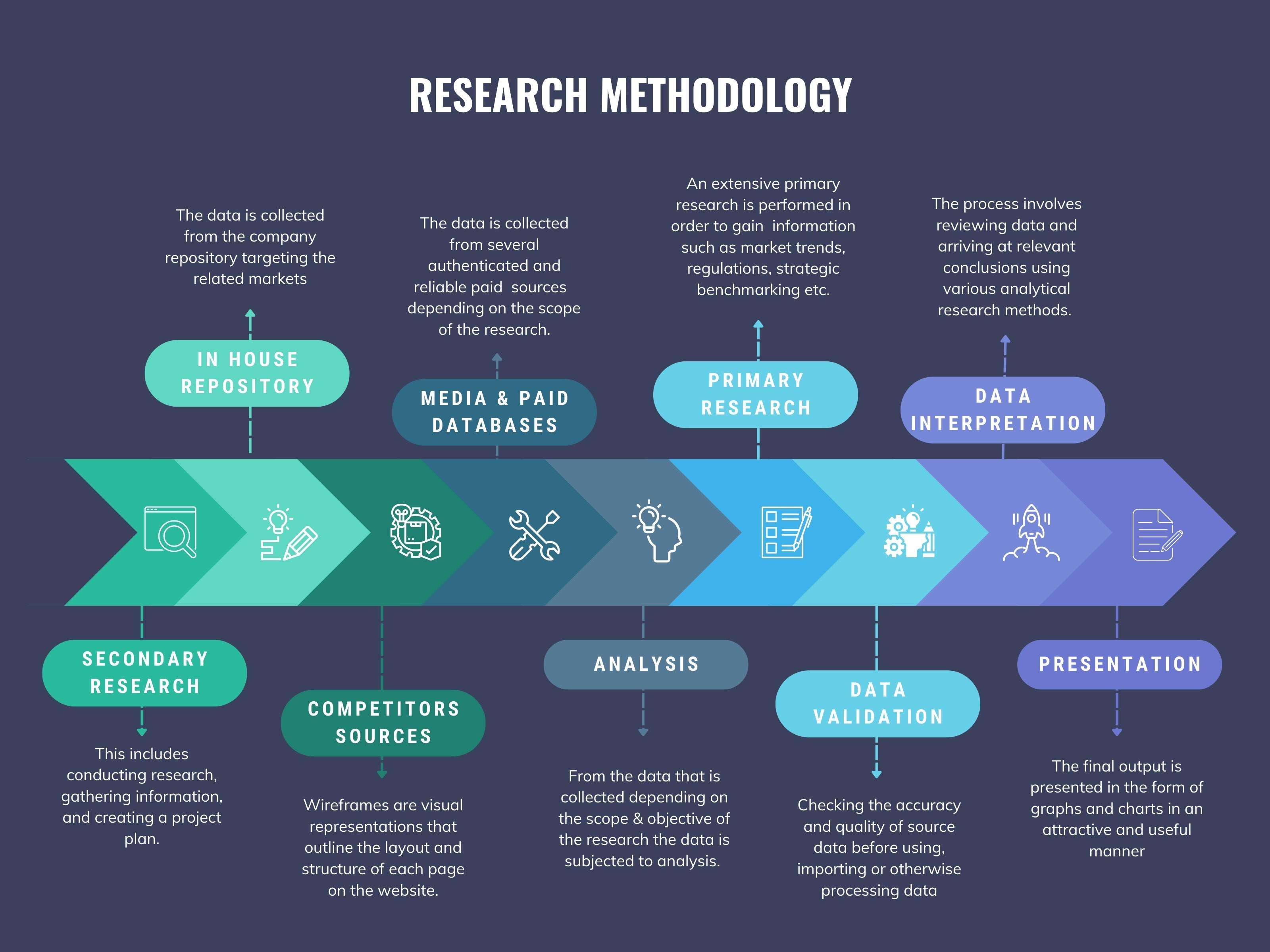
We at ‘Stratistics’ opt for an extensive research approach which involves data mining, data validation, and data analysis. The various research sources include in-house repository, secondary research, competitor’s sources, social media research, client internal data, and primary research.
Our team of analysts prefers the most reliable and authenticated data sources in order to perform the comprehensive literature search. With access to most of the authenticated data bases our team highly considers the best mix of information through various sources to obtain extensive and accurate analysis.
Each report takes an average time of a month and a team of 4 industry analysts. The time may vary depending on the scope and data availability of the desired market report. The various parameters used in the market assessment are standardized in order to enhance the data accuracy.
Data Mining
The data is collected from several authenticated, reliable, paid and unpaid sources and is filtered depending on the scope & objective of the research. Our reports repository acts as an added advantage in this procedure. Data gathering from the raw material suppliers, distributors and the manufacturers is performed on a regular basis, this helps in the comprehensive understanding of the products value chain. Apart from the above mentioned sources the data is also collected from the industry consultants to ensure the objective of the study is in the right direction.
Market trends such as technological advancements, regulatory affairs, market dynamics (Drivers, Restraints, Opportunities and Challenges) are obtained from scientific journals, market related national & international associations and organizations.
Data Analysis
From the data that is collected depending on the scope & objective of the research the data is subjected for the analysis. The critical steps that we follow for the data analysis include:
- Product Lifecycle Analysis
- Competitor analysis
- Risk analysis
- Porters Analysis
- PESTEL Analysis
- SWOT Analysis
The data engineering is performed by the core industry experts considering both the Marketing Mix Modeling and the Demand Forecasting. The marketing mix modeling makes use of multiple-regression techniques to predict the optimal mix of marketing variables. Regression factor is based on a number of variables and how they relate to an outcome such as sales or profits.
Data Validation
The data validation is performed by the exhaustive primary research from the expert interviews. This includes telephonic interviews, focus groups, face to face interviews, and questionnaires to validate our research from all aspects. The industry experts we approach come from the leading firms, involved in the supply chain ranging from the suppliers, distributors to the manufacturers and consumers so as to ensure an unbiased analysis.
We are in touch with more than 15,000 industry experts with the right mix of consultants, CEO's, presidents, vice presidents, managers, experts from both supply side and demand side, executives and so on.
The data validation involves the primary research from the industry experts belonging to:
- Leading Companies
- Suppliers & Distributors
- Manufacturers
- Consumers
- Industry/Strategic Consultants
Apart from the data validation the primary research also helps in performing the fill gap research, i.e. providing solutions for the unmet needs of the research which helps in enhancing the reports quality.
For more details about research methodology, kindly write to us at info@strategymrc.com
Frequently Asked Questions
In case of any queries regarding this report, you can contact the customer service by filing the “Inquiry Before Buy” form available on the right hand side. You may also contact us through email: info@strategymrc.com or phone: +1-301-202-5929
Yes, the samples are available for all the published reports. You can request them by filling the “Request Sample” option available in this page.
Yes, you can request a sample with your specific requirements. All the customized samples will be provided as per the requirement with the real data masked.
All our reports are available in Digital PDF format. In case if you require them in any other formats, such as PPT, Excel etc you can submit a request through “Inquiry Before Buy” form available on the right hand side. You may also contact us through email: info@strategymrc.com or phone: +1-301-202-5929
We offer a free 15% customization with every purchase. This requirement can be fulfilled for both pre and post sale. You may send your customization requirements through email at info@strategymrc.com or call us on +1-301-202-5929.
We have 3 different licensing options available in electronic format.
- Single User Licence: Allows one person, typically the buyer, to have access to the ordered product. The ordered product cannot be distributed to anyone else.
- 2-5 User Licence: Allows the ordered product to be shared among a maximum of 5 people within your organisation.
- Corporate License: Allows the product to be shared among all employees of your organisation regardless of their geographical location.
All our reports are typically be emailed to you as an attachment.
To order any available report you need to register on our website. The payment can be made either through CCAvenue or PayPal payments gateways which accept all international cards.
We extend our support to 6 months post sale. A post sale customization is also provided to cover your unmet needs in the report.
Request Customization
We offer complimentary customization of up to 15% with every purchase. To share your customization requirements, feel free to email us at info@strategymrc.com or call us on +1-301-202-5929. .
Please Note: Customization within the 15% threshold is entirely free of charge. If your request exceeds this limit, we will conduct a feasibility assessment. Following that, a detailed quote and timeline will be provided.
WHY CHOOSE US ?

Assured Quality
Best in class reports with high standard of research integrity

24X7 Research Support
Continuous support to ensure the best customer experience.

Free Customization
Adding more values to your product of interest.

Safe & Secure Access
Providing a secured environment for all online transactions.

Trusted by 600+ Brands
Serving the most reputed brands across the world.