Automotive Fuel Pump Market
Automotive Fuel Pump Market Forecasts to 2034 – Global Analysis By Pump Technology (Electric Fuel Pumps, Mechanical Fuel Pumps, and High-Pressure Fuel Pumps), Pump Location, Fuel Injection System, Vehicle Type, and By Geography

Market Dynamics:
Driver:
Direct injection and hybrid operation increase delivery-system demands
Modern engines need stable fuel delivery under rapidly changing operating conditions, making pump control an important part of powertrain performance. Direct injection adds a high-pressure stage with close mechanical tolerances, while hybrids may require frequent restarts after extended periods without engine operation. These conditions reward pumps that respond predictably without creating unnecessary noise or electrical demand. Larger variations in fuel formulation also encourage validation of seals and wear surfaces. The commercial driver is therefore increasingly the quality and controllability of delivered fuel, not simply the ability to move a greater volume from the tank.
Restraint:
Qualification spans the entire fuel circuit
A pump must work with the tank, filter, pressure regulator, injector system and vehicle controls, which makes substitution more difficult than matching a nominal flow rating. Testing has to address hot fuel, low tank levels, repeated starts and exposure to approved fuel blends. High-pressure designs add machining, sealing and lubrication requirements that raise development costs. For replacement suppliers, incorrect application matching can cause poor starting or unstable engine operation even when a pump physically fits. These demands limit low-cost product introductions and increase the value of technical documentation, diagnostic support and verified vehicle coverage.
Opportunity:
Compatible replacement modules support an extensive installed fleet
Vehicles that remain in service for many years create opportunities for pumps with reliable fitment, updated internal components and practical installation support. Suppliers can develop complete modules that combine pumping, level sensing and associated connections, reducing workshop time where vehicle access is difficult. Direct-injection pumps create a separate specialist replacement category requiring pressure-control accuracy and durable drive interfaces. Fuel compatibility also offers differentiation as regional ethanol blends evolve. The most credible opportunity lies in solving documented application problems and supplying traceable specifications, rather than promoting a universal pump that claims to suit unrelated fuel systems.
Threat:
Electric propulsion eliminates conventional fuel delivery content
The shift toward battery-electric vehicles removes both tank-mounted and engine-mounted fuel pumps from those platforms. Hybrid vehicles preserve demand, but their component requirements and purchasing volumes can differ from those of conventional engines. This changing mix can leave production equipment underutilized if suppliers rely heavily on a few high-volume combustion programs. Price competition in mature replacement categories creates a second pressure, especially when buyers compare products without access to durability evidence. Suppliers need to manage the transition between shrinking legacy applications and technically demanding newer systems without assuming aftermarket growth will fully replace lost original-equipment volumes.
Covid-19 Impact:
Pandemic-related assembly shutdowns reduced new-vehicle pump demand, while restrictions on mobility changed replacement patterns by lowering mileage for many private vehicles. Commercial fleets that continued operating still required fuel-system service, although workshop access and delivery times were disrupted. Pump suppliers also depended on electronics, motors, precision metal parts and seals that could become unavailable at different points in the supply chain. Recovery required restoring complete assembly availability, not just individual components. Demand therefore normalized unevenly between original-equipment programs, essential fleet repairs and deferred maintenance on privately owned vehicles.
The Electric Fuel Pumps segment is expected to be the largest during the forecast period
Electric Fuel Pumps are expected to hold the largest technology share because electrically driven supply stages are widely suited to gasoline vehicles and many modern diesel fuel circuits. In-tank integration supports compact packaging and controlled delivery independently of engine speed. These pumps also form part of service modules used across a large installed vehicle base, creating demand beyond new production. Their broad application range is more extensive than any single high-pressure pump architecture. The expected lead does not imply identical products across vehicles: pressure control, fuel resistance, electrical interfaces and module geometry remain strongly application dependent.
The High-Pressure Fuel Pumps segment is expected to have the highest CAGR during the forecast period
High-Pressure Fuel Pumps are projected to register the fastest growth as manufacturers refine direct-injection gasoline and diesel engines, including units designed for hybrid powertrains. These pumps have greater engineering content than a basic supply pump because they must maintain accurate delivery under substantial mechanical loads. Improvements in compactness, friction and metering can support new engine programs even when overall combustion-vehicle production grows slowly. Demand also develops in the replacement channel as direct-injection vehicles age. The growth outlook is tied to the mix of injection systems and repair requirements rather than an assumption that pressure must continually increase on every engine.
Region with largest share:
Asia Pacific is expected to account for the largest regional demand because it combines extensive passenger-vehicle production with a broad supplier base for motors, electronics and fuel-system components. Gasoline, diesel and hybrid vehicles coexist across regional markets, supporting multiple pump configurations and price levels. A large installed fleet further creates replacement opportunities that depend on distribution coverage and accurate vehicle identification. Local sourcing can reduce logistics burdens for bulky tank modules and improve responsiveness to automaker changes. These advantages support scale, while differing fuel specifications mean regional presence must be paired with sound application engineering.
Region with highest CAGR:
Asia Pacific is anticipated to achieve the highest growth as hybrid engine programs and continuing vehicle ownership expand demand for more capable fuel-delivery assemblies. Manufacturers serving varied local fuel blends can create opportunities for pumps validated against specific materials and operating conditions. The replacement market also benefits as newer direct-injection vehicles move beyond their initial warranty periods. Rapid electrification in some countries will constrain conventional pump volumes, so growth should not be read as a uniform regional increase. Suppliers with a balanced mix of hybrid, commercial and service applications are better placed to capture the remaining opportunities.
Key players in the market
Some of the key players in the Automotive Fuel Pump Market include Bosch, DENSO, Valeo, Stanadyne, PHINIA, Aisan Industry, TI Automotive, Astemo, US Motor Works, Standard Motor Products, GMB, Holley, Aeromotive, Spectra Premium, and DeatschWerks.
Key Developments:
In December 2025, Stanadyne introduced its GX series of high-pressure gasoline pumps for street-performance and racing applications. The specialized range expanded pump choices for engines with elevated fueling requirements, illustrating a performance aftermarket opportunity distinct from standard original-equipment vehicle programs and routine replacement of tank-mounted supply pumps.
In July 2025, PHINIA reported GDI rail and pump business for a Chinese automaker’s hybrid engine serving China and Brazil, including an ethanol application. The award showed how fuel-pump development is being shaped by both hybrid operation and regional fuel requirements within new combustion-engine programs.
In April 2024, Stanadyne’s two-piston diesel common rail pump received an Automotive News PACE Award. The recognized pump combined a compact drive arrangement with attention to low-lubricity fuel operation, providing a concrete example of continued innovation in the high-pressure diesel portion of the automotive fuel-pump market.
Pump Technologies Covered:
• Electric Fuel Pumps
• Mechanical Fuel Pumps
• High-Pressure Fuel Pumps
Pump Locations Covered:
• In-Tank Pumps
• In-Line Pumps
• Engine-Mounted Pumps
Fuel Injection Systems Covered:
• Port Fuel Injection
• Gasoline Direct Injection
• Diesel Common-Rail Injection
Vehicle Types Covered:
• Passenger Cars
• Light Commercial Vehicles
• Heavy Commercial Vehicles
• Hybrid Vehicles
Regions Covered:
• North America
o United States
o Canada
o Mexico
• Europe
o United Kingdom
o Germany
o France
o Italy
o Spain
o Netherlands
o Belgium
o Sweden
o Switzerland
o Poland
o Rest of Europe
• Asia Pacific
o China
o Japan
o India
o South Korea
o Australia
o Indonesia
o Thailand
o Malaysia
o Singapore
o Vietnam
o Rest of Asia Pacific
• South America
o Brazil
o Argentina
o Colombia
o Chile
o Peru
o Rest of South America
• Rest of the World (RoW)
o Middle East
▪ Saudi Arabia
▪ United Arab Emirates
▪ Qatar
▪ Israel
▪ Rest of Middle East
o Africa
▪ South Africa
▪ Egypt
▪ Morocco
▪ Rest of Africa
What our report offers:
- Market share assessments for the regional and country-level segments
- Strategic recommendations for the new entrants
- Covers Market data for the years 2023, 2024, 2025, 2026, 2027, 2028, 2030, 2032 and 2034
- Market Trends (Drivers, Constraints, Opportunities, Threats, Challenges, Investment Opportunities, and recommendations)
- Strategic recommendations in key business segments based on the market estimations
- Competitive landscaping mapping the key common trends
- Company profiling with detailed strategies, financials, and recent developments
- Supply chain trends mapping the latest technological advancements
Free Customization Offerings:
All the customers of this report will be entitled to receive one of the following free customization options:
• Company Profiling
o Comprehensive profiling of additional market players (up to 3)
o SWOT Analysis of key players (up to 3)
• Regional Segmentation
o Market estimations, Forecasts and CAGR of any prominent country as per the client's interest (Note: Depends on feasibility check)
• Competitive Benchmarking
o Benchmarking of key players based on product portfolio, geographical presence, and strategic alliances
Table of Contents
1 Executive Summary1.1 Market Snapshot and Key Highlights
1.2 Growth Drivers, Challenges, and Opportunities
1.3 Competitive Landscape Overview
1.4 Strategic Insights and Recommendations
2 Research Framework
2.1 Study Objectives and Scope
2.2 Stakeholder Analysis
2.3 Research Assumptions and Limitations
2.4 Research Methodology
2.4.1 Data Collection (Primary and Secondary)
2.4.2 Data Modeling and Estimation Techniques
2.4.3 Data Validation and Triangulation
2.4.4 Analytical and Forecasting Approach
3 Market Dynamics and Trend Analysis
3.1 Market Definition and Structure
3.2 Key Market Drivers
3.3 Market Restraints and Challenges
3.4 Growth Opportunities and Investment Hotspots
3.5 Industry Threats and Risk Assessment
3.6 Technology and Innovation Landscape
3.7 Emerging and High-Growth Markets
3.8 Regulatory and Policy Environment
3.9 Impact of COVID-19 and Recovery Outlook
4 Competitive and Strategic Assessment
4.1 Porter's Five Forces Analysis
4.1.1 Supplier Bargaining Power
4.1.2 Buyer Bargaining Power
4.1.3 Threat of Substitutes
4.1.4 Threat of New Entrants
4.1.5 Competitive Rivalry
4.2 Market Share Analysis of Key Players
4.3 Product Benchmarking and Performance Comparison
5 Global Automotive Fuel Pump Market, By Pump Technology
5.1 Electric Fuel Pumps
5.2 Mechanical Fuel Pumps
5.3 High-Pressure Fuel Pumps
6 Global Automotive Fuel Pump Market, By Pump Location
6.1 In-Tank Pumps
6.2 In-Line Pumps
6.3 Engine-Mounted Pumps
7 Global Automotive Fuel Pump Market, By Fuel Injection System
7.1 Port Fuel Injection
7.2 Gasoline Direct Injection
7.3 Diesel Common-Rail Injection
8 Global Automotive Fuel Pump Market, By Vehicle Type
8.1 Passenger Cars
8.2 Light Commercial Vehicles
8.3 Heavy Commercial Vehicles
8.4 Hybrid Vehicles
9 Global Automotive Fuel Pump Market, By Geography
9.1 North America
9.1.1 United States
9.1.2 Canada
9.1.3 Mexico
9.2 Europe
9.2.1 United Kingdom
9.2.2 Germany
9.2.3 France
9.2.4 Italy
9.2.5 Spain
9.2.6 Netherlands
9.2.7 Belgium
9.2.8 Sweden
9.2.9 Switzerland
9.2.10 Poland
9.2.11 Rest of Europe
9.3 Asia Pacific
9.3.1 China
9.3.2 Japan
9.3.3 India
9.3.4 South Korea
9.3.5 Australia
9.3.6 Indonesia
9.3.7 Thailand
9.3.8 Malaysia
9.3.9 Singapore
9.3.10 Vietnam
9.3.11 Rest of Asia Pacific
9.4 South America
9.4.1 Brazil
9.4.2 Argentina
9.4.3 Colombia
9.4.4 Chile
9.4.5 Peru
9.4.6 Rest of South America
9.5 Rest of the World (RoW)
9.5.1 Middle East
9.5.1.1 Saudi Arabia
9.5.1.2 United Arab Emirates
9.5.1.3 Qatar
9.5.1.4 Israel
9.5.1.5 Rest of Middle East
9.5.2 Africa
9.5.2.1 South Africa
9.5.2.2 Egypt
9.5.2.3 Morocco
9.5.2.4 Rest of Africa
10 Strategic Market Intelligence
10.1 Industry Value Network and Supply Chain Assessment
10.2 White-Space and Opportunity Mapping
10.3 Product Evolution and Market Life Cycle Analysis
10.4 Channel, Distributor, and Go-to-Market Assessment
11 Industry Developments and Strategic Initiatives
11.1 Mergers and Acquisitions
11.2 Partnerships, Alliances, and Joint Ventures
11.3 New Product Launches and Certifications
11.4 Capacity Expansion and Investments
11.5 Other Strategic Initiatives
12 Company Profiles
12.1 Bosch
12.2 DENSO
12.3 Valeo
12.4 Stanadyne
12.5 PHINIA
12.6 Aisan Industry
12.7 TI Automotive
12.8 Astemo
12.9 US Motor Works
12.10 Standard Motor Products
12.11 GMB
12.12 Holley
12.13 Aeromotive
12.14 Spectra Premium
12.15 DeatschWerks
List of Tables
1 Global Automotive Fuel Pump Market Outlook, By Region (2023–2034) ($MN)
2 Global Automotive Fuel Pump Market Outlook, By Pump Technology (2023–2034) ($MN)
3 Global Automotive Fuel Pump Market Outlook, By Electric Fuel Pumps (2023–2034) ($MN)
4 Global Automotive Fuel Pump Market Outlook, By Mechanical Fuel Pumps (2023–2034) ($MN)
5 Global Automotive Fuel Pump Market Outlook, By High-Pressure Fuel Pumps (2023–2034) ($MN)
6 Global Automotive Fuel Pump Market Outlook, By Pump Location (2023–2034) ($MN)
7 Global Automotive Fuel Pump Market Outlook, By In-Tank Pumps (2023–2034) ($MN)
8 Global Automotive Fuel Pump Market Outlook, By In-Line Pumps (2023–2034) ($MN)
9 Global Automotive Fuel Pump Market Outlook, By Engine-Mounted Pumps (2023–2034) ($MN)
10 Global Automotive Fuel Pump Market Outlook, By Fuel Injection System (2023–2034) ($MN)
11 Global Automotive Fuel Pump Market Outlook, By Port Fuel Injection (2023–2034) ($MN)
12 Global Automotive Fuel Pump Market Outlook, By Gasoline Direct Injection (2023–2034) ($MN)
13 Global Automotive Fuel Pump Market Outlook, By Diesel Common-Rail Injection (2023–2034) ($MN)
14 Global Automotive Fuel Pump Market Outlook, By Vehicle Type (2023–2034) ($MN)
15 Global Automotive Fuel Pump Market Outlook, By Passenger Cars (2023–2034) ($MN)
16 Global Automotive Fuel Pump Market Outlook, By Light Commercial Vehicles (2023–2034) ($MN)
17 Global Automotive Fuel Pump Market Outlook, By Heavy Commercial Vehicles (2023–2034) ($MN)
18 Global Automotive Fuel Pump Market Outlook, By Hybrid Vehicles (2023–2034) ($MN)
Note: Tables for North America, Europe, APAC, South America, and Rest of the World (RoW) Regions are also represented in the same manner as above.
List of Figures
RESEARCH METHODOLOGY
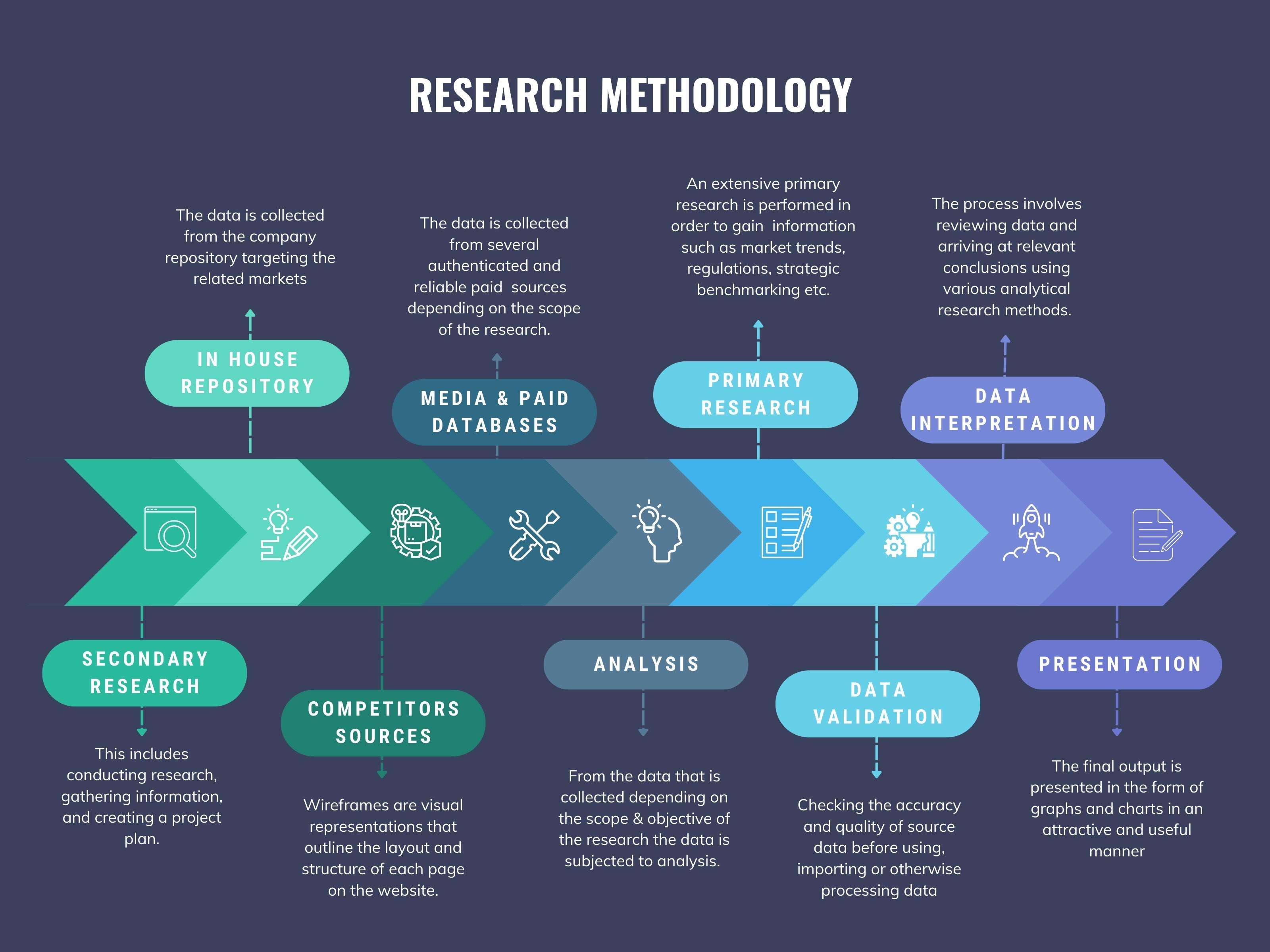
We at ‘Stratistics’ opt for an extensive research approach which involves data mining, data validation, and data analysis. The various research sources include in-house repository, secondary research, competitor’s sources, social media research, client internal data, and primary research.
Our team of analysts prefers the most reliable and authenticated data sources in order to perform the comprehensive literature search. With access to most of the authenticated data bases our team highly considers the best mix of information through various sources to obtain extensive and accurate analysis.
Each report takes an average time of a month and a team of 4 industry analysts. The time may vary depending on the scope and data availability of the desired market report. The various parameters used in the market assessment are standardized in order to enhance the data accuracy.
Data Mining
The data is collected from several authenticated, reliable, paid and unpaid sources and is filtered depending on the scope & objective of the research. Our reports repository acts as an added advantage in this procedure. Data gathering from the raw material suppliers, distributors and the manufacturers is performed on a regular basis, this helps in the comprehensive understanding of the products value chain. Apart from the above mentioned sources the data is also collected from the industry consultants to ensure the objective of the study is in the right direction.
Market trends such as technological advancements, regulatory affairs, market dynamics (Drivers, Restraints, Opportunities and Challenges) are obtained from scientific journals, market related national & international associations and organizations.
Data Analysis
From the data that is collected depending on the scope & objective of the research the data is subjected for the analysis. The critical steps that we follow for the data analysis include:
- Product Lifecycle Analysis
- Competitor analysis
- Risk analysis
- Porters Analysis
- PESTEL Analysis
- SWOT Analysis
The data engineering is performed by the core industry experts considering both the Marketing Mix Modeling and the Demand Forecasting. The marketing mix modeling makes use of multiple-regression techniques to predict the optimal mix of marketing variables. Regression factor is based on a number of variables and how they relate to an outcome such as sales or profits.
Data Validation
The data validation is performed by the exhaustive primary research from the expert interviews. This includes telephonic interviews, focus groups, face to face interviews, and questionnaires to validate our research from all aspects. The industry experts we approach come from the leading firms, involved in the supply chain ranging from the suppliers, distributors to the manufacturers and consumers so as to ensure an unbiased analysis.
We are in touch with more than 15,000 industry experts with the right mix of consultants, CEO's, presidents, vice presidents, managers, experts from both supply side and demand side, executives and so on.
The data validation involves the primary research from the industry experts belonging to:
- Leading Companies
- Suppliers & Distributors
- Manufacturers
- Consumers
- Industry/Strategic Consultants
Apart from the data validation the primary research also helps in performing the fill gap research, i.e. providing solutions for the unmet needs of the research which helps in enhancing the reports quality.
For more details about research methodology, kindly write to us at info@strategymrc.com
Frequently Asked Questions
In case of any queries regarding this report, you can contact the customer service by filing the “Inquiry Before Buy” form available on the right hand side. You may also contact us through email: info@strategymrc.com or phone: +1-301-202-5929
Yes, the samples are available for all the published reports. You can request them by filling the “Request Sample” option available in this page.
Yes, you can request a sample with your specific requirements. All the customized samples will be provided as per the requirement with the real data masked.
All our reports are available in Digital PDF format. In case if you require them in any other formats, such as PPT, Excel etc you can submit a request through “Inquiry Before Buy” form available on the right hand side. You may also contact us through email: info@strategymrc.com or phone: +1-301-202-5929
We offer a free 15% customization with every purchase. This requirement can be fulfilled for both pre and post sale. You may send your customization requirements through email at info@strategymrc.com or call us on +1-301-202-5929.
We have 3 different licensing options available in electronic format.
- Single User Licence: Allows one person, typically the buyer, to have access to the ordered product. The ordered product cannot be distributed to anyone else.
- 2-5 User Licence: Allows the ordered product to be shared among a maximum of 5 people within your organisation.
- Corporate License: Allows the product to be shared among all employees of your organisation regardless of their geographical location.
All our reports are typically be emailed to you as an attachment.
To order any available report you need to register on our website. The payment can be made either through CCAvenue or PayPal payments gateways which accept all international cards.
We extend our support to 6 months post sale. A post sale customization is also provided to cover your unmet needs in the report.
Request Customization
We offer complimentary customization of up to 15% with every purchase. To share your customization requirements, feel free to email us at info@strategymrc.com or call us on +1-301-202-5929. .
Please Note: Customization within the 15% threshold is entirely free of charge. If your request exceeds this limit, we will conduct a feasibility assessment. Following that, a detailed quote and timeline will be provided.
WHY CHOOSE US ?

Assured Quality
Best in class reports with high standard of research integrity

24X7 Research Support
Continuous support to ensure the best customer experience.

Free Customization
Adding more values to your product of interest.

Safe & Secure Access
Providing a secured environment for all online transactions.

Trusted by 600+ Brands
Serving the most reputed brands across the world.