
Automotive Gdi Pump Market
Automotive GDI Pump Market Forecasts to 2034 – Global Analysis By Pump Architecture (Single-Piston High-Pressure Pumps, Multi-Piston High-Pressure Pumps, and Integrated Pump and Metering Units), Pressure Class, Fuel and Engine, and By Geography

Market Dynamics:
Driver:
Combustion control depends on consistent high-pressure gasoline supply
Direct-injection engines rely on predictable fuel pressure to produce the intended spray and meter each injection accurately. Pump performance therefore supports combustion calibration during acceleration, cold starting and transitions between operating modes. Turbocharged engines can place particularly demanding flow requirements on a compact assembly, while hybrid engines add repeated restarts and changing duty cycles. Manufacturers seek pumps that provide the necessary pressure without excessive mechanical losses or objectionable noise. This combination sustains development activity even when engine displacement falls, because reduced size does not necessarily mean simpler or less demanding fuel-delivery hardware.
Restraint:
Gasoline lubrication and pulsation create difficult design tradeoffs
A GDI pump must withstand repeated mechanical loading while operating with a fluid that offers limited lubrication compared with engine oil. Fuel chemistry, temperature and contamination can alter wear behavior, making materials and surface treatments important. Pressure pulsation must also be controlled without introducing excessive package size or cost. Raising output may increase drive loads and acoustic challenges that affect the engine as a whole. These interdependencies require long validation cycles and close coordination with the automaker, limiting the speed at which a new pump can move from a promising bench result to approved production hardware.
Opportunity:
Hybrid and ethanol-compatible pumps open targeted supply opportunities
Hybrid engine development creates opportunities for pumps optimized around intermittent operation and efficient combustion at selected load points. Regional ethanol use adds a separate need for verified corrosion resistance, seal compatibility and stable metering. Suppliers able to support both requirements can compete for programs that combine shared engine architectures with market-specific fuel specifications. There is also room for application-correct replacement pumps as the direct-injection fleet ages. The opportunity is strongest where engineering support accompanies the component, since a pressure rating alone does not establish compatibility with the control strategy, fuel blend or mechanical drive of a particular engine.
Threat:
Powertrain shifts can shorten the runway for dedicated investment
GDI pump programs require tooling, precision production and application development that must be recovered over an engine’s commercial life. If a customer accelerates battery-electric production or consolidates several combustion platforms, planned volumes may fall before those investments are fully utilized. Port-injection alternatives and combined injection strategies can also change the required high-pressure content. Meanwhile, performance aftermarket products do not necessarily compensate for reduced mass-market demand. Suppliers therefore face a portfolio risk: a technically successful pump can serve a narrowing addressable engine base unless it is adaptable across customers and powertrain variants.
Covid-19 Impact:
COVID-19 disrupted GDI pump demand through vehicle assembly closures and delayed engine-program work. Precision parts, control components and cross-border logistics could each constrain the supply of complete pump assemblies. Lower private-vehicle mileage reduced some immediate repair needs, while workshop restrictions delayed diagnosis and replacement of existing failures. When production restarted, pump requirements depended on the mix of direct-injection engines scheduled for assembly rather than overall vehicle demand alone. The period reinforced the importance of coordinating hardware deliveries with engine launches and maintaining application-specific service inventory for vehicles already in operation.
The Single-Piston High-Pressure Pumps segment is expected to be the largest during the forecast period
Single-Piston High-Pressure Pumps are expected to remain the largest architectural segment because they offer a compact arrangement suited to many passenger-vehicle gasoline engines. Their established mechanical interfaces and supplier manufacturing experience support integration into a wide range of cylinder-head layouts. Automakers can adapt metering and pressure capability within a familiar architecture, reducing the need for a fundamentally different pumping package. Replacement demand also follows the installed base of these systems. This expected lead reflects broad application practicality; engines with unusual flow, performance or packaging requirements may still justify multi-piston or more heavily integrated alternatives.
The Above 350 bar segment is expected to have the highest CAGR during the forecast period
Above 350 bar is anticipated to show the fastest growth among the specified pressure classes as selected engine programs pursue finer control of gasoline injection and particulate formation. The category begins from a smaller base than established lower-pressure systems and requires stronger validation of wear, sealing and drive loads. Its development is therefore likely to be concentrated in applications where the complete engine can use the additional pressure effectively. Higher pressure is not inherently the best solution for every duty cycle. Growth depends on demonstrated combustion benefits sufficient to justify the associated pump, injector and calibration costs.
Region with largest share:
Asia Pacific is expected to lead regional demand because of its extensive production of gasoline passenger vehicles, turbocharged engines and hybrid powertrains. The region combines major vehicle manufacturers with component supply chains capable of supporting high-volume precision assemblies. Engine programs intended for both domestic and export markets create a range of fuel and calibration requirements. These conditions provide a substantial addressable base for GDI pumps, although adoption differs by manufacturer and engine strategy. Local engineering capacity is valuable because pump specifications must align with the injector system, emissions package and operating characteristics of each engine family.
Region with highest CAGR:
Asia Pacific is projected to deliver the highest regional growth as automakers refine hybrid combustion engines and introduce more sophisticated fuel systems across selected vehicle classes. Suppliers can benefit from new programs that require compact packaging, improved pressure control and compatibility with diverse gasoline blends. Replacement opportunities should also broaden as direct-injection vehicles accumulate service years. At the same time, rapid battery-electric adoption limits the number of potential installations in some markets. The strongest growth case therefore rests on increased technical content and a changing engine mix, supported by aftermarket demand, rather than an unrestricted rise in gasoline vehicles.
Key players in the market
Some of the key players in the Automotive GDI Pump Market include Bosch, DENSO, Stanadyne, PHINIA, Astemo, Standard Motor Products, GMB, US Motor Works, Spectra Premium, Holley (APR), Carter, Xtreme-DI, Nostrum High Performance, HELLA, and Hyundai KEFICO.
Key Developments:
In May 2026, Standard Motor Products announced further expansion of its gasoline fuel-injection program, which included GDI high-pressure pumps alongside injectors and supporting fuel-system components. The development strengthened the service-market context for direct-injection hardware as workshops maintain a growing variety of application-specific gasoline systems.
In December 2025, Stanadyne launched GX-series gasoline direct-injection pumps aimed at street and race performance. The announcement addressed a specialized high-flow application set, demonstrating continued development of engine-mounted gasoline pumping hardware without implying that the performance products were selected for mainstream vehicle production.
In July 2025, PHINIA disclosed new GDI pump business, including a hybrid-engine rail and pump program for a Chinese customer and its first GDI pump business with a major North American automaker. The announcements highlighted continuing customer commitments to high-pressure gasoline delivery within evolving combustion-engine portfolios.
Pump Architectures Covered:
• Single-Piston High-Pressure Pumps
• Multi-Piston High-Pressure Pumps
• Integrated Pump and Metering Units
Pressure Classes Covered:
• Below 200 bar
• 200–350 bar
• Above 350 bar
Fuels and Engines Covered:
• Gasoline Direct Injection
• Gasoline Particulate-Filtration Engines
• Turbocharged and Downsized Engines
Regions Covered:
• North America
o United States
o Canada
o Mexico
• Europe
o United Kingdom
o Germany
o France
o Italy
o Spain
o Netherlands
o Belgium
o Sweden
o Switzerland
o Poland
o Rest of Europe
• Asia Pacific
o China
o Japan
o India
o South Korea
o Australia
o Indonesia
o Thailand
o Malaysia
o Singapore
o Vietnam
o Rest of Asia Pacific
• South America
o Brazil
o Argentina
o Colombia
o Chile
o Peru
o Rest of South America
• Rest of the World (RoW)
o Middle East
▪ Saudi Arabia
▪ United Arab Emirates
▪ Qatar
▪ Israel
▪ Rest of Middle East
o Africa
▪ South Africa
▪ Egypt
▪ Morocco
▪ Rest of Africa
What our report offers:
- Market share assessments for the regional and country-level segments
- Strategic recommendations for the new entrants
- Covers Market data for the years 2023, 2024, 2025, 2026, 2027, 2028, 2030, 2032 and 2034
- Market Trends (Drivers, Constraints, Opportunities, Threats, Challenges, Investment Opportunities, and recommendations)
- Strategic recommendations in key business segments based on the market estimations
- Competitive landscaping mapping the key common trends
- Company profiling with detailed strategies, financials, and recent developments
- Supply chain trends mapping the latest technological advancements
Free Customization Offerings:
All the customers of this report will be entitled to receive one of the following free customization options:
• Company Profiling
o Comprehensive profiling of additional market players (up to 3)
o SWOT Analysis of key players (up to 3)
• Regional Segmentation
o Market estimations, Forecasts and CAGR of any prominent country as per the client's interest (Note: Depends on feasibility check)
• Competitive Benchmarking
o Benchmarking of key players based on product portfolio, geographical presence, and strategic alliances
Table of Contents
1 Executive Summary1.1 Market Snapshot and Key Highlights
1.2 Growth Drivers, Challenges, and Opportunities
1.3 Competitive Landscape Overview
1.4 Strategic Insights and Recommendations
2 Research Framework
2.1 Study Objectives and Scope
2.2 Stakeholder Analysis
2.3 Research Assumptions and Limitations
2.4 Research Methodology
2.4.1 Data Collection (Primary and Secondary)
2.4.2 Data Modeling and Estimation Techniques
2.4.3 Data Validation and Triangulation
2.4.4 Analytical and Forecasting Approach
3 Market Dynamics and Trend Analysis
3.1 Market Definition and Structure
3.2 Key Market Drivers
3.3 Market Restraints and Challenges
3.4 Growth Opportunities and Investment Hotspots
3.5 Industry Threats and Risk Assessment
3.6 Technology and Innovation Landscape
3.7 Emerging and High-Growth Markets
3.8 Regulatory and Policy Environment
3.9 Impact of COVID-19 and Recovery Outlook
4 Competitive and Strategic Assessment
4.1 Porter's Five Forces Analysis
4.1.1 Supplier Bargaining Power
4.1.2 Buyer Bargaining Power
4.1.3 Threat of Substitutes
4.1.4 Threat of New Entrants
4.1.5 Competitive Rivalry
4.2 Market Share Analysis of Key Players
4.3 Product Benchmarking and Performance Comparison
5 Global Automotive GDI Pump Market, By Pump Architecture
5.1 Single-Piston High-Pressure Pumps
5.2 Multi-Piston High-Pressure Pumps
5.3 Integrated Pump and Metering Units
6 Global Automotive GDI Pump Market, By Pressure Class
6.1 Below 200 bar
6.2 200–350 bar
6.3 Above 350 bar
7 Global Automotive GDI Pump Market, By Fuel and Engine
7.1 Gasoline Direct Injection
7.2 Gasoline Particulate-Filtration Engines
7.3 Turbocharged and Downsized Engines
8 Global Automotive GDI Pump Market, By Geography
8.1 North America
8.1.1 United States
8.1.2 Canada
8.1.3 Mexico
8.2 Europe
8.2.1 United Kingdom
8.2.2 Germany
8.2.3 France
8.2.4 Italy
8.2.5 Spain
8.2.6 Netherlands
8.2.7 Belgium
8.2.8 Sweden
8.2.9 Switzerland
8.2.10 Poland
8.2.11 Rest of Europe
8.3 Asia Pacific
8.3.1 China
8.3.2 Japan
8.3.3 India
8.3.4 South Korea
8.3.5 Australia
8.3.6 Indonesia
8.3.7 Thailand
8.3.8 Malaysia
8.3.9 Singapore
8.3.10 Vietnam
8.3.11 Rest of Asia Pacific
8.4 South America
8.4.1 Brazil
8.4.2 Argentina
8.4.3 Colombia
8.4.4 Chile
8.4.5 Peru
8.4.6 Rest of South America
8.5 Rest of the World (RoW)
8.5.1 Middle East
8.5.1.1 Saudi Arabia
8.5.1.2 United Arab Emirates
8.5.1.3 Qatar
8.5.1.4 Israel
8.5.1.5 Rest of Middle East
8.5.2 Africa
8.5.2.1 South Africa
8.5.2.2 Egypt
8.5.2.3 Morocco
8.5.2.4 Rest of Africa
9 Strategic Market Intelligence
9.1 Industry Value Network and Supply Chain Assessment
9.2 White-Space and Opportunity Mapping
9.3 Product Evolution and Market Life Cycle Analysis
9.4 Channel, Distributor, and Go-to-Market Assessment
10 Industry Developments and Strategic Initiatives
10.1 Mergers and Acquisitions
10.2 Partnerships, Alliances, and Joint Ventures
10.3 New Product Launches and Certifications
10.4 Capacity Expansion and Investments
10.5 Other Strategic Initiatives
11 Company Profiles
11.1 Bosch
11.2 DENSO
11.3 Stanadyne
11.4 PHINIA
11.5 Astemo
11.6 Standard Motor Products
11.7 GMB
11.8 US Motor Works
11.9 Spectra Premium
11.10 Holley (APR)
11.11 Carter
11.12 Xtreme-DI
11.13 Nostrum High Performance
11.14 HELLA
11.15 Hyundai KEFICO
List of Tables
1 Global Automotive GDI Pump Market Outlook, By Region (2023–2034) ($MN)
2 Global Automotive GDI Pump Market Outlook, By Pump Architecture (2023–2034) ($MN)
3 Global Automotive GDI Pump Market Outlook, By Single-Piston High-Pressure Pumps (2023–2034) ($MN)
4 Global Automotive GDI Pump Market Outlook, By Multi-Piston High-Pressure Pumps (2023–2034) ($MN)
5 Global Automotive GDI Pump Market Outlook, By Integrated Pump and Metering Units (2023–2034) ($MN)
6 Global Automotive GDI Pump Market Outlook, By Pressure Class (2023–2034) ($MN)
7 Global Automotive GDI Pump Market Outlook, By Below 200 bar (2023–2034) ($MN)
8 Global Automotive GDI Pump Market Outlook, By 200–350 bar (2023–2034) ($MN)
9 Global Automotive GDI Pump Market Outlook, By Above 350 bar (2023–2034) ($MN)
10 Global Automotive GDI Pump Market Outlook, By Fuel and Engine (2023–2034) ($MN)
11 Global Automotive GDI Pump Market Outlook, By Gasoline Direct Injection (2023–2034) ($MN)
12 Global Automotive GDI Pump Market Outlook, By Gasoline Particulate-Filtration Engines (2023–2034) ($MN)
13 Global Automotive GDI Pump Market Outlook, By Turbocharged and Downsized Engines (2023–2034) ($MN)
Note: Tables for North America, Europe, APAC, South America, and Rest of the World (RoW) Regions are also represented in the same manner as above.
List of Figures
RESEARCH METHODOLOGY
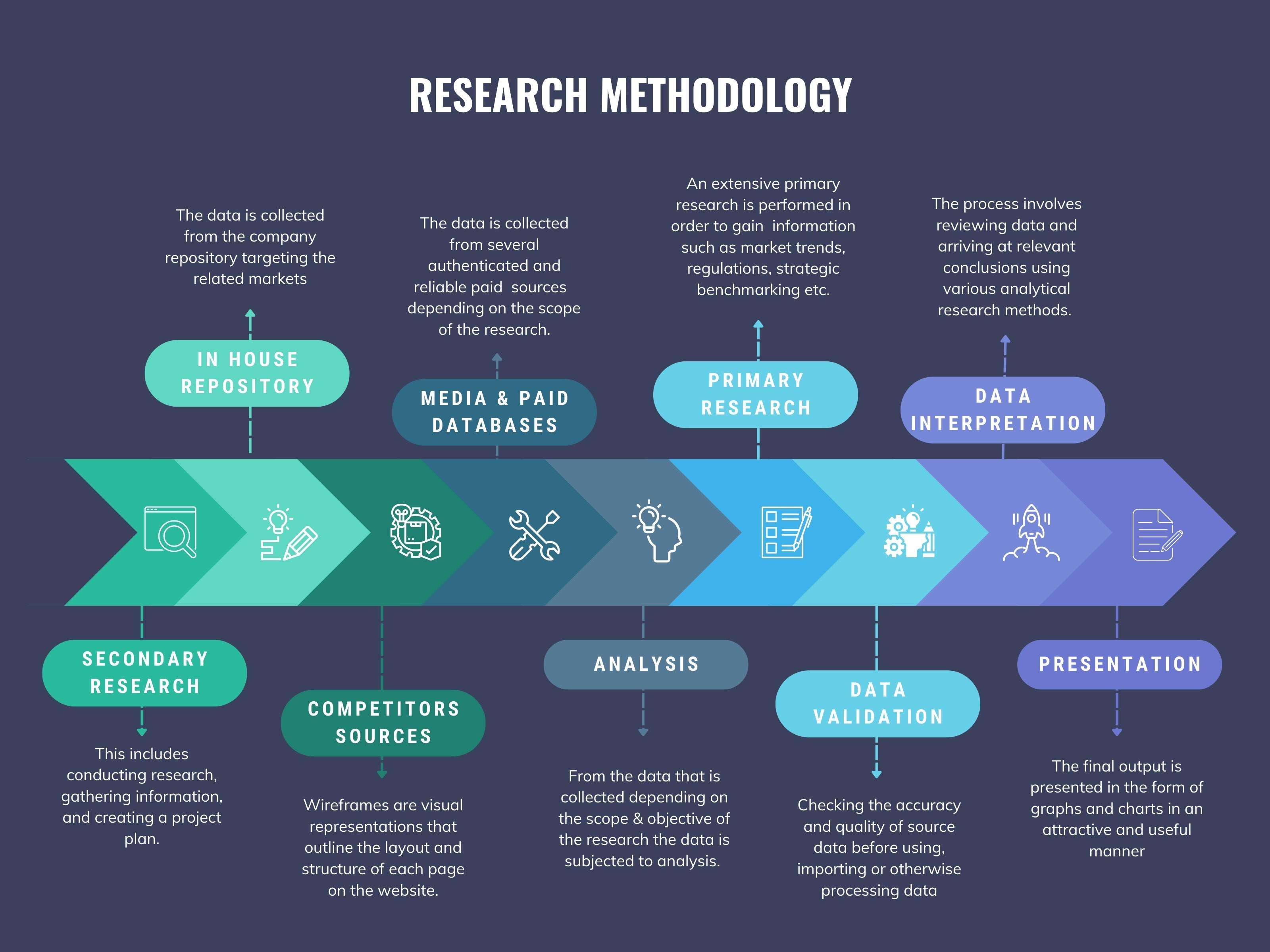
We at ‘Stratistics’ opt for an extensive research approach which involves data mining, data validation, and data analysis. The various research sources include in-house repository, secondary research, competitor’s sources, social media research, client internal data, and primary research.
Our team of analysts prefers the most reliable and authenticated data sources in order to perform the comprehensive literature search. With access to most of the authenticated data bases our team highly considers the best mix of information through various sources to obtain extensive and accurate analysis.
Each report takes an average time of a month and a team of 4 industry analysts. The time may vary depending on the scope and data availability of the desired market report. The various parameters used in the market assessment are standardized in order to enhance the data accuracy.
Data Mining
The data is collected from several authenticated, reliable, paid and unpaid sources and is filtered depending on the scope & objective of the research. Our reports repository acts as an added advantage in this procedure. Data gathering from the raw material suppliers, distributors and the manufacturers is performed on a regular basis, this helps in the comprehensive understanding of the products value chain. Apart from the above mentioned sources the data is also collected from the industry consultants to ensure the objective of the study is in the right direction.
Market trends such as technological advancements, regulatory affairs, market dynamics (Drivers, Restraints, Opportunities and Challenges) are obtained from scientific journals, market related national & international associations and organizations.
Data Analysis
From the data that is collected depending on the scope & objective of the research the data is subjected for the analysis. The critical steps that we follow for the data analysis include:
- Product Lifecycle Analysis
- Competitor analysis
- Risk analysis
- Porters Analysis
- PESTEL Analysis
- SWOT Analysis
The data engineering is performed by the core industry experts considering both the Marketing Mix Modeling and the Demand Forecasting. The marketing mix modeling makes use of multiple-regression techniques to predict the optimal mix of marketing variables. Regression factor is based on a number of variables and how they relate to an outcome such as sales or profits.
Data Validation
The data validation is performed by the exhaustive primary research from the expert interviews. This includes telephonic interviews, focus groups, face to face interviews, and questionnaires to validate our research from all aspects. The industry experts we approach come from the leading firms, involved in the supply chain ranging from the suppliers, distributors to the manufacturers and consumers so as to ensure an unbiased analysis.
We are in touch with more than 15,000 industry experts with the right mix of consultants, CEO's, presidents, vice presidents, managers, experts from both supply side and demand side, executives and so on.
The data validation involves the primary research from the industry experts belonging to:
- Leading Companies
- Suppliers & Distributors
- Manufacturers
- Consumers
- Industry/Strategic Consultants
Apart from the data validation the primary research also helps in performing the fill gap research, i.e. providing solutions for the unmet needs of the research which helps in enhancing the reports quality.
For more details about research methodology, kindly write to us at info@strategymrc.com
Frequently Asked Questions
In case of any queries regarding this report, you can contact the customer service by filing the “Inquiry Before Buy” form available on the right hand side. You may also contact us through email: info@strategymrc.com or phone: +1-301-202-5929
Yes, the samples are available for all the published reports. You can request them by filling the “Request Sample” option available in this page.
Yes, you can request a sample with your specific requirements. All the customized samples will be provided as per the requirement with the real data masked.
All our reports are available in Digital PDF format. In case if you require them in any other formats, such as PPT, Excel etc you can submit a request through “Inquiry Before Buy” form available on the right hand side. You may also contact us through email: info@strategymrc.com or phone: +1-301-202-5929
We offer a free 15% customization with every purchase. This requirement can be fulfilled for both pre and post sale. You may send your customization requirements through email at info@strategymrc.com or call us on +1-301-202-5929.
We have 3 different licensing options available in electronic format.
- Single User Licence: Allows one person, typically the buyer, to have access to the ordered product. The ordered product cannot be distributed to anyone else.
- 2-5 User Licence: Allows the ordered product to be shared among a maximum of 5 people within your organisation.
- Corporate License: Allows the product to be shared among all employees of your organisation regardless of their geographical location.
All our reports are typically be emailed to you as an attachment.
To order any available report you need to register on our website. The payment can be made either through CCAvenue or PayPal payments gateways which accept all international cards.
We extend our support to 6 months post sale. A post sale customization is also provided to cover your unmet needs in the report.
Request Customization
We offer complimentary customization of up to 15% with every purchase. To share your customization requirements, feel free to email us at info@strategymrc.com or call us on +1-301-202-5929. .
Please Note: Customization within the 15% threshold is entirely free of charge. If your request exceeds this limit, we will conduct a feasibility assessment. Following that, a detailed quote and timeline will be provided.
WHY CHOOSE US ?

Assured Quality
Best in class reports with high standard of research integrity

24X7 Research Support
Continuous support to ensure the best customer experience.

Free Customization
Adding more values to your product of interest.

Safe & Secure Access
Providing a secured environment for all online transactions.

Trusted by 600+ Brands
Serving the most reputed brands across the world.