Automotive Hard Carbon Anode Market
Automotive Hard Carbon Anode Market Forecasts to 2034 – Global Analysis By Precursor Source (Biomass-Derived Hard Carbon, Resin-Derived Hard Carbon, and Coal-Tar and Petroleum-Derived Hard Carbon), Anode Product, Battery Chemistry, and By Geography

Market Dynamics:
Driver:
Sodium-ion vehicle development creates a distinct anode requirement
Automakers considering sodium-ion batteries need an anode system suited to sodium storage rather than a direct copy of a conventional graphite electrode. Hard carbon offers an established development route, connecting demand to entry-level vehicles, cold-weather applications, and other programs where material availability and cost can matter more than maximum energy density. As cell projects move toward vehicle validation, requirements shift from laboratory powder to reproducible production material. This supports demand for suppliers capable of controlling impurities and pore structure while maintaining practical electrode performance. The pace of adoption will follow successful sodium-ion commercialization rather than general battery capacity growth alone.
Restraint:
Initial efficiency and material variability complicate cell balancing
A hard carbon with attractive reversible capacity can still impose substantial losses during the first charge. Surface reactions and inaccessible storage sites affect how much sodium remains available for subsequent cycling, complicating full-cell design. Biomass and other variable feedstocks add another challenge because small changes in composition or processing can alter the final structure. Manufacturers must balance pore development against density, surface area, and cost. Achieving that balance consistently across large batches requires careful quality control and thermal processing. The resulting development work can delay qualification even when small test cells show encouraging individual performance metrics.
Opportunity:
Traceable biomass routes and customer-specific surface treatment
Biomass-derived hard carbon offers a route to differentiate anode supply through feedstock traceability and potentially attractive use of industrial by-products. The opportunity is strongest when a producer can demonstrate repeatable material properties rather than relying on renewable origin alone. Surface coatings and controlled doping provide additional ways to improve interfacial behavior and match particular sodium cathodes. Collaboration with cell makers can turn these capabilities into qualified formulations. Local precursor access may also support regional supply chains, provided collection, purification, carbonization, and energy requirements produce a competitive material with reliable automotive performance.
Threat:
Sodium-ion may remain confined to narrower vehicle niches
Hard carbon investment is exposed to the commercial trajectory of sodium-ion batteries. If improvements in established lithium chemistries keep their total vehicle cost attractive, sodium-ion adoption could concentrate in a smaller set of applications than early capacity plans assume. Energy density, pack mass, and customer acceptance all influence that outcome. Suppliers also face competition among precursor routes and from alternative carbon structures. A plant designed around one customer's formulation may struggle if that program changes. The principal risk is therefore a mismatch between dedicated material capacity and the timing or breadth of actual automotive cell demand.
Covid-19 Impact:
The pandemic affected hard carbon primarily through research access, pilot work, and emerging battery projects. Many automotive sodium-ion applications were not yet established commercial production programs, so the disruption should be understood as a delay to development rather than a collapse in mature vehicle supply. Restrictions complicated sample preparation, equipment installation, and joint testing with prospective cell customers. Changing investment priorities could also slow scale-up decisions. Subsequent interest in alternative battery materials renewed attention to hard carbon, but manufacturers still had to demonstrate full-cell performance and production consistency before converting that interest into automotive orders.
The Sodium-Ion Batteries segment is expected to be the largest during the forecast period
Sodium-Ion Batteries are expected to form the largest segment because hard carbon addresses a fundamental anode requirement within this chemistry. The material's disordered structure provides storage mechanisms that make it a practical candidate for sodium-based cells under development for vehicles. Demand can therefore grow with qualification of entry-level traction packs and auxiliary applications. This position differs from lithium-ion batteries, where graphite already has a strong manufacturing base and hard carbon serves more selective needs. The anticipated share reflects hard carbon's central role in sodium-ion design, while remaining dependent on the scale and timing of commercial cell adoption.
The Biomass-Derived Hard Carbon segment is expected to have the highest CAGR during the forecast period
Biomass-Derived Hard Carbon is projected to grow fastest as developers explore locally available precursors and alternatives to fossil-derived feedstocks. Lignin and other carbon-rich residues offer a platform for material differentiation when processing can deliver repeatable pore structure and low impurity levels. Partnerships between biomass processors and battery companies may shorten the route from precursor supply to qualified anode material. Expansion will nevertheless depend on yields, energy consumption, initial efficiency, and electrode density. A renewable feedstock is commercially persuasive only when the resulting hard carbon meets the same performance and consistency standards expected of competing routes.
Region with largest share:
Asia Pacific is anticipated to lead because its sodium-ion development ecosystem links material suppliers with cell manufacturers and vehicle programs. That proximity supports iterative work on hard carbon formulations, full-cell balancing, and production-scale validation. The region also has experience in thermal carbon processing and a wide choice of potential precursors. These advantages can help manufacturers move beyond isolated laboratory results toward repeatable electrode production. Regional leadership is expected to arise from the coordination of anode and cathode development, rather than from precursor availability alone, since a qualified hard carbon must function reliably within a complete automotive battery.
Region with highest CAGR:
Europe is expected to achieve the highest growth rate from a modest base as sodium-ion developers investigate regional material chains and biomass-derived anodes. Forest-industry by-products and collaboration between carbon producers and cell specialists offer a distinctive route to hard carbon supply. Pilot validation provides a foundation, but industrial equipment demonstrations and small cell batches should not be mistaken for automotive qualification. The region's growth case rests on converting those early programs into repeatable materials and commercially viable cells. Progress will be strongest where local feedstocks, process efficiency, and customer performance requirements can be developed together.
Key players in the market
Some of the key players in the Automotive Hard Carbon Anode Market include Kuraray, Sumitomo Bakelite, Stora Enso, JFE Chemical, Targray, BTR New Material Group, Shanshan Technology, Shengquan Group, Chengdu Best Carbon Tech, MTI Corporation, Xiamen Tmax Battery Equipments, Xiamen TOB New Energy Technology, MSE Supplies, Merck (Sigma-Aldrich), and Aekyung Chemical.
Key Developments:
In February 2026, CATL and CHANGAN unveiled a sodium-ion passenger vehicle with a market introduction planned for mid-2026. This development in the parent automotive sodium-ion battery market broadened the potential application base for hard carbon anodes, although the announcement itself did not verify completed customer deliveries or identify an anode supplier.
In June 2025, Stora Enso and Altris reported pilot-scale sodium-ion cells using Lignode hard carbon, including cells intended for industrial-equipment evaluation. The material milestone supported further development, while the stated pilot applications remained distinct from a qualified automotive production program or evidence of established vehicle-scale supply.
In June 2024, Stora Enso and Altris announced cooperation to develop sodium-ion batteries using lignin-derived hard carbon anodes. The collaboration connected renewable carbon processing with cell development and established a technical pathway for material evaluation, rather than announcing commercial automotive cell output or completed vehicle qualification.
Precursor Sources Covered:
• Biomass-Derived Hard Carbon
• Resin-Derived Hard Carbon
• Coal-Tar and Petroleum-Derived Hard Carbon
Anode Products Covered:
• Uncoated Hard Carbon
• Surface-Coated Hard Carbon
• Doped and Composite Hard Carbon
Battery Chemistries Covered:
• Sodium-Ion Batteries
• Lithium-Ion and Hybrid-Ion Batteries
Regions Covered:
• North America
o United States
o Canada
o Mexico
• Europe
o United Kingdom
o Germany
o France
o Italy
o Spain
o Netherlands
o Belgium
o Sweden
o Switzerland
o Poland
o Rest of Europe
• Asia Pacific
o China
o Japan
o India
o South Korea
o Australia
o Indonesia
o Thailand
o Malaysia
o Singapore
o Vietnam
o Rest of Asia Pacific
• South America
o Brazil
o Argentina
o Colombia
o Chile
o Peru
o Rest of South America
• Rest of the World (RoW)
o Middle East
▪ Saudi Arabia
▪ United Arab Emirates
▪ Qatar
▪ Israel
▪ Rest of Middle East
o Africa
▪ South Africa
▪ Egypt
▪ Morocco
▪ Rest of Africa
What our report offers:
- Market share assessments for the regional and country-level segments
- Strategic recommendations for the new entrants
- Covers Market data for the years 2023, 2024, 2025, 2026, 2027, 2028, 2030, 2032 and 2034
- Market Trends (Drivers, Constraints, Opportunities, Threats, Challenges, Investment Opportunities, and recommendations)
- Strategic recommendations in key business segments based on the market estimations
- Competitive landscaping mapping the key common trends
- Company profiling with detailed strategies, financials, and recent developments
- Supply chain trends mapping the latest technological advancements
Free Customization Offerings:
All the customers of this report will be entitled to receive one of the following free customization options:
• Company Profiling
o Comprehensive profiling of additional market players (up to 3)
o SWOT Analysis of key players (up to 3)
• Regional Segmentation
o Market estimations, Forecasts and CAGR of any prominent country as per the client's interest (Note: Depends on feasibility check)
• Competitive Benchmarking
o Benchmarking of key players based on product portfolio, geographical presence, and strategic alliances
Table of Contents
1 Executive Summary1.1 Market Snapshot and Key Highlights
1.2 Growth Drivers, Challenges, and Opportunities
1.3 Competitive Landscape Overview
1.4 Strategic Insights and Recommendations
2 Research Framework
2.1 Study Objectives and Scope
2.2 Stakeholder Analysis
2.3 Research Assumptions and Limitations
2.4 Research Methodology
2.4.1 Data Collection (Primary and Secondary)
2.4.2 Data Modeling and Estimation Techniques
2.4.3 Data Validation and Triangulation
2.4.4 Analytical and Forecasting Approach
3 Market Dynamics and Trend Analysis
3.1 Market Definition and Structure
3.2 Key Market Drivers
3.3 Market Restraints and Challenges
3.4 Growth Opportunities and Investment Hotspots
3.5 Industry Threats and Risk Assessment
3.6 Technology and Innovation Landscape
3.7 Emerging and High-Growth Markets
3.8 Regulatory and Policy Environment
3.9 Impact of COVID-19 and Recovery Outlook
4 Competitive and Strategic Assessment
4.1 Porter's Five Forces Analysis
4.1.1 Supplier Bargaining Power
4.1.2 Buyer Bargaining Power
4.1.3 Threat of Substitutes
4.1.4 Threat of New Entrants
4.1.5 Competitive Rivalry
4.2 Market Share Analysis of Key Players
4.3 Product Benchmarking and Performance Comparison
5 Global Automotive Hard Carbon Anode Market, By Precursor Source
5.1 Biomass-Derived Hard Carbon
5.2 Resin-Derived Hard Carbon
5.3 Coal-Tar and Petroleum-Derived Hard Carbon
6 Global Automotive Hard Carbon Anode Market, By Anode Product
6.1 Uncoated Hard Carbon
6.2 Surface-Coated Hard Carbon
6.3 Doped and Composite Hard Carbon
7 Global Automotive Hard Carbon Anode Market, By Battery Chemistry
7.1 Sodium-Ion Batteries
7.2 Lithium-Ion and Hybrid-Ion Batteries
8 Global Automotive Hard Carbon Anode Market, By Geography
8.1 North America
8.1.1 United States
8.1.2 Canada
8.1.3 Mexico
8.2 Europe
8.2.1 United Kingdom
8.2.2 Germany
8.2.3 France
8.2.4 Italy
8.2.5 Spain
8.2.6 Netherlands
8.2.7 Belgium
8.2.8 Sweden
8.2.9 Switzerland
8.2.10 Poland
8.2.11 Rest of Europe
8.3 Asia Pacific
8.3.1 China
8.3.2 Japan
8.3.3 India
8.3.4 South Korea
8.3.5 Australia
8.3.6 Indonesia
8.3.7 Thailand
8.3.8 Malaysia
8.3.9 Singapore
8.3.10 Vietnam
8.3.11 Rest of Asia Pacific
8.4 South America
8.4.1 Brazil
8.4.2 Argentina
8.4.3 Colombia
8.4.4 Chile
8.4.5 Peru
8.4.6 Rest of South America
8.5 Rest of the World (RoW)
8.5.1 Middle East
8.5.1.1 Saudi Arabia
8.5.1.2 United Arab Emirates
8.5.1.3 Qatar
8.5.1.4 Israel
8.5.1.5 Rest of Middle East
8.5.2 Africa
8.5.2.1 South Africa
8.5.2.2 Egypt
8.5.2.3 Morocco
8.5.2.4 Rest of Africa
9 Strategic Market Intelligence
9.1 Industry Value Network and Supply Chain Assessment
9.2 White-Space and Opportunity Mapping
9.3 Product Evolution and Market Life Cycle Analysis
9.4 Channel, Distributor, and Go-to-Market Assessment
10 Industry Developments and Strategic Initiatives
10.1 Mergers and Acquisitions
10.2 Partnerships, Alliances, and Joint Ventures
10.3 New Product Launches and Certifications
10.4 Capacity Expansion and Investments
10.5 Other Strategic Initiatives
11 Company Profiles
11.1 Kuraray
11.2 Sumitomo Bakelite
11.3 Stora Enso
11.4 JFE Chemical
11.5 Targray
11.6 BTR New Material Group
11.7 Shanshan Technology
11.8 Shengquan Group
11.9 Chengdu Best Carbon Tech
11.10 MTI Corporation
11.11 Xiamen Tmax Battery Equipments
11.12 Xiamen TOB New Energy Technology
11.13 MSE Supplies
11.14 Merck (Sigma-Aldrich)
11.15 Aekyung Chemical
List of Tables
1 Global Automotive Hard Carbon Anode Market Outlook, By Region (2023–2034) ($MN)
2 Global Automotive Hard Carbon Anode Market Outlook, By Precursor Source (2023–2034) ($MN)
3 Global Automotive Hard Carbon Anode Market Outlook, By Biomass-Derived Hard Carbon (2023–2034) ($MN)
4 Global Automotive Hard Carbon Anode Market Outlook, By Resin-Derived Hard Carbon (2023–2034) ($MN)
5 Global Automotive Hard Carbon Anode Market Outlook, By Coal-Tar and Petroleum-Derived Hard Carbon (2023–2034) ($MN)
6 Global Automotive Hard Carbon Anode Market Outlook, By Anode Product (2023–2034) ($MN)
7 Global Automotive Hard Carbon Anode Market Outlook, By Uncoated Hard Carbon (2023–2034) ($MN)
8 Global Automotive Hard Carbon Anode Market Outlook, By Surface-Coated Hard Carbon (2023–2034) ($MN)
9 Global Automotive Hard Carbon Anode Market Outlook, By Doped and Composite Hard Carbon (2023–2034) ($MN)
10 Global Automotive Hard Carbon Anode Market Outlook, By Battery Chemistry (2023–2034) ($MN)
11 Global Automotive Hard Carbon Anode Market Outlook, By Sodium-Ion Batteries (2023–2034) ($MN)
12 Global Automotive Hard Carbon Anode Market Outlook, By Lithium-Ion and Hybrid-Ion Batteries (2023–2034) ($MN)
Note: Tables for North America, Europe, APAC, South America, and Rest of the World (RoW) Regions are also represented in the same manner as above.
List of Figures
RESEARCH METHODOLOGY
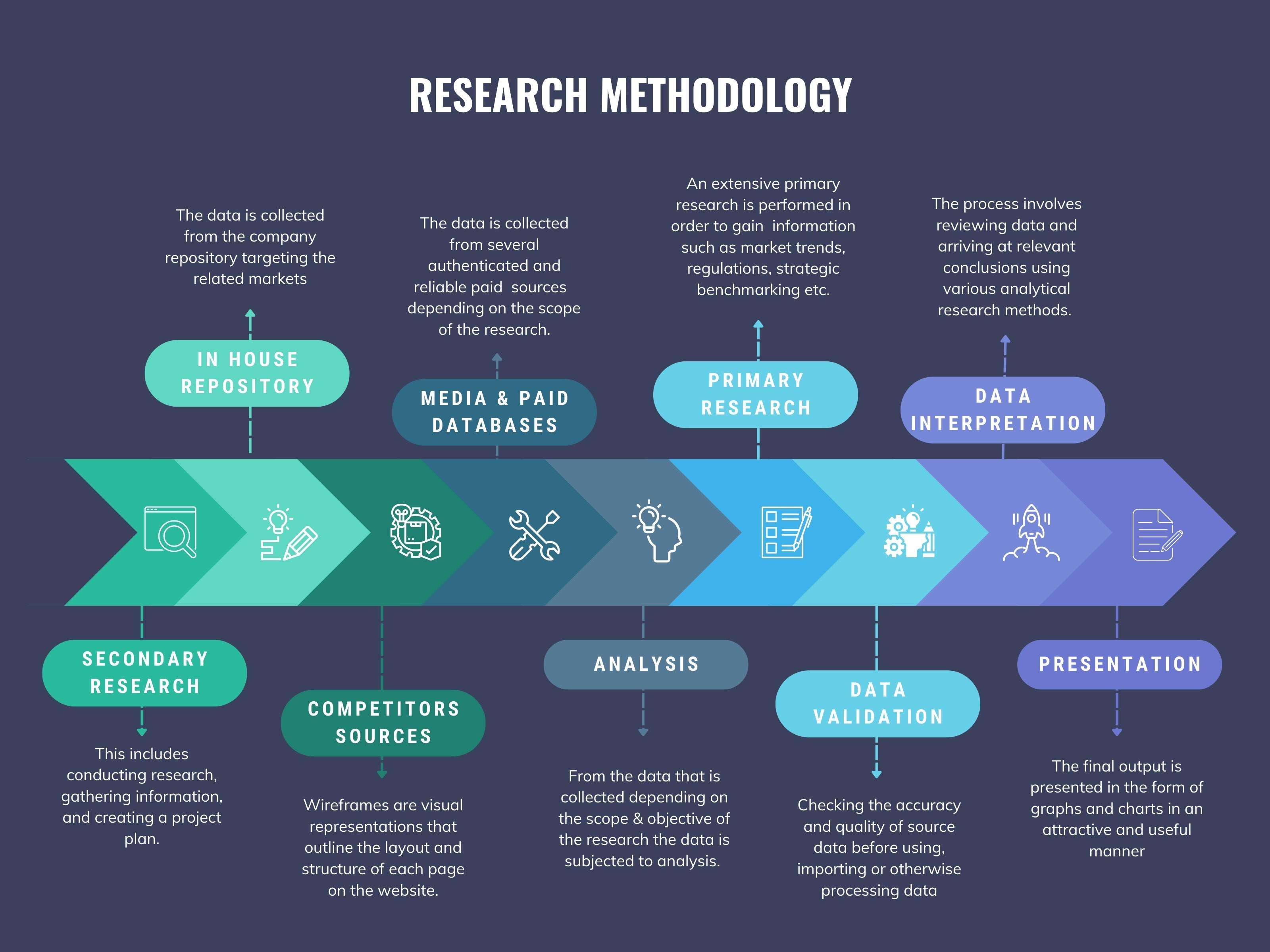
We at ‘Stratistics’ opt for an extensive research approach which involves data mining, data validation, and data analysis. The various research sources include in-house repository, secondary research, competitor’s sources, social media research, client internal data, and primary research.
Our team of analysts prefers the most reliable and authenticated data sources in order to perform the comprehensive literature search. With access to most of the authenticated data bases our team highly considers the best mix of information through various sources to obtain extensive and accurate analysis.
Each report takes an average time of a month and a team of 4 industry analysts. The time may vary depending on the scope and data availability of the desired market report. The various parameters used in the market assessment are standardized in order to enhance the data accuracy.
Data Mining
The data is collected from several authenticated, reliable, paid and unpaid sources and is filtered depending on the scope & objective of the research. Our reports repository acts as an added advantage in this procedure. Data gathering from the raw material suppliers, distributors and the manufacturers is performed on a regular basis, this helps in the comprehensive understanding of the products value chain. Apart from the above mentioned sources the data is also collected from the industry consultants to ensure the objective of the study is in the right direction.
Market trends such as technological advancements, regulatory affairs, market dynamics (Drivers, Restraints, Opportunities and Challenges) are obtained from scientific journals, market related national & international associations and organizations.
Data Analysis
From the data that is collected depending on the scope & objective of the research the data is subjected for the analysis. The critical steps that we follow for the data analysis include:
- Product Lifecycle Analysis
- Competitor analysis
- Risk analysis
- Porters Analysis
- PESTEL Analysis
- SWOT Analysis
The data engineering is performed by the core industry experts considering both the Marketing Mix Modeling and the Demand Forecasting. The marketing mix modeling makes use of multiple-regression techniques to predict the optimal mix of marketing variables. Regression factor is based on a number of variables and how they relate to an outcome such as sales or profits.
Data Validation
The data validation is performed by the exhaustive primary research from the expert interviews. This includes telephonic interviews, focus groups, face to face interviews, and questionnaires to validate our research from all aspects. The industry experts we approach come from the leading firms, involved in the supply chain ranging from the suppliers, distributors to the manufacturers and consumers so as to ensure an unbiased analysis.
We are in touch with more than 15,000 industry experts with the right mix of consultants, CEO's, presidents, vice presidents, managers, experts from both supply side and demand side, executives and so on.
The data validation involves the primary research from the industry experts belonging to:
- Leading Companies
- Suppliers & Distributors
- Manufacturers
- Consumers
- Industry/Strategic Consultants
Apart from the data validation the primary research also helps in performing the fill gap research, i.e. providing solutions for the unmet needs of the research which helps in enhancing the reports quality.
For more details about research methodology, kindly write to us at info@strategymrc.com
Frequently Asked Questions
In case of any queries regarding this report, you can contact the customer service by filing the “Inquiry Before Buy” form available on the right hand side. You may also contact us through email: info@strategymrc.com or phone: +1-301-202-5929
Yes, the samples are available for all the published reports. You can request them by filling the “Request Sample” option available in this page.
Yes, you can request a sample with your specific requirements. All the customized samples will be provided as per the requirement with the real data masked.
All our reports are available in Digital PDF format. In case if you require them in any other formats, such as PPT, Excel etc you can submit a request through “Inquiry Before Buy” form available on the right hand side. You may also contact us through email: info@strategymrc.com or phone: +1-301-202-5929
We offer a free 15% customization with every purchase. This requirement can be fulfilled for both pre and post sale. You may send your customization requirements through email at info@strategymrc.com or call us on +1-301-202-5929.
We have 3 different licensing options available in electronic format.
- Single User Licence: Allows one person, typically the buyer, to have access to the ordered product. The ordered product cannot be distributed to anyone else.
- 2-5 User Licence: Allows the ordered product to be shared among a maximum of 5 people within your organisation.
- Corporate License: Allows the product to be shared among all employees of your organisation regardless of their geographical location.
All our reports are typically be emailed to you as an attachment.
To order any available report you need to register on our website. The payment can be made either through CCAvenue or PayPal payments gateways which accept all international cards.
We extend our support to 6 months post sale. A post sale customization is also provided to cover your unmet needs in the report.
Request Customization
We offer complimentary customization of up to 15% with every purchase. To share your customization requirements, feel free to email us at info@strategymrc.com or call us on +1-301-202-5929. .
Please Note: Customization within the 15% threshold is entirely free of charge. If your request exceeds this limit, we will conduct a feasibility assessment. Following that, a detailed quote and timeline will be provided.
WHY CHOOSE US ?

Assured Quality
Best in class reports with high standard of research integrity

24X7 Research Support
Continuous support to ensure the best customer experience.

Free Customization
Adding more values to your product of interest.

Safe & Secure Access
Providing a secured environment for all online transactions.

Trusted by 600+ Brands
Serving the most reputed brands across the world.