
Automotive Headliners Market
Automotive Headliners Market Forecasts to 2032 – Global Analysis By Material Type (Fabric, Synthetic Leather, Plastic, Composite Materials and Other Material Types), Vehicle Type (Passenger Vehicles, Light Commercial Vehicles (LCVs) and Heavy Commercial Vehicles (HCVs)), Distribution Channel, and By Geography

According to Stratistics MRC, the Global Automotive Headliners Market is accounted for $20.8 billion in 2025 and is expected to reach $28.8 billion by 2032 growing at a CAGR of 4.7% during the forecast period. Automotive headliners are interior components affixed to the roof of vehicles, providing aesthetic appeal and functional benefits. They are made from materials layered with fabric or foam, and they enhance cabin insulation, acoustic dampening, and overall comfort. Headliners also serve as a mounting base for overhead systems such as lighting, airbags, and sunroofs. Their design and material selection significantly influence vehicle interior quality, weight, and compliance with safety and sustainability standards.
According to a 2024 report in ScienceDirect, the automobile industry is the largest user of technical textiles, with about 20kg used in each of the 45 million cars manufactured annually worldwide.
Market Dynamics:
Driver:
Growing vehicle production globally
Surging automotive sales in both established and emerging economies foster heightened demand for interior components, headliners included. As automakers compete to meet evolving consumer expectations for comfort and cabin aesthetics, investments in high-quality headliner materials and advanced fabrication processes have accelerated. Furthermore, increased vehicle ownership, especially in fast-growing markets in Asia and Latin America, reinforces the market’s robust expansion. These dynamics collectively ensure that manufacturers consistently experience strong, broad-based demand for automotive headliners, thereby driving sustainable long-term growth.
Restraint:
Limited aftermarket potential
Due to their durable and integrated nature, headliners are rarely replaced during a vehicle's lifetime unless damaged or involved in significant refurbishment, which happens infrequently. Additionally, the relatively high installation complexity and cost associated with retrofitting headliners further diminishes aftermarket appeal. This structural limitation means that most market opportunities remain closely tied to Original Equipment Manufacturer (OEM) supply channels, constraining overall market size and growth avenues for firms hoping to expand via aftermarket sales.
Opportunity:
Rising electric vehicles (EV)
The transition to EVs prioritizes lightweight, eco-friendly, and technologically advanced interiors to enhance battery efficiency and user experience. As a result, OEMs are increasingly opting for advanced headliner materials offering superior acoustic insulation, integration of lighting or sensor systems, and reduced overall vehicle weight. Moreover, consumer expectation for premium, quiet cabins in EVs fuels innovation across headliner technologies. The rise of electrification is catalyzing demand for highly engineered and sustainable headliner solutions, paving fresh avenues for both established players and startups.
Threat:
Intense competition among suppliers
The presence of numerous global and local manufacturers, each striving to secure contracts with major automakers, exerts downward pressure on pricing and profit margins. Rapid technological advancements and changing consumer preferences require continuous investments in innovation, raising entry barriers while encouraging consolidation. OEMs regularly demand cost efficiencies and higher quality, intensifying supplier rivalry.
Covid-19 Impact:
The COVID-19 pandemic temporarily hampered the automotive headliners market, as supply chain disruptions, factory shutdowns, and workforce shortages led to steep declines in global vehicle production. Lockdowns and economic uncertainty dampened consumer demand for new vehicles, further restraining market revenue. The closure of automotive assembly plants delayed project timelines and impacted OEM procurement cycles. However, as economies gradually reopened and automakers resumed operations, pent-up demand and renewed consumer activity supported a steady market rebound through 2021 and beyond, although supply chain challenges and raw material availability remained ongoing concerns.
The fabric segment is expected to be the largest during the forecast period
The fabric segment is expected to account for the largest market share during the forecast period. Fabric-based headliners appeal strongly to automakers due to their cost-efficiency, wide variety of design options, and beneficial acoustic and insulation properties. This segment’s dominance is reinforced by rising production of compact and mid-range vehicles, where affordability and interior appeal are critical. Fabric headliners can be seamlessly integrated with vehicle design requirements, enabling manufacturers to offer custom textures, shades, and patterns without significant increases in production costs, thereby sustaining the segment’s leading market position.
The passenger vehicles segment is expected to have the highest CAGR during the forecast period
Over the forecast period, the passenger vehicles segment is predicted to witness the highest growth rate due to increasing urbanization, higher disposable incomes, and growing consumer preference for enhanced comfort and aesthetics. The proliferation of electric and hybrid passenger vehicles, requiring advanced noise insulation and lightweight interiors, further fuels headliner demand within this segment. Automaker emphasis on in-cabin experience upgrades and integration of premium features in mainstream models ensures that the passenger vehicle category continues to expand at the fastest pace in headliner adoption.
Region with largest share:
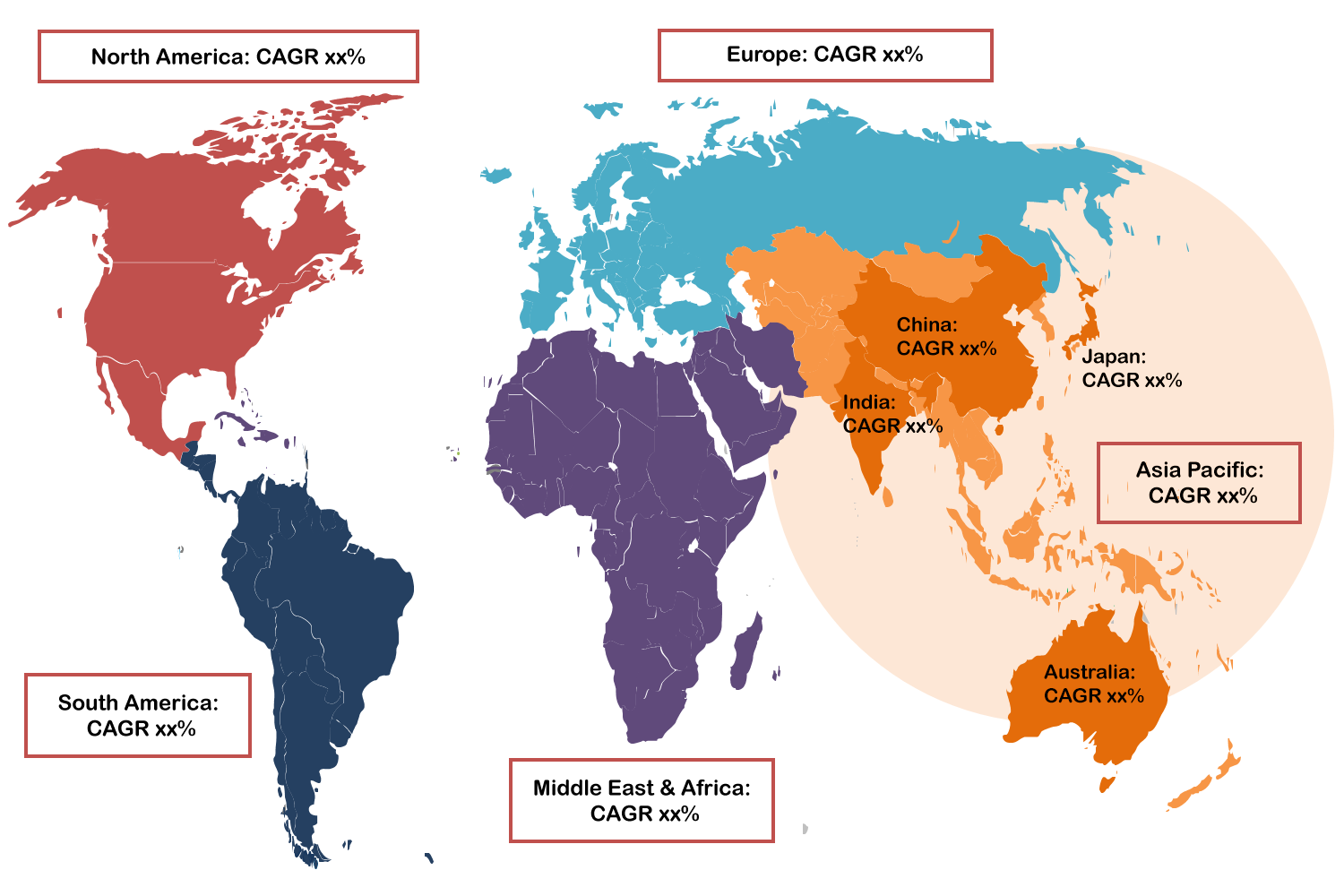
During the forecast period, the Asia Pacific region is expected to hold the largest market share. Robust automotive manufacturing activities in countries such as China, India, Japan, and South Korea, coupled with rapidly rising vehicle ownership, underpin the region’s primacy. The burgeoning middle class, ongoing urbanization, and increasing acceptance of electric vehicles further stimulate market demand. Additionally, the well-developed ecosystem of Tier I and Tier II suppliers drives innovation and competitive pricing, reinforcing Asia Pacific’s leadership position.
Region with highest CAGR:
Over the forecast period, the Asia Pacific region is anticipated to exhibit the highest CAGR. The region’s dynamic growth is driven by a confluence of rising domestic vehicle sales, aggressive investments in EV technologies, and strong policy support for local automotive industries. With China and India establishing themselves as global automotive manufacturing hubs and increasing their focus on advanced lightweight materials, the market for automotive headliners continues to expand rapidly. Collaboration between international OEMs and regional suppliers accelerates the adoption of innovative headliner materials and designs, sustaining Asia Pacific’s industry-leading growth trajectory.
Key players in the market
Some of the key players in Automotive Headliners Market include Grupo Antolin-Irausa, S.A., Motus Integrated Technologies, Toyota Boshoku Corporation, Kasai North America, Inc., International Automotive Components Group SA (IAC Group), Howa Co., Ltd., UGN, Inc., SA Automotive, Hayashi Telempu Corporation, Freudenberg Performance Materials, Inteva Products, LLC, IMR-Industrialesud Spa, Lear Corporation, Adient plc, Atlas Roofing Corporation, Harodite Industries, and Sage Automotive Interiors.
Key Developments:
In April 2025, Toyota Boshoku Corporation will exhibit at the 21st International Automobile Industry Exhibition (Auto Shanghai 2025), taking place from April 23 to May 2. This marks the company's eighth appearance at the event. Under the theme ""reSpire*1: Beyond the Expectation,"" Toyota Boshoku will present advanced products and technologies focused on comfort and environmental sustainability. The exhibits will also showcase innovative interior concepts for future mobility, particularly in anticipation of autonomous driving.
In November 2024, Nissan Motor Co., Ltd. announced the successful completion of its investment in Kasai Kogyo Co., Ltd., a major Japanese supplier of automotive parts. This investment, first disclosed on May 9, 2024, includes the acquisition of newly issued Class A preferred shares of Kasai Kogyo. The completion follows all necessary formalities, including shareholder approval at Kasai Kogyo’s recent ordinary general meeting and regulatory clearances. This strategic investment is part of Nissan’s efforts to enhance its supply chain and strengthen partnerships that align with its goals of innovation in automotive technology. The partnership with Kasai Kogyo is expected to support advancements in sustainable and next-generation vehicle components, signaling Nissan’s ongoing commitment to innovation in a competitive global market.
Material Types Covered:
• Fabric
• Synthetic Leather
• Plastic
• Composite Materials
• Other Material Types
Vehicle Types:
• Passenger Vehicles
• Light Commercial Vehicles (LCVs)
• Heavy Commercial Vehicles (HCVs)
Distribution Channels Covered:
• OEMs (Original Equipment Manufacturers)
• Aftermarket
Regions Covered:
• North America
o US
o Canada
o Mexico
• Europe
o Germany
o UK
o Italy
o France
o Spain
o Rest of Europe
• Asia Pacific
o Japan
o China
o India
o Australia
o New Zealand
o South Korea
o Rest of Asia Pacific
• South America
o Argentina
o Brazil
o Chile
o Rest of South America
• Middle East & Africa
o Saudi Arabia
o UAE
o Qatar
o South Africa
o Rest of Middle East & Africa
What our report offers:
- Market share assessments for the regional and country-level segments
- Strategic recommendations for the new entrants
- Covers Market data for the years 2024, 2025, 2026, 2028, and 2032
- Market Trends (Drivers, Constraints, Opportunities, Threats, Challenges, Investment Opportunities, and recommendations)
- Strategic recommendations in key business segments based on the market estimations
- Competitive landscaping mapping the key common trends
- Company profiling with detailed strategies, financials, and recent developments
- Supply chain trends mapping the latest technological advancements
Free Customization Offerings:
All the customers of this report will be entitled to receive one of the following free customization options:
• Company Profiling
o Comprehensive profiling of additional market players (up to 3)
o SWOT Analysis of key players (up to 3)
• Regional Segmentation
o Market estimations, Forecasts and CAGR of any prominent country as per the client's interest (Note: Depends on feasibility check)
• Competitive Benchmarking
o Benchmarking of key players based on product portfolio, geographical presence, and strategic alliances
Table of Contents
1 Executive Summary
2 Preface
2.1 Abstract
2.2 Stake Holders
2.3 Research Scope
2.4 Research Methodology
2.4.1 Data Mining
2.4.2 Data Analysis
2.4.3 Data Validation
2.4.4 Research Approach
2.5 Research Sources
2.5.1 Primary Research Sources
2.5.2 Secondary Research Sources
2.5.3 Assumptions
3 Market Trend Analysis
3.1 Introduction
3.2 Drivers
3.3 Restraints
3.4 Opportunities
3.5 Threats
3.6 Emerging Markets
3.7 Impact of Covid-19
4 Porters Five Force Analysis
4.1 Bargaining power of suppliers
4.2 Bargaining power of buyers
4.3 Threat of substitutes
4.4 Threat of new entrants
4.5 Competitive rivalry
5 Global Automotive Headliners Market, By Material Type
5.1 Introduction
5.2 Fabric
5.3 Synthetic Leather
5.4 Plastic
5.5 Composite Materials
5.6 Other Material Types
6 Global Automotive Headliners Market, By Vehicle Type
6.1 Introduction
6.2 Passenger Vehicles
6.2.1 Hatchbacks
6.2.2 Sedans
6.2.3 SUVs
6.3 Light Commercial Vehicles (LCVs)
6.4 Heavy Commercial Vehicles (HCVs)
7 Global Automotive Headliners Market, By Distribution Channel
7.1 Introduction
7.2 OEMs (Original Equipment Manufacturers)
7.3 Aftermarket
8 Global Automotive Headliners Market, By Geography
8.1 Introduction
8.2 North America
8.2.1 US
8.2.2 Canada
8.2.3 Mexico
8.3 Europe
8.3.1 Germany
8.3.2 UK
8.3.3 Italy
8.3.4 France
8.3.5 Spain
8.3.6 Rest of Europe
8.4 Asia Pacific
8.4.1 Japan
8.4.2 China
8.4.3 India
8.4.4 Australia
8.4.5 New Zealand
8.4.6 South Korea
8.4.7 Rest of Asia Pacific
8.5 South America
8.5.1 Argentina
8.5.2 Brazil
8.5.3 Chile
8.5.4 Rest of South America
8.6 Middle East & Africa
8.6.1 Saudi Arabia
8.6.2 UAE
8.6.3 Qatar
8.6.4 South Africa
8.6.5 Rest of Middle East & Africa
9 Key Developments
9.1 Agreements, Partnerships, Collaborations and Joint Ventures
9.2 Acquisitions & Mergers
9.3 New Product Launch
9.4 Expansions
9.5 Other Key Strategies
10 Company Profiling
10.1 Grupo Antolin-Irausa, S.A.
10.2 Motus Integrated Technologies
10.3 Toyota Boshoku Corporation
10.4 Kasai North America, Inc.
10.5 International Automotive Components Group SA (IAC Group)
10.6 Howa Co., Ltd.
10.7 UGN, Inc.
10.8 SA Automotive
10.9 Hayashi Telempu Corporation
10.10 Freudenberg Performance Materials
10.11 Inteva Products, LLC
10.12 IMR-Industrialesud Spa
10.13 Lear Corporation
10.14 Adient plc.
10.15 Atlas Roofing Corporation
10.16 Harodite Industries
10.17 Sage Automotive Interiors
List of Tables
1 Global Automotive Headliners Market Outlook, By Region (2024-2032) ($MN)
2 Global Automotive Headliners Market Outlook, By Material Type (2024-2032) ($MN)
3 Global Automotive Headliners Market Outlook, By Fabric (2024-2032) ($MN)
4 Global Automotive Headliners Market Outlook, By Synthetic Leather (2024-2032) ($MN)
5 Global Automotive Headliners Market Outlook, By Plastic (2024-2032) ($MN)
6 Global Automotive Headliners Market Outlook, By Composite Materials (2024-2032) ($MN)
7 Global Automotive Headliners Market Outlook, By Other Material Types (2024-2032) ($MN)
8 Global Automotive Headliners Market Outlook, By Vehicle Type (2024-2032) ($MN)
9 Global Automotive Headliners Market Outlook, By Passenger Vehicles (2024-2032) ($MN)
10 Global Automotive Headliners Market Outlook, By Hatchbacks (2024-2032) ($MN)
11 Global Automotive Headliners Market Outlook, By Sedans (2024-2032) ($MN)
12 Global Automotive Headliners Market Outlook, By SUVs (2024-2032) ($MN)
13 Global Automotive Headliners Market Outlook, By Light Commercial Vehicles (LCVs) (2024-2032) ($MN)
14 Global Automotive Headliners Market Outlook, By Heavy Commercial Vehicles (HCVs) (2024-2032) ($MN)
15 Global Automotive Headliners Market Outlook, By Distribution Channel (2024-2032) ($MN)
16 Global Automotive Headliners Market Outlook, By OEMs (Original Equipment Manufacturers) (2024-2032) ($MN)
17 Global Automotive Headliners Market Outlook, By Aftermarket (2024-2032) ($MN)
Note: Tables for North America, Europe, APAC, South America, and Middle East & Africa Regions are also represented in the same manner as above.
List of Figures
RESEARCH METHODOLOGY

We at ‘Stratistics’ opt for an extensive research approach which involves data mining, data validation, and data analysis. The various research sources include in-house repository, secondary research, competitor’s sources, social media research, client internal data, and primary research.
Our team of analysts prefers the most reliable and authenticated data sources in order to perform the comprehensive literature search. With access to most of the authenticated data bases our team highly considers the best mix of information through various sources to obtain extensive and accurate analysis.
Each report takes an average time of a month and a team of 4 industry analysts. The time may vary depending on the scope and data availability of the desired market report. The various parameters used in the market assessment are standardized in order to enhance the data accuracy.
Data Mining
The data is collected from several authenticated, reliable, paid and unpaid sources and is filtered depending on the scope & objective of the research. Our reports repository acts as an added advantage in this procedure. Data gathering from the raw material suppliers, distributors and the manufacturers is performed on a regular basis, this helps in the comprehensive understanding of the products value chain. Apart from the above mentioned sources the data is also collected from the industry consultants to ensure the objective of the study is in the right direction.
Market trends such as technological advancements, regulatory affairs, market dynamics (Drivers, Restraints, Opportunities and Challenges) are obtained from scientific journals, market related national & international associations and organizations.
Data Analysis
From the data that is collected depending on the scope & objective of the research the data is subjected for the analysis. The critical steps that we follow for the data analysis include:
- Product Lifecycle Analysis
- Competitor analysis
- Risk analysis
- Porters Analysis
- PESTEL Analysis
- SWOT Analysis
The data engineering is performed by the core industry experts considering both the Marketing Mix Modeling and the Demand Forecasting. The marketing mix modeling makes use of multiple-regression techniques to predict the optimal mix of marketing variables. Regression factor is based on a number of variables and how they relate to an outcome such as sales or profits.
Data Validation
The data validation is performed by the exhaustive primary research from the expert interviews. This includes telephonic interviews, focus groups, face to face interviews, and questionnaires to validate our research from all aspects. The industry experts we approach come from the leading firms, involved in the supply chain ranging from the suppliers, distributors to the manufacturers and consumers so as to ensure an unbiased analysis.
We are in touch with more than 15,000 industry experts with the right mix of consultants, CEO's, presidents, vice presidents, managers, experts from both supply side and demand side, executives and so on.
The data validation involves the primary research from the industry experts belonging to:
- Leading Companies
- Suppliers & Distributors
- Manufacturers
- Consumers
- Industry/Strategic Consultants
Apart from the data validation the primary research also helps in performing the fill gap research, i.e. providing solutions for the unmet needs of the research which helps in enhancing the reports quality.
For more details about research methodology, kindly write to us at info@strategymrc.com
Frequently Asked Questions
In case of any queries regarding this report, you can contact the customer service by filing the “Inquiry Before Buy” form available on the right hand side. You may also contact us through email: info@strategymrc.com or phone: +1-301-202-5929
Yes, the samples are available for all the published reports. You can request them by filling the “Request Sample” option available in this page.
Yes, you can request a sample with your specific requirements. All the customized samples will be provided as per the requirement with the real data masked.
All our reports are available in Digital PDF format. In case if you require them in any other formats, such as PPT, Excel etc you can submit a request through “Inquiry Before Buy” form available on the right hand side. You may also contact us through email: info@strategymrc.com or phone: +1-301-202-5929
We offer a free 15% customization with every purchase. This requirement can be fulfilled for both pre and post sale. You may send your customization requirements through email at info@strategymrc.com or call us on +1-301-202-5929.
We have 3 different licensing options available in electronic format.
- Single User Licence: Allows one person, typically the buyer, to have access to the ordered product. The ordered product cannot be distributed to anyone else.
- 2-5 User Licence: Allows the ordered product to be shared among a maximum of 5 people within your organisation.
- Corporate License: Allows the product to be shared among all employees of your organisation regardless of their geographical location.
All our reports are typically be emailed to you as an attachment.
To order any available report you need to register on our website. The payment can be made either through CCAvenue or PayPal payments gateways which accept all international cards.
We extend our support to 6 months post sale. A post sale customization is also provided to cover your unmet needs in the report.
Request Customization
We offer complimentary customization of up to 15% with every purchase. To share your customization requirements, feel free to email us at info@strategymrc.com or call us on +1-301-202-5929. .
Please Note: Customization within the 15% threshold is entirely free of charge. If your request exceeds this limit, we will conduct a feasibility assessment. Following that, a detailed quote and timeline will be provided.
WHY CHOOSE US ?

Assured Quality
Best in class reports with high standard of research integrity

24X7 Research Support
Continuous support to ensure the best customer experience.

Free Customization
Adding more values to your product of interest.

Safe & Secure Access
Providing a secured environment for all online transactions.

Trusted by 600+ Brands
Serving the most reputed brands across the world.
