
Automotive Intake Manifold Market
Automotive Intake Manifold Market Forecasts to 2034 – Global Analysis By Manifold Material (Aluminum, Polymer and Composite, and Cast Iron and Other Metals), Manifold Design, Engine Type, Vehicle Type, and By Geography

Market Dynamics:
Driver:
Efficient combustion begins with consistent air distribution
Each cylinder needs an appropriate air supply across changing engine speeds and loads. Uneven distribution or unnecessary restriction can compromise the calibration work carried out elsewhere in the engine. Manifold geometry therefore remains an important design variable as manufacturers seek efficient combustion from smaller, turbocharged or hybrid-optimized engines. The need becomes more demanding when air-path components must share a restricted installation envelope. Suppliers that can model and validate the complete flow arrangement contribute directly to engine development. This supports demand for carefully engineered manifolds even when the external appearance of the component suggests a relatively simple molded or cast part.
Restraint:
Integrated features increase validation and repair complexity
Adding variable runners, actuators, cooling interfaces or sensors can improve function but also introduces more potential failure points. Polymer structures must retain shape and sealing under heat, pressure and repeated cycling, while metal designs face weight and manufacturing-cost tradeoffs. Oil mist and recirculated exhaust can affect internal cleanliness in some applications. These considerations require durability work beyond a favorable airflow test. A highly integrated manifold may also be expensive to replace when one internal mechanism fails. Automakers therefore need to balance functional gains against assembly cost, warranty exposure and the practical serviceability of the complete module.
Opportunity:
Combined intake modules can simplify crowded engine layouts
There is room for suppliers to bring air distribution, charge-air management and selected sensing or actuation into coordinated modules. This can reduce external joints and help vehicle manufacturers package combustion engines alongside hybrid hardware. Modular approaches may also support related engine variants without requiring every feature to be redesigned from the beginning. The opportunity depends on joint development with the automaker, because airflow, temperature and control requirements vary substantially by engine. Suppliers that provide simulation, manufacturing and validation as a connected capability are better positioned than those competing solely on the material cost of the manifold housing.
Threat:
A shrinking engine portfolio concentrates customer exposure
Electric-only vehicles remove the intake manifold, and consolidation of combustion engine families can reduce the number of new manifold programs available to suppliers. A supplier may win a technically valuable hybrid project while still losing total addressable volume elsewhere. Dedicated tooling and platform-specific geometry make that transition difficult to manage. Customer pressure for lower costs can intensify as established engine programs approach maturity. Replacement demand offers some continuity, but manifolds are not routine annual service items. The resulting risk is concentrated exposure to a small number of engine architectures whose production schedules can change materially.
Covid-19 Impact:
COVID-19 affected intake manifolds through engine-plant closures, interruptions to molded and cast parts, and delays in vehicle development work. Actuated or sensor-equipped modules could be constrained by missing electronics even when the main housing was available. Lower travel reduced some immediate maintenance activity, while repair needs persisted for vehicles remaining in service. Because manifolds are platform-specific, suppliers could not easily redirect inventory to unrelated engines. The recovery required synchronizing complete module production with engine assembly and restarting validation activities that depended on laboratories, test vehicles and coordinated engineering teams.
The Polymer and Composite segment is expected to be the largest during the forecast period
Polymer and Composite is expected to be the largest material segment because these materials allow intricate runner geometry and integrated mounting features with comparatively low mass. Established molding processes can serve high-volume passenger-engine programs efficiently, provided the design meets temperature and pressure requirements. Their flexibility supports compact packages and selected functional integration without extensive machining. Aluminum remains important in demanding environments and particular performance applications, so material choice is not uniform. The expected lead of polymers and composites reflects their broad suitability for contemporary passenger-vehicle manifolds rather than a claim that they outperform metal across every engine condition.
The Integrated Charge-Air and Intake Modules segment is expected to have the highest CAGR during the forecast period
Integrated Charge-Air and Intake Modules are projected to grow fastest as automakers seek compact arrangements for boosted and hybrid engine platforms. Coordinating the cooling and distribution of intake air can reduce separate interfaces and improve packaging consistency. Such modules also increase the supplier’s engineering contribution, potentially raising value per engine even where unit growth is modest. The segment begins from a narrower base than conventional plenum designs and requires close thermal and airflow validation. Its outlook is strongest where integration solves a documented vehicle constraint, rather than where added complexity merely combines parts that could function more economically separately.
Region with largest share:
Asia Pacific is expected to command the largest regional position because it supports a wide range of gasoline, diesel and hybrid engine manufacturing. High-volume passenger-car platforms create demand for molded intake assemblies, while commercial applications sustain different metal and module configurations. The region’s supplier networks can provide tooling, polymers, castings and actuators near engine plants. Local engineering remains essential because vehicle classes and engine strategies differ considerably across markets. This combination of manufacturing scale and application diversity supports a broad intake-manifold business rather than dependence on a single premium or performance-engine category.
Region with highest CAGR:
Asia Pacific is anticipated to record the highest growth as new hybrid and turbocharged engine programs create opportunities for redesigned intake paths and integrated modules. Suppliers can gain business from local development partnerships that respond quickly to packaging and fuel-efficiency targets. Growth is expected to be uneven because battery-electric adoption removes the component from some vehicles, while other markets continue expanding combustion-based fleets. Increased functionality per manifold can partly support value growth under those conditions. The strongest prospects belong to adaptable designs and confirmed engine awards, supported by the ability to validate several operating strategies on related platforms.
Key players in the market
Some of the key players in the Automotive Intake Manifold Market include MAHLE, Aisan Industry, MoldTecs, Astemo, Rheinmetall (Pierburg), Sogefi, Röchling Automotive, Holley, Edelbrock, Dorman Products, Novares, AISIN, Skunk2 Racing, Jenvey Dynamics, and Mikuni.
Key Developments:
In April 2026, MAHLE’s annual results announcement identified air-intake modules among the product categories securing orders during 2025. The disclosure provided direct evidence of continuing customer business for intake hardware within a diversified powertrain portfolio, without identifying a separate named vehicle launch or treating every order as completed production.
In June 2025, Rheinmetall announced electronic throttle-body and pressure-control-valve business for a Chinese hybrid manufacturer. This parent engine air-management development is relevant to intake modules because controlled airflow and manifold packaging must be coordinated, although the announcement did not describe an intake-manifold supply award.
In May 2024, Subaru, Toyota and Mazda committed to developing new engines suited to electrification and more compact vehicle packaging. This parent combustion-powertrain development creates design context for intake manifolds, whose airflow paths and installation geometry must adapt to the operating strategies and layouts of future hybrid engines.
Manifold Materials Covered:
• Aluminum
• Polymer and Composite
• Cast Iron and Other Metals
Manifold Designs Covered:
• Single-Plane and Plenum Designs
• Variable-Length Intake Manifolds
• Integrated Charge-Air and Intake Modules
Engine Types Covered:
• Gasoline Engines
• Diesel Engines
• Turbocharged and Downsized Engines
• Hybrid Powertrains
Vehicle Types Covered:
• Passenger Cars
• Light Commercial Vehicles
• Heavy Commercial Vehicles
Regions Covered:
• North America
o United States
o Canada
o Mexico
• Europe
o United Kingdom
o Germany
o France
o Italy
o Spain
o Netherlands
o Belgium
o Sweden
o Switzerland
o Poland
o Rest of Europe
• Asia Pacific
o China
o Japan
o India
o South Korea
o Australia
o Indonesia
o Thailand
o Malaysia
o Singapore
o Vietnam
o Rest of Asia Pacific
• South America
o Brazil
o Argentina
o Colombia
o Chile
o Peru
o Rest of South America
• Rest of the World (RoW)
o Middle East
▪ Saudi Arabia
▪ United Arab Emirates
▪ Qatar
▪ Israel
▪ Rest of Middle East
o Africa
▪ South Africa
▪ Egypt
▪ Morocco
▪ Rest of Africa
What our report offers:
- Market share assessments for the regional and country-level segments
- Strategic recommendations for the new entrants
- Covers Market data for the years 2023, 2024, 2025, 2026, 2027, 2028, 2030, 2032 and 2034
- Market Trends (Drivers, Constraints, Opportunities, Threats, Challenges, Investment Opportunities, and recommendations)
- Strategic recommendations in key business segments based on the market estimations
- Competitive landscaping mapping the key common trends
- Company profiling with detailed strategies, financials, and recent developments
- Supply chain trends mapping the latest technological advancements
Free Customization Offerings:
All the customers of this report will be entitled to receive one of the following free customization options:
• Company Profiling
o Comprehensive profiling of additional market players (up to 3)
o SWOT Analysis of key players (up to 3)
• Regional Segmentation
o Market estimations, Forecasts and CAGR of any prominent country as per the client's interest (Note: Depends on feasibility check)
• Competitive Benchmarking
o Benchmarking of key players based on product portfolio, geographical presence, and strategic alliances
Table of Contents
1 Executive Summary1.1 Market Snapshot and Key Highlights
1.2 Growth Drivers, Challenges, and Opportunities
1.3 Competitive Landscape Overview
1.4 Strategic Insights and Recommendations
2 Research Framework
2.1 Study Objectives and Scope
2.2 Stakeholder Analysis
2.3 Research Assumptions and Limitations
2.4 Research Methodology
2.4.1 Data Collection (Primary and Secondary)
2.4.2 Data Modeling and Estimation Techniques
2.4.3 Data Validation and Triangulation
2.4.4 Analytical and Forecasting Approach
3 Market Dynamics and Trend Analysis
3.1 Market Definition and Structure
3.2 Key Market Drivers
3.3 Market Restraints and Challenges
3.4 Growth Opportunities and Investment Hotspots
3.5 Industry Threats and Risk Assessment
3.6 Technology and Innovation Landscape
3.7 Emerging and High-Growth Markets
3.8 Regulatory and Policy Environment
3.9 Impact of COVID-19 and Recovery Outlook
4 Competitive and Strategic Assessment
4.1 Porter's Five Forces Analysis
4.1.1 Supplier Bargaining Power
4.1.2 Buyer Bargaining Power
4.1.3 Threat of Substitutes
4.1.4 Threat of New Entrants
4.1.5 Competitive Rivalry
4.2 Market Share Analysis of Key Players
4.3 Product Benchmarking and Performance Comparison
5 Global Automotive Intake Manifold Market, By Manifold Material
5.1 Aluminum
5.2 Polymer and Composite
5.3 Cast Iron and Other Metals
6 Global Automotive Intake Manifold Market, By Manifold Design
6.1 Single-Plane and Plenum Designs
6.2 Variable-Length Intake Manifolds
6.3 Integrated Charge-Air and Intake Modules
7 Global Automotive Intake Manifold Market, By Engine Type
7.1 Gasoline Engines
7.2 Diesel Engines
7.3 Turbocharged and Downsized Engines
7.4 Hybrid Powertrains
8 Global Automotive Intake Manifold Market, By Vehicle Type
8.1 Passenger Cars
8.2 Light Commercial Vehicles
8.3 Heavy Commercial Vehicles
9 Global Automotive Intake Manifold Market, By Geography
9.1 North America
9.1.1 United States
9.1.2 Canada
9.1.3 Mexico
9.2 Europe
9.2.1 United Kingdom
9.2.2 Germany
9.2.3 France
9.2.4 Italy
9.2.5 Spain
9.2.6 Netherlands
9.2.7 Belgium
9.2.8 Sweden
9.2.9 Switzerland
9.2.10 Poland
9.2.11 Rest of Europe
9.3 Asia Pacific
9.3.1 China
9.3.2 Japan
9.3.3 India
9.3.4 South Korea
9.3.5 Australia
9.3.6 Indonesia
9.3.7 Thailand
9.3.8 Malaysia
9.3.9 Singapore
9.3.10 Vietnam
9.3.11 Rest of Asia Pacific
9.4 South America
9.4.1 Brazil
9.4.2 Argentina
9.4.3 Colombia
9.4.4 Chile
9.4.5 Peru
9.4.6 Rest of South America
9.5 Rest of the World (RoW)
9.5.1 Middle East
9.5.1.1 Saudi Arabia
9.5.1.2 United Arab Emirates
9.5.1.3 Qatar
9.5.1.4 Israel
9.5.1.5 Rest of Middle East
9.5.2 Africa
9.5.2.1 South Africa
9.5.2.2 Egypt
9.5.2.3 Morocco
9.5.2.4 Rest of Africa
10 Strategic Market Intelligence
10.1 Industry Value Network and Supply Chain Assessment
10.2 White-Space and Opportunity Mapping
10.3 Product Evolution and Market Life Cycle Analysis
10.4 Channel, Distributor, and Go-to-Market Assessment
11 Industry Developments and Strategic Initiatives
11.1 Mergers and Acquisitions
11.2 Partnerships, Alliances, and Joint Ventures
11.3 New Product Launches and Certifications
11.4 Capacity Expansion and Investments
11.5 Other Strategic Initiatives
12 Company Profiles
12.1 MAHLE
12.2 Aisan Industry
12.3 MoldTecs
12.4 Astemo
12.5 Rheinmetall (Pierburg)
12.6 Sogefi
12.7 Röchling Automotive
12.8 Holley
12.9 Edelbrock
12.10 Dorman Products
12.11 Novares
12.12 AISIN
12.13 Skunk2 Racing
12.14 Jenvey Dynamics
12.15 Mikuni
List of Tables
1 Global Automotive Intake Manifold Market Outlook, By Region (2023–2034) ($MN)
2 Global Automotive Intake Manifold Market Outlook, By Manifold Material (2023–2034) ($MN)
3 Global Automotive Intake Manifold Market Outlook, By Aluminum (2023–2034) ($MN)
4 Global Automotive Intake Manifold Market Outlook, By Polymer and Composite (2023–2034) ($MN)
5 Global Automotive Intake Manifold Market Outlook, By Cast Iron and Other Metals (2023–2034) ($MN)
6 Global Automotive Intake Manifold Market Outlook, By Manifold Design (2023–2034) ($MN)
7 Global Automotive Intake Manifold Market Outlook, By Single-Plane and Plenum Designs (2023–2034) ($MN)
8 Global Automotive Intake Manifold Market Outlook, By Variable-Length Intake Manifolds (2023–2034) ($MN)
9 Global Automotive Intake Manifold Market Outlook, By Integrated Charge-Air and Intake Modules (2023–2034) ($MN)
10 Global Automotive Intake Manifold Market Outlook, By Engine Type (2023–2034) ($MN)
11 Global Automotive Intake Manifold Market Outlook, By Gasoline Engines (2023–2034) ($MN)
12 Global Automotive Intake Manifold Market Outlook, By Diesel Engines (2023–2034) ($MN)
13 Global Automotive Intake Manifold Market Outlook, By Turbocharged and Downsized Engines (2023–2034) ($MN)
14 Global Automotive Intake Manifold Market Outlook, By Hybrid Powertrains (2023–2034) ($MN)
15 Global Automotive Intake Manifold Market Outlook, By Vehicle Type (2023–2034) ($MN)
16 Global Automotive Intake Manifold Market Outlook, By Passenger Cars (2023–2034) ($MN)
17 Global Automotive Intake Manifold Market Outlook, By Light Commercial Vehicles (2023–2034) ($MN)
18 Global Automotive Intake Manifold Market Outlook, By Heavy Commercial Vehicles (2023–2034) ($MN)
Note: Tables for North America, Europe, APAC, South America, and Rest of the World (RoW) Regions are also represented in the same manner as above.
List of Figures
RESEARCH METHODOLOGY
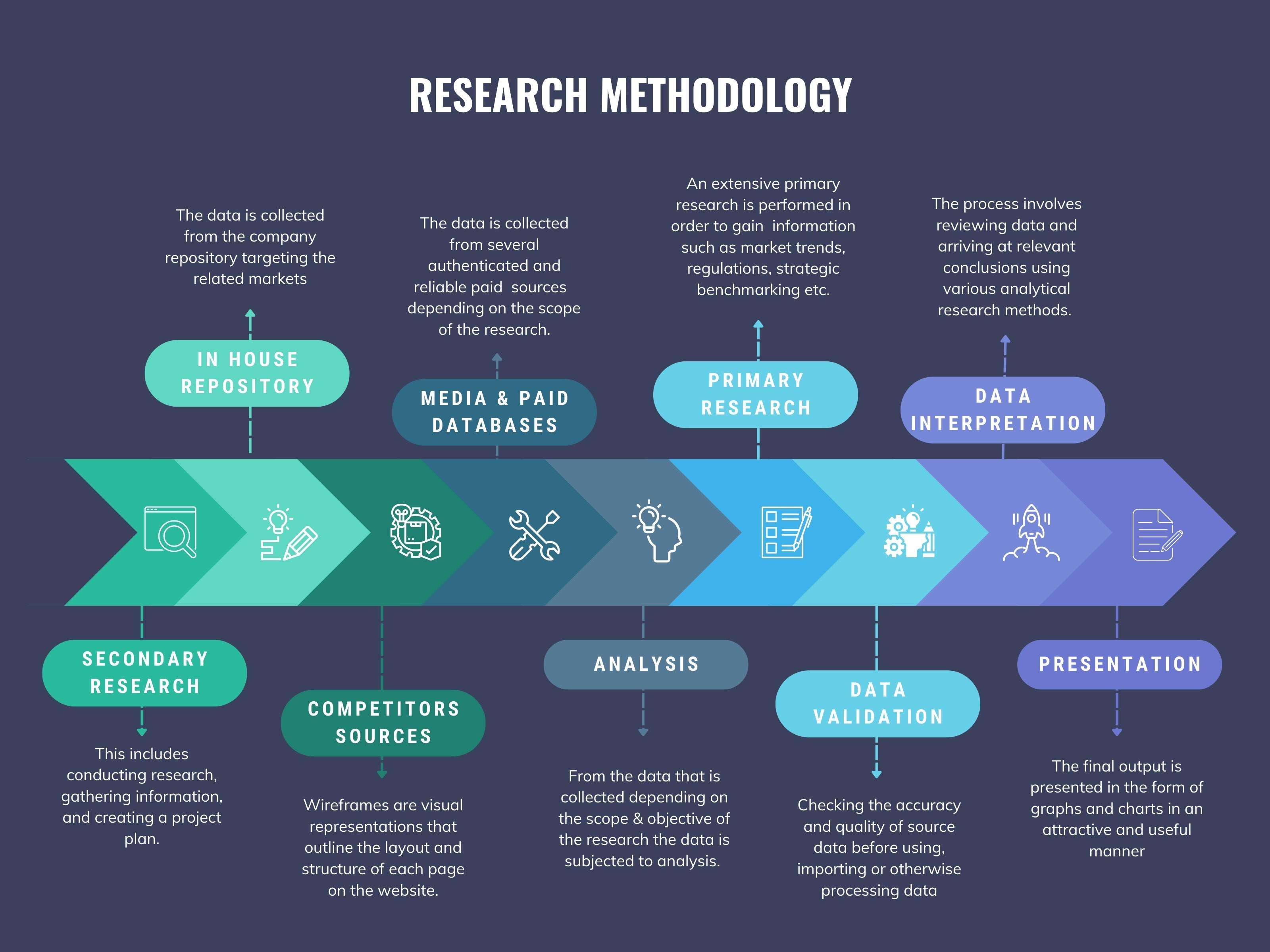
We at ‘Stratistics’ opt for an extensive research approach which involves data mining, data validation, and data analysis. The various research sources include in-house repository, secondary research, competitor’s sources, social media research, client internal data, and primary research.
Our team of analysts prefers the most reliable and authenticated data sources in order to perform the comprehensive literature search. With access to most of the authenticated data bases our team highly considers the best mix of information through various sources to obtain extensive and accurate analysis.
Each report takes an average time of a month and a team of 4 industry analysts. The time may vary depending on the scope and data availability of the desired market report. The various parameters used in the market assessment are standardized in order to enhance the data accuracy.
Data Mining
The data is collected from several authenticated, reliable, paid and unpaid sources and is filtered depending on the scope & objective of the research. Our reports repository acts as an added advantage in this procedure. Data gathering from the raw material suppliers, distributors and the manufacturers is performed on a regular basis, this helps in the comprehensive understanding of the products value chain. Apart from the above mentioned sources the data is also collected from the industry consultants to ensure the objective of the study is in the right direction.
Market trends such as technological advancements, regulatory affairs, market dynamics (Drivers, Restraints, Opportunities and Challenges) are obtained from scientific journals, market related national & international associations and organizations.
Data Analysis
From the data that is collected depending on the scope & objective of the research the data is subjected for the analysis. The critical steps that we follow for the data analysis include:
- Product Lifecycle Analysis
- Competitor analysis
- Risk analysis
- Porters Analysis
- PESTEL Analysis
- SWOT Analysis
The data engineering is performed by the core industry experts considering both the Marketing Mix Modeling and the Demand Forecasting. The marketing mix modeling makes use of multiple-regression techniques to predict the optimal mix of marketing variables. Regression factor is based on a number of variables and how they relate to an outcome such as sales or profits.
Data Validation
The data validation is performed by the exhaustive primary research from the expert interviews. This includes telephonic interviews, focus groups, face to face interviews, and questionnaires to validate our research from all aspects. The industry experts we approach come from the leading firms, involved in the supply chain ranging from the suppliers, distributors to the manufacturers and consumers so as to ensure an unbiased analysis.
We are in touch with more than 15,000 industry experts with the right mix of consultants, CEO's, presidents, vice presidents, managers, experts from both supply side and demand side, executives and so on.
The data validation involves the primary research from the industry experts belonging to:
- Leading Companies
- Suppliers & Distributors
- Manufacturers
- Consumers
- Industry/Strategic Consultants
Apart from the data validation the primary research also helps in performing the fill gap research, i.e. providing solutions for the unmet needs of the research which helps in enhancing the reports quality.
For more details about research methodology, kindly write to us at info@strategymrc.com
Frequently Asked Questions
In case of any queries regarding this report, you can contact the customer service by filing the “Inquiry Before Buy” form available on the right hand side. You may also contact us through email: info@strategymrc.com or phone: +1-301-202-5929
Yes, the samples are available for all the published reports. You can request them by filling the “Request Sample” option available in this page.
Yes, you can request a sample with your specific requirements. All the customized samples will be provided as per the requirement with the real data masked.
All our reports are available in Digital PDF format. In case if you require them in any other formats, such as PPT, Excel etc you can submit a request through “Inquiry Before Buy” form available on the right hand side. You may also contact us through email: info@strategymrc.com or phone: +1-301-202-5929
We offer a free 15% customization with every purchase. This requirement can be fulfilled for both pre and post sale. You may send your customization requirements through email at info@strategymrc.com or call us on +1-301-202-5929.
We have 3 different licensing options available in electronic format.
- Single User Licence: Allows one person, typically the buyer, to have access to the ordered product. The ordered product cannot be distributed to anyone else.
- 2-5 User Licence: Allows the ordered product to be shared among a maximum of 5 people within your organisation.
- Corporate License: Allows the product to be shared among all employees of your organisation regardless of their geographical location.
All our reports are typically be emailed to you as an attachment.
To order any available report you need to register on our website. The payment can be made either through CCAvenue or PayPal payments gateways which accept all international cards.
We extend our support to 6 months post sale. A post sale customization is also provided to cover your unmet needs in the report.
Request Customization
We offer complimentary customization of up to 15% with every purchase. To share your customization requirements, feel free to email us at info@strategymrc.com or call us on +1-301-202-5929. .
Please Note: Customization within the 15% threshold is entirely free of charge. If your request exceeds this limit, we will conduct a feasibility assessment. Following that, a detailed quote and timeline will be provided.
WHY CHOOSE US ?

Assured Quality
Best in class reports with high standard of research integrity

24X7 Research Support
Continuous support to ensure the best customer experience.

Free Customization
Adding more values to your product of interest.

Safe & Secure Access
Providing a secured environment for all online transactions.

Trusted by 600+ Brands
Serving the most reputed brands across the world.