Automotive Low Copper Brake Pad Market
Automotive Low-Copper Brake Pad Market Forecasts to 2034 – Global Analysis By Copper Content and Formulation (Copper-Free NAO, Low-Copper NAO, Low-Copper Semi-Metallic, and Ceramic Low-Metallic Formulations), Pad Type, Vehicle Type, and By Geography

Market Dynamics:
Driver:
Material requirements accelerate reformulation across brake-pad ranges
Restrictions on copper release and customer sustainability objectives encourage suppliers to reconsider established friction recipes. A qualifying low-copper or copper-free range can help manufacturers serve customers across multiple jurisdictions and reduce the complexity of maintaining separate regional products. Fleet and aftermarket purchasers also benefit from clear product identification when selecting replacements. The transition remains performance-sensitive because pads must retain suitable friction behavior under the intended load and temperature conditions. Demand therefore supports both material-development expertise and reliable documentation, with successful suppliers converting environmental requirements into a complete, application-specific product offering.
Restraint:
Legacy categories and changing definitions complicate product selection
A pad described broadly as low-copper may not meet the stricter definition that applies to a particular sale or vehicle application. Distributors must distinguish formulation classes, manufacturing dates, and relevant exceptions rather than rely on a generic marketing term. For producers, reformulation can change wear, heat response, and noise, requiring further validation before a replacement is approved. This combination of technical and catalogue complexity raises transition costs. Small production runs and slow-moving fitments are especially challenging because the expense of developing and documenting a new compound must be recovered across limited sales volumes.
Opportunity:
Application-specific ranges can manage the transition toward copper-free products
Suppliers can create value by organizing their portfolio around clearly documented composition classes and vehicle requirements. This helps distributors migrate from legacy low-copper products to qualifying copper-free alternatives where needed, while avoiding unnecessary confusion in markets with different rules. Regenerative-braking applications provide a further opportunity to optimize compounds for intermittent use and corrosion-related first-stop behavior. Technical training, accurate catalogue records, and dependable fitment coverage can strengthen the commercial proposition. A well-managed transition gives workshops confidence that environmental attributes and braking suitability have been assessed together rather than treated as separate purchasing decisions.
Threat:
Stricter copper limits can shrink legacy low-copper subsegments
Some reduced-copper formulations may lose addressable applications as requirements move closer to trace-content levels. Suppliers that depend on those products must fund replacement development while managing remaining inventory responsibly. Low-cost competitors can also compress margins by promoting broad environmental claims without equivalent testing or clear classification. Changes in ingredient supply add another risk if substitutes alter an approved compound's behavior. The category's growth is therefore not uniform: copper-free products may expand while older low-copper recipes decline. Companies need to distinguish these movements when planning capacity, catalogue updates, and distributor support.
Covid-19 Impact:
COVID-19 slowed normal brake-pad replacement activity and complicated the turnover of legacy formulations in distribution. Lower mileage reduced wear-related workshop visits, while factory and logistics restrictions interrupted both established production and qualification work for updated compounds. Demand varied across personal vehicles and essential commercial fleets, making inventory planning difficult. As service activity recovered, suppliers needed accurate product records to separate older low-copper references from newer compliant alternatives. The experience reinforced the importance of coordinating material conversion with real aftermarket stock movement rather than assuming that a new formulation immediately replaces every existing product in the channel.
The Disc Brake Pads segment is expected to be the largest during the forecast period
Disc Brake Pads are expected to account for the largest product share because they serve a broad passenger and commercial vehicle population with recurring service needs. They are also a primary focus of friction-material reformulation and product-classification work, making catalogue conversion commercially significant. Manufacturers can deploy several low-copper or copper-free compounds across different fitments while retaining a common distribution framework. The segment benefits from both factory specifications and replacement purchasing. Its scale allows formulation expertise and quality-control investment to support numerous applications, provided that the material selected remains appropriate for each vehicle's braking system and duty cycle.
The Copper-Free NAO segment is expected to have the highest CAGR during the forecast period
Copper-Free NAO is anticipated to register the fastest growth as purchasers seek formulations compatible with more restrictive copper-content requirements. The absence of a traditional metallic recipe does not remove the need to manage heat, friction stability, and wear through the complete compound. Suppliers can use reinforcing fibers, lubricants, fillers, and process control to tailor performance to specific applications. Expansion is likely to follow successful qualification and broad replacement coverage rather than a single material substitution. Clear labeling and technician support will remain important as distributors move away from legacy reduced-copper products toward more consistently qualifying ranges.
Region with largest share:
North America is expected to hold the largest regional share because its copper-related brake requirements have encouraged substantial development and distribution of reduced-copper and copper-free products. A large service market for passenger cars, pickups, and commercial vans supports a wide variety of friction formulations. Established aftermarket brands can extend qualifying ranges through familiar channels, while technical information helps workshops distinguish current products from legacy stock. The region's importance is therefore linked to both material transition and replacement scale. Suppliers must remain attentive to application-specific rules and performance requirements rather than assume that one composition label answers every purchasing question.
Region with highest CAGR:
Asia Pacific is projected to record the highest CAGR as manufacturers broaden low-copper and copper-free offerings for local vehicle programs and export markets. International customer specifications can encourage common formulation platforms, while expanding premium and electrified fleets create demand for improved noise and wear characteristics. Local production scale provides opportunities to control cost after qualification. Growth will depend on consistent material quality and clear application documentation, particularly in fragmented replacement channels. Companies able to combine affordable products with reliable technical support can help customers adopt newer formulations without sacrificing confidence in everyday braking performance.
Key players in the market
Some of the key players in the Automotive Low-Copper Brake Pad Market include Brembo N.V., ZF Friedrichshafen AG, Robert Bosch GmbH, AUMOVIO SE, Akebono Brake Industry Co., Ltd., Nisshinbo Holdings Inc., ADVICS Co., Ltd., Astemo, Ltd., HL Mando Corporation, Knorr-Bremse AG, Tenneco Inc. (DRiV), TMD Friction Holdings GmbH, Frasle Mobility S.A., Sangsin Brake Co., Ltd., and EBC Brakes.
Key Developments:
In October 2026, Akebono expanded its ProACT and EURO pad ranges with five new references in the parent automotive brake-pad market. The release broadened ceramic-friction application coverage, illustrating the importance of a complete replacement catalogue when suppliers introduce or extend environmentally oriented friction-material families.
In December 2025, TMD Friction added Textar pads for several heavy and high-performance vehicles in the parent brake-friction market. The company stressed tailored compounds for each application, a relevant reminder that reduced-copper material development must preserve the thermal and mechanical performance required by the vehicle.
In January 2025, Washington's 0.5% copper-content limit became effective for covered brake-friction-material sales. This regulatory change favored qualifying copper-free products over some legacy low-copper formulations, with exemptions and older-product provisions remaining relevant when distributors assess particular inventory and vehicle applications.
Copper Content and Formulations Covered:
• Copper-Free NAO
• Low-Copper NAO
• Low-Copper Semi-Metallic
• Ceramic Low-Metallic Formulations
Pad Types Covered:
• Disc Brake Pads
• Drum Brake Linings
• Regenerative-Braking-Optimized Pads
Vehicle Types Covered:
• Passenger Cars
• Light Commercial Vehicles
• Heavy Commercial Vehicles
• Electric and Hybrid Vehicles
Regions Covered:
• North America
o United States
o Canada
o Mexico
• Europe
o United Kingdom
o Germany
o France
o Italy
o Spain
o Netherlands
o Belgium
o Sweden
o Switzerland
o Poland
o Rest of Europe
• Asia Pacific
o China
o Japan
o India
o South Korea
o Australia
o Indonesia
o Thailand
o Malaysia
o Singapore
o Vietnam
o Rest of Asia Pacific
• South America
o Brazil
o Argentina
o Colombia
o Chile
o Peru
o Rest of South America
• Rest of the World (RoW)
o Middle East
▪ Saudi Arabia
▪ United Arab Emirates
▪ Qatar
▪ Israel
▪ Rest of Middle East
o Africa
▪ South Africa
▪ Egypt
▪ Morocco
▪ Rest of Africa
What our report offers:
- Market share assessments for the regional and country-level segments
- Strategic recommendations for the new entrants
- Covers Market data for the years 2023, 2024, 2025, 2026, 2027, 2028, 2030, 2032 and 2034
- Market Trends (Drivers, Constraints, Opportunities, Threats, Challenges, Investment Opportunities, and recommendations)
- Strategic recommendations in key business segments based on the market estimations
- Competitive landscaping mapping the key common trends
- Company profiling with detailed strategies, financials, and recent developments
- Supply chain trends mapping the latest technological advancements
Free Customization Offerings:
All the customers of this report will be entitled to receive one of the following free customization options:
• Company Profiling
o Comprehensive profiling of additional market players (up to 3)
o SWOT Analysis of key players (up to 3)
• Regional Segmentation
o Market estimations, Forecasts and CAGR of any prominent country as per the client's interest (Note: Depends on feasibility check)
• Competitive Benchmarking
o Benchmarking of key players based on product portfolio, geographical presence, and strategic alliances
Table of Contents
1 Executive Summary1.1 Market Snapshot and Key Highlights
1.2 Growth Drivers, Challenges, and Opportunities
1.3 Competitive Landscape Overview
1.4 Strategic Insights and Recommendations
2 Research Framework
2.1 Study Objectives and Scope
2.2 Stakeholder Analysis
2.3 Research Assumptions and Limitations
2.4 Research Methodology
2.4.1 Data Collection (Primary and Secondary)
2.4.2 Data Modeling and Estimation Techniques
2.4.3 Data Validation and Triangulation
2.4.4 Analytical and Forecasting Approach
3 Market Dynamics and Trend Analysis
3.1 Market Definition and Structure
3.2 Key Market Drivers
3.3 Market Restraints and Challenges
3.4 Growth Opportunities and Investment Hotspots
3.5 Industry Threats and Risk Assessment
3.6 Technology and Innovation Landscape
3.7 Emerging and High-Growth Markets
3.8 Regulatory and Policy Environment
3.9 Impact of COVID-19 and Recovery Outlook
4 Competitive and Strategic Assessment
4.1 Porter's Five Forces Analysis
4.1.1 Supplier Bargaining Power
4.1.2 Buyer Bargaining Power
4.1.3 Threat of Substitutes
4.1.4 Threat of New Entrants
4.1.5 Competitive Rivalry
4.2 Market Share Analysis of Key Players
4.3 Product Benchmarking and Performance Comparison
5 Global Automotive Low-Copper Brake Pad Market, By Copper Content and Formulation
5.1 Copper-Free NAO
5.2 Low-Copper NAO
5.3 Low-Copper Semi-Metallic
5.4 Ceramic Low-Metallic Formulations
6 Global Automotive Low-Copper Brake Pad Market, By Pad Type
6.1 Disc Brake Pads
6.2 Drum Brake Linings
6.3 Regenerative-Braking-Optimized Pads
7 Global Automotive Low-Copper Brake Pad Market, By Vehicle Type
7.1 Passenger Cars
7.2 Light Commercial Vehicles
7.3 Heavy Commercial Vehicles
7.4 Electric and Hybrid Vehicles
8 Global Automotive Low-Copper Brake Pad Market, By Geography
8.1 North America
8.1.1 United States
8.1.2 Canada
8.1.3 Mexico
8.2 Europe
8.2.1 United Kingdom
8.2.2 Germany
8.2.3 France
8.2.4 Italy
8.2.5 Spain
8.2.6 Netherlands
8.2.7 Belgium
8.2.8 Sweden
8.2.9 Switzerland
8.2.10 Poland
8.2.11 Rest of Europe
8.3 Asia Pacific
8.3.1 China
8.3.2 Japan
8.3.3 India
8.3.4 South Korea
8.3.5 Australia
8.3.6 Indonesia
8.3.7 Thailand
8.3.8 Malaysia
8.3.9 Singapore
8.3.10 Vietnam
8.3.11 Rest of Asia Pacific
8.4 South America
8.4.1 Brazil
8.4.2 Argentina
8.4.3 Colombia
8.4.4 Chile
8.4.5 Peru
8.4.6 Rest of South America
8.5 Rest of the World (RoW)
8.5.1 Middle East
8.5.1.1 Saudi Arabia
8.5.1.2 United Arab Emirates
8.5.1.3 Qatar
8.5.1.4 Israel
8.5.1.5 Rest of Middle East
8.5.2 Africa
8.5.2.1 South Africa
8.5.2.2 Egypt
8.5.2.3 Morocco
8.5.2.4 Rest of Africa
9 Strategic Market Intelligence
9.1 Industry Value Network and Supply Chain Assessment
9.2 White-Space and Opportunity Mapping
9.3 Product Evolution and Market Life Cycle Analysis
9.4 Channel, Distributor, and Go-to-Market Assessment
10 Industry Developments and Strategic Initiatives
10.1 Mergers and Acquisitions
10.2 Partnerships, Alliances, and Joint Ventures
10.3 New Product Launches and Certifications
10.4 Capacity Expansion and Investments
10.5 Other Strategic Initiatives
11 Company Profiles
11.1 Brembo N.V.
11.2 ZF Friedrichshafen AG
11.3 Robert Bosch GmbH
11.4 AUMOVIO SE
11.5 Akebono Brake Industry Co., Ltd.
11.6 Nisshinbo Holdings Inc.
11.7 ADVICS Co., Ltd.
11.8 Astemo, Ltd.
11.9 HL Mando Corporation
11.10 Knorr-Bremse AG
11.11 Tenneco Inc. (DRiV)
11.12 TMD Friction Holdings GmbH
11.13 Frasle Mobility S.A.
11.14 Sangsin Brake Co., Ltd.
11.15 EBC Brakes
List of Tables
1 Global Automotive Low-Copper Brake Pad Market Outlook, By Region (2023–2034) ($MN)
2 Global Automotive Low-Copper Brake Pad Market Outlook, By Copper Content and Formulation (2023–2034) ($MN)
3 Global Automotive Low-Copper Brake Pad Market Outlook, By Copper-Free NAO (2023–2034) ($MN)
4 Global Automotive Low-Copper Brake Pad Market Outlook, By Low-Copper NAO (2023–2034) ($MN)
5 Global Automotive Low-Copper Brake Pad Market Outlook, By Low-Copper Semi-Metallic (2023–2034) ($MN)
6 Global Automotive Low-Copper Brake Pad Market Outlook, By Ceramic Low-Metallic Formulations (2023–2034) ($MN)
7 Global Automotive Low-Copper Brake Pad Market Outlook, By Pad Type (2023–2034) ($MN)
8 Global Automotive Low-Copper Brake Pad Market Outlook, By Disc Brake Pads (2023–2034) ($MN)
9 Global Automotive Low-Copper Brake Pad Market Outlook, By Drum Brake Linings (2023–2034) ($MN)
10 Global Automotive Low-Copper Brake Pad Market Outlook, By Regenerative-Braking-Optimized Pads (2023–2034) ($MN)
11 Global Automotive Low-Copper Brake Pad Market Outlook, By Vehicle Type (2023–2034) ($MN)
12 Global Automotive Low-Copper Brake Pad Market Outlook, By Passenger Cars (2023–2034) ($MN)
13 Global Automotive Low-Copper Brake Pad Market Outlook, By Light Commercial Vehicles (2023–2034) ($MN)
14 Global Automotive Low-Copper Brake Pad Market Outlook, By Heavy Commercial Vehicles (2023–2034) ($MN)
15 Global Automotive Low-Copper Brake Pad Market Outlook, By Electric and Hybrid Vehicles (2023–2034) ($MN)
Note: Tables for North America, Europe, APAC, South America, and Rest of the World (RoW) Regions are also represented in the same manner as above.
List of Figures
RESEARCH METHODOLOGY
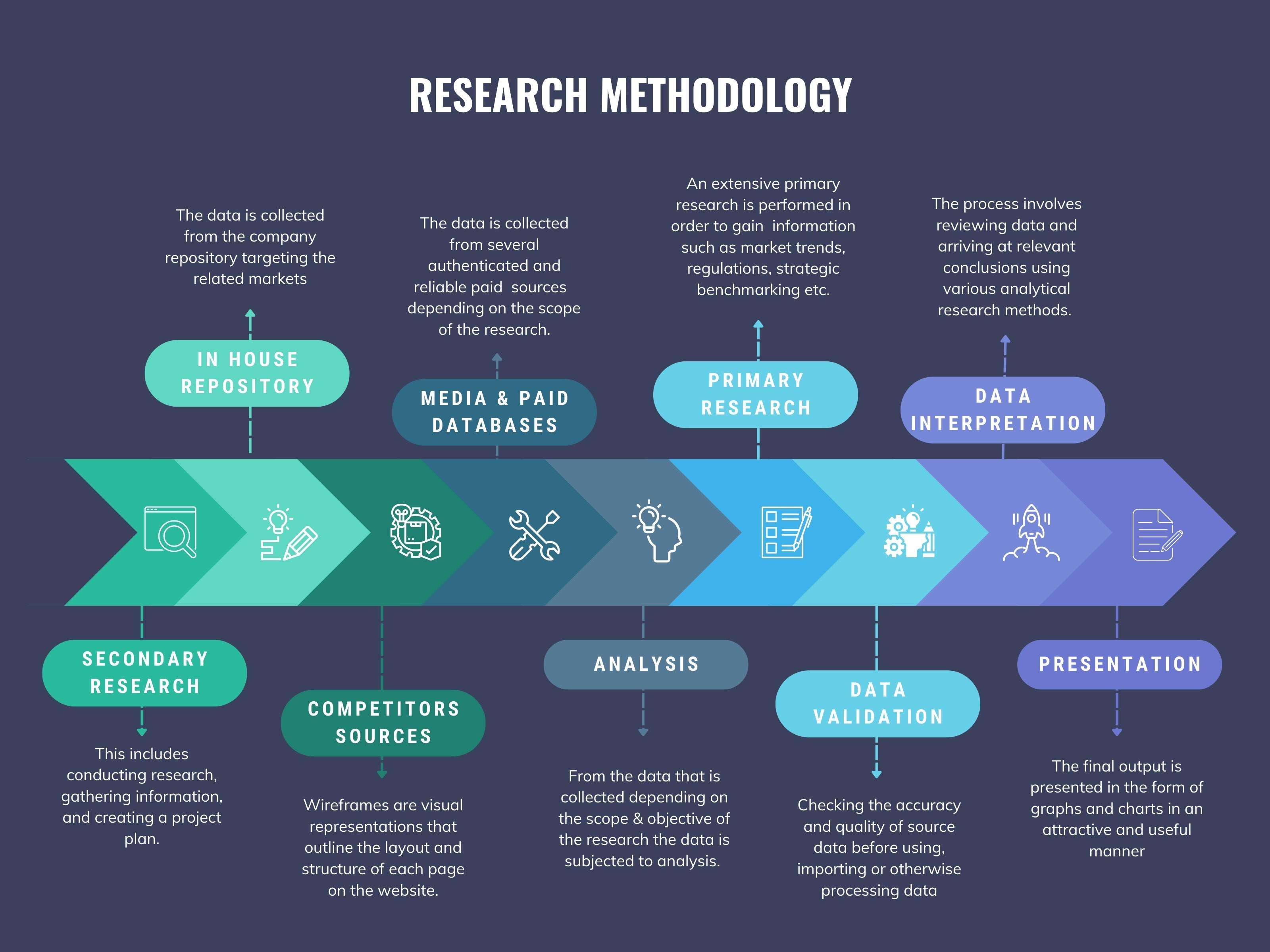
We at ‘Stratistics’ opt for an extensive research approach which involves data mining, data validation, and data analysis. The various research sources include in-house repository, secondary research, competitor’s sources, social media research, client internal data, and primary research.
Our team of analysts prefers the most reliable and authenticated data sources in order to perform the comprehensive literature search. With access to most of the authenticated data bases our team highly considers the best mix of information through various sources to obtain extensive and accurate analysis.
Each report takes an average time of a month and a team of 4 industry analysts. The time may vary depending on the scope and data availability of the desired market report. The various parameters used in the market assessment are standardized in order to enhance the data accuracy.
Data Mining
The data is collected from several authenticated, reliable, paid and unpaid sources and is filtered depending on the scope & objective of the research. Our reports repository acts as an added advantage in this procedure. Data gathering from the raw material suppliers, distributors and the manufacturers is performed on a regular basis, this helps in the comprehensive understanding of the products value chain. Apart from the above mentioned sources the data is also collected from the industry consultants to ensure the objective of the study is in the right direction.
Market trends such as technological advancements, regulatory affairs, market dynamics (Drivers, Restraints, Opportunities and Challenges) are obtained from scientific journals, market related national & international associations and organizations.
Data Analysis
From the data that is collected depending on the scope & objective of the research the data is subjected for the analysis. The critical steps that we follow for the data analysis include:
- Product Lifecycle Analysis
- Competitor analysis
- Risk analysis
- Porters Analysis
- PESTEL Analysis
- SWOT Analysis
The data engineering is performed by the core industry experts considering both the Marketing Mix Modeling and the Demand Forecasting. The marketing mix modeling makes use of multiple-regression techniques to predict the optimal mix of marketing variables. Regression factor is based on a number of variables and how they relate to an outcome such as sales or profits.
Data Validation
The data validation is performed by the exhaustive primary research from the expert interviews. This includes telephonic interviews, focus groups, face to face interviews, and questionnaires to validate our research from all aspects. The industry experts we approach come from the leading firms, involved in the supply chain ranging from the suppliers, distributors to the manufacturers and consumers so as to ensure an unbiased analysis.
We are in touch with more than 15,000 industry experts with the right mix of consultants, CEO's, presidents, vice presidents, managers, experts from both supply side and demand side, executives and so on.
The data validation involves the primary research from the industry experts belonging to:
- Leading Companies
- Suppliers & Distributors
- Manufacturers
- Consumers
- Industry/Strategic Consultants
Apart from the data validation the primary research also helps in performing the fill gap research, i.e. providing solutions for the unmet needs of the research which helps in enhancing the reports quality.
For more details about research methodology, kindly write to us at info@strategymrc.com
Frequently Asked Questions
In case of any queries regarding this report, you can contact the customer service by filing the “Inquiry Before Buy” form available on the right hand side. You may also contact us through email: info@strategymrc.com or phone: +1-301-202-5929
Yes, the samples are available for all the published reports. You can request them by filling the “Request Sample” option available in this page.
Yes, you can request a sample with your specific requirements. All the customized samples will be provided as per the requirement with the real data masked.
All our reports are available in Digital PDF format. In case if you require them in any other formats, such as PPT, Excel etc you can submit a request through “Inquiry Before Buy” form available on the right hand side. You may also contact us through email: info@strategymrc.com or phone: +1-301-202-5929
We offer a free 15% customization with every purchase. This requirement can be fulfilled for both pre and post sale. You may send your customization requirements through email at info@strategymrc.com or call us on +1-301-202-5929.
We have 3 different licensing options available in electronic format.
- Single User Licence: Allows one person, typically the buyer, to have access to the ordered product. The ordered product cannot be distributed to anyone else.
- 2-5 User Licence: Allows the ordered product to be shared among a maximum of 5 people within your organisation.
- Corporate License: Allows the product to be shared among all employees of your organisation regardless of their geographical location.
All our reports are typically be emailed to you as an attachment.
To order any available report you need to register on our website. The payment can be made either through CCAvenue or PayPal payments gateways which accept all international cards.
We extend our support to 6 months post sale. A post sale customization is also provided to cover your unmet needs in the report.
Request Customization
We offer complimentary customization of up to 15% with every purchase. To share your customization requirements, feel free to email us at info@strategymrc.com or call us on +1-301-202-5929. .
Please Note: Customization within the 15% threshold is entirely free of charge. If your request exceeds this limit, we will conduct a feasibility assessment. Following that, a detailed quote and timeline will be provided.
WHY CHOOSE US ?

Assured Quality
Best in class reports with high standard of research integrity

24X7 Research Support
Continuous support to ensure the best customer experience.

Free Customization
Adding more values to your product of interest.

Safe & Secure Access
Providing a secured environment for all online transactions.

Trusted by 600+ Brands
Serving the most reputed brands across the world.