
Bioprinting Material Market
Bioprinting Material Market Forecasts to 2034 - Global Analysis By Component (Hydrogels, Extracellular Matrices (ECM), Living Cells, Support Materials/Sacrificial Materials, and Other Biomaterials), Application, End User, and By Geography

|
Years Covered |
2023-2034 |
|
Estimated Year Value (2026) |
US $2.01 BN |
|
Projected Year Value (2032) |
US $9.94 BN |
|
CAGR (2026-2032) |
22.1% |
|
Regions Covered |
North America, Europe, Asia Pacific, South America, and Middle East & Africa |
|
Countries Covered |
US, Canada, Mexico, Germany, UK, Italy, France, Spain, Japan, China, India, Australia, New Zealand, South Korea, Rest of Asia Pacific, South America, Argentina, Brazil, Chile, Middle East & Africa, Saudi Arabia, UAE, Qatar, and South Africa |
|
Largest Market |
North America |
|
Highest Growing Market |
Asia Pacific |
According to Stratistics MRC, the Global Bioprinting Material Market is accounted for $2.01 billion in 2026 and is expected to reach $9.94 billion by 2034 growing at a CAGR of 22.1% during the forecast period. The bioprinting material market focuses on bioinks, hydrogels, polymers, and cell-compatible materials used in 3D printing tissues and biological structures. It supports research laboratories, pharmaceutical companies, and regenerative medicine developers. Growth is driven by advances in tissue engineering, increasing investment in personalized medicine, demand for alternative drug-testing models, progress in stem cell research, and expanding applications in organ modeling, wound healing, and biomedical research.
According to the U.S. National Institutes of Health (NIH), more than USD 2.5 billion annually is invested globally in regenerative medicine and tissue engineering research.
Market Dynamics:
Driver:
Growing R&D in drug discovery and testing using 3D bioprinted tissues
Pharmaceutical giants are increasingly transitioning from traditional 2D cell cultures and ethically sensitive animal testing toward high-fidelity bioprinted constructs. These 3D models offer superior physiological relevance, allowing for more accurate toxicity screening and metabolic profiling of drug candidates. By identifying potential failures earlier in the preclinical phase, companies significantly reduce development costs and time-to-market. This shift toward advanced in vitro testing ensures a sustained demand for high-quality bioinks and specialized bioprinting materials.
Restraint:
Extremely high cost of research-grade bioinks and living cells
Developing bioinks that maintain the delicate balance between structural integrity and biological viability requires complex chemical formulations and rigorous purification processes. Additionally, the procurement and maintenance of specific human primary cells and stem cells add substantial overhead to research budgets. For many academic institutions and smaller biotechnology startups, these recurring expenses can be restrictive, slowing the pace of experimental validation. This financial pressure often limits the use of bioprinting to high-budget projects, hindering broader commercialization across various price-sensitive medical sectors.
Opportunity:
Expansion into cosmetic testing and personalized medicine
With increasing global bans on animal testing for beauty products, the cosmetic industry is turning to bioprinted skin models to evaluate ingredient safety and efficacy. Simultaneously, the rise of personalized medicine offers a unique niche where patient-derived cells are used to print custom tissue grafts and organ-on-a-chip models. These tailored solutions minimize the risk of transplant rejection and allow for individualized drug sensitivity testing. Such applications represent a massive, untapped revenue stream that could redefine standard clinical and industrial practices.
Threat:
Limited scalability and reproducibility for mass production
Bioprinting is inherently a high-precision, time-intensive process that struggles with throughput limitations. Ensuring that every bioprinted construct maintains identical cellular distribution and structural density across large batches is technically challenging. Variations in material batches or environmental conditions can lead to inconsistent results, which is unacceptable for clinical-grade applications. Without significant breakthroughs in automated quality control and high-speed multi-nozzle printing technologies, the industry risks remaining a niche research tool rather than a standard manufacturing method for regenerative medicine.
Covid-19 Impact:
The COVID-19 pandemic presented both challenges and opportunities for the bioprinting material market. Initially, disruptions in the supply chain and laboratory closures impeded standard research activities. However, the crisis expedited the implementation of bioprinting for vaccine development and respiratory disease modeling. Researchers employed 3D bioprinted lung tissues to investigate viral infection mechanisms and evaluate antiviral efficacy in a controlled, human-relevant setting. This urgent transition underscored the technology's efficacy in emergency medical response, consequently drawing substantial government funding and private investment that has supported post-pandemic expansion.
The hydrogels segment is expected to be the largest during the forecast period
The hydrogels segment is expected to account for the largest market share during the forecast period due to its indispensable role as a structural scaffold for living cells. Hydrogels are favored for their high water content and biocompatibility, which closely mimic the natural extracellular matrix of human tissues. Their versatility allows for the incorporation of various growth factors and signaling molecules, facilitating cell proliferation and differentiation. Furthermore, the development of "smart" hydrogels that respond to thermal or chemical stimuli has broadened their application scope.
The biopharmaceutical & biotechnology companies segment is expected to have the highest CAGR during the forecast period
Over the forecast period, the biopharmaceutical & biotechnology companies segment is predicted to witness the highest growth rate as these entities aggressively integrate bioprinting into their discovery pipelines. The push for more efficient drug development processes is driving these companies to invest heavily in 3D cell culture systems that provide better predictive data than traditional methods. Moreover, strategic collaborations between bioprinting material providers and biotech firms are becoming commonplace, aimed at developing proprietary bioinks for specific therapeutic areas like oncology and neurology. The rising global demand for personalized therapeutic solutions and regenerative medicine further fuels this segment's rapid expansion.
Region with largest share:
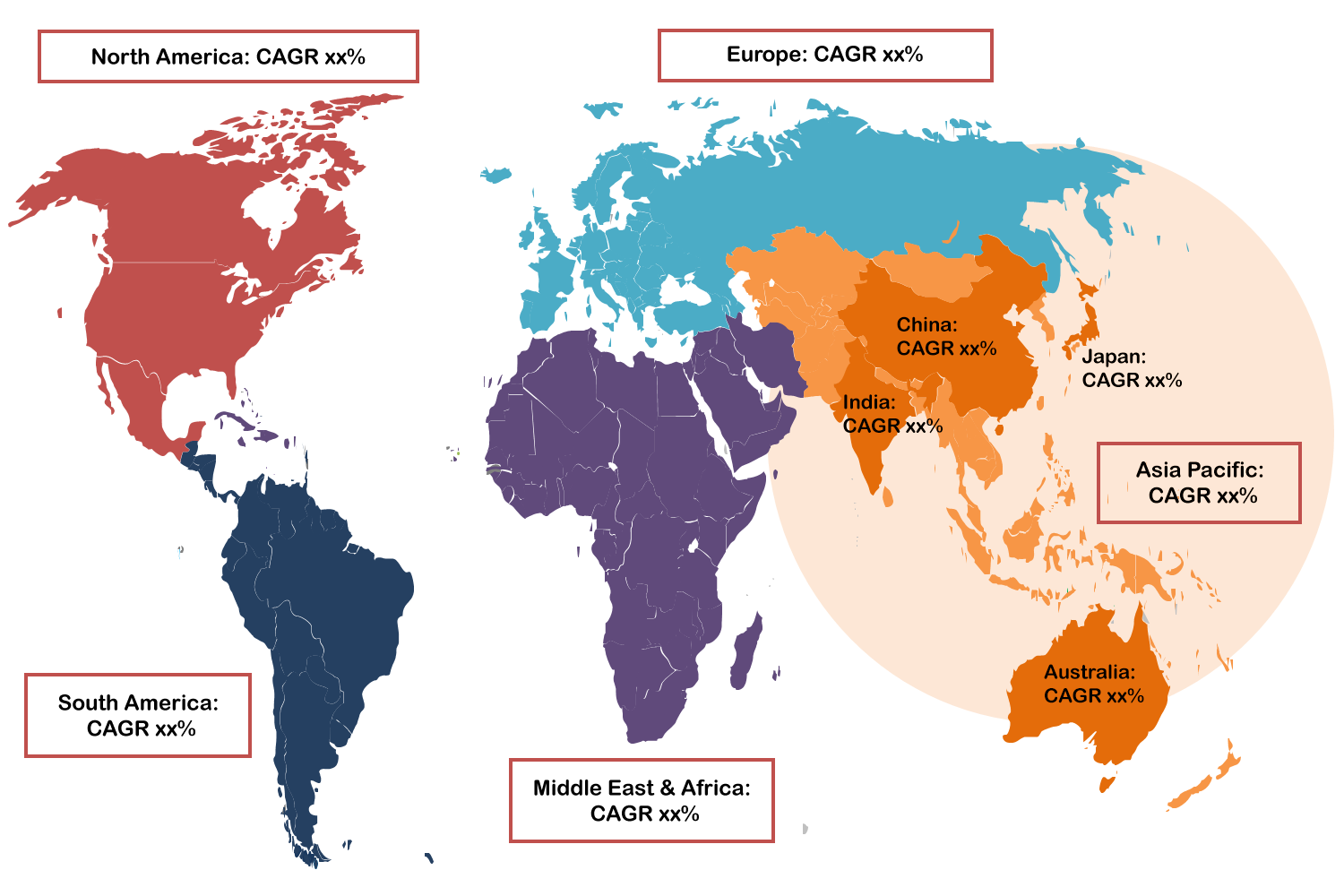
During the forecast period, the North America region is expected to hold the largest market share, primarily driven by its sophisticated healthcare infrastructure and substantial investment in life sciences. The presence of major industry players and leading research universities in the United States and Canada fosters a robust ecosystem for technological innovation. Additionally, favorable regulatory frameworks and the early adoption of advanced medical technologies provide a competitive edge. The region’s focus on regenerative medicine and the high prevalence of chronic diseases necessitate the development of bioprinted tissue solutions, ensuring North America remains the primary revenue generator for the global market.
Region with highest CAGR:
Over the forecast period, the Asia Pacific region is anticipated to exhibit the highest CAGR due to rapid advancements in biotechnology and increased government support for medical research. Countries like China, India, and Japan are investing heavily in healthcare modernization and the indigenization of medical device manufacturing. The growing geriatric population in this region, coupled with a rise in chronic conditions, is creating a massive demand for innovative organ and tissue replacement therapies. Furthermore, lower clinical trial costs and improving regulatory clarity are attracting global bioprinting companies to expand their footprint in Asia, leading to an unprecedented rate of market growth.
Key players in the market
Some of the key players in Bioprinting Material Market include CELLINK AB, Advanced BioMatrix, Inc., CollPlant Biotechnologies Ltd., Organovo Holdings, Inc., 3D Systems, Inc., Merck KGaA, Thermo Fisher Scientific Inc., Sartorius AG, Corning Incorporated, Lonza Group AG, FUJIFILM Corporation, Bio-Techne Corporation, Aspect Biosystems Ltd., Gelita AG, and Rousselot B.V.
Key Developments:
In December 2025, CELLINK (BICO Group) unveiled a new bioink portfolio designed for vascularized tissue printing, targeting pharmaceutical R&D.
In October 2025, Organovo announced progress in 3D-printed liver tissue models, expanding its bioprinting material applications for drug testing.
In August 2025, 3D Systems launched collagen-based bioprinting materials, strengthening its healthcare additive manufacturing division.
Components Covered:
• Hydrogels
• Extracellular Matrices (ECM)
• Living Cells
• Support Materials/Sacrificial Materials
• Other Biomaterials
Applications Covered:
• Tissue Engineering & Regenerative Medicine
• Drug Discovery & Development
• Cancer Research
• Dental Applications
• Cosmetic & Dermal Applications
• Other Applications
End Users Covered:
• Research & Academic Institutions
• Biopharmaceutical & Biotechnology Companies
• Hospitals & Diagnostic Centers
• Contract Research Organizations (CROs)
• Other End Users
Regions Covered:
• North America
o US
o Canada
o Mexico
• Europe
o Germany
o UK
o Italy
o France
o Spain
o Rest of Europe
• Asia Pacific
o Japan
o China
o India
o Australia
o New Zealand
o South Korea
o Rest of Asia Pacific
• South America
o Argentina
o Brazil
o Chile
o Rest of South America
• Middle East & Africa
o Saudi Arabia
o UAE
o Qatar
o South Africa
o Rest of Middle East & Africa
What our report offers:
- Market share assessments for the regional and country-level segments
- Strategic recommendations for the new entrants
- Covers Market data for the years 2024, 2025, 2026, 2028, and 2032
- Market Trends (Drivers, Constraints, Opportunities, Threats, Challenges, Investment Opportunities, and recommendations)
- Strategic recommendations in key business segments based on the market estimations
- Competitive landscaping mapping the key common trends
- Company profiling with detailed strategies, financials, and recent developments
- Supply chain trends mapping the latest technological advancements
Free Customization Offerings:
All the customers of this report will be entitled to receive one of the following free customization options:
• Company Profiling
o Comprehensive profiling of additional market players (up to 3)
o SWOT Analysis of key players (up to 3)
• Regional Segmentation
o Market estimations, Forecasts and CAGR of any prominent country as per the client's interest (Note: Depends on feasibility check)
• Competitive Benchmarking
o Benchmarking of key players based on product portfolio, geographical presence, and strategic alliances
Table of Contents
1 Executive Summary
2 Preface
2.1 Abstract
2.2 Stake Holders
2.3 Research Scope
2.4 Research Methodology
2.4.1 Data Mining
2.4.2 Data Analysis
2.4.3 Data Validation
2.4.4 Research Approach
2.5 Research Sources
2.5.1 Primary Research Sources
2.5.2 Secondary Research Sources
2.5.3 Assumptions
3 Market Trend Analysis
3.1 Introduction
3.2 Drivers
3.3 Restraints
3.4 Opportunities
3.5 Threats
3.6 Application Analysis
3.7 End User Analysis
3.8 Emerging Markets
3.9 Impact of Covid-19
4 Porters Five Force Analysis
4.1 Bargaining power of suppliers
4.2 Bargaining power of buyers
4.3 Threat of substitutes
4.4 Threat of new entrants
4.5 Competitive rivalry
5 Global Bioprinting Material Market, By Component
5.2 Hydrogels
5.2.1 Natural Hydrogels
5.2.2 Synthetic Hydrogels
5.2.3 Hybrid/Hydrogel Composites
5.3 Extracellular Matrices (ECM)
5.4 Living Cells
5.5 Support Materials/Sacrificial Materials
5.6 Other Biomaterials
6 Global Bioprinting Material Market, By Application
6.1 Introduction
6.2 Tissue Engineering & Regenerative Medicine
6.2.1 Bone & Cartilage
6.2.2 Skin & Integumentary
6.2.3 Vascular & Cardiac
6.2.4 Neural
6.2.5 Other Tissues
6.3 Drug Discovery & Development
6.4 Cancer Research
6.5 Dental Applications
6.6 Cosmetic & Dermal Applications
6.7 Other Applications
7 Global Bioprinting Material Market, By End User
7.1 Introduction
7.2 Research & Academic Institutions
7.3 Biopharmaceutical & Biotechnology Companies
7.4 Hospitals & Diagnostic Centers
7.5 Contract Research Organizations (CROs)
7.6 Other End Users
8 Global Bioprinting Material Market, By Geography
8.1 Introduction
8.2 North America
8.2.1 US
8.2.2 Canada
8.2.3 Mexico
8.3 Europe
8.3.1 Germany
8.3.2 UK
8.3.3 Italy
8.3.4 France
8.3.5 Spain
8.3.6 Rest of Europe
8.4 Asia Pacific
8.4.1 Japan
8.4.2 China
8.4.3 India
8.4.4 Australia
8.4.5 New Zealand
8.4.6 South Korea
8.4.7 Rest of Asia Pacific
8.5 South America
8.5.1 Argentina
8.5.2 Brazil
8.5.3 Chile
8.5.4 Rest of South America
8.6 Middle East & Africa
8.6.1 Saudi Arabia
8.6.2 UAE
8.6.3 Qatar
8.6.4 South Africa
8.6.5 Rest of Middle East & Africa
9 Key Developments
9.1 Agreements, Partnerships, Collaborations and Joint Ventures
9.2 Acquisitions & Mergers
9.3 New Product Launch
9.4 Expansions
9.5 Other Key Strategies
10 Company Profiling
10.1 CELLINK AB
10.2 Advanced BioMatrix, Inc.
10.3 CollPlant Biotechnologies Ltd.
10.4 Organovo Holdings, Inc.
10.5 3D Systems, Inc.
10.6 Merck KGaA
10.7 Thermo Fisher Scientific Inc.
10.8 Sartorius AG
10.9 Corning Incorporated
10.10 Lonza Group AG
10.11 FUJIFILM Corporation
10.12 Bio-Techne Corporation
10.13 Aspect Biosystems Ltd.
10.14 Gelita AG
10.15 Rousselot B.V.
List of Tables
1 Global Bioprinting Material Market Outlook, By Region (2023–2034) ($MN)
2 Global Bioprinting Material Market Outlook, By Component (2023–2034) ($MN)
3 Global Bioprinting Material Market Outlook, By Hydrogels (2023–2034) ($MN)
4 Global Bioprinting Material Market Outlook, By Natural Hydrogels (2023–2034) ($MN)
5 Global Bioprinting Material Market Outlook, By Synthetic Hydrogels (2023–2034) ($MN)
6 Global Bioprinting Material Market Outlook, By Hybrid / Hydrogel Composites (2023–2034) ($MN)
7 Global Bioprinting Material Market Outlook, By Extracellular Matrices (ECM) (2023–2034) ($MN)
8 Global Bioprinting Material Market Outlook, By Living Cells (2023–2034) ($MN)
9 Global Bioprinting Material Market Outlook, By Support / Sacrificial Materials (2023–2034) ($MN)
10 Global Bioprinting Material Market Outlook, By Other Biomaterials (2023–2034) ($MN)
11 Global Bioprinting Material Market Outlook, By Application (2023–2034) ($MN)
12 Global Bioprinting Material Market Outlook, By Tissue Engineering & Regenerative Medicine (2023–2034) ($MN)
13 Global Bioprinting Material Market Outlook, By Bone & Cartilage (2023–2034) ($MN)
14 Global Bioprinting Material Market Outlook, By Skin & Integumentary (2023–2034) ($MN)
15 Global Bioprinting Material Market Outlook, By Vascular & Cardiac (2023–2034) ($MN)
16 Global Bioprinting Material Market Outlook, By Neural (2023–2034) ($MN)
17 Global Bioprinting Material Market Outlook, By Other Tissues (2023–2034) ($MN)
18 Global Bioprinting Material Market Outlook, By Drug Discovery & Development (2023–2034) ($MN)
19 Global Bioprinting Material Market Outlook, By Cancer Research (2023–2034) ($MN)
20 Global Bioprinting Material Market Outlook, By Dental Applications (2023–2034) ($MN)
21 Global Bioprinting Material Market Outlook, By Cosmetic & Dermal Applications (2023–2034) ($MN)
22 Global Bioprinting Material Market Outlook, By Other Applications (2023–2034) ($MN)
23 Global Bioprinting Material Market Outlook, By End User (2023–2034) ($MN)
24 Global Bioprinting Material Market Outlook, By Research & Academic Institutions (2023–2034) ($MN)
25 Global Bioprinting Material Market Outlook, By Biopharmaceutical & Biotechnology Companies (2023–2034) ($MN)
26 Global Bioprinting Material Market Outlook, By Hospitals & Diagnostic Centers (2023–2034) ($MN)
27 Global Bioprinting Material Market Outlook, By Contract Research Organizations (CROs) (2023–2034) ($MN)
28 Global Bioprinting Material Market Outlook, By Other End Users (2023–2034) ($MN)
Note: Tables for North America, Europe, APAC, South America, and Middle East & Africa Regions are also represented in the same manner as above.
List of Figures
RESEARCH METHODOLOGY

We at ‘Stratistics’ opt for an extensive research approach which involves data mining, data validation, and data analysis. The various research sources include in-house repository, secondary research, competitor’s sources, social media research, client internal data, and primary research.
Our team of analysts prefers the most reliable and authenticated data sources in order to perform the comprehensive literature search. With access to most of the authenticated data bases our team highly considers the best mix of information through various sources to obtain extensive and accurate analysis.
Each report takes an average time of a month and a team of 4 industry analysts. The time may vary depending on the scope and data availability of the desired market report. The various parameters used in the market assessment are standardized in order to enhance the data accuracy.
Data Mining
The data is collected from several authenticated, reliable, paid and unpaid sources and is filtered depending on the scope & objective of the research. Our reports repository acts as an added advantage in this procedure. Data gathering from the raw material suppliers, distributors and the manufacturers is performed on a regular basis, this helps in the comprehensive understanding of the products value chain. Apart from the above mentioned sources the data is also collected from the industry consultants to ensure the objective of the study is in the right direction.
Market trends such as technological advancements, regulatory affairs, market dynamics (Drivers, Restraints, Opportunities and Challenges) are obtained from scientific journals, market related national & international associations and organizations.
Data Analysis
From the data that is collected depending on the scope & objective of the research the data is subjected for the analysis. The critical steps that we follow for the data analysis include:
- Product Lifecycle Analysis
- Competitor analysis
- Risk analysis
- Porters Analysis
- PESTEL Analysis
- SWOT Analysis
The data engineering is performed by the core industry experts considering both the Marketing Mix Modeling and the Demand Forecasting. The marketing mix modeling makes use of multiple-regression techniques to predict the optimal mix of marketing variables. Regression factor is based on a number of variables and how they relate to an outcome such as sales or profits.
Data Validation
The data validation is performed by the exhaustive primary research from the expert interviews. This includes telephonic interviews, focus groups, face to face interviews, and questionnaires to validate our research from all aspects. The industry experts we approach come from the leading firms, involved in the supply chain ranging from the suppliers, distributors to the manufacturers and consumers so as to ensure an unbiased analysis.
We are in touch with more than 15,000 industry experts with the right mix of consultants, CEO's, presidents, vice presidents, managers, experts from both supply side and demand side, executives and so on.
The data validation involves the primary research from the industry experts belonging to:
- Leading Companies
- Suppliers & Distributors
- Manufacturers
- Consumers
- Industry/Strategic Consultants
Apart from the data validation the primary research also helps in performing the fill gap research, i.e. providing solutions for the unmet needs of the research which helps in enhancing the reports quality.
For more details about research methodology, kindly write to us at info@strategymrc.com
Frequently Asked Questions
In case of any queries regarding this report, you can contact the customer service by filing the “Inquiry Before Buy” form available on the right hand side. You may also contact us through email: info@strategymrc.com or phone: +1-301-202-5929
Yes, the samples are available for all the published reports. You can request them by filling the “Request Sample” option available in this page.
Yes, you can request a sample with your specific requirements. All the customized samples will be provided as per the requirement with the real data masked.
All our reports are available in Digital PDF format. In case if you require them in any other formats, such as PPT, Excel etc you can submit a request through “Inquiry Before Buy” form available on the right hand side. You may also contact us through email: info@strategymrc.com or phone: +1-301-202-5929
We offer a free 15% customization with every purchase. This requirement can be fulfilled for both pre and post sale. You may send your customization requirements through email at info@strategymrc.com or call us on +1-301-202-5929.
We have 3 different licensing options available in electronic format.
- Single User Licence: Allows one person, typically the buyer, to have access to the ordered product. The ordered product cannot be distributed to anyone else.
- 2-5 User Licence: Allows the ordered product to be shared among a maximum of 5 people within your organisation.
- Corporate License: Allows the product to be shared among all employees of your organisation regardless of their geographical location.
All our reports are typically be emailed to you as an attachment.
To order any available report you need to register on our website. The payment can be made either through CCAvenue or PayPal payments gateways which accept all international cards.
We extend our support to 6 months post sale. A post sale customization is also provided to cover your unmet needs in the report.
Request Customization
We offer complimentary customization of up to 15% with every purchase. To share your customization requirements, feel free to email us at info@strategymrc.com or call us on +1-301-202-5929. .
Please Note: Customization within the 15% threshold is entirely free of charge. If your request exceeds this limit, we will conduct a feasibility assessment. Following that, a detailed quote and timeline will be provided.
WHY CHOOSE US ?

Assured Quality
Best in class reports with high standard of research integrity

24X7 Research Support
Continuous support to ensure the best customer experience.

Free Customization
Adding more values to your product of interest.

Safe & Secure Access
Providing a secured environment for all online transactions.

Trusted by 600+ Brands
Serving the most reputed brands across the world.
