
Biosciences Electronics Market
Biosciences Electronics Market Forecasts to 2034 - Global Analysis By Product Type (Wearable Biosensors, Implantable Biosensors and Non-invasive Biosensors), Device, Application, End User and By Geography

|
Years Covered |
2023-2034 |
|
Estimated Year Value (2026) |
US $10.72 BN |
|
Projected Year Value (2034) |
US $25.23 BN |
|
CAGR (2026-2034) |
11.3 |
|
Regions Covered |
North America, Europe, Asia Pacific, South America, and Rest of the World (RoW) |
|
Countries Covered |
United States, Canada, Mexico, United Kingdom, Germany, France, Italy, Spain, Netherlands, Belgium, Sweden, Switzerland, Poland, Rest of Europe, China, Japan, India, South Korea, Australia, Indonesia, Thailand, Malaysia, Singapore, Vietnam, Rest of Asia Pacific, Brazil, Argentina, Colombia, Chile, Peru, Rest of South America, Saudi Arabia, United Arab Emirates, Qatar, Israel, Rest of Middle East, South Africa, Egypt, Morocco, and Rest of Africa. |
|
Largest Market |
North America |
|
Highest Growing Market |
Asia Pacific |
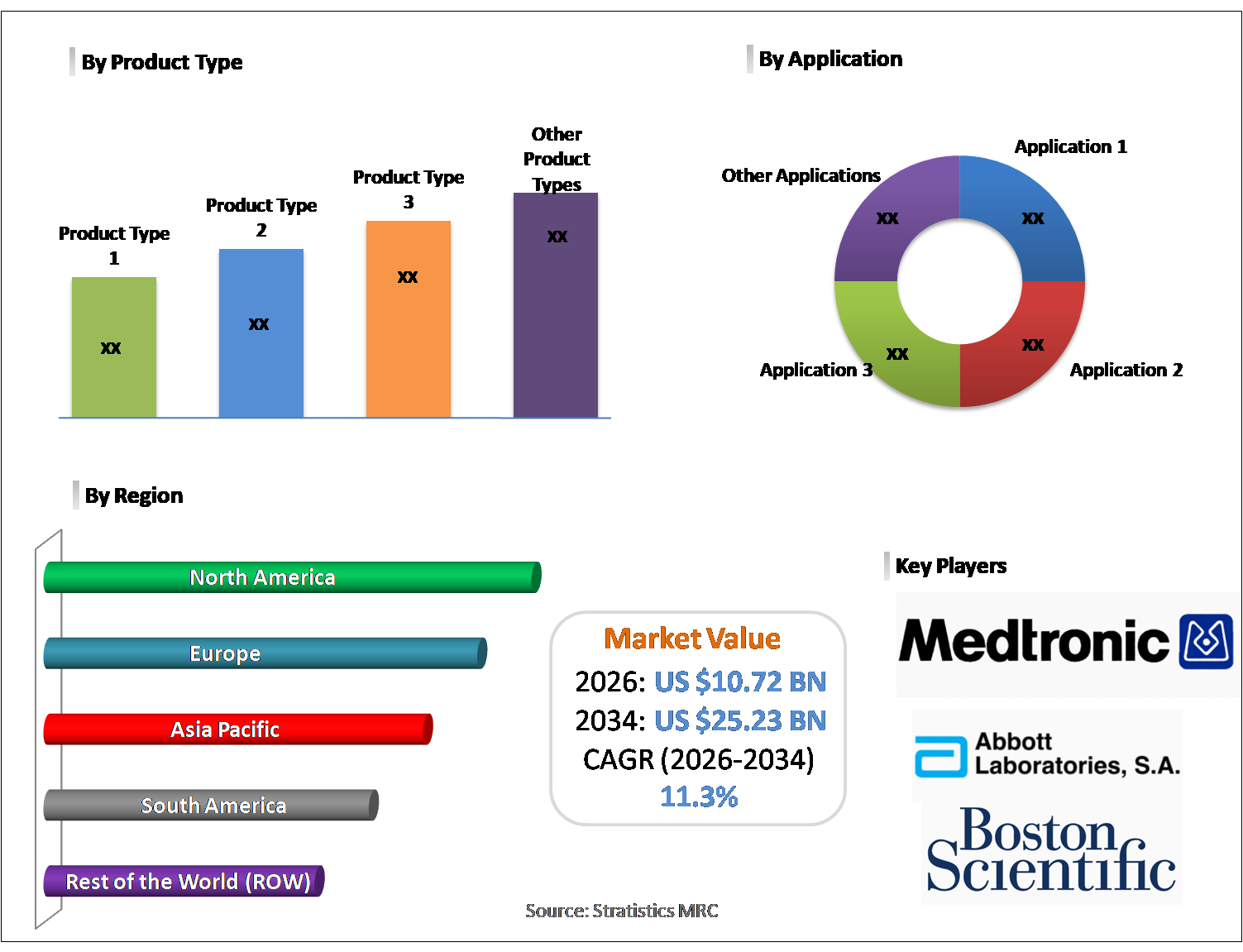
According to Stratistics MRC, the Global Biosciences Electronics Market is accounted for $10.72 billion in 2026 and is expected to reach $25.23 billion by 2034 growing at a CAGR of 11.3% during the forecast period. Bioelectronics, or biosciences electronics, merges biology with electronic engineering to design advanced devices for healthcare, diagnostics, and environmental applications. It emphasizes the development of sensors, wearables, and implants that track biological signals, measure physiological conditions, and administer precise treatments. Integrating biological components with electronic systems allows real-time monitoring, personalized therapies, and enhanced clinical outcomes. This technology plays a vital role in modern diagnostics, pharmaceutical research, and biotechnology, promoting precision medicine and intelligent healthcare innovations while creating seamless interactions between living organisms and electronic platforms.
According to the National Institutes of Health (NIH), bioelectronic medicine is recognized as a promising field that uses devices to modulate neural circuits for treating chronic diseases. NIH has funded multiple studies in this area, including vagus nerve stimulation (VNS) for autoimmune and inflammatory conditions. However, NIH does not officially state a fixed “30–50% reduction” figure in rheumatoid arthritis symptoms. That number is not an NIH-published statistic.
Market Dynamics:
Driver:
Rising demand for personalized healthcare
The biosciences electronics market is strongly influenced by the rising focus on personalized healthcare. Wearable and implantable bioelectronic devices enable continuous monitoring of individual health metrics, supporting customized treatment strategies. By adjusting therapies according to a patient’s unique biological profile, these solutions minimize side effects and improve outcomes. Growing awareness of personalized care among clinicians and patients is driving the adoption of advanced bioelectronics in diagnostics, chronic illness management, and real-time monitoring. Consequently, the market experiences significant growth as healthcare transitions from standard approaches to patient-specific interventions that leverage bioelectronic technology.
Restraint:
High cost of bioelectronic devices
The expensive nature of bioelectronic devices poses a major challenge to the market. Developing advanced wearable and implantable devices involves costly materials, precision components, and intricate manufacturing, making them less affordable. High prices restrict access in developing regions and among patients with limited income, curbing adoption. Healthcare providers may also be reluctant to invest without demonstrable cost-effectiveness. Additionally, specialized training for operation and maintenance adds to the overall expense. As a result, the high production, implementation, and operational costs hinder the large-scale deployment of bioelectronics solutions and slow overall market growth worldwide.
Opportunity:
Expansion of telemedicine and digital health
The expansion of telemedicine and digital healthcare offers substantial growth potential for the biosciences electronics market. Wearable and remote monitoring bioelectronic devices can feed real-time patient information into telehealth systems, facilitating remote diagnostics and continuous monitoring. This integration allows for personalized care and reduces the need for hospital visits. Increasing adoption of digital health solutions globally is expected to drive demand for bioelectronics devices. Additionally, the growth of telemedicine in emerging markets creates new opportunities, promoting investment in cost-effective, scalable, and connected bioelectronic technologies that cater to diverse patient populations worldwide.
Threat:
Intense competition among market players
High competition among market participants is a major threat to the biosciences electronics industry. Both established manufacturers and emerging startups are vying to launch advanced wearable, implantable, and diagnostic devices. Competitive pricing, fast technological changes, and strong marketing tactics force companies to innovate rapidly while managing costs. Smaller firms may find it difficult to meet these demands, potentially leading to consolidation in the market. Increased rivalry can compress profit margins and hinder adoption rates, making it challenging for new entrants and existing players to sustain growth and remain competitive in the rapidly evolving bioelectronics sector.
Covid-19 Impact:
The COVID-19 outbreak had a profound impact on the biosciences electronics market, driving rapid adoption of wearable devices, remote monitoring systems, and telemedicine platforms. Social distancing measures and stressed healthcare facilities increased the need for real-time, non-invasive monitoring of patients with chronic conditions and COVID-19 symptoms. Governments and private organizations invested heavily in bioelectronics R&D and digital health infrastructure to improve pandemic response. Although supply chain challenges and production delays temporarily affected the market, the pandemic ultimately highlighted the importance of bioelectronics in remote diagnostics, personalized healthcare, and digital health solutions, fostering long-term market growth.
The wearable biosensors segment is expected to be the largest during the forecast period
The wearable biosensors segment is expected to account for the largest market share during the forecast period due to their convenience, non-invasive nature, and ability to offer continuous monitoring of health metrics. Devices like fitness trackers, smartwatches, and sensor patches enable real-time tracking of vital signs and other physiological data, supporting remote healthcare and reducing the need for hospital visits. Rising emphasis on personalized medicine, chronic disease management, and remote monitoring has boosted demand for wearable devices. Their compatibility with AI, mobile apps, and cloud systems enhances patient engagement and enables data-driven healthcare solutions, making wearable biosensors the leading segment in the global bioelectronics market.
The home healthcare segment is expected to have the highest CAGR during the forecast period
Over the forecast period, the home healthcare segment is predicted to witness the highest growth rate due to increasing demand for remote monitoring, personalized treatment, and chronic disease management at home. Bioelectronic devices, including wearable and non-invasive sensors, allow patients to continuously track vital signs and other health metrics without frequent hospital visits, lowering healthcare expenses. Their connection with telehealth services, mobile applications, and cloud analytics improves patient participation and care effectiveness. Rising health awareness, advancements in bioelectronics technology, and a growing elderly population are driving the accelerated adoption of home healthcare solutions, resulting in the highest growth rate among all market segments.
Region with largest share:
During the forecast period, the North America region is expected to hold the largest market share, attributed to its well-established healthcare infrastructure and widespread adoption of digital health solutions. Strong R&D investment, presence of leading bioelectronics companies, and supportive regulatory policies encourage the development and commercialization of wearable, implantable, and non-invasive devices. Rising demand for personalized healthcare, remote monitoring, and management of chronic diseases also contributes to market growth. Integration of bioelectronics with AI, IoT, and telemedicine platforms enhances healthcare delivery and patient engagement. These factors collectively ensure that North America remains the largest regional contributor to the global bioelectronics market.
Region with highest CAGR:
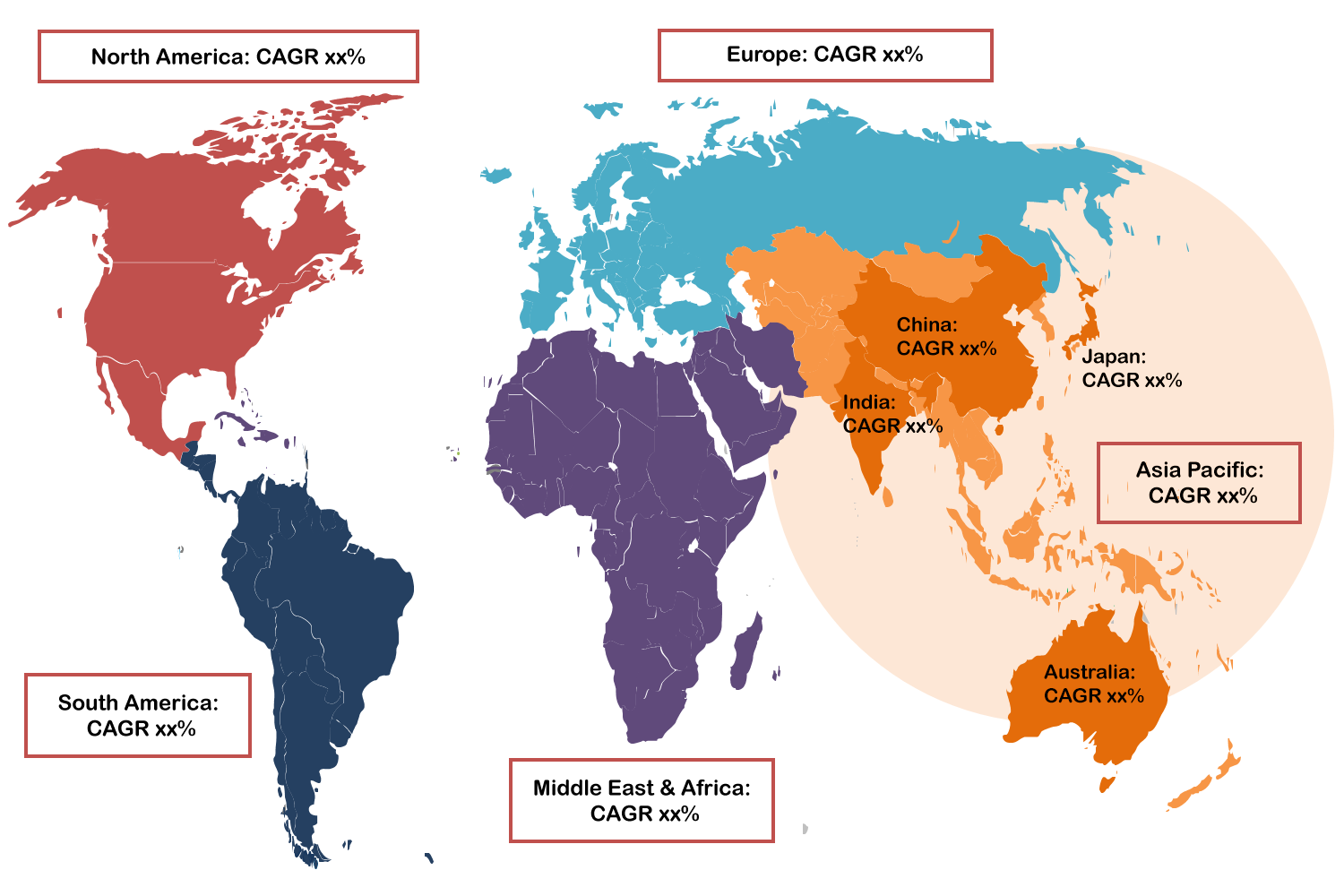
Over the forecast period, the Asia Pacific region is anticipated to exhibit the highest CAGR, driven by enhancements in healthcare infrastructure, increased spending, and greater awareness of innovative medical technologies. The adoption of wearable, implantable, and non-invasive bioelectronic devices for remote monitoring and chronic condition management is accelerating. Supportive government policies, advances in technology, and the expansion of telehealth services further stimulate demand. A large, aging population and increasing chronic disease prevalence create substantial market opportunities, positioning Asia-Pacific as the fastest-growing region in the global biosciences electronics industry.
Key players in the market
Some of the key players in Biosciences Electronics Market include Medtronic, Abbott Laboratories, Boston Scientific, Siemens Healthineers, F. Hoffmann-La Roche Ltd, Bio-Rad Laboratories, GE Healthcare, Thermo Fisher Scientific, Danaher Corporation, Salvia BioElectronics, Synchron, Cochlear Ltd, LivaNova PLC, BIOTRONIK, Nevro Corp, Nova Biomedical, Dexcom, Inc. and Analog Devices, Inc.
Key Developments:
In February 2026, Medtronic has agreed to acquire CathWorks, an Israeli medtech company focused on the diagnosis and treatment of coronary artery disease, for up to $585 million. CathWorks is known for its FFRangio technology, which uses advanced artificial intelligence (AI) algorithms and computational science to obtain fractional flow reserve (FFR) measurements of the coronary tree from routine X-ray images.
In January 2026, Boston Scientific Corporation and Penumbra, Inc. announced the companies have entered into a definitive agreement under which Boston Scientific will acquire Penumbra in cash and stock transaction that values Penumbra at $374 per share, reflecting an enterprise value of approximately $14.5 billion.
In November 2025, Abbott and Exact Sciences announced a definitive agreement for Abbott to acquire Exact Sciences, which will enable it to enter and lead in fast-growing cancer diagnostics segments, serving millions more people. Under the terms of the agreement, Exact Sciences shareholders will receive $105 per common share, representing a total equity value of approximately $21 billion.
Product Types Covered:
• Wearable Biosensors
• Implantable Biosensors
• Non-invasive Biosensors
Devices Covered:
• Bio-electronic Devices
• Bio-electronic Medicine
• Bio-electronic Technology
Applications Covered:
• Healthcare
• Environmental Monitoring
• Food Safety
• Industrial Applications
End Users Covered:
• Hospitals
• Home Healthcare
• Research Laboratories
• Industrial Facilities
Regions Covered:
• North America
o United States
o Canada
o Mexico
• Europe
o United Kingdom
o Germany
o France
o Italy
o Spain
o Netherlands
o Belgium
o Sweden
o Switzerland
o Poland
o Rest of Europe
• Asia Pacific
o China
o Japan
o India
o South Korea
o Australia
o Indonesia
o Thailand
o Malaysia
o Singapore
o Vietnam
o Rest of Asia Pacific
• South America
o Brazil
o Argentina
o Colombia
o Chile
o Peru
o Rest of South America
• Rest of the World (RoW)
o Middle East
§ Saudi Arabia
§ United Arab Emirates
§ Qatar
§ Israel
§ Rest of Middle East
o Africa
§ South Africa
§ Egypt
§ Morocco
§ Rest of Africa
What our report offers:
- Market share assessments for the regional and country-level segments
- Strategic recommendations for the new entrants
- Covers Market data for the years 2023, 2024, 2025, 2026, 2027, 2028, 2030, 2032 and 2034
- Market Trends (Drivers, Constraints, Opportunities, Threats, Challenges, Investment Opportunities, and recommendations)
- Strategic recommendations in key business segments based on the market estimations
- Competitive landscaping mapping the key common trends
- Company profiling with detailed strategies, financials, and recent developments
- Supply chain trends mapping the latest technological advancements
Free Customization Offerings:
All the customers of this report will be entitled to receive one of the following free customization options:
• Company Profiling
o Comprehensive profiling of additional market players (up to 3)
o SWOT Analysis of key players (up to 3)
• Regional Segmentation
o Market estimations, Forecasts and CAGR of any prominent country as per the client's interest (Note: Depends on feasibility check)
• Competitive Benchmarking
o Benchmarking of key players based on product portfolio, geographical presence, and strategic alliances
Table of Contents
1 Executive Summary
1.1 Market Snapshot and Key Highlights
1.2 Growth Drivers, Challenges, and Opportunities
1.3 Competitive Landscape Overview
1.4 Strategic Insights and Recommendations
2 Research Framework
2.1 Study Objectives and Scope
2.2 Stakeholder Analysis
2.3 Research Assumptions and Limitations
2.4 Research Methodology
2.4.1 Data Collection (Primary and Secondary)
2.4.2 Data Modeling and Estimation Techniques
2.4.3 Data Validation and Triangulation
2.4.4 Analytical and Forecasting Approach
3 Market Dynamics and Trend Analysis
3.1 Market Definition and Structure
3.2 Key Market Drivers
3.3 Market Restraints and Challenges
3.4 Growth Opportunities and Investment Hotspots
3.5 Industry Threats and Risk Assessment
3.6 Technology and Innovation Landscape
3.7 Emerging and High-Growth Markets
3.8 Regulatory and Policy Environment
3.9 Impact of COVID-19 and Recovery Outlook
4 Competitive and Strategic Assessment
4.1 Porter's Five Forces Analysis
4.1.1 Supplier Bargaining Power
4.1.2 Buyer Bargaining Power
4.1.3 Threat of Substitutes
4.1.4 Threat of New Entrants
4.1.5 Competitive Rivalry
4.2 Market Share Analysis of Key Players
4.3 Product Benchmarking and Performance Comparison
5 Global Biosciences Electronics Market, By Product Type
5.1 Wearable Biosensors
5.2 Implantable Biosensors
5.3 Non-invasive Biosensors
6 Global Biosciences Electronics Market, By Device
6.1 Bio-electronic Devices
6.2 Bio-electronic Medicine
6.3 Bio-electronic Technology
7 Global Biosciences Electronics Market, By Application
7.1 Healthcare
7.2 Environmental Monitoring
7.3 Food Safety
7.4 Industrial Applications
8 Global Biosciences Electronics Market, By End User
8.1 Hospitals
8.2 Home Healthcare
8.3 Research Laboratories
8.4 Industrial Facilities
9 Global Biosciences Electronics Market, By Geography
9.1 North America
9.1.1 United States
9.1.2 Canada
9.1.3 Mexico
9.2 Europe
9.2.1 United Kingdom
9.2.2 Germany
9.2.3 France
9.2.4 Italy
9.2.5 Spain
9.2.6 Netherlands
9.2.7 Belgium
9.2.8 Sweden
9.2.9 Switzerland
9.2.10 Poland
9.2.11 Rest of Europe
9.3 Asia Pacific
9.3.1 China
9.3.2 Japan
9.3.3 India
9.3.4 South Korea
9.3.5 Australia
9.3.6 Indonesia
9.3.7 Thailand
9.3.8 Malaysia
9.3.9 Singapore
9.3.10 Vietnam
9.3.11 Rest of Asia Pacific
9.4 South America
9.4.1 Brazil
9.4.2 Argentina
9.4.3 Colombia
9.4.4 Chile
9.4.5 Peru
9.4.6 Rest of South America
9.5 Rest of the World (RoW)
9.5.1 Middle East
9.5.1.1 Saudi Arabia
9.5.1.2 United Arab Emirates
9.5.1.3 Qatar
9.5.1.4 Israel
9.5.1.5 Rest of Middle East
9.5.2 Africa
9.5.2.1 South Africa
9.5.2.2 Egypt
9.5.2.3 Morocco
9.5.2.4 Rest of Africa
10 Strategic Market Intelligence
10.1 Industry Value Network and Supply Chain Assessment
10.2 White-Space and Opportunity Mapping
10.3 Product Evolution and Market Life Cycle Analysis
10.4 Channel, Distributor, and Go-to-Market Assessment
11 Industry Developments and Strategic Initiatives
11.1 Mergers and Acquisitions
11.2 Partnerships, Alliances, and Joint Ventures
11.3 New Product Launches and Certifications
11.4 Capacity Expansion and Investments
11.5 Other Strategic Initiatives
12 Company Profiles
12.1 Medtronic
12.2 Abbott Laboratories
12.3 Boston Scientific
12.4 Siemens Healthineers
12.5 F. Hoffmann-La Roche Ltd
12.6 Bio-Rad Laboratories
12.7 GE Healthcare
12.8 Thermo Fisher Scientific
12.9 Danaher Corporation
12.10 Salvia BioElectronics
12.11 Synchron
12.12 Cochlear Ltd
12.13 LivaNova PLC
12.14 BIOTRONIK
12.15 Nevro Corp
12.16 Nova Biomedical
12.17 Dexcom, Inc.
12.18 Analog Devices, Inc.
List of Tables
1 Global Biosciences Electronics Market Outlook, By Region (2023-2034) ($MN)
2 Global Biosciences Electronics Market Outlook, By Product Type (2023-2034) ($MN)
3 Global Biosciences Electronics Market Outlook, By Wearable Biosensors (2023-2034) ($MN)
4 Global Biosciences Electronics Market Outlook, By Implantable Biosensors (2023-2034) ($MN)
5 Global Biosciences Electronics Market Outlook, By Non-invasive Biosensors (2023-2034) ($MN)
6 Global Biosciences Electronics Market Outlook, By Device (2023-2034) ($MN)
7 Global Biosciences Electronics Market Outlook, By Bio-electronic Devices (2023-2034) ($MN)
8 Global Biosciences Electronics Market Outlook, By Bio-electronic Medicine (2023-2034) ($MN)
9 Global Biosciences Electronics Market Outlook, By Bio-electronic Technology (2023-2034) ($MN)
10 Global Biosciences Electronics Market Outlook, By Application (2023-2034) ($MN)
11 Global Biosciences Electronics Market Outlook, By Healthcare (2023-2034) ($MN)
12 Global Biosciences Electronics Market Outlook, By Environmental Monitoring (2023-2034) ($MN)
13 Global Biosciences Electronics Market Outlook, By Food Safety (2023-2034) ($MN)
14 Global Biosciences Electronics Market Outlook, By Industrial Applications (2023-2034) ($MN)
15 Global Biosciences Electronics Market Outlook, By End User (2023-2034) ($MN)
16 Global Biosciences Electronics Market Outlook, By Hospitals (2023-2034) ($MN)
17 Global Biosciences Electronics Market Outlook, By Home Healthcare (2023-2034) ($MN)
18 Global Biosciences Electronics Market Outlook, By Research Laboratories (2023-2034) ($MN)
19 Global Biosciences Electronics Market Outlook, By Industrial Facilities (2023-2034) ($MN)
Note: Tables for North America, Europe, APAC, South America, and Rest of the World (RoW) Regions are also represented in the same manner as above.
List of Figures
RESEARCH METHODOLOGY

We at ‘Stratistics’ opt for an extensive research approach which involves data mining, data validation, and data analysis. The various research sources include in-house repository, secondary research, competitor’s sources, social media research, client internal data, and primary research.
Our team of analysts prefers the most reliable and authenticated data sources in order to perform the comprehensive literature search. With access to most of the authenticated data bases our team highly considers the best mix of information through various sources to obtain extensive and accurate analysis.
Each report takes an average time of a month and a team of 4 industry analysts. The time may vary depending on the scope and data availability of the desired market report. The various parameters used in the market assessment are standardized in order to enhance the data accuracy.
Data Mining
The data is collected from several authenticated, reliable, paid and unpaid sources and is filtered depending on the scope & objective of the research. Our reports repository acts as an added advantage in this procedure. Data gathering from the raw material suppliers, distributors and the manufacturers is performed on a regular basis, this helps in the comprehensive understanding of the products value chain. Apart from the above mentioned sources the data is also collected from the industry consultants to ensure the objective of the study is in the right direction.
Market trends such as technological advancements, regulatory affairs, market dynamics (Drivers, Restraints, Opportunities and Challenges) are obtained from scientific journals, market related national & international associations and organizations.
Data Analysis
From the data that is collected depending on the scope & objective of the research the data is subjected for the analysis. The critical steps that we follow for the data analysis include:
- Product Lifecycle Analysis
- Competitor analysis
- Risk analysis
- Porters Analysis
- PESTEL Analysis
- SWOT Analysis
The data engineering is performed by the core industry experts considering both the Marketing Mix Modeling and the Demand Forecasting. The marketing mix modeling makes use of multiple-regression techniques to predict the optimal mix of marketing variables. Regression factor is based on a number of variables and how they relate to an outcome such as sales or profits.
Data Validation
The data validation is performed by the exhaustive primary research from the expert interviews. This includes telephonic interviews, focus groups, face to face interviews, and questionnaires to validate our research from all aspects. The industry experts we approach come from the leading firms, involved in the supply chain ranging from the suppliers, distributors to the manufacturers and consumers so as to ensure an unbiased analysis.
We are in touch with more than 15,000 industry experts with the right mix of consultants, CEO's, presidents, vice presidents, managers, experts from both supply side and demand side, executives and so on.
The data validation involves the primary research from the industry experts belonging to:
- Leading Companies
- Suppliers & Distributors
- Manufacturers
- Consumers
- Industry/Strategic Consultants
Apart from the data validation the primary research also helps in performing the fill gap research, i.e. providing solutions for the unmet needs of the research which helps in enhancing the reports quality.
For more details about research methodology, kindly write to us at info@strategymrc.com
Frequently Asked Questions
In case of any queries regarding this report, you can contact the customer service by filing the “Inquiry Before Buy” form available on the right hand side. You may also contact us through email: info@strategymrc.com or phone: +1-301-202-5929
Yes, the samples are available for all the published reports. You can request them by filling the “Request Sample” option available in this page.
Yes, you can request a sample with your specific requirements. All the customized samples will be provided as per the requirement with the real data masked.
All our reports are available in Digital PDF format. In case if you require them in any other formats, such as PPT, Excel etc you can submit a request through “Inquiry Before Buy” form available on the right hand side. You may also contact us through email: info@strategymrc.com or phone: +1-301-202-5929
We offer a free 15% customization with every purchase. This requirement can be fulfilled for both pre and post sale. You may send your customization requirements through email at info@strategymrc.com or call us on +1-301-202-5929.
We have 3 different licensing options available in electronic format.
- Single User Licence: Allows one person, typically the buyer, to have access to the ordered product. The ordered product cannot be distributed to anyone else.
- 2-5 User Licence: Allows the ordered product to be shared among a maximum of 5 people within your organisation.
- Corporate License: Allows the product to be shared among all employees of your organisation regardless of their geographical location.
All our reports are typically be emailed to you as an attachment.
To order any available report you need to register on our website. The payment can be made either through CCAvenue or PayPal payments gateways which accept all international cards.
We extend our support to 6 months post sale. A post sale customization is also provided to cover your unmet needs in the report.
Request Customization
We offer complimentary customization of up to 15% with every purchase. To share your customization requirements, feel free to email us at info@strategymrc.com or call us on +1-301-202-5929. .
Please Note: Customization within the 15% threshold is entirely free of charge. If your request exceeds this limit, we will conduct a feasibility assessment. Following that, a detailed quote and timeline will be provided.
WHY CHOOSE US ?

Assured Quality
Best in class reports with high standard of research integrity

24X7 Research Support
Continuous support to ensure the best customer experience.

Free Customization
Adding more values to your product of interest.

Safe & Secure Access
Providing a secured environment for all online transactions.

Trusted by 600+ Brands
Serving the most reputed brands across the world.
