
Catalyst Market
Catalyst Market Forecasts to 2034 - Global Analysis By Type (Heterogeneous Catalysts, Homogeneous Catalysts, Biocatalysts, Organocatalysts, and Nanocatalysts), Material, Process, Form, Application, and By Geography

According to Stratistics MRC, the Global Catalyst Market is accounted for $35.7 billion in 2026 and is expected to reach $52.4 billion by 2034 growing at a CAGR of 4.9% during the forecast period. Catalysts are substances that accelerate chemical reactions without being consumed, playing an indispensable role in over 80% of industrial chemical processes. These materials enable faster reaction rates at lower temperatures and pressures, significantly reducing energy consumption and operational costs across petroleum refining, petrochemical production, pharmaceutical synthesis, and environmental protection applications. The market encompasses diverse catalyst types including heterogeneous, homogeneous, biocatalysts, organocatalysts, and emerging nanocatalysts, each offering unique advantages for specific reaction environments. Growing demand for cleaner fuels, stricter emissions regulations, and the shift toward sustainable chemical manufacturing are collectively driving innovation and adoption across this mature yet dynamic industry.
Market Dynamics:
Driver:
Stringent environmental regulations on vehicle emissions
Regulatory agencies worldwide have imposed increasingly strict limits on nitrogen oxides, carbon monoxide, and particulate matter from internal combustion engines, directly boosting demand for automotive catalysts. Catalytic converters utilizing precious metals like platinum, palladium, and rhodium convert harmful exhaust gases into less toxic substances, making them mandatory for compliance. The implementation of Euro 6, China 6, and Bharat Stage VI standards has forced automakers to incorporate advanced catalyst systems. Beyond road vehicles, regulations now extend to marine engines, off-road equipment, and power generation plants, continuously expanding the addressable market for emission control catalysts across multiple transportation and industrial sectors.
Restraint:
Volatile prices of precious metal raw materials
Platinum, palladium, and rhodium prices fluctuate dramatically due to supply disruptions, mining strikes, and speculative trading, creating significant cost uncertainty for catalyst manufacturers and end-users. Palladium prices surged to record highs in recent years, dramatically increasing the production costs of automotive catalytic converters. This volatility makes long-term pricing agreements difficult and encourages efforts to reduce precious metal loadings or develop alternative formulations. Some manufacturers have shifted toward base metal catalysts or advanced material designs that use lower quantities of expensive metals, but these alternatives often require extensive validation before replacing established technologies in critical applications.
Opportunity:
Growing demand for green hydrogen production
The global push toward decarbonization is driving massive investment in electrolyzers for green hydrogen production, with catalysts representing a critical component of this emerging industry. Water electrolysis requires efficient catalysts to facilitate the oxygen evolution and hydrogen evolution reactions, traditionally relying on iridium and platinum. Research into earth-abundant alternatives such as nickel-based and cobalt-based catalysts is rapidly advancing, creating new material markets. As hydrogen economies expand in Europe, Japan, and North America, catalyst suppliers are developing specialized products for proton exchange membrane, alkaline, and solid oxide electrolyzers, opening substantial revenue streams beyond traditional refining and petrochemical applications.
Threat:
Incremental improvements in electrification and fuel cells
While fuel cells themselves require catalysts, widespread electrification of transportation reduces the total number of internal combustion engines requiring emission control catalysts. Battery electric vehicles eliminate exhaust treatment entirely, representing a long-term threat to the automotive catalyst market. Even in hybrid configurations, engines run less frequently, reducing catalyst replacement cycles. Meanwhile, solid-state batteries and lithium-iron-phosphate chemistries continue improving range and cost competitiveness. Although fuel cell electric vehicles create demand for platinum-based catalysts, their market share remains minimal compared to conventional vehicles. This technological transition forces catalyst companies to diversify into fuel cell and electrolyzer applications to offset declining combustion engine exposure.
Covid-19 Impact:
The COVID-19 pandemic triggered temporary but severe disruptions in catalyst demand as automotive production halted globally and refinery utilization dropped precipitously during lockdowns. Supply chains for precious metals faced logistical challenges, with mining operations in South Africa and Russia experiencing periodic shutdowns. However, the pandemic also accelerated certain catalyst demand segments as governments introduced economic stimulus packages favoring green technologies. Biofuel production catalysts gained attention as countries sought energy independence and lower carbon fuel alternatives. The recovery has been strong, particularly in Asia Pacific, with pent-up automotive demand and renewed infrastructure spending pushing catalyst consumption back to pre-pandemic levels with an accelerated shift toward higher-performance emission control systems.
The Heterogeneous Catalysts segment is expected to be the largest during the forecast period
The Heterogeneous Catalysts segment is expected to account for the largest market share during the forecast period, owing to their widespread industrial use where catalysts remain in a distinct phase from reactants, typically solid catalysts with liquid or gas reactants. This configuration enables easy separation, recovery, and recycling of catalysts after reactions, making them economically attractive for continuous processes. Petroleum refining, petrochemical production, and emission control systems rely almost exclusively on heterogeneous catalysts, with fluid catalytic cracking units representing single largest applications. The extensive installed infrastructure for catalytic converters, hydrocracking, and chemical synthesis processes favors heterogeneous over homogeneous catalysts, ensuring this segment maintains market dominance throughout the forecast period.
The Carbon-Based Catalysts segment is expected to have the highest CAGR during the forecast period
Over the forecast period, the Carbon-Based Catalysts segment is predicted to witness the highest growth rate, driven by their exceptional surface area, tunable functional properties, and electrical conductivity. Carbon nanotubes, graphene, activated carbon, and other carbon allotropes serve both as catalyst supports and as active catalytic materials in electrochemical applications such as fuel cells, batteries, and supercapacitors. Their abundance, non-toxic nature, and resistance to harsh chemical environments make them attractive alternatives to precious metals. Emerging applications in oxygen reduction reactions, oxygen evolution reactions, and hydrogen evolution reactions are accelerating research and commercialization. As industries seek low-cost, sustainable catalytic solutions, carbon-based catalysts are gaining prominence across energy conversion and organic synthesis applications.
Region with largest share:
During the forecast period, the Asia Pacific region is expected to hold the largest market share, driven by massive refining capacity, petrochemical production, and automotive manufacturing concentrated in China, India, Japan, and South Korea. China alone accounts for a significant portion of global petroleum refining expansion and remains the world's largest automotive market, creating sustained demand for both refinery catalysts and emission control systems. Government mandates for cleaner fuels, including China VI and Bharat Stage VI emissions standards, are accelerating catalyst replacement cycles and upgrading requirements. The region's dominance in chemical production, combined with increasing environmental enforcement, positions Asia Pacific as the primary growth engine and largest consumer of industrial catalysts worldwide.
Region with highest CAGR:
Over the forecast period, the North America region is anticipated to exhibit the highest CAGR, supported by substantial investments in advanced catalyst technologies for renewable fuel production and carbon capture applications. The region's robust refinery infrastructure is increasingly shifting toward processing lower-carbon feedstocks including biomass and recycled plastics, requiring next-generation catalysts. Strong government incentives under the Inflation Reduction Act are accelerating deployment of hydrogen electrolyzers and sustainable aviation fuel production facilities, both highly dependent on specialized catalysts. Additionally, stringent emissions standards for heavy-duty vehicles across the United States and Canada continue driving automotive catalyst upgrades. Leading catalyst manufacturers headquartered in the region are actively developing innovative formulations, ensuring North America outpaces global average growth rates throughout the forecast period.
Key players in the market
Some of the key players in Catalyst Market include BASF SE, Johnson Matthey plc, Clariant AG, W R Grace & Co, Honeywell International Inc, Axens, Haldor Topsoe AS, Evonik Industries AG, Exxon Mobil Corporation, Dow Inc, LyondellBasell Industries NV, Mitsui Chemicals Inc, SABIC, Shell Global Solutions International BV, Solvay SA, Sumitomo Chemical Co Ltd, Umicore SA, Albemarle Corporation and Chevron Phillips Chemical Company LLC.
Key Developments:
In April 2026, Honeywell announced the sale of its Productivity Solutions and Services business for $1.4 billion to further simplify its portfolio. This move allows the company to refocus on core process technologies and UOP catalyst solutions for aerospace and industrial automation.
In March 2026, Topsoe announced that Elena Scaltritti assumed the role of President and CEO. The company reported DKK 8,197 million in 2025 revenue, with 20% of that income generated from e-fuels and renewable fuel technologies.
In August 2025, Topsoe inaugurated the largest Solid Oxide Electrolyzer Cell (SOEC) manufacturing facility in Europe (Herning, Denmark), marking a major milestone in green hydrogen catalyst scaling.
Types Covered:
• Heterogeneous Catalysts
• Homogeneous Catalysts
• Biocatalysts
• Organocatalysts
• Nanocatalysts
Materials Covered:
• Precious Metal Catalysts
• Base Metal Catalysts
• Zeolite Catalysts
• Organometallic Catalysts
• Enzyme-Based Catalysts
• Ceramic Catalysts
• Carbon-Based Catalysts
Process Covered:
• Fluid Catalytic Cracking
• Hydroprocessing
• Catalytic Reforming
• Alkylation
• Isomerization
• Polymerization
• Oxidation
• Hydrogenation
• Dehydrogenation
• Steam Reforming
• Fischer-Tropsch Synthesis
• Ammonia Synthesis
Forms Covered:
• Pellets
• Beads
• Powder
• Extrudates
• Monoliths
• Honeycomb Structures
Applications Covered:
• Petroleum Refining
• Chemical Synthesis
• Petrochemicals
• Polymer Production
• Environmental Applications
• Pharmaceuticals
• Biofuels & Renewable Energy
• Hydrogen Production
• Electronics & Semiconductor Manufacturing
• Agrochemicals
• Food Processing
• Pulp & Paper
• Textile Industry
Regions Covered:
• North America
o United States
o Canada
o Mexico
• Europe
o United Kingdom
o Germany
o France
o Italy
o Spain
o Netherlands
o Belgium
o Sweden
o Switzerland
o Poland
o Rest of Europe
• Asia Pacific
o China
o Japan
o India
o South Korea
o Australia
o Indonesia
o Thailand
o Malaysia
o Singapore
o Vietnam
o Rest of Asia Pacific
• South America
o Brazil
o Argentina
o Colombia
o Chile
o Peru
o Rest of South America
• Rest of the World (RoW)
o Middle East
§ Saudi Arabia
§ United Arab Emirates
§ Qatar
§ Israel
§ Rest of Middle East
o Africa
§ South Africa
§ Egypt
§ Morocco
§ Rest of Africa
What our report offers:
- Market share assessments for the regional and country-level segments
- Strategic recommendations for the new entrants
- Covers Market data for the years 2023, 2024, 2025, 2026, 2027, 2028, 2030, 2032 and 2034
- Market Trends (Drivers, Constraints, Opportunities, Threats, Challenges, Investment Opportunities, and recommendations)
- Strategic recommendations in key business segments based on the market estimations
- Competitive landscaping mapping the key common trends
- Company profiling with detailed strategies, financials, and recent developments
- Supply chain trends mapping the latest technological advancements
Free Customization Offerings:
All the customers of this report will be entitled to receive one of the following free customization options:
• Company Profiling
o Comprehensive profiling of additional market players (up to 3)
o SWOT Analysis of key players (up to 3)
• Regional Segmentation
o Market estimations, Forecasts and CAGR of any prominent country as per the client's interest (Note: Depends on feasibility check)
• Competitive Benchmarking
o Benchmarking of key players based on product portfolio, geographical presence, and strategic alliances
Table of Contents
1 Executive Summary
1.1 Market Snapshot and Key Highlights
1.2 Growth Drivers, Challenges, and Opportunities
1.3 Competitive Landscape Overview
1.4 Strategic Insights and Recommendations
2 Research Framework
2.1 Study Objectives and Scope
2.2 Stakeholder Analysis
2.3 Research Assumptions and Limitations
2.4 Research Methodology
2.4.1 Data Collection (Primary and Secondary)
2.4.2 Data Modeling and Estimation Techniques
2.4.3 Data Validation and Triangulation
2.4.4 Analytical and Forecasting Approach
3 Market Dynamics and Trend Analysis
3.1 Market Definition and Structure
3.2 Key Market Drivers
3.3 Market Restraints and Challenges
3.4 Growth Opportunities and Investment Hotspots
3.5 Industry Threats and Risk Assessment
3.6 Technology and Innovation Landscape
3.7 Emerging and High-Growth Markets
3.8 Regulatory and Policy Environment
3.9 Impact of COVID-19 and Recovery Outlook
4 Competitive and Strategic Assessment
4.1 Porter's Five Forces Analysis
4.1.1 Supplier Bargaining Power
4.1.2 Buyer Bargaining Power
4.1.3 Threat of Substitutes
4.1.4 Threat of New Entrants
4.1.5 Competitive Rivalry
4.2 Market Share Analysis of Key Players
4.3 Product Benchmarking and Performance Comparison
5 Global Catalyst Market, By Type
5.1 Heterogeneous Catalysts
5.2 Homogeneous Catalysts
5.3 Biocatalysts
5.4 Organocatalysts
5.5 Nanocatalysts
6 Global Catalyst Market, By Material
6.1 Precious Metal Catalysts
6.1.1 Platinum
6.1.2 Palladium
6.1.3 Rhodium
6.1.4 Ruthenium
6.1.5 Iridium
6.2 Base Metal Catalysts
6.2.1 Nickel
6.2.2 Copper
6.2.3 Iron
6.2.4 Cobalt
6.2.5 Molybdenum
6.3 Zeolite Catalysts
6.4 Organometallic Catalysts
6.5 Enzyme-Based Catalysts
6.6 Ceramic Catalysts
6.7 Carbon-Based Catalysts
7 Global Catalyst Market, By Process
7.1 Fluid Catalytic Cracking
7.2 Hydroprocessing
7.2.1 Hydrotreating
7.2.2 Hydrocracking
7.3 Catalytic Reforming
7.4 Alkylation
7.5 Isomerization
7.6 Polymerization
7.7 Oxidation
7.8 Hydrogenation
7.9 Dehydrogenation
7.10 Steam Reforming
7.11 Fischer-Tropsch Synthesis
7.12 Ammonia Synthesis
8 Global Catalyst Market, By Form
8.1 Pellets
8.2 Beads
8.3 Powder
8.4 Extrudates
8.5 Monoliths
8.6 Honeycomb Structures
9 Global Catalyst Market, By Application
9.1 Petroleum Refining
9.2 Chemical Synthesis
9.3 Petrochemicals
9.4 Polymer Production
9.5 Environmental Applications
9.5.1 Automotive Emission Control
9.5.2 Industrial Emission Control
9.5.3 Wastewater Treatment
9.5.4 VOC Removal
9.6 Pharmaceuticals
9.7 Biofuels & Renewable Energy
9.8 Hydrogen Production
9.9 Electronics & Semiconductor Manufacturing
9.10 Agrochemicals
9.11 Food Processing
9.12 Pulp & Paper
9.13 Textile Industry
10 Global Catalyst Market, By Geography
10.1 North America
10.1.1 United States
10.1.2 Canada
10.1.3 Mexico
10.2 Europe
10.2.1 United Kingdom
10.2.2 Germany
10.2.3 France
10.2.4 Italy
10.2.5 Spain
10.2.6 Netherlands
10.2.7 Belgium
10.2.8 Sweden
10.2.9 Switzerland
10.2.10 Poland
10.2.11 Rest of Europe
10.3 Asia Pacific
10.3.1 China
10.3.2 Japan
10.3.3 India
10.3.4 South Korea
10.3.5 Australia
10.3.6 Indonesia
10.3.7 Thailand
10.3.8 Malaysia
10.3.9 Singapore
10.3.10 Vietnam
10.3.11 Rest of Asia Pacific
10.4 South America
10.4.1 Brazil
10.4.2 Argentina
10.4.3 Colombia
10.4.4 Chile
10.4.5 Peru
10.4.6 Rest of South America
10.5 Rest of the World (RoW)
10.5.1 Middle East
10.5.1.1 Saudi Arabia
10.5.1.2 United Arab Emirates
10.5.1.3 Qatar
10.5.1.4 Israel
10.5.1.5 Rest of Middle East
10.5.2 Africa
10.5.2.1 South Africa
10.5.2.2 Egypt
10.5.2.3 Morocco
10.5.2.4 Rest of Africa
11 Strategic Market Intelligence
11.1 Industry Value Network and Supply Chain Assessment
11.2 White-Space and Opportunity Mapping
11.3 Product Evolution and Market Life Cycle Analysis
11.4 Channel, Distributor, and Go-to-Market Assessment
12 Industry Developments and Strategic Initiatives
12.1 Mergers and Acquisitions
12.2 Partnerships, Alliances, and Joint Ventures
12.3 New Product Launches and Certifications
12.4 Capacity Expansion and Investments
12.5 Other Strategic Initiatives
13 Company Profiles
13.1 BASF SE
13.2 Johnson Matthey plc
13.3 Clariant AG
13.4 W R Grace & Co
13.5 Honeywell International Inc
13.6 Axens
13.7 Haldor Topsoe AS
13.8 Evonik Industries AG
13.9 Exxon Mobil Corporation
13.10 Dow Inc
13.11 LyondellBasell Industries NV
13.12 Mitsui Chemicals Inc
13.13 SABIC
13.14 Shell Global Solutions International BV
13.15 Solvay SA
13.16 Sumitomo Chemical Co Ltd
13.17 Umicore SA
13.18 Albemarle Corporation
13.19 Chevron Phillips Chemical Company LLC
List of Tables
1 Global Catalyst Market Outlook, By Region (2023–2034) ($MN)
2 Global Catalyst Market Outlook, By Type (2023–2034) ($MN)
3 Global Catalyst Market Outlook, By Heterogeneous Catalysts (2023–2034) ($MN)
4 Global Catalyst Market Outlook, By Homogeneous Catalysts (2023–2034) ($MN)
5 Global Catalyst Market Outlook, By Biocatalysts (2023–2034) ($MN)
6 Global Catalyst Market Outlook, By Organocatalysts (2023–2034) ($MN)
7 Global Catalyst Market Outlook, By Nanocatalysts (2023–2034) ($MN)
8 Global Catalyst Market Outlook, By Material (2023–2034) ($MN)
9 Global Catalyst Market Outlook, By Precious Metal Catalysts (2023–2034) ($MN)
10 Global Catalyst Market Outlook, By Platinum (2023–2034) ($MN)
11 Global Catalyst Market Outlook, By Palladium (2023–2034) ($MN)
12 Global Catalyst Market Outlook, By Rhodium (2023–2034) ($MN)
13 Global Catalyst Market Outlook, By Ruthenium (2023–2034) ($MN)
14 Global Catalyst Market Outlook, By Iridium (2023–2034) ($MN)
15 Global Catalyst Market Outlook, By Base Metal Catalysts (2023–2034) ($MN)
16 Global Catalyst Market Outlook, By Nickel (2023–2034) ($MN)
17 Global Catalyst Market Outlook, By Copper (2023–2034) ($MN)
18 Global Catalyst Market Outlook, By Iron (2023–2034) ($MN)
19 Global Catalyst Market Outlook, By Cobalt (2023–2034) ($MN)
20 Global Catalyst Market Outlook, By Molybdenum (2023–2034) ($MN)
21 Global Catalyst Market Outlook, By Zeolite Catalysts (2023–2034) ($MN)
22 Global Catalyst Market Outlook, By Organometallic Catalysts (2023–2034) ($MN)
23 Global Catalyst Market Outlook, By Enzyme-Based Catalysts (2023–2034) ($MN)
24 Global Catalyst Market Outlook, By Ceramic Catalysts (2023–2034) ($MN)
25 Global Catalyst Market Outlook, By Carbon-Based Catalysts (2023–2034) ($MN)
26 Global Catalyst Market Outlook, By Process (2023–2034) ($MN)
27 Global Catalyst Market Outlook, By Fluid Catalytic Cracking (2023–2034) ($MN)
28 Global Catalyst Market Outlook, By Hydroprocessing (2023–2034) ($MN)
29 Global Catalyst Market Outlook, By Hydrotreating (2023–2034) ($MN)
30 Global Catalyst Market Outlook, By Hydrocracking (2023–2034) ($MN)
31 Global Catalyst Market Outlook, By Catalytic Reforming (2023–2034) ($MN)
32 Global Catalyst Market Outlook, By Alkylation (2023–2034) ($MN)
33 Global Catalyst Market Outlook, By Isomerization (2023–2034) ($MN)
34 Global Catalyst Market Outlook, By Polymerization (2023–2034) ($MN)
35 Global Catalyst Market Outlook, By Oxidation (2023–2034) ($MN)
36 Global Catalyst Market Outlook, By Hydrogenation (2023–2034) ($MN)
37 Global Catalyst Market Outlook, By Dehydrogenation (2023–2034) ($MN)
38 Global Catalyst Market Outlook, By Steam Reforming (2023–2034) ($MN)
39 Global Catalyst Market Outlook, By Fischer-Tropsch Synthesis (2023–2034) ($MN)
40 Global Catalyst Market Outlook, By Ammonia Synthesis (2023–2034) ($MN)
41 Global Catalyst Market Outlook, By Form (2023–2034) ($MN)
42 Global Catalyst Market Outlook, By Pellets (2023–2034) ($MN)
43 Global Catalyst Market Outlook, By Beads (2023–2034) ($MN)
44 Global Catalyst Market Outlook, By Powder (2023–2034) ($MN)
45 Global Catalyst Market Outlook, By Extrudates (2023–2034) ($MN)
46 Global Catalyst Market Outlook, By Monoliths (2023–2034) ($MN)
47 Global Catalyst Market Outlook, By Honeycomb Structures (2023–2034) ($MN)
48 Global Catalyst Market Outlook, By Application (2023–2034) ($MN)
49 Global Catalyst Market Outlook, By Petroleum Refining (2023–2034) ($MN)
50 Global Catalyst Market Outlook, By Chemical Synthesis (2023–2034) ($MN)
51 Global Catalyst Market Outlook, By Petrochemicals (2023–2034) ($MN)
52 Global Catalyst Market Outlook, By Polymer Production (2023–2034) ($MN)
53 Global Catalyst Market Outlook, By Environmental Applications (2023–2034) ($MN)
54 Global Catalyst Market Outlook, By Automotive Emission Control (2023–2034) ($MN)
55 Global Catalyst Market Outlook, By Industrial Emission Control (2023–2034) ($MN)
56 Global Catalyst Market Outlook, By Wastewater Treatment (2023–2034) ($MN)
57 Global Catalyst Market Outlook, By VOC Removal (2023–2034) ($MN)
58 Global Catalyst Market Outlook, By Pharmaceuticals (2023–2034) ($MN)
59 Global Catalyst Market Outlook, By Biofuels & Renewable Energy (2023–2034) ($MN)
60 Global Catalyst Market Outlook, By Hydrogen Production (2023–2034) ($MN)
61 Global Catalyst Market Outlook, By Electronics & Semiconductor Manufacturing (2023–2034) ($MN)
62 Global Catalyst Market Outlook, By Agrochemicals (2023–2034) ($MN)
63 Global Catalyst Market Outlook, By Food Processing (2023–2034) ($MN)
64 Global Catalyst Market Outlook, By Pulp & Paper (2023–2034) ($MN)
65 Global Catalyst Market Outlook, By Textile Industry (2023–2034) ($MN)
Note: Tables for North America, Europe, APAC, South America, and Rest of the World (RoW) Regions are also represented in the same manner as above.
List of Figures
RESEARCH METHODOLOGY
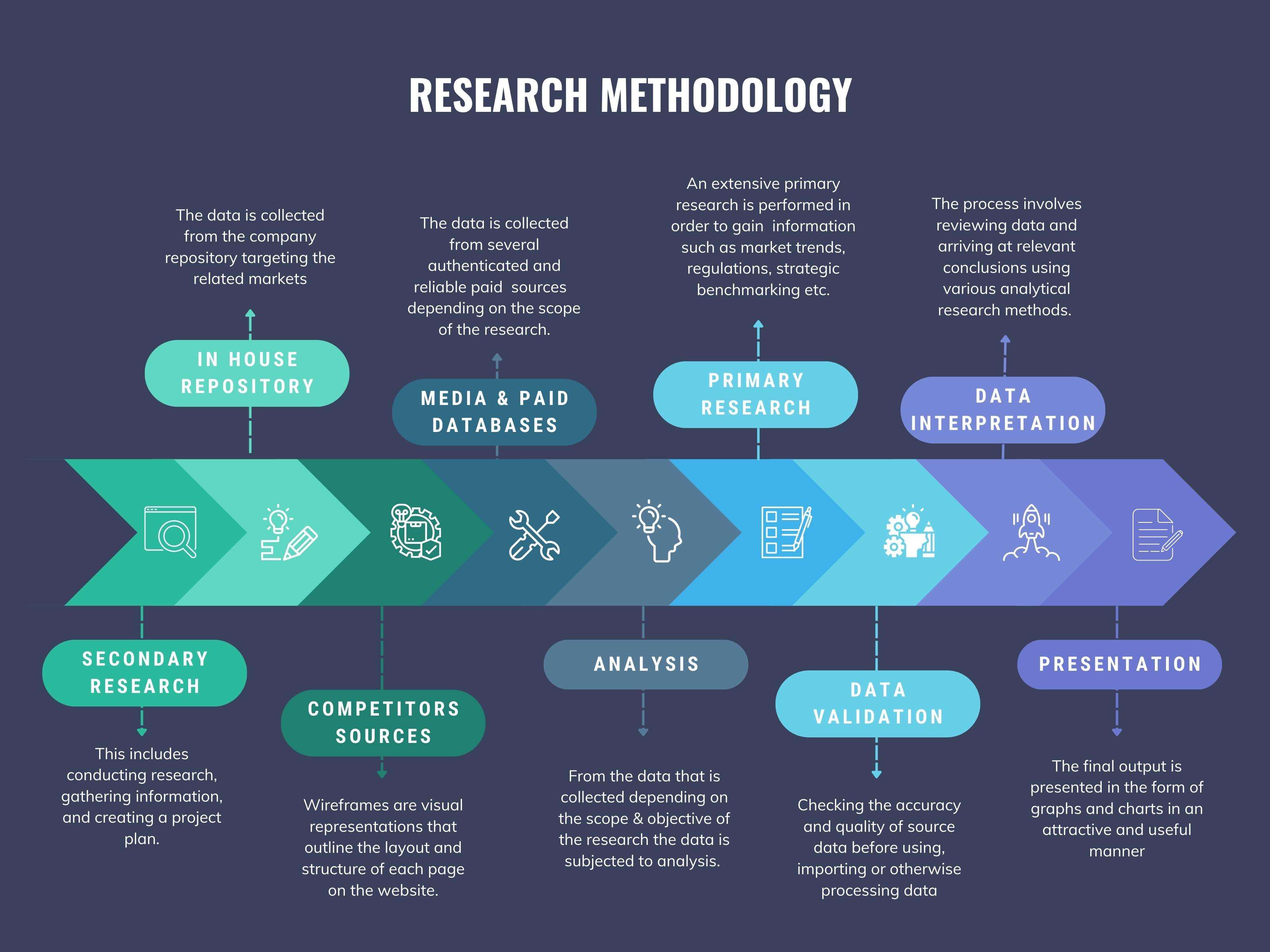
We at ‘Stratistics’ opt for an extensive research approach which involves data mining, data validation, and data analysis. The various research sources include in-house repository, secondary research, competitor’s sources, social media research, client internal data, and primary research.
Our team of analysts prefers the most reliable and authenticated data sources in order to perform the comprehensive literature search. With access to most of the authenticated data bases our team highly considers the best mix of information through various sources to obtain extensive and accurate analysis.
Each report takes an average time of a month and a team of 4 industry analysts. The time may vary depending on the scope and data availability of the desired market report. The various parameters used in the market assessment are standardized in order to enhance the data accuracy.
Data Mining
The data is collected from several authenticated, reliable, paid and unpaid sources and is filtered depending on the scope & objective of the research. Our reports repository acts as an added advantage in this procedure. Data gathering from the raw material suppliers, distributors and the manufacturers is performed on a regular basis, this helps in the comprehensive understanding of the products value chain. Apart from the above mentioned sources the data is also collected from the industry consultants to ensure the objective of the study is in the right direction.
Market trends such as technological advancements, regulatory affairs, market dynamics (Drivers, Restraints, Opportunities and Challenges) are obtained from scientific journals, market related national & international associations and organizations.
Data Analysis
From the data that is collected depending on the scope & objective of the research the data is subjected for the analysis. The critical steps that we follow for the data analysis include:
- Product Lifecycle Analysis
- Competitor analysis
- Risk analysis
- Porters Analysis
- PESTEL Analysis
- SWOT Analysis
The data engineering is performed by the core industry experts considering both the Marketing Mix Modeling and the Demand Forecasting. The marketing mix modeling makes use of multiple-regression techniques to predict the optimal mix of marketing variables. Regression factor is based on a number of variables and how they relate to an outcome such as sales or profits.
Data Validation
The data validation is performed by the exhaustive primary research from the expert interviews. This includes telephonic interviews, focus groups, face to face interviews, and questionnaires to validate our research from all aspects. The industry experts we approach come from the leading firms, involved in the supply chain ranging from the suppliers, distributors to the manufacturers and consumers so as to ensure an unbiased analysis.
We are in touch with more than 15,000 industry experts with the right mix of consultants, CEO's, presidents, vice presidents, managers, experts from both supply side and demand side, executives and so on.
The data validation involves the primary research from the industry experts belonging to:
- Leading Companies
- Suppliers & Distributors
- Manufacturers
- Consumers
- Industry/Strategic Consultants
Apart from the data validation the primary research also helps in performing the fill gap research, i.e. providing solutions for the unmet needs of the research which helps in enhancing the reports quality.
For more details about research methodology, kindly write to us at info@strategymrc.com
Frequently Asked Questions
In case of any queries regarding this report, you can contact the customer service by filing the “Inquiry Before Buy” form available on the right hand side. You may also contact us through email: info@strategymrc.com or phone: +1-301-202-5929
Yes, the samples are available for all the published reports. You can request them by filling the “Request Sample” option available in this page.
Yes, you can request a sample with your specific requirements. All the customized samples will be provided as per the requirement with the real data masked.
All our reports are available in Digital PDF format. In case if you require them in any other formats, such as PPT, Excel etc you can submit a request through “Inquiry Before Buy” form available on the right hand side. You may also contact us through email: info@strategymrc.com or phone: +1-301-202-5929
We offer a free 15% customization with every purchase. This requirement can be fulfilled for both pre and post sale. You may send your customization requirements through email at info@strategymrc.com or call us on +1-301-202-5929.
We have 3 different licensing options available in electronic format.
- Single User Licence: Allows one person, typically the buyer, to have access to the ordered product. The ordered product cannot be distributed to anyone else.
- 2-5 User Licence: Allows the ordered product to be shared among a maximum of 5 people within your organisation.
- Corporate License: Allows the product to be shared among all employees of your organisation regardless of their geographical location.
All our reports are typically be emailed to you as an attachment.
To order any available report you need to register on our website. The payment can be made either through CCAvenue or PayPal payments gateways which accept all international cards.
We extend our support to 6 months post sale. A post sale customization is also provided to cover your unmet needs in the report.
Request Customization
We offer complimentary customization of up to 15% with every purchase. To share your customization requirements, feel free to email us at info@strategymrc.com or call us on +1-301-202-5929. .
Please Note: Customization within the 15% threshold is entirely free of charge. If your request exceeds this limit, we will conduct a feasibility assessment. Following that, a detailed quote and timeline will be provided.
WHY CHOOSE US ?

Assured Quality
Best in class reports with high standard of research integrity

24X7 Research Support
Continuous support to ensure the best customer experience.

Free Customization
Adding more values to your product of interest.

Safe & Secure Access
Providing a secured environment for all online transactions.

Trusted by 600+ Brands
Serving the most reputed brands across the world.