
Cellulose Nanocrystals Market
Cellulose Nanocrystals Market Forecasts to 2034 – Global Analysis By Source (Wood Pulp, Cotton, Agricultural Residues, Bacterial Cellulose and Other Sources), Production Method, Surface Modification, Form, Application, End User and By Geography

Market Dynamics:
Driver:
Regulatory Substitution of Synthetic Microplastics
The European Union’s REACH restriction on intentionally added synthetic microplastics is compelling formulators across coatings, personal care, and barrier packaging to qualify bio-based alternatives such as cellulose nanocrystals. The restriction is projected to prevent approximately 500,000 tonnes of synthetic microplastics from entering the environment over twenty years, and this regulatory pressure creates a direct substitution pathway for CNC in rheology modification and stabilization applications. Because cellulose nanocrystals deliver high viscosity and suspension stability at low loading levels, they offer a technically viable drop-in replacement for incumbent synthetic additives, thereby driving demand growth in compliance-driven formulator segments.
Restraint:
High Production Cost and Drying Energy Burden
Cellulose nanocrystals remain expensive relative to conventional additives because acid hydrolysis, neutralization, and purification steps consume significant energy and chemicals, while the drying of aqueous CNC suspensions to powder form further adds cost. The material’s price in 2023 was approximately $20 per kilogram, and for CNC to penetrate commodity markets such as packaging and construction, pricing would need to fall to $2–3 per kilogram . This cost gap confines current adoption to high-value applications such as personal care and specialty coatings, thereby limiting volume growth in price-sensitive segments where synthetic alternatives remain economically favored.
Opportunity:
Barrier Coatings for Recyclable Packaging
The shift toward mono-material and recyclable packaging under the EU Packaging and Packaging Waste Regulation creates a substantial opportunity for cellulose nanocrystals as a barrier coating additive that can replace aluminum and EVOH layers without compromising recyclability. CNC-based coatings deliver high oxygen barrier performance at low coat weights, and they are compatible with existing paper and film conversion lines, which reduces adoption friction for converters. As brand owners and packaging manufacturers seek PPWR-compliant solutions that maintain shelf life while simplifying material structures, CNC-based barrier formulations can capture long-term supply agreements, thereby establishing a defensible position in the high-growth sustainable packaging segment.
Threat:
Competition from Cellulose Nanofibrils and Alternative Bio-Additives
Cellulose nanocrystals face intensifying competition from cellulose nanofibrils, which benefit from broader production scale, lower processing costs, and established commercial adoption in paper and packaging applications. CNF accounted for approximately 62.3% of the cellulose nanomaterial market in 2026, while CNC’s share remains smaller and concentrated in higher-value niches. Additionally, alternative bio-based additives and modified starches compete for formulator attention in rheology modification applications. If CNC producers cannot achieve cost reduction and application-specific performance validation at scale, the material risks remaining confined to specialty segments, thereby limiting its addressable market relative to CNF-based alternatives.
Covid-19 Impact:
The pandemic initially disrupted cellulose nanocrystals supply chains through laboratory closures and reduced research activity, while pilot-scale production and application development timelines slipped. As recovery progressed, demand for sustainable packaging and bio-based additives strengthened, and regulatory momentum toward microplastic substitution accelerated. Post-pandemic, the structural impact has been a sharper focus on scaling production and reducing costs, which has prompted producers and research institutions to prioritize continuous processing routes and application-specific validation in order to transition CNC from laboratory curiosity to commercially viable industrial additive.
The chemically modified CNC segment is expected to be the largest during the forecast period
The chemically modified CNC segment is expected to account for the largest market share during the forecast period, due to the necessity of surface functionalization for dispersing cellulose nanocrystals in non-polar polymer matrices and achieving consistent performance in composite and coating applications. Chemical modification through esterification, silylation, or polymer grafting improves compatibility with hydrophobic polymers, which in turn enables higher loading levels and better mechanical reinforcement. As compounders and formulators seek drop-in CNC masterbatches and additive packages that integrate with existing processing equipment, chemically modified grades remain the default specification for commercial applications, thereby sustaining their leading revenue position throughout the forecast horizon.
The barrier coatings segment is expected to have the highest CAGR during the forecast period
Over the forecast period, the barrier coatings segment is predicted to witness the highest growth rate, driven by regulatory pressure to replace multi-material packaging with recyclable mono-material structures and by brand commitments to reduce plastic content in packaging. Cellulose nanocrystals deliver exceptional oxygen barrier performance at low coat weights, and their aqueous suspension form is compatible with existing coating and printing lines, which reduces capital expenditure for converters. As the EU Packaging and Packaging Waste Regulation and similar frameworks in North America push brand owners toward recyclable and repulpable packaging, CNC-based barrier coatings offer a credible alternative to aluminum and EVOH, thereby outpacing other applications in growth terms.
Region with largest share:
During the forecast period, the North America region is expected to hold the largest market share, due to early commercial-scale production capacity, established research infrastructure, and the presence of key producers such as CelluForce Inc. and American Process Inc. The United States and Canada benefit from integrated forestry resources and pulp and paper industry infrastructure that supports CNC feedstock supply, while government research programs and university collaborations have accelerated application development. Canadian producers and FPInnovations have driven pilot and demonstration-scale capacity, and this early-mover advantage in production and application know-how reinforces North America’s dominant revenue position, thereby sustaining its leading share throughout the forecast period.
Region with highest CAGR:
Over the forecast period, the Asia Pacific region is anticipated to exhibit the highest CAGR, due to rapid capacity expansion in China, supportive government policies for bio-based materials, and expanding packaging and electronics manufacturing sectors that represent high-volume application opportunities. China is the largest contributor to nanocellulose research output globally, and domestic producers are scaling production to serve local packaging converters and composite manufacturers. Japan maintains a technology-intensive position in CNC-reinforced composites and automotive applications, supported by public funding for cellulose nanofiber technology development. As packaging regulation tightens and consumer goods brands seek sustainable additives, Asia Pacific’s combination of feedstock availability and manufacturing scale supports above-average regional growth.
Key players in the market
Some of the key players in Cellulose Nanocrystals Market include CelluForce Inc., Melodea Ltd., American Process Inc., Nippon Paper Industries Co., Ltd., Borregaard ASA, Sappi Limited, Stora Enso Oyj, UPM-Kymmene Corporation, Kruger Inc., Blue Goose Biorefineries Inc., Anomera Inc., Cellulose Lab Inc., FiberLean Technologies Limited, GranBio Technologies, Oji Holdings Corporation, RISE Research Institutes of Sweden, FPInnovations, and Daicel Corporation.
Key Developments:
In October 2026, Stora Enso Oyj entered into a strategic partnership with Shanshan Technology to develop lignin-based hard carbon anode materials, establishing a demonstration line in Ningbo, China, to accelerate industrial validation and commercialization.
In October 2026, Stora Enso Oyj partnered with Shanshan Technology to establish a demonstration line in Ningbo, China, accelerating the development and industrialization of lignin-based hard carbon anode materials for sodium-ion batteries and sustainable energy storage applications.
Sources Covered:
• Wood Pulp
• Cotton
• Agricultural Residues
• Bacterial Cellulose
• Other Sources
Production Methods Covered:
• Acid Hydrolysis
• Enzymatic Hydrolysis
• Oxidative Processing
• Other Production Methods
Surface Modifications Covered:
• Unmodified CNC
• Chemically Modified CNC
Forms Covered:
• Aqueous Suspension
• Dry Powder
• Composite Masterbatch
Applications Covered:
• Barrier Coatings
• Polymer Nanocomposites
• Rheology Modifiers
• Biomedical Materials
• Printed Electronics
• Personal Care Formulations
• Other Applications
End Users Covered:
• Packaging Material Producers
• Coatings Manufacturers
• Chemical and Polymer Producers
• Healthcare Material Manufacturers
• Electronics Manufacturers
• Research Institutions
• Other End Users
What our report offers:
- Market share assessments for the regional and country-level segments
- Strategic recommendations for the new entrants
- Covers Market data for the years 2023, 2024, 2025, 2026, 2027, 2028, 2030, 2032 and 2034
- Market Trends (Drivers, Constraints, Opportunities, Threats, Challenges, Investment Opportunities, and recommendations)
- Strategic recommendations in key business segments based on the market estimations
- Competitive landscaping mapping the key common trends
- Company profiling with detailed strategies, financials, and recent developments
- Supply chain trends mapping the latest technological advancements
Complimentary Customization Options:
- Every purchase of this report includes ONE complimentary customization option, allowing clients to tailor the research to their specific business requirements at no additional cost..
1. Company Profiling & Competitive Intelligence
• Detailed profiling of up to 3 additional market players
• SWOT analysis of up to 3 key market participants
• Analysis of competitive positioning, product portfolios and strategic developments
2. Country-Level Market Analysis
• Market size estimates, forecasts and CAGR analysis for one additional country of the client's choice
• Country-specific market trends, growth drivers, opportunities and challenges
• Regional market insights tailored to the client's geographical interests
• Subject to data availability and feasibility assessment
3. Competitive Benchmarking
• Comparative benchmarking of up to 5 key market players
• Evaluation based on product portfolios, geographical presence, technological capabilities and strategic partnerships
• Competitive positioning matrix highlighting key strengths and market differentiation
4. Additional Market Segmentation
• Market size estimates and forecasts for one additional subsegment relevant to the client's requirements
• Analysis of growth opportunities, demand patterns and emerging trends within the selected subsegment
• Subject to data availability and feasibility assessment
5. Market Trends & Strategic Insights
• Analysis of up to 3 emerging market trends relevant to the client's business interests
• Assessment of key growth opportunities, technological developments and potential market disruptions
• Strategic insights to support market entry, expansion or investment decisions
Customization Terms
• Clients may select one of the above complimentary customization options per report purchase.
• Complimentary customization is subject to data availability, research feasibility and scope confirmation.
• Requests exceeding the complimentary scope may be accommodated through paid customization.
• Delivery timelines for customized content will be confirmed upon assessment of the requirements.
Need something more specific?
- Our research team can also provide tailored research solutions to address your unique business requirements. Contact us to discuss additional customization opportunities
Table of Contents
1 Executive Summary1.1 Market Snapshot and Key Highlights
1.2 Growth Drivers, Challenges, and Opportunities
1.3 Competitive Landscape Overview
1.4 Strategic Insights and Recommendations
2 Research Framework
2.1 Study Objectives and Scope
2.2 Stakeholder Analysis
2.3 Research Assumptions and Limitations
2.4 Research Methodology
2.4.1 Data Collection (Primary and Secondary)
2.4.2 Data Modeling and Estimation Techniques
2.4.3 Data Validation and Triangulation
2.4.4 Analytical and Forecasting Approach
3 Market Dynamics and Trend Analysis
3.1 Market Definition and Structure
3.2 Key Market Drivers
3.3 Market Restraints and Challenges
3.4 Growth Opportunities and Investment Hotspots
3.5 Industry Threats and Risk Assessment
3.6 Technology and Innovation Landscape
3.7 Emerging and High-Growth Markets
3.8 Regulatory and Policy Environment
3.9 Impact of COVID-19 and Recovery Outlook
4 Competitive and Strategic Assessment
4.1 Porter's Five Forces Analysis
4.1.1 Supplier Bargaining Power
4.1.2 Buyer Bargaining Power
4.1.3 Threat of Substitutes
4.1.4 Threat of New Entrants
4.1.5 Competitive Rivalry
4.2 Market Share Analysis of Key Players
4.3 Product Benchmarking and Performance Comparison
5 Global Cellulose Acetate Market, By Product Type
5.1 Cellulose Diacetate
5.2 Cellulose Triacetate
5.3 Other Cellulose Acetate Types
6 Global Cellulose Acetate Market, By Form
6.1 Flakes
6.2 Powder
6.3 Tow
6.4 Films
6.5 Fibers
7 Global Cellulose Acetate Market, By Grade
7.1 Industrial Grade
7.2 Optical Grade
7.3 Pharmaceutical Grade
8 Global Cellulose Acetate Market, By Manufacturing Process
8.1 Acetylation
8.2 Hydrolysis and Ripening
8.3 Solution Casting
8.4 Fiber Spinning
9 Global Cellulose Acetate Market, By Application
9.1 Cigarette Filter Tow
9.2 Textile Fibers
9.3 Optical Films
9.4 Eyewear Frames
9.5 Membranes and Filtration
9.6 Pharmaceutical Coatings
9.7 Other Applications
10 Global Cellulose Acetate Market, By End User
10.1 Tobacco Product Manufacturers
10.2 Optical Film Producers
10.3 Textile Manufacturers
10.4 Eyewear Manufacturers
10.5 Pharmaceutical Companies
10.6 Filtration Equipment Manufacturers
10.7 Other End Users
11 Global Cellulose Acetate Market, By Geography
11.1 North America
11.1.1 United States
11.1.2 Canada
11.1.3 Mexico
11.2 Europe
11.2.1 United Kingdom
11.2.2 Germany
11.2.3 France
11.2.4 Italy
11.2.5 Spain
11.2.6 Netherlands
11.2.7 Belgium
11.2.8 Sweden
11.2.9 Switzerland
11.2.10 Poland
11.2.11 Rest of Europe
11.3 Asia Pacific
11.3.1 China
11.3.2 Japan
11.3.3 India
11.3.4 South Korea
11.3.5 Australia
11.3.6 Indonesia
11.3.7 Thailand
11.3.8 Malaysia
11.3.9 Singapore
11.3.10 Vietnam
11.3.11 Rest of Asia Pacific
11.4 South America
11.4.1 Brazil
11.4.2 Argentina
11.4.3 Colombia
11.4.4 Chile
11.4.5 Peru
11.4.6 Rest of South America
11.5 Rest of the World (RoW)
11.5.1 Middle East
11.5.1.1 Saudi Arabia
11.5.1.2 United Arab Emirates
11.5.1.3 Qatar
11.5.1.4 Israel
11.5.1.5 Rest of Middle East
11.5.2 Africa
11.5.2.1 South Africa
11.5.2.2 Egypt
11.5.2.3 Morocco
11.5.2.4 Rest of Africa
12 Strategic Market Intelligence
12.1 Industry Value Network and Supply Chain Assessment
12.2 White-Space and Opportunity Mapping
12.3 Product Evolution and Market Life Cycle Analysis
12.4 Channel, Distributor, and Go-to-Market Assessment
13 Industry Developments and Strategic Initiatives
13.1 Mergers and Acquisitions
13.2 Partnerships, Alliances, and Joint Ventures
13.3 New Product Launches and Certifications
13.4 Capacity Expansion and Investments
13.5 Other Strategic Initiatives
14 Company Profiles
14.1 Eastman Chemical Company
14.2 Daicel Corporation
14.3 Celanese Corporation
14.4 Sichuan Push Acetati Co., Ltd.
14.5 Mitsubishi Chemical Group Corporation
14.6 Solvay S.A.
14.7 Rotuba Extruders, Inc.
14.8 Sappi Limited
14.9 Rayonier Advanced Materials Inc.
14.10 Acordis Cellulosic Fibers
14.11 Cerdia International GmbH
14.12 China National Tobacco Corporation
14.13 Nippon Paper Industries Co., Ltd.
14.14 Kuraray Co., Ltd.
14.15 Sichuan Yibin Push Group
14.16 Toyo Roshi Kaisha, Ltd.
14.17 SK Chemicals Co., Ltd.
14.18 Chemviron Carbon
List of Tables
1 Global Cellulose Acetate Market Outlook, By Region (2023-2034) ($MN)
2 Global Cellulose Acetate Market Outlook, By Product Type (2023-2034) ($MN)
3 Global Cellulose Acetate Market Outlook, By Cellulose Diacetate (2023-2034) ($MN)
4 Global Cellulose Acetate Market Outlook, By Cellulose Triacetate (2023-2034) ($MN)
5 Global Cellulose Acetate Market Outlook, By Other Cellulose Acetate Types (2023-2034) ($MN)
6 Global Cellulose Acetate Market Outlook, By Form (2023-2034) ($MN)
7 Global Cellulose Acetate Market Outlook, By Flakes (2023-2034) ($MN)
8 Global Cellulose Acetate Market Outlook, By Powder (2023-2034) ($MN)
9 Global Cellulose Acetate Market Outlook, By Tow (2023-2034) ($MN)
10 Global Cellulose Acetate Market Outlook, By Films (2023-2034) ($MN)
11 Global Cellulose Acetate Market Outlook, By Fibers (2023-2034) ($MN)
12 Global Cellulose Acetate Market Outlook, By Grade (2023-2034) ($MN)
13 Global Cellulose Acetate Market Outlook, By Industrial Grade (2023-2034) ($MN)
14 Global Cellulose Acetate Market Outlook, By Optical Grade (2023-2034) ($MN)
15 Global Cellulose Acetate Market Outlook, By Pharmaceutical Grade (2023-2034) ($MN)
16 Global Cellulose Acetate Market Outlook, By Manufacturing Process (2023-2034) ($MN)
17 Global Cellulose Acetate Market Outlook, By Acetylation (2023-2034) ($MN)
18 Global Cellulose Acetate Market Outlook, By Hydrolysis and Ripening (2023-2034) ($MN)
19 Global Cellulose Acetate Market Outlook, By Solution Casting (2023-2034) ($MN)
20 Global Cellulose Acetate Market Outlook, By Fiber Spinning (2023-2034) ($MN)
21 Global Cellulose Acetate Market Outlook, By Application (2023-2034) ($MN)
22 Global Cellulose Acetate Market Outlook, By Cigarette Filter Tow (2023-2034) ($MN)
23 Global Cellulose Acetate Market Outlook, By Textile Fibers (2023-2034) ($MN)
24 Global Cellulose Acetate Market Outlook, By Optical Films (2023-2034) ($MN)
25 Global Cellulose Acetate Market Outlook, By Eyewear Frames (2023-2034) ($MN)
26 Global Cellulose Acetate Market Outlook, By Membranes and Filtration (2023-2034) ($MN)
27 Global Cellulose Acetate Market Outlook, By Pharmaceutical Coatings (2023-2034) ($MN)
28 Global Cellulose Acetate Market Outlook, By Other Applications (2023-2034) ($MN)
29 Global Cellulose Acetate Market Outlook, By End User (2023-2034) ($MN)
30 Global Cellulose Acetate Market Outlook, By Tobacco Product Manufacturers (2023-2034) ($MN)
31 Global Cellulose Acetate Market Outlook, By Optical Film Producers (2023-2034) ($MN)
32 Global Cellulose Acetate Market Outlook, By Textile Manufacturers (2023-2034) ($MN)
33 Global Cellulose Acetate Market Outlook, By Eyewear Manufacturers (2023-2034) ($MN)
34 Global Cellulose Acetate Market Outlook, By Pharmaceutical Companies (2023-2034) ($MN)
35 Global Cellulose Acetate Market Outlook, By Filtration Equipment Manufacturers (2023-2034) ($MN)
36 Global Cellulose Acetate Market Outlook, By Other End Users (2023-2034) ($MN)
Note: Tables for North America, Europe, APAC, South America, and Rest of the World (RoW) Regions are also represented in the same manner as above.
List of Figures
RESEARCH METHODOLOGY
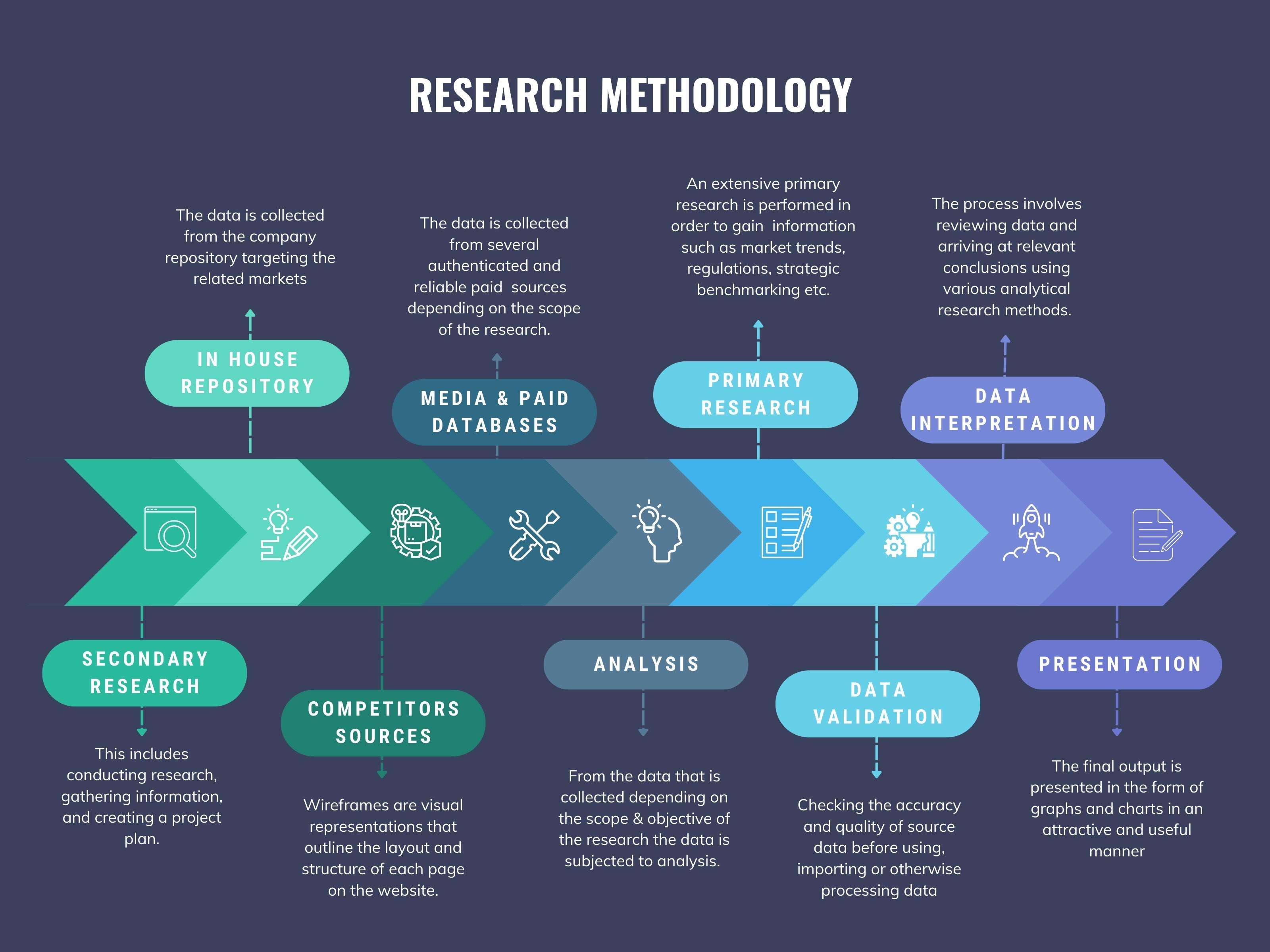
We at ‘Stratistics’ opt for an extensive research approach which involves data mining, data validation, and data analysis. The various research sources include in-house repository, secondary research, competitor’s sources, social media research, client internal data, and primary research.
Our team of analysts prefers the most reliable and authenticated data sources in order to perform the comprehensive literature search. With access to most of the authenticated data bases our team highly considers the best mix of information through various sources to obtain extensive and accurate analysis.
Each report takes an average time of a month and a team of 4 industry analysts. The time may vary depending on the scope and data availability of the desired market report. The various parameters used in the market assessment are standardized in order to enhance the data accuracy.
Data Mining
The data is collected from several authenticated, reliable, paid and unpaid sources and is filtered depending on the scope & objective of the research. Our reports repository acts as an added advantage in this procedure. Data gathering from the raw material suppliers, distributors and the manufacturers is performed on a regular basis, this helps in the comprehensive understanding of the products value chain. Apart from the above mentioned sources the data is also collected from the industry consultants to ensure the objective of the study is in the right direction.
Market trends such as technological advancements, regulatory affairs, market dynamics (Drivers, Restraints, Opportunities and Challenges) are obtained from scientific journals, market related national & international associations and organizations.
Data Analysis
From the data that is collected depending on the scope & objective of the research the data is subjected for the analysis. The critical steps that we follow for the data analysis include:
- Product Lifecycle Analysis
- Competitor analysis
- Risk analysis
- Porters Analysis
- PESTEL Analysis
- SWOT Analysis
The data engineering is performed by the core industry experts considering both the Marketing Mix Modeling and the Demand Forecasting. The marketing mix modeling makes use of multiple-regression techniques to predict the optimal mix of marketing variables. Regression factor is based on a number of variables and how they relate to an outcome such as sales or profits.
Data Validation
The data validation is performed by the exhaustive primary research from the expert interviews. This includes telephonic interviews, focus groups, face to face interviews, and questionnaires to validate our research from all aspects. The industry experts we approach come from the leading firms, involved in the supply chain ranging from the suppliers, distributors to the manufacturers and consumers so as to ensure an unbiased analysis.
We are in touch with more than 15,000 industry experts with the right mix of consultants, CEO's, presidents, vice presidents, managers, experts from both supply side and demand side, executives and so on.
The data validation involves the primary research from the industry experts belonging to:
- Leading Companies
- Suppliers & Distributors
- Manufacturers
- Consumers
- Industry/Strategic Consultants
Apart from the data validation the primary research also helps in performing the fill gap research, i.e. providing solutions for the unmet needs of the research which helps in enhancing the reports quality.
For more details about research methodology, kindly write to us at info@strategymrc.com
Frequently Asked Questions
In case of any queries regarding this report, you can contact the customer service by filing the “Inquiry Before Buy” form available on the right hand side. You may also contact us through email: info@strategymrc.com or phone: +1-301-202-5929
Yes, the samples are available for all the published reports. You can request them by filling the “Request Sample” option available in this page.
Yes, you can request a sample with your specific requirements. All the customized samples will be provided as per the requirement with the real data masked.
All our reports are available in Digital PDF format. In case if you require them in any other formats, such as PPT, Excel etc you can submit a request through “Inquiry Before Buy” form available on the right hand side. You may also contact us through email: info@strategymrc.com or phone: +1-301-202-5929
We offer a free 15% customization with every purchase. This requirement can be fulfilled for both pre and post sale. You may send your customization requirements through email at info@strategymrc.com or call us on +1-301-202-5929.
We have 3 different licensing options available in electronic format.
- Single User Licence: Allows one person, typically the buyer, to have access to the ordered product. The ordered product cannot be distributed to anyone else.
- 2-5 User Licence: Allows the ordered product to be shared among a maximum of 5 people within your organisation.
- Corporate License: Allows the product to be shared among all employees of your organisation regardless of their geographical location.
All our reports are typically be emailed to you as an attachment.
To order any available report you need to register on our website. The payment can be made either through CCAvenue or PayPal payments gateways which accept all international cards.
We extend our support to 6 months post sale. A post sale customization is also provided to cover your unmet needs in the report.
Request Customization
We offer complimentary customization of up to 15% with every purchase. To share your customization requirements, feel free to email us at info@strategymrc.com or call us on +1-301-202-5929. .
Please Note: Customization within the 15% threshold is entirely free of charge. If your request exceeds this limit, we will conduct a feasibility assessment. Following that, a detailed quote and timeline will be provided.
WHY CHOOSE US ?

Assured Quality
Best in class reports with high standard of research integrity

24X7 Research Support
Continuous support to ensure the best customer experience.

Free Customization
Adding more values to your product of interest.

Safe & Secure Access
Providing a secured environment for all online transactions.

Trusted by 600+ Brands
Serving the most reputed brands across the world.