Cryogenic Equipment Market
Cryogenic Equipment Market Forecasts to 2034 - Global Analysis By Equipment Type (Cryogenic Storage Tanks, Cryogenic Valves, Cryogenic Pumps, Cryogenic Vaporizers, Cryogenic Heat Exchangers and Cryogenic Refrigerators & Freezers), Cryogen Type, Application, End User and By Geography

According to Stratistics MRC, the Global Cryogenic Equipment Market is accounted for $27.0 billion in 2026 and is expected to reach $44.3 billion by 2034 growing at a CAGR of 6.4% during the forecast period. Cryogenic Equipment encompasses advanced machinery used for the storage, handling, and movement of substances at ultra-low temperatures, generally below -150°C. It plays a critical role across sectors such as aerospace, healthcare, energy, and metal processing, where gases like oxygen, nitrogen, and LNG are preserved in liquid states. These systems include insulated tanks, specialized valves, pumps, and vaporizers designed to reduce thermal exchange. Rising demand for liquefied natural gas, coupled with innovations in healthcare, is fueling market expansion. Furthermore, growing investments in sustainable energy and industrial gas usage are significantly boosting the global deployment of cryogenic equipment.
According to the International Gas Union (IGU) 2023 World LNG Report, global LNG trade reached 401 million tonnes in 2022, up from 379 million tonnes in 2021. This expansion directly drives demand for cryogenic tanks, pumps, and vaporizers used in LNG storage and transport.
Market Dynamics:
Driver:
Rising demand for liquefied natural gas (LNG)
Growing global consumption of liquefied natural gas (LNG) significantly drives the expansion of the cryogenic equipment market. With an increasing emphasis on cleaner fuels, LNG is gaining popularity due to its relatively lower environmental impact compared to traditional fossil fuels like coal and oil. Cryogenic systems play a crucial role in maintaining LNG in liquid form during storage and transportation at very low temperatures. Expanding industrial activities, rising urban populations, and higher energy needs in developing regions are fueling LNG demand. Moreover, continuous investments in LNG infrastructure are accelerating the adoption of efficient cryogenic technologies globally.
Restraint:
High capital and maintenance costs
The substantial initial investment and high maintenance expenses act as key limitations for the cryogenic equipment market. Establishing cryogenic systems involves sophisticated design, specialized materials, and high-performance insulation, leading to elevated upfront costs. Moreover, sustaining ultra-low temperatures requires constant energy consumption and system supervision, increasing operational spending. Many small and mid-sized businesses find it difficult to afford such investments. In addition, regular servicing, strict safety regulations, and the need for trained professionals contribute to overall ownership costs. These economic barriers can restrict broader adoption, particularly in price-sensitive regions and emerging economies.
Opportunity:
Growth in hydrogen economy and clean energy initiatives
Increasing emphasis on hydrogen-based energy systems and sustainable initiatives creates strong growth opportunities for the cryogenic equipment market. Liquid hydrogen must be maintained at ultra-low temperatures, making cryogenic technologies vital for its safe storage and transport. Governments and industries are significantly investing in hydrogen infrastructure to meet decarbonization targets. The rise of renewable energy sources like solar and wind also promotes hydrogen as an efficient energy carrier. As the global transition toward cleaner energy accelerates, demand for innovative cryogenic solutions is expected to expand considerably across multiple sectors.
Threat:
Volatility in energy prices and supply chain disruptions
Unstable energy costs and disruptions in supply chains represent major threats to the growth of the cryogenic equipment market. Cryogenic systems rely on energy-intensive operations and consistent access to specialized materials, making them vulnerable to price fluctuations. Rising energy expenses can reduce affordability and limit adoption among end users. Furthermore, global supply chain interruptions due to geopolitical issues or trade barriers can lead to production delays and extended delivery schedules. Such uncertainties affect investment decisions and project execution, creating obstacles for manufacturers and hindering overall market expansion across regions.
Covid-19 Impact:
The outbreak of COVID-19 created both challenges and growth opportunities for the cryogenic equipment market. In the early stages, disruptions in supply chains, workforce limitations, and temporary shutdowns of industries negatively affected production and project execution. Nevertheless, rising demand from the healthcare sector played a crucial role in market expansion, especially for storing vaccines, medical gases, and biological materials at ultra-low temperatures. The global vaccine rollout increased the need for reliable cryogenic storage solutions. Furthermore, growing investments in healthcare systems and pharmaceutical development aided recovery, while the gradual restart of industrial activities contributed to sustained market growth.
The cryogenic storage tanks segment is expected to be the largest during the forecast period
The cryogenic storage tanks segment is expected to account for the largest market share during the forecast period because of their essential function in preserving liquefied gases at ultra-low temperatures. They are extensively utilized in sectors such as energy, healthcare, chemicals, and food industries, where reliable storage of gases like nitrogen, oxygen, and LNG is crucial. Their efficiency in maintaining stable temperatures and reducing evaporation losses makes them highly valuable. Growing demand for industrial gases, increasing LNG infrastructure development, and rising medical applications are boosting their usage. Consequently, cryogenic storage tanks continue to lead as the most prominent segment in the market.
The LNG (liquefied natural gas) segment is expected to have the highest CAGR during the forecast period
Over the forecast period, the LNG (liquefied natural gas) segment is predicted to witness the highest growth rate owing to its rising adoption as a cleaner alternative fuel. With increasing efforts to lower carbon emissions, many countries are shifting from conventional fuels like coal and oil to LNG for energy generation, transport, and industrial use. Cryogenic systems are essential for maintaining LNG in liquid form at very low temperatures during storage and transport. The rapid development of LNG infrastructure, such as processing plants and storage facilities, is boosting demand. Growing energy needs and sustainability investments are further driving this segment’s expansion.
Region with largest share:
During the forecast period, the Asia-Pacific region is expected to hold the largest market share driven by strong industrial growth, rising urban population, and increasing energy requirements in countries like China, India, and Japan. Substantial investments in LNG infrastructure, such as storage and transport facilities, are fueling the need for cryogenic technologies. Moreover, the growth of healthcare services and the rising demand for industrial gases in sectors like electronics and manufacturing are supporting market expansion. Favorable government policies encouraging clean energy adoption and infrastructure development further strengthen the region’s leading position in the global cryogenic equipment market.
Region with highest CAGR:
Over the forecast period, the Rest of the World (RoW) region is anticipated to exhibit the highest CAGR, supported by rising investments in energy infrastructure and increasing demand for liquefied natural gas. Regional countries are enhancing their LNG production, storage, and export capacities, boosting the requirement for efficient cryogenic technologies. Moreover, ongoing industrial development and efforts to diversify economies beyond oil are encouraging the use of industrial gases. Expanding healthcare infrastructure and large-scale development projects are also contributing to growth. Supportive government policies and strategic energy initiatives are further driving the rapid expansion of this regional market.
Key players in the market
Some of the key players in Cryogenic Equipment Market include Linde plc, Air Liquide, Air Products and Chemicals, Inc., Chart Industries, Parker Hannifin Corp, Flowserve Corporation, Nikkiso Co., Ltd., INOX India Limited, SHI Cryogenics Group, Emerson Electric Co., Sulzer Ltd, Taylor-Wharton, Wessington Cryogenics, Cryofab Inc, Acme Cryo, HEROSE GMBH, Alfa Laval AB and Fives SAS.
Key Developments:
In June 2026, Emerson Electric Co. inked a strategic collaboration with SiMa.ai to integrate SiMa.ai’s MLSoC (Machine Learning System on Chip) technology into Emerson’s industrial PCs. The integration of advanced artificial intelligence capabilities into industrial personal computers will enable Emerson to perform real-time data analysis in factory and remote site environments.
In December 2025, Air Liquide and Hyundai Motor Group reaffirm leadership in the hydrogen sector as co-chairs of the Hydrogen Council, driving global hydrogen ecosystem expansion. This partnership focuses on building a sustainable energy ecosystem across Europe, U.S. and South Korea, encompassing hydrogen production, storage, transportation and utilization. This collaboration expands beyond mobility to include infrastructure, logistics, and clean energy solutions, supporting the global energy transition.
In January 2024, Linde announced it has expanded its existing long-term agreement for the supply of industrial gases with Steel Authority of India Limited (SAIL), one of the largest steelmaking companies in India. Under the terms of the new agreement, Linde will now build, own and operate an additional 1,000 tons per day ASU, nearly doubling Linde’s on-site production at Rourkela. Linde’s investment is expected to be approximately $60 million.
Equipment Types Covered:
• Cryogenic Storage Tanks
• Cryogenic Valves
• Cryogenic Pumps
• Cryogenic Vaporizers
• Cryogenic Heat Exchangers
• Cryogenic Refrigerators & Freezers
Cryogen Types Covered:
• Liquid Nitrogen
• Liquid Oxygen
• Liquid Argon
• Liquid Helium
• LNG (Liquefied Natural Gas)
• Other Cryogen Types
Applications Covered:
• Energy & Power
• Healthcare & Medical
• Chemicals & Petrochemicals
• Food & Beverage
• Aerospace & Defense
• Metallurgy & Electronics
• Research & Laboratories
End Users Covered:
• Industrial Gas Companies
• Oil & Gas Companies
• Chemical & Petrochemical Companies
• Healthcare Institutions
• Food & Beverage Companies
• Research Organizations
Regions Covered:
• North America
o United States
o Canada
o Mexico
• Europe
o United Kingdom
o Germany
o France
o Italy
o Spain
o Netherlands
o Belgium
o Sweden
o Switzerland
o Poland
o Rest of Europe
• Asia Pacific
o China
o Japan
o India
o South Korea
o Australia
o Indonesia
o Thailand
o Malaysia
o Singapore
o Vietnam
o Rest of Asia Pacific
• South America
o Brazil
o Argentina
o Colombia
o Chile
o Peru
o Rest of South America
• Rest of the World (RoW)
o Middle East
§ Saudi Arabia
§ United Arab Emirates
§ Qatar
§ Israel
§ Rest of Middle East
o Africa
§ South Africa
§ Egypt
§ Morocco
§ Rest of Africa
What our report offers:
- Market share assessments for the regional and country-level segments
- Strategic recommendations for the new entrants
- Covers Market data for the years 2023, 2024, 2025, 2026, 2027, 2028, 2030, 2032 and 2034
- Market Trends (Drivers, Constraints, Opportunities, Threats, Challenges, Investment Opportunities, and recommendations)
- Strategic recommendations in key business segments based on the market estimations
- Competitive landscaping mapping the key common trends
- Company profiling with detailed strategies, financials, and recent developments
- Supply chain trends mapping the latest technological advancements
Free Customization Offerings:
All the customers of this report will be entitled to receive one of the following free customization options:
• Company Profiling
o Comprehensive profiling of additional market players (up to 3)
o SWOT Analysis of key players (up to 3)
• Regional Segmentation
o Market estimations, Forecasts and CAGR of any prominent country as per the client's interest (Note: Depends on feasibility check)
• Competitive Benchmarking
o Benchmarking of key players based on product portfolio, geographical presence, and strategic alliances
Table of Contents
1 Executive Summary
1.1 Market Snapshot and Key Highlights
1.2 Growth Drivers, Challenges, and Opportunities
1.3 Competitive Landscape Overview
1.4 Strategic Insights and Recommendations
2 Research Framework
2.1 Study Objectives and Scope
2.2 Stakeholder Analysis
2.3 Research Assumptions and Limitations
2.4 Research Methodology
2.4.1 Data Collection (Primary and Secondary)
2.4.2 Data Modeling and Estimation Techniques
2.4.3 Data Validation and Triangulation
2.4.4 Analytical and Forecasting Approach
3 Market Dynamics and Trend Analysis
3.1 Market Definition and Structure
3.2 Key Market Drivers
3.3 Market Restraints and Challenges
3.4 Growth Opportunities and Investment Hotspots
3.5 Industry Threats and Risk Assessment
3.6 Technology and Innovation Landscape
3.7 Emerging and High-Growth Markets
3.8 Regulatory and Policy Environment
3.9 Impact of COVID-19 and Recovery Outlook
4 Competitive and Strategic Assessment
4.1 Porter's Five Forces Analysis
4.1.1 Supplier Bargaining Power
4.1.2 Buyer Bargaining Power
4.1.3 Threat of Substitutes
4.1.4 Threat of New Entrants
4.1.5 Competitive Rivalry
4.2 Market Share Analysis of Key Players
4.3 Product Benchmarking and Performance Comparison
5 Global Cryogenic Equipment Market, By Equipment Type
5.1 Cryogenic Storage Tanks
5.2 Cryogenic Valves
5.3 Cryogenic Pumps
5.4 Cryogenic Vaporizers
5.5 Cryogenic Heat Exchangers
5.6 Cryogenic Refrigerators & Freezers
6 Global Cryogenic Equipment Market, By Cryogen Type
6.1 Liquid Nitrogen
6.2 Liquid Oxygen
6.3 Liquid Argon
6.4 Liquid Helium
6.5 LNG (Liquefied Natural Gas)
6.6 Other Cryogen Types
7 Global Cryogenic Equipment Market, By Application
7.1 Energy & Power
7.2 Healthcare & Medical
7.3 Chemicals & Petrochemicals
7.4 Food & Beverage
7.5 Aerospace & Defense
7.6 Metallurgy & Electronics
7.7 Research & Laboratories
8 Global Cryogenic Equipment Market, By End User
8.1 Industrial Gas Companies
8.2 Oil & Gas Companies
8.3 Chemical & Petrochemical Companies
8.4 Healthcare Institutions
8.5 Food & Beverage Companies
8.6 Research Organizations
9 Global Cryogenic Equipment Market, By Geography
9.1 North America
9.1.1 United States
9.1.2 Canada
9.1.3 Mexico
9.2 Europe
9.2.1 United Kingdom
9.2.2 Germany
9.2.3 France
9.2.4 Italy
9.2.5 Spain
9.2.6 Netherlands
9.2.7 Belgium
9.2.8 Sweden
9.2.9 Switzerland
9.2.10 Poland
9.2.11 Rest of Europe
9.3 Asia Pacific
9.3.1 China
9.3.2 Japan
9.3.3 India
9.3.4 South Korea
9.3.5 Australia
9.3.6 Indonesia
9.3.7 Thailand
9.3.8 Malaysia
9.3.9 Singapore
9.3.10 Vietnam
9.3.11 Rest of Asia Pacific
9.4 South America
9.4.1 Brazil
9.4.2 Argentina
9.4.3 Colombia
9.4.4 Chile
9.4.5 Peru
9.4.6 Rest of South America
9.5 Rest of the World (RoW)
9.5.1 Middle East
9.5.1.1 Saudi Arabia
9.5.1.2 United Arab Emirates
9.5.1.3 Qatar
9.5.1.4 Israel
9.5.1.5 Rest of Middle East
9.5.2 Africa
9.5.2.1 South Africa
9.5.2.2 Egypt
9.5.2.3 Morocco
9.5.2.4 Rest of Africa
10 Strategic Market Intelligence
10.1 Industry Value Network and Supply Chain Assessment
10.2 White-Space and Opportunity Mapping
10.3 Product Evolution and Market Life Cycle Analysis
10.4 Channel, Distributor, and Go-to-Market Assessment
11 Industry Developments and Strategic Initiatives
11.1 Mergers and Acquisitions
11.2 Partnerships, Alliances, and Joint Ventures
11.3 New Product Launches and Certifications
11.4 Capacity Expansion and Investments
11.5 Other Strategic Initiatives
12 Company Profiles
12.1 Linde plc
12.2 Air Liquide
12.3 Air Products and Chemicals, Inc.
12.4 Chart Industries
12.5 Parker Hannifin Corp
12.6 Flowserve Corporation
12.7 Nikkiso Co., Ltd.
12.8 INOX India Limited
12.9 SHI Cryogenics Group
12.10 Emerson Electric Co.
12.11 Sulzer Ltd
12.12 Taylor-Wharton
12.13 Wessington Cryogenics
12.14 Cryofab Inc
12.15 Acme Cryo
12.16 HEROSE GMBH
12.17 Alfa Laval AB
12.18 Fives SAS
List of Tables
1 Global Cryogenic Equipment Market Outlook, By Region (2023-2034) ($MN)
2 Global Cryogenic Equipment Market Outlook, By Equipment Type (2023-2034) ($MN)
3 Global Cryogenic Equipment Market Outlook, By Cryogenic Storage Tanks (2023-2034) ($MN)
4 Global Cryogenic Equipment Market Outlook, By Cryogenic Valves (2023-2034) ($MN)
5 Global Cryogenic Equipment Market Outlook, By Cryogenic Pumps (2023-2034) ($MN)
6 Global Cryogenic Equipment Market Outlook, By Cryogenic Vaporizers (2023-2034) ($MN)
7 Global Cryogenic Equipment Market Outlook, By Cryogenic Heat Exchangers (2023-2034) ($MN)
8 Global Cryogenic Equipment Market Outlook, By Cryogenic Refrigerators & Freezers (2023-2034) ($MN)
9 Global Cryogenic Equipment Market Outlook, By Cryogen Type (2023-2034) ($MN)
10 Global Cryogenic Equipment Market Outlook, By Liquid Nitrogen (2023-2034) ($MN)
11 Global Cryogenic Equipment Market Outlook, By Liquid Oxygen (2023-2034) ($MN)
12 Global Cryogenic Equipment Market Outlook, By Liquid Argon (2023-2034) ($MN)
13 Global Cryogenic Equipment Market Outlook, By Liquid Helium (2023-2034) ($MN)
14 Global Cryogenic Equipment Market Outlook, By LNG (Liquefied Natural Gas) (2023-2034) ($MN)
15 Global Cryogenic Equipment Market Outlook, By Other Cryogen Types (2023-2034) ($MN)
16 Global Cryogenic Equipment Market Outlook, By Application (2023-2034) ($MN)
17 Global Cryogenic Equipment Market Outlook, By Energy & Power (2023-2034) ($MN)
18 Global Cryogenic Equipment Market Outlook, By Healthcare & Medical (2023-2034) ($MN)
19 Global Cryogenic Equipment Market Outlook, By Chemicals & Petrochemicals (2023-2034) ($MN)
20 Global Cryogenic Equipment Market Outlook, By Food & Beverage (2023-2034) ($MN)
21 Global Cryogenic Equipment Market Outlook, By Aerospace & Defense (2023-2034) ($MN)
22 Global Cryogenic Equipment Market Outlook, By Metallurgy & Electronics (2023-2034) ($MN)
23 Global Cryogenic Equipment Market Outlook, By Research & Laboratories (2023-2034) ($MN)
24 Global Cryogenic Equipment Market Outlook, By End User (2023-2034) ($MN)
25 Global Cryogenic Equipment Market Outlook, By Industrial Gas Companies (2023-2034) ($MN)
26 Global Cryogenic Equipment Market Outlook, By Oil & Gas Companies (2023-2034) ($MN)
27 Global Cryogenic Equipment Market Outlook, By Chemical & Petrochemical Companies (2023-2034) ($MN)
28 Global Cryogenic Equipment Market Outlook, By Healthcare Institutions (2023-2034) ($MN)
29 Global Cryogenic Equipment Market Outlook, By Food & Beverage Companies (2023-2034) ($MN)
30 Global Cryogenic Equipment Market Outlook, By Research Organizations (2023-2034) ($MN)
Note: Tables for North America, Europe, APAC, South America, and Rest of the World (RoW) Regions are also represented in the same manner as above.
List of Figures
RESEARCH METHODOLOGY
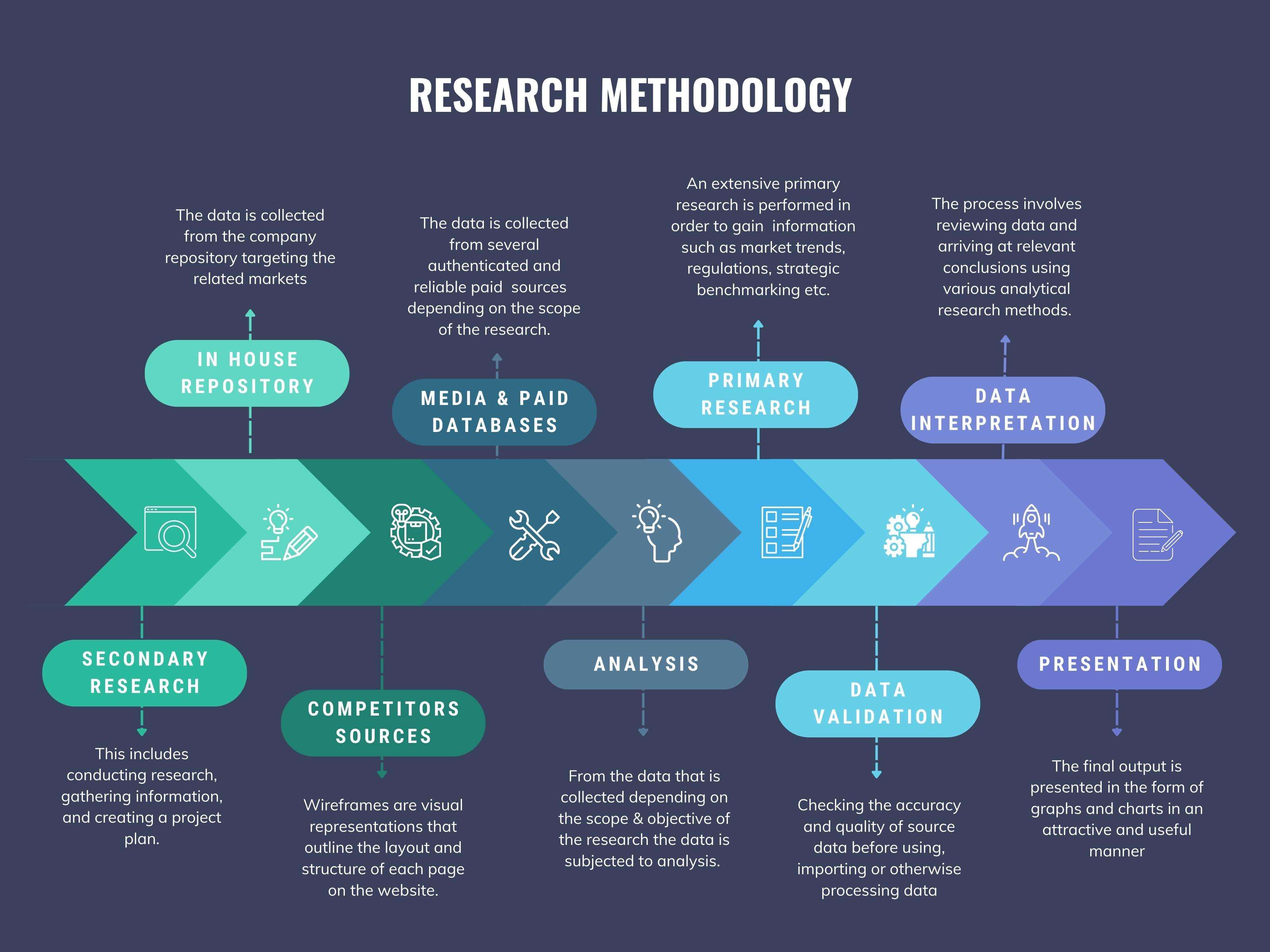
We at ‘Stratistics’ opt for an extensive research approach which involves data mining, data validation, and data analysis. The various research sources include in-house repository, secondary research, competitor’s sources, social media research, client internal data, and primary research.
Our team of analysts prefers the most reliable and authenticated data sources in order to perform the comprehensive literature search. With access to most of the authenticated data bases our team highly considers the best mix of information through various sources to obtain extensive and accurate analysis.
Each report takes an average time of a month and a team of 4 industry analysts. The time may vary depending on the scope and data availability of the desired market report. The various parameters used in the market assessment are standardized in order to enhance the data accuracy.
Data Mining
The data is collected from several authenticated, reliable, paid and unpaid sources and is filtered depending on the scope & objective of the research. Our reports repository acts as an added advantage in this procedure. Data gathering from the raw material suppliers, distributors and the manufacturers is performed on a regular basis, this helps in the comprehensive understanding of the products value chain. Apart from the above mentioned sources the data is also collected from the industry consultants to ensure the objective of the study is in the right direction.
Market trends such as technological advancements, regulatory affairs, market dynamics (Drivers, Restraints, Opportunities and Challenges) are obtained from scientific journals, market related national & international associations and organizations.
Data Analysis
From the data that is collected depending on the scope & objective of the research the data is subjected for the analysis. The critical steps that we follow for the data analysis include:
- Product Lifecycle Analysis
- Competitor analysis
- Risk analysis
- Porters Analysis
- PESTEL Analysis
- SWOT Analysis
The data engineering is performed by the core industry experts considering both the Marketing Mix Modeling and the Demand Forecasting. The marketing mix modeling makes use of multiple-regression techniques to predict the optimal mix of marketing variables. Regression factor is based on a number of variables and how they relate to an outcome such as sales or profits.
Data Validation
The data validation is performed by the exhaustive primary research from the expert interviews. This includes telephonic interviews, focus groups, face to face interviews, and questionnaires to validate our research from all aspects. The industry experts we approach come from the leading firms, involved in the supply chain ranging from the suppliers, distributors to the manufacturers and consumers so as to ensure an unbiased analysis.
We are in touch with more than 15,000 industry experts with the right mix of consultants, CEO's, presidents, vice presidents, managers, experts from both supply side and demand side, executives and so on.
The data validation involves the primary research from the industry experts belonging to:
- Leading Companies
- Suppliers & Distributors
- Manufacturers
- Consumers
- Industry/Strategic Consultants
Apart from the data validation the primary research also helps in performing the fill gap research, i.e. providing solutions for the unmet needs of the research which helps in enhancing the reports quality.
For more details about research methodology, kindly write to us at info@strategymrc.com
Frequently Asked Questions
In case of any queries regarding this report, you can contact the customer service by filing the “Inquiry Before Buy” form available on the right hand side. You may also contact us through email: info@strategymrc.com or phone: +1-301-202-5929
Yes, the samples are available for all the published reports. You can request them by filling the “Request Sample” option available in this page.
Yes, you can request a sample with your specific requirements. All the customized samples will be provided as per the requirement with the real data masked.
All our reports are available in Digital PDF format. In case if you require them in any other formats, such as PPT, Excel etc you can submit a request through “Inquiry Before Buy” form available on the right hand side. You may also contact us through email: info@strategymrc.com or phone: +1-301-202-5929
We offer a free 15% customization with every purchase. This requirement can be fulfilled for both pre and post sale. You may send your customization requirements through email at info@strategymrc.com or call us on +1-301-202-5929.
We have 3 different licensing options available in electronic format.
- Single User Licence: Allows one person, typically the buyer, to have access to the ordered product. The ordered product cannot be distributed to anyone else.
- 2-5 User Licence: Allows the ordered product to be shared among a maximum of 5 people within your organisation.
- Corporate License: Allows the product to be shared among all employees of your organisation regardless of their geographical location.
All our reports are typically be emailed to you as an attachment.
To order any available report you need to register on our website. The payment can be made either through CCAvenue or PayPal payments gateways which accept all international cards.
We extend our support to 6 months post sale. A post sale customization is also provided to cover your unmet needs in the report.
Request Customization
We offer complimentary customization of up to 15% with every purchase. To share your customization requirements, feel free to email us at info@strategymrc.com or call us on +1-301-202-5929. .
Please Note: Customization within the 15% threshold is entirely free of charge. If your request exceeds this limit, we will conduct a feasibility assessment. Following that, a detailed quote and timeline will be provided.
WHY CHOOSE US ?

Assured Quality
Best in class reports with high standard of research integrity

24X7 Research Support
Continuous support to ensure the best customer experience.

Free Customization
Adding more values to your product of interest.

Safe & Secure Access
Providing a secured environment for all online transactions.

Trusted by 600+ Brands
Serving the most reputed brands across the world.