
Energy Storage Systems Market
Energy Storage Systems Market Forecasts to 2030 - Global Analysis By Component (Energy Management Systems (EMS), Inverters, Battery Management Systems (BMS), Power Conversion Systems (PCS) and Other Components), Capacity, Technology, Application and By Geography

|
Years Covered |
2022-2030 |
|
Estimated Year Value (2024) |
US $264.05 BN |
|
Projected Year Value (2030) |
US $475.50 BN |
|
CAGR (2024 - 2030) |
10.3% |
|
Regions Covered |
North America, Europe, Asia Pacific, South America, and Middle East & Africa |
|
Countries Covered |
US, Canada, Mexico, Germany, UK, Italy, France, Spain, Japan, China, India, Australia, New Zealand, South Korea, Rest of Asia Pacific, South America, Argentina, Brazil, Chile, Middle East & Africa, Saudi Arabia, UAE, Qatar, and South Africa |
|
Largest Market |
Asia Pacific |
|
Highest Growing Market |
North America |
According to Stratistics MRC, the Global Energy Storage Systems Market is accounted for $264.05 billion in 2024 and is expected to reach $475.50 billion by 2030 growing at a CAGR of 10.3% during the forecast period. Energy Storage Systems (ESS) refers to a range of technologies and methods designed to capture, store, and manage energy for later use. As they regulate intermittency and provide a steady supply of energy, these systems are essential to the integration of renewable energy sources like wind and solar power. The industry offers a range of technologies for use in commercial, industrial, and residential settings, such as batteries, pumped hydro storage, and thermal storage.
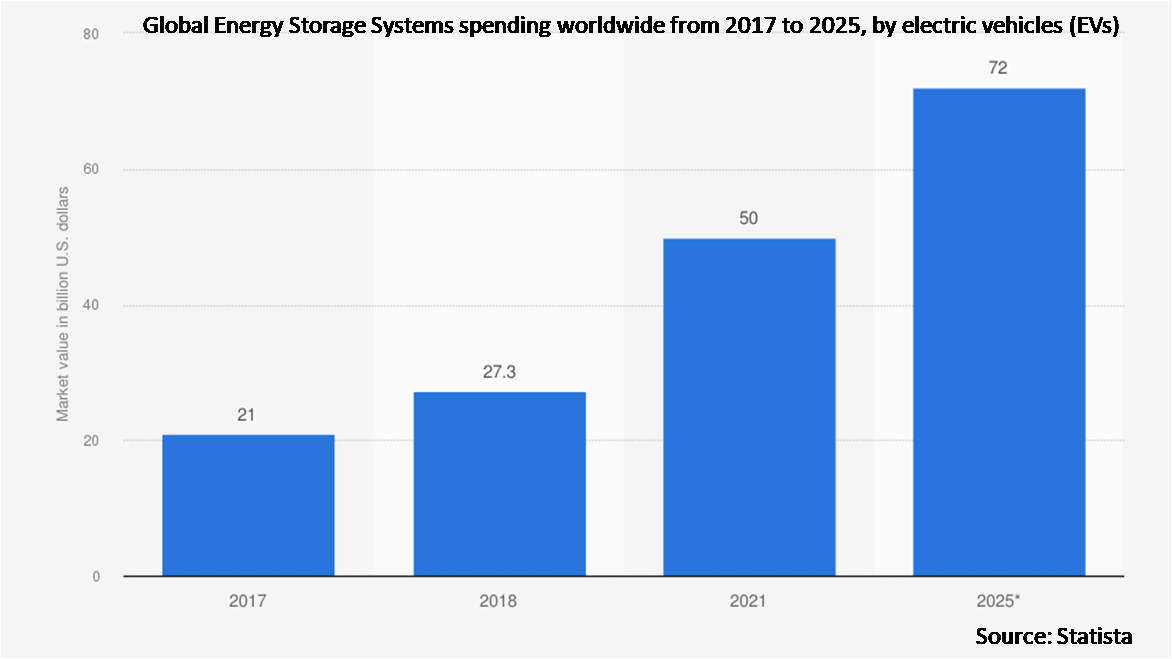
According to the Institute for Energy Economics and Financial Analysis (IEEFA), in 2018, investments in renewable power production technologies, dominated by solar and wind energy, totaled USD 64.2 billion in the United States.
Market Dynamics:
Driver:
Growing adoption of renewable energy
Energy Storage Systems (ESS) are in high demand due to the growing use of renewable energy sources like solar and wind power. Energy storage systems (ESS) are crucial for storing extra energy during peak production periods and releasing it during periods of low production or high demand since the output of these intermittent energy sources might fluctuate. This contributes to grid balancing and guarantees a consistent and sustainable supply of energy. In addition, ESS can be used to minimize greenhouse gas emissions and lessen dependency on fossil fuels, which makes them an essential part of the shift to cleaner energy sources in the future.
Restraint:
High initial investment costs
High initial investment prices provide a major hurdle for the Energy Storage Systems (ESS) market. This covers the price of installing batteries as well as power conversion, battery management, and facility infrastructure. System control, balance of plant, building, and commissioning are additional expenses. The initial expenses associated with energy storage systems may impede their extensive implementation, particularly in developing nations where funding resources are scarce.
Opportunity:
Declining costs of battery technology
Battery technology is becoming more affordable, which is driving growth in the market for Energy Storage Systems (ESS). Batteries are getting cheaper as a result of increased manufacturing efficiency and the realization of economies of scale, which makes energy storage systems like pumped hydro storage more competitive and more affordable. Because of this, utilities, companies, and homeowners find ESS to be more appealing for off-grid power supply, peak load management, and grid stabilization.
Threat:
Lack of standardization
Lack of standardization in several areas presents difficulties for the Energy Storage Systems (ESS) sector. Evaluating systems is challenging for both suppliers and customers due to the absence of standard definitions, metrics, and testing procedures. Issues with integration and vendor lock-in arise from open communication protocols across vendors. Complicating matters include local safety, environmental, and grid code laws. Reducing soft costs, enhancing interoperability, and hastening the global adoption of energy storage technologies all depend on closing these standardized gaps.
Covid-19 Impact
The COVID-19 epidemic caused supply chain disruptions, production and installation delays, and other significant effects on the energy storage systems market. Investment and project development slowed as a result of lockdowns and restrictions, especially in the residential and commercial sectors. However, because of the pandemic's increased demand for energy storage due to rising domestic energy consumption, the transition to renewable energy sources was also accelerated. Restoring grid resilience and incorporating more sustainable energy practices are top priorities as economies rebound, setting up the industry for future expansion.
The energy management systems (EMS) segment is expected to be the largest during the forecast period
The energy management systems (EMS) segment is projected to account for the largest market share during the projection period. As the need for environmentally friendly energy solutions increases, EMS makes it possible to monitor and control energy output and consumption in real time, improving grid stability. These systems enable demand response and load balancing, enabling users to modify energy consumption in accordance with availability. Furthermore, as energy networks are becoming more complicated, enhanced analytics and reporting skills are required, which means that energy storage applications need to use EMS in order to maximize efficiency and minimize reliance on fossil fuels.
The grid energy storage segment is expected to have the highest CAGR during the forecast period
During the projection period, the grid energy storage segment is expected to grow at the highest CAGR, due to the growing need for a dependable and resilient power supply. The increasing prevalence of renewable energy sources such as solar and wind power emphasizes the urgent need for efficient energy storage technologies to mitigate their intermittency. The market is further driven by regulatory support and incentives for clean energy programs, which also make it easier to integrate different energy sources and increase the overall stability and efficiency of the grid.
Region with largest share:
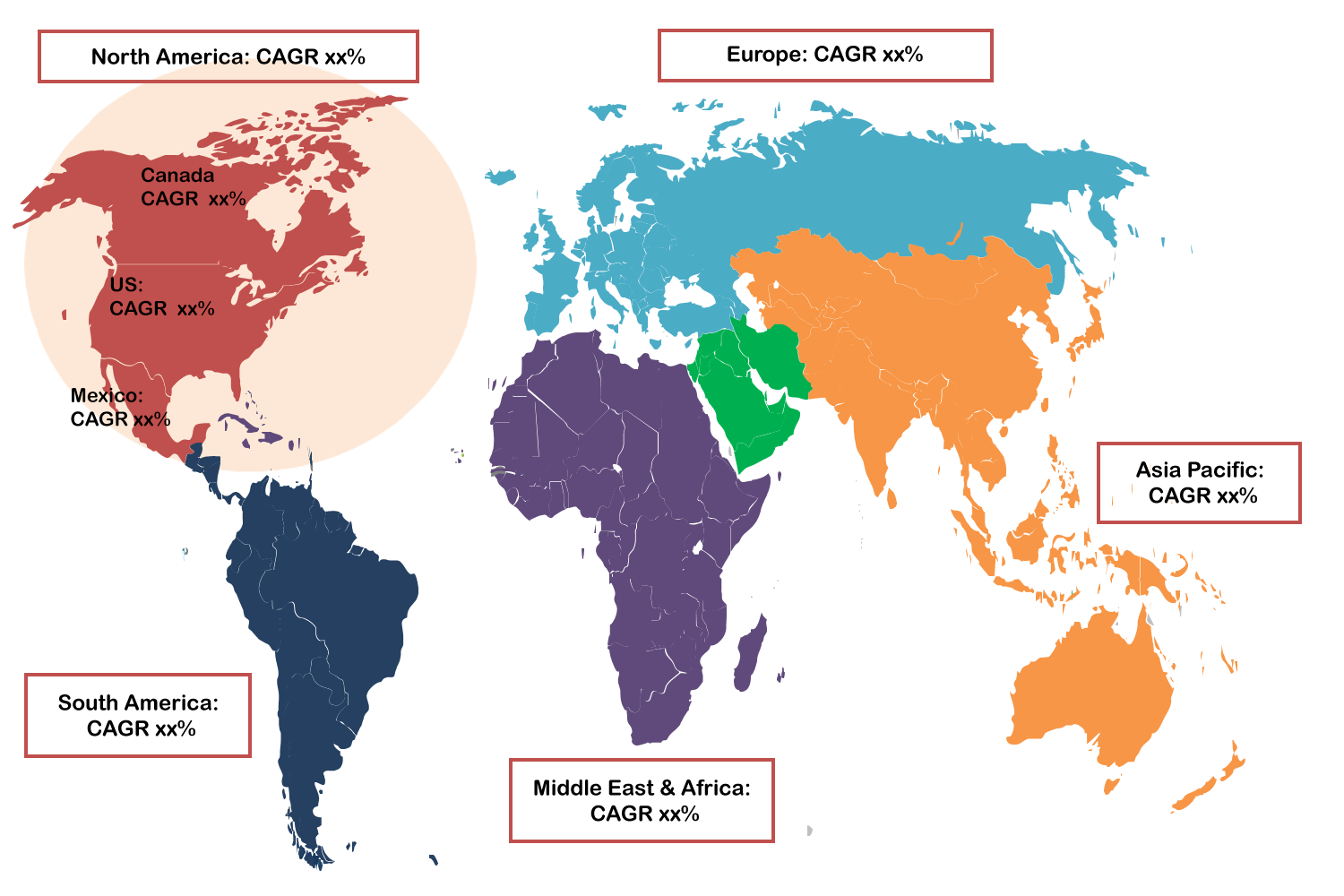
The Asia Pacific region is projected to account for the largest market share during the forecast period, due to the growing need for the integration of renewable energy sources and a steady supply of electricity. Growth in the market is also accelerated by encouraging government initiatives and regulations that improve energy security and sustainability. The region becomes a major factor in the global energy transition as a result of the trend towards electrification in distant areas, which also presents prospects for the deployment of energy storage systems.
Region with highest CAGR:
Over the forecasted timeframe, the North America region is anticipated to exhibit the highest CAGR, owing to increasing demand for grid resilience and modernization, the quick uptake of renewable energy sources, and encouraging government incentives and regulations. The growing popularity of electric vehicles and the requirement for dependable backup power also contribute to the market's growth. Constant developments in battery technologies, including as flow and lithium-ion batteries, improve system economics and efficiency, increasing the availability and desirability of energy storage systems in the North American market.
Key players in the market
Some of the key players profiled in the Energy Storage Systems Market include LG Chem, Siemens Energy, Samsung SDI, Fluence, Hitachi ABB Power Grids, GE Renewable Energy, VRB Energy, Eve Energy Co. Ltd., ABB, Kokam, Tesla, Panasonic, AES Corporation, Enphase Energy, TotalEnergies, Vivint Solar, GE Vernova, Northvolt, Tata Power and Larsen & Toubro (L&T).
Key Developments:
In August 2023, Fluence Energy launched a new storage platform aimed at improving efficiency in integrating renewable energy sources into the grid.
In June 2023, LG Chem announced the construction of a new production facility in the U.S. to expand its lithium-ion battery output.
In April 2023, Tesla launched the Megapack, a large-scale battery designed for commercial use to provide enhanced energy storage capacity and stability.
In May 2020, Northvolt introduced the Voltpack Mobile System, a lithium-ion battery energy storage solution designed as a zero-emission alternative to diesel generators, applicable for powering remote grids and supporting EV charging.
Components Covered:
• Energy Management Systems (EMS)
• Inverters
• Battery Management Systems (BMS)
• Power Conversion Systems (PCS)
• Other Components
Capacities Covered:
• Large Scale (Above 10 MW)
• Medium Scale (1 MW – 10 MW)
• Small Scale (Up to 1 MW)
Technologies Covered:
• Lithium-Ion Batteries
• Lead-Acid Batteries
• Flow Batteries
• Sodium-Sulfur Batteries
• Nickel-Cadmium Batteries
• Flywheel Energy Storage
• Pumped Hydro Storage
• Compressed Air Energy Storage (CAES)
• Thermal Energy Storage
Applications Covered:
• Grid Energy Storage
• Renewable Energy Integration
• Electric Vehicles (EVs)
• Commercial & Industrial Applications
• Residential Energy Storage
• Telecommunications
• Transportation and Heavy Industries
• Other Applications
Regions Covered:
• North America
o US
o Canada
o Mexico
• Europe
o Germany
o UK
o Italy
o France
o Spain
o Rest of Europe
• Asia Pacific
o Japan
o China
o India
o Australia
o New Zealand
o South Korea
o Rest of Asia Pacific
• South America
o Argentina
o Brazil
o Chile
o Rest of South America
• Middle East & Africa
o Saudi Arabia
o UAE
o Qatar
o South Africa
o Rest of Middle East & Africa
What our report offers:
- Market share assessments for the regional and country-level segments
- Strategic recommendations for the new entrants
- Covers Market data for the years 2022, 2023, 2024, 2026, and 2030
- Market Trends (Drivers, Constraints, Opportunities, Threats, Challenges, Investment Opportunities, and recommendations)
- Strategic recommendations in key business segments based on the market estimations
- Competitive landscaping mapping the key common trends
- Company profiling with detailed strategies, financials, and recent developments
- Supply chain trends mapping the latest technological advancements
Free Customization Offerings:
All the customers of this report will be entitled to receive one of the following free customization options:
• Company Profiling
o Comprehensive profiling of additional market players (up to 3)
o SWOT Analysis of key players (up to 3)
• Regional Segmentation
o Market estimations, Forecasts and CAGR of any prominent country as per the client's interest (Note: Depends on feasibility check)
• Competitive Benchmarking
o Benchmarking of key players based on product portfolio, geographical presence, and strategic alliances
Table of Contents
1 Executive Summary
2 Preface
2.1 Abstract
2.2 Stake Holders
2.3 Research Scope
2.4 Research Methodology
2.4.1 Data Mining
2.4.2 Data Analysis
2.4.3 Data Validation
2.4.4 Research Approach
2.5 Research Sources
2.5.1 Primary Research Sources
2.5.2 Secondary Research Sources
2.5.3 Assumptions
3 Market Trend Analysis
3.1 Introduction
3.2 Drivers
3.3 Restraints
3.4 Opportunities
3.5 Threats
3.6 Technology Analysis
3.7 Application Analysis
3.8 Emerging Markets
3.9 Impact of Covid-19
4 Porters Five Force Analysis
4.1 Bargaining power of suppliers
4.2 Bargaining power of buyers
4.3 Threat of substitutes
4.4 Threat of new entrants
4.5 Competitive rivalry
5 Global Energy Storage Systems Market, By Component
5.1 Introduction
5.2 Energy Management Systems (EMS)
5.3 Inverters
5.4 Battery Management Systems (BMS)
5.5 Power Conversion Systems (PCS)
5.6 Other Components
6 Global Energy Storage Systems Market, By Capacity
6.1 Introduction
6.2 Large Scale (Above 10 MW)
6.3 Medium Scale (1 MW – 10 MW)
6.4 Small Scale (Up to 1 MW)
7 Global Energy Storage Systems Market, By Technology
7.1 Introduction
7.2 Lithium-Ion Batteries
7.3 Lead-Acid Batteries
7.4 Flow Batteries
7.5 Sodium-Sulfur Batteries
7.6 Nickel-Cadmium Batteries
7.7 Flywheel Energy Storage
7.8 Pumped Hydro Storage
7.9 Compressed Air Energy Storage (CAES)
7.10 Thermal Energy Storage
8 Global Energy Storage Systems Market, By Application
8.1 Introduction
8.2 Grid Energy Storage
8.3 Renewable Energy Integration
8.4 Electric Vehicles (EVs)
8.5 Commercial & Industrial Applications
8.6 Residential Energy Storage
8.7 Telecommunications
8.8 Transportation and Heavy Industries
8.9 Other Applications
9 Global Energy Storage Systems Market, By Geography
9.1 Introduction
9.2 North America
9.2.1 US
9.2.2 Canada
9.2.3 Mexico
9.3 Europe
9.3.1 Germany
9.3.2 UK
9.3.3 Italy
9.3.4 France
9.3.5 Spain
9.3.6 Rest of Europe
9.4 Asia Pacific
9.4.1 Japan
9.4.2 China
9.4.3 India
9.4.4 Australia
9.4.5 New Zealand
9.4.6 South Korea
9.4.7 Rest of Asia Pacific
9.5 South America
9.5.1 Argentina
9.5.2 Brazil
9.5.3 Chile
9.5.4 Rest of South America
9.6 Middle East & Africa
9.6.1 Saudi Arabia
9.6.2 UAE
9.6.3 Qatar
9.6.4 South Africa
9.6.5 Rest of Middle East & Africa
10 Key Developments
10.1 Agreements, Partnerships, Collaborations and Joint Ventures
10.2 Acquisitions & Mergers
10.3 New Product Launch
10.4 Expansions
10.5 Other Key Strategies
11 Company Profiling
11.1 LG Chem
11.2 Siemens Energy
11.3 Samsung SDI
11.4 Fluence
11.5 Hitachi ABB Power Grids
11.6 GE Renewable Energy
11.7 VRB Energy
11.8 Eve Energy Co. Ltd.
11.9 ABB
11.10 Kokam
11.11 Tesla
11.12 Panasonic
11.13 AES Corporation
11.14 Enphase Energy
11.15 TotalEnergies
11.16 Vivint Solar
11.17 GE Vernova
11.18 Northvolt
11.19 Tata Power
11.20 Larsen & Toubro (L&T)
List of Tables
1 Global Energy Storage Systems Market Outlook, By Region (2022-2030) ($MN)
2 Global Energy Storage Systems Market Outlook, By Component (2022-2030) ($MN)
3 Global Energy Storage Systems Market Outlook, By Energy Management Systems (EMS) (2022-2030) ($MN)
4 Global Energy Storage Systems Market Outlook, By Inverters (2022-2030) ($MN)
5 Global Energy Storage Systems Market Outlook, By Battery Management Systems (BMS) (2022-2030) ($MN)
6 Global Energy Storage Systems Market Outlook, By Power Conversion Systems (PCS) (2022-2030) ($MN)
7 Global Energy Storage Systems Market Outlook, By Other Components (2022-2030) ($MN)
8 Global Energy Storage Systems Market Outlook, By Capacity (2022-2030) ($MN)
9 Global Energy Storage Systems Market Outlook, By Large Scale (Above 10 MW) (2022-2030) ($MN)
10 Global Energy Storage Systems Market Outlook, By Medium Scale (1 MW – 10 MW) (2022-2030) ($MN)
11 Global Energy Storage Systems Market Outlook, By Small Scale (Up to 1 MW) (2022-2030) ($MN)
12 Global Energy Storage Systems Market Outlook, By Technology (2022-2030) ($MN)
13 Global Energy Storage Systems Market Outlook, By Lithium-Ion Batteries (2022-2030) ($MN)
14 Global Energy Storage Systems Market Outlook, By Lead-Acid Batteries (2022-2030) ($MN)
15 Global Energy Storage Systems Market Outlook, By Flow Batteries (2022-2030) ($MN)
16 Global Energy Storage Systems Market Outlook, By Sodium-Sulfur Batteries (2022-2030) ($MN)
17 Global Energy Storage Systems Market Outlook, By Nickel-Cadmium Batteries (2022-2030) ($MN)
18 Global Energy Storage Systems Market Outlook, By Flywheel Energy Storage (2022-2030) ($MN)
19 Global Energy Storage Systems Market Outlook, By Pumped Hydro Storage (2022-2030) ($MN)
20 Global Energy Storage Systems Market Outlook, By Compressed Air Energy Storage (CAES) (2022-2030) ($MN)
21 Global Energy Storage Systems Market Outlook, By Thermal Energy Storage (2022-2030) ($MN)
22 Global Energy Storage Systems Market Outlook, By Application (2022-2030) ($MN)
23 Global Energy Storage Systems Market Outlook, By Grid Energy Storage (2022-2030) ($MN)
24 Global Energy Storage Systems Market Outlook, By Renewable Energy Integration (2022-2030) ($MN)
25 Global Energy Storage Systems Market Outlook, By Electric Vehicles (EVs) (2022-2030) ($MN)
26 Global Energy Storage Systems Market Outlook, By Commercial & Industrial Applications (2022-2030) ($MN)
27 Global Energy Storage Systems Market Outlook, By Residential Energy Storage (2022-2030) ($MN)
28 Global Energy Storage Systems Market Outlook, By Telecommunications (2022-2030) ($MN)
29 Global Energy Storage Systems Market Outlook, By Transportation and Heavy Industries (2022-2030) ($MN)
30 Global Energy Storage Systems Market Outlook, By Other Applications (2022-2030) ($MN)
Note: Tables for North America, Europe, APAC, South America, and Middle East & Africa Regions are also represented in the same manner as above.
List of Figures
RESEARCH METHODOLOGY

We at ‘Stratistics’ opt for an extensive research approach which involves data mining, data validation, and data analysis. The various research sources include in-house repository, secondary research, competitor’s sources, social media research, client internal data, and primary research.
Our team of analysts prefers the most reliable and authenticated data sources in order to perform the comprehensive literature search. With access to most of the authenticated data bases our team highly considers the best mix of information through various sources to obtain extensive and accurate analysis.
Each report takes an average time of a month and a team of 4 industry analysts. The time may vary depending on the scope and data availability of the desired market report. The various parameters used in the market assessment are standardized in order to enhance the data accuracy.
Data Mining
The data is collected from several authenticated, reliable, paid and unpaid sources and is filtered depending on the scope & objective of the research. Our reports repository acts as an added advantage in this procedure. Data gathering from the raw material suppliers, distributors and the manufacturers is performed on a regular basis, this helps in the comprehensive understanding of the products value chain. Apart from the above mentioned sources the data is also collected from the industry consultants to ensure the objective of the study is in the right direction.
Market trends such as technological advancements, regulatory affairs, market dynamics (Drivers, Restraints, Opportunities and Challenges) are obtained from scientific journals, market related national & international associations and organizations.
Data Analysis
From the data that is collected depending on the scope & objective of the research the data is subjected for the analysis. The critical steps that we follow for the data analysis include:
- Product Lifecycle Analysis
- Competitor analysis
- Risk analysis
- Porters Analysis
- PESTEL Analysis
- SWOT Analysis
The data engineering is performed by the core industry experts considering both the Marketing Mix Modeling and the Demand Forecasting. The marketing mix modeling makes use of multiple-regression techniques to predict the optimal mix of marketing variables. Regression factor is based on a number of variables and how they relate to an outcome such as sales or profits.
Data Validation
The data validation is performed by the exhaustive primary research from the expert interviews. This includes telephonic interviews, focus groups, face to face interviews, and questionnaires to validate our research from all aspects. The industry experts we approach come from the leading firms, involved in the supply chain ranging from the suppliers, distributors to the manufacturers and consumers so as to ensure an unbiased analysis.
We are in touch with more than 15,000 industry experts with the right mix of consultants, CEO's, presidents, vice presidents, managers, experts from both supply side and demand side, executives and so on.
The data validation involves the primary research from the industry experts belonging to:
- Leading Companies
- Suppliers & Distributors
- Manufacturers
- Consumers
- Industry/Strategic Consultants
Apart from the data validation the primary research also helps in performing the fill gap research, i.e. providing solutions for the unmet needs of the research which helps in enhancing the reports quality.
For more details about research methodology, kindly write to us at info@strategymrc.com
Frequently Asked Questions
In case of any queries regarding this report, you can contact the customer service by filing the “Inquiry Before Buy” form available on the right hand side. You may also contact us through email: info@strategymrc.com or phone: +1-301-202-5929
Yes, the samples are available for all the published reports. You can request them by filling the “Request Sample” option available in this page.
Yes, you can request a sample with your specific requirements. All the customized samples will be provided as per the requirement with the real data masked.
All our reports are available in Digital PDF format. In case if you require them in any other formats, such as PPT, Excel etc you can submit a request through “Inquiry Before Buy” form available on the right hand side. You may also contact us through email: info@strategymrc.com or phone: +1-301-202-5929
We offer a free 15% customization with every purchase. This requirement can be fulfilled for both pre and post sale. You may send your customization requirements through email at info@strategymrc.com or call us on +1-301-202-5929.
We have 3 different licensing options available in electronic format.
- Single User Licence: Allows one person, typically the buyer, to have access to the ordered product. The ordered product cannot be distributed to anyone else.
- 2-5 User Licence: Allows the ordered product to be shared among a maximum of 5 people within your organisation.
- Corporate License: Allows the product to be shared among all employees of your organisation regardless of their geographical location.
All our reports are typically be emailed to you as an attachment.
To order any available report you need to register on our website. The payment can be made either through CCAvenue or PayPal payments gateways which accept all international cards.
We extend our support to 6 months post sale. A post sale customization is also provided to cover your unmet needs in the report.
Request Customization
We offer complimentary customization of up to 15% with every purchase. To share your customization requirements, feel free to email us at info@strategymrc.com or call us on +1-301-202-5929. .
Please Note: Customization within the 15% threshold is entirely free of charge. If your request exceeds this limit, we will conduct a feasibility assessment. Following that, a detailed quote and timeline will be provided.
WHY CHOOSE US ?

Assured Quality
Best in class reports with high standard of research integrity

24X7 Research Support
Continuous support to ensure the best customer experience.

Free Customization
Adding more values to your product of interest.

Safe & Secure Access
Providing a secured environment for all online transactions.

Trusted by 600+ Brands
Serving the most reputed brands across the world.
