
Geothermal Power Market
Geothermal Power Market Forecasts to 2034 - Global Analysis By Power Plant Technology (Flash Steam Power Plants, Dry Steam Power Plants, Binary Cycle Power Plants), Resource and Development Type, Capacity, Application, End User, and By Geography

Market Dynamics:
Driver:
Increasing demand for reliable and low-carbon electricity generation
The growing demand for dependable, low-carbon electricity is a major driver of the geothermal power market. Unlike solar and wind generation, geothermal power plants can provide continuous electricity generation with comparatively limited dependence on weather conditions. This characteristic makes geothermal power valuable for strengthening renewable energy portfolios, supporting grid stability, and reducing reliance on fossil-fuel-based generation. Additionally, rising electricity consumption from data centers, industrial facilities, and electrification initiatives is encouraging energy developers to evaluate firm renewable energy resources. Government decarbonization targets, clean energy procurement agreements, and investments in advanced geothermal technologies are further supporting project development. As electricity systems increasingly require reliable renewable capacity, geothermal power is gaining strategic importance.
Restraint:
High upfront investment and geothermal resource uncertainty
High initial capital requirements and uncertainty surrounding underground geothermal resources remain significant restraints on market expansion. Geothermal projects require geological surveys, exploratory drilling, reservoir testing, specialized equipment, and substantial infrastructure before commercial electricity generation can begin. Exploration may not identify resources with sufficient temperature, permeability, or fluid availability to support economically viable operations. Moreover, drilling costs, project financing requirements, and long development timelines can increase financial exposure for developers. Projects may also face delays associated with permitting, land access, water management, and transmission infrastructure. These factors can limit participation by smaller developers and make geothermal projects more challenging to finance than technologies with shorter development cycles.
Opportunity:
Advancements in enhanced and closed-loop geothermal technologies
Technological advancements in enhanced geothermal systems and closed-loop geothermal technologies present significant opportunities for the market. Enhanced geothermal systems can expand access to hot rock resources by engineering subsurface permeability and fluid circulation, potentially enabling development beyond naturally productive hydrothermal reservoirs. Closed-loop systems circulate working fluids through sealed underground well configurations, offering an alternative approach to extracting geothermal heat. Additionally, improvements in directional drilling, high-temperature materials, reservoir modeling, and subsurface monitoring can improve project performance and reduce development risks. The transfer of drilling expertise from the oil and gas industry is supporting innovation in well construction and reservoir engineering. As these technologies mature, geothermal developers can pursue new locations and larger-scale electricity generation projects.
Threat:
Competition from other renewable energy technologies and project execution risks
Competition from solar, wind, battery storage, hydropower, and other low-carbon electricity technologies represents a significant threat to geothermal power development. Solar and wind projects can often be deployed more rapidly, while battery storage can help address variability in renewable electricity supply. Geothermal projects must also manage risks associated with drilling performance, induced seismicity, reservoir sustainability, and long-term operating conditions. In certain locations, permitting requirements, environmental concerns, and local community opposition may delay development. Furthermore, changes in electricity prices, interest rates, equipment costs, and clean energy policies can affect project economics. Developers must therefore demonstrate reliable resource performance, effective risk management, and competitive long-term electricity costs to secure investment and power purchase agreements.
Covid-19 Impact:
The COVID-19 pandemic affected geothermal power development through restrictions on field operations, disruptions to equipment supply chains, delays in construction activities, and uncertainty surrounding project financing. Travel limitations and workforce constraints complicated geological surveys, drilling programs, and engineering work in some markets. However, the pandemic also reinforced interest in energy security, resilient electricity systems, and long-term investment in low-carbon infrastructure. Following the initial disruption, government recovery programs, clean energy procurement initiatives, and corporate decarbonization commitments supported renewed interest in renewable energy projects. Geothermal development has continued to benefit from its ability to provide dependable electricity, although project timelines remain influenced by financing conditions, resource quality, permitting, and infrastructure availability.
The Flash Steam Power Plants segment is expected to account for the largest share during the forecast period
The Flash Steam Power Plants segment is expected to maintain a leading position in the geothermal power market, supported by its established deployment across high-temperature hydrothermal resources. Flash steam technology reduces the pressure of high-temperature geothermal fluid, allowing a portion of the fluid to vaporize and drive a turbine for electricity generation. The technology is widely used in geothermal fields with suitable temperature and pressure conditions and benefits from extensive operating experience across established geothermal markets. Its commercial maturity, proven plant configurations, and suitability for large-scale electricity generation support continued adoption. Flash steam plants are particularly relevant in countries with productive high-temperature geothermal reservoirs and established geothermal power infrastructure.
The Enhanced Geothermal Systems (EGS) segment is expected to witness the highest CAGR during the forecast period
The Enhanced Geothermal Systems segment is expected to record the highest growth rate as developers pursue geothermal resources beyond naturally productive hydrothermal reservoirs. EGS technologies involve engineering underground rock formations to improve fluid circulation and heat extraction, expanding the range of locations that may support geothermal electricity generation. Advances in horizontal drilling, reservoir stimulation, well monitoring, and subsurface modeling are improving development capabilities. Additionally, rising demand for firm, carbon-free electricity from data centers, utilities, and industrial customers is encouraging investment in next-generation geothermal projects. Continued progress in commercial demonstrations, drilling efficiency, and project financing is expected to support the segment's expansion throughout the forecast period.
Region with largest share:
During the forecast period, Asia Pacific is expected to hold the largest share of the Global Geothermal Power Market, supported by its established geothermal power capacity and favorable resource conditions across several countries. Indonesia and the Philippines are important geothermal electricity producers, while Japan and New Zealand maintain established geothermal industries. Other regional markets offer opportunities for additional exploration, capacity development, and modernization of existing facilities. Government initiatives supporting renewable electricity generation and energy diversification are encouraging investment in geothermal resources. The presence of high-temperature geothermal fields, experienced project developers, and established operating facilities supports Asia Pacific's leading position in geothermal electricity generation.
Region with highest CAGR:
North America is expected to exhibit strong growth during the forecast period, supported by investment in enhanced geothermal systems, advanced drilling technologies, and long-term clean electricity procurement. The United States is a major center for next-generation geothermal development, with projects targeting utility-scale electricity generation and power supply for energy-intensive customers. Federal research funding, private investment, and partnerships between geothermal developers, technology providers, utilities, and corporate electricity buyers are supporting project commercialization. Canada also offers opportunities for geothermal development through its subsurface engineering expertise and emerging project pipeline. Continued progress in drilling performance, commercial project commissioning, and long-term power purchase agreements is expected to strengthen regional market growth.
Key players in the market
Some of the key players in the Global Geothermal Power Market include Ormat Technologies, Inc., Calpine Corporation, Enel Green Power S.p.A., Mitsubishi Heavy Industries, Ltd., Fuji Electric Co., Ltd., Toshiba Energy Systems & Solutions Corporation, Sumitomo Corporation, Baker Hughes Company, SLB, Halliburton Company, Eavor Technologies Inc., Fervo Energy Company, GreenFire Energy Inc., Exergy International S.r.l., and Turboden S.p.A.
Key Developments:
In October 2026, Fervo Energy announced that its first power plant at Cape Station in Utah had reached commercial operation ahead of schedule. The initial GeoBlock achieved 33 MW of net power production, marking a major milestone for commercial-scale enhanced geothermal systems and demonstrating progress toward delivering continuous, carbon-free electricity.
In September 2026, Ormat Technologies, Inc. was selected for approximately $35 million in U.S. Department of Energy funding to advance enhanced geothermal and hydrothermal development at its Dixie Valley project in Nevada and Cove Fort project in Utah. The funding supports activities intended to advance geothermal resource development and improve project readiness.
In September 2026, Fervo Energy and Google signed a 396 MW power purchase agreement to support continued development of the Cape Station enhanced geothermal project in Utah. The agreement strengthens the commercial pipeline for next-generation geothermal electricity and supports growing demand for reliable, carbon-free power for energy-intensive operations.
In July 2026, Eavor Technologies Inc. secured $8 million from the Government of Alberta's industry-supported Technology Innovation and Emissions Reduction fund through Emissions Reduction Alberta's Drilling Technology Challenge. The funding supports the Eavor-Jules project, which is intended to advance Eavor-Loop technology and enable access to deeper, higher-temperature geothermal resources.
Power Plant Technologies Covered:
• Flash Steam Power Plants
• Dry Steam Power Plants
• Binary Cycle Power Plants
Resource and Development Types Covered:
• Conventional Hydrothermal Resources
• Enhanced Geothermal Systems (EGS)
• Closed-Loop Geothermal Systems
Capacity Categories Covered:
• Below 5 MW
• 5–20 MW
• 21–50 MW
• Above 50 MW
Applications Covered:
• Utility-Scale Electricity Generation
• Industrial Power Generation
• Distributed and On-Site Power Generation
End Users Covered:
• Electric Utilities
• Independent Power Producers (IPPs)
• Industrial and Manufacturing Facilities
• Commercial and Institutional Facilities
Regions Covered:
• North America
o United States
o Canada
o Mexico
• Europe
o United Kingdom
o Germany
o France
o Italy
o Spain
o Netherlands
o Belgium
o Sweden
o Switzerland
o Poland
o Rest of Europe
• Asia Pacific
o China
o Japan
o India
o South Korea
o Australia
o Indonesia
o Thailand
o Malaysia
o Singapore
o Vietnam
o Rest of Asia Pacific
• South America
o Brazil
o Argentina
o Colombia
o Chile
o Peru
o Rest of South America
• Rest of the World (RoW)
o Middle East
§ Saudi Arabia
§ United Arab Emirates
§ Qatar
§ Israel
§ Rest of Middle East
o Africa
§ South Africa
§ Egypt
§ Morocco
§ Rest of Africa
What our report offers:
• Market share assessments for regional and country-level segments
• Strategic recommendations for new entrants
• Covers market data for the years 2023, 2024, 2025, 2026, 2027, 2028, 2030, 2032, and 2034
• Market trends, including drivers, constraints, opportunities, threats, challenges, investment opportunities, and recommendations
• Strategic recommendations for key business segments based on market estimations
• Competitive landscape mapping and assessment of key industry trends
• Company profiling with detailed strategies, financials, and recent developments
• Supply chain trends and assessment of the latest technological advancements
Free Customization Offerings:
All customers of this report will be entitled to receive one of the following free customization options:
• Company Profiling
o Comprehensive profiling of additional market players (up to 3)
o SWOT analysis of key players (up to 3)
• Regional Segmentation
o Market estimations, forecasts, and CAGR of any prominent country as per the client's interest (subject to feasibility assessment)
• Competitive Benchmarking
o Benchmarking of key players based on product portfolio, geographical presence, and strategic alliances
Table of Contents
1 Executive Summary1.1 Market Snapshot and Key Highlights
1.2 Growth Drivers, Challenges, and Opportunities
1.3 Competitive Landscape Overview
1.4 Strategic Insights and Recommendations
2 Research Framework
2.1 Study Objectives and Scope
2.2 Stakeholder Analysis
2.3 Research Assumptions and Limitations
2.4 Research Methodology
2.4.1 Data Collection (Primary and Secondary)
2.4.2 Data Modeling and Estimation Techniques
2.4.3 Data Validation and Triangulation
2.4.4 Analytical and Forecasting Approach
3 Market Dynamics and Trend Analysis
3.1 Market Definition and Structure
3.2 Key Market Drivers
3.3 Market Restraints and Challenges
3.4 Growth Opportunities and Investment Hotspots
3.5 Industry Threats and Risk Assessment
3.6 Technology and Innovation Landscape
3.7 Emerging and High-Growth Markets
3.8 Regulatory and Policy Environment
3.9 Impact of COVID-19 and Recovery Outlook
4 Competitive and Strategic Assessment
4.1 Porter's Five Forces Analysis
4.1.1 Supplier Bargaining Power
4.1.2 Buyer Bargaining Power
4.1.3 Threat of Substitutes
4.1.4 Threat of New Entrants
4.1.5 Competitive Rivalry
4.2 Market Share Analysis of Key Players
4.3 Product Benchmarking and Performance Comparison
5 Global Geothermal Power Market, By Power Plant Technology
5.1 Flash Steam Power Plants
5.2 Dry Steam Power Plants
5.3 Binary Cycle Power Plants
6 Global Geothermal Power Market, By Resource and Development Type
6.1 Conventional Hydrothermal Resources
6.2 Enhanced Geothermal Systems (EGS)
6.3 Closed-Loop Geothermal Systems
7 Global Geothermal Power Market, By Capacity
7.1 Below 5 MW
7.2 5–20 MW
7.3 21–50 MW
7.4 Above 50 MW
8 Global Geothermal Power Market, By Application
8.1 Utility-Scale Electricity Generation
8.2 Industrial Power Generation
8.3 Distributed and On-Site Power Generation
9 Global Geothermal Power Market, By End User
9.1 Electric Utilities
9.2 Independent Power Producers (IPPs)
9.3 Industrial and Manufacturing Facilities
9.4 Commercial and Institutional Facilities
10 Global Geothermal Power Market, By Geography
10.1 North America
10.1.1 United States
10.1.2 Canada
10.1.3 Mexico
10.2 Europe
10.2.1 United Kingdom
10.2.2 Germany
10.2.3 France
10.2.4 Italy
10.2.5 Spain
10.2.6 Netherlands
10.2.7 Belgium
10.2.8 Sweden
10.2.9 Switzerland
10.2.10 Poland
10.2.11 Rest of Europe
10.3 Asia Pacific
10.3.1 China
10.3.2 Japan
10.3.3 India
10.3.4 South Korea
10.3.5 Australia
10.3.6 Indonesia
10.3.7 Thailand
10.3.8 Malaysia
10.3.9 Singapore
10.3.10 Vietnam
10.3.11 Rest of Asia Pacific
10.4 South America
10.4.1 Brazil
10.4.2 Argentina
10.4.3 Colombia
10.4.4 Chile
10.4.5 Peru
10.4.6 Rest of South America
10.5 Rest of the World (RoW)
10.5.1 Middle East
10.5.1.1 Saudi Arabia
10.5.1.2 United Arab Emirates
10.5.1.3 Qatar
10.5.1.4 Israel
10.5.1.5 Rest of Middle East
10.5.2 Africa
10.5.2.1 South Africa
10.5.2.2 Egypt
10.5.2.3 Morocco
10.5.2.4 Rest of Africa
11 Strategic Market Intelligence
11.1 Industry Value Network and Supply Chain Assessment
11.2 White-Space and Opportunity Mapping
11.3 Technology Evolution and Geothermal Project Life Cycle Analysis
11.4 Project Development, Financing, and Power Purchase Agreement Assessment
12 Industry Developments and Strategic Initiatives
12.1 Mergers and Acquisitions
12.2 Partnerships, Alliances, and Joint Ventures
12.3 New Geothermal Technologies and Project Launches
12.4 Exploration, Drilling, Capacity Expansion, and Investments
12.5 Other Strategic Initiatives
13 Company Profiles
13.1 Ormat Technologies, Inc.
13.2 Calpine Corporation
13.3 Enel Green Power S.p.A.
13.4 Mitsubishi Heavy Industries, Ltd.
13.5 Fuji Electric Co., Ltd.
13.6 Toshiba Energy Systems & Solutions Corporation
13.7 Sumitomo Corporation
13.8 Baker Hughes Company
13.9 SLB
13.10 Halliburton Company
13.11 Eavor Technologies Inc.
13.12 Fervo Energy Company
13.13 GreenFire Energy Inc.
13.14 Exergy International S.r.l.
13.15 Turboden S.p.A.
List of Tables
1 Global Geothermal Power Market Outlook, By Region (2023–2034) ($MN)
2 Global Geothermal Power Market Outlook, By Power Plant Technology (2023–2034) ($MN)
3 Global Geothermal Power Market Outlook, By Flash Steam Power Plants (2023–2034) ($MN)
4 Global Geothermal Power Market Outlook, By Dry Steam Power Plants (2023–2034) ($MN)
5 Global Geothermal Power Market Outlook, By Binary Cycle Power Plants (2023–2034) ($MN)
6 Global Geothermal Power Market Outlook, By Resource and Development Type (2023–2034) ($MN)
7 Global Geothermal Power Market Outlook, By Conventional Hydrothermal Resources (2023–2034) ($MN)
8 Global Geothermal Power Market Outlook, By Enhanced Geothermal Systems (EGS) (2023–2034) ($MN)
9 Global Geothermal Power Market Outlook, By Closed-Loop Geothermal Systems (2023–2034) ($MN)
10 Global Geothermal Power Market Outlook, By Capacity (2023–2034) ($MN)
11 Global Geothermal Power Market Outlook, By Below 5 MW (2023–2034) ($MN)
12 Global Geothermal Power Market Outlook, By 5–20 MW (2023–2034) ($MN)
13 Global Geothermal Power Market Outlook, By 21–50 MW (2023–2034) ($MN)
14 Global Geothermal Power Market Outlook, By Above 50 MW (2023–2034) ($MN)
15 Global Geothermal Power Market Outlook, By Application (2023–2034) ($MN)
16 Global Geothermal Power Market Outlook, By Utility-Scale Electricity Generation (2023–2034) ($MN)
17 Global Geothermal Power Market Outlook, By Industrial Power Generation (2023–2034) ($MN)
18 Global Geothermal Power Market Outlook, By Distributed and On-Site Power Generation (2023–2034) ($MN)
19 Global Geothermal Power Market Outlook, By End User (2023–2034) ($MN)
20 Global Geothermal Power Market Outlook, By Electric Utilities (2023–2034) ($MN)
21 Global Geothermal Power Market Outlook, By Independent Power Producers (IPPs) (2023–2034) ($MN)
22 Global Geothermal Power Market Outlook, By Industrial and Manufacturing Facilities (2023–2034) ($MN)
23 Global Geothermal Power Market Outlook, By Commercial and Institutional Facilities (2023–2034) ($MN)
Note: Tables for North America, Europe, Asia Pacific (APAC), South America, and Rest of the World (RoW) are also represented in the same manner as above.
List of Figures
RESEARCH METHODOLOGY
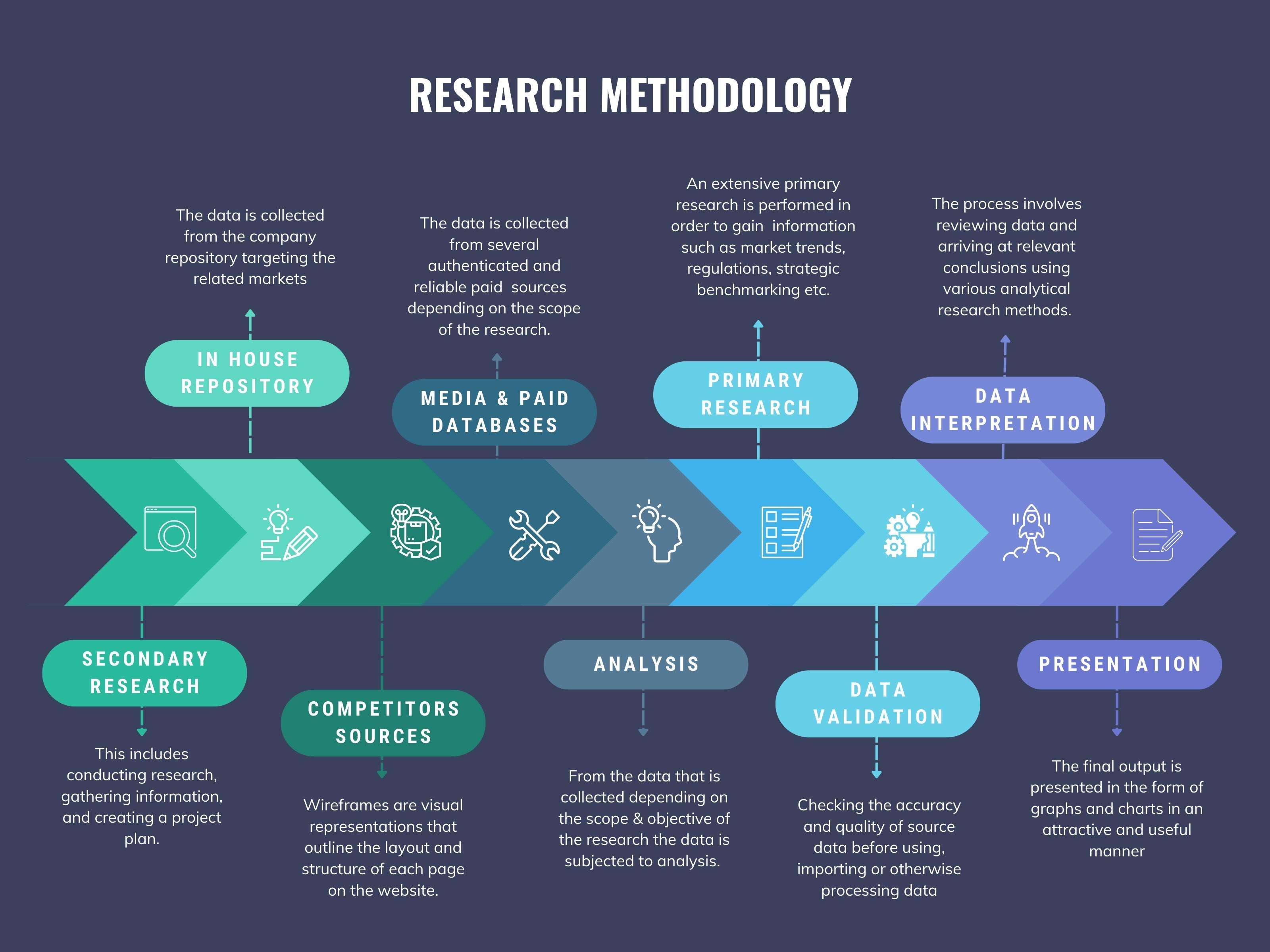
We at ‘Stratistics’ opt for an extensive research approach which involves data mining, data validation, and data analysis. The various research sources include in-house repository, secondary research, competitor’s sources, social media research, client internal data, and primary research.
Our team of analysts prefers the most reliable and authenticated data sources in order to perform the comprehensive literature search. With access to most of the authenticated data bases our team highly considers the best mix of information through various sources to obtain extensive and accurate analysis.
Each report takes an average time of a month and a team of 4 industry analysts. The time may vary depending on the scope and data availability of the desired market report. The various parameters used in the market assessment are standardized in order to enhance the data accuracy.
Data Mining
The data is collected from several authenticated, reliable, paid and unpaid sources and is filtered depending on the scope & objective of the research. Our reports repository acts as an added advantage in this procedure. Data gathering from the raw material suppliers, distributors and the manufacturers is performed on a regular basis, this helps in the comprehensive understanding of the products value chain. Apart from the above mentioned sources the data is also collected from the industry consultants to ensure the objective of the study is in the right direction.
Market trends such as technological advancements, regulatory affairs, market dynamics (Drivers, Restraints, Opportunities and Challenges) are obtained from scientific journals, market related national & international associations and organizations.
Data Analysis
From the data that is collected depending on the scope & objective of the research the data is subjected for the analysis. The critical steps that we follow for the data analysis include:
- Product Lifecycle Analysis
- Competitor analysis
- Risk analysis
- Porters Analysis
- PESTEL Analysis
- SWOT Analysis
The data engineering is performed by the core industry experts considering both the Marketing Mix Modeling and the Demand Forecasting. The marketing mix modeling makes use of multiple-regression techniques to predict the optimal mix of marketing variables. Regression factor is based on a number of variables and how they relate to an outcome such as sales or profits.
Data Validation
The data validation is performed by the exhaustive primary research from the expert interviews. This includes telephonic interviews, focus groups, face to face interviews, and questionnaires to validate our research from all aspects. The industry experts we approach come from the leading firms, involved in the supply chain ranging from the suppliers, distributors to the manufacturers and consumers so as to ensure an unbiased analysis.
We are in touch with more than 15,000 industry experts with the right mix of consultants, CEO's, presidents, vice presidents, managers, experts from both supply side and demand side, executives and so on.
The data validation involves the primary research from the industry experts belonging to:
- Leading Companies
- Suppliers & Distributors
- Manufacturers
- Consumers
- Industry/Strategic Consultants
Apart from the data validation the primary research also helps in performing the fill gap research, i.e. providing solutions for the unmet needs of the research which helps in enhancing the reports quality.
For more details about research methodology, kindly write to us at info@strategymrc.com
Frequently Asked Questions
In case of any queries regarding this report, you can contact the customer service by filing the “Inquiry Before Buy” form available on the right hand side. You may also contact us through email: info@strategymrc.com or phone: +1-301-202-5929
Yes, the samples are available for all the published reports. You can request them by filling the “Request Sample” option available in this page.
Yes, you can request a sample with your specific requirements. All the customized samples will be provided as per the requirement with the real data masked.
All our reports are available in Digital PDF format. In case if you require them in any other formats, such as PPT, Excel etc you can submit a request through “Inquiry Before Buy” form available on the right hand side. You may also contact us through email: info@strategymrc.com or phone: +1-301-202-5929
We offer a free 15% customization with every purchase. This requirement can be fulfilled for both pre and post sale. You may send your customization requirements through email at info@strategymrc.com or call us on +1-301-202-5929.
We have 3 different licensing options available in electronic format.
- Single User Licence: Allows one person, typically the buyer, to have access to the ordered product. The ordered product cannot be distributed to anyone else.
- 2-5 User Licence: Allows the ordered product to be shared among a maximum of 5 people within your organisation.
- Corporate License: Allows the product to be shared among all employees of your organisation regardless of their geographical location.
All our reports are typically be emailed to you as an attachment.
To order any available report you need to register on our website. The payment can be made either through CCAvenue or PayPal payments gateways which accept all international cards.
We extend our support to 6 months post sale. A post sale customization is also provided to cover your unmet needs in the report.
Request Customization
We offer complimentary customization of up to 15% with every purchase. To share your customization requirements, feel free to email us at info@strategymrc.com or call us on +1-301-202-5929. .
Please Note: Customization within the 15% threshold is entirely free of charge. If your request exceeds this limit, we will conduct a feasibility assessment. Following that, a detailed quote and timeline will be provided.
WHY CHOOSE US ?

Assured Quality
Best in class reports with high standard of research integrity

24X7 Research Support
Continuous support to ensure the best customer experience.

Free Customization
Adding more values to your product of interest.

Safe & Secure Access
Providing a secured environment for all online transactions.

Trusted by 600+ Brands
Serving the most reputed brands across the world.